Iowa Locks In 50% Front-Side Tint Floor: HF 766 Takes Effect July 1
Independently fact-checked against primary sources (last audited June 26, 2026). · Law checked current as of August 9, 2026. · 5 primary sources cited on this page. How we verify our legal content
Iowa Locks In 50% Front-Side Tint Floor: HF 766 Takes Effect July 1
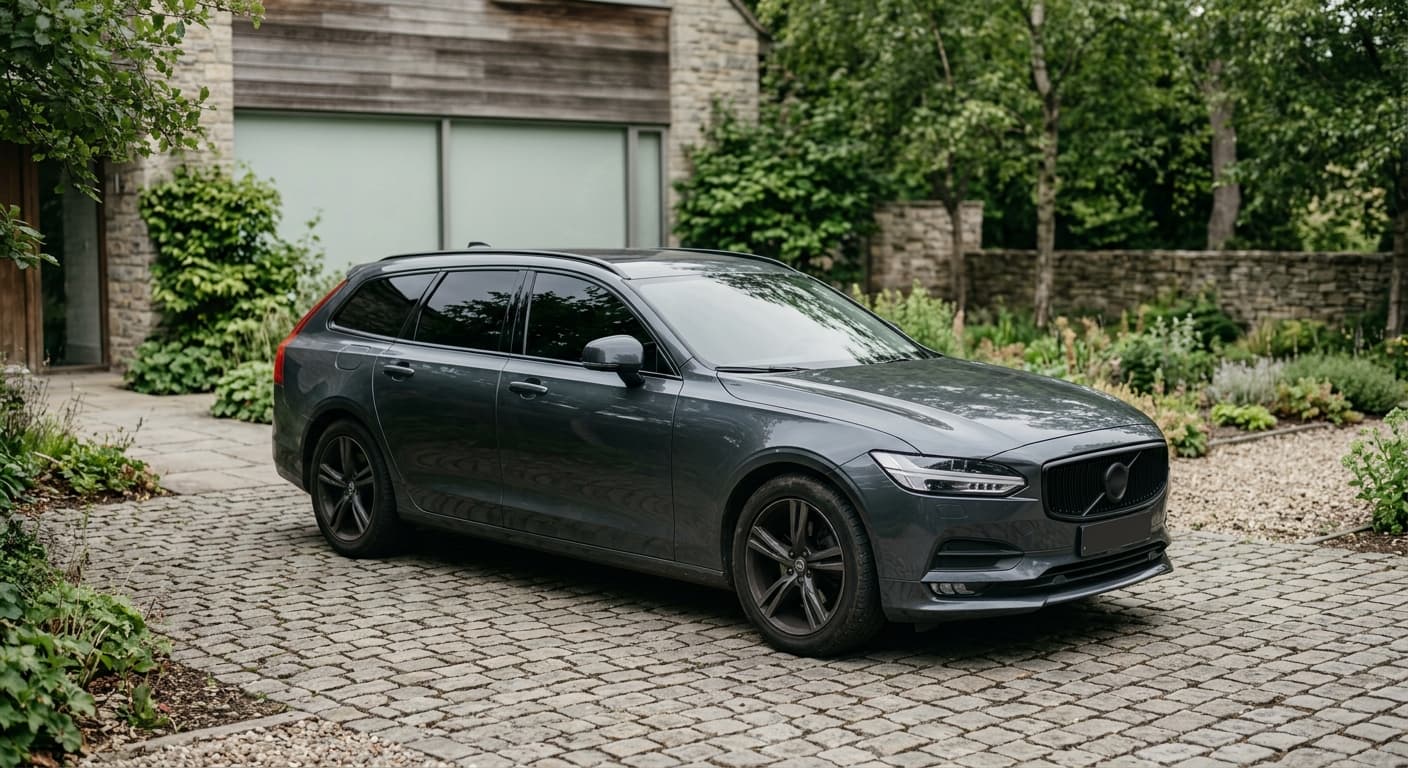
Starting July 1, 2026, Iowa drivers face a codified 50% visible light transmittance minimum on front side windows and sidewings under House File 766, signed by Gov. Kim Reynolds on May 15, 2026. The law replaces a vague "excessively dark or reflective" standard with a precise statutory floor. Iowa Code § 321.438.
Information last verified on June 26, 2026. This is a developing story; we update it as the record changes.
Status: Signed by Gov. Kim Reynolds on May 15, 2026; takes effect July 1, 2026. As of June 26, 2026 the prior tint rule remains in force.
Jurisdiction scope: This article addresses Iowa House File 766 and its effect on Iowa Code § 321.438, which governs window tinting for motor vehicles registered or operated in Iowa. It does not address the tint laws of other states. For the full Iowa tint picture, see Iowa window tint laws.
What Happened
Iowa Governor Kim Reynolds signed House File 766 on May 15, 2026, during a session in which she also signed Senate File 2430 and a list of other bills into law. HF 766 was a bill "relating to motor vehicle window tint, and making penalties applicable," passed by the 91st Iowa General Assembly.
The bill amends Iowa Code § 321.438, subsection 2, the section that governs windshields and window obstructions. Before HF 766, that provision prohibited driving a motor vehicle with a front windshield, side window, or sidewing that was "excessively dark or reflective" to the point that it was difficult for a person outside the vehicle to see in. The Iowa Department of Transportation, acting under the rulemaking authority the statute delegated to it, had set 70% light transmittance as the measurable floor for front windows under Iowa Administrative Code rule 761 IAC 450.7.
HF 766 does three things. First, it strikes the "excessively dark or reflective" language and the department's rulemaking authority over tint minimums. Second, it codifies two specific VLT floors directly into statute: 70% for the front windshield and 50% for the side window or sidewing immediately beside or forward of the driver. Third, it creates an express exception for vehicles owned or leased by a federal, state, or local law enforcement agency when the driver is acting in the course of official duties.
The law takes effect July 1, 2026. Until that date, the prior standard ("excessively dark or reflective" interpreted through the DOT's 70% administrative rule) remains in force.
What the Law Actually Says
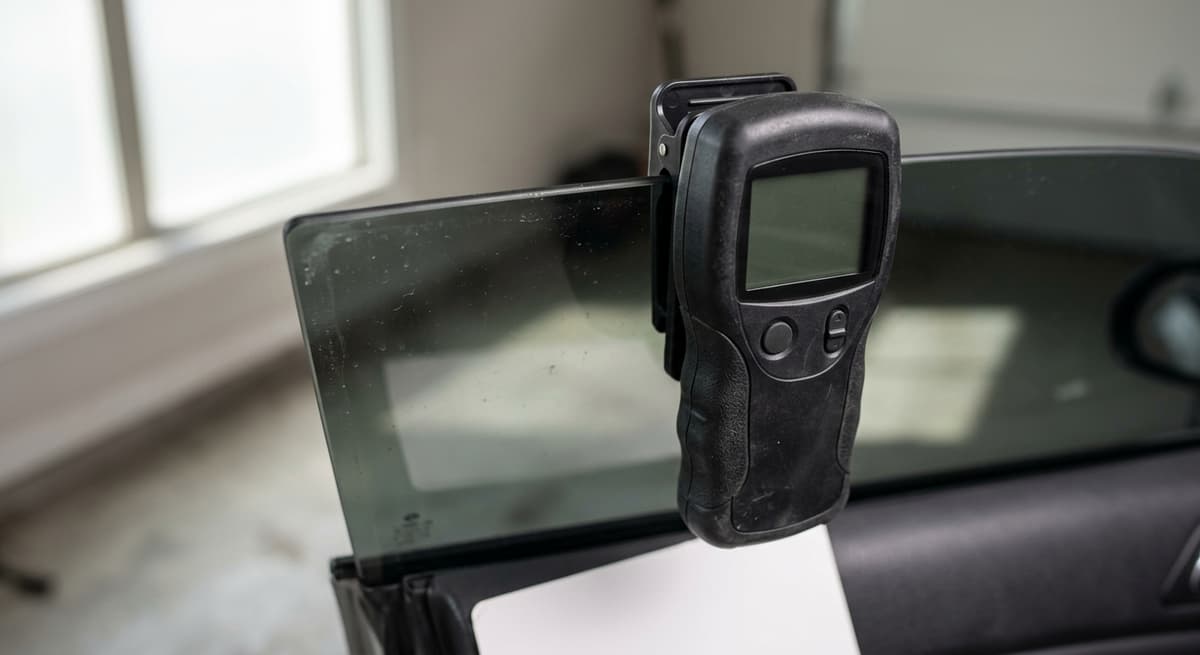
Visible light transmittance is a measured percentage of ambient light that passes through a window. A 50% VLT film blocks half of incoming light; a 35% VLT film blocks 65%. The lower the VLT number, the darker the tint. Testers use a light-meter device that measures the light coming through the combined stack of the window glass and any added film.
Under HF 766, Iowa Code § 321.438 will prohibit operating a motor vehicle whose front windshield allows less than 70% light transmittance or whose side window or sidewing immediately beside or forward of the driver allows less than 50% light transmittance. The 70% windshield figure is unchanged in practice (the DOT rule already set it at 70%), but the authority now rests in statute rather than administrative rule. The 50% front-side floor is the operative change: it reduces the prior regulatory minimum of 70% by 20 percentage points.
The statute is specific about which windows carry the new floor: the side window or sidewing "immediately beside or forward of the driver." This covers the driver-side front window and the passenger-side front window, as well as any sidewing (the small triangular fixed pane some vehicles have forward of the main front side window). Rear side windows and the rear windshield are not addressed by the amended section, meaning Iowa imposes no VLT minimum on those surfaces after July 1.
For a broader look at how Iowa tint rules fit the national picture, see Iowa window tint laws and the window tint laws hub.
Analysis: Why This Matters
The following is analysis from the Recording Law Editorial Team.
Iowa's prior tint standard was rooted in administrative discretion: the statute said "excessively dark or reflective," and a DOT regulation translated that into a 70% VLT floor for all front windows. That arrangement gave the department room to adjust the floor by rulemaking. HF 766 locks the numbers into statute, which means changing them now requires a legislative act rather than a regulatory notice-and-comment cycle. Drivers and tint shops gain predictability, but the legislature trades away the flexibility that an agency-rule structure provides.
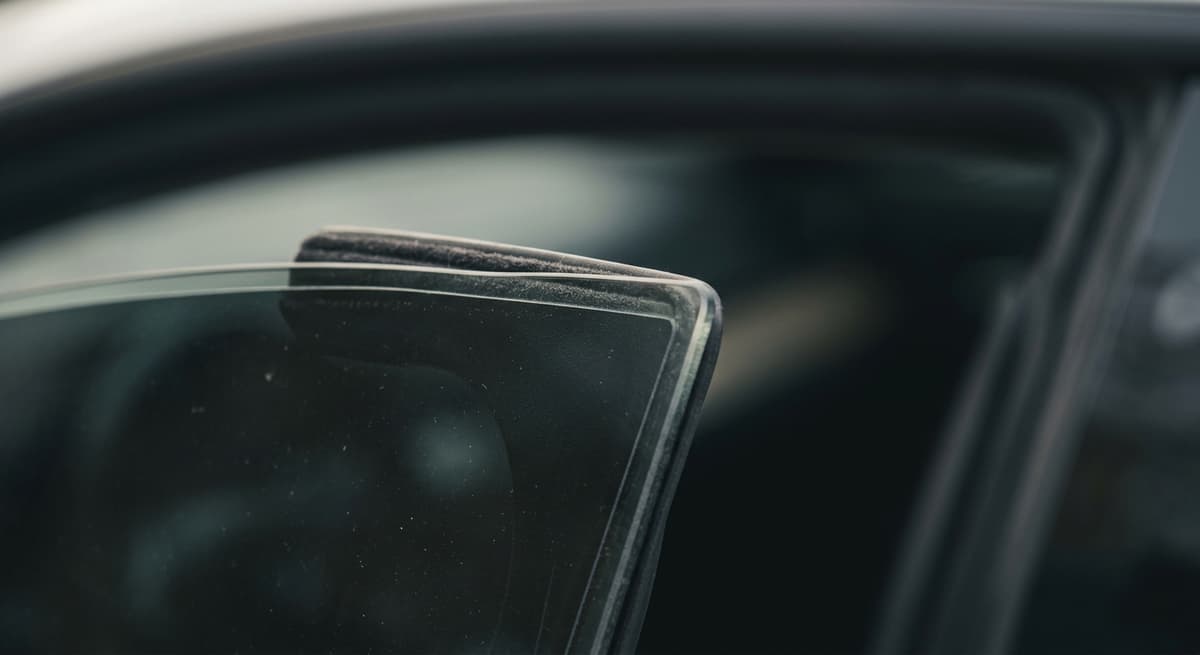
The more significant practical change is the front-side window drop from 70% to 50%. A 50% VLT film is visibly tinted but still relatively transparent. State front-side minimums vary widely. California requires 70% VLT on front side windows, so Iowa's new 50% floor is more permissive than California's. Other states set lower floors than Iowa: Illinois permits front side windows as dark as 35% VLT and Tennessee allows 35% VLT, so Iowa's 50% is stricter than those states. That variation matters for Iowans who drive across state lines: a vehicle that complies with Iowa's 50% front-side minimum could still be cited in a state that requires 70% on the same window.
Iowa's decision not to set any rear-window minimum is consistent with a common pattern. Many states regulate only the driver's visibility field (the front windshield and the windows beside the driver) and leave rear and rear-side windows to market choice, on the theory that rearward vision is less critical to roadway safety.
The law enforcement carve-out reflects a practical reality: undercover vehicles and unmarked units often carry film darker than the civilian minimum, and the statute accommodates that use case without requiring individual waivers or certificates.
How This Affects You
If your vehicle currently has tint on the front side windows that meets the 50% to 70% range, it will be compliant under Iowa law as of July 1, 2026, even if it would have violated the prior 70% DOT rule. If your front side windows carry film darker than 50% VLT (meaning they let through less than half of incoming light), that remains prohibited after July 1.
If you plan to install new tint before or after the effective date, confirm the VLT of any film with your installer and get documentation of the reading. Film manufacturers list nominal VLT, but the combined reading through your vehicle's existing glass (which is itself never 100% clear) will be lower.
Iowa's new law does not govern what rear-seat passengers may experience. If your vehicle has rear side windows or a rear windshield with very dark film, that is not addressed by § 321.438 as amended. Be aware, however, that if you drive in other states, those states apply their own tint rules to your vehicle.
This is general information, not advice for your specific vehicle or situation.
What Happens Next
The statute takes effect July 1, 2026. Iowa law enforcement officers enforcing Iowa Code § 321.438 after that date will apply the 50% front-side floor and the 70% windshield floor as statutory standards, not regulatory ones. The scheduled fine for a violation remains $70 under Iowa's existing penalty structure.
The statute does not contain a medical exemption provision in the text of HF 766 as identified through sources reviewed for this article. Drivers who previously relied on any DOT administrative guidance for medical-need exceptions should consult the Iowa DOT directly or seek advice from an Iowa-licensed attorney, as the rulemaking authority the DOT previously had over tint minimums has been removed by the new law.
This is general legal information, not legal advice. It covers Iowa window-tint law and reflects sources verified on June 26, 2026. Laws change and this story is developing; consult a lawyer licensed in your jurisdiction about your specific situation.
Sources
- Iowa House File 766, 91st General Assembly (enrolled), amending Iowa Code § 321.438 (legis.iowa.gov)
- Iowa Legislature, Bill History for HF 766, 91st General Assembly (legis.iowa.gov)
- Office of Gov. Kim Reynolds: Gov. Reynolds signs SF 2430, list of bills into law, May 15, 2026 (governor.iowa.gov)
- LegiScan: Iowa HF766 bill history and text, 91st General Assembly (legiscan.com)
- Iowa Administrative Code rule 761 IAC 450.7 (prior DOT tint standard) (legis.iowa.gov)
- Iowa Code § 321.438 (windshields and windows, current codified text) (legis.iowa.gov)
Related articles
- Iowa window tint laws
- Window tint laws by state
- Illinois window tint laws
- California window tint laws
- Tennessee window tint laws
Last updated: 2026-06-26. This is a developing story; details verified as of 2026-06-26.
Frequently Asked Questions
When does Iowa HF 766 take effect?
July 1, 2026. Gov. Kim Reynolds signed HF 766 on May 15, 2026. Until July 1, the prior 'excessively dark or reflective' standard remains in force under Iowa Code § 321.438 and Iowa DOT rule 761 IAC 450.7.
What is the new Iowa window tint VLT minimum for front side windows?
50% visible light transmittance. Under HF 766, a side window or sidewing immediately beside or forward of the driver must allow at least 50% of light to pass through. The prior effective minimum, set by DOT rule, was 70%.
What does HF 766 require for the front windshield?
At least 70% light transmittance. This figure is unchanged from the prior DOT rule but is now codified directly in Iowa Code § 321.438 rather than set by administrative regulation.
Does Iowa's new tint law cover rear windows?
No. HF 766 amends only the provision covering the front windshield and the side window or sidewing immediately beside or forward of the driver. Iowa Code § 321.438, as amended, imposes no minimum VLT on rear side windows or the rear windshield.
Are law enforcement vehicles exempt from the Iowa tint law?
Yes. HF 766 includes an express exception for vehicles owned or leased by a federal, state, or local law enforcement agency when operated by a person in the course of their official duties.
What is the penalty for an Iowa window tint violation?
A scheduled fine of $70 under Iowa's existing penalty provisions for violations of Iowa Code § 321.438.
Will Iowa tint that is legal under HF 766 be legal in other states?
Not necessarily. Iowa's 50% front-side minimum is more permissive than the 70% floor some other states require. Drivers should check the tint laws of any state they plan to drive in, as those states apply their own rules to vehicles traveling through. See the window tint laws hub for a state-by-state breakdown.
Updates
Governing law re-checked for recent changes
Independently fact-checked against the cited primary sources
The Law Behind This Article
This article rests on the statutory provisions below, held in our own legal record and retrieved from the official source. Tap a section to read the operative text.
Iowa Code, Chapter 321: MOTOR VEHICLES AND LAW OF THE ROAD
§ 321.438Windshields and windows.In forcecited in 4 of our articles
1. A person shall not drive a motor vehicle equipped with a windshield, sidewings, or side or rear windows which do not permit clear vision. 2. A person shall not operate on the highway a motor vehicle equipped with a front windshield, a side window to the immediate right or left of the driver, or a sidewing forward of and to the left or right of the driver which is excessively dark or reflective so that it is difficult for a person outside the motor vehicle to see into the motor vehicle through the windshield, window, or sidewing. a. The department shall adopt rules establishing a minimum measurable standard of transparency which shall apply to violations of this subsection. b. This subsection does not apply to a person who operates a motor vehicle owned or leased by a federal, state, or local law enforcement agency if the operation is part of the person’s official duties. 3. Every motor vehicle except a motorcycle, or a vehicle included in the provisions of section 321.383 or section 321.115 shall be equipped with a windshield in accordance with section 321.444.
Official text (excerpt) · last checked 2026-09-07 · Read the full text in our law library · Verify at legis.iowa.gov
Cited in 14 court opinions in our collectionLatest citing opinion in our collection: 2025
In the courts (editorial summary, independently checked):Iowa courts have applied section 321.438 mainly to validate traffic stops. State v. Aderholdt (1996) found an officer had reasonable cause to believe windows were tinted beyond subsection 2, and State of Iowa v. Gatkek Dual Lieth (2025) held a trooper's observation of a cracked windshield under subsection 1 gave probable cause to stop.
Opinions citing this section in our collection:
- State v. Aderholdt (Supreme Court of Iowa 1996, 545 N.W.2d 559)✓A trooper stopped a car whose occupants were unbelted and whose windows later metered at six percent light transmission; the court held he had reasonable cause to believe the tint exceeded what Iowa Code 321.438(2) permits, which helped justify the stop.
- State of Iowa v. Cassidy Jo Poage (Court of Appeals of Iowa 2025)“…his observation of the window-tint traffic violation. See Iowa Code §§ 321.438(2), 321.482 (2024). He also planned to…”
- State of Iowa v. Gatkek Dual Lieth (Court of Appeals of Iowa 2025)✓A trooper stopped the car Lieth rode in after seeing two windshield cracks, one in front of the driver's view; the court agreed that observing a violation of Iowa Code 321.438(1) gave probable cause for the stop, and treated his mistake-of-law argument as unpreserved.
Identified automatically from the court opinions citing this section — not a ranking of which case controls.
Also relied on in: Iowa Dashcam Laws: Recording Rules, Windshield Mounting, and Legal Limits (2026), Iowa Window Tint Laws (2026): Legal VLT Limits, Iowa Windshield Mounting Laws (2026 Guide)
Search our full record of US law — 2.1 million sections, every state + federal →
Sources and References
- Iowa House File 766, 91st General Assembly (enrolled), amending Iowa Code § 321.438(legis.iowa.gov).gov
- Iowa Legislature, Bill History for HF 766, 91st General Assembly(legis.iowa.gov).gov
- Office of Gov. Kim Reynolds, Gov. Reynolds signs SF 2430, list of bills into law, May 15, 2026(governor.iowa.gov).gov
- LegiScan, Iowa HF766 bill history and text, 91st General Assembly(legiscan.com)
- Iowa Administrative Code rule 761 IAC 450.7 (prior DOT tint standard)(legis.iowa.gov).gov
- Iowa Code § 321.438 (windshields and windows, current codified text)(legis.iowa.gov).gov