
Iowa
Iowa Landlord-Tenant Recording Laws: Surveillance and Privacy Rights (2026)
Independently fact-checked against primary sources (last audited August 15, 2026). · Reviewed by the RecordingLaw editorial team. · Law checked current as of August 15, 2026. · 8 primary sources cited on this page. How we verify our legal content
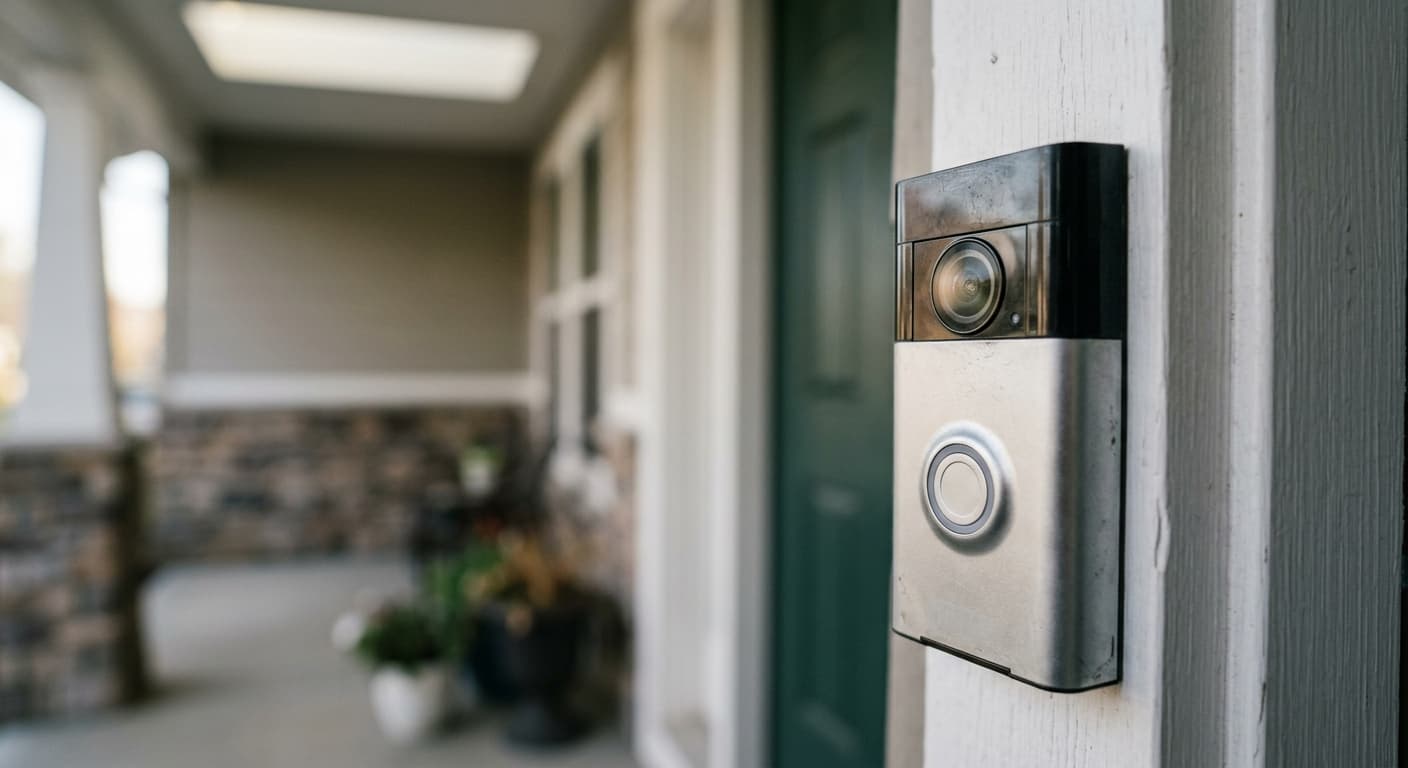
Iowa tenants can record conversations with their landlord without consent under the one-party consent rule in Iowa Code 808B.2. Iowa Code 727.8 separately permits lessees to install exterior monitoring devices on their leased property. Landlords who place hidden cameras inside a rental unit risk criminal liability under Iowa Code 709.21.
Iowa's recording laws give tenants significant rights when it comes to documenting interactions with landlords and installing security equipment in their rental units. Under Iowa Code 808B.2, tenants can record conversations they participate in without landlord consent. Under Iowa Code 727.8, lessees can use exterior monitoring devices on their leased property.
At the same time, landlords have legitimate interests in property security that allow them to install surveillance in common areas. This guide covers the complete framework of landlord-tenant recording rights in Iowa, including tenant recording of conversations, landlord surveillance limits, security camera installation, and how recordings are used in housing disputes.
Tenant Rights to Record Conversations
Recording Interactions With Your Landlord
Iowa's one-party consent law permits you to record any conversation you participate in. As a tenant, you can record:
- Phone calls with your landlord about repairs, rent, or lease terms
- In-person conversations during property inspections or walkthroughs
- Meetings to discuss lease renewals, rent increases, or move-out procedures
- Interactions with property managers, maintenance staff, and management company representatives
- Conversations about security deposit deductions or disputes
Your participation in the conversation satisfies the consent requirement. You do not need to inform the landlord that you are recording.
The Purpose Limitation
Iowa's one-party consent exception requires that the recording not be made for a "criminal, tortious, or injurious purpose." For tenant recordings, this means:
Legitimate purposes (protected):
- Documenting verbal agreements about repairs or maintenance
- Recording evidence of harassment, threats, or illegal conduct by the landlord
- Preserving conversations about lease terms or rent amounts
- Creating a record of landlord promises or representations
- Documenting illegal entry into your rental unit
Potentially problematic purposes (not protected):
- Recording with the intent to blackmail or extort the landlord
- Recording to selectively edit and publish for purposes of defamation
- Recording for harassment or intimidation
When Tenant Recordings Are Most Valuable
Tenant recordings serve as critical evidence in several common landlord-tenant situations:
Illegal entry: Under Iowa Code 562A.19, landlords must give at least 24 hours' notice before entering a rental unit (except in emergencies). If your landlord enters without proper notice, recording the interaction provides evidence of the violation.
Failure to repair: Under Iowa Code 562A.15, landlords must maintain the premises in a fit and habitable condition. Recording conversations where the landlord acknowledges maintenance issues but refuses to address them creates valuable evidence.
Retaliatory conduct: Iowa Code 562A.36 prohibits landlords from retaliating against tenants who complain about housing code violations or exercise their legal rights. Recording conversations that demonstrate retaliatory intent can support a retaliation claim.
Security deposit disputes: Recording the move-out walkthrough and any discussions about the condition of the unit can help resolve disputes about security deposit deductions under Iowa Code 562A.12.
Tenant Rights to Install Security Cameras
Iowa Code 727.8 Lessee Exception
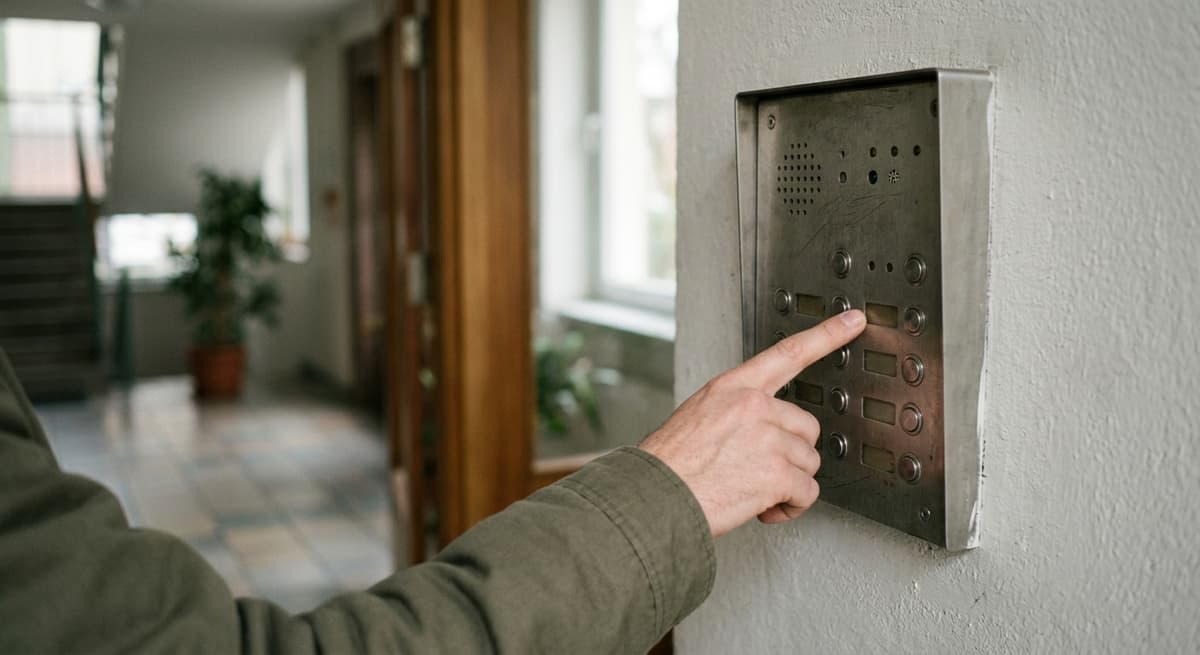
Iowa Code 727.8 exempts the use of a monitoring device from the eavesdropping statute. The statute defines a monitoring device as a video or audio device placed outside a person's dwelling or other structure, not in a shared hallway, on real property that person owns or leases. This gives tenants the legal right to install exterior security cameras and monitoring devices on their leased property, not devices placed inside the dwelling.
Tenants can:
- Place a doorbell camera or exterior camera at their unit entrance
- Install an exterior motion-activated camera covering their own leased space, such as a patio or private entry
- Mount an exterior camera aimed at their own portion of the property, subject to lease terms
Lease Agreement Considerations
While Iowa law allows tenants to install monitoring devices, lease agreements may contain provisions about modifications to the rental unit. Before installing security cameras, tenants should:
- Review the lease for any clauses about installations, modifications, or drilling into walls
- Use non-invasive mounting when possible (adhesive mounts, magnetic mounts, or shelf placement)
- Communicate with the landlord about planned installations, particularly for exterior-mounted devices
- Remove equipment upon move-out and repair any damage caused by the installation
If the lease prohibits modifications but does not specifically address security cameras, a tenant could argue that a non-invasive camera installation is not a "modification" to the premises. However, discussing the installation with the landlord first can prevent disputes.
Limitations on Tenant Cameras
Tenants cannot use cameras to:
- Record other tenants in common areas where those tenants have privacy expectations (shared bathrooms, for example)
- Surveil the landlord's private residence or office
- Record inside other tenants' units
- Monitor areas outside the tenant's leased space without authorization
Landlord Surveillance Rights and Limits

Common Areas
Landlords in Iowa can install security cameras in common areas of multi-unit buildings under the property owner monitoring device exception in Iowa Code 727.8. Permissible locations include:
- Building entrances and exits
- Parking lots and garages
- Laundry rooms (common areas, not individual units)
- Mailbox areas
- Exterior perimeters of the building
- Storage areas and basements (common spaces)
Iowa Code 727.8's monitoring device definition specifically excludes a device placed in a shared hallway, so landlords cannot rely on this exception to place cameras in hallways or corridors.
Where Landlords Cannot Install Cameras
Landlords are strictly prohibited from installing cameras in areas where tenants have a reasonable expectation of privacy:
- Inside rental units: A landlord cannot install cameras inside a tenant's apartment or house without the tenant's informed consent
- Bathrooms and shared restrooms: Recording a person in a state of nudity in a restroom, without consent and for the purpose of sexual arousal or gratification, violates Iowa Code 709.21. Even outside those specific elements, cameras in these spaces raise serious privacy and lease-violation concerns
- Shared locker rooms or changing areas: The same privacy protections apply
- Areas immediately outside a tenant's door in a manner designed to monitor the tenant's specific comings and goings (this could constitute harassment)
Hidden Cameras in Rental Units
A landlord who installs hidden cameras inside a tenant's rental unit faces serious criminal and civil liability:
- Criminal charges: Depending on camera placement, charges may include invasion of privacy under Iowa Code 709.21 (aggravated misdemeanor), eavesdropping under Iowa Code 727.8 (serious misdemeanor), or illegal interception under Iowa Code 808B.2 (Class D felony)
- Civil liability: The tenant can sue for invasion of privacy, intentional infliction of emotional distress, and statutory damages under Iowa Code 808B.8
- Lease violations: Hidden surveillance likely constitutes a breach of the implied warranty of habitability and quiet enjoyment
Audio Recording in Common Areas
If landlord cameras in common areas include audio recording, the monitoring device exception in Iowa Code 727.8 provides authorization on the landlord's property. However, landlords should be transparent about audio recording in common areas and consider posting notices to inform tenants and visitors.
Notice Requirements for Landlord Surveillance
Iowa Law
Iowa does not have a specific statute requiring landlords to notify tenants about security cameras in common areas. However, providing notice is strongly recommended and may be required by lease terms.
Best Practices for Landlords
Landlords should:
- Include a surveillance disclosure clause in the lease agreement
- Post visible signs in monitored common areas ("Security cameras in use")
- Inform tenants of any changes to surveillance systems
- Maintain a record of camera locations and access policies
- Respond to tenant questions about surveillance honestly
Best Practices for Tenants
Tenants should:
- Ask the landlord about surveillance during the leasing process
- Review the lease for any surveillance-related clauses
- Document the location of cameras in common areas
- Report any cameras discovered inside their rental unit immediately
Using Recordings in Landlord-Tenant Disputes
Administrative Proceedings
Iowa tenants who file complaints with local housing authorities or the Iowa Attorney General's Consumer Protection Division can use legally obtained recordings as supporting evidence. Common situations include:
- Code violation complaints
- Fair housing discrimination complaints
- Retaliation claims
- Rent overcharge disputes
Small Claims Court
Iowa small claims court handles many landlord-tenant disputes, including security deposit claims (up to $6,500). Audio and video recordings are admissible in small claims court if they are relevant and authentic. Recordings are commonly used to prove:
- The condition of the rental unit at move-in and move-out
- Verbal agreements about repairs or lease terms
- Landlord acknowledgment of maintenance issues
- The circumstances of a security deposit dispute
District Court
For larger claims or eviction proceedings in Iowa district court, recordings must meet the Iowa Rules of Evidence. Authentication under Iowa Rule of Evidence 5.901 requires testimony that the recording is genuine and unaltered.
Fair Housing Complaints
Recordings can be powerful evidence in fair housing complaints filed with the Iowa Civil Rights Commission or the U.S. Department of Housing and Urban Development (HUD). If a landlord makes discriminatory statements during a recorded conversation, that recording can support a fair housing claim.
Special Situations
Recording During Property Inspections
When a landlord conducts a property inspection (with proper 24-hour notice under Iowa Code 562A.19), both the tenant and the landlord can record the inspection. The tenant is present and participating, satisfying one-party consent. Recording the inspection creates an objective record of the property's condition at the time.
Recording Maintenance Workers
When a landlord sends maintenance workers to your rental unit, you can record the interaction. You are present in your own home and participating in any conversation. This can be useful for:
- Documenting the scope and quality of repairs
- Recording what the maintenance worker says about the condition of the property
- Preserving evidence if a maintenance worker behaves inappropriately
Recording During Eviction Proceedings
If a landlord serves an eviction notice or attempts to lock you out, recording the interaction provides evidence. Illegal lockouts and self-help evictions violate Iowa Code 562A.26, and a recording can prove the landlord's conduct.
Airbnb and Short-Term Rental Recording
Iowa hosts using platforms like Airbnb must comply with all recording laws. Hosts cannot place hidden cameras inside rental units. If security cameras are present on the property exterior, hosts should disclose them in the listing and comply with the platform's policies. Indoor cameras in private spaces (bedrooms, bathrooms) are never permitted, regardless of disclosure.
Domestic Violence and Tenant Recording
Recording for Safety Documentation
Tenants who are victims of domestic violence can use Iowa's one-party consent law to record threatening conversations with an abusive partner for safety documentation. These recordings can support:
- Applications for protective orders under Iowa Code Chapter 236
- Criminal complaints
- Requests for early lease termination (Iowa allows domestic violence victims to break leases under certain conditions)
Landlord Obligations
Under Iowa law, landlords must not retaliate against tenants who report domestic violence or request lease modifications for safety purposes. Recording conversations where a landlord threatens retaliation for reporting domestic violence creates important evidence.
More Iowa Recording Laws
Audio Recording | Video Recording | Voyeurism and Hidden Cameras | Workplace Recording | Recording Police | Phone Call Recording | Security Cameras | Recording in Public | Landlord-Tenant Recording | Dashcam Laws | School Recording | Medical Recording
More Iowa Recording Topics
More Iowa Recording and Landlord-Tenant Laws
More Iowa Laws
Frequently Asked Questions
Can I record my landlord in Iowa?
Yes. Iowa's one-party consent law under Iowa Code 808B.2 allows you to record any conversation you participate in without informing the landlord. This includes phone calls, in-person conversations, property inspections, and meetings about lease terms. The recording must not be made for a criminal, tortious, or injurious purpose.
Can my landlord put cameras inside my apartment in Iowa?
No. A landlord cannot install cameras inside a tenant's rental unit without informed consent. Cameras that record someone in a state of nudity in private areas like bathrooms or bedrooms, without consent and for the purpose of sexual arousal or gratification, violate Iowa Code 709.21. Hidden cameras inside a rental unit may result in criminal charges and civil liability. Tenants who discover hidden cameras should contact law enforcement immediately.
Can I install a security camera in my Iowa rental?
Yes, for exterior placements. Iowa Code 727.8 allows lessees to use monitoring devices on their leased property, but the statute's monitoring device exception covers only devices placed outside your dwelling, not indoor cameras. You can install a doorbell camera or other exterior camera at your unit entrance. Review your lease for any restrictions on modifications, use non-invasive mounting when possible, and consider informing your landlord about exterior installations.
Can landlords install cameras in common areas in Iowa?
Yes, in most exterior common areas, but not shared hallways. Iowa Code 727.8 allows property owners to use monitoring devices on their real property, but the statute's monitoring device definition excludes anything placed in a shared hallway. Landlords can install cameras in parking lots, building entrances, and other common areas. They cannot install cameras in shared hallways, shared bathrooms, locker rooms, or inside individual rental units.
Can I use a recording of my landlord as evidence in court in Iowa?
Yes. Recordings made legally under Iowa's one-party consent law are generally admissible in Iowa courts, including small claims court and district court. The recording must be authenticated as genuine and relevant to the case. Recordings are commonly used in security deposit disputes, eviction proceedings, and fair housing complaints.
Updates
Independently fact-checked against the cited primary sources; governing law re-checked for recent changes
Governing law re-checked for recent changes
Corrected a repeated claim that Iowa Code 727.8's monitoring-device exception covers cameras placed inside a rental unit or in shared hallways -- the statute's definition of a monitoring device covers only exterior devices not placed in a shared hallway -- and qualified the bathroom/709.21 claims to the statute's actual nudity and sexual-purpose elements.
Governing law re-checked for recent changes
Reviewed and approved by an editor
The Law Behind This Article
This article rests on the statutory provisions below, held in our own legal record and retrieved from the official source. Tap a section to read the operative text.
Iowa Code, Chapter 808B: INTERCEPTION OF COMMUNICATIONS
§ 808B.2Unlawful acts — penalty.In forcecited in 18 of our articles
1. Except as otherwise specifically provided in this chapter, a person who does any of the following commits a class “D” felony: a. Willfully intercepts, endeavors to intercept, or procures any other person to intercept or endeavor to intercept, a wire, oral, or electronic communication. b. Willfully uses, endeavors to use, or procures any other person to use or endeavor to use an electronic, mechanical, or other device to intercept any oral communication when either of the following applies: (1) The device is affixed to, or otherwise transmits a signal through, a wire, cable, or other like connection used in wire communication. (2) The device transmits communications by radio, or interferes with the transmission of radio communications. c. Willfully discloses, or endeavors to disclose, to any other person the contents of a wire, oral, or electronic communication, knowing or having reason to know that the information was obtained through the interception of a wire, oral, or electronic communication in violation of this subsection. d.
Official text (excerpt) · last checked 2026-08-31 · Read the full text in our law library · Verify at legis.iowa.gov
Cited in 10 court opinions in our collectionLatest citing opinion in our collection: 2017
In the courts (editorial summary, independently checked):Iowa courts have applied 808B.2 to covert recordings by private parties. State v. Spencer (2007) read its one-party consent exception to include vicarious consent, but only where a parent has a good faith, objectively reasonable basis for consenting for a minor child. Papillon v. Jones (2017) applied it to a hidden home recorder.
Opinions citing this section in our collection:
- Brenda Papillon v. Bryon Jones (Supreme Court of Iowa 2017, 892 N.W.2d 763)✓A man left a hidden voice-activated recorder in his ex-girlfriend's home and captured her private phone calls, then used them in their custody case; the court affirmed liability under Section 808B.2 but held punitive damages require proof he knew he was violating the chapter.
- Amended June 6, 2017 Brenda Papillon v. Bryon Jones (Supreme Court of Iowa 2017)“…n in district court against Jones, alleging a violation of Iowa Code section 808B.2, which prohibits “willfully intercept[…”
- Iowa Beta Chapter of Phi Delta Theta Fraternity v. State, University of Iowa (Supreme Court of Iowa 2009, 763 N.W.2d 250)✓A nonmember hid a recorder in a fraternity's private meeting room and gave the tape to university officials who used it to discipline the chapter; the court held the tape was a protected oral communication and read "willfully" in Section 808B.2 to mean purposeful conduct.
Identified automatically from the court opinions citing this section — not a ranking of which case controls.
Also relied on in: Iowa Recording Laws (2026): One-Party Consent Rules, Iowa Smart Glasses Recording Laws (2026), Iowa Security Camera Laws: Home, Business, and HOA Rules (2026)
Iowa Code, Chapter 562A: UNIFORM RESIDENTIAL LANDLORD AND TENANT LAW
§ 562A.12Rental deposits.In forcecited in 2 of our articles
1. A landlord shall not demand or receive as a security deposit an amount or value in excess of two months’ rent. 2. All rental deposits shall be held by the landlord for the tenant, who is a party to the agreement, in a bank or savings and loan association or credit union which is insured by an agency of the federal government. Rental deposits shall not be commingled with the personal funds of the landlord. Notwithstanding the provisions of chapter 543B, all rental deposits may be held in a trust account, which may be a common trust account and which may be an interest-bearing account. Any interest earned on a rental deposit during the first five years of a tenancy shall be the property of the landlord. 3. a. A landlord shall, within thirty days from the date of termination of the tenancy and receipt of the tenant’s mailing address or delivery instructions, return the rental deposit to the tenant or furnish to the tenant a written statement showing the specific reason for withholding of the rental deposit or any portion thereof.
Official text (excerpt) · last checked 2026-09-05 · Read the full text in our law library · Verify at legis.iowa.gov
Cited in 21 court opinions in our collectionLatest citing opinion in our collection: 2026
Opinions citing this section in our collection:
- Elyse De Stefano v. Apts. Downtown, Inc. (Supreme Court of Iowa 2016)“…280.00 1This opinion follows Iowa Code section 562A.12(3) in referring to this as a “rental de…”
- Umeka Lewis v. John J. Jaeger, Robert E. Boge, and the City of Dubuque (Supreme Court of Iowa 2012, 818 N.W.2d 165)“…apartment. _______________________ term of the lease. See Iowa Code § 562A.12(3) (2009) (stating a landlord has thirt…”
- Whitehorn v. Lovik (Supreme Court of Iowa 1987, 398 N.W.2d 851)“…judgment; and (2) that the magistrate improperly construed Iowa Code section 562A.12(3) by entering judgment on the landlord…”
Identified automatically from the court opinions citing this section — not a ranking of which case controls.
Also relied on in: Iowa Landlord-Tenant Laws (2026): Deposits, Notice, and Tenant Rights
§ 562A.19Access.In force
1. The tenant shall not unreasonably withhold consent to the landlord to enter into the dwelling unit in order to inspect the premises, make necessary or agreed repairs, decorations, alterations, or improvements, supply necessary or agreed services, or exhibit the dwelling unit to prospective or actual purchasers, mortgagees, tenants, workers, or contractors. 2. The landlord may enter the dwelling unit without consent of the tenant in case of emergency. 3. The landlord shall not abuse the right of access or use it to harass the tenant. Except in case of emergency or if it is impracticable to do so, the landlord shall give the tenant at least twenty-four hours’ notice of the landlord’s intent to enter and enter only at reasonable times. 4. The landlord does not have another right of access except by court order, and as permitted by sections 562A.28 and 562A.29, or if the tenant has abandoned or surrendered the premises.
Official text (excerpt) · last checked 2026-07-29 · Read the full text in our law library · Verify at legis.iowa.gov
Cited in 6 court opinions in our collectionLatest citing opinion in our collection: 2017
Opinions citing this section in our collection:
- Umeka Lewis v. John J. Jaeger, Robert E. Boge, and the City of Dubuque (Supreme Court of Iowa 2012, 818 N.W.2d 165)“…without [the] consent of the tenant in case of emergency.” Iowa Code § 562A.19(2). The landlord, however, “shall not…”
- Alta Vista Properties, LLC v. Mauer Vision Center, PC (Supreme Court of Iowa 2014)“…perty that he or she has the right to sell or finance. See Iowa Code § 562A.19(1) (2011). It provides, “The tenant sha…”
- State v. Lewis (Supreme Court of Iowa 2004, 675 N.W.2d 516)“…leased premises under certain circumstances as provided by Iowa Code sections 562A.19 and 562A.29. These Code provisions, how…”
Identified automatically from the court opinions citing this section — not a ranking of which case controls.
Iowa Code, Chapter 709: SEXUAL ABUSE
§ 709.21Invasion of privacy — nudity.In forcecited in 12 of our articles
1. A person who knowingly views, photographs, or films another person, for the purpose of arousing or gratifying the sexual desire of any person, commits invasion of privacy if all of the following apply: a. The other person does not consent or is unable to consent to being viewed, photographed, or filmed. b. The other person is in a state of full or partial nudity. c. The other person has a reasonable expectation of privacy while in a state of full or partial nudity. 2. As used in this section: a. “Full or partial nudity” means the showing of any part of the human genitals or pubic area or buttocks, or any part of the nipple of the breast of a female, with less than fully opaque covering. b. “Photographs or films” means the making of any photograph, motion picture film, videotape, or any other recording or transmission of the image of a person. 3. A person who violates this section commits an aggravated misdemeanor.
Official text (excerpt) · last checked 2026-08-31 · Read the full text in our law library · Verify at legis.iowa.gov
Cited in 19 court opinions in our collectionLatest citing opinion in our collection: 2026
In the courts (editorial summary, independently checked):Iowa courts apply section 709.21 element by element. State of Iowa v. Nathaniel Wade Marchant affirmed a conviction on circumstantial proof of hidden bedroom cameras; State of Iowa v. Paul Andrew Monahan reversed, finding no objectively reasonable expectation of privacy at open public restroom urinals.
Opinions citing this section in our collection:
- State of Iowa v. Paul Andrew Monahan (Court of Appeals of Iowa 2018, 919 N.W.2d 635)✓A man was convicted under section 709.21 for allegedly looking at teenage boys at urinals in a public restroom at a track meet; the court reversed, finding no objectively reasonable expectation of privacy at those open urinals and insufficient evidence of a sexual purpose.
- Iowa Supreme Court Attorney Disciplinary Board v. Templeton (Supreme Court of Iowa 2010, 784 N.W.2d 761)✓A lawyer repeatedly peered into women's bedroom and bathroom windows and pleaded guilty to six counts of invasion of privacy under section 709.21; the court did not interpret the statute but held those convictions reflected adversely on his fitness to practice law.
- State of Iowa v. Nathaniel Wade Marchant (Court of Appeals of Iowa 2026)✓The mother's live-in partner hid a camera in her 13-year-old daughter's bedroom, and over 1,000 nude images were found on his phones; the court held the circumstantial evidence sufficed to sustain his invasion-of-privacy conviction under section 709.21(1).
Identified automatically from the court opinions citing this section — not a ranking of which case controls.
Also relied on in: Iowa Video Recording Laws: Where You Can and Cannot Film (2026), Iowa Voyeurism and Hidden Camera Laws: Iowa Code 709.21 Penalties (2026), Iowa Workplace Recording Laws: Employee and Employer Rights (2026)
Iowa Code, Chapter 727: HEALTH, SAFETY, AND WELFARE
§ 727.8Electronic and mechanical eavesdropping.In forcecited in 15 of our articles
1. “Monitoring device” means a digital video or audio streaming or recording device that records, listens to, or otherwise intercepts video or audio communications in order to provide proof of or prevent criminal activity that is placed outside of a person’s dwelling or other structure that is not in a shared hallway and is on real property owned or leased by the person. 2. Any person, having no right or authority to do so, who taps into or connects a listening or recording device to any telephone or other communication wire, or who by any electronic or mechanical means listens to, records, or otherwise intercepts a conversation or communication of any kind, commits a serious misdemeanor. 3. This section does not apply to any of the following: a. The recording by a sender or recipient of a message or one who is openly present and participating in or listening to a communication from recording such message or communication. b. The use of any radio or television receiver to receive any communication transmitted by radio or wireless signal. c. The use of a monitoring device.
Official text (excerpt) · last checked 2026-07-29 · Read the full text in our law library · Verify at legis.iowa.gov
Cited in 8 court opinions in our collectionLatest citing opinion in our collection: 2024
In the courts (editorial summary, independently checked):State v. Reid (1986) read the section's exception to let a sender, recipient, or person openly present and participating record a conversation without all-party consent or a court order. State v. Philpott (2005) affirmed a conviction for leaving a voice-activated recorder running in an office during the defendant's absence.
Opinions citing this section in our collection:
- State v. Philpott (Supreme Court of Iowa 2005, 702 N.W.2d 500)✓A court clerk left a voice-activated recorder running on her desk while at lunch, capturing coworkers; the court affirmed her section 727.8 conviction, holding a jury could find she intended to record conversations that took place during her absence.
- State v. Reid (Supreme Court of Iowa 1986, 394 N.W.2d 399)✓Police had a ten-year-old girl call the defendant and taped the call, then videotaped his station interview without telling him; the court held both recordings fell within section 727.8's exception for a participant, so no court order or all-party consent was needed.
- State v. Fox (Supreme Court of Iowa 1992, 493 N.W.2d 829)✓A deputy monitored a county jail inmate's outgoing phone call, and what she said led to a cell search that turned up marijuana; the court held the right or authority to monitor under section 727.8 comes from chapter 808B, whose law-enforcement exception covered him.
Identified automatically from the court opinions citing this section — not a ranking of which case controls.
Also relied on in: Iowa Audio Recording Laws: One-Party Consent Rules and Penalties (2026), Iowa Dashcam Laws: Recording Rules, Windshield Mounting, and Legal Limits (2026), Iowa Medical Recording Laws: Patient Rights, HIPAA, and One-Party Consent (2026)
Explore the law
This article also draws on these acts and chapters (opening at their first section): Iowa Code, Chapter 562A: UNIFORM RESIDENTIAL LANDLORD AND TENANT LAW § 562A.1 (Short title.)
Related law for further reading — not part of this article’s citations.
Search our full record of US law — 2.1 million sections, every state + federal →
Sources and References
- Iowa Code 808B.2 - Unlawful Acts and Penalty(legis.iowa.gov).gov
- Iowa Code 727.8 - Electronic and Mechanical Eavesdropping(legis.iowa.gov).gov
- Iowa Code 709.21 - Invasion of Privacy (Nudity)(legis.iowa.gov).gov
- Iowa Code Chapter 562A - Uniform Residential Landlord and Tenant Law(legis.iowa.gov).gov
- Iowa Code 562A.12 - Security Deposits(legis.iowa.gov).gov
- Iowa Code 562A.19 - Access by Landlord(legis.iowa.gov).gov
- Iowa Civil Rights Commission(icrc.iowa.gov).gov
- U.S. Department of Housing and Urban Development(hud.gov).gov