
South Dakota
South Dakota Dashcam Laws
Independently fact-checked against primary sources (last audited August 15, 2026). · Reviewed by the RecordingLaw editorial team. · Law checked current as of August 15, 2026. · 6 primary sources cited on this page. How we verify our legal content
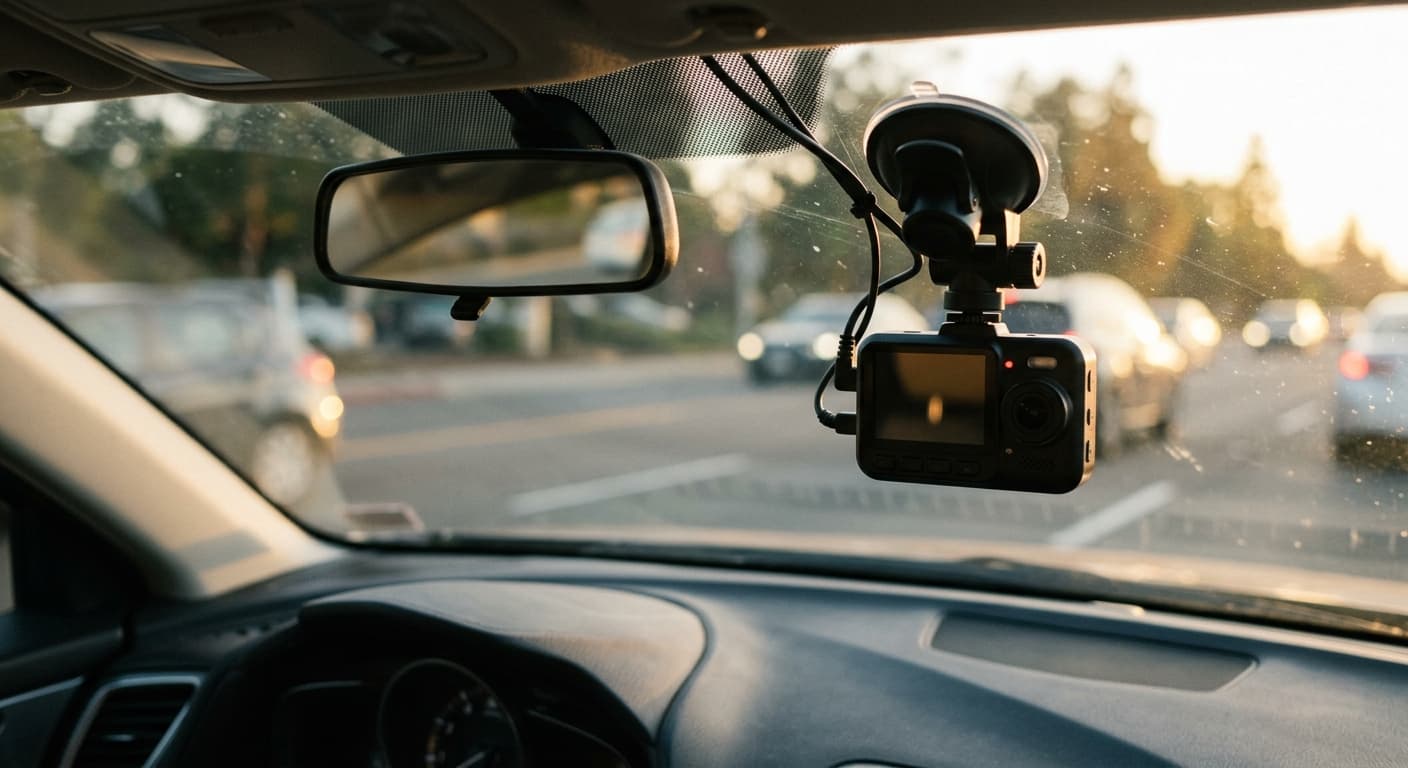
Dashcams are legal in South Dakota, with no state statute prohibiting their use in vehicles. Audio captured by a dashcam is covered by one-party consent under SDCL 23A-35A-20, meaning you consent as the vehicle operator. Mount the camera on the dashboard rather than the windshield to avoid obstructing your view.
Dashcams are legal in South Dakota. There is no state statute that specifically prohibits installing or using a dashboard camera in your vehicle. However, South Dakota does regulate where you can mount devices in your vehicle, and the state's recording laws apply to any audio captured by your dashcam.
This guide covers dashcam mounting rules, audio recording considerations, how dashcam footage works as evidence, commercial fleet dashcam use, and privacy concerns.
Dashcam Legality in South Dakota
No Specific Dashcam Statute
South Dakota does not have a statute that directly addresses dashcams. The legality of dashcams is determined by general traffic laws regarding windshield obstructions and the state's recording laws for audio capture.
Dashcams are legal for:
- Personal vehicles (cars, trucks, SUVs, motorcycles)
- Commercial vehicles and fleet trucks
- Rideshare and delivery vehicles
- Recreational vehicles and campers
Mounting Requirements
South Dakota law prohibits mounting objects on your windshield that obstruct your view of the road. While the state does not have a statute as specific as some states about exact placement zones, the general requirement is that no device should impede the driver's ability to see the road clearly.
Best practices for dashcam mounting in South Dakota:
- Mount the dashcam on the dashboard rather than the windshield for the safest legal position
- If mounting on the windshield, place the camera behind the rearview mirror where it does not block your field of vision
- Ensure the camera and any cables do not obstruct your view of traffic, signals, or signs
- Secure the camera so it does not fall or shift while driving
Rear-Facing and Multi-Camera Systems
South Dakota law does not prohibit rear-facing dashcams or multi-camera systems. You can install:
- A front-facing camera on the dashboard
- A rear-facing camera on the rear window or dashboard
- A cabin-facing camera (for rideshare or fleet use)
- Multiple cameras covering different angles
Audio Recording by Dashcams
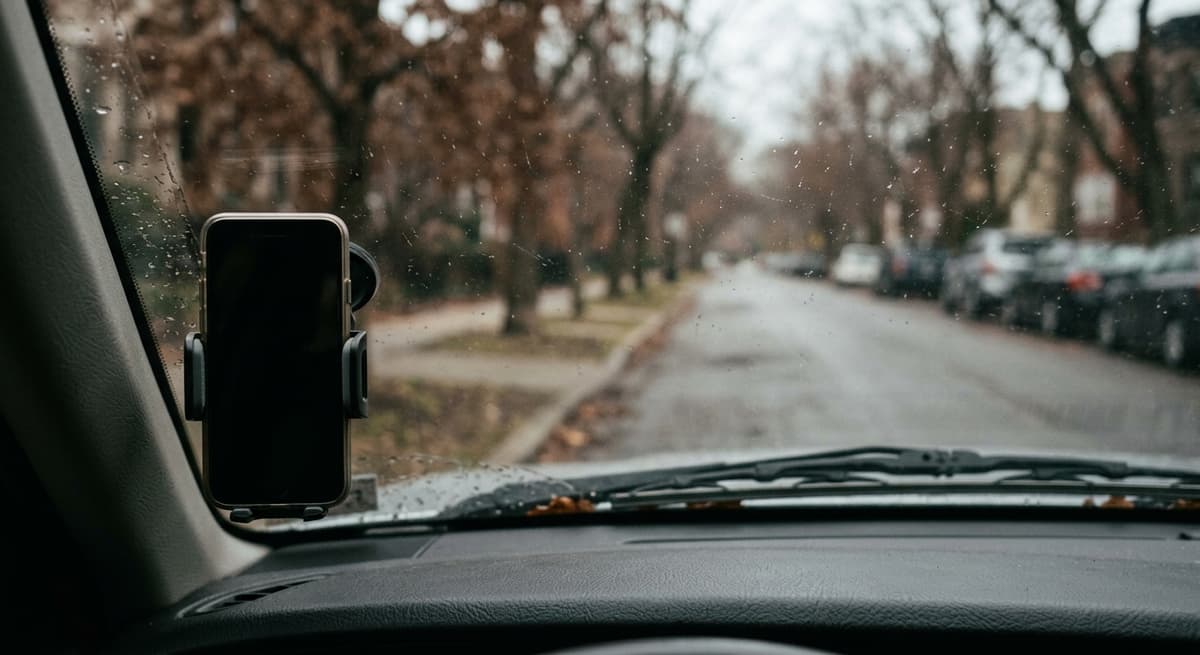
One-Party Consent Applies
Many dashcams record audio along with video. In South Dakota, audio recording by a dashcam follows the one-party consent rule under SDCL 23A-35A-20.
As the vehicle owner and operator, you are present and consenting to the recording. This means:
- Audio recording of your own conversations in the car is legal. You are a party to those conversations.
- Audio recording of conversations between passengers is also covered by your consent as the vehicle operator who activated the recording device.
- Audio during traffic stops is legal because you are a participant in the interaction with the officer.
Rideshare and Taxi Dashcams
If you drive for a rideshare company or taxi service in South Dakota, you can use a dashcam with audio. You are present and consenting as a party to conversations in your vehicle. However, many rideshare drivers choose to post a notice informing passengers about the recording as a best practice.
Dashcam Footage as Evidence

Traffic Accidents
Dashcam footage is one of the most valuable forms of evidence in South Dakota traffic accident cases. The footage can:
- Establish fault by showing which driver violated traffic rules
- Capture the speed, direction, and behavior of all vehicles involved
- Record traffic signals, stop signs, and road conditions at the time of the accident
- Provide a timestamp for the incident
- Corroborate or contradict witness testimony
Insurance companies in South Dakota regularly accept dashcam footage as part of accident claims. Some insurers offer premium discounts for drivers who use dashcams.
Criminal and Traffic Cases
Dashcam footage is admissible in South Dakota courts for:
- DUI and impaired driving cases
- Hit-and-run identification
- Road rage incidents
- Reckless driving charges
- Traffic violations
- Assault cases involving vehicles
Insurance Claims
Dashcam footage strengthens insurance claims by providing objective visual evidence. This is particularly helpful for:
- Disputed liability in multi-vehicle accidents
- Uninsured or underinsured motorist claims
- Vandalism and theft documentation
- Weather-related incidents
- Animal collision documentation
Admissibility Requirements
For dashcam footage to be admitted as evidence in a South Dakota court:
- Authentication: You must testify that the footage is genuine and from your dashcam
- Relevance: The footage must relate to the incident or issue in question
- Unaltered: The footage must not have been edited or manipulated
- Chain of custody: You should document how the footage has been stored and handled
Commercial and Fleet Dashcams

Employer-Installed Dashcams
South Dakota employers who operate vehicle fleets can install dashcams for:
- Driver safety monitoring
- Accident documentation and liability protection
- Route verification and compliance
- Training and coaching
- Insurance cost reduction
Cabin-Facing Cameras
Some fleet dashcam systems include cabin-facing cameras that monitor the driver. These cameras are legal in South Dakota but raise additional considerations:
- Employers should notify drivers about cabin-facing cameras in their employment policies
- Audio recording by cabin cameras follows one-party consent rules
- The NLRB has scrutinized employer surveillance that chills protected concerted activity
- Drivers should review their employment agreements regarding dashcam use
DOT and FMCSA Regulations
Federal Department of Transportation (DOT) and Federal Motor Carrier Safety Administration (FMCSA) regulations apply to commercial vehicle dashcams in South Dakota. While these agencies do not mandate dashcams, they do not prohibit them, and footage may be requested during accident investigations or compliance audits.
Parking Mode and Unattended Recording
Many dashcams have a "parking mode" that activates recording when motion or impact is detected while the vehicle is parked and unattended. In South Dakota:
- Video-only parking mode recording is generally permissible in public parking areas
- Audio recording in parking mode when you are not in the vehicle does not involve your participation in any conversation, so it does not fall under one-party consent. The risk of capturing a private conversation is low in a parking lot, but you should be aware of this distinction.
- Parking mode footage of vandalism, hit-and-run damage, or break-ins is valuable evidence
Privacy Considerations
Recording in Private Locations
While your dashcam can freely record on public roads, be aware that:
- Recording in a private parking garage or gated community is subject to the property owner's rules
- If your dashcam captures footage inside someone's private property (through a window, for example), this could raise privacy concerns under SDCL 22-21-1
- Drone-mounted cameras used alongside dashcams must comply with both FAA regulations and South Dakota privacy law
Sharing Dashcam Footage
You can share your dashcam footage with:
- Insurance companies for claims
- Law enforcement for accident reports or criminal investigations
- Attorneys for legal proceedings
- Courts as evidence
Sharing dashcam footage on social media is not prohibited by South Dakota recording law, but consider whether the footage shows identifiable individuals in potentially embarrassing situations. While there is no specific statute against it, public posting could create other legal issues.
Tips for South Dakota Dashcam Users
- Choose a dashcam with timestamp capability. Date and time stamps strengthen the evidentiary value of footage.
- Use a high-resolution camera. Higher resolution makes it easier to read license plates and identify vehicles.
- Set recording to loop. Most dashcams overwrite the oldest footage when storage is full. Lock important clips immediately after an incident.
- Mount securely. A loose dashcam can become a projectile in an accident.
- Check your insurance. Some South Dakota insurers offer discounts for dashcam use.
- Download footage promptly after an incident. Do not rely on loop recording to preserve important footage.
More South Dakota Recording Laws
Audio Recording | Video Recording | Voyeurism & Hidden Cameras | Workplace Recording | Recording Police | Phone Call Recording | Security Cameras | Recording in Public | Landlord-Tenant | Dashcam Laws | Schools | Medical Recording
Back to South Dakota Recording Laws
More South Dakota Recording Topics
More South Dakota Laws
Frequently Asked Questions
Are dashcams legal in South Dakota?
Yes. South Dakota has no law prohibiting dashcams. You can install and use a dashcam in any personal or commercial vehicle. Mount the camera so it does not obstruct your view of the road.
Where should I mount my dashcam in South Dakota?
The safest legal position is on the dashboard. If mounting on the windshield, place it behind the rearview mirror where it does not block your view. South Dakota law prohibits objects on the windshield that obstruct the driver's vision.
Can my dashcam record audio in South Dakota?
Yes. As the vehicle operator, you are present and consenting to the recording under South Dakota's one-party consent law (SDCL 23A-35A-20). Audio recording of conversations in your vehicle, including during traffic stops, is legal.
Can I use dashcam footage as evidence in South Dakota?
Yes. Dashcam footage is regularly admitted as evidence in South Dakota courts for traffic accident cases, insurance claims, DUI cases, and other proceedings. The footage must be authentic, unaltered, and relevant to the case.
Do any South Dakota insurance companies offer dashcam discounts?
Some insurers offer premium discounts or reduced rates for drivers who use dashcams. Check with your specific insurance provider. Dashcam footage can also speed up claims processing by providing clear evidence of fault.
Updates
Independently fact-checked against the cited primary sources; governing law re-checked for recent changes
Governing law re-checked for recent changes
Reviewed and approved by an editor
The Law Behind This Article
This article rests on the statutory provisions below, held in our own legal record and retrieved from the official source. Tap a section to read the operative text.
South Dakota Codified Laws, Chapter 23A-35A: INTERCEPTION OF WIRE, ELECTRONIC, OR ORAL COMMUNICATIONS
§ 23A-35A-20Overhearing or recording communications, conversations, or jury deliberations by means of eavesdropping device as felony.In forcecited in 17 of our articles
Except as provided in § 23A-35A-21, a person is guilty of a Class 5 felony who is not: (1) A sender or receiver of a communication who intentionally and by means of an eavesdropping device overhears or records a communication, or aids, authorizes, employs, procures, or permits another to overhear or record, without the consent of either a sender or receiver of the communication; (2) A person present during a conversation or discussion who intentionally and by means of an eavesdropping device overhears or records the conversation or discussion, or aids, authorizes, employs, procures, or permits another to overhear or record, without the consent of a party to the conversation or discussion; or (3) A member of a jury who intentionally records or listens to by means of an eavesdropping device the deliberations of the jury or aids, authorizes, employs, procures, or permits another to record or listen.
Official text (excerpt) · last checked 2026-08-31 · Read the full text in our law library · Verify at sdlegislature.gov
Cited in 3 court opinions in our collectionLatest citing opinion in our collection: 2022
Opinions citing this section in our collection:
- State v. Woods (South Dakota Supreme Court 1985, 361 N.W.2d 620)“…ent fails. We next address the State’s argument that SDCL 23A-35A-20(2) exempts one party consent recordings…”
- State v. Braddock (South Dakota Supreme Court 1990, 452 N.W.2d 785)“…nsent recordings without prior court authorization” because SDCL 23A-35A-20 exempts from criminal liability a perso…”
- Gantvoort v. Ranschau (South Dakota Supreme Court 2022, 2022 S.D. 22)“…ff when no noise was detected in the room. 3. SDCL 23A-35A-20(1)–(2), which criminalizes recordings m…”
Identified automatically from the court opinions citing this section — not a ranking of which case controls.
Also relied on in: South Dakota Recording Laws (2026): One-Party Consent Rules, South Dakota Security Camera Laws, South Dakota Audio Recording Laws
South Dakota Codified Laws, Chapter 22-21: INVASIONS OF PRIVACY
§ 22-21-1Eavesdropping--Privacy--Misdemeanor.In forcecited in 14 of our articles
No person may, except as authorized by law: (1) Trespass on property with intent to subject anyone to eavesdropping or other surveillance in a private place; or (2) Install in any private place, without the consent of the person or persons entitled to privacy there, any device for observing, photographing, recording, amplifying, or broadcasting sounds or events in such place, or uses any such unauthorized installation. A person who violates this section is guilty of a Class 1 misdemeanor. Subdivision (2) does not apply to law enforcement officers, or to those acting under the direction of a law enforcement officer, while engaged in the performance of the officer's lawful duties.
Official text (excerpt) · last checked 2026-08-31 · Read the full text in our law library · Verify at sdlegislature.gov
Cited in 3 court opinions in our collectionLatest citing opinion in our collection: 2022
Opinions citing this section in our collection:
- State v. Olson (South Dakota Supreme Court 1981, 305 N.W.2d 852)“…9,1980, appellant was arraigned on four counts of violating SDCL 22-21-1(1) 1 and one count of viol…”
- State v. Reif (South Dakota Supreme Court 1992, 490 N.W.2d 511)“…d to "reasonably satisfy" the court that appellant violated SDCL 22-21-1(1) and that these activities were suffi…”
- Gantvoort v. Ranschau (South Dakota Supreme Court 2022, 2022 S.D. 22)“…Further, placing such a device is a class one misdemeanor. SDCL 22-21-1(2), provides in part that:…”
Identified automatically from the court opinions citing this section — not a ranking of which case controls.
Also relied on in: South Dakota Landlord-Tenant Recording Laws, South Dakota Medical Recording Laws, South Dakota Laws on Recording in Public
United States Code Title 18
§ 2511Interception and disclosure of wire, oral, or electronic communications prohibitedIn forcecited in 422 of our articles
Except as otherwise specifically provided in this chapter any person who— intentionally intercepts, endeavors to intercept, or procures any other person to intercept or endeavor to intercept, any wire, oral, or electronic communication; intentionally uses, endeavors to use, or procures any other person to use or endeavor to use any electronic, mechanical, or other device to intercept any oral communication when— such device is affixed to, or otherwise transmits a signal through, a wire, cable, or other like connection used in wire communication; or such device transmits communications by radio, or interferes with the transmission of such communication; or such person knows, or has reason to know, that such device or any component thereof has been sent through the mail or transported in interstate or foreign commerce; or such use or endeavor to use (A) takes place on the premises of any business or other commercial establishment the operations of which affect interstate or foreign commerce; or (B) obtains or is for the purpose of obtaining information relating to the operations of any business or other commercial establishment the operations of which affect interstate or foreign…
Official text (excerpt) · last checked 2026-08-28 · Read the full text in our law library · Verify at uscode.house.gov
Cited in 2,045 court opinions in our collectionLatest citing opinion in our collection: 2026
In the courts (editorial summary, independently checked):Griggs-Ryan v. Smith (1990) applied the Section 2511(2)(d) prior-consent exception, treating a tenant repeatedly told that all incoming calls were taped as having impliedly consented. United States v. United States District Court (1972) read the then-current Section 2511(3) as conferring no presidential surveillance power.
Opinions citing this section in our collection:
- Mitchell v. Forsyth (Supreme Court of the United States 1985, 472 U.S. 511)✓The Attorney General authorized a warrantless 1970 national security wiretap that caught the plaintiff's calls; the Court held the since-repealed Section 2511(3) disclaimer left the tap lawful under Title III, and that Mitchell had qualified immunity.
- United States v. United States District Court for the Eastern District of Michigan (Supreme Court of the United States 1972, 407 U.S. 297)✓The Attorney General approved warrantless wiretaps on members of a domestic group accused of bombing a CIA office; the Court read Section 2511(3) as a congressional disclaimer conferring no surveillance power, then held the Fourth Amendment required prior judicial approval.
- Forsyth v. Barr (Court of Appeals for the Fifth Circuit 1994, 19 F.3d 1527)✓Dallas police used, in an internal affairs probe of an officer, calls private parties allegedly intercepted illegally; assuming that was unlawful, the Fifth Circuit held Section 2517(1) and (2) allowed the disclosure and use, defeating the Section 2511(1)(c) and (d) claims.
Identified automatically from the court opinions citing this section — not a ranking of which case controls.
Also relied on in: Connecticut Recording Laws (2026): Hybrid Consent Rules Explained, Oregon Recording Laws (2026): Hybrid One-Party and All-Party Rules, US Recording Laws by State (2026): All 50 States Explained
Search our full record of US law — 2.1 million sections, every state + federal →
Sources and References
- SDCL 23A-35A-20 -- Interception of Communications(sdlegislature.gov).gov
- SDCL 22-21-1 -- Hidden Cameras and Privacy(sdlegislature.gov).gov
- SDCL Chapter 32 -- Motor Vehicles(sdlegislature.gov).gov
- FMCSA -- Federal Motor Carrier Safety Administration(fmcsa.dot.gov).gov
- National Labor Relations Act(nlrb.gov).gov
- 18 U.S.C. 2511 -- Federal Wiretap Act(uscode.house.gov).gov