
Wisconsin
Wisconsin Dashcam Laws: Mounting Rules, Audio Recording, and Evidence (2026)
Independently fact-checked against primary sources (last audited August 15, 2026). · Reviewed by the RecordingLaw editorial team. · Law checked current as of August 15, 2026. · 5 primary sources cited on this page. How we verify our legal content
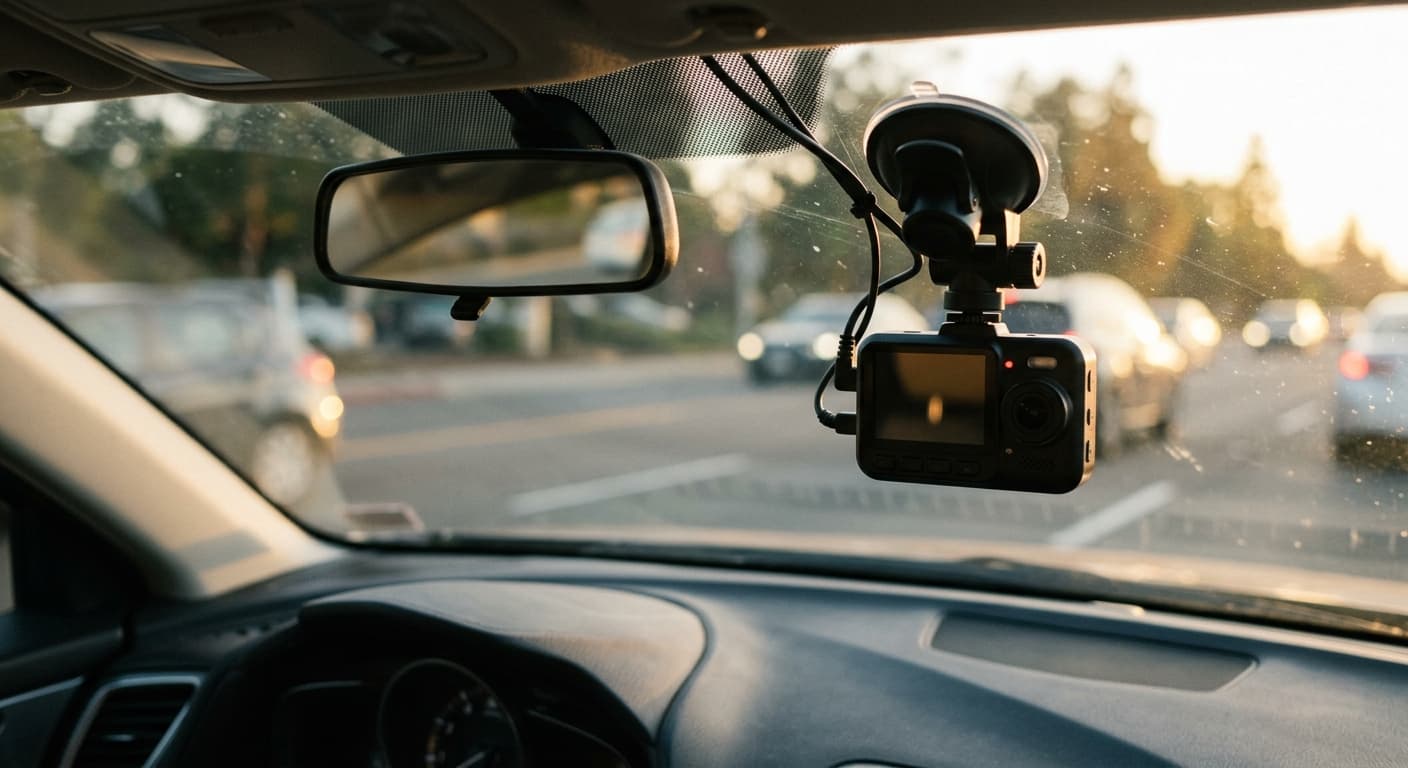
Dashcams are legal in Wisconsin and no state law prohibits their use. Video recorded on public roads is permitted, and under Wis. Stat. 968.31, Wisconsin's one-party consent statute, a driver may record in-vehicle audio of any conversation they are part of. Mount the camera to avoid obstructing the windshield.
Dashcams are legal and widely used in Wisconsin. The state has no specific dashcam statute, so their use is governed by traffic safety laws, the one-party consent wiretapping statute (Wis. Stat. 968.31), and federal regulations.
Are Dashcams Legal in Wisconsin?
Yes. Wisconsin does not prohibit dashcam use. No registration or notification is required.
Windshield Mounting
Wisconsin law (Wis. Stat. 346.88) restricts objects on windshields that obstruct the driver's view. Mount your dashcam behind the rearview mirror or in a corner.
Audio Recording and Consent
One-Party Consent
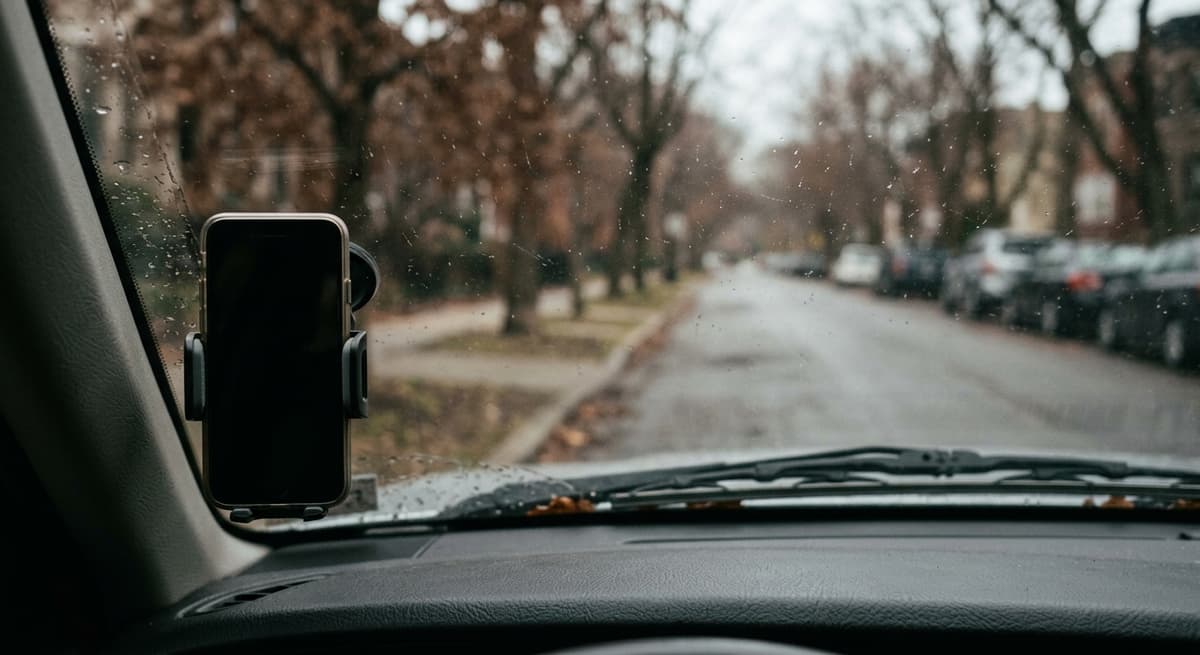
Wisconsin is a one-party consent state under Wis. Stat. 968.31. Your presence in the vehicle satisfies consent for audio recording. You can record passenger conversations and traffic stop audio without informing anyone.
The exception does not apply when recording is for criminal or tortious purposes.
Unattended Recording
If your dashcam runs while you are absent, you are no longer a party. Disable the microphone for parking mode.
Dashcam Footage as Evidence
Modified Comparative Fault
Wisconsin follows a modified comparative fault system under Wis. Stat. 895.045. A plaintiff cannot recover if 51% or more at fault. Dashcam footage is critical for establishing fault percentages.
Admissibility
Footage is admissible in Wisconsin courts when authenticated under the Wisconsin Rules of Evidence as genuine, unaltered, and relevant.
Commercial Use
Fleet operators use dashcams for safety and FMCSA compliance. Rideshare drivers can use dashcams with one-party consent.
Law Enforcement
You have a First Amendment right to record police during traffic stops. Wisconsin's courts have recognized this right.
Penalties
| Violation | Statute | Penalty |
|---|---|---|
| Windshield obstruction | Wis. Stat. 346.88 | Traffic citation |
| Audio recording without consent | Wis. Stat. 968.31 | Class H felony: up to 6 years, $10,000 fine |
Civil damages under Wis. Stat. 968.31(2m) include actual damages, punitive damages, and attorney fees.
More Wisconsin Recording Laws
Audio Recording | Video Recording | Voyeurism Laws | Workplace Recording | Recording Police | Phone Call Recording | Security Cameras | Recording in Public | Landlord-Tenant Recording | Dashcam Laws | School Recording | Medical Recording
Back to Wisconsin Recording Laws
More Wisconsin Recording Topics
More Wisconsin Laws
Frequently Asked Questions
Do I need to tell passengers my dashcam records audio in Wisconsin?
No. Wisconsin one-party consent (Wis. Stat. 968.31) allows recording when you are a party.
Can dashcam footage be used in Wisconsin courts?
Yes. Footage is admissible when authenticated as genuine and relevant.
Where should I mount my dashcam?
Behind the rearview mirror or in a corner. Wis. Stat. 346.88 restricts windshield obstructions.
Can my dashcam record while parked?
Video is fine. Audio when absent could violate wiretapping law. Disable the microphone.
Can police order me to turn off my dashcam?
No. The First Amendment protects recording police in public.
Updates
Fixed two dead statute citation links (the windshield-obstruction rule and the comparative-fault rule) that used the wrong chapter subchapter designator.
Independently fact-checked against the cited primary sources; governing law re-checked for recent changes
Governing law re-checked for recent changes
Governing law re-checked for recent changes
Reviewed and approved by an editor
The Law Behind This Article
This article rests on the statutory provisions below, held in our own legal record and retrieved from the official source. Tap a section to read the operative text.
Wisconsin Statutes, Chapter 968: Commencement Of Criminal Proceedings
§ 968.31Interception and disclosure of wire, electronic or oral communications prohibited.In forcecited in 22 of our articles
(1) Except as otherwise specifically provided in ss. 196.63 or 968.28 to 968.30, whoever commits any of the acts enumerated in this section is guilty of a Class H felony: (a) Intentionally intercepts, attempts to intercept or procures any other person to intercept or attempt to intercept, any wire, electronic or oral communication. (b) Intentionally uses, attempts to use or procures any other person to use or attempt to use any electronic, mechanical or other device to intercept any oral communication. (c) Discloses, or attempts to disclose, to any other person the contents of any wire, electronic or oral communication, knowing or having reason to know that the information was obtained through the interception of a wire, electronic or oral communication in violation of this section or under circumstances constituting violation of this section. (d) Uses, or attempts to use, the contents of any wire, electronic or oral communication, knowing or having reason to know that the information was obtained through the interception of a wire, electronic or oral communication in violation of this section or under circumstances constituting violation of this section.
Official text (excerpt) · last checked 2026-08-31 · Read the full text in our law library · Verify at docs.legis.wisconsin.gov
Cited in 23 court opinions in our collectionLatest citing opinion in our collection: 2026
In the courts (editorial summary, independently checked):State v. Maloney held recordings made with one party's prior consent fall under Section 968.31(2)(b) and (c), and that aiding a police sting is not an "injurious act." State v. Gilmore pointed to 968.31(2m) damages and 968.31(1)(e) penalties, reserving suppression for illegal interceptions.
Opinions citing this section in our collection:
- State v. Maloney (Wisconsin Supreme Court 2005, 281 Wis. 2d 595)✓A homicide suspect's girlfriend let police record her hotel room conversations with him in Las Vegas; the court held the videotapes lawful under 968.31(2)(b) and (c) because she was a consenting party, and that helping a lawful sting is not an injurious act.
- State v. Popenhagen (Wisconsin Supreme Court 2008, 309 Wis. 2d 601)“…Arnold, 51 Wis.2d at 442 , 187 N.W.2d 354 (citing Wis. Stat. § 968.31 (2)(b)). However, in considering all th…”
- State v. Gilmore (Wisconsin Supreme Court 1996, 201 Wis. 2d 820)✓Prosecutors filed a public complaint quoting 27 pages of lawfully wiretapped calls; the court held the unsealed filing violated the surveillance law but refused suppression, pointing to the civil action in 968.31(2m) and the criminal penalty in 968.31(1)(e) as the remedies.
Identified automatically from the court opinions citing this section — not a ranking of which case controls.
Also relied on in: One-Party Consent States: Complete 2026 Guide, Wisconsin Security Camera Laws: Home, Business, and HOA Rules (2026), Wisconsin Video Recording Laws: Surveillance, Filming, and Privacy Rules (2026)
Wisconsin Statutes, Chapter 346: Rules Of The Road
§ 346.88Obstruction of operator’s view or driving mechanism.In forcecited in 4 of our articles
(1) No person shall drive a vehicle when it is so loaded or when there are in the front seat such number of persons, or any persons so situated, as to obstruct the view of the operator to the front or to the sides or as to interfere with the operator having free use of both hands and feet to the operating mechanisms or controls of the vehicle. (2) No passenger in a vehicle shall ride in such a position as to interfere with the operator’s view ahead or to the sides or to interfere with the operator’s control of the operating mechanism of the vehicle. (3) (a) No person shall drive any motor vehicle with any sign, poster or other nontransparent material upon the front windshield, front side wings, side windows in the driver’s compartment or rear window of such vehicle other than a certificate or other sticker issued by order of a governmental agency. Such permitted sticker shall not cover more than 15 square inches of glass surface and shall be placed in the lower left-hand corner of the windshield; the left corner being on the driver’s left when seated behind the wheel.
Official text (excerpt) · last checked 2026-09-08 · Read the full text in our law library · Verify at docs.legis.wisconsin.gov
Cited in 1 court opinions in our collectionLatest citing opinion in our collection: 2015
Opinions citing this section in our collection:
- State v. Richard E. Houghton, Jr. (Wisconsin Supreme Court 2015, 364 Wis. 2d 234)“…pull Houghton over for a violation of Wis. Stat. § 346.88(3)(b) (2011-12),3 "Obstruction of opera…”
Identified automatically from the court opinions citing this section — not a ranking of which case controls.
Also relied on in: Dashboard Camera Legality and Privacy Laws: Is It Illegal to Use Dashcams in North America?, Windshield Mounting Restrictions by State (2026 Guide), Wisconsin Windshield Mounting Laws
Wisconsin Statutes, Chapter 895: Damages, Liability, And Miscellaneous Provisions Regarding Actions In Courts
§ 895.045Contributory negligence.In forcecited in 9 of our articles
(1) Comparative negligence. Contributory negligence does not bar recovery in an action by any person or the person’s legal representative to recover damages for negligence resulting in death or in injury to person or property, if that negligence was not greater than the negligence of the person against whom recovery is sought, but any damages allowed shall be diminished in the proportion to the amount of negligence attributed to the person recovering. The negligence of the plaintiff shall be measured separately against the negligence of each person found to be causally negligent. The liability of each person found to be causally negligent whose percentage of causal negligence is less than 51 percent is limited to the percentage of the total causal negligence attributed to that person. A person found to be causally negligent whose percentage of causal negligence is 51 percent or more shall be jointly and severally liable for the damages allowed. (2) Concerted action. Notwithstanding sub. (1), if 2 or more parties act in accordance with a common scheme or plan, those parties are jointly and severally liable for all damages resulting from that action, except as provided in s.
Official text (excerpt) · last checked 2026-09-08 · Read the full text in our law library · Verify at docs.legis.wisconsin.gov
Cited in 69 court opinions in our collectionLatest citing opinion in our collection: 2024
Opinions citing this section in our collection:
- Industrial Risk Insurers & Quad Graphics, Inc. v. American Engineering Testing, Inc. (Court of Appeals of Wisconsin 2009, 318 Wis. 2d 148)“…g to Leavitt, the policy reasons for the 1995 amendment to Wis. Stat. § 895.045 , which changed the common law on joint…”
- Richards v. Badger Mutual Insurance (Wisconsin Supreme Court 2008, 309 Wis. 2d 541)“…me or plan" that invokes joint and several liability under Wis. Stat. § 895.045 (2) (2005-06). [2] We affirm the court…”
- Fuchsgruber v. Custom Accessories, Inc. (Wisconsin Supreme Court 2001, 244 Wis. 2d 758)“…o the compara *763 tive negligence statute, Wis. Stat. § 895.045 (1) (1999-2000), 1 applies…”
Identified automatically from the court opinions citing this section — not a ranking of which case controls.
Also relied on in: Wisconsin Car Accident Laws: Fault, Insurance, and Your Claim, Medical Malpractice Laws in Wisconsin (2026): Deadlines & Caps, Motorcycle Accident Laws in Wisconsin (2026): Deadlines
Search our full record of US law — 2.1 million sections, every state + federal →
Sources and References
- Wis. Stat. 968.31 - Interception of Communications(docs.legis.wisconsin.gov).gov
- Wis. Stat. 346.88 - Windshield Requirements(docs.legis.wisconsin.gov).gov
- Wis. Stat. 895.045 - Comparative Fault(docs.legis.wisconsin.gov).gov
- FMCSA(fmcsa.dot.gov).gov
- NHTSA(nhtsa.gov).gov