
Massachusetts
Massachusetts Dashcam Laws
Independently fact-checked against primary sources (last audited August 22, 2026). · Reviewed by the RecordingLaw editorial team. · Law checked current as of August 22, 2026. · 4 primary sources cited on this page. How we verify our legal content
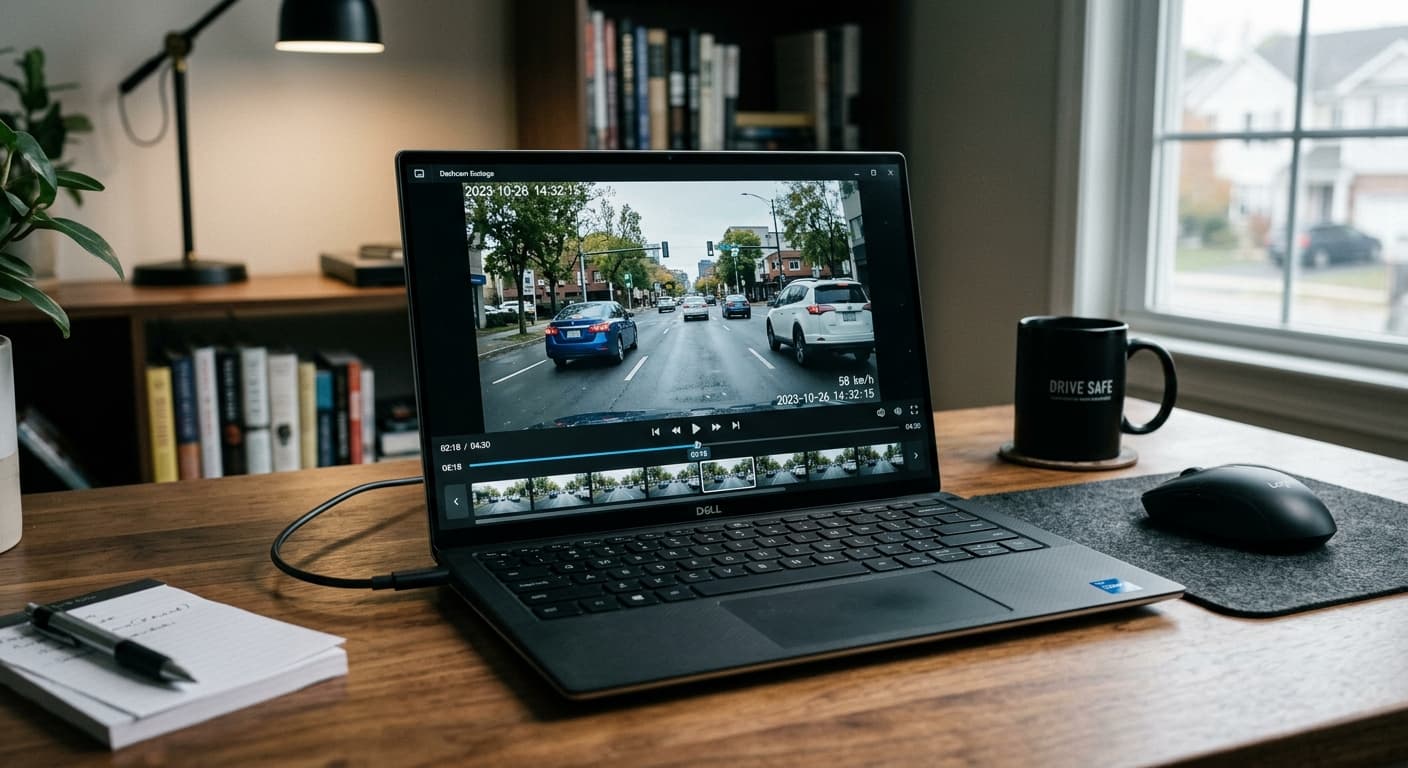
Dashcams are legal in Massachusetts for video recording on public roads. Under Mass. Gen. Laws ch. 272, Section 99, secretly recording audio of in-car conversations is a felony requiring all-party consent. Mount the camera behind the rearview mirror to avoid windshield obstruction violations.
Dashcams are legal in Massachusetts and widely used for documenting traffic incidents, insurance claims, and road conditions. However, the Massachusetts wiretap statute creates a critical legal issue that dashcam users must understand: if your dashcam records audio of conversations inside the vehicle without everyone's knowledge, you may be committing a felony.
Under Mass. Gen. Laws ch. 272, Section 99, secretly recording any oral communication carries up to 5 years in state prison and a $10,000 fine. There is no misdemeanor option. This means a dashcam that captures conversations between the driver and passengers without disclosure can turn a routine commute into a criminal offense.
This guide covers dashcam legality, the audio recording problem, windshield placement rules, using footage as evidence, and special considerations for rideshare drivers.
Dashcam Legality in Massachusetts
The General Rule
Dashboard cameras are legal to own and operate in Massachusetts. There is no state statute that specifically prohibits or regulates dashcams. You can install a dashcam in your vehicle and use it to record:
- Road conditions and traffic
- Accidents and near-misses
- Your own driving for personal review
- Weather events and environmental conditions
The legal complications arise from two separate issues: audio recording and windshield placement.
The Audio Problem
Most modern dashcams come with built-in microphones that are enabled by default. These microphones capture conversations between the driver and any passengers in the vehicle. Under Massachusetts law, this audio recording is illegal if the passengers do not know it is happening.
The solution is straightforward:
- Disable the microphone in your dashcam settings if you do not want to deal with disclosure requirements
- Inform all passengers before driving that the dashcam records audio and video, if you want to keep audio enabled
- Post a small notice in your vehicle stating that audio and video recording is in progress
If you drive alone and there is no passenger whose conversation could be captured, the audio recording raises no wiretap concerns. The statute targets the secret recording of "oral communications," and a driver talking to themselves or singing along to the radio is not the type of communication the statute was designed to protect.
Windshield Placement Rules

Massachusetts Obstruction Law
Massachusetts law restricts what can be placed on vehicle windshields. Under Mass. Gen. Laws ch. 90, Section 9D, signs, posters, stickers, and non-transparent or reflective tinting materials cannot obstruct the driver's view through the windshield or front side windows. The statute does not specifically address mounted electronic equipment like a dashcam, but the same obstruction principle is a useful practical guide to placement.
As a practical recommendation, not a direct requirement of Section 9D, dashcam placement should follow these guidelines:
- Mount the camera behind the rearview mirror where it does not block your view
- Do not mount the camera in the center of the windshield or at eye level
- Keep the camera as small and unobtrusive as possible in terms of its physical footprint on the glass
- Ensure the camera and its mounting hardware do not obstruct your view of the road, traffic signals, or pedestrians
Where to Mount a Dashcam
The safest placement options are:
- Behind the rearview mirror: This is the most common and legally defensible position. The camera sits where the mirror already blocks some of the windshield.
- Lower right corner of the windshield: Some drivers mount cameras here, though care must be taken not to obstruct the view.
- On the dashboard surface: Dash-mounted cameras avoid windshield obstruction entirely, though the viewing angle may be less ideal.
Vehicle Inspection Considerations
Massachusetts requires annual vehicle safety inspections under 540 CMR 4.00. While dashcams are not specifically addressed in the inspection regulations, an inspector could flag a dashcam that significantly obstructs the driver's view as a windshield obstruction violation.
Using Dashcam Footage as Evidence
Traffic Accidents
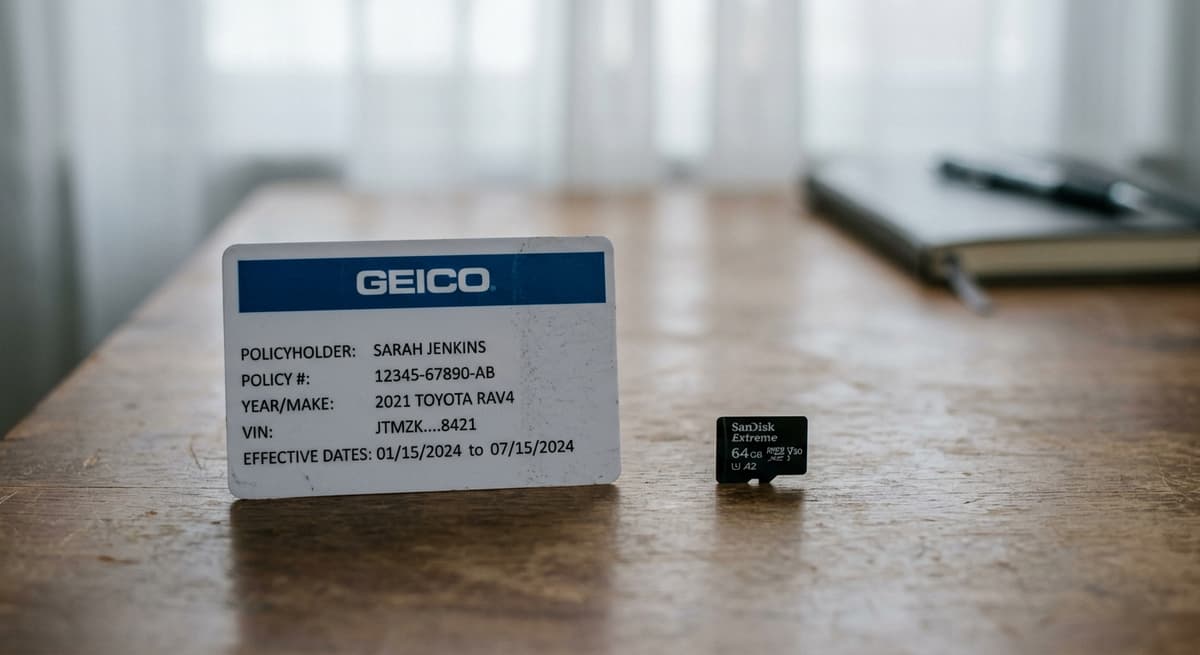
Dashcam footage is valuable evidence in Massachusetts accident cases. Legally obtained footage can show:
- The sequence of events leading to a collision
- Traffic signal status at the time of the accident
- The speed and behavior of other vehicles
- Weather and road conditions
- Whether the other driver was distracted or impaired
Insurance Claims
Massachusetts insurance companies commonly accept dashcam footage when evaluating claims. Footage can:
- Corroborate your account of an accident
- Demonstrate that you were not at fault
- Document hit-and-run incidents where the other driver fled
- Provide evidence of staged accidents or insurance fraud
Admissibility in Court
Dashcam footage is generally admissible in Massachusetts courts when:
- The footage was obtained legally (no secret audio recording issues)
- The footage is authentic and has not been altered
- The footage is relevant to the case
- A witness can testify about the camera's operation and placement
- The chain of custody has been maintained
If the dashcam captured audio without the passengers' knowledge, the video portion may still be admissible while the audio component could be challenged under Section 99. The safest approach is to ensure all recordings are fully legal.
Dashcam Footage and Police Encounters
If you are pulled over by police, your dashcam is already recording the encounter. Under Project Veritas v. Rollins (2020), recording police in public is protected by the First Amendment. Your dashcam footage of a traffic stop is constitutionally protected.
However, if an officer asks whether you are recording:
- You are not required to stop recording
- You may inform the officer that a dashcam is operating
- The officer cannot order you to turn off your dashcam or delete footage
- The officer needs a warrant to search the contents of your dashcam
Rideshare Drivers and Dashcams
Special Considerations for Uber and Lyft Drivers
Rideshare drivers in Massachusetts who use dashcams face heightened legal exposure because they regularly carry passengers who may not know about the recording. The wiretap statute applies to every passenger conversation captured by the dashcam's microphone.
How to Comply
Rideshare drivers should:
- Post a visible notice inside the vehicle stating "Audio and video recording in progress" or similar language
- Verbally inform passengers when they enter the vehicle that a dashcam with audio is operating
- Consider disabling audio to eliminate the disclosure requirement entirely
- Check rideshare platform policies since Uber and Lyft have their own rules about dashcam use
Rideshare Platform Policies
Both Uber and Lyft permit drivers to use dashcams but generally require that drivers follow state and local laws regarding recording. In Massachusetts, this means:
- Drivers must inform passengers about audio recording
- Some drivers choose to disable audio and rely on video-only recording
- Platform-provided in-app recordings follow separate rules from driver-installed dashcams
Commercial Vehicle Dashcams
Fleet and Trucking Companies
Massachusetts companies that install dashcams in fleet vehicles must comply with the wiretap statute for any audio recording. Company policies should:
- Inform all drivers that dashcams are installed and may record audio
- Include dashcam disclosures in employment agreements
- Provide training on when audio recording is active
- Address passengers in company vehicles (clients, coworkers, etc.)
Taxi and Livery Services
Taxi companies and livery services that use dashcams must inform passengers about recording. Many taxis display notices inside the vehicle stating that recording is in progress. This practice satisfies the Massachusetts disclosure requirement because it puts passengers on notice before any conversation is captured.
Dual-Channel and Cabin-Facing Dashcams
Interior-Facing Cameras
Some dashcams include a second camera that faces the vehicle cabin, recording the driver and passengers. These dual-channel systems present additional considerations:
- The interior camera captures clear video of passengers, which raises privacy awareness
- If the interior camera also records audio, all passengers must be informed
- Cabin-facing cameras in commercial vehicles should be disclosed to all employees and passengers
- In personal vehicles, inform any passenger about the interior camera's presence and capabilities
Night Vision and Infrared
Many cabin-facing cameras use infrared or night vision to record in low-light conditions. While the technology does not change the legal analysis, it increases the intrusiveness of the recording because passengers may not realize they are being filmed in detail when the vehicle interior is dark.
Penalties for Illegal Dashcam Recording
Criminal Penalties for Audio Violations
| Offense | Maximum Prison Term | Maximum Fine |
|---|---|---|
| Dashcam secretly recording passenger conversations | 5 years (state prison) | $10,000 |
| Disclosing illegally recorded dashcam audio | 2 years (house of correction) | $5,000 |
Civil Liability
Passengers whose conversations are secretly recorded by a dashcam can pursue civil damages:
- $100 per day of violation or $1,000 minimum under Section 99 Q
- Actual damages if they exceed the statutory amount
- Reasonable attorney fees and court costs
Windshield Obstruction Penalties
Violating Mass. Gen. Laws ch. 90, Section 9D by improperly mounting a dashcam can result in a traffic citation. The fine is typically modest compared to wiretap penalties, but the citation may also affect your driving record.
Massachusetts Recording Laws by Topic
Phone Call Recording | Audio Recording | Video Recording | Workplace Recording | Recording Police | Security Cameras | Recording in Public | Landlord-Tenant | Dashcam Laws | Schools | Medical Recording | Voyeurism & Hidden Cameras
Back to Massachusetts Recording Laws
More Massachusetts Recording Topics
More Massachusetts Laws
Frequently Asked Questions
Are dashcams legal in Massachusetts?
Yes. Dashcams are legal in Massachusetts. You can use a dashcam to record road conditions, traffic, and accidents. The legal issue arises when the dashcam records audio of conversations inside the vehicle without the knowledge of all passengers. Secret audio recording is a felony under Section 99.
Do I need to disable audio on my dashcam in Massachusetts?
You should either disable audio or inform all passengers that audio recording is occurring. If you drive alone, audio is not a concern. If you carry passengers, the safest option is to disable the microphone or post a visible notice in your vehicle and verbally inform passengers.
Can dashcam footage be used as evidence in Massachusetts?
Yes. Legally obtained dashcam footage is generally admissible in Massachusetts courts and accepted by insurance companies. The footage must be authentic, relevant, and obtained without violating the wiretap statute. If the audio was recorded secretly, the video may still be usable while the audio could be challenged.
Where should I mount my dashcam in Massachusetts?
Mount the camera behind the rearview mirror or in another position that does not obstruct your view of the road. Massachusetts law prohibits non-transparent materials that block the driver's view through the windshield. A camera mounted at eye level or in the center of the windshield could violate this rule.
Do Uber and Lyft drivers need to tell passengers about dashcams in Massachusetts?
Yes, if the dashcam records audio. Rideshare drivers must inform passengers that audio recording is occurring. The simplest approach is to post a visible notice in the vehicle and disable audio recording. If audio is enabled, verbal disclosure to each passenger is the safest practice.
Updates
Scoped the 'no misdemeanor option' claim to the core secret-recording offense, corrected the disclosure-offense penalty from 2.5 to 2 years, and clarified that the windshield-obstruction statute addresses signage and tinting rather than dashcam mounting directly.
Independently fact-checked against the cited primary sources; governing law re-checked for recent changes
Reviewed and approved by an editor
The Law Behind This Article
This article rests on the statutory provisions below, held in our own legal record and retrieved from the official source. Tap a section to read the operative text.
Massachusetts General Laws, Chapter 272
§ 99Interception of wire and oral communicationsIn forcecited in 19 of our articles
Section 99. Interception of wire and oral communications.— A. Preamble. The general court finds that organized crime exists within the commonwealth and that the increasing activities of organized crime constitute a grave danger to the public welfare and safety. Organized crime, as it exists in the commonwealth today, consists of a continuing conspiracy among highly organized and disciplined groups to engage in supplying illegal goods and services. In supplying these goods and services organized crime commits unlawful acts and employs brutal and violent tactics. Organized crime is infiltrating legitimate business activities and depriving honest businessmen of the right to make a living. The general court further finds that because organized crime carries on its activities through layers of insulation and behind a wall of secrecy, government has been unsuccessful in curtailing and eliminating it. Normal investigative procedures are not effective in the investigation of illegal acts committed by organized crime.
Official text (excerpt) · last checked 2026-08-31 · Read the full text in our law library · Verify at malegislature.gov
Cited in 271 court opinions in our collectionLatest citing opinion in our collection: 2026
In the courts (editorial summary, independently checked):Commonwealth v. Blood (1987) read Section 99 as generally proscribing secret recording of oral communications without all parties' consent, and suppressed under art. 14 a warrantless police recording made with one party's consent. Commonwealth v. Vitello (1975) held Section 99 substantially complies with federal Title III.
Opinions citing this section in our collection:
- Commonwealth v. Vitello (Massachusetts Supreme Judicial Court 1975, 367 Mass. 224)✓In a gaming prosecution built on wiretapped phone calls, the SJC gave chapter 272 section 99 its first full review and held the state wiretap statute substantially complies with federal Title III and that the warrants issued under it met both standards.
- Commonwealth v. Blood (Massachusetts Supreme Judicial Court 1987, 400 Mass. 61)✓Police wired an informant who recorded conversations in private homes about a planned break-in; the SJC held the recordings fell within section 99's one-party-consent exception but that article 14 nonetheless required a warrant, and reversed the convictions.
- Commonwealth v. D'Amour (Massachusetts Supreme Judicial Court 1999, 428 Mass. 725)✓The SJC upheld a section 99 wiretap of a widow suspected of arranging her husband's murder for insurance money, holding the district attorney's written designation of an assistant satisfied Vitello and that probable cause supported the organized crime connection.
Identified automatically from the court opinions citing this section — not a ranking of which case controls.
Also relied on in: Massachusetts Recording Laws (2026): Two-Party Consent Rules, Massachusetts Landlord-Tenant Recording Laws, Massachusetts Nursing Home Camera Laws: All-Party Consent Risks
Massachusetts General Laws, Chapter 90
§ 9DWindshields and windows obscured by nontransparent materialsIn forcecited in 3 of our articles
Section 9D. No person shall operate any motor vehicle upon any public way or upon any way to which the public shall have the right of access with any of the following affixed thereto: (1) a sign, poster or sticker on the front windshield, the side windows immediately adjacent to the operator's seat and the front passenger seat, the side windows immediately to the rear of the operator's seat and the front passenger seat and the rear window in such a manner so as to obstruct, impede or distort the vision of the operator. (2) nontransparent or sunscreen material, window application, reflective film or nonreflective film used in any way to cover or treat the front windshield, the side windows immediately adjacent to the right and left of the operator's seat, the side windows immediately to the rear of the operator's seat and the front passenger seat and the rear window, so as to make such windshield and said window glass areas in any way nontransparent or obscured from either the interior or exterior thereof.
Official text (excerpt) · last checked 2026-09-08 · Read the full text in our law library · Verify at malegislature.gov
Cited in 12 court opinions in our collectionLatest citing opinion in our collection: 2026
In the courts (editorial summary, independently checked):Commonwealth v. Baez (1999) held that a stop for a suspected section 9D violation is judged by whether the officer reasonably suspected from visual observation that the tint exceeded the limit, with no meter reading required first. Commonwealth v. Cordero (2017) held detention had to end once that investigation was complete.
Opinions citing this section in our collection:
- Commonwealth v. Cordero (Massachusetts Supreme Judicial Court 2017, 477 Mass. 237)✓A trooper stopped a car for broken lights and illegal tint and held the driver for a drug inquiry after testing the tint; the court held that once the tint and lights investigation ended with no reasonable suspicion, the driver had to be allowed to drive away.
- Commonwealth v. Baez (Massachusetts Appeals Court 1999, 47 Mass. App. Ct. 115)✓A trooper stopped a car whose side windows looked darker than the legal limit and later measured them at 31 percent light transmission; the court held such a stop is lawful if the officer reasonably suspected from visual observation that the tint exceeded the limit.
- Commonwealth v. Washington (Massachusetts Supreme Judicial Court 2011, 459 Mass. 32)“…of window followed traffic stop for suspected violation of G. L. c. 90, § 9D). In this limited sense, issuance of a…”
Identified automatically from the court opinions citing this section — not a ranking of which case controls.
Also relied on in: Massachusetts Windshield Mounting Laws (2026 Guide), Massachusetts Window Tint Laws (2026): Legal VLT Limits
Search our full record of US law — 2.1 million sections, every state + federal →
Sources and References
- Mass. Gen. Laws ch. 272, Section 99 - Wiretapping Statute(malegislature.gov).gov
- Mass. Gen. Laws ch. 90, Section 9D - Windshield Obstruction(malegislature.gov).gov
- 540 CMR 4.00 - Motor Vehicle Inspection Stations(mass.gov).gov
- Massachusetts Registry of Motor Vehicles(mass.gov).gov