
Massachusetts
Massachusetts Windshield Mounting Laws (2026 Guide)
Independently fact-checked against primary sources (last audited August 17, 2026). · Reviewed by the RecordingLaw editorial team. · Law checked current as of August 17, 2026. · 10 primary sources cited on this page. How we verify our legal content
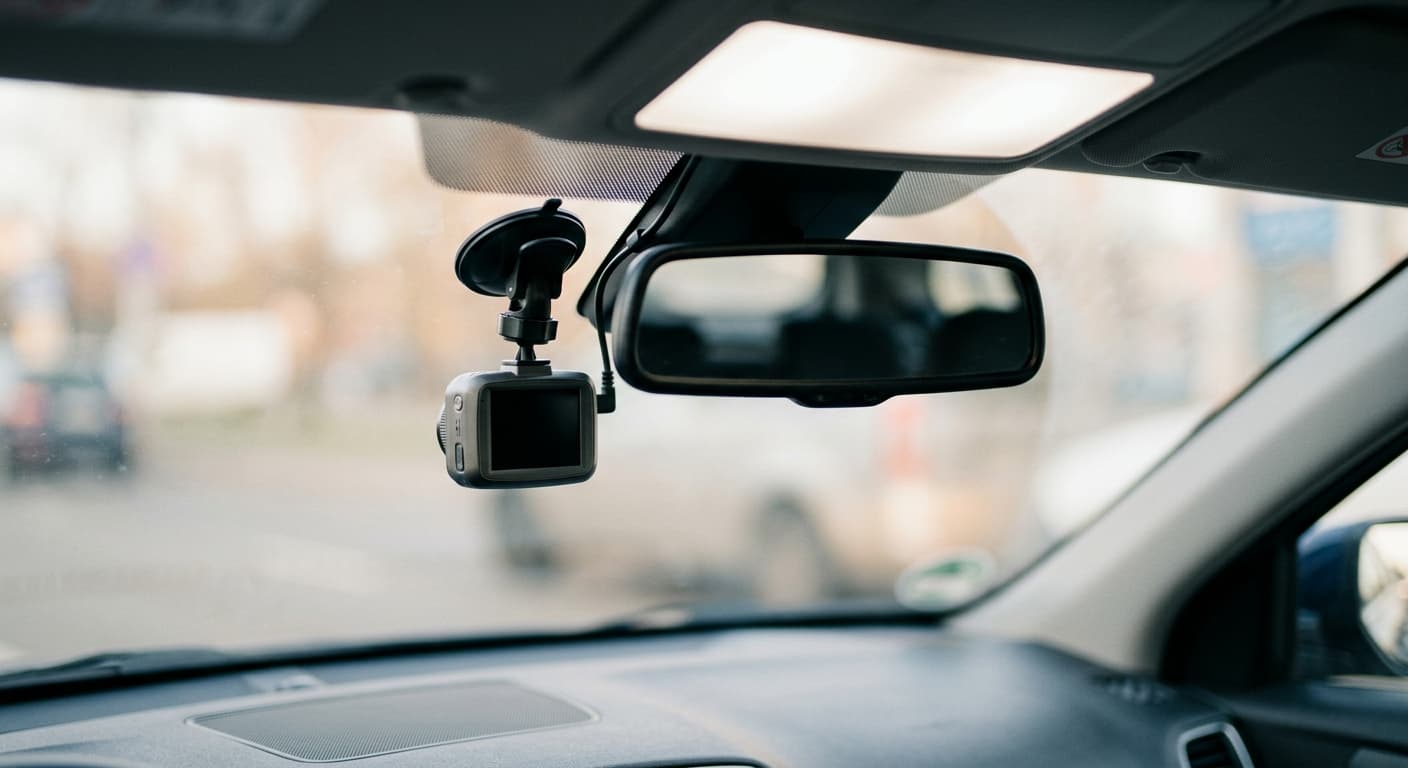
Massachusetts allows dashcam, GPS, and phone mounts on the windshield as long as they do not interfere with or impede the proper operation of the vehicle under MGL Chapter 90, Section 13, and do not obstruct the driver's view at the annual safety inspection under 540 CMR 4.04. MGL Chapter 90, Section 9D reaches something narrower: signs, posters, and stickers that obstruct the operator's vision, and window films and other nontransparent treatments. The state hands-free law (MGL c. 90, Section 13B) explicitly approves mounts on the windshield, dashboard, or center console for navigation use.
Massachusetts regulates what drivers can mount on or attach to their windshield through two primary statutes. MGL Chapter 90, Section 9D governs nontransparent materials and window obstructions. MGL Chapter 90, Section 13B addresses electronic device mounting under the state's hands-free driving law.
Together, these laws create a framework that allows mounted GPS units, phones, and toll transponders while prohibiting anything that blocks the driver's line of sight.
Massachusetts Windshield Obstruction Law (MGL c. 90, Section 9D)
Section 9D of Chapter 90 makes it unlawful to operate a motor vehicle on any public way with "any sign, poster, or sticker" on the front windshield, front side windows, rear side windows, or rear window if the item obstructs, impedes, or distorts the driver's vision.
The law also prohibits nontransparent materials, sunscreen material, window applications, reflective film, and nonreflective film that make the windshield or window glass nontransparent or obscured from either the interior or exterior of the vehicle.
Those two categories are the whole of Section 9D. A suction cup or adhesive mount holding a camera, phone, or GPS unit is neither a sign, poster, or sticker nor a film or window treatment, so Section 9D does not reach mounted hardware. Section 13 and the annual inspection rules do.
This statute applies to all motor vehicles driven on Massachusetts public roads and any way to which the public has the right of access.
What Section 9D Covers
The prohibition under Section 9D extends to the following areas of the vehicle:
- Front windshield
- Side windows immediately adjacent to the driver's seat and front passenger seat
- Side windows immediately behind the driver's seat and front passenger seat
- Rear window
The key legal standard is whether the item "obstructs, impedes, or distorts" the operator's vision. Items that do not interfere with the driver's view are not automatically prohibited.
Impeded Operation Law (MGL c. 90, Section 13)
MGL Chapter 90, Section 13 provides a broader rule. No person operating a motor vehicle shall permit anything on or in the vehicle, or on their person, that may "interfere with or impede the proper operation of the vehicle or any equipment by which the vehicle is operated or controlled."
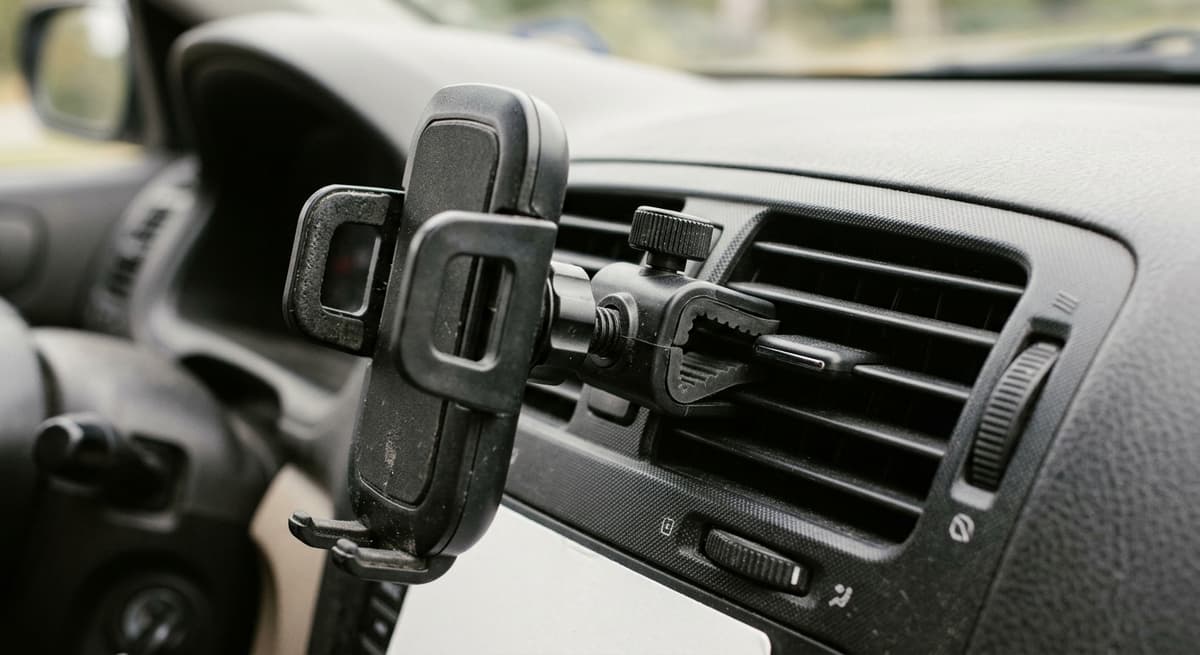
This statute is the operative rule for windshield-mounted hardware, because such items do not fall under Section 9D's categories of signs, posters, or stickers and window films. Section 13 itself sets no penalty, so the Chapter 90 default in Section 20 applies: a fine of not more than $35 for a first offense, not less than $35 nor more than $75 for a second offense, and not less than $75 nor more than $150 for subsequent offenses committed during any 12-month period.
GPS and Phone Mounts
Massachusetts explicitly permits mounting GPS devices and phones on the windshield under the state's hands-free law (MGL c. 90, Section 13B), which took effect on February 23, 2020.
Section 13B states that a driver may "view a map generated by a navigation system or application on a mobile electronic device that is mounted on or affixed to a vehicle's windshield, dashboard or center console in a manner that does not impede the operation of the motor vehicle."
Approved Mounting Locations
The hands-free law specifies three approved locations for electronic device mounts:
- Windshield
- Dashboard
- Center console
The device must be mounted or affixed (not hand-held) and positioned so it does not impede vehicle operation. The safest placement is the lower corner of the windshield or on the dashboard, where it stays out of the driver's primary line of sight.
What You Can and Cannot Do With a Mounted Device
Even with a properly mounted device, the hands-free law limits what drivers can do:
- Allowed: View a navigation map on a mounted device
- Allowed: Use voice commands or hands-free mode to make calls
- Allowed: Touch the device once to activate hands-free mode
- Not allowed: Hold or support the device in your hand
- Not allowed: Read or send text messages, emails, or social media
- Not allowed: Browse the internet or watch video
- Not allowed: Use any app other than navigation while driving
Drivers under 18 face stricter rules. Under MGL c. 90, Section 8M, no person under 18 may hold in their hand or use a mobile telephone, hands-free mobile telephone, or mobile electronic device while operating a motor vehicle on any public way. This includes mounted devices.
Dashcam Mounting Rules
Massachusetts does not have a specific statute addressing dashcams. A windshield-mounted dashcam is not a sign, poster, or sticker and is not a window film, so Section 9D does not reach it. The rules that do apply are Section 13, which bars anything that interferes with or impedes the proper operation of the vehicle, and the annual safety inspection standard in 540 CMR 4.04, which requires rejection when an item attached to the windshield obstructs the operator's vision.
The safest placement for a dashcam is behind the rearview mirror, where it stays out of the driver's direct sightline. A dashcam mounted in the center of the windshield or in a location that blocks the driver's view could draw a citation under Section 13 and a rejection sticker at the annual inspection.
When selecting a dashcam mount, choose a compact unit that sits behind the mirror housing. Suction cup mounts placed elsewhere on the windshield are legal in Massachusetts, but placement matters for enforcement purposes.
Toll Transponders and E-ZPass
E-ZPass transponders and the newer E-ZPass stickers are permitted on Massachusetts windshields. These devices are small enough that they do not obstruct the driver's view under normal circumstances.
Massachusetts has been transitioning from traditional E-ZPass transponder boxes to RFID stickers that adhere directly to the inside of the windshield. The sticker format is smaller and creates even less potential for obstruction.
For vehicles with metallic-coated windshields that interfere with transponder signals, E-ZPass MA offers bumper-mounted transponders as an alternative.
Windshield Tinting Restrictions
Section 9D sets specific standards for window tinting on Massachusetts vehicles.
Front Windshield
- Nontransparent or sunscreen material is prohibited on the front windshield
- Transparent material is allowed on the uppermost 6 inches of the windshield
- The tint strip must not encroach on the driver's direct forward viewing area as defined by applicable Federal Motor Vehicle Safety Standards
Side and Rear Windows
- Side windows and rear windows must allow at least 35% visible light transmittance (VLT)
- Total visible light reflectance must not exceed 35%
- On the rear window, that 35% exemption is available only if the vehicle is equipped with two outside mirrors, one on each side, adjusted so the driver has a clear view of the highway behind the vehicle. Adding mirrors does not authorize film darker than 35% VLT anywhere on the vehicle
Tinting Standards Table
| Window Location | Minimum VLT | Maximum Reflectance | Notes |
|---|---|---|---|
| Front windshield | No tint below AS-1 line | N/A | Top 6 inches only |
| Front side windows | 35% | 35% | Adjacent to driver and passenger |
| Rear side windows | 35% | 35% | Behind driver and passenger |
| Rear window | 35% | 35% | Two outside mirrors required to use the 35% exemption |
The Massachusetts Registry of Motor Vehicles (RMV) establishes the rules and regulations for measuring reflectance and transmittance. Annual vehicle inspections include a tint check, and windows that fail the 35% VLT standard will cause the vehicle to fail inspection.
Exemptions
Section 9D's exemption list is closed at items (1) through (8). The first two rows below are not statutory exemptions. They describe items that simply do not obstruct the operator's vision, so the Section 9D prohibition on signs, posters, and stickers never applies to them in the first place.
| Exemption | Authority |
|---|---|
| Inspection stickers and other law-required certificates in their designated position | Not a listed exemption; does not obstruct vision, so the Section 9D sign/poster/sticker prohibition does not apply |
| E-ZPass transponders and RFID stickers | Not a listed exemption; does not obstruct vision, so the Section 9D sign/poster/sticker prohibition does not apply |
| Transparent tint strip on top 6 inches of windshield | MGL c. 90, Section 9D(5) |
| GPS/phone mounts on windshield, dashboard, or center console | MGL c. 90, Section 13B |
| Out-of-state registered vehicles | MGL c. 90, Section 9D(6) |
| Medical exemption for light sensitivity | MGL c. 90, Section 9D(8); RMV Medical Advisory Board |
| Law enforcement, licensed watch guard or patrol, and college, university or hospital police vehicles, only while using a K-9 team and only if the vehicle has two outside mirrors | MGL c. 90, Section 9D(3) |
| Factory-installed window glazing meeting 49 CFR 571.205 | MGL c. 90, Section 9D, exemption (1) |
A marked cruiser without a K-9 team on board is not exempt under Section 9D(3). The exemption is written around K-9 units and requires the two outside mirrors as a condition.
Medical Exemptions
Massachusetts allows a tinted glass waiver for drivers with documented medical conditions that cause light sensitivity or photosensitivity. To apply:
- Submit a written application to the RMV Medical Advisory Board
- Include a written attestation from a physician licensed to practice in Massachusetts
- The physician must confirm the applicant is light-sensitive or photosensitive
- If approved, the RMV issues a compliance sticker to affix to the side window next to the driver
The medical exemption covers side windows and the rear window only. The front windshield cannot be tinted below the AS-1 line (top 6 inches) even with a medical waiver.
Penalties for Windshield Violations
Massachusetts assigns different penalties depending on the specific statute violated.
Section 9D Violations (Windshield Obstruction and Tinting)
| Offense | Fine | Additional Consequence |
|---|---|---|
| First offense | Up to $250 | None |
| Second offense | Up to $250 | None |
| Third or subsequent offense | Up to $250 | License suspension up to 90 days |
Section 13 Violations (Impeded Operation)
Section 13 carries no penalty of its own, so the Chapter 90 default in Section 20 governs.
| Offense | Fine |
|---|---|
| First offense | Not more than $35 |
| Second offense | $35 to $75 |
| Subsequent offense within a 12-month period | $75 to $150 |
Section 13B Violations (Hands-Free Law)
| Offense | Fine | Additional Consequence |
|---|---|---|
| First offense | $100 | None |
| Second offense | $250 | Mandatory distracted driving program |
| Third or subsequent offense | $500 | Mandatory distracted driving program |
A second or subsequent violation of Section 13B also requires the driver to complete a program approved by the RMV that encourages a change in driver behavior and attitude about distracted driving.
Vehicle Inspection Failure
Windshield obstructions and illegal tinting can cause a vehicle to fail its annual safety inspection under 540 CMR 4.04. Items attached to the windshield that obstruct the driver's vision will result in a rejection sticker. The vehicle owner has 60 days to correct the deficiency and pass a re-inspection.
The Hands-Free Law and Windshield Mounts
The Massachusetts hands-free law, signed by Governor Baker on November 25, 2019 and effective February 23, 2020, fundamentally changed how drivers interact with electronic devices.
Before the hands-free law, there was no explicit authorization for mounting devices on the windshield. The 2020 law created a clear legal framework by specifying that mounted navigation devices are permitted.
The law was passed as Acts of 2019, Chapter 122, which amended several sections of Chapter 90 including Sections 8M, 12A, 13, and 13B.
Emergency Exception
The hands-free law includes an affirmative defense for emergency use. Evidence that a mobile electronic device was used in response to an emergency is a valid defense against a Section 13B violation. However, this defense must be raised in court; it does not prevent a citation from being issued at the time of the stop.
Parked Vehicle Exception
A driver is not considered to be "operating" a motor vehicle under Section 13B if the vehicle is stationary and not located in a part of the public way intended for travel by a motor vehicle or bicycle. Drivers can use their phone normally when legally parked.
Recent Changes and Updates
No amendments to Section 9D or Section 13B were enacted during the 2025 legislative session. The core windshield obstruction and hands-free device laws remain as amended by the 2019 Acts, Chapter 122.
Massachusetts has been phasing in E-ZPass RFID stickers to replace traditional transponder boxes. New E-ZPass accounts receive the sticker format, which is smaller and adheres directly to the windshield glass. Existing transponder holders can continue using their current devices.
More Massachusetts Laws
Frequently Asked Questions
Can I mount a GPS or phone on my windshield in Massachusetts?
Yes. Under MGL Chapter 90, Section 13B (the hands-free law), drivers may mount a mobile electronic device on the windshield, dashboard, or center console. The device must be affixed in a manner that does not impede vehicle operation. You may view a navigation map on the mounted device while driving, but you cannot read texts, browse apps, or watch video.
Is it legal to use a dashcam in Massachusetts?
Yes. Massachusetts does not have a specific dashcam statute. A dashcam mount is not a sign, poster, sticker, or window film, so Section 9D does not reach it. What applies is Section 13, which bars anything that interferes with or impedes the proper operation of the vehicle, and the annual inspection standard in 540 CMR 4.04, which requires rejection when an item attached to the windshield obstructs the operator's vision. The safest placement is behind the rearview mirror.
What is the fine for a windshield obstruction in Massachusetts?
Under Section 9D, the fine for a windshield obstruction violation is up to $250. A third or subsequent conviction can result in a license suspension of up to 90 days. Section 13 sets no fine of its own, so an impeded operation citation falls under the Chapter 90 default in Section 20: not more than $35 for a first offense, $35 to $75 for a second, and $75 to $150 for subsequent offenses within a 12-month period.
Can I get a medical exemption for darker window tint in Massachusetts?
Yes. Drivers with documented light sensitivity can apply for a tinted glass waiver through the RMV Medical Advisory Board. A licensed Massachusetts physician must provide written attestation of the condition. The exemption covers side and rear windows only. The front windshield cannot be tinted below the top 6 inches even with a medical waiver.
Will illegal window tint cause my car to fail inspection in Massachusetts?
Yes. Massachusetts requires annual vehicle safety inspections under 540 CMR 4.04. Inspectors check window tint with a meter. Any window darker than 35% VLT (or an illegally tinted windshield) will cause the vehicle to fail. You will receive a rejection sticker and have 60 days to fix the issue and pass re-inspection.
Updates
Corrected the penalty for an impeded operation citation (Section 13 carries no fine of its own, so the Chapter 90 default in Section 20 applies), narrowed the police and inspection-sticker exemption rows to what Section 9D actually says, fixed an inverted rear-window tint rule, and clarified that windshield mounts are governed by Section 13 and the annual inspection standard rather than Section 9D.
Independently fact-checked against the cited primary sources; governing law re-checked for recent changes
Reviewed and approved by an editor
The Law Behind This Article
This article rests on the statutory provisions below, held in our own legal record and retrieved from the official source. Tap a section to read the operative text.
Massachusetts General Laws, Chapter 90
§ 9DWindshields and windows obscured by nontransparent materialsIn forcecited in 3 of our articles
Section 9D. No person shall operate any motor vehicle upon any public way or upon any way to which the public shall have the right of access with any of the following affixed thereto: (1) a sign, poster or sticker on the front windshield, the side windows immediately adjacent to the operator's seat and the front passenger seat, the side windows immediately to the rear of the operator's seat and the front passenger seat and the rear window in such a manner so as to obstruct, impede or distort the vision of the operator. (2) nontransparent or sunscreen material, window application, reflective film or nonreflective film used in any way to cover or treat the front windshield, the side windows immediately adjacent to the right and left of the operator's seat, the side windows immediately to the rear of the operator's seat and the front passenger seat and the rear window, so as to make such windshield and said window glass areas in any way nontransparent or obscured from either the interior or exterior thereof.
Official text (excerpt) · last checked 2026-09-08 · Read the full text in our law library · Verify at malegislature.gov
Cited in 12 court opinions in our collectionLatest citing opinion in our collection: 2026
In the courts (editorial summary, independently checked):Commonwealth v. Baez (1999) held that a stop for a suspected section 9D violation is judged by whether the officer reasonably suspected from visual observation that the tint exceeded the limit, with no meter reading required first. Commonwealth v. Cordero (2017) held detention had to end once that investigation was complete.
Opinions citing this section in our collection:
- Commonwealth v. Cordero (Massachusetts Supreme Judicial Court 2017, 477 Mass. 237)✓A trooper stopped a car for broken lights and illegal tint and held the driver for a drug inquiry after testing the tint; the court held that once the tint and lights investigation ended with no reasonable suspicion, the driver had to be allowed to drive away.
- Commonwealth v. Baez (Massachusetts Appeals Court 1999, 47 Mass. App. Ct. 115)✓A trooper stopped a car whose side windows looked darker than the legal limit and later measured them at 31 percent light transmission; the court held such a stop is lawful if the officer reasonably suspected from visual observation that the tint exceeded the limit.
- Commonwealth v. Washington (Massachusetts Supreme Judicial Court 2011, 459 Mass. 32)“…of window followed traffic stop for suspected violation of G. L. c. 90, § 9D). In this limited sense, issuance of a…”
Identified automatically from the court opinions citing this section — not a ranking of which case controls.
Also relied on in: Massachusetts Dashcam Laws, Massachusetts Window Tint Laws (2026): Legal VLT Limits
Search our full record of US law — 2.1 million sections, every state + federal →
Sources and References
- MGL Chapter 90, Section 9D - Windshields and Windows Obscured by Nontransparent Materials(malegislature.gov).gov
- MGL Chapter 90, Section 13B - Electronic Device Use While Driving(malegislature.gov).gov
- MGL Chapter 90, Section 13 - Safety Precautions for Proper Operation(malegislature.gov).gov
- Acts of 2019, Chapter 122 - Massachusetts Hands-Free Driving Law(malegislature.gov).gov
- Massachusetts Hands-Free Law Overview(mass.gov).gov
- Governor Baker Signs Hands-Free Device Legislation(mass.gov).gov
- Apply for a Tinted Glass Waiver - Massachusetts RMV(mass.gov).gov
- MGL Chapter 90, Section 8M - Junior Operator Mobile Device Restrictions(malegislature.gov).gov
- EZDriveMA - Massachusetts Toll Information(mass.gov).gov
- 540 CMR 4.00 - Annual Vehicle Safety Inspection Regulations(mass.gov).gov
- 540 CMR 4.04 - Procedures for Inspection of Non-commercial Motor Vehicles(law.cornell.edu)
- MGL Chapter 90, Section 20 - Default Penalties for Chapter 90 Violations(malegislature.gov)