
Massachusetts
Massachusetts Landlord-Tenant Recording Laws
Independently fact-checked against primary sources (last audited August 22, 2026). · Reviewed by the RecordingLaw editorial team. · Law checked current as of August 22, 2026. · 5 primary sources cited on this page. How we verify our legal content
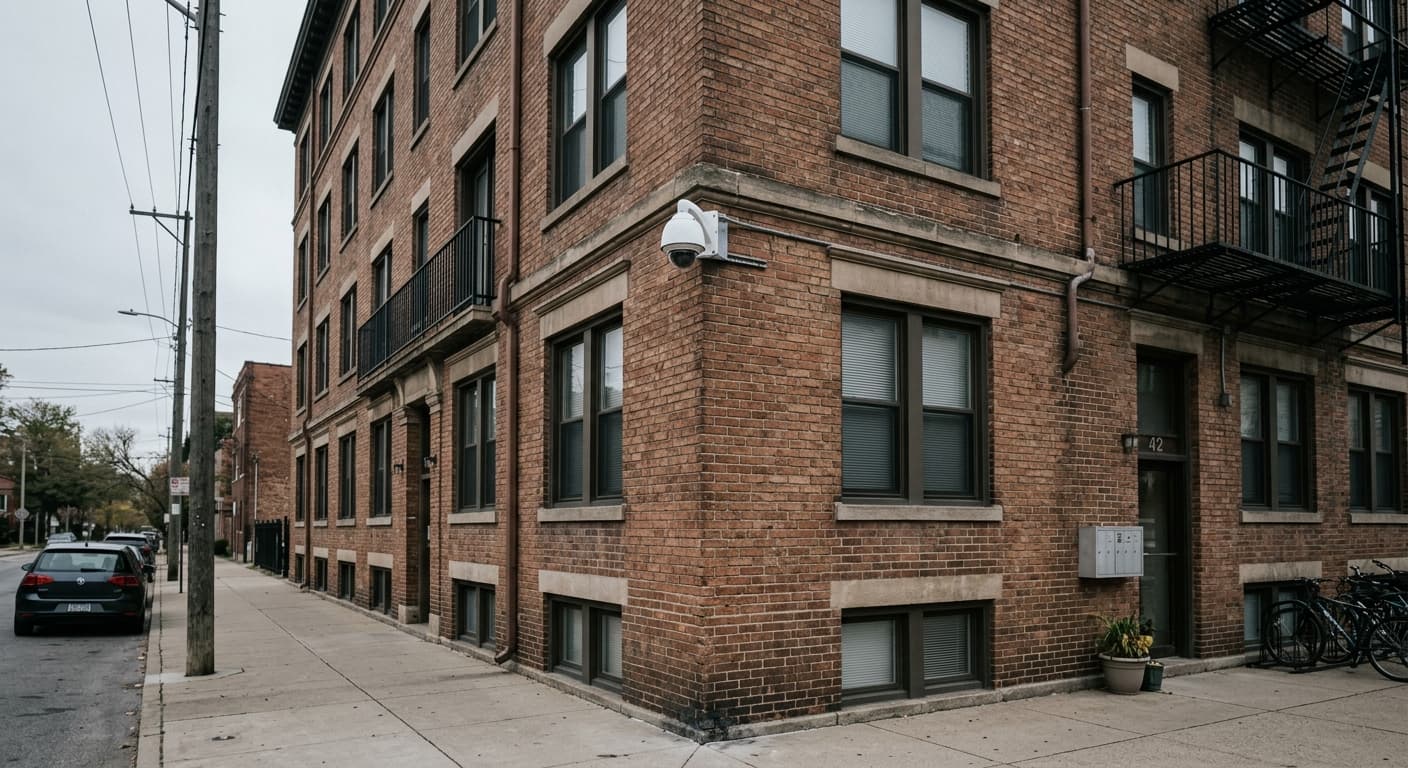
Massachusetts applies all-party consent to landlord-tenant interactions under Mass. Gen. Laws ch. 272, Section 99. Neither landlords nor tenants may secretly record a conversation, and doing so is a felony. Landlords cannot place hidden cameras inside a rental unit.
Landlord-tenant disputes in Massachusetts often lead both sides to consider recording interactions for evidence. The problem is that Massachusetts has one of the strictest recording laws in the country. Under Mass. Gen. Laws ch. 272, Section 99, secretly recording any conversation is a felony carrying up to 5 years in state prison and a $10,000 fine. There is no misdemeanor option. This applies equally to tenants recording landlords and landlords recording tenants.
This guide covers the rules for recording in rental properties, security camera placement, tenant and landlord rights, and how to legally document housing disputes in Massachusetts.
Recording Conversations Between Landlords and Tenants
The Core Rule
Neither landlords nor tenants can secretly record conversations with each other. The Massachusetts wiretap statute makes no exception for housing disputes, maintenance disagreements, or lease negotiations. If you want to record a conversation with your landlord or tenant, you must tell them before the conversation begins.
How Tenants Can Legally Record
If you are a tenant who wants to document interactions with your landlord:
- Announce the recording before any substantive conversation. Say something like "I am going to record this conversation."
- Place the recording device in plain view so the landlord can see it.
- Record from the beginning of the conversation. Do not start recording partway through and then announce it later.
- The landlord does not need to agree. Massachusetts law targets secrecy, not consent. If the landlord knows about the recording, it is legal even if the landlord objects.
If the landlord says "I do not want to be recorded" and leaves, you have not violated the law. The landlord chose to end the conversation. If the landlord stays and continues talking despite knowing about the recording, the statute is satisfied.
How Landlords Can Legally Record
Landlords who want to record interactions with tenants follow the same rules:
- Disclose the recording before any conversation begins
- Keep recording equipment visible
- Document the disclosure in your records
- Never use hidden recording devices during inspections, maintenance visits, or lease discussions
Common Scenarios
Legal: A tenant tells the landlord "I am recording this" before discussing a maintenance complaint. The landlord continues the conversation. The recording is lawful.
Illegal: A tenant hides a phone in a pocket to secretly record the landlord during an apartment inspection. This is a felony regardless of the tenant's reasons.
Legal: A landlord calls a tenant and says "I am recording this call about your lease renewal." The tenant stays on the line.
Illegal: A landlord installs a hidden audio recorder in a tenant's apartment to monitor complaints about building conditions. This is a felony and also violates tenant privacy rights.
Security Cameras in Rental Properties

Landlord-Installed Cameras
Massachusetts landlords may install security cameras in rental properties under specific conditions:
Permitted locations (with signage):
- Building entrances and exits
- Lobbies and common hallways
- Parking garages and lots
- Laundry rooms (visible cameras, no audio)
- Exterior areas of the property
Prohibited locations (always illegal):
- Inside individual tenant apartments or units
- On balconies or patios assigned to specific units
- Inside bathrooms or restrooms
- In areas where tenants undress or engage in private activities
- Any location where a hidden camera captures audio
Audio on Common Area Cameras
If a landlord installs security cameras with audio recording capability in common areas, Section 99 requires that all persons whose conversations may be captured know about the recording. Landlords must:
- Post visible signage specifically noting that audio and video recording is in progress
- Include camera and recording disclosures in lease agreements
- Ensure signage is posted at every entrance to monitored areas
- Disable audio on cameras in areas where comprehensive disclosure is impractical
Simply posting a "video surveillance" sign is not sufficient if the cameras also record audio. The signage must alert people to the audio recording component.
Tenant-Installed Cameras
Tenants generally have the right to install security cameras inside their own rental units and at their own entry points (such as a doorbell camera on the door of their unit). Tenants should:
- Check their lease for any provisions about camera installation
- Ensure cameras do not point into common areas in a way that captures other tenants' conversations
- Follow the same audio disclosure rules as landlords if their cameras have microphones
- Remove cameras when they vacate the unit unless the lease provides otherwise
Ring Doorbells and Smart Cameras in Rentals
Video doorbells and smart cameras are increasingly common in rental properties. In Massachusetts:
- Tenants can generally install a doorbell camera on their apartment door
- Landlords may restrict camera installation in lease terms
- Cameras with audio that capture conversations in hallways should have posted signage
- Landlords cannot prohibit tenants from having cameras inside their own units as a general rule, though specific lease provisions may apply
Hidden Cameras in Rental Properties
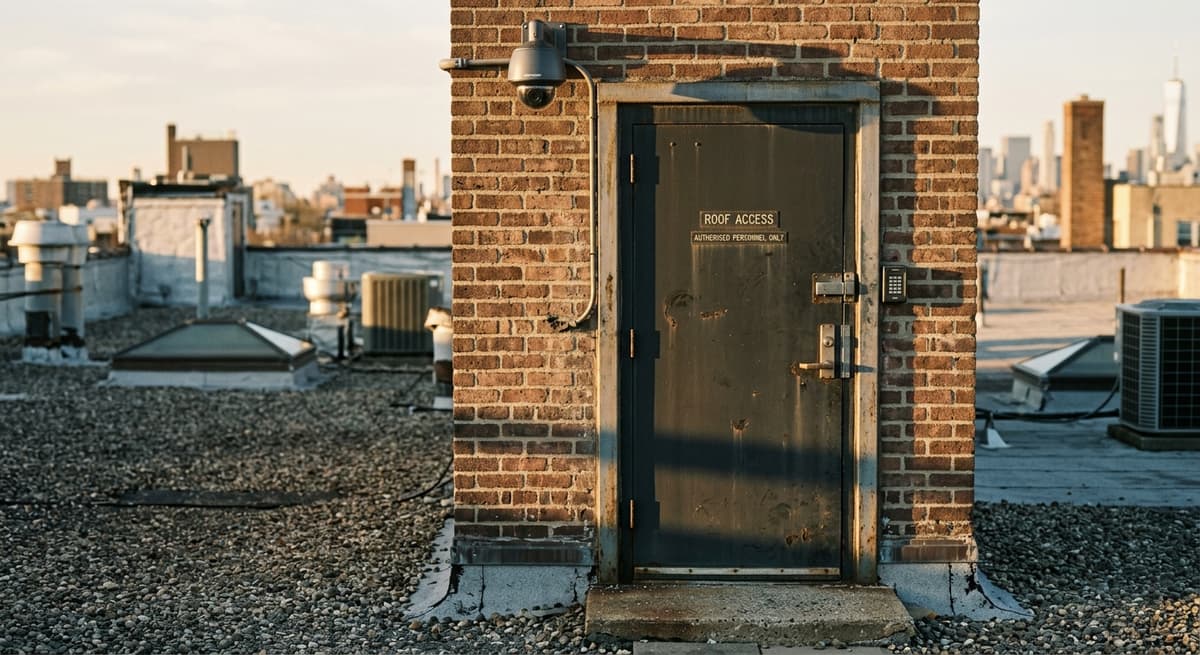
The Law Is Clear: Hidden Cameras in Units Are Illegal
Hiding cameras inside a tenant's apartment violates multiple Massachusetts laws:
- Section 99: If the camera captures audio of tenant conversations, it constitutes secret interception (felony: up to 5 years in prison, $10,000 fine)
- Section 105: If the camera is placed in areas where the tenant has a privacy expectation, it constitutes voyeurism. For an adult tenant with no dissemination of the images, the penalty tops out at 2.5 years in a house of correction and a $5,000 fine; a minor victim raises the exposure to up to 5 years in state prison and a $10,000 fine
- Mass. Gen. Laws ch. 214, Section 1B: Hidden cameras in rental units violate the Massachusetts right of privacy, creating civil liability
What to Do If You Find a Hidden Camera
If you are a tenant and discover a hidden camera in your apartment:
- Document the camera with photographs showing its location and any wiring
- Do not remove or tamper with the camera until law enforcement has documented it
- Contact local police immediately to file a report
- Contact the Massachusetts Attorney General's Office consumer protection division
- Consult a tenant rights attorney about civil remedies including lease termination, damages, and injunctive relief
- File a complaint with your local housing authority or code enforcement office
Penalties for Landlord Surveillance of Tenants
| Offense | Statute | Maximum Prison | Maximum Fine |
|---|---|---|---|
| Hidden camera with audio in tenant unit | Section 99 | 5 years (state prison) | $10,000 |
| Hidden camera in private area, adult tenant (restroom, bedroom) | Section 105 | 2.5 years (house of correction) | $5,000 |
| Hidden camera in private area, minor victim | Section 105 | 5 years (state prison) | $10,000 |
| Invasion of tenant privacy | MGL ch. 214, s.1B | Civil damages | Actual damages + attorney fees |
Using Recordings as Evidence in Housing Disputes

Legally Recorded Evidence
Recordings made in compliance with Massachusetts law can be valuable evidence in housing disputes:
- Maintenance requests: A recorded conversation where you tell your landlord about a needed repair documents the request
- Harassment: A recorded conversation capturing landlord harassment provides evidence for a complaint
- Lease violations: A recorded discussion about lease terms can clarify disputed provisions
- Habitability issues: A recorded inspection documenting building code violations supports a housing court claim
The Simpson Ruling and Housing Cases
The 2025 Simpson v. Boston Public Health Commission Superior Court ruling found that illegally obtained recordings may be admissible in civil cases. This means that a secretly recorded conversation between a landlord and tenant could potentially be admitted as evidence in housing court, even though making the recording was a felony.
However, this does not make secret recording advisable. The person who made the illegal recording still faces:
- Felony criminal charges (up to 5 years in prison, $10,000 fine)
- Civil liability under Section 99 Q ($100 per day or $1,000 minimum, plus attorney fees)
- Potential counterclaims that overshadow the original housing dispute
Better Alternatives to Secret Recording
Instead of risking felony charges, tenants and landlords should:
- Communicate in writing through email, text messages, or certified mail, which creates an automatic record
- Record openly by announcing the recording at the start of every conversation
- Bring a witness to important meetings or inspections
- Use the Massachusetts housing court system, which has processes for documenting disputes
- Contact Massachusetts Legal Aid for assistance with housing disputes
Landlord Entry and Recording Rights
Landlord Right of Entry
Under Massachusetts law, landlords have the right to enter rental units for specific purposes with proper notice. Mass. Gen. Laws ch. 186, Section 15B and common law establish that landlords may enter for:
- Emergency repairs
- Agreed-upon maintenance and repairs
- Showing the unit to prospective tenants (with reasonable notice)
- Inspections required by law
Recording During Entry
When a landlord enters a tenant's unit, neither party can secretly record the interaction:
- Landlords cannot use hidden cameras or recorders during inspections
- Tenants cannot secretly record the landlord during a maintenance visit
- Either party can openly record by announcing the recording before the interaction begins
- Both parties should document the condition of the unit through photographs (which do not trigger the wiretap statute) rather than secret audio recording
Massachusetts Recording Laws by Topic
Phone Call Recording | Audio Recording | Video Recording | Workplace Recording | Recording Police | Security Cameras | Recording in Public | Landlord-Tenant | Dashcam Laws | Schools | Medical Recording | Voyeurism & Hidden Cameras
Back to Massachusetts Recording Laws
More Massachusetts Recording Topics
More Massachusetts Laws
Frequently Asked Questions
Can I record my landlord in Massachusetts?
Yes, but only if the landlord knows about the recording. You must announce that you are recording before the conversation begins. Secretly recording your landlord is a felony under Mass. Gen. Laws ch. 272, Section 99, punishable by up to 5 years in prison and a $10,000 fine.
Can my landlord put cameras in my apartment?
No. Landlords cannot install cameras inside tenant units. Hidden cameras in apartments violate the wiretap statute (Section 99), the voyeurism statute (Section 105), and the Massachusetts right of privacy (MGL ch. 214, Section 1B). If you find a hidden camera, contact police immediately.
Can my landlord have security cameras in the building hallway?
Yes. Landlords can install visible security cameras in common areas like lobbies, hallways, and parking areas with posted signage. If the cameras record audio, additional disclosure is required to comply with the wiretap statute. Cameras cannot be placed in areas where tenants have a privacy expectation.
Can I install a Ring doorbell camera on my apartment door?
Generally yes. Tenants can typically install doorbell cameras at their own entry points. Check your lease for any restrictions on modifications. If the camera has audio capability and captures conversations in the hallway, consider posting a small sign or disabling the audio feature to comply with Section 99.
Can a secretly recorded conversation be used in housing court?
Possibly. A 2025 Superior Court ruling suggests illegally recorded conversations may be admissible in civil cases. However, making the recording is still a felony. The criminal and civil penalties for secret recording far outweigh any potential evidentiary benefit. Communicate in writing instead.
Updates
Corrected the Section 105 hidden-camera penalty table: the 5-year state prison, up-to-$10,000 tier applies only to a minor victim, not the base adult-tenant scenario, which tops out at 2.5 years in a house of correction and $5,000.
Independently fact-checked against the cited primary sources; governing law re-checked for recent changes
Reviewed and approved by an editor
The Law Behind This Article
This article rests on the statutory provisions below, held in our own legal record and retrieved from the official source. Tap a section to read the operative text.
Massachusetts General Laws, Chapter 272
§ 99Interception of wire and oral communicationsIn forcecited in 19 of our articles
Section 99. Interception of wire and oral communications.— A. Preamble. The general court finds that organized crime exists within the commonwealth and that the increasing activities of organized crime constitute a grave danger to the public welfare and safety. Organized crime, as it exists in the commonwealth today, consists of a continuing conspiracy among highly organized and disciplined groups to engage in supplying illegal goods and services. In supplying these goods and services organized crime commits unlawful acts and employs brutal and violent tactics. Organized crime is infiltrating legitimate business activities and depriving honest businessmen of the right to make a living. The general court further finds that because organized crime carries on its activities through layers of insulation and behind a wall of secrecy, government has been unsuccessful in curtailing and eliminating it. Normal investigative procedures are not effective in the investigation of illegal acts committed by organized crime.
Official text (excerpt) · last checked 2026-08-31 · Read the full text in our law library · Verify at malegislature.gov
Cited in 271 court opinions in our collectionLatest citing opinion in our collection: 2026
In the courts (editorial summary, independently checked):Commonwealth v. Blood (1987) read Section 99 as generally proscribing secret recording of oral communications without all parties' consent, and suppressed under art. 14 a warrantless police recording made with one party's consent. Commonwealth v. Vitello (1975) held Section 99 substantially complies with federal Title III.
Opinions citing this section in our collection:
- Commonwealth v. Vitello (Massachusetts Supreme Judicial Court 1975, 367 Mass. 224)✓In a gaming prosecution built on wiretapped phone calls, the SJC gave chapter 272 section 99 its first full review and held the state wiretap statute substantially complies with federal Title III and that the warrants issued under it met both standards.
- Commonwealth v. Blood (Massachusetts Supreme Judicial Court 1987, 400 Mass. 61)✓Police wired an informant who recorded conversations in private homes about a planned break-in; the SJC held the recordings fell within section 99's one-party-consent exception but that article 14 nonetheless required a warrant, and reversed the convictions.
- Commonwealth v. D'Amour (Massachusetts Supreme Judicial Court 1999, 428 Mass. 725)✓The SJC upheld a section 99 wiretap of a widow suspected of arranging her husband's murder for insurance money, holding the district attorney's written designation of an assistant satisfied Vitello and that probable cause supported the organized crime connection.
Identified automatically from the court opinions citing this section — not a ranking of which case controls.
Also relied on in: Massachusetts Recording Laws (2026): Two-Party Consent Rules, Massachusetts Nursing Home Camera Laws: All-Party Consent Risks, Massachusetts Voyeurism and Hidden Camera Laws
Massachusetts General Laws, Chapter 186
§ 15BEntrance of premises prior to termination of lease; payments; receipts; interest; records; security depositsIn forcecited in 2 of our articles
Section 15B. (1) (a) No lease relating to residential real property shall contain a provision that a lessor may, except to inspect the premises, to make repairs thereto or to show the same to a prospective tenant, purchaser, mortgagee or its agents, enter the premises before the termination date of such lease. A lessor may, however, enter such premises: (i) in accordance with a court order; (ii) if the premises appear to have been abandoned by the lessee; or (iii) to inspect, within the last thirty days of the tenancy or after either party has given notice to the other of intention to terminate the tenancy, the premises for the purpose of determining the amount of damage, if any, to the premises which would be cause for deduction from any security deposit held by the lessor pursuant to this section. [ Introductory paragraph of clause (b) of subsection (1) effective until August 1, 2025. For text effective August 1, 2025, see below.] (b) At or prior to the commencement of any tenancy, no lessor may require a tenant or prospective tenant to pay any amount in excess of the following: [ Introductory paragraph of clause (b) of subsection (1) as amended by 2025, 9, Secs.
Official text (excerpt) · last checked 2026-09-06 · Read the full text in our law library · Verify at malegislature.gov
Cited in 115 court opinions in our collectionLatest citing opinion in our collection: 2026
Opinions citing this section in our collection:
- McGrath v. Mishara (Massachusetts Supreme Judicial Court 1982, 386 Mass. 74)“…redited with the full amount of interest owed to them under G. L. c. 186, § 15B. The judge concluded that a total of $1…”
- Mellor v. Berman (Massachusetts Supreme Judicial Court 1983, 390 Mass. 275)“…a tenant for improper retention of a security deposit. See G.L.c. 186, § 15B (7), as appearing in St. 1978, c. 553,…”
- Hampshire Village Associates v. District Court of Hampshire (Massachusetts Supreme Judicial Court 1980, 381 Mass. 148)“…d (and one Ruhlander, manager) claiming damages pursuant to G. L. c. 186, § 15B. This section states that for violation…”
Identified automatically from the court opinions citing this section — not a ranking of which case controls.
Also relied on in: Massachusetts Landlord-Tenant Laws (2026): Deposits, Notice, and Tenant Rights
Massachusetts General Laws, Chapter 214
§ 1BRight of privacyIn forcecited in 8 of our articles
Section 1B. A person shall have a right against unreasonable, substantial or serious interference with his privacy. The superior court shall have jurisdiction in equity to enforce such right and in connection therewith to award damages.
Official text (excerpt) · last checked 2026-08-31 · Read the full text in our law library · Verify at malegislature.gov
Cited in 199 court opinions in our collectionLatest citing opinion in our collection: 2026
In the courts (editorial summary, independently checked):Ayash v. Dana-Farber Cancer Institute (2005) held that recovery under c. 214, Section 1B requires a disclosure both unreasonable and either substantial or serious, and that publicity on a matter of public concern falls outside it. Cort v. Bristol-Myers Co. (1982) held an attempted intrusion that obtained no information is not actionable.
Opinions citing this section in our collection:
- Madsen v. Erwin (Massachusetts Supreme Judicial Court 1985, 395 Mass. 715)✓A Christian Science Monitor writer fired after her employers questioned her about her sexual orientation sued under Section 1B; the court held the privacy count as pleaded did not survive dismissal but let her replead it, since religion clauses do not immunize tortious conduct.
- Ayash v. Dana-Farber Cancer Institute (Massachusetts Supreme Judicial Court 2005, 443 Mass. 367)✓A physician won a privacy verdict after her institute leaked confidential peer review material about chemotherapy overdoses to a newspaper; the court vacated it, holding disclosures about her professional conduct in a matter of intense public interest fall outside Section 1B.
- Duarte v. Healy (Massachusetts Supreme Judicial Court 1989, 405 Mass. 43)✓Cambridge fire fighter recruits had to give monitored urine samples and Duarte was fired after testing positive for cocaine; the court assumed a Privacy Act violation but held the city manager and fire chief immune for discretionary acts, so the Section 1B claims were dismissed.
Identified automatically from the court opinions citing this section — not a ranking of which case controls.
Also relied on in: Massachusetts Security Camera Laws, Massachusetts Video Recording Laws, Massachusetts Data Privacy Laws: Security Rules & Consumer Rights (2026)
Search our full record of US law — 2.1 million sections, every state + federal →
Sources and References
- Mass. Gen. Laws ch. 272, Section 99 - Wiretapping Statute(malegislature.gov).gov
- Mass. Gen. Laws ch. 214, Section 1B - Right of Privacy(malegislature.gov).gov
- Mass. Gen. Laws ch. 186, Section 15B - Security Deposits and Tenant Rights(malegislature.gov).gov
- Massachusetts Attorney General - Consumer Protection(mass.gov).gov
- Find Legal Aid in Massachusetts(mass.gov).gov