
Nebraska
Nebraska Dashcam Laws: Mounting Rules, Audio Recording, and Evidence (2026)
Independently fact-checked against primary sources (last audited August 15, 2026). · Reviewed by the RecordingLaw editorial team. · Law checked current as of August 15, 2026. · 6 primary sources cited on this page. How we verify our legal content
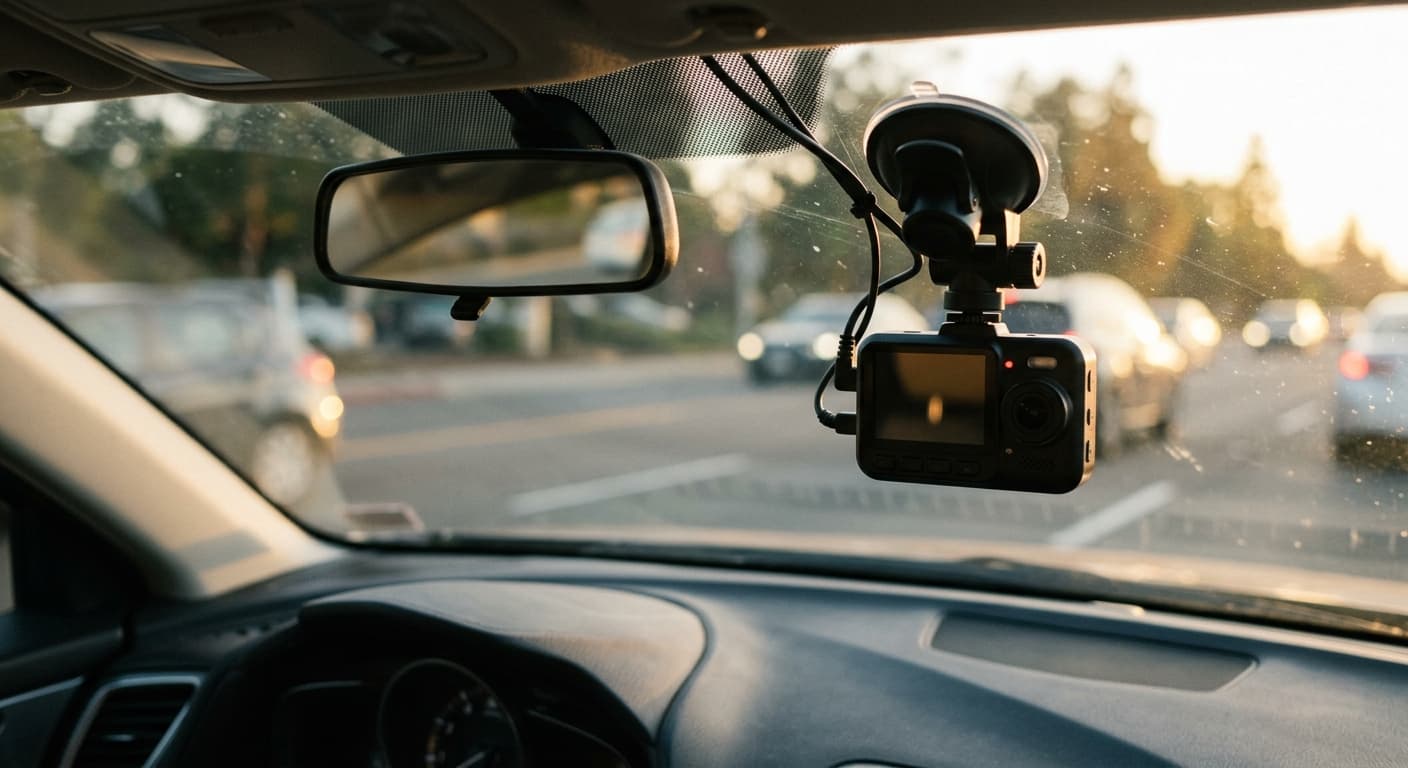
Dashcams are legal in Nebraska and may be mounted where they do not obstruct the driver's view under Neb. Rev. Stat. section 60-6,256. Because Nebraska is a one-party consent state under Neb. Rev. Stat. section 86-290, a driver's presence in the vehicle satisfies consent for in-vehicle audio recording.
Dashcams are legal and widely used in Nebraska. The state has no specific dashcam statute, so their use is governed by general traffic laws, the one-party consent wiretapping statute (Neb. Rev. Stat. section 86-290), and federal regulations.
Are Dashcams Legal in Nebraska?
Yes. Nebraska does not prohibit dashcam use. There are no registration, notification, or specification requirements.
Windshield Mounting
Nebraska law under Neb. Rev. Stat. section 60-6,256 restricts objects affixed to windshields that obstruct the driver's view. Mount your dashcam behind the rearview mirror or in a corner where it does not block visibility.
Audio Recording and Consent
One-Party Consent
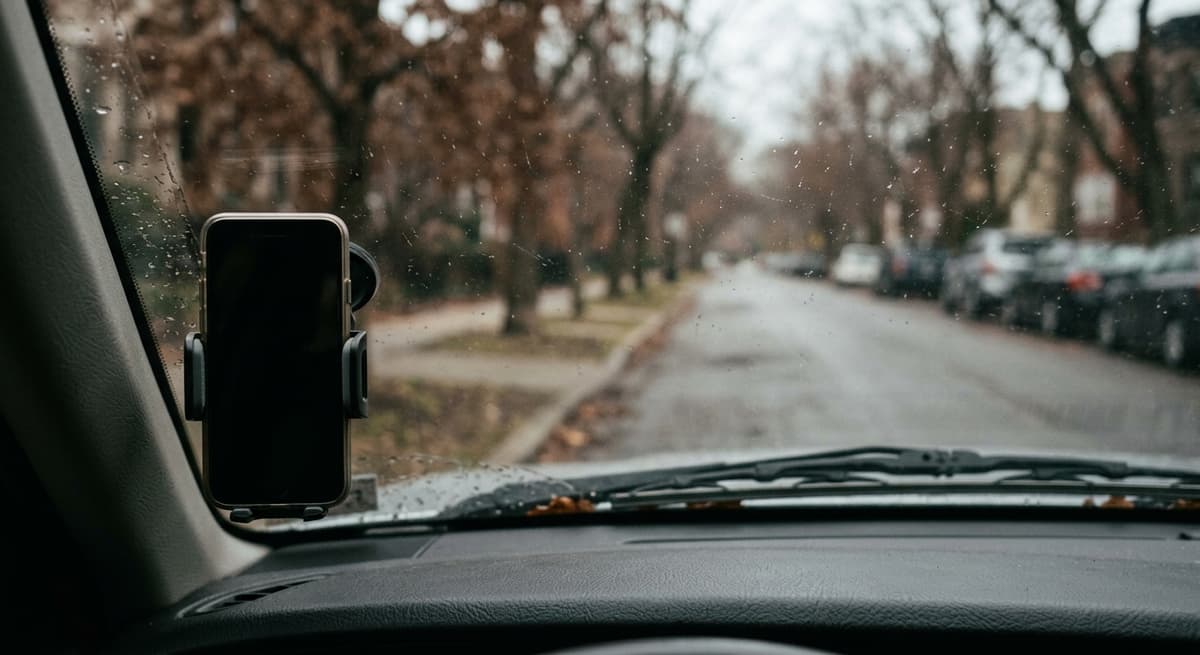
Nebraska is a one-party consent state under Neb. Rev. Stat. section 86-290. Your presence in the vehicle satisfies consent for audio recording. You can record passenger conversations, traffic stop audio, and road incidents without informing anyone.
The consent exception does not apply when recording is made for criminal or tortious purposes.
Unattended Recording
If your dashcam runs while you are absent and captures conversations, you are no longer a party. Disable the microphone for parking mode.
Dashcam Footage as Evidence
Modified Comparative Fault
Nebraska follows a modified comparative fault system under Neb. Rev. Stat. section 25-21,185.09. The statute bars recovery when a plaintiff's fault is equal to or greater than the total fault of the parties they are suing, meaning a plaintiff who is 50% or more at fault cannot recover. Dashcam footage is critical for establishing who bears what percentage of fault.
Admissibility
Footage is admissible in Nebraska courts when authenticated as genuine, unaltered, and relevant under Nebraska Rules of Evidence.
Commercial Use

Fleet operators use dashcams for safety monitoring and FMCSA compliance. Rideshare drivers can use dashcams with one-party consent satisfied by driver presence.
Law Enforcement
You have a First Amendment right to record police during traffic stops. Your dashcam can continue recording without permission.
Penalties
| Violation | Statute | Penalty |
|---|---|---|
| Windshield obstruction | Neb. Rev. Stat. 60-6,256 | Traffic citation |
| Audio recording without consent | Neb. Rev. Stat. 86-290 | Class IV felony: up to 2 years, $10,000 fine |
Civil damages under Neb. Rev. Stat. section 86-297 include actual damages and attorney fees.
More Nebraska Recording Laws
Audio Recording | Video Recording | Voyeurism Laws | Workplace Recording | Recording Police | Phone Call Recording | Security Cameras | Recording in Public | Landlord-Tenant Recording | Dashcam Laws | School Recording | Medical Recording
Back to Nebraska Recording Laws
More Nebraska Recording Topics
More Nebraska Laws
Frequently Asked Questions
Do I need to tell passengers my dashcam records audio in Nebraska?
No. Nebraska is a one-party consent state under Neb. Rev. Stat. section 86-290. Your presence satisfies consent.
Can dashcam footage be used in Nebraska courts?
Yes. Footage is admissible when authenticated as genuine, unaltered, and relevant under Nebraska Rules of Evidence.
Where should I mount my dashcam?
Behind the rearview mirror or in a corner. Neb. Rev. Stat. section 60-6,256 restricts windshield obstructions.
Can my dashcam record while parked?
Video is fine. Audio when absent could capture others' conversations without consent. Disable the microphone for parking mode.
Can police order me to turn off my dashcam?
No. The First Amendment protects recording police in public.
Updates
Corrected Nebraska's comparative-fault bar from 51% to the statute's actual 50% threshold (fault equal to or greater than half bars recovery), which had been stated wrong in two places on the page.
Independently fact-checked against the cited primary sources; governing law re-checked for recent changes
Governing law re-checked for recent changes
Reviewed and approved by an editor
The Law Behind This Article
This article rests on the statutory provisions below, held in our own legal record and retrieved from the official source. Tap a section to read the operative text.
Nebraska Revised Statutes, Chapter 86: TELECOMMUNICATIONS AND TECHNOLOGY
§ 86-290Unlawful acts; penaltyIn forcecited in 18 of our articles
(1) Except as otherwise specifically provided in sections 86-271 to 86-295, it is unlawful to: (a) Intentionally intercept, endeavor to intercept, or procure any other person to intercept or endeavor to intercept any wire, electronic, or oral communication; (b) Intentionally use, endeavor to use, or procure any other person to use or endeavor to use any electronic, mechanical, or other device to intercept any oral communication when (i) such device is affixed to, or otherwise transmits a signal through, a wire, cable, or other like connection used in wire communication or (ii) such device transmits communications by radio or interferes with the transmission of such communication; (c) Intentionally disclose or endeavor to disclose to any other person the contents of any wire, electronic, or oral communication, knowing or having reason to know that the information was obtained through the interception of a wire, electronic, or oral communication in violation of this subsection; (d) Intentionally use or endeavor to use the contents of any wire, electronic, or oral communication, knowing or having reason to know that the information was obtained through the interception of a wire,…
Official text (excerpt) · last checked 2026-08-31 · Read the full text in our law library · Verify at nebraskalegislature.gov
Cited in 3 court opinions in our collectionLatest citing opinion in our collection: 2022
Opinions citing this section in our collection:
- Hays v. Hays (Nebraska Court of Appeals 2022)“…to her. We address these arguments, in turn. Under Neb. Rev. Stat. § 86-290(2)(c) (Reissue 2016), “it is not unlawf…”
- Ades v. Omni Hotels Management Corp. (District Court, C.D. California 2014, 46 F. Supp. 3d 999)“…f the carrier or provider of such communication services.”' Neb.Rev.Stat. § 86-290(2)(a). Based on this provision, Omni co…”
- Lewton Ex Rel. Lewton v. Divingnzzo (District Court, D. Nebraska 2011, 772 F. Supp. 2d 1046)“…7) to exclude the recordings as illegally intercepted under Neb.Rev.Stat. § 86-290(a) (see Doc. 137-16 at p.…”
Identified automatically from the court opinions citing this section — not a ranking of which case controls.
Also relied on in: Nebraska Recording Laws (2026): One-Party Consent Rules, Nebraska Audio Recording Laws: One-Party Consent Rules and Penalties (2026), Nebraska Landlord-Tenant Recording Laws: Cameras, Audio, and Privacy Rights (2026)
§ 86-297Interception; civil actionIn forcecited in 10 of our articles
(1) Any person whose wire, electronic, or oral communication is intercepted, disclosed, or intentionally used in violation of sections 86-271 to 86-295 and 86-298 to 86-2,103 may in a civil action recover from the person or entity which engaged in that violation such relief as may be appropriate. (2) In an action under this section, appropriate relief includes: (a) Such preliminary and other equitable or declaratory relief as may be appropriate; (b) Damages under subsection (3) of this section; and (c) Reasonable attorney's fees and other litigation costs reasonably incurred. (3)(a) In an action under this section, if the conduct in violation of sections 86-271 to 86-295 and 86-298 to 86-2,103 is the private viewing of a private satellite video communication that is not scrambled or encrypted or if the communication is a radio communication that is transmitted on frequencies allocated for remote pickup broadcast stations under subpart D of 47 C.F.R.
Official text (excerpt) · last checked 2026-07-29 · Read the full text in our law library · Verify at nebraskalegislature.gov
Cited in 1 court opinions in our collectionLatest citing opinion in our collection: 2020
Opinions citing this section in our collection:
- Brumbaugh v. Bendorf (Nebraska Supreme Court 2020, 945 N.W.2d 116)“…warded under 18 U.S.C. § 2520 (2018) or Neb. Rev. Stat. § 86-297 (Reissue 2014) is addressed to the tria…”
Identified automatically from the court opinions citing this section — not a ranking of which case controls.
Also relied on in: Nebraska Phone Call Recording Laws: Consent Rules for Landline, Cell, and VoIP (2026), Nebraska Security Camera Laws: Rules for Homes, Businesses, and HOAs (2026), Nebraska Voyeurism Laws: Hidden Cameras, Penalties, and Privacy Protections (2026)
Nebraska Revised Statutes, Chapter 25: COURTS; CIVIL PROCEDURE
§ 25-21,185.09Civil actions to which contributory negligence is a defense; effect on recoveryIn forcecited in 8 of our articles
Any contributory negligence chargeable to the claimant shall diminish proportionately the amount awarded as damages for an injury attributable to the claimant's contributory negligence but shall not bar recovery, except that if the contributory negligence of the claimant is equal to or greater than the total negligence of all persons against whom recovery is sought, the claimant shall be totally barred from recovery. The jury shall be instructed on the effects of the allocation of negligence.
Official text (excerpt) · last checked 2026-09-10 · Read the full text in our law library · Verify at nebraskalegislature.gov
Also relied on in: Nebraska Dog Bite Laws: Liability and Victim Rights, Medical Malpractice Laws in Nebraska (2026): Deadlines & Caps, Motorcycle Accident Laws in Nebraska (2026): Deadlines
Nebraska Revised Statutes, Chapter 60: MOTOR VEHICLES
§ 60-6,256Objects placed or hung to obstruct or interfere with view of operator; unlawful; enforcement; penaltyIn forcecited in 2 of our articles
(1) It shall be unlawful for any person to operate a motor vehicle with any object placed or hung in or upon the motor vehicle, except required or permitted equipment of the motor vehicle, in such a manner as to significantly and materially obstruct or interfere with the view of the operator through the windshield or to prevent the operator from having a clear and full view of the road and condition of traffic behind the motor vehicle. Any sticker or identification authorized or required by the federal government or any agency thereof or the State of Nebraska or any political subdivision thereof may be placed upon the windshield of the motor vehicle without violating this section. (2) Enforcement of this section by state or local law enforcement agencies shall be accomplished only as a secondary action when a driver of a motor vehicle has been cited or charged with a traffic violation or some other offense. (3) Any person who violates this section is guilty of a traffic infraction.
Official text (excerpt) · last checked 2026-09-08 · Read the full text in our law library · Verify at nebraskalegislature.gov
Also relied on in: Nebraska Windshield Mounting Laws (2026 Guide)
Search our full record of US law — 2.1 million sections, every state + federal →
Sources and References
- Neb. Rev. Stat. section 86-290 - Interception of Communications(nebraskalegislature.gov).gov
- Neb. Rev. Stat. section 60-6,256 - Windshield Requirements(nebraskalegislature.gov).gov
- Neb. Rev. Stat. section 86-297 - Civil Remedies(nebraskalegislature.gov).gov
- FMCSA(fmcsa.dot.gov).gov
- NHTSA(nhtsa.gov).gov
- Neb. Rev. Stat. 25-21,185.09 (modified comparative negligence; recovery barred at 50% or more fault)(nebraskalegislature.gov).gov