
California
California Phone Call Recording Laws: Consent Rules for Cell and Landline (2026)
Independently fact-checked against primary sources (last audited August 22, 2026). · Reviewed by the RecordingLaw editorial team. · Law checked current as of August 22, 2026. · 7 primary sources cited on this page. How we verify our legal content
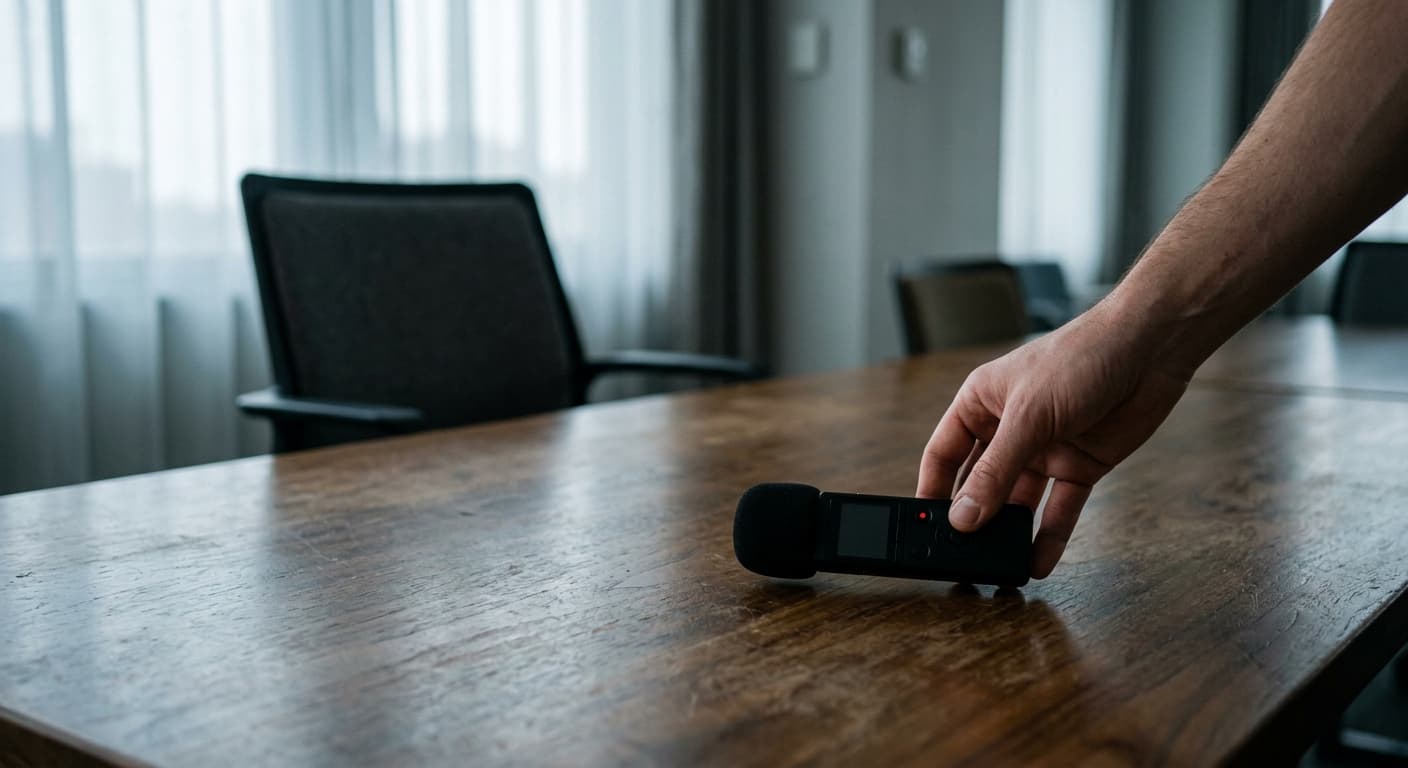
California requires all parties to consent before anyone records a phone call. Penal Code 632 covers confidential communications, while Penal Code 632.7 extends that protection to every cell phone and cordless phone call regardless of whether the conversation is confidential. Both statutes apply to residents, businesses, and out-of-state callers who dial a California number.
California has some of the strictest phone call recording laws in the United States. As a two-party consent state, California requires that every person on a phone call agrees before the conversation can be recorded. Two primary statutes govern call recording: Penal Code 632, which covers confidential communications including phone calls, and Penal Code 632.7, which specifically addresses cell phone and cordless phone communications.
These rules apply to landlines, cell phones, VoIP calls, video calls, and internet-based communications. Whether you are a consumer, business owner, employer, or just someone who wants to record a personal call, understanding these laws is critical to avoiding criminal prosecution and civil liability.
Penal Code 632: The Foundation of California Phone Recording Law
Penal Code 632 is the core statute that governs phone call recording in California. It makes it illegal to intentionally use an electronic amplifying or recording device to eavesdrop upon or record a confidential communication without the consent of all parties. The statute specifically includes telephone conversations within its scope.
The law applies to anyone who records a phone call, whether they are a participant in the call or a third party intercepting it. The critical element is consent: every person involved in the conversation must agree to the recording before it begins.
What Makes a Phone Call "Confidential"?
Under PC 632(c), a confidential communication is any communication "carried on in circumstances as may reasonably indicate that any party to the communication desires it to be confined to the parties thereto." The California Supreme Court defined this standard in Flanagan v. Flanagan, 27 Cal.4th 766 (2002), holding that a communication is confidential when the parties have an objectively reasonable expectation that the conversation is not being overheard or recorded.
Most private phone calls qualify as confidential communications. When you call someone from your home, office, or personal cell phone and speak privately, both parties reasonably expect that the conversation is not being recorded by any device other than those they know about. The confidential nature of the call does not depend on the subject matter discussed.
A phone call is generally not confidential when:
- It takes place on a speakerphone in a crowded room where participants know others can hear
- It is part of an open government proceeding or public meeting
- The parties have no reasonable expectation that the conversation is private
However, placing a call on speakerphone does not automatically destroy the expectation of privacy. If only the parties to the call are present and they have no reason to believe the call is being recorded, the communication may still be considered confidential.
Penal Code 632.7: Cell Phone and Cordless Phone Recording
Penal Code 632.7 provides a separate and broader layer of protection specifically for wireless phone communications. This statute prohibits anyone from intercepting or intentionally recording a communication transmitted between:
- Two cellular phones
- A cellular phone and a landline
- Two cordless phones
- A cordless phone and a landline
- A cordless phone and a cellular phone
The statute covers any of these combinations without the consent of all parties to the communication.
PC 632.7 Does Not Require "Confidentiality"
The most significant difference between PC 632 and PC 632.7 is that Section 632.7 does not require the communication to be confidential for a violation to occur. The California Supreme Court confirmed this distinction in Smith v. LoanMe, Inc., 11 Cal.5th 183 (2021).
In that case, LoanMe recorded a call with a customer after playing a brief beep tone. The lower court held that PC 632.7 only applied to third-party eavesdroppers, not to parties on the call. The California Supreme Court reversed, holding that:
- Section 632.7 applies to parties to a call, not just third-party eavesdroppers
- The statute does not require the communication to be confidential
- A brief beep tone alone does not constitute adequate consent
This means that recording any cell phone or cordless phone conversation in California without all-party consent is illegal, even if the conversation happens in a public place where no one would expect confidentiality.
Broad Definition of "Communication"
Section 632.7 defines "communication" broadly to include voice, data, and image transmissions, including facsimile. The statute was last amended in 2022 (Stats. 2022, Ch. 27, effective January 1, 2023), modernizing its language to reflect current telecommunications technology.
How Consent Works for Phone Call Recording

California law requires all-party consent before recording a phone call. Consent can take several forms, each with different levels of legal protection.
Express Verbal Consent
The most legally secure method is to ask everyone on the call directly: "Do you consent to this call being recorded?" If all parties say yes, you have clear, express consent. This approach leaves little room for legal dispute.
Implied Consent Through Announcements
Consent can also be implied through adequate notice. The most common example is when a business plays an automated message at the start of a call: "This call may be recorded for quality assurance purposes." If the other party remains on the line and continues the conversation after hearing this announcement, courts have generally treated the continued participation as implied consent.
The key requirements for implied consent through announcements are:
- The announcement must be clear and audible
- It must occur before the recording begins
- The other party must have a meaningful opportunity to end the call if they object
Beep Tone Warnings
California Public Utilities Commission General Order 107-B permits the use of an automatic "beep" tone that is audible to all parties and repeated at regular intervals during the recording. However, the legal sufficiency of beep tones alone has been questioned. In Smith v. LoanMe, the California Supreme Court suggested that a brief beep without further explanation may not provide adequate notice that a call is being recorded.
The safest practice is to use a verbal announcement or express consent rather than relying solely on a beep tone.
Written Consent
Advance written consent can satisfy the statute. For example, if a customer signs a service agreement that discloses call recording practices and consents to recording, this can support a consent defense. However, written consent obtained long before the actual call may face challenges if the caller did not have meaningful notice at the time of the specific call being recorded.
Business Call Recording Compliance in California
Businesses that record phone calls with customers, prospects, or partners must follow specific compliance steps to avoid criminal liability and class action lawsuits.
What Businesses Must Do
Every business that records calls involving California residents must:
- Provide upfront notice at the start of every recorded call, either through an automated announcement or a live verbal disclosure by the representative
- Obtain consent before the recording begins. Implied consent (continuing the call after the announcement) is generally acceptable, but express consent is safer
- Give the caller an opportunity to opt out by ending the call, asking to proceed without recording, or speaking to someone on an unrecorded line
- Train employees on proper disclosure protocols so that consent is obtained consistently
- Document compliance procedures to demonstrate good-faith efforts to follow the law
Common Compliance Mistakes
Businesses frequently run into trouble with these practices:
- Late disclosure: Playing the recording notice after the call has already been partially recorded
- Unclear announcements: Speaking the disclosure too quickly, at too low a volume, or in a way that callers cannot understand
- Beep-only notice: Relying on a beep tone without any verbal explanation, which the California Supreme Court has called into question
- No opt-out path: Failing to provide an alternative for callers who do not want to be recorded
- Inconsistent application: Recording some calls without notice due to employee error or system configuration issues
Class Action Exposure
California businesses face substantial class action risk if they record calls without proper consent. Because Penal Code 637.2 provides $5,000 in statutory damages per violation without requiring proof of actual harm, a business that records thousands of calls without consent could face millions of dollars in potential liability. Several major California class actions in recent years have targeted businesses for recording customer service calls without adequate disclosure.
Interstate Phone Calls: When California Law Applies

One of the most important and frequently litigated questions in California phone recording law involves interstate calls. When one party is in California and the other is in a state with less restrictive recording laws, which state's rules apply?
Kearney v. Salomon Smith Barney (2006)
The California Supreme Court answered this question in Kearney v. Salomon Smith Barney, Inc., 39 Cal.4th 95 (2006). In that case, employees at Salomon Smith Barney's Atlanta office secretly recorded phone calls with California clients. Georgia is a one-party consent state, meaning the recording was legal under Georgia law.
The California Supreme Court ruled that California's all-party consent requirement applies when a person in a one-party consent state records a call with someone in California. The Court reasoned that California has a compelling interest in protecting the privacy of its residents, and that interest outweighs the more permissive approach of the recording party's state.
Practical Rules for Interstate Calls
Based on the Kearney ruling and general legal principles:
- If you are in California calling someone in a one-party consent state, California law still applies to you. You need all-party consent.
- If you are outside California calling someone in California, California law applies. You need the California resident's consent.
- If both parties are outside California, California law does not apply. Follow the laws of the states where each party is located.
- When in doubt, follow the stricter state's rules. This protects you from liability in either jurisdiction.
Businesses with customers in multiple states should adopt a policy of obtaining all-party consent on every call, which satisfies the requirements of every U.S. state.
VoIP, Zoom, FaceTime, and Internet-Based Calls
California's phone recording laws apply to modern communication technologies, not just traditional telephone calls. As courts and legislators have interpreted the statutes, the consensus is that PC 632 and PC 632.7 extend to internet-based voice and video communications.
VoIP Calls (Skype, Google Voice, WhatsApp)
Voice over Internet Protocol (VoIP) calls fall under PC 632 as confidential communications transmitted via an electronic device. Even though VoIP calls travel over the internet rather than traditional phone lines, the statute's reference to communications made by "telephone, or other device" is broad enough to cover them. Courts have not carved out an exception for internet-based voice calls.
Video Calls (Zoom, FaceTime, Google Meet, Microsoft Teams)
Video conferencing platforms are treated the same as phone calls for recording purposes. Recording a Zoom meeting, FaceTime call, or Google Meet session without the consent of all participants violates PC 632 when the communication is confidential.
Most major video conferencing platforms provide built-in recording features that display a visible indicator and notify all participants when recording starts. These notifications can help establish consent, but the best practice is to verbally confirm that all participants agree to the recording at the beginning of the session.
Important Considerations for Internet Calls
- The same all-party consent requirement applies regardless of the platform
- Platform notifications alone may not substitute for explicit consent, particularly if some participants miss the notification or join late
- If participants are in different states or countries, the most restrictive jurisdiction's law should apply
- Recording webinars or large public meetings may be treated differently because participants may not have a reasonable expectation of privacy
Call Recording Apps in California
Numerous apps for iPhone and Android allow users to record phone calls automatically or on demand. Popular options include TapeACall, Rev Call Recorder, Cube ACR, and others. While these apps are legally available for download, using them in California without all-party consent is illegal.
Legal Status of Recording Apps
The apps themselves are not illegal. California law does not prohibit owning or installing call recording software. The violation occurs when a person uses the app to record a call without obtaining consent from all parties. This applies whether the app records automatically (recording every incoming and outgoing call) or manually (recording only calls the user selects).
Automatic Recording Features
Some call recording apps offer an "auto-record" feature that captures every call without any action from the user. In California, using this feature without notifying and obtaining consent from the other party on every call is illegal. The fact that the recording was automatic does not provide a defense.
How to Use Recording Apps Legally
To use a call recording app legally in California:
- Inform the other party at the beginning of every call that you will be recording
- Obtain verbal consent before activating the recording
- If the other party objects, do not record. Turn off the recording feature for that call.
- Do not use auto-record features unless you have a system in place to notify every caller before the recording begins
Apple and Google Restrictions
Both Apple and Google have implemented platform-level restrictions on call recording apps. Apple's iOS does not provide a native API for recording phone calls, so most iPhone recording apps work by connecting to a third-party conferencing line. Google has restricted call recording API access on Android as well, limiting many third-party recording apps. These platform restrictions reflect the legal sensitivity of call recording but do not change the underlying legal requirements.
Employer Recording of Employee Phone Calls
California employers face specific restrictions when recording employee phone calls, governed by both the Invasion of Privacy Act and state labor laws.
When Employers Can Record Calls
Employers may record employee phone calls only when:
- All parties consent to the recording, including the employee and the person on the other end of the call
- A clear disclosure is provided at the start of the call (for example, "This call is being recorded for quality and training purposes")
- The call is a business call being monitored for legitimate business purposes such as quality assurance or training
When Employers Cannot Record Calls
Employers are prohibited from:
- Recording personal calls made by employees, even on company phones, unless the employer has informed the employee that personal calls are not permitted and the employee consented to monitoring of all calls on the business line
- Using hidden recording equipment to capture phone conversations without notice
- Monitoring calls without notifying all parties, including the external party on the other end of the line
- Recording calls in areas with an expectation of privacy, such as break rooms where employees make personal calls
Employee Rights
Employees who discover their phone calls have been illegally recorded can pursue both criminal complaints and civil lawsuits. Under PC 637.2, each illegally recorded call can result in $5,000 in statutory damages or treble actual damages.
Company policies may also restrict recording beyond what the law requires. An employer can prohibit employees from recording any calls (including their own), and violating such a policy can result in termination even if the recording would have been legal under the statute.
Criminal Penalties for Illegal Phone Call Recording
Violating California's phone call recording laws carries significant criminal consequences.
Penalties Under PC 632
PC 632 is a wobbler offense in California, meaning it can be charged as either a misdemeanor or a felony:
First Offense:
- Misdemeanor: Up to one year in county jail and/or a fine of up to $2,500
- Felony: 16 months, two years, or three years in state prison and/or a fine of up to $2,500
Repeat Offense (prior conviction under PC 631, 632, 632.5, 632.6, 632.7, or 636):
- A fine of up to $10,000 per violation
- Up to one year in county jail or 16 months to three years in state prison
- Or both the enhanced fine and imprisonment
Penalties Under PC 632.7
Violations of PC 632.7 carry:
- A fine of up to $2,500 per violation (up to $10,000 for repeat offenders)
- Up to one year in county jail or state prison
- Or both fine and imprisonment
Penalties Under PC 631 (Wiretapping)
Third-party interception of phone calls falls under Penal Code 631, which is also a wobbler offense. Felony wiretapping can result in 16 months to three years in state prison.
Civil Remedies for Victims
Beyond criminal prosecution, victims of illegal phone call recording have a private right of action under Penal Code 637.2.
Statutory and Treble Damages
An injured party may recover the greater of:
- $5,000 per violation, or
- Three times (treble) actual damages suffered
No proof of actual financial harm is required to collect the $5,000 statutory damages. Each illegally recorded phone call can constitute a separate violation, so damages can accumulate rapidly.
Injunctive Relief
Courts can issue injunctions ordering the offending party to stop recording calls without consent. This remedy is particularly relevant in class action lawsuits against businesses that have a pattern of recording calls without proper disclosure.
Inadmissibility of Illegal Recordings
Recordings made in violation of California's privacy statutes are generally inadmissible in any judicial, administrative, legislative, or other proceeding. Under Penal Code 631(c), evidence obtained through illegal wiretapping or recording cannot be used in court. This means that even if an illegally recorded call contains relevant evidence, it will likely be excluded.
Exceptions to the Consent Requirement
Several narrow exceptions exist that allow phone call recording without all-party consent.
Crime Evidence Exception (PC 633.5)
Penal Code 633.5 permits one party to a phone call to record the conversation without consent when they reasonably believe they are gathering evidence of:
- Extortion
- Kidnapping
- Bribery
- Any felony involving violence against a person, including human trafficking (PC 236.1)
- Harassing phone calls (PC 653m)
- Domestic violence (PC 13700)
Recordings made under this exception are admissible as evidence in court.
Law Enforcement Exception (PC 633)
Penal Code 633 is a narrow grandfather clause, not a general one-party-consent rule for investigations. It provides that PC 631, 632, 632.5, 632.6, and 632.7 do not prohibit named law enforcement officials, including the Attorney General, district attorneys, and specified investigators, from overhearing or recording any communication that they could lawfully overhear or record prior to January 1, 1968. The exception is limited to the specific officials the statute names.
Correctional Facility Calls
Phone calls made from California correctional facilities using institutional phone systems are routinely recorded. Inmates receive notice that their calls are subject to monitoring and recording, and continued use of the phone system constitutes implied consent.
Key Court Cases on California Phone Recording
Three landmark California Supreme Court cases define how phone recording laws work in practice:
Flanagan v. Flanagan (2002)
The California Supreme Court established the objective test for what makes a communication "confidential" under PC 632. A phone call is confidential when the parties have an objectively reasonable expectation that the conversation is not being overheard or recorded. The focus is on the expectation of privacy at the time of the call, not whether the content was intended to remain secret.
Kearney v. Salomon Smith Barney (2006)
The Court held that California's all-party consent law applies to phone calls involving California residents, even when the recording occurs in a one-party consent state. This ruling established that out-of-state businesses cannot secretly record calls with California customers by relying on their home state's more permissive laws.
Smith v. LoanMe, Inc. (2021)
The Court confirmed that PC 632.7 applies to parties to a cell phone call, not just third-party eavesdroppers. It also held that PC 632.7 does not require a communication to be "confidential" for a violation to occur. A brief beep tone, without verbal explanation, was found to be inadequate notice. This ruling significantly expanded the scope of protection for wireless phone conversations.
More California Recording Laws
Audio Recording | Video Recording | Voyeurism & Hidden Cameras | Workplace Recording | Recording Police | Phone Call Recording | Security Cameras | Recording in Public | Landlord-Tenant | Dashcam Laws | Schools | Medical Recording
← Back to California Recording Laws
More California Recording Topics
More California Laws
Frequently Asked Questions
Can I legally record a phone call in California?
Yes, but only with the consent of all parties on the call. California is an all-party consent state under Penal Code 632 and Penal Code 632.7. You must inform everyone on the call that you intend to record and obtain their agreement before the recording starts. Recording without consent is a criminal offense punishable by fines up to $2,500 and up to one year in jail.
Does saying 'this call may be recorded' satisfy California consent requirements?
Generally, yes. When a business plays an automated announcement at the start of a call stating the call may be recorded, and the other party stays on the line and continues the conversation, courts have treated that as implied consent. The announcement must be clear, audible, and delivered before recording begins. A beep tone alone, without a verbal explanation, may not be sufficient based on the California Supreme Court's reasoning in Smith v. LoanMe (2021).
If I live in a one-party consent state, can I record a call with someone in California?
No, not without their consent. In Kearney v. Salomon Smith Barney (2006), the California Supreme Court ruled that California's all-party consent law applies to phone calls involving California residents, regardless of where the recording party is located. If any party to the call is in California, you should obtain consent from all parties before recording.
Is it legal to use a call recording app in California?
Owning and installing a call recording app is legal. Using the app to record calls without the consent of all parties is illegal under PC 632 and PC 632.7. If you use a recording app, you must inform the other party and obtain their consent at the start of each call. Auto-record features that capture every call without notification are particularly risky because they provide no opportunity for consent.
What are the penalties for illegally recording a phone call in California?
Criminal penalties include fines up to $2,500 for a first offense (up to $10,000 for repeat offenders) and up to one year in county jail. PC 632 is a wobbler, so it can also be charged as a felony with 16 months to three years in state prison. On the civil side, victims can sue for $5,000 per violation or three times their actual damages under PC 637.2, whichever is greater. Each recorded call counts as a separate violation.
Updates
Independently fact-checked against the cited primary sources; governing law re-checked for recent changes
Corrected the description of Penal Code 633: it is a narrow grandfather clause preserving what named law-enforcement officials could already lawfully record before January 1, 1968, not a general one-party-consent exception for current criminal investigations.
Governing law re-checked for recent changes
Reviewed and approved by an editor
The Law Behind This Article
This article rests on the statutory provisions below, held in our own legal record and retrieved from the official source. Tap a section to read the operative text.
California Penal Code
§ 632In forcecited in 41 of our articles
(a) A person who, intentionally and without the consent of all parties to a confidential communication, uses an electronic amplifying or recording device to eavesdrop upon or record the confidential communication, whether the communication is carried on among the parties in the presence of one another or by means of a telegraph, telephone, or other device, except a radio, shall be punished by a fine not exceeding two thousand five hundred dollars ($2,500) per violation, or imprisonment in a county jail not exceeding one year, or in the state prison, or by both that fine and imprisonment. If the person has previously been convicted of a violation of this section or Section 631, 632.5, 632.6, 632.7, or 636, the person shall be punished by a fine not exceeding ten thousand dollars ($10,000) per violation, by imprisonment in a county jail not exceeding one year, or in the state prison, or by both that fine and imprisonment.
Official text (excerpt) · last checked 2026-08-31 · Read the full text in our law library · Verify at leginfo.legislature.ca.gov
Cited in 267 court opinions in our collectionLatest citing opinion in our collection: 2026
In the courts (editorial summary, independently checked):Kimmel v. Goland (1990) held the section 47(2) litigation privilege does not bar a damages claim under Section 632 for recording confidential conversations without consent. Lieberman v. KCOP Television, Inc. (2003) held a Section 632 violation is complete the moment the recording is made, whether or not it is disclosed.
Opinions citing this section in our collection:
- Rubin v. Green (California Supreme Court 1993, 4 Cal. 4th 1187)“…f telephone conversations with defendants, an offense under Penal Code section 632. We noted that defendants alleged that…”
- Kimmel v. Goland (California Supreme Court 1990, 51 Cal. 3d 202)✓Mobilehome owners secretly taped phone calls with park management in anticipation of suing; the court held the section 47(2) litigation privilege did not bar the cross-complaint for damages under Penal Code section 632, since the injury came from recording, not publication.
- Shulman v. Group W Productions, Inc. (California Supreme Court 1998, 74 Cal. Rptr. 2d 843)✓A TV producer put a wireless microphone on the flight nurse treating a crash victim. No section 632 claim was before the court, but it called section 632 and the intrusion tort laws of general applicability and said the press may not eavesdrop in violation of section 632.
Identified automatically from the court opinions citing this section — not a ranking of which case controls.
Also relied on in: California Recording Laws (2026): All-Party Consent Rules, US Recording Laws by State (2026): All 50 States Explained, Can an Employer Record Conversations Without Consent? (2026)
§ 631In forcecited in 9 of our articles
(a) Any person who, by means of any machine, instrument, or contrivance, or in any other manner, intentionally taps, or makes any unauthorized connection, whether physically, electrically, acoustically, inductively, or otherwise, with any telegraph or telephone wire, line, cable, or instrument, including the wire, line, cable, or instrument of any internal telephonic communication system, or who willfully and without the consent of all parties to the communication, or in any unauthorized manner, reads, or attempts to read, or to learn the contents or meaning of any message, report, or communication while the same is in transit or passing over any wire, line, or cable, or is being sent from, or received at any place within this state; or who uses, or attempts to use, in any manner, or for any purpose, or to communicate in any way, any information so obtained, or who aids, agrees with, employs, or conspires with any person or persons to unlawfully do, or permit, or cause to be done any of the acts or things mentioned above in this section, is punishable by a fine not exceeding two thousand five hundred dollars ($2,500), or by imprisonment in the county jail not exceeding one year,…
Official text (excerpt) · last checked 2026-07-28 · Read the full text in our law library · Verify at leginfo.legislature.ca.gov
Cited in 202 court opinions in our collectionLatest citing opinion in our collection: 2026
Opinions citing this section in our collection:
- Ribas v. Clark (California Supreme Court 1985, 38 Cal. 3d 355)“…iminal statutes prohibiting various forms of eavesdropping (Pen. Code, §§ 631, subd. (a), and 637), as well as for in…”
- Warden v. Kahn (California Court of Appeal 1979, 99 Cal. App. 3d 805)“…not to be found elsewhere among the states of the nation. Penal Code section 631 provides: "Any person who, by means of…”
- Rogers v. Ulrich (California Court of Appeal 1975, 52 Cal. App. 3d 894)“…nowledge the incident amounted to wiretapping as defined by Penal Code section 631; a statutory penalty in the amount of $…”
Identified automatically from the court opinions citing this section — not a ranking of which case controls.
Also relied on in: Serial CIPA Website-Wiretap Filer Declared a Vexatious Litigant, California Pixel-Wiretap Rulings Split the Same Week: Blue Shield Claim Dismissed, BlueChew Claims Advance, Otter.ai Faces Consolidated Wiretap Class Action Over Its AI Meeting Notetaker and All-Party Consent
§ 632.7In forcecited in 5 of our articles
(a) Every person who, without the consent of all of the parties to a communication, intercepts or receives and intentionally records, or assists in the interception or reception and intentional recordation of, a communication transmitted between two cellular radio telephones, a cellular radio telephone and a landline telephone, two cordless telephones, a cordless telephone and a landline telephone, or a cordless telephone and a cellular radio telephone, shall be punished by a fine not exceeding two thousand five hundred dollars ($2,500), or by imprisonment in a county jail not exceeding one year, or in the state prison, or by both that fine and imprisonment. If the person has been convicted previously of a violation of this section or of Section 631, 632, 632.5, 632.6, or 636, the person shall be punished by a fine not exceeding ten thousand dollars ($10,000), by imprisonment in a county jail not exceeding one year, or in the state prison, or by both that fine and imprisonment.
Official text (excerpt) · last checked 2026-07-28 · Read the full text in our law library · Verify at leginfo.legislature.ca.gov
Cited in 67 court opinions in our collectionLatest citing opinion in our collection: 2026
Opinions citing this section in our collection:
- Smith v. LoanMe, Inc. (California Supreme Court 2021, 276 Cal. Rptr. 3d 746)“…Opinion of the Court by Cantil-Sakauye, C. J. Under Penal Code section 632.7, subdivision (a) (hereinafter section 6…”
- People v. Chavez (California Court of Appeal 1996, 44 Cal. App. 4th 1144)“…Smith (5th Cir. 1992) 978 F.2d 171, 178 ; Pen. Code, § 632.7, subd. (c)(2).) The CI sought au…”
- Gruber v. Yelp Inc. (California Court of Appeal 2020)“…al courts have refused to dismiss or summarily adjudicate a Penal Code section 632.7 claim based merely on the fact that the…”
Identified automatically from the court opinions citing this section — not a ranking of which case controls.
Also relied on in: California Audio Recording Laws: Two-Party Consent Rules and Penalties (2026), California Surveillance Camera Laws: Complete 2026 Guide, California Penal Code § 632 Explained: Recording Consent
§ 633In forcecited in 3 of our articles
(a) Nothing in Section 631, 632, 632.5, 632.6, or 632.7 prohibits the Attorney General, any district attorney, or any assistant, deputy, or investigator of the Attorney General or any district attorney, any officer of the California Highway Patrol, any peace officer of the Office of Internal Affairs of the Department of Corrections and Rehabilitation, any chief of police, assistant chief of police, or police officer of a city or city and county, any sheriff, undersheriff, or deputy sheriff regularly employed and paid in that capacity by a county, police officer of the County of Los Angeles, or any person acting pursuant to the direction of one of these law enforcement officers acting within the scope of his or her authority, from overhearing or recording any communication that they could lawfully overhear or record prior to January 1, 1968. (b) Nothing in Section 631, 632, 632.5, 632.6, or 632.7 renders inadmissible any evidence obtained by the above-named persons by means of overhearing or recording any communication that they could lawfully overhear or record prior to January 1, 1968.
Official text (excerpt) · last checked 2026-07-28 · Read the full text in our law library · Verify at leginfo.legislature.ca.gov
Cited in 21 court opinions in our collectionLatest citing opinion in our collection: 2015
Opinions citing this section in our collection:
- People v. Ayers (California Court of Appeal 1975, 51 Cal. App. 3d 370)“…nder police direction and supervision would be admissible. (Pen. Code, § 633.) 1 They argue, however, t…”
- People v. Chavez (California Court of Appeal 1996, 44 Cal. App. 4th 1144)“…fully subject to the law enforcement exception codified in Penal Code section 633. Consequently, we reverse the order gra…”
- Untitled California Attorney General Opinion (California Attorney General Reports 1996)“…Does the designation "district attorney" as used in Penal Code section 633 with respect to the overhearing or reco…”
Identified automatically from the court opinions citing this section — not a ranking of which case controls.
§ 633.5In forcecited in 8 of our articles
Sections 631, 632, 632.5, 632.6, and 632.7 do not prohibit one party to a confidential communication from recording the communication for the purpose of obtaining evidence reasonably believed to relate to the commission by another party to the communication of the crime of extortion, kidnapping, bribery, any felony involving violence against the person, including, but not limited to, human trafficking, as defined in Section 236.1, or a violation of Section 653m, or domestic violence as defined in Section 13700. Sections 631, 632, 632.5, 632.6, and 632.7 do not render any evidence so obtained inadmissible in a prosecution for extortion, kidnapping, bribery, any felony involving violence against the person, including, but not limited to, human trafficking, as defined in Section 236.1, a violation of Section 653m, or domestic violence as defined in Section 13700, or any crime in connection therewith.
Official text (excerpt) · last checked 2026-07-28 · Read the full text in our law library · Verify at leginfo.legislature.ca.gov
Cited in 21 court opinions in our collectionLatest citing opinion in our collection: 2026
Opinions citing this section in our collection:
- People v. Baker (California Court of Appeal 1978, 88 Cal. App. 3d 115)“…ction 632. 3 . Appellant has overlooked Penal Code section 633.5, 4 which is dispositive of…”
- Malinowski v. Martin (California Court of Appeal 2024)“…se permitted under statutory exceptions to the Privacy Act (Pen. Code, §§ 633.5 and 633.6). In the published port…”
- Geragos v. Abelyan (California Court of Appeal 2023)“…matter pleaded.”].) The Geragos Parties next contend Penal Code section 633.5 exempts Kazarian’s recording from exclu…”
Identified automatically from the court opinions citing this section — not a ranking of which case controls.
§ 637.2In forcecited in 20 of our articles
(a) Any person who has been injured by a violation of this chapter may bring an action against the person who committed the violation for the greater of the following amounts: (1) Five thousand dollars ($5,000) per violation. (2) Three times the amount of actual damages, if any, sustained by the plaintiff. (b) Any person may, in accordance with Chapter 3 (commencing with Section 525) of Title 7 of Part 2 of the Code of Civil Procedure, bring an action to enjoin and restrain any violation of this chapter, and may in the same action seek damages as provided by subdivision (a). (c) It is not a necessary prerequisite to an action pursuant to this section that the plaintiff has suffered, or be threatened with, actual damages. (d) This section shall not be construed to affect Title 4 (commencing with Section 3425.1) of Part 1 of Division 4 of the Civil Code.
Official text (excerpt) · last checked 2026-07-28 · Read the full text in our law library · Verify at leginfo.legislature.ca.gov
Cited in 103 court opinions in our collectionLatest citing opinion in our collection: 2026
In the courts (editorial summary, independently checked):Ribas v. Clark (1985) held the section 637.2 award accrues at the moment of the Privacy Act violation, so the Civil Code section 47 litigation privilege does not bar it, though damages flowing solely from privileged testimony fail. Kimmel v. Goland (1990) applied that reasoning to recordings made in anticipation of litigation.
Opinions citing this section in our collection:
- Rubin v. Green (California Supreme Court 1993, 4 Cal. 4th 1187)“…asion of privacy and related torts as well as damages under Penal Code section 637.2, granting persons injured by eavesdropp…”
- Ribas v. Clark (California Supreme Court 1985, 38 Cal. 3d 355)✓A wife asked a third party to listen on an extension phone while she called her husband, and that listener later testified about it; the court held the judicial privilege barred damages from the testimony but not Section 637.2's fixed award, which accrues at the violation.
- Kimmel v. Goland (California Supreme Court 1990, 51 Cal. 3d 202)✓Mobilehome residents secretly taped calls with park management to gather evidence for a planned lawsuit; the court held the litigation privilege did not bar management's Section 637.2 claim, because the injury came from the recording itself and not from any publication.
Identified automatically from the court opinions citing this section — not a ranking of which case controls.
Also relied on in: Can I Sue Someone for Recording Me on Private or Public Property?, How to Detect and Block Listening Devices in Your Home (2026), Is It Illegal to Video Record Someone Without Their Consent? (2026)
United States Code Title 18
§ 2511Interception and disclosure of wire, oral, or electronic communications prohibitedIn forcecited in 422 of our articles
Except as otherwise specifically provided in this chapter any person who— intentionally intercepts, endeavors to intercept, or procures any other person to intercept or endeavor to intercept, any wire, oral, or electronic communication; intentionally uses, endeavors to use, or procures any other person to use or endeavor to use any electronic, mechanical, or other device to intercept any oral communication when— such device is affixed to, or otherwise transmits a signal through, a wire, cable, or other like connection used in wire communication; or such device transmits communications by radio, or interferes with the transmission of such communication; or such person knows, or has reason to know, that such device or any component thereof has been sent through the mail or transported in interstate or foreign commerce; or such use or endeavor to use (A) takes place on the premises of any business or other commercial establishment the operations of which affect interstate or foreign commerce; or (B) obtains or is for the purpose of obtaining information relating to the operations of any business or other commercial establishment the operations of which affect interstate or foreign…
Official text (excerpt) · last checked 2026-08-28 · Read the full text in our law library · Verify at uscode.house.gov
Cited in 2,045 court opinions in our collectionLatest citing opinion in our collection: 2026
In the courts (editorial summary, independently checked):Griggs-Ryan v. Smith (1990) applied the Section 2511(2)(d) prior-consent exception, treating a tenant repeatedly told that all incoming calls were taped as having impliedly consented. United States v. United States District Court (1972) read the then-current Section 2511(3) as conferring no presidential surveillance power.
Opinions citing this section in our collection:
- Mitchell v. Forsyth (Supreme Court of the United States 1985, 472 U.S. 511)✓The Attorney General authorized a warrantless 1970 national security wiretap that caught the plaintiff's calls; the Court held the since-repealed Section 2511(3) disclaimer left the tap lawful under Title III, and that Mitchell had qualified immunity.
- United States v. United States District Court for the Eastern District of Michigan (Supreme Court of the United States 1972, 407 U.S. 297)✓The Attorney General approved warrantless wiretaps on members of a domestic group accused of bombing a CIA office; the Court read Section 2511(3) as a congressional disclaimer conferring no surveillance power, then held the Fourth Amendment required prior judicial approval.
- Forsyth v. Barr (Court of Appeals for the Fifth Circuit 1994, 19 F.3d 1527)✓Dallas police used, in an internal affairs probe of an officer, calls private parties allegedly intercepted illegally; assuming that was unlawful, the Fifth Circuit held Section 2517(1) and (2) allowed the disclosure and use, defeating the Section 2511(1)(c) and (d) claims.
Identified automatically from the court opinions citing this section — not a ranking of which case controls.
Also relied on in: Connecticut Recording Laws (2026): Hybrid Consent Rules Explained, Oregon Recording Laws (2026): Hybrid One-Party and All-Party Rules, Hawaii Recording Laws (2026): Hybrid Consent State Rules
Search our full record of US law — 2.1 million sections, every state + federal →
Sources and References
- California Penal Code Section 632 - Eavesdropping on Confidential Communications(leginfo.legislature.ca.gov).gov
- California Penal Code Section 632.7 - Recording Cellular and Cordless Phone Communications(leginfo.legislature.ca.gov).gov
- California Penal Code Section 631 - Wiretapping(leginfo.legislature.ca.gov).gov
- California Penal Code Section 633 - Law Enforcement Recording Exception(leginfo.legislature.ca.gov).gov
- California Penal Code Section 633.5 - Crime-Evidence Recording Exception(leginfo.legislature.ca.gov).gov
- California Penal Code Section 637.2 - Civil Remedies for Privacy Violations(leginfo.legislature.ca.gov).gov
- California Invasion of Privacy Act - Full Chapter Text (Penal Code 630-638.55)(leginfo.legislature.ca.gov).gov
- 18 U.S.C. Section 2511 - Federal Wiretap Act(law.cornell.edu)
- Flanagan v. Flanagan, 27 Cal.4th 766 (2002)(law.justia.com)
- Kearney v. Salomon Smith Barney, Inc., 39 Cal.4th 95 (2006)(law.justia.com)
- Smith v. LoanMe, Inc., 11 Cal.5th 183 (2021)(law.justia.com)