
California
California Laws on Recording Police: Your Rights and Limits (2026)
Independently fact-checked against primary sources (last audited August 22, 2026). · Reviewed by the RecordingLaw editorial team. · Law checked current as of August 22, 2026. · 8 primary sources cited on this page. How we verify our legal content
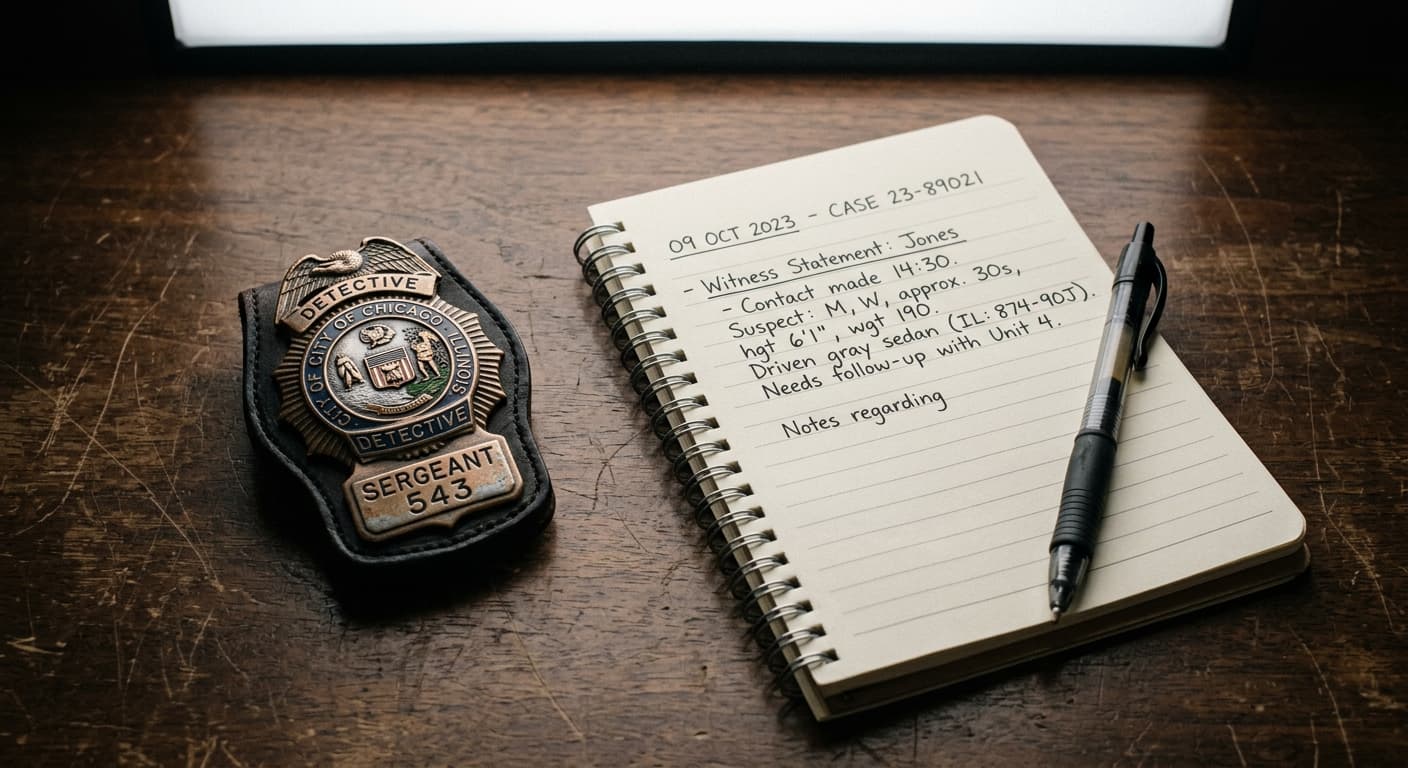
California law explicitly protects your right to record police officers in public. Under Penal Code 148(g), recording an officer performing their duties cannot constitute obstruction, reasonable suspicion for detention, or probable cause for arrest, as long as you are in a public place or somewhere you have a legal right to be.
Your Right to Record Police in California
California is one of the strongest states in the country when it comes to protecting your right to record law enforcement. Since January 1, 2016, Penal Code section 148(g) has provided a clear, statutory right to record police officers performing their duties.
The law states: "The fact that a person takes a photograph or makes an audio or video recording of a public officer or peace officer, while the officer is in a public place or the person taking the photograph or making the recording is in a place he or she has the right to be, does not constitute, in and of itself, a violation of subdivision (a), nor does it constitute reasonable suspicion to detain the person or probable cause to arrest the person."
This means that if you are standing on a public sidewalk, in a park, or anywhere else you have a legal right to be, you can record a police officer without breaking the law. The officer cannot arrest you, detain you, or use your recording activity as justification for any enforcement action against you.
How SB 411 (The Right to Record Act) Changed California Law
Before 2015, the right to record police in California existed as a matter of First Amendment caselaw, but it was not written into the state's penal code. Officers sometimes arrested bystanders who recorded encounters and charged them under Penal Code 148(a) for resisting, delaying, or obstructing an officer.
State Senator Ricardo Lara introduced Senate Bill 411 to close this gap. Governor Jerry Brown signed SB 411 on August 11, 2015, and it took effect on January 1, 2016. The bill amended two sections of the Penal Code:
- Penal Code 69(b): Recording an executive officer in a public place, or from a place where you have a right to be, does not by itself constitute a violation of the law against threatening or resisting an executive officer.
- Penal Code 148(g): Recording a peace officer in a public place, or from a place where you have a right to be, does not by itself violate the obstruction statute, and it does not provide reasonable suspicion or probable cause for any enforcement action.
The bill received bipartisan support. Its passage reflected a growing national movement toward transparency in policing, driven in part by high-profile incidents where bystander video proved essential in holding officers accountable.
What Counts as "Interference" With Police

Your right to record is not unlimited. While PC 148(g) protects the act of recording, PC 148(a)(1) still makes it a misdemeanor to willfully resist, delay, or obstruct any public officer in the discharge of their duties.
The key distinction is between recording and interfering. Recording, by itself, is never interference. But certain actions taken while recording can cross the line:
Actions that are protected:
- Standing on a public sidewalk and filming from a reasonable distance
- Holding your phone up to record during a traffic stop where you are the driver or passenger
- Livestreaming a police encounter to social media
- Refusing to identify yourself solely because you are recording (California does not have a general stop-and-identify statute)
- Continuing to record after an officer asks you to stop (assuming no actual interference)
Actions that may constitute interference:
- Physically blocking an officer from reaching a suspect or making an arrest
- Entering a secured crime scene or restricted area to get a better angle
- Touching an officer or their equipment while recording
- Shouting or creating a disturbance that prevents officers from communicating with each other or with a suspect
- Moving so close that you obstruct the officer's ability to perform their duties
An officer may lawfully order you to step back or move to a different location for safety reasons. For example, an order to "step back 20 feet" during an active arrest is likely a reasonable time, place, and manner restriction. However, an order to "stop recording" or "put your phone away" that has no safety justification is not a lawful order, and you are not required to comply with it.
Can Police Order You to Stop Recording?
The short answer is no. A police officer in California cannot order you to stop recording simply because they do not want to be filmed. Recording is a constitutionally protected activity, and PC 148(g) makes clear that recording alone is not a crime.
However, officers can issue lawful orders related to your physical location and behavior. If you are recording from a spot that genuinely creates a safety hazard or interferes with an active operation, an officer can direct you to move. The distinction matters:
- Unlawful order: "Turn off your camera" or "Delete that video"
- Potentially lawful order: "Please move back to the sidewalk" or "Stand behind this line"
If an officer orders you to stop recording and you believe the order is unlawful, the safest course of action is to comply in the moment and challenge the order later through legal channels. Refusing a direct order from a police officer, even an arguably unlawful one, can escalate the situation and lead to charges under PC 148(a)(1) that you would then need to fight in court.
Can Police Seize Your Phone or Delete Recordings?
Police officers cannot lawfully seize your phone solely because you used it to record them. The Fourth Amendment to the U.S. Constitution protects against unreasonable searches and seizures, and the U.S. Supreme Court has applied this protection specifically to cell phones.
Riley v. California (2014)
In Riley v. California, the Supreme Court held unanimously that police must obtain a warrant before searching the contents of a cell phone seized during an arrest. Chief Justice John Roberts wrote for the court that cell phones contain "the privacies of life" and that the search-incident-to-arrest exception does not justify warrantless phone searches.
This decision means that even if an officer lawfully arrests you, they cannot scroll through your photos, videos, or other data without a warrant. The phone itself may be temporarily secured to prevent destruction of evidence, but its contents remain off-limits until a judge issues a search warrant.
Deleting Your Recordings
An officer who deletes recordings from your phone has potentially committed multiple legal violations:
- Destruction of evidence if the recording is relevant to any legal proceeding
- Violation of your First Amendment rights by suppressing protected expression
- Violation of your Fourth Amendment rights by conducting a warrantless search
- Potential violation of 42 U.S.C. Section 1983, the federal civil rights statute, which allows lawsuits against government officials who violate constitutional rights
If an officer deletes your footage, you may be able to recover it through data recovery software or cloud backups. You should also document what happened as soon as possible and consider filing a complaint with the officer's department and consulting a civil rights attorney.
Recording Police During Traffic Stops
You have the right to record during a traffic stop in California, whether you are the driver or a passenger. This right applies to both audio and video recording.
Practical Tips for Recording During a Traffic Stop
- Keep your hands visible. If you plan to use your phone to record, tell the officer what you are doing before reaching for it. An officer who sees you reaching for an unseen object may perceive a threat.
- Use a dashboard mount or phone holder. Having your phone already mounted reduces the need to reach for it during the stop.
- You do not need the officer's permission. You may inform the officer that you are recording as a courtesy, but you are not legally required to ask for permission.
- Passengers can record too. Passengers have the same right to record as drivers, and they are often in a better position to hold a phone and capture the interaction.
Dashcam Recordings
Dashcam recordings of police encounters are legal in California. Under Vehicle Code Section 26708, dashcams are permitted as long as they do not obstruct the driver's view. They must be mounted in specific areas of the windshield, such as the lower corners or behind the rearview mirror.
One important note: California is a two-party consent state for audio recordings of confidential conversations under Penal Code 632. However, interactions with police officers performing their duties in public are generally not considered "confidential communications" because there is no reasonable expectation of privacy. A police officer conducting a traffic stop on a public road is not having a private conversation.
California's Two-Party Consent Law and Recording Police
California's wiretapping statute, Penal Code 632, makes it illegal to record a "confidential communication" without the consent of all parties. This is sometimes called the "two-party consent" rule.
However, this law does not prevent you from recording police officers in the line of duty. Here is why:
Public places lack confidentiality. PC 632 defines a "confidential communication" as one where the parties reasonably expect their words to be confined to themselves. A police officer speaking to a civilian on a public street, at a traffic stop, or during an arrest has no reasonable expectation of privacy in those statements.
PC 148(g) explicitly permits recording. The statute specifically authorizes "audio or video recording" of peace officers in public. If the legislature intended to limit this to video-only recording, it would not have included the word "audio."
The First Amendment provides additional protection. Federal courts have consistently held that recording police in public is a First Amendment right. Even in two-party consent states like California, constitutional protections take precedence over state eavesdropping statutes when applied to recordings of police performing public duties.
The bottom line: you can record both audio and video of police officers performing their duties in public without violating PC 632, because those interactions are not confidential communications.
Body Camera Laws for California Police Officers
California has two major laws governing police body cameras: Penal Code 832.18, which sets policies for how agencies manage body camera programs, and AB 748, which governs public access to body camera footage.
Penal Code 832.18: Body Camera Policies
Penal Code 832.18 requires every California law enforcement agency that uses body-worn cameras to establish written policies covering:
- Who downloads footage: Supervisors must take custody of cameras after use-of-force incidents, officer-involved shootings, or other serious events.
- Data security: Agencies must implement measures to prevent tampering, unauthorized duplication, and distribution of footage.
- Categorization and tagging: All footage must be classified by incident type at the time of download.
- Retention periods: PC 832.18 directs agencies to consider retention as a best practice, not a hard mandate. Nonevidentiary footage should be retained for a minimum of 60 days, and evidentiary footage, including use-of-force incidents, arrests, and complaints, should be retained for a minimum of two years.
- Access controls: Body camera footage is the property of the law enforcement agency. Officers are prohibited from accessing footage for personal use or uploading it to social media.
- Permanent access logs: Records of who accessed or deleted footage should be retained permanently.
AB 748: Public Access to Body Camera Footage
Assembly Bill 748, which took effect on July 1, 2019, requires law enforcement agencies to release body camera footage of "critical incidents" under the California Public Records Act.
A "critical incident" means:
- An incident where an officer discharged a firearm at a person
- An incident where an officer's use of force resulted in death or great bodily injury
Disclosure timelines under AB 748:
| Timeline | Condition |
|---|---|
| 45 days | Agency may withhold footage if release would substantially interfere with an active investigation |
| Up to 1 year | Continued delay requires proof of interference with investigation |
| Beyond 1 year | Agency must show clear and convincing evidence of interference |
| Every 30 days | Agency must reassess and notify the requester of continued withholding |
Agencies may redact footage to protect the privacy of individuals, such as blurring faces or distorting audio. However, redactions cannot prevent the viewer from fully comprehending the events depicted.
SB 1421: Disclosure of Officer Misconduct Records
Senate Bill 1421, effective January 1, 2019, opened police personnel records to public disclosure in three categories:
- Use-of-force incidents where an officer discharged a firearm or caused great bodily injury
- Sustained findings of sexual assault by an officer
- Sustained findings of dishonesty related to the reporting, investigation, or prosecution of a crime
This law applies retroactively, meaning records from before January 1, 2019, are also subject to disclosure.
SB 691 (2025): Medical Recording Restrictions
The most recent legislation, SB 691, requires law enforcement agencies that have body-worn camera policies to update those policies by July 1, 2026. The update must prohibit officers from intentionally recording a person undergoing a medical or psychological evaluation, procedure, or treatment, and must include procedures for officers to follow when asked by emergency medical personnel to stop recording.
Recording Inside a Police Station
Your right to record inside a police station is more limited than your right to record on a public street. The key factor is whether you are in an area that is genuinely open to the public.
Public areas (lobby, waiting room): You likely have the right to record in parts of a police station that function as public spaces, such as the front lobby or a public-facing service counter. These areas are ones where you have a legal right to be, which triggers the protection of PC 148(g).
Restricted areas (booking rooms, holding cells, offices): You do not have an automatic right to record in restricted areas of a police station. These are not public places, and entering them without authorization could itself constitute a violation. Recording in jails and detention facilities is generally prohibited without prior approval.
Courtrooms: Recording inside California courtrooms is governed by California Rule of Court 1.150, which requires prior permission from the presiding judge. This is a separate legal framework from PC 148(g).
If you need to file a report at a police station and want to record the interaction, the safest approach is to inform the desk officer that you are recording for your own records. If you are told not to record, you may wish to comply in the moment and later consult an attorney about whether the restriction was lawful.
The Copwatch Movement in California
California has a deep history of civilian police monitoring that predates any modern statute. Understanding this history provides context for why the state's laws are among the most protective in the country.
The Black Panther Party (1966)
The practice of organized civilian police monitoring began in Oakland, California, in 1966, when the Black Panther Party for Self-Defense organized armed citizen patrols to monitor the behavior of officers in the Oakland Police Department. Members would follow police cars through predominantly Black neighborhoods and observe interactions from a distance, armed with law books and firearms (which were legal to carry openly under California law at the time).
Berkeley Copwatch (1990)
Berkeley Copwatch, founded in 1990, became the model for modern copwatch organizations. Volunteers patrolled the Telegraph Avenue area near UC Berkeley, documenting police interactions with students, homeless individuals, and activists. Unlike the Black Panthers, Berkeley Copwatch adopted a strict policy of nonviolence and non-interference with police activity.
The organization has been credited with creating some of the first systematic databases of police encounters and successfully using public records requests to challenge police practices. In 2013, Berkeley Copwatch received the James Madison Freedom of Information Award from the Society of Professional Journalists for using public records to block a Homeland Security grant for an armored military vehicle.
Oakland Copwatch
After the fatal shooting of Oscar Grant by a BART police officer on January 1, 2009 (an incident captured on bystander video that became a landmark moment in the recording rights movement), Berkeley Copwatch helped establish Oakland Copwatch. Volunteers conducted street patrols for five months following the shooting.
Modern Impact
The Copwatch model has spread to cities across California and the nation, including San Diego, San Francisco, and Los Angeles. These groups operate within the legal framework established by PC 148(g) and serve as practical examples of the right to record in action.
Federal Court Cases Supporting Your Right to Record
While California's statutory protections are among the strongest in the country, they are reinforced by federal court decisions that have established recording police as a First Amendment right.
Glik v. Cunniffe (1st Circuit, 2011)
In Glik v. Cunniffe, the First Circuit Court of Appeals became the first federal appellate court to explicitly hold that private citizens have a First Amendment right to record police officers in public. Simon Glik was arrested in Boston for filming officers making an arrest in a public park. The court found his arrest violated both the First and Fourth Amendments and noted that this right was "clearly established." Boston paid Glik $170,000 in a settlement.
Turner v. Driver (5th Circuit, 2017)
In Turner v. Driver, the Fifth Circuit held that recording police is a First Amendment right subject only to reasonable time, place, and manner restrictions. Phillip Turner was handcuffed and placed in a patrol car after filming a police station from a public sidewalk. The court ruled that officers had no probable cause to arrest him.
Fields v. City of Philadelphia (3rd Circuit, 2017)
In Fields v. City of Philadelphia, the Third Circuit noted that "every Circuit Court of Appeals to address this issue has held that there is a First Amendment right to record police activity in public." The court held that this right applies to all citizens, regardless of whether they have a specific journalistic or expressive purpose for recording.
Fordyce v. City of Seattle (9th Circuit, 1995)
The controlling Ninth Circuit authority for California is Fordyce v. City of Seattle, 55 F.3d 436 (9th Cir. 1995), which recognized 'the right to film matters of public interest' as protected speech under the First Amendment. Because California falls within the Ninth Circuit, this decision is directly binding on federal district courts in the state.
Askins v. U.S. Department of Homeland Security (9th Circuit, 2018)
In Askins v. U.S. Department of Homeland Security, 899 F.3d 1035 (9th Cir. 2018), the Ninth Circuit expressly held that the First Amendment 'protects the right to photograph and record matters of public interest' and 'includes the right to record law enforcement officers engaged in the exercise of their official duties in public places.' The court added that this right was 'clearly established' at the time of the Fordyce decision. These two 9th Circuit rulings provide the strongest federal foundation for your right to record police in California.
Together, these decisions and others from the Seventh, Ninth, and Eleventh Circuits have created a strong consensus across federal courts that recording police in public is protected by the First Amendment.
What to Do If Your Rights Are Violated
If a police officer arrests you, seizes your phone, or retaliates against you for recording, you have several options:
Immediate Steps
- Do not resist physically. Even if the officer's actions are unlawful, physical resistance can lead to additional charges and physical harm.
- State clearly that you are exercising your right to record under PC 148(g). This creates a record that you invoked your legal right.
- Note the officer's name and badge number if visible.
- Identify witnesses who saw the interaction.
- As soon as possible, back up any recordings to cloud storage or a separate device.
Legal Remedies
- File an internal complaint with the officer's police department. California law requires agencies to accept and investigate complaints.
- File a complaint with the California Department of Justice if the department fails to act.
- Consult a civil rights attorney about a lawsuit under 42 U.S.C. Section 1983. This federal law allows you to sue government officials who violate your constitutional rights while acting under color of law.
- Potential damages may include compensation for emotional distress, punitive damages, and attorney fees.
Explore California Recording Laws
California Recording Laws Overview | Audio Recording | Video Recording | Phone Calls | Workplace | Dashcam Laws | Public Recording | Security Cameras | Landlord-Tenant | Medical | Schools | Voyeurism
This article is for informational purposes only and does not constitute legal advice. Recording laws are subject to change, and you should consult with a qualified attorney for advice specific to your situation.
More California Recording Topics
More California Laws
Frequently Asked Questions
Can I record police in California without telling them?
Yes. California Penal Code 148(g) protects your right to record police officers in public places or from any location where you have a legal right to be. You are not required to announce that you are recording or ask for the officer's permission. While California is a two-party consent state for confidential communications under PC 632, interactions with police officers performing their duties in public are not considered confidential communications because there is no reasonable expectation of privacy.
What happens if a police officer tells me to stop recording?
An officer cannot lawfully order you to stop recording solely because they do not want to be filmed. Under PC 148(g), the act of recording is not obstruction and cannot be used as the basis for detention or arrest. However, if an officer gives you a direct order, the safest approach is to comply in the moment and challenge it later through legal channels. Officers can issue lawful orders to move back for safety, but an order to stop recording that has no safety justification is not a lawful order.
Can police take my phone if I record them in California?
Officers may lawfully seize your phone without a warrant in some circumstances, such as incident to a lawful arrest or to prevent destruction of evidence. But the U.S. Supreme Court held in Riley v. California (2014) that cell phones are protected by the Fourth Amendment and require a warrant to search, even during a lawful arrest, so officers cannot view, unlock, or delete your recordings without one. If an officer unlawfully seizes your phone or destroys footage, you may have grounds for a civil rights lawsuit under 42 U.S.C. Section 1983.
Can passengers record police during a traffic stop in California?
Yes. Passengers have the same right to record as drivers under PC 148(g). Passengers are often in a better position to record because they do not need to keep their hands on the wheel or manage vehicle documents. The right applies to both audio and video recording. If an officer asks a passenger to stop recording without a specific safety justification, that order is likely not lawful.
Can I request body camera footage from California police?
Yes. Under AB 748 (effective July 1, 2019), you can request body camera footage of critical incidents through the California Public Records Act. Critical incidents include officer-involved shootings and use-of-force incidents resulting in death or great bodily injury. Agencies may withhold footage for up to 45 days if release would interfere with an investigation, but they must reassess every 30 days. Under SB 1421, you can also request records of officer misconduct, including use-of-force incidents, sexual assault findings, and dishonesty findings.
Updates
Fixed a self-contradicting FAQ answer and a matching KeyTakeaways bullet about police and phone seizure: officers may lawfully seize a phone in some circumstances but need a warrant under Riley v. California to search its contents.
Independently fact-checked against the cited primary sources; governing law re-checked for recent changes
Corrected the body-camera retention-period description: Penal Code 832.18 frames the 60-day and two-year figures as best practices agencies are directed to consider, not firm legal mandates.
Corrected a body-camera-policy bullet that restated a fixed overstatement, changing 'must be retained permanently' to 'should be retained permanently' to match PC 832.18(b)(5)(E)'s best-practice language.
Governing law re-checked for recent changes
Reviewed and approved by an editor
The Law Behind This Article
This article rests on the statutory provisions below, held in our own legal record and retrieved from the official source. Tap a section to read the operative text.
California Penal Code
§ 148In forcecited in 3 of our articles
(a) (1) Every person who willfully resists, delays, or obstructs any public officer, peace officer, or an emergency medical technician, as defined in Division 2.5 (commencing with Section 1797) of the Health and Safety Code, in the discharge or attempt to discharge any duty of his or her office or employment, when no other punishment is prescribed, shall be punished by a fine not exceeding one thousand dollars ($1,000), or by imprisonment in a county jail not to exceed one year, or by both that fine and imprisonment. (2) Except as provided by subdivision (d) of Section 653t, every person who knowingly and maliciously interrupts, disrupts, impedes, or otherwise interferes with the transmission of a communication over a public safety radio frequency shall be punished by a fine not exceeding one thousand dollars ($1,000), imprisonment in a county jail not exceeding one year, or by both that fine and imprisonment.
Official text (excerpt) · last checked 2026-07-28 · Read the full text in our law library · Verify at leginfo.legislature.ca.gov
Cited in 1,008 court opinions in our collectionLatest citing opinion in our collection: 2026
In the courts (editorial summary, independently checked):California courts have shaped Sec. 148(a)(1): People v. Smith (2013) held it is a necessarily included lesser offense of resisting an officer under section 69 as charged. Cornell v. City & Cnty. of S.F. (2017) held a 148(a) charge requires the officer act within lawful duty, so an unlawful detention defeats probable cause to arrest.
Opinions citing this section in our collection:
- People v. Kelly (California Supreme Court 2006, 51 Cal. Rptr. 3d 98)“…or count of resisting, delaying, or obstructing an officer (Pen.Code, § 148, subd. (a)(1)). The trial court imposed…”
- People v. Smith (California Supreme Court 2013, 57 Cal. 4th 232)✓A jail inmate struck one deputy and threw a bowl of urine and feces at another, and was convicted under section 69; the court held section 148(a)(1) was a lesser offense necessarily included in section 69 as charged, but that no instruction on it was required here.
- City of Santa Cruz v. Municipal Court (California Supreme Court 1989, 49 Cal. 3d 74)✓A man charged under section 148 after a forceful arrest sought the officers' prior excessive force complaints; in that prosecution the court held his lawyer's information-and-belief declaration showed materiality under Evidence Code section 1043, not construing section 148.
Identified automatically from the court opinions citing this section — not a ranking of which case controls.
Also relied on in: California Laws on Recording in Public: What Is Legal (2026), California Recording Laws (2026): All-Party Consent Rules
§ 632In forcecited in 39 of our articles
(a) A person who, intentionally and without the consent of all parties to a confidential communication, uses an electronic amplifying or recording device to eavesdrop upon or record the confidential communication, whether the communication is carried on among the parties in the presence of one another or by means of a telegraph, telephone, or other device, except a radio, shall be punished by a fine not exceeding two thousand five hundred dollars ($2,500) per violation, or imprisonment in a county jail not exceeding one year, or in the state prison, or by both that fine and imprisonment. If the person has previously been convicted of a violation of this section or Section 631, 632.5, 632.6, 632.7, or 636, the person shall be punished by a fine not exceeding ten thousand dollars ($10,000) per violation, by imprisonment in a county jail not exceeding one year, or in the state prison, or by both that fine and imprisonment.
Official text (excerpt) · last checked 2026-08-31 · Read the full text in our law library · Verify at leginfo.legislature.ca.gov
Cited in 267 court opinions in our collectionLatest citing opinion in our collection: 2026
In the courts (editorial summary, independently checked):Kimmel v. Goland (1990) held the section 47(2) litigation privilege does not bar a damages claim under Section 632 for recording confidential conversations without consent. Lieberman v. KCOP Television, Inc. (2003) held a Section 632 violation is complete the moment the recording is made, whether or not it is disclosed.
Opinions citing this section in our collection:
- Rubin v. Green (California Supreme Court 1993, 4 Cal. 4th 1187)“…f telephone conversations with defendants, an offense under Penal Code section 632. We noted that defendants alleged that…”
- Kimmel v. Goland (California Supreme Court 1990, 51 Cal. 3d 202)✓Mobilehome owners secretly taped phone calls with park management in anticipation of suing; the court held the section 47(2) litigation privilege did not bar the cross-complaint for damages under Penal Code section 632, since the injury came from recording, not publication.
- Shulman v. Group W Productions, Inc. (California Supreme Court 1998, 74 Cal. Rptr. 2d 843)✓A TV producer put a wireless microphone on the flight nurse treating a crash victim. No section 632 claim was before the court, but it called section 632 and the intrusion tort laws of general applicability and said the press may not eavesdrop in violation of section 632.
Identified automatically from the court opinions citing this section — not a ranking of which case controls.
Also relied on in: US Recording Laws by State (2026): All 50 States Explained, Can an Employer Record Conversations Without Consent? (2026), Can I Sue Someone for Recording Me on Private or Public Property?
§ 832.18In force
(a) It is the intent of the Legislature to establish policies and procedures to address issues related to the downloading and storage data recorded by a body-worn camera worn by a peace officer. These policies and procedures shall be based on best practices. (b) When establishing policies and procedures for the implementation and operation of a body-worn camera system, law enforcement agencies, departments, or entities shall consider the following best practices regarding the downloading and storage of body-worn camera data: (1) Designate the person responsible for downloading the recorded data from the body-worn camera. If the storage system does not have automatic downloading capability, the officer’s supervisor should take immediate physical custody of the camera and should be responsible for downloading the data in the case of an incident involving the use of force by an officer, an officer-involved shooting, or other serious incident. (2) Establish when data should be downloaded to ensure the data is entered into the system in a timely manner, the cameras are properly maintained and ready for the next use, and for purposes of tagging and categorizing the data.
Official text (excerpt) · last checked 2026-07-28 · Read the full text in our law library · Verify at leginfo.legislature.ca.gov
Cited in 3 court opinions in our collectionLatest citing opinion in our collection: 2026
Opinions citing this section in our collection:
- City of Gilroy v. Superior Court (California Supreme Court 2026)“…ne and radio communications maintained by the department”]; Pen. Code, § 832.18, subd. (b)(5) [specifying that “nonevid…”
- City of Gilroy v. Super Ct. (California Court of Appeal 2023)“…ase of a civilian complaint and to preserve transparency.” (Pen. Code, § 832.18, subd. (b)(5)(A).) The statute also pro…”
Identified automatically from the court opinions citing this section — not a ranking of which case controls.
United States Code Title 42
§ 1983Civil action for deprivation of rightsIn forcecited in 50 of our articles
Every person who, under color of any statute, ordinance, regulation, custom, or usage, of any State or Territory or the District of Columbia, subjects, or causes to be subjected, any citizen of the United States or other person within the jurisdiction thereof to the deprivation of any rights, privileges, or immunities secured by the Constitution and laws, shall be liable to the party injured in an action at law, suit in equity, or other proper proceeding for redress, except that in any action brought against a judicial officer for an act or omission taken in such officer’s judicial capacity, injunctive relief shall not be granted unless a declaratory decree was violated or declaratory relief was unavailable. For the purposes of this section, any Act of Congress applicable exclusively to the District of Columbia shall be considered to be a statute of the District of Columbia.
Official text (excerpt) · last checked 2026-07-28 · Read the full text in our law library · Verify at uscode.house.gov
Cited in 282,365 court opinions in our collectionLatest citing opinion in our collection: 2026
Opinions citing this section in our collection:
- Ashcroft v. Iqbal (Supreme Court of the United States 2009, 556 U.S. 662)“…its brought against state officials under Rev. Stat. §1979, 42 U. S. C. §1983.” Hartman, 547 U. S., at 254, n. 2. Cf.…”
- Celotex Corp. v. Catrett, Administratrix of the Estate of Catrett (Supreme Court of the United States 1986, 477 U.S. 317)“…policeman as she left. Petitioner brought an action under 42 U. S. C. § 1983 claiming that the refusal of service a…”
- Monell v. New York City Dept. of Social Servs. (Supreme Court of the United States 1978, 436 U.S. 658)“…decided less than two decades ago. Focusing new light on 42 U. S. C. § 1983 , that decision widened access to the f…”
Identified automatically from the court opinions citing this section — not a ranking of which case controls.
Also relied on in: Alabama Laws on Recording Police: Your Rights and Limits, Alaska Laws on Recording Police: Your Rights and Limits (2026), Arkansas Laws on Recording Police: Your Rights and Limits (2026)
Search our full record of US law — 2.1 million sections, every state + federal →
Sources and References
- California Penal Code Section 148 (including subdivision g)(leginfo.legislature.ca.gov).gov
- SB 411 (2015) - Right to Record Act(leginfo.legislature.ca.gov).gov
- California Penal Code Section 832.18 - Body-Worn Camera Policies(leginfo.legislature.ca.gov).gov
- AB 748 - Peace Officers: Video and Audio Recordings Disclosure(leginfo.legislature.ca.gov).gov
- SB 1421 - Peace Officers: Release of Records(leginfo.legislature.ca.gov).gov
- California Penal Code Section 632 - Eavesdropping(leginfo.legislature.ca.gov).gov
- Riley v. California, 573 U.S. 373 (2014)(supreme.justia.com)
- Glik v. Cunniffe, 655 F.3d 78 (1st Cir. 2011)(law.justia.com)
- Turner v. Driver, 848 F.3d 678 (5th Cir. 2017)(law.justia.com)
- Fields v. City of Philadelphia, 862 F.3d 353 (3rd Cir. 2017)(law.justia.com)
- 42 U.S.C. Section 1983 - Civil Action for Deprivation of Rights(law.cornell.edu)
- Berkeley Copwatch - History(berkeleycopwatch.org)
- SB 691 (2025) - Body-Worn Camera Medical Recording Restrictions(legiscan.com)
- California Rule of Court 1.150 - Courtroom Recording(courts.ca.gov).gov
- Fordyce v. City of Seattle, 55 F.3d 436 (9th Cir. 1995)(law.cornell.edu)
- Askins v. U.S. Department of Homeland Security, 899 F.3d 1035 (9th Cir. 2018)(cdn.ca9.uscourts.gov).gov