
California
California Security Camera and Surveillance Laws: Rules for Home and Business (2026)
Independently fact-checked against primary sources (last audited August 22, 2026). · Reviewed by the RecordingLaw editorial team. · Law checked current as of August 22, 2026. · 8 primary sources cited on this page. How we verify our legal content
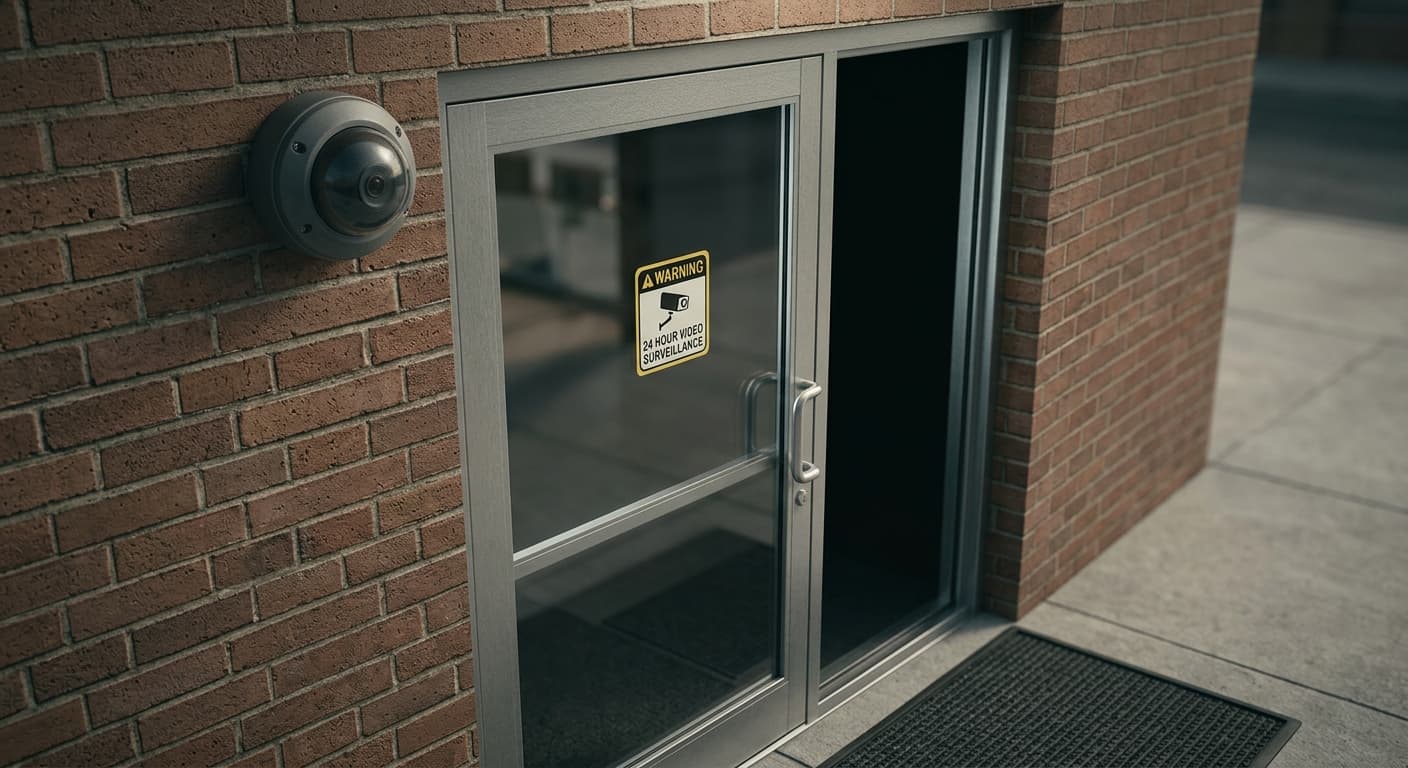
California allows security cameras on residential and commercial property for video-only recording in areas visible to the public. Adding audio to any camera triggers Penal Code 632, the state's all-party consent law, and pointing a camera into private spaces such as bedrooms or bathrooms violates Penal Code 647(j).
Quick Answer
California does not have a single statute governing security cameras. Instead, a combination of state laws controls where you can place cameras, whether you can record audio, and how footage must be handled. The most important rule to understand is that video-only recording in areas visible to the public is generally legal, but adding audio to any security camera immediately triggers California Penal Code 632, the state's strict two-party consent wiretapping law. This distinction between video and audio is the single biggest source of legal trouble for California homeowners and businesses using security cameras.
This guide covers residential placement rules, neighbor disputes, HOA regulations, commercial and workplace surveillance, Ring doorbell cameras, dummy cameras, police access to footage, CCPA data privacy, and apartment complex rules.
California Security Camera Laws at a Glance
| Topic | Rule |
|---|---|
| Video recording on your property | Legal in areas visible to the public |
| Audio recording | Requires all-party consent under PC 632 |
| Cameras aimed at neighbors | Legal if recording publicly visible areas only |
| Hidden cameras in private areas | Illegal under PC 647(j) |
| Workplace cameras | Allowed in common areas, banned in restrooms and locker rooms |
| Signage requirement | Not legally required but strongly recommended |
| CCPA applies to footage | Yes, footage is personal data if it identifies individuals |
| Police access | Requires a warrant, subpoena, or your voluntary consent |
| Retention period | No state-mandated minimum; 30 to 90 days is standard practice |
Residential Security Camera Placement Rules
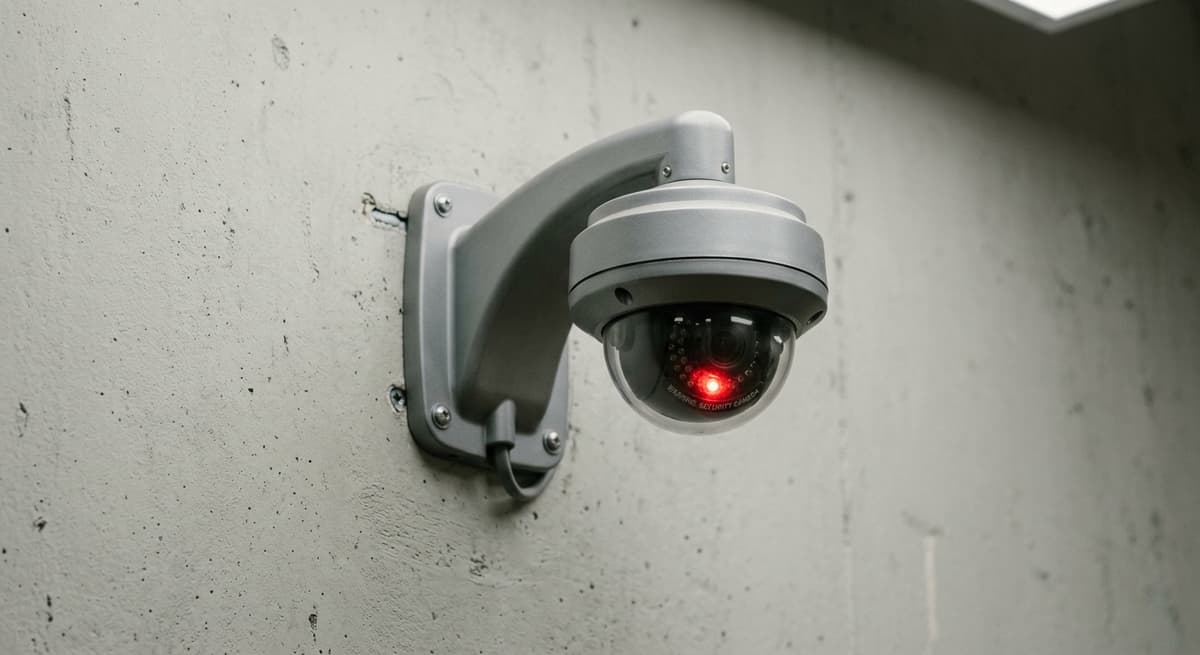
Where You Can Place Cameras
California homeowners can install security cameras on their own property to protect against crime, monitor deliveries, and keep an eye on their homes. You can place cameras in the following locations without legal concern:
- Your front porch, driveway, and garage
- Side yards and backyards that are your own property
- Entryways, hallways, and common rooms inside your home
- Pointed at your own front door, mailbox, or vehicles
The general rule is that you can record anything visible from a public vantage point. If a passerby on the sidewalk could see it, your camera can record it.
Where You Cannot Place Cameras
California law draws a firm line at areas where people have a reasonable expectation of privacy. Under Penal Code 647(j), it is illegal to use any recording device to view the interior of a bedroom, bathroom, changing room, or any other area where the occupant has a reasonable expectation of privacy. Violating this law is a misdemeanor punishable by up to six months in jail and a fine of up to $1,000 for a first offense, or up to one year in jail and $2,000 for repeat offenses.
You should never place cameras:
- Inside bathrooms or restrooms
- Aimed into a neighbor's bedroom or bathroom windows
- In guest bedrooms where visitors expect privacy
- Pointed directly into a neighbor's fenced, enclosed backyard
The Audio Recording Problem
This is where most homeowners get into trouble. Many popular security cameras from Ring, Nest, Arlo, and Wyze come with built-in microphones enabled by default. The moment your camera records audio, you are subject to California Penal Code 632, which makes it illegal to record a confidential communication without the consent of all parties.
A first-time violation of PC 632 carries penalties of up to $2,500 in fines and up to one year in county jail or state prison. Repeat offenders face fines of up to $10,000. Victims can also file a civil lawsuit and recover $5,000 per violation or three times their actual damages, whichever is greater.
A conversation on your front porch between you and a delivery driver could be considered confidential if both parties reasonably expect it to be private. To stay safe, you should disable audio recording on outdoor cameras or post clear signage stating that audio and video recording is in progress.
Can Your Neighbor Point a Security Camera at Your Property?
This is one of the most common questions California homeowners ask. The short answer: it depends on what the camera captures.
When It Is Legal
Your neighbor can legally point a security camera in the general direction of your property if the camera captures only areas that are visible from public spaces. This includes your:
- Front yard, driveway, and sidewalk
- Exterior walls and roof
- Vehicles parked in your driveway or on the street
- Any area visible from the neighbor's own property or the street
California courts have consistently held that you have no reasonable expectation of privacy in areas that are plainly visible to the public. If someone standing on the sidewalk could see the same view as the camera, the recording is likely legal.
When It Is Illegal
A neighbor's camera crosses the legal line when it is aimed to capture areas where you have a reasonable expectation of privacy. This includes:
- The interior of your home through windows, especially bedrooms and bathrooms
- A fenced backyard where you have taken steps to create privacy
- Any area where the camera uses zoom or enhanced optics to see details not visible to the naked eye from a public vantage point
California Civil Code 1708.8 creates civil liability for invasion of privacy. A person who knowingly enters onto another's land or uses a device to capture images of someone engaged in a private activity, in a manner offensive to a reasonable person, is liable for up to three times the actual damages. Courts can also impose civil fines ranging from $5,000 to $50,000.
What to Do if a Neighbor's Camera Invades Your Privacy
If you believe a neighbor's security camera is recording areas where you have a reasonable expectation of privacy, take these steps:
- Document the camera's position. Take photos showing the camera's placement and the areas it appears to cover.
- Talk to your neighbor. Many disputes arise from cameras set up with poor aim rather than bad intent. A polite conversation may resolve the issue.
- Send a written request. If talking does not work, send a written letter asking the neighbor to redirect the camera.
- Contact local code enforcement. Some California cities and counties have local ordinances that may provide additional protections.
- Consult an attorney. If the invasion continues, you may have grounds for a civil lawsuit under Civil Code 1708.8 or a criminal complaint under PC 647(j).
HOA Security Camera Rules in California

Homeowners associations add another layer of regulation. Under California Civil Code 4765, HOAs can require architectural approval for exterior modifications, and security cameras mounted on exterior walls or eaves may fall under this requirement.
What HOAs Can Do
- Require you to submit an architectural review application before installing exterior cameras
- Set rules about camera placement, size, color, and visibility
- Regulate where cameras point to protect neighboring units' privacy
- Install their own cameras in common areas like parking garages, lobbies, pools, and hallways
What HOAs Cannot Do
- Ban security cameras outright. An HOA cannot use architectural review as a pretext to prohibit cameras entirely. California courts have recognized that homeowners have a legitimate interest in protecting their property.
- Record in private areas. HOA-installed cameras in common areas must not be aimed into individual units, bathrooms, or other private spaces.
- Record audio without consent. HOA cameras with microphones are subject to the same PC 632 two-party consent requirements as any other recording device.
Ring Doorbells and HOA Rules
Video doorbells like Ring, Nest Hello, and Arlo are a frequent point of conflict in California HOAs. Some associations have attempted to ban doorbell cameras entirely. However, a doorbell camera is legally treated the same as any other residential security camera. HOAs can regulate the installation method (such as prohibiting drilling into common-area walls in a condo), but outright bans on video doorbells face legal challenges. If your HOA tries to ban your Ring doorbell, consult the CC&Rs and consider whether the restriction is reasonable under California law.
Commercial and Retail Surveillance in California
Businesses in California can use security cameras to prevent theft, monitor safety, and protect employees and customers. However, commercial surveillance is subject to additional regulations beyond residential rules.
Where Businesses Can Install Cameras
- Sales floors, retail areas, and merchandise displays
- Building entrances and exits
- Parking lots and parking structures
- Loading docks and storage areas
- Cash register areas and point-of-sale stations
- Office common areas, hallways, and lobbies
Where Businesses Cannot Install Cameras
California strictly prohibits cameras in areas where customers or employees have a reasonable expectation of privacy:
- Restrooms and bathrooms
- Changing rooms, fitting rooms, and dressing rooms
- Locker rooms and shower facilities
- Tanning booths
- Lactation rooms
Violating these restrictions can result in criminal charges under PC 647(j) and significant civil liability.
Signage for Commercial Properties
California does not have a blanket state law requiring businesses to post "video surveillance in use" signs. However, posting visible signage is strongly recommended as a best practice for several reasons:
- Signs act as a deterrent to theft and vandalism
- Signage helps establish that individuals entering the premises have no expectation of privacy in monitored areas
- Signs demonstrate good faith compliance with privacy regulations
- Some local city and county ordinances may require signage for businesses
If your cameras record audio, signage becomes more important because it can help establish that people were notified and continued their conversations voluntarily, potentially addressing the PC 632 consent requirement.
Workplace Surveillance Cameras in California
California has some of the strongest employee privacy protections in the country. The California Constitution explicitly guarantees a right to privacy in Article I, Section 1, and this right extends into the workplace.
Employer Rights
Employers can install visible security cameras in common work areas as long as they have a legitimate business reason. Acceptable reasons include:
- Preventing theft of inventory, equipment, or trade secrets
- Monitoring workplace safety and compliance
- Protecting employees from violence or harassment
- Documenting incidents for workers' compensation or liability purposes
Prohibited Surveillance Areas
California Labor Code 435 makes it illegal for any employer to record audio or video of an employee in a restroom, locker room, or room designated for changing clothes, unless authorized by a court order. This prohibition has no exceptions for security purposes.
Other areas where workplace cameras are prohibited or heavily restricted include:
- Break rooms (courts have found employees may have a reasonable expectation of privacy)
- Union meeting rooms
- Areas designated for personal phone calls
- Any private space where employees have a reasonable expectation of privacy
Audio Recording in the Workplace
Because California is a two-party consent state under PC 632, employers cannot record workplace conversations without the knowledge and consent of all parties. This applies to:
- In-person conversations between employees
- Phone calls made by employees
- Video conference calls
- Any verbal communication where parties expect privacy
Employers who want to use cameras with audio should provide clear written notice in employee handbooks and obtain explicit consent from workers.
Emerging Legislation
California has been actively expanding employee surveillance protections. Assembly Bill 1221 seeks to regulate workplace surveillance tools, including AI-powered monitoring systems, extending coverage to remote and off-site workers regardless of location. AB 1331 would restrict surveillance in bathrooms and breakrooms and give employees a right to leave surveillance-capable devices behind during off-duty hours. Neither bill has been enacted; employers should monitor both for new compliance requirements.
Ring Doorbells and Video Doorbell Laws
Ring doorbells and similar video doorbell cameras are legal in California, but they are subject to the same rules as any other security camera.
Key Rules for Ring Doorbell Owners
- Video recording of your front porch, driveway, and street is legal
- Audio recording must comply with PC 632. Ring doorbells have microphones enabled by default. Consider disabling audio or posting a sign that says "Audio and Video Recording in Progress"
- Two-way audio through the Ring app is legal because both parties are aware the conversation is happening through the device
- Motion-activated recording is legal as long as it captures only publicly visible areas and does not include audio of confidential conversations
- Sharing footage on social media or neighborhood apps like Nextdoor is legal if it captures activity in public areas, but sharing footage that shows someone in a private moment could create liability
Ring and Police Access
Ring's official policy requires law enforcement to obtain a valid search warrant or court order before the company will disclose user footage. Ring ended its Request for Assistance (RFA) tool in early 2024, which had allowed police to send bulk video requests directly to Ring users.
Police can still:
- Ask you voluntarily to share footage (you have the right to refuse)
- Obtain a warrant from a judge based on probable cause
- Request footage in emergencies involving imminent danger of death or serious physical injury
You are never required to hand over your Ring footage to police without a warrant. The Fourth Amendment protects your right to refuse warrantless searches of your property, including digital recordings stored on your devices or in the cloud.
Dummy and Fake Security Cameras
California does not have a specific law prohibiting the installation of dummy or fake security cameras. However, using fake cameras creates significant legal liability.
The Liability Risk
If you install dummy cameras and someone is assaulted, robbed, or otherwise harmed in an area they believed was under surveillance, you could face civil liability for creating a false sense of security. Courts have found that fake cameras can lead people to take risks they otherwise would not, such as walking alone in a poorly lit area they believe is monitored.
This risk is especially high for:
- Apartment complex owners and property managers
- HOAs that install dummy cameras in common areas
- Business owners who use fake cameras instead of real ones
- Landlords who represent that a property has security surveillance
Best Practices for Dummy Cameras
If you choose to use dummy cameras despite the liability risk:
- Never represent that the cameras are real or functional
- Do not post "surveillance in progress" signs near dummy cameras, as this increases the false sense of security
- Disclose to tenants, employees, or HOA members that the cameras are non-functional
- Consider the cost comparison. Basic real security cameras now cost under $50, making the liability risk of dummy cameras hard to justify
CCPA and Security Camera Footage
Security camera footage that captures identifiable individuals qualifies as personal information under the California Consumer Privacy Act (CCPA). This has significant implications for businesses that operate security cameras.
Consumer Rights Under the CCPA
If your business collects security camera footage that identifies California consumers, those individuals have the right to:
- Know what personal information (including video footage) your business has collected about them
- Access video footage in which they appear
- Request deletion of footage containing their image (with some exceptions for security and legal compliance)
- Opt out of the sale or sharing of footage containing their likeness
- Non-discrimination for exercising any of these rights
When a consumer requests access to footage they appear in, businesses must comply. However, any third parties visible in the same footage must be blurred or redacted before the footage is shared.
Penalties for CCPA Violations
The CCPA imposes penalties of up to $7,500 per intentional violation. For businesses with extensive security camera systems that capture hundreds or thousands of individuals, the potential liability is substantial.
Practical Compliance Steps
- Include security camera footage in your CCPA privacy policy disclosures
- Establish a clear data retention and deletion policy for footage
- Train employees on how to handle consumer requests for footage access
- Implement procedures to redact third parties when fulfilling access requests
- Document your legitimate business purpose for collecting footage
Apartment Complex Security Cameras
Security cameras in apartment complexes involve a balance between the landlord's interest in property security and tenants' privacy rights.
Landlord Camera Placement Rules
Landlords can install cameras in:
- Building entrances and exits
- Hallways and stairwells
- Parking lots and garages
- Laundry rooms and mail areas
- Swimming pools and recreation areas
Landlords cannot place cameras:
- Inside individual apartment units
- Aimed to capture the interior of units when doors open
- Near windows angled to see inside private spaces
- In any location that would constitute surveillance of a specific tenant's daily activities
Tenant Rights
Under California Civil Code 1940.2, it is unlawful for a landlord to use force, willful threats, menacing conduct, or other listed coercive tactics, including a significant violation of the entry-notice rules, for the purpose of pressuring a tenant to vacate. The statute does not itself create a right for tenants to install security devices. Tenants often can install removable cameras at their own unit's entrance when the lease permits it, but they should:
- Check the lease for restrictions on modifications (drilling holes, mounting hardware)
- Make sure cameras do not point at other tenants' doors or windows
- Disable audio recording to comply with PC 632
- Remove cameras and repair any damage when moving out
Audio in Common Areas
Landlords should never enable audio recording on cameras in apartment common areas. Conversations between tenants in hallways, lobbies, and parking areas may be considered confidential under PC 632, and recording them without consent from all parties is illegal.
Security Camera Footage Retention
California does not have a general state law mandating how long homeowners or businesses must keep security camera footage. However, there are practical guidelines and some specific requirements to consider.
General Best Practices
- Residential cameras: Most home security systems retain footage for 7 to 30 days before overwriting, which is sufficient for most purposes
- Commercial properties: Industry best practice is 30 to 90 days of retention
- Incident-related footage: If your camera captures a crime, accident, or other incident, preserve that footage immediately and store it separately from your regular recording loop
Specific Requirements
- A 2025-2026 bill known as the California Location Privacy Act (AB 1355) would have required deletion of footage containing license plates or facial recognition data within 30 days for certain camera systems that capture public areas, but it died in the Legislature on January 31, 2026 and never became law; no such deletion requirement currently applies
- If a consumer makes a CCPA request related to footage, you must retain the footage long enough to process the request
- If footage is relevant to pending or anticipated litigation, you have a legal duty to preserve it regardless of your normal retention schedule
Penalties for Illegal Security Camera Use in California
California imposes both criminal and civil penalties for security camera violations.
| Violation | Statute | Penalty |
|---|---|---|
| Recording confidential communications (audio) | PC 632 | Up to $2,500 fine and/or 1 year in jail (first offense); up to $10,000 fine (repeat offense) |
| Voyeurism or hidden camera in private area | PC 647(j) | Up to 6 months in jail and $1,000 fine (first offense); up to 1 year and $2,000 (repeat) |
| Invasion of privacy (civil) | Civil Code 1708.8 | Three times actual damages plus $5,000 to $50,000 civil fine |
| Employer recording in restroom or locker room | Labor Code 435 | Criminal penalties plus civil liability |
| CCPA violation (AG/CPPA enforcement) | Civil Code 1798.155 | Up to $7,500 per intentional violation |
| Civil lawsuit for illegal audio recording | PC 637.2 | $5,000 per violation or three times actual damages, whichever is greater |
Related California Recording Laws
- California Recording Laws (Main Guide)
- California Audio Recording Laws
- California Video Recording Laws
- California Workplace Recording Laws
- California Voyeurism and Hidden Camera Laws
- California Laws on Recording Police
- California Landlord-Tenant Recording and Surveillance Laws
- California Dashcam Laws
- California Phone Call Recording Laws
- California Laws on Recording in Public
- California School Recording Laws
- California Laws on Recording Doctors and Medical Appointments
More California Recording Topics
See Also
- California Surveillance Camera Laws covers home, HOA, neighbor, workplace, and landlord camera rules in California.
More California Laws
Frequently Asked Questions
Is it legal to have security cameras on your house in California?
Yes. California homeowners can install security cameras on their own property. Cameras can record your front yard, driveway, porch, and any area visible from a public vantage point. However, cameras must not be aimed into areas where others have a reasonable expectation of privacy, such as a neighbor's bedroom or bathroom windows. If your cameras record audio, you must comply with Penal Code 632, which requires consent from all parties to a confidential communication.
Can my neighbor legally point a security camera at my house in California?
Your neighbor can point a camera in the general direction of your property if it only captures areas visible from public spaces, such as your front yard, driveway, or exterior walls. The camera becomes illegal if it is aimed to record areas where you have a reasonable expectation of privacy, such as the interior of your home through windows or a fenced backyard. If a neighbor's camera invades your privacy, you may have grounds for a civil lawsuit under California Civil Code 1708.8.
Do security cameras with audio violate California law?
Security cameras that record video only are generally legal in California. However, enabling audio recording triggers Penal Code 632, California's two-party consent wiretapping law. Recording a confidential conversation without the consent of all parties is a crime punishable by fines up to $2,500 (first offense) or $10,000 (repeat offense) and up to one year in jail. Many popular cameras from Ring, Nest, and Arlo have microphones enabled by default, so homeowners should disable audio or post clear signage.
Can my HOA ban security cameras or Ring doorbells in California?
An HOA can regulate how security cameras are installed, including requiring architectural review under Civil Code 4765 for exterior-mounted cameras. However, an HOA generally cannot ban security cameras or video doorbells outright. Courts have recognized that homeowners have a legitimate interest in property security. The HOA can set reasonable rules about placement, appearance, and direction of cameras, but a total ban is likely unenforceable.
Can police access my security camera or Ring doorbell footage without a warrant in California?
Police generally need a valid search warrant or court order to access your security camera footage. You are not required to hand over recordings without a warrant. Ring's official policy requires law enforcement to obtain a warrant before the company will disclose user footage. The only exceptions are when you voluntarily consent to share footage or in emergency situations involving imminent danger of death or serious physical injury.
Updates
Corrected three defects on the California security camera page: the 'California Location Privacy Act (AB 1355)' died in the Legislature and never took effect, the CCPA's $7,500 penalty figure is cited to the wrong statute (fixed to Civil Code 1798.155), and the home/remote-worker surveillance provisions were misattributed between pending bills AB 1221 and AB 1331.
Independently fact-checked against the cited primary sources; governing law re-checked for recent changes
Corrected the description of Civil Code 1940.2: it bars specific coercive landlord conduct aimed at forcing a tenant to move out, and does not itself grant tenants a right to install security devices.
Governing law re-checked for recent changes
Reviewed and approved by an editor
The Law Behind This Article
This article rests on the statutory provisions below, held in our own legal record and retrieved from the official source. Tap a section to read the operative text.
California Penal Code
§ 632In forcecited in 39 of our articles
(a) A person who, intentionally and without the consent of all parties to a confidential communication, uses an electronic amplifying or recording device to eavesdrop upon or record the confidential communication, whether the communication is carried on among the parties in the presence of one another or by means of a telegraph, telephone, or other device, except a radio, shall be punished by a fine not exceeding two thousand five hundred dollars ($2,500) per violation, or imprisonment in a county jail not exceeding one year, or in the state prison, or by both that fine and imprisonment. If the person has previously been convicted of a violation of this section or Section 631, 632.5, 632.6, 632.7, or 636, the person shall be punished by a fine not exceeding ten thousand dollars ($10,000) per violation, by imprisonment in a county jail not exceeding one year, or in the state prison, or by both that fine and imprisonment.
Official text (excerpt) · last checked 2026-08-31 · Read the full text in our law library · Verify at leginfo.legislature.ca.gov
Cited in 267 court opinions in our collectionLatest citing opinion in our collection: 2026
In the courts (editorial summary, independently checked):Kimmel v. Goland (1990) held the section 47(2) litigation privilege does not bar a damages claim under Section 632 for recording confidential conversations without consent. Lieberman v. KCOP Television, Inc. (2003) held a Section 632 violation is complete the moment the recording is made, whether or not it is disclosed.
Opinions citing this section in our collection:
- Rubin v. Green (California Supreme Court 1993, 4 Cal. 4th 1187)“…f telephone conversations with defendants, an offense under Penal Code section 632. We noted that defendants alleged that…”
- Kimmel v. Goland (California Supreme Court 1990, 51 Cal. 3d 202)✓Mobilehome owners secretly taped phone calls with park management in anticipation of suing; the court held the section 47(2) litigation privilege did not bar the cross-complaint for damages under Penal Code section 632, since the injury came from recording, not publication.
- Shulman v. Group W Productions, Inc. (California Supreme Court 1998, 74 Cal. Rptr. 2d 843)✓A TV producer put a wireless microphone on the flight nurse treating a crash victim. No section 632 claim was before the court, but it called section 632 and the intrusion tort laws of general applicability and said the press may not eavesdrop in violation of section 632.
Identified automatically from the court opinions citing this section — not a ranking of which case controls.
Also relied on in: California Recording Laws (2026): All-Party Consent Rules, US Recording Laws by State (2026): All 50 States Explained, Can an Employer Record Conversations Without Consent? (2026)
§ 647In forcecited in 16 of our articles
Except as provided in paragraph (5) of subdivision (b) and in subdivisions (k) and (l), a person who commits any of the following acts is guilty of disorderly conduct, a misdemeanor: (a) An individual who solicits anyone to engage in or who engages in lewd or dissolute conduct in a public place or in a place open to the public or exposed to public view. (b) (1) An individual who solicits, or who agrees to engage in, or who engages in, an act of prostitution with the intent to receive compensation, money, or anything of value from another person. An individual agrees to engage in an act of prostitution when, with specific intent to so engage, the individual manifests an acceptance of an offer or solicitation by another person to so engage, regardless of whether the offer or solicitation was made by a person who also possessed the specific intent to engage in an act of prostitution. (2) An individual who solicits, or who agrees to engage in, or who engages in, an act of prostitution with another person who is 18 years of age or older in exchange for the individual providing compensation, money, or anything of value to the other person.
Official text (excerpt) · last checked 2026-08-31 · Read the full text in our law library · Verify at leginfo.legislature.ca.gov
Cited in 593 court opinions in our collectionLatest citing opinion in our collection: 2026
In the courts (editorial summary, independently checked):In re Giannini (1968) set aside convictions under Penal Code 647(a) because the prosecution introduced no evidence of community standards, and equated "lewd or dissolute" with obscenity only for the purpose of judging an allegedly obscene dance performed for an audience.
Opinions citing this section in our collection:
- Morrison v. State Board of Education (California Supreme Court 1969, 1 Cal. 3d 214)“…public beach and the teacher was arrested for violation of Penal Code section 647, subdivision (a), and convicted, on his…”
- People v. Laiwa (California Supreme Court 1983, 34 Cal. 3d 711)“…to arrest him for being under the influence of a narcotic. (Pen. Code, § 647, subd. (f).) [1] He moved, however, to…”
- In Re Cregler (California Supreme Court 1961, 56 Cal. 2d 308)✓A man previously convicted of theft was arrested for standing in a San Francisco bus station under the pre-1961 vagrancy version of section 647. The court rejected his vagueness challenge, reading loiter to require lingering to commit a crime, and denied habeas relief.
Identified automatically from the court opinions citing this section — not a ranking of which case controls.
Also relied on in: Is It Illegal to Video Record Someone Without Their Consent? (2026), California Laws on Recording in Public: What Is Legal (2026), California Smart Glasses Recording Laws (2026)
California Civil Code
§ 1708.8In forcecited in 9 of our articles
(a) A person is liable for physical invasion of privacy when the person knowingly enters onto the land or into the airspace above the land of another person without permission or otherwise commits a trespass in order to capture any type of visual image, sound recording, or other physical impression of the plaintiff engaging in a private, personal, or familial activity and the invasion occurs in a manner that is offensive to a reasonable person. (b) A person is liable for constructive invasion of privacy when the person attempts to capture, in a manner that is offensive to a reasonable person, any type of visual image, sound recording, or other physical impression of the plaintiff engaging in a private, personal, or familial activity, through the use of any device, regardless of whether there is a physical trespass, if this image, sound recording, or other physical impression could not have been achieved without a trespass unless the device was used. (c) An assault or false imprisonment committed with the intent to capture any type of visual image, sound recording, or other physical impression of the plaintiff is subject to subdivisions (d), (e), and (h).
Official text (excerpt) · last checked 2026-08-31 · Read the full text in our law library · Verify at leginfo.legislature.ca.gov
Cited in 17 court opinions in our collectionLatest citing opinion in our collection: 2026
In the courts (editorial summary, independently checked):Richardson-Tunnell v. Schools Insurance Program for Employees (2007) held Section 1708.8 creates no exception to Government Code 821.6 immunity for a public entity's investigatory surveillance. Simmons v. Bauer Media Group USA, LLC (2020) let a 1708.8(b) claim over a hidden tracker past an anti-SLAPP motion without reaching its elements.
Opinions citing this section in our collection:
- Hernandez v. Hillsides, Inc. (California Supreme Court 2009, 47 Cal. 4th 272)“…provisions is on the “intent to capture” a “visual image” (Civ. Code, § 1708.8, subd. (a)), or on the “attempt” to do…”
- Richardson-Tunnell v. Schools Insurance Program for Employees (California Court of Appeal 2007, 69 Cal. Rptr. 3d 176)✓Workers' compensation investigators secretly videotaped an injured teacher at her wedding and honeymoon; the court held Civil Code section 1708.8 creates no exception to the investigatory immunity of Government Code section 821.6, so her claim against the public entities failed.
- Raef v. Appellate Division of the Superior Court (California Court of Appeal 2015, 240 Cal. App. 4th 1112)“…Erwin Chemerinsky explained in relation to another statute (Civ. Code, § 1708.8, which, too, forms part of what is popu…”
Identified automatically from the court opinions citing this section — not a ranking of which case controls.
Also relied on in: California Video Recording Laws: Filming, Surveillance, and Consent (2026), California Voyeurism and Hidden Camera Laws: Penalties and Protections (2026), California Drone Laws (2026): Privacy, Fires & Shoot-Down Rules
§ 1940.2In forcecited in 2 of our articles
(a) It is unlawful for a landlord to do any of the following for the purpose of influencing a tenant to vacate a dwelling: (1) Engage in conduct that violates subdivision (a) of Section 484 of the Penal Code. (2) Engage in conduct that violates Section 518 of the Penal Code. (3) Use, or threaten to use, force, willful threats, or menacing conduct constituting a course of conduct that interferes with the tenant’s quiet enjoyment of the premises in violation of Section 1927 that would create an apprehension of harm in a reasonable person. Nothing in this paragraph requires a tenant to be actually or constructively evicted in order to obtain relief. (4) Commit a significant and intentional violation of Section 1954. (5) Threaten to disclose information regarding or relating to the immigration or citizenship status of a tenant, occupant, or other person known to the landlord to be associated with a tenant or occupant. This paragraph does not require a tenant to be actually or constructively evicted in order to obtain relief.
Official text (excerpt) · last checked 2026-07-28 · Read the full text in our law library · Verify at leginfo.legislature.ca.gov
Cited in 24 court opinions in our collectionLatest citing opinion in our collection: 2026
Opinions citing this section in our collection:
- Larson v. City & County of San Francisco (California Court of Appeal 2011, 192 Cal. App. 4th 1263)“…ntiharassment” legislation, enacted in 2004 and codified as Civil Code section 1940.2, also makes such conduct actionable by…”
- Erlach v. Sierra Asset Servicing, LLC (California Court of Appeal 2014, 226 Cal. App. 4th 1281)“…17 In addition, Civil Code section 1940.2 makes it unlawful for a landlord to com…”
- Action Apartment Ass'n v. City of Santa Monica (California Supreme Court 2007, 41 Cal. 4th 1232)“…nt to vacate a dwelling includes a similar savings clause. (Civ. Code, § 1940.2, subd. (d).) However, we see nothing in…”
Identified automatically from the court opinions citing this section — not a ranking of which case controls.
Also relied on in: California Landlord-Tenant Recording and Surveillance Laws (2026)
§ 4765In force
(a) This section applies if the governing documents require association approval before a member may make a physical change to the member’s separate interest or to the common area. In reviewing and approving or disapproving a proposed change, the association shall satisfy the following requirements: (1) The association shall provide a fair, reasonable, and expeditious procedure for making its decision. The procedure shall be included in the association’s governing documents. The procedure shall provide for prompt deadlines. The procedure shall state the maximum time for response to an application or a request for reconsideration by the board. (2) A decision on a proposed change shall be made in good faith and may not be unreasonable, arbitrary, or capricious. (3) Notwithstanding a contrary provision of the governing documents, a decision on a proposed change may not violate any governing provision of law, including, but not limited to, the Fair Employment and Housing Act (Part 2.8 (commencing with Section 12900) of Division 3 of Title 2 of the Government Code), or a building code or other applicable law governing land use or public safety.
Official text (excerpt) · last checked 2026-07-28 · Read the full text in our law library · Verify at leginfo.legislature.ca.gov
Cited in 3 court opinions in our collectionLatest citing opinion in our collection: 2025
Opinions citing this section in our collection:
- Eng v. Opperman (California Court of Appeal 2025)“…adoption and enforcement.” Beyond all that, there is Civil Code section 4765, entitled…”
- Forbush v. Hamilton Cove Homeowners Assn. CA2/5 (California Court of Appeal 2025)“…e covenant of good faith and fair dealing, and violation of Civil Code section 4765, the Forbushes were clear that the reme…”
- Whitehawk Ranch at Hubbard Homeowner Assn. v. Bolin CA2/8 (California Court of Appeal 2016)“…nterest Development Act. (See former Civ. Code, § 1378, now Civ. Code, § 4765.)] . . . the rules should have been pub…”
Identified automatically from the court opinions citing this section — not a ranking of which case controls.
California Labor Code
§ 435In forcecited in 7 of our articles
(a) No employer may cause an audio or video recording to be made of an employee in a restroom, locker room, or room designated by an employer for changing clothes, unless authorized by court order. (b) No recording made in violation of this section may be used by an employer for any purpose. This section applies to a private or public employer, except the federal government. (c) A violation of this section constitutes an infraction.
Official text (excerpt) · last checked 2026-07-28 · Read the full text in our law library · Verify at leginfo.legislature.ca.gov
Cited in 1 court opinions in our collectionLatest citing opinion in our collection: 2006
Opinions citing this section in our collection:
- Trujillo v. City of Ontario (District Court, C.D. California 2006, 428 F. Supp. 2d 1094)“…See, e.g., Cal.Penal Code §§ 647(k), 653(n); Cal. Labor Code 435. While the laws concerning video survei…”
Identified automatically from the court opinions citing this section — not a ranking of which case controls.
Also relied on in: California Employee Monitoring Laws: Employer Rules (2026), California Surveillance Camera Laws: Complete 2026 Guide, Workplace Surveillance Camera Laws: Employee Guide
Search our full record of US law — 2.1 million sections, every state + federal →
Sources and References
- California Penal Code 632 - Eavesdropping and Recording(leginfo.legislature.ca.gov).gov
- California Penal Code 647 - Disorderly Conduct and Invasion of Privacy(leginfo.legislature.ca.gov).gov
- California Civil Code 1708.8 - Invasion of Privacy(leginfo.legislature.ca.gov).gov
- California Labor Code 435 - Employer Recording Restrictions(leginfo.legislature.ca.gov).gov
- California Civil Code 4765 - HOA Architectural Review(leginfo.legislature.ca.gov).gov
- California Consumer Privacy Act (CCPA) - Office of the Attorney General(oag.ca.gov).gov
- California Civil Code 1940.2 - Landlord Retaliation(leginfo.legislature.ca.gov).gov
- California Invasion of Privacy Act - Full Chapter(leginfo.legislature.ca.gov).gov