
Virginia
Virginia Security Camera Laws: Home, Business, and HOA Rules
Independently fact-checked against primary sources (last audited August 15, 2026). · Reviewed by the RecordingLaw editorial team. · Law checked current as of August 15, 2026. · 6 primary sources cited on this page. How we verify our legal content
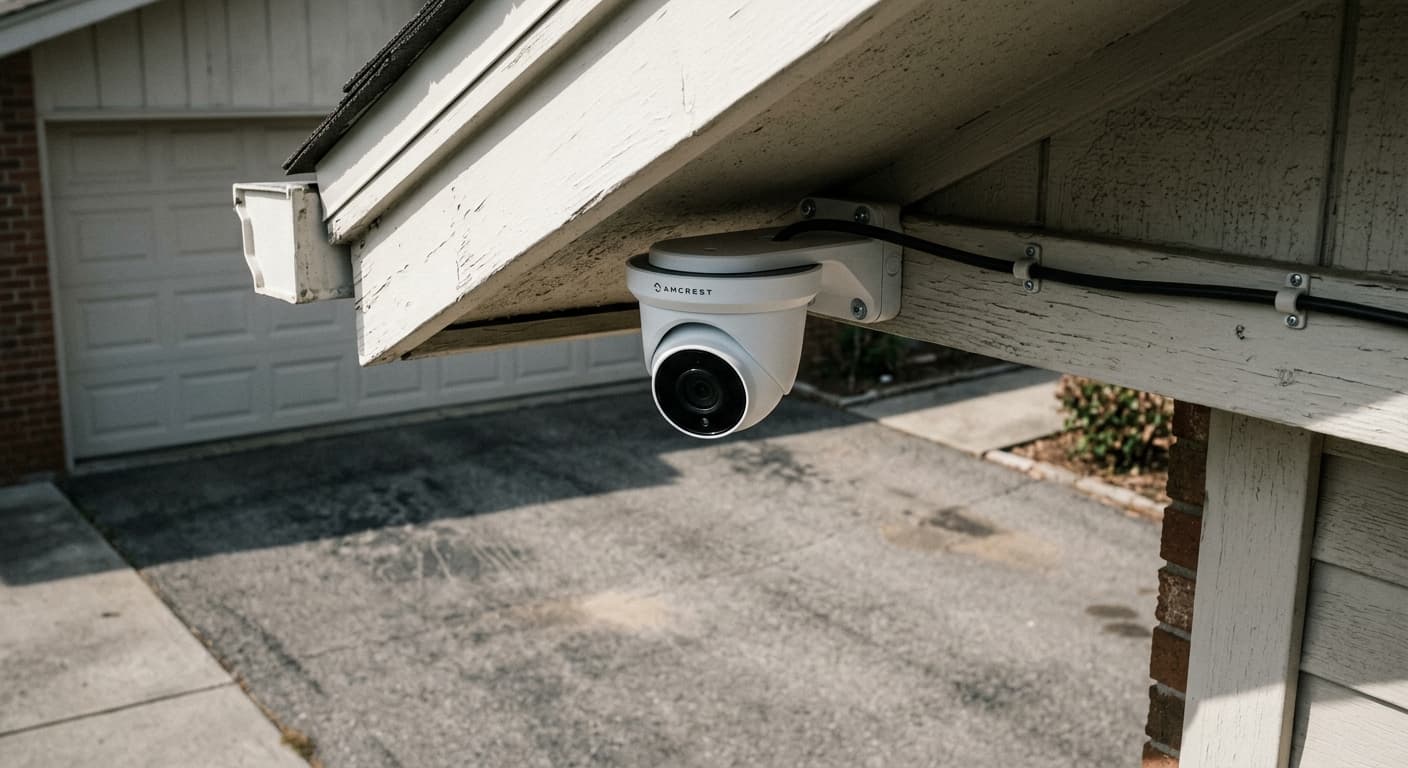
In Virginia, installing security cameras on your own property is legal and requires no permit. Cameras may not record areas where others have a reasonable expectation of privacy under Va. Code 18.2-386.1. Audio captured by cameras must follow the one-party consent rule under Va. Code 19.2-62.
Virginia does not have a single comprehensive security camera statute. Instead, the legality of security cameras is governed by a combination of privacy statutes, wiretapping laws, property rights, and local ordinances. In most situations, you can install security cameras on your own property without restriction. The legal issues arise when those cameras capture footage of areas where other people have a reasonable expectation of privacy, or when they record audio of conversations.
This guide covers the full scope of Virginia security camera law for homeowners, renters, businesses, and HOA communities, including placement rules, audio recording concerns, neighbor disputes, and footage retention.
Home Security Cameras
Your Right to Install Cameras
Virginia homeowners have broad discretion to install security cameras on their own property. You can place cameras at:
- Front doors and entryways
- Driveways and garages
- Backyards and patios
- Interior hallways and common areas of your home
- Windows facing your own property
No permit is required for residential security cameras in Virginia, and there is no statewide registration requirement.
Where Home Cameras Cannot Point
While you can protect your own property, your cameras cannot be positioned to:
- Record inside a neighbor's home through their windows, capturing private activity where they have a reasonable expectation of privacy (Virginia's peeping statute, Va. Code Ann. 18.2-130, targets physically entering another's property to peep through a window or aperture, or using a peephole, so a stand-off camera raises privacy concerns even where it does not squarely fit that statute's elements)
- Capture footage of areas where neighbors have a reasonable expectation of privacy (bathrooms, bedrooms visible through windows)
- Use zoom or telephoto capabilities to observe private activities on neighboring properties
- Record into areas enclosed by fences or privacy barriers designed to create a private space
The key legal standard is the "reasonable expectation of privacy." Public-facing areas of a neighbor's property (front yard, driveway visible from the street) generally do not carry this expectation. Enclosed backyards, interior rooms, and areas with privacy fencing typically do.
Doorbell Cameras
Doorbell cameras (Ring, Nest, Arlo, and similar devices) are widely used in Virginia and are generally legal. These cameras typically capture:
- Your front porch and entryway
- The public sidewalk and street in front of your home
- A portion of your front yard
- Anyone who approaches your door
Because doorbell cameras face areas with minimal privacy expectation (public street, your own porch), they rarely create legal issues. However, if a doorbell camera is positioned to capture a neighbor's private space, the same privacy rules apply.
Audio Recording on Home Security Cameras
This is where many Virginia homeowners create unintentional legal risks. If your security camera records audio, the wiretapping statute (Va. Code Ann. 19.2-62) applies to the audio portion.
Under one-party consent, you can only record conversations that you are a party to. If your outdoor camera captures audio of your neighbor's conversations on the sidewalk while you are not present, the audio recording could technically violate the wiretapping statute if those conversations carry a reasonable expectation of privacy.
Practical recommendations:
- Disable audio on outdoor cameras that capture areas beyond your immediate property
- If audio is enabled, post visible signs stating "Audio and Video Recording in Progress"
- Use cameras with configurable audio zones
- Keep audio recording limited to doorbell cameras where you interact directly with visitors
Business Security Cameras
General Rules for Virginia Businesses
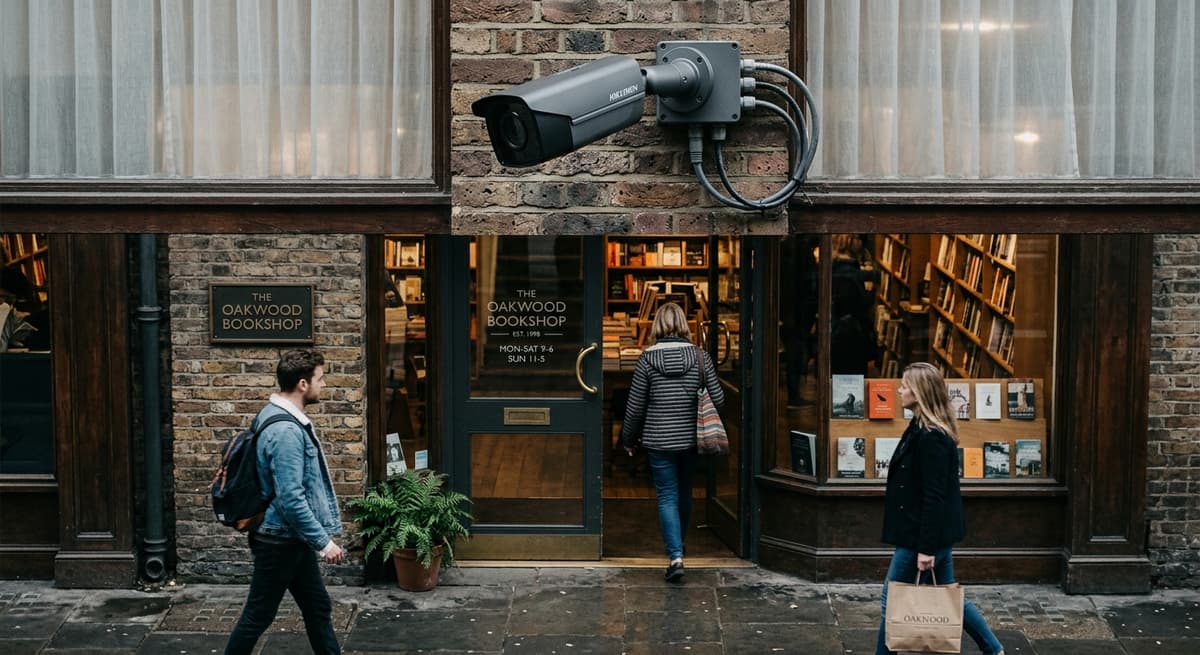
Virginia businesses can install security cameras for legitimate purposes including:
- Theft prevention and loss control
- Employee safety monitoring
- Customer dispute documentation
- Property protection
- Compliance with insurance requirements
Permitted Camera Locations
Business cameras are legal in:
- Sales floors and retail areas
- Entrances, exits, and lobbies
- Hallways and corridors
- Parking lots and loading docks
- Warehouses and storage areas
- Cash register and point-of-sale areas
- Conference rooms and meeting spaces
Prohibited Camera Locations
Under Va. Code Ann. 18.2-386.1, businesses cannot place cameras in:
- Employee or customer restrooms
- Locker rooms and changing areas
- Fitting rooms in retail stores
- Lactation or nursing rooms
- Any area where individuals have a reasonable expectation of privacy for undressing
Violating this prohibition is a Class 1 misdemeanor for adult victims, escalating to a Class 6 felony if the victim is a minor.
Employee Notification
Virginia does not have a statute specifically requiring employers to notify employees about video surveillance in the workplace (unlike states such as New York with its Civil Rights Law 52-c). However, many Virginia employers choose to:
- Post signs indicating camera presence
- Include surveillance disclosure in employee handbooks
- Address monitoring in employment agreements
While not legally required, notification is a best practice that reduces the risk of employee complaints and demonstrates the employer's good faith.
Audio on Business Security Systems
Business security cameras with audio capabilities raise the same wiretapping concerns as home cameras. If the business owner or an employee is not a participant in the recorded conversations, audio capture may violate Va. Code 19.2-62. Many Virginia businesses disable audio on their security systems or post clear notices about audio recording.
Renter Security Cameras
Tenant Rights
Virginia tenants can generally install non-invasive security cameras in their rental units. Under Virginia landlord-tenant law (Va. Code Ann. 55.1-1200 et seq.), tenants have the right to quiet enjoyment of their rental property, which includes reasonable security measures.
Tenants can typically:
- Install doorbell cameras (without drilling into walls if the lease prohibits alterations)
- Place interior cameras within their own unit
- Use window-mounted cameras facing common areas
- Set up wireless security systems that do not require permanent installation
Lease Restrictions
Leases may restrict certain installations, particularly those requiring:
- Drilling holes in walls or door frames
- Modifying electrical systems
- Permanent alterations to the property
- External camera mounts on shared structures
Tenants should review their lease agreement and communicate with their landlord before installing cameras that require physical modifications to the property.
Landlord Camera Restrictions
Landlords cannot install hidden cameras inside rental units. Virginia's voyeurism statute (Va. Code 18.2-386.1) prohibits capturing images of a tenant who is nude or undressed in areas like bathrooms and bedrooms, and a camera that peeps into a tenant's private space may also raise concerns under the peeping statute (Va. Code 18.2-130). Landlords can install cameras in:
- Building entrances and lobbies (common areas)
- Parking lots and exterior areas
- Hallways and corridors in multi-unit buildings
- Shared amenity spaces (gyms, pools, laundry rooms)
Cameras in common areas of apartment buildings should not be aimed to capture the interior of any individual unit.
HOA and Security Camera Restrictions
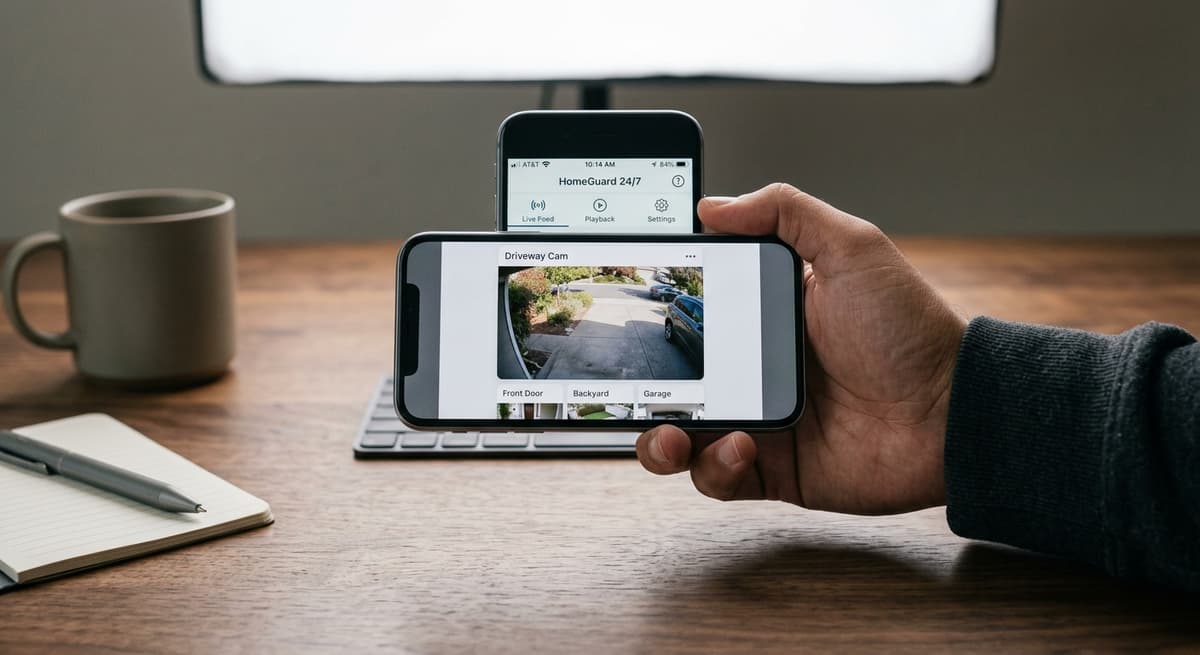
HOA Authority Over Cameras
Homeowners associations (HOAs) in Virginia derive their authority from their governing documents, including the Declaration of Covenants, Conditions, and Restrictions (CC&Rs), bylaws, and architectural guidelines. An HOA may regulate security cameras through:
- Architectural review committees that must approve exterior camera installations
- Aesthetic restrictions on the size, placement, or visibility of cameras
- Common area rules governing camera use in shared spaces
- Specific camera policies addressing recording in community areas
Virginia Property Owners' Association Act
The Virginia Property Owners' Association Act (POAA) and the Virginia Condominium Act establish the legal framework for HOA governance. These statutes give associations the authority to adopt rules governing the use and appearance of property within the community.
Common HOA Camera Restrictions
Typical HOA restrictions on security cameras include:
- Cameras must be a neutral color matching the home's exterior
- Cameras cannot be visible from the street or common areas
- External cameras require architectural review board approval
- Cameras cannot be aimed at common areas or neighbors' properties
- Certain camera types or brands may be specified
Challenging HOA Camera Rules
If you believe an HOA camera restriction is unreasonable, you may be able to challenge it. Virginia law requires HOA rules to be reasonable and applied consistently. A restriction that effectively prevents homeowners from securing their property could be challenged as unreasonable.
Neighbor Disputes Over Security Cameras
Common Issues
Security camera placement frequently leads to neighbor disputes in Virginia. Common complaints include:
- A camera aimed at a neighbor's backyard or private space
- A camera that captures a neighbor's driveway, documenting their comings and goings
- Audio recording of conversations in adjacent yards
- Perception of surveillance even when cameras face only the owner's property
- Bright infrared lights from cameras disturbing neighbors at night
Legal Options for Neighbors
A Virginia resident who believes a neighbor's camera violates their privacy may:
- Communicate directly with the neighbor about camera repositioning
- Contact the HOA if applicable architectural guidelines are being violated
- File a complaint with local authorities if the camera placement appears to violate peeping or voyeurism statutes
- Consult an attorney about potential civil claims for invasion of privacy
- Install privacy fencing or landscaping to block the camera's view
What Does Not Constitute a Privacy Violation
A neighbor's security camera that captures incidental footage of your front yard, driveway, or other areas visible from the street does not violate Virginia law. There is no reasonable expectation of privacy in areas plainly visible to passersby.
Footage Retention and Storage
No Statewide Retention Requirement
Virginia does not mandate how long homeowners or businesses must retain security camera footage. Retention periods are up to the individual or business. However, certain situations may create retention obligations:
- If footage is relevant to a known legal dispute, destroying it could constitute spoliation of evidence
- Insurance companies may require retention for a specified period as a condition of coverage
- Some industries (banking, healthcare) have federal retention requirements
- Law enforcement can obtain a court order requiring preservation of specific footage
Cloud Storage and Data Privacy
Many modern security cameras store footage in the cloud. Virginia's Consumer Data Protection Act (CDPA) may apply to businesses that collect and store security footage containing personal data. The CDPA gives Virginia consumers rights regarding their personal data, including the right to access, correct, and delete data.
For home users, cloud storage providers' terms of service govern data retention and access.
Using Security Camera Footage as Evidence
Admissibility in Virginia Courts
Security camera footage is generally admissible in Virginia courts if properly authenticated. The offering party must establish:
- The camera system was functioning properly
- The footage has not been altered or edited
- The date, time, and location stamps are accurate
- The footage is relevant to the matter at issue
Video vs. Audio Admissibility
Video-only security footage does not face the civil admissibility restrictions of Va. Code 8.01-420.2, which applies only to recorded telephone conversations. However, if security footage includes audio of conversations, the audio component may be subject to wiretapping analysis.
More Virginia Recording Laws
Audio Recording | Video Recording | Voyeurism and Hidden Cameras | Workplace Recording | Recording Police | Phone Call Recording | Security Cameras | Recording in Public | Landlord-Tenant Recording | Dashcam Laws | School Recording | Medical Recording
Back to Virginia Recording Laws
More Virginia Recording Topics
See Also
- Virginia Surveillance Camera Laws covers home, HOA, neighbor, workplace, and landlord camera rules in Virginia.
More Virginia Surveillance Laws
- Virginia Employee Monitoring Laws
- Virginia Landlord-Tenant Laws
- Virginia Drone Laws
- Virginia Data Privacy Laws
More Virginia Laws
Frequently Asked Questions
Do I need permission to install security cameras on my property in Virginia?
No state permit or registration is required. Homeowners can install security cameras on their own property. If you live in an HOA community, you may need approval from the architectural review committee. Renters should check their lease for restrictions on modifications.
Can my neighbor point a security camera at my house in Virginia?
A neighbor's camera can capture areas visible from the street, including your front yard and driveway. However, a camera aimed at areas where you have a reasonable expectation of privacy (into your windows, enclosed backyard) may violate Virginia's peeping statute (Va. Code 18.2-130) or voyeurism statute (Va. Code 18.2-386.1).
Can a Virginia business have cameras in changing rooms or restrooms?
No. Va. Code 18.2-386.1 prohibits cameras in areas where individuals have a reasonable expectation of privacy for undressing, including restrooms, changing rooms, fitting rooms, and locker rooms. This applies to businesses and employers alike.
Should I enable audio on my security cameras in Virginia?
Audio recording on security cameras raises additional legal considerations under Virginia's wiretapping law (Va. Code 19.2-62). If you are not present for the conversations being captured, audio recording may violate one-party consent rules. Disabling audio on outdoor cameras or posting clear notice about audio recording are recommended approaches.
How long do I have to keep security camera footage in Virginia?
Virginia has no statewide requirement for security camera footage retention. However, if footage is relevant to a legal dispute, destroying it could constitute spoliation of evidence. Some industries have federal retention requirements, and insurance policies may also specify retention periods.
Updates
Independently fact-checked against the cited primary sources; governing law re-checked for recent changes
Governing law re-checked for recent changes
Corrected an overstated claim that a stand-off security camera recording through a neighbor's window flatly violates Virginia's peeping statute; the statute's elements require physically entering another's property or using a narrowly defined "peephole," not a remote camera.
Clarified that Virginia's peeping statute (Va. Code 18.2-130) targets physical trespass or peephole use, not remote camera placement generally, in the KeyTakeaways and landlord-restrictions sections.
Governing law re-checked for recent changes
Reviewed and approved by an editor
The Law Behind This Article
This article rests on the statutory provisions below, held in our own legal record and retrieved from the official source. Tap a section to read the operative text.
Code of Virginia, Title 18.2: Crimes and Offenses Generally
§ 18.2-386.1Unlawful creation of image of another; penaltyIn forcecited in 16 of our articles
A. It is unlawful for any person to knowingly and intentionally create any videographic or still image by any means whatsoever of any nonconsenting person if (i) that person is (a) totally nude; (b) clad in undergarments; (c) in a state of undress so as to expose the genitals, pubic area, buttocks, or female breast; or (d) not exposed to show the genitals, pubic area, buttocks, or female breast but such videographic or still image is obscene, as defined in § 18.2-372, when such nonconsenting person is in a restroom, dressing room, locker room, hotel room, motel room, tanning bed, tanning booth, bedroom, or other location; or (ii) the videographic or still image is created by placing the lens or image-gathering component of the recording device in a position directly beneath or between a person's legs for the purpose of capturing an image of the person's intimate parts or undergarments covering those intimate parts when the intimate parts or undergarments would not otherwise be visible to the general public; and when the circumstances set forth in clause (i) or (ii) are otherwise such that the person being recorded would have a reasonable expectation of privacy. B.
Official text (excerpt) · last checked 2026-08-31 · Read the full text in our law library · Verify at law.lis.virginia.gov
Also relied on in: Virginia Landlord-Tenant Recording Laws: Surveillance and Privacy Rights, Virginia Laws on Recording in Public: Rights and Restrictions, Virginia School Recording Laws: Student, Parent, and Teacher Rights
§ 18.2-130Peeping or spying into dwelling or enclosureIn forcecited in 9 of our articles
A. It shall be unlawful for any person to enter upon the property of another and secretly or furtively peep, spy or attempt to peep or spy into or through a window, door or other aperture of any building, structure, or other enclosure of any nature occupied or intended for occupancy as a dwelling, whether or not such building, structure or enclosure is permanently situated or transportable and whether or not such occupancy is permanent or temporary, or to do the same, without just cause, upon property owned by him and leased or rented to another under circumstances that would violate the occupant's reasonable expectation of privacy. B.
Official text (excerpt) · last checked 2026-07-29 · Read the full text in our law library · Verify at law.lis.virginia.gov
Cited in 1 court opinions in our collectionLatest citing opinion in our collection: 2026
Opinions citing this section in our collection:
- United States v. Watkins (Court of Appeals for the Tenth Circuit 2026)“…ah Code Ann. § 76-12-306;2 Vt. Stat. Ann. tit. 13, § 2605;3 Va. Code Ann. § 18.2-130;1 (in part),3 Wash. Rev. Code § 9A.44.1…”
Identified automatically from the court opinions citing this section — not a ranking of which case controls.
Also relied on in: Virginia Video Recording Laws: Surveillance Rules and Privacy Limits, Virginia Voyeurism and Hidden Camera Laws: Penalties and Protections, Virginia Employee Monitoring Laws: Workplace Surveillance and Social Media (2026)
Code of Virginia, Title 19.2: Criminal Procedure
§ 19.2-62Interception, disclosure, etc., of wire, electronic or oral communications unlawful; penalties; exceptionsIn forcecited in 21 of our articles
A. Except as otherwise specifically provided in this chapter any person who: 1. Intentionally intercepts, endeavors to intercept or procures any other person to intercept or endeavor to intercept, any wire, electronic or oral communication; 2. Intentionally uses, endeavors to use, or procures any other person to use or endeavor to use any electronic, mechanical or other device to intercept any oral communication; 3. Intentionally discloses, or endeavors to disclose, to any other person the contents of any wire, electronic or oral communication knowing or having reason to know that the information was obtained through the interception of a wire, electronic or oral communication; or 4. Intentionally uses, or endeavors to use, the contents of any wire, electronic or oral communication, knowing or having reason to know that the information was obtained through the interception of a wire, electronic or oral communication; shall be guilty of a Class 6 felony. B. 1.
Official text (excerpt) · last checked 2026-08-31 · Read the full text in our law library · Verify at law.lis.virginia.gov
Cited in 11 court opinions in our collectionLatest citing opinion in our collection: 2025
In the courts (editorial summary, independently checked):Courts read Section 19.2-62 in step with the federal wiretap act. Global Policy Partners, LLC v. Yessin (2009) held that accessing email stored on a destination server is not an intercept, and Wilks v. Commonwealth (1977) held a conversation police recorded through a cooperating coconspirator was not a protected oral communication.
Opinions citing this section in our collection:
- Belmer v. Commonwealth (Court of Appeals of Virginia 2001, 36 Va. App. 448)✓A juvenile arrested for robbery whispered to his mother's boyfriend in a police interview room while a detective listened in; the court found no reasonable expectation of privacy, so Chapter 6, which carries the Section 19.2-62 ban, did not bar the detective's testimony.
- Wilks v. Commonwealth (Supreme Court of Virginia 1977, 217 Va. 885)✓An arson conspirator agreed to be wired and drew the defendant into a taped shop-talk about the fires; the court held the defendant had no justifiable expectation of noninterception, so the talk was not an oral communication protected by Chapter 6 and the tape was admissible.
- Bartnicki v. Vopper (Supreme Court of the United States 2001, 532 U.S. 514)“…16.02 (Supp. 2001); Utah Code Ann. § 77 23a4 (1982); Va. Code Ann. § 19.2-62 (1995); W. Va. Code § 62 -1D-3 (2000)…”
Identified automatically from the court opinions citing this section — not a ranking of which case controls.
Also relied on in: One-Party Consent States: Complete 2026 Guide, District of Columbia Phone Call Recording Laws: Consent Rules and Interstate Calls, Virginia Dashcam Laws: Installation, Audio, and Evidence Rules
Code of Virginia, Title 55.1: Property and Conveyances
§ 55.1-1200DefinitionsIn forcecited in 3 of our articles
As used in this chapter, unless the context requires a different meaning: "Action" means any recoupment, counterclaim, setoff, or other civil action and any other proceeding in which rights are determined, including actions for possession, rent, unlawful detainer, unlawful entry, and distress for rent. "Application deposit" means any refundable deposit of money, however denominated, including all money intended to be used as a security deposit under a rental agreement, or property that is paid by a tenant to a landlord for the purpose of being considered as a tenant for a dwelling unit. "Application fee" means any nonrefundable fee that is paid by a tenant to a landlord or managing agent for the purpose of being considered as a tenant for a dwelling unit. "Assignment" means the transfer by any tenant of all interests created by a rental agreement. "Authorized occupant" means a person entitled to occupy a dwelling unit with the consent of the landlord, but who has not signed the rental agreement and therefore does not have the financial obligations as a tenant under the rental agreement.
Official text (excerpt) · last checked 2026-07-29 · Read the full text in our law library · Verify at law.lis.virginia.gov
Cited in 4 court opinions in our collectionLatest citing opinion in our collection: 2025
Opinions citing this section in our collection:
- Broggin v. Atlantic Housing Foundation, Inc. (District Court, W.D. Virginia 2025)“…igations; and enumerating remedies from rental agreements. Va. Code §§ 55.1-1200 et. seg. However, the Virginia Supreme…”
- Andrews v. Brown (District Court, E.D. Virginia 2025)“…l obligations as a tenant under the rental agreement.” See Va. Code § 55.1-1200. Because Mr. Andrews was listed only a…”
- Smith v. 4037 Lamplighter Dr LLC (District Court, E.D. Virginia 2025)“…o make Leveco, the property manager, liable as a landlord. Va. Code Ann. § 55.1-1200. Further, the lease that Smith attache…”
Identified automatically from the court opinions citing this section — not a ranking of which case controls.
Also relied on in: Virginia Ring Doorbell Laws: What You Need to Know in 2026
Code of Virginia, Title 8.01: Civil Remedies and Procedure
§ 8.01-420.2Limitation on use of recorded conversations as evidenceIn forcecited in 15 of our articles
No mechanical recording, electronic or otherwise, of a telephone conversation shall be admitted into evidence in any civil proceeding unless (i) all parties to the conversation were aware the conversation was being recorded or (ii) the portion of the recording to be admitted contains admissions that, if true, would constitute criminal conduct which is the basis for the civil action, and one of the parties was aware of the recording and the proceeding is not one for divorce, separate maintenance or annulment of a marriage. The parties' knowledge of the recording pursuant to clause (i) shall be demonstrated by a declaration at the beginning of the recorded portion of the conversation to be admitted into evidence that the conversation is being recorded. This section shall not apply to emergency reporting systems operated by police and fire departments and by emergency medical services agencies, nor to any communications common carrier utilizing service observing or random monitoring pursuant to § 19.2-62.
Official text (excerpt) · last checked 2026-07-29 · Read the full text in our law library · Verify at law.lis.virginia.gov
Cited in 2 court opinions in our collectionLatest citing opinion in our collection: 1991
Opinions citing this section in our collection:
- Leitman v. McAusland (Court of Appeals for the Fourth Circuit 1991, 934 F.2d 46)“…transcript could not be admitted into evidence pursuant to Va.Code § 8.01-420.2. 5 A state evidentiary rule, such as…”
Identified automatically from the court opinions citing this section — not a ranking of which case controls.
Also relied on in: Virginia Audio Recording Laws: One-Party Consent Rules and Penalties, Virginia Medical Recording Laws: Patient Rights and Healthcare Privacy, Virginia Phone Call Recording Laws: What You Need to Know
Search our full record of US law — 2.1 million sections, every state + federal →
Sources and References
- Va. Code Ann. 19.2-62(law.lis.virginia.gov).gov
- Va. Code Ann. 18.2-386.1(law.lis.virginia.gov).gov
- Va. Code Ann. 18.2-130(law.lis.virginia.gov).gov
- Virginia Property Owners Association Act(law.lis.virginia.gov).gov
- Virginia RLTA(law.lis.virginia.gov).gov
- Virginia CDPA(law.lis.virginia.gov).gov