
Virginia
Virginia Video Recording Laws: Surveillance Rules and Privacy Limits
Independently fact-checked against primary sources (last audited August 15, 2026). · Reviewed by the RecordingLaw editorial team. · Law checked current as of August 15, 2026. · 7 primary sources cited on this page. How we verify our legal content
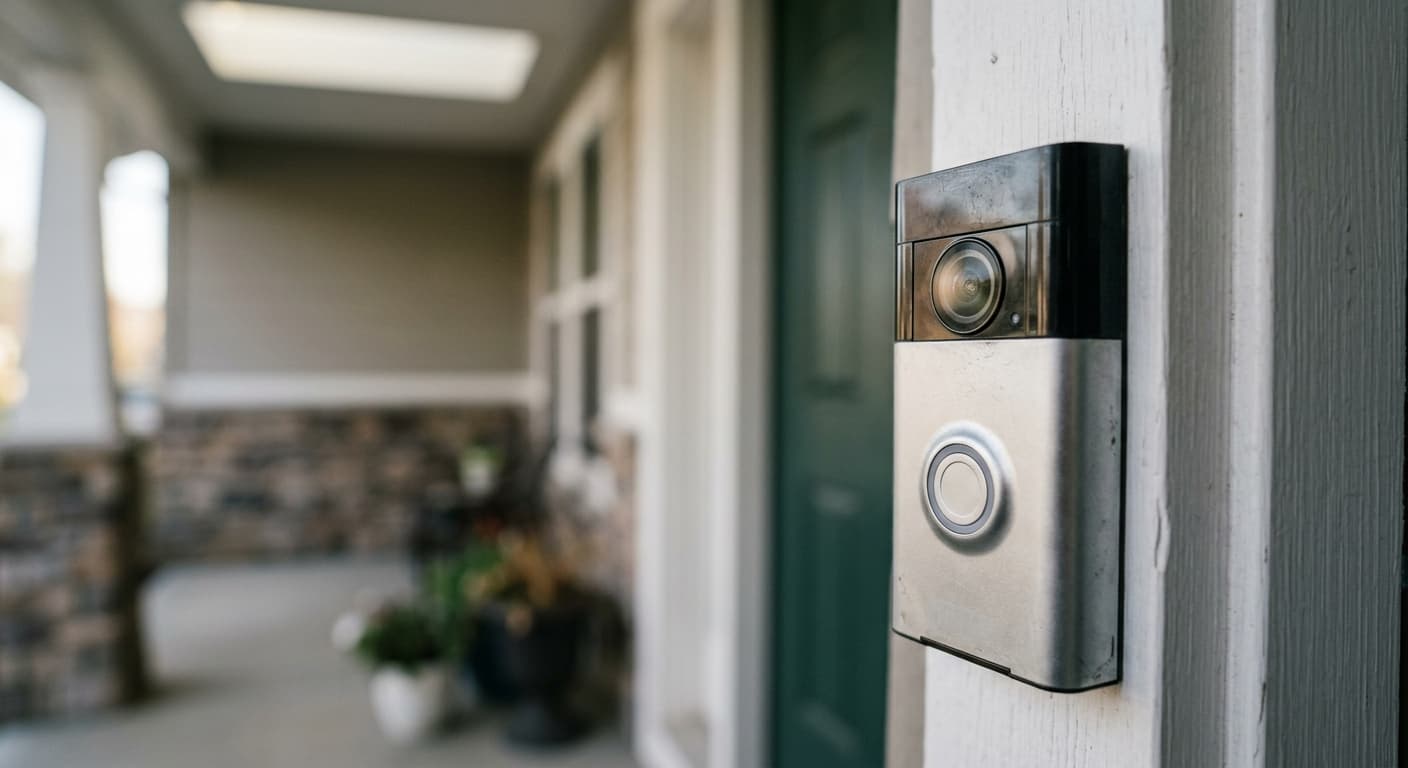
In Virginia, silent video recording in public spaces is legal with no specific statute prohibiting it. When video also captures audio, one-party consent applies under Va. Code 19.2-62. Secret filming of a person who is nude or undressed in a private location is a criminal offense under Va. Code 18.2-386.1.
Virginia does not have a single comprehensive video recording statute. Instead, the legality of video recording depends on the context: where you are filming, what you are capturing, and whether audio is also being recorded. Public filming is broadly permitted, while private recordings are governed by a combination of voyeurism, peeping, and wiretapping laws.
This guide explains the full legal framework for video recording in Virginia, covering public spaces, private property, audio-video overlap, voyeurism protections, deepfake laws, and how video evidence works in court.
Video Recording in Public Spaces
General Rule: Public Filming Is Legal
Virginia has no statute that prohibits video recording in public spaces. You are free to film on:
- Public sidewalks, streets, and parks
- Government buildings open to the public (lobbies, courtrooms where permitted)
- Public transit stations and stops
- Shopping areas visible from public property
- Public events, rallies, protests, and demonstrations
The legal foundation is rooted in First Amendment protections. Courts have consistently held that recording in public is a protected activity, particularly when it involves matters of public concern.
Limitations on Public Recording
Even in public, certain restrictions may apply:
- Private conversations captured on audio must comply with one-party consent under Va. Code Ann. 19.2-62 if you are not a participant
- Restricted government facilities (military bases, certain court proceedings) may prohibit recording
- Private property visible from public areas can be filmed, but using telephoto lenses or drones to peer into areas with a reasonable expectation of privacy may violate peeping statutes
- Interfering with government operations while filming can lead to obstruction charges
Drones and Aerial Video
Virginia regulates drone use through Va. Code Ann. 19.2-60.1, which restricts the use of unmanned aircraft systems by law enforcement without a warrant. For private individuals, drone operation is primarily governed by Federal Aviation Administration (FAA) regulations. Virginia's peeping statute, Va. Code 18.2-130, is limited to physical peeping through an aperture or peephole and does not by its text reach drones or other electronic surveillance. A drone used to capture images of a nonconsenting nude or undressed person in a private location would instead fall under Virginia's voyeurism statute, Va. Code 18.2-386.1, which covers images "created by any means whatsoever."
Video Recording on Private Property
Property Owner Rights
On private property, the property owner or authorized occupant controls whether video recording is permitted. Businesses can prohibit filming on their premises, and violating that prohibition can result in a trespass charge under Va. Code Ann. 18.2-119.
Common examples:
- A store can post "No Recording" signs and ask violators to leave
- A private venue can prohibit filming at events
- A homeowner can restrict guests from recording inside the home
- An employer can set policies about video recording in the workplace
Recording on Your Own Property
You can generally record video on your own property, including with security cameras. However, Virginia law imposes limits even on your own property:
- Cameras cannot be aimed at areas where others have a reasonable expectation of privacy (such as a neighbor's bedroom window)
- You cannot record guests in bathrooms, bedrooms designated for their use, or changing areas
- Audio capture on security cameras must comply with one-party consent rules if you are not present for the recorded conversations
Virginia Voyeurism Laws
Unlawful Creation of Image (Va. Code 18.2-386.1)
Va. Code Ann. 18.2-386.1 is Virginia's primary voyeurism statute. It prohibits knowingly and intentionally creating a videographic or still image of a nonconsenting person who is totally nude, clad in undergarments, or in a state of undress, when the person is in a location where they have a reasonable expectation of privacy.
The statute also prohibits "upskirting" and similar acts: knowingly and intentionally creating an image of the intimate parts of a nonconsenting person when those parts are covered by clothing and would not otherwise be visible.
| Offense | Classification | Penalty |
|---|---|---|
| Voyeuristic filming of an adult | Class 1 misdemeanor | Up to 12 months jail and/or $2,500 fine |
| Voyeuristic filming of a minor (under 18) | Class 6 felony | 1 to 5 years imprisonment |
| Third or subsequent offense (after two or more prior convictions) | Class 6 felony | 1 to 5 years imprisonment |
Peeping or Spying (Va. Code 18.2-130)
Va. Code Ann. 18.2-130 makes it unlawful to enter another person's property and secretly or furtively peep or spy through a window, door, or other aperture of a dwelling, or to use a peephole to secretly peep or spy into a restroom, bedroom, or other specified private location. The statute is built around physical apertures and peepholes, not cameras or other recording devices.
| Offense | Classification | Penalty |
|---|---|---|
| Any violation | Class 1 misdemeanor | Up to 12 months jail and/or $2,500 fine |
The statute applies to physically peeping or spying through a window, door, or other aperture, or through a peephole, defined in the statute as "any hole, crack or other similar opening through which a person can see." Capturing images of a nonconsenting nude or undressed person using a camera, phone, or other recording device is instead addressed under Virginia's voyeurism statute, Va. Code 18.2-386.1.
Non-Consensual Distribution of Intimate Images
Va. Code 18.2-386.2
Va. Code Ann. 18.2-386.2 criminalizes the malicious dissemination or sale of intimate images without the depicted person's consent. This law covers what is commonly called "revenge porn."
The offense is a Class 1 misdemeanor for any violation, with no repeat-offense felony enhancement under this statute.
Deepfake Intimate Images
Virginia was among the first states to expand its intimate image laws to cover AI-generated and digitally manipulated content. The statute now explicitly covers images "created by any means whatsoever," including:
- AI-generated images depicting a recognizable actual person
- Digitally manipulated photos or videos (deepfakes)
- Computer-generated content using someone's likeness
This means distributing or selling a realistic deepfake intimate image of someone without their consent is illegal under the same statute, even though the depicted activity never actually occurred, because the statute covers images "created by any means whatsoever."
Civil Remedy for Victims
Victims of non-consensual intimate image distribution have a civil cause of action under Va. Code Ann. 8.01-40.4. This allows victims to sue for:
- Compensatory damages
- Punitive damages
- Reasonable attorney fees and costs
Audio-Video Overlap: When Wiretapping Law Applies
The Critical Distinction
Video recording and audio recording are governed by different legal frameworks in Virginia. The wiretapping statute (Va. Code 19.2-62) specifically covers the interception of wire, electronic, and oral communications. Pure video without audio does not implicate this statute.
However, most modern video recording also captures audio. When your video recording picks up conversations, the one-party consent rule applies to the audio portion. This means:
- Video only (no audio): Not governed by the wiretapping statute. Governed by voyeurism, peeping, and general privacy laws.
- Video with audio where you are a participant in the conversation: Legal under one-party consent.
- Video with audio of conversations you are not part of: Potentially a Class 6 felony wiretapping violation for the audio component.
Security Cameras With Audio
Home and business security cameras that record audio in areas where conversations with a privacy expectation occur can create wiretapping issues. If the camera owner is not present for and participating in the conversations being recorded, the audio capture may violate Va. Code 19.2-62.
Many Virginia residents and businesses use video-only security cameras or disable audio recording to avoid this issue. If audio is enabled, posting clear notice that "audio and video recording is in progress" can help establish that speakers lack a reasonable expectation of non-interception.
Video Recording in Specific Settings
Schools and Educational Institutions
Virginia does not have a specific statute addressing student or parent video recording in schools. School districts set their own policies regarding recording on school grounds. The Virginia Department of Education does not mandate statewide recording policies, leaving this to local school boards.
Schools can restrict recording through their codes of conduct. Students or parents who violate these policies may face disciplinary consequences, though the recording itself is not a criminal act unless it violates voyeurism or wiretapping statutes.
Courtrooms
Video recording in Virginia courtrooms is governed by the presiding judge's discretion. Virginia Supreme Court guidelines generally permit cameras in courtrooms, but individual judges can restrict or prohibit recording. Always seek permission before recording in any Virginia courtroom.
Healthcare Facilities
Patients can video record their own medical appointments as participants. However, recording other patients or staff without their involvement in the conversation raises both legal and ethical concerns. Hospitals and clinics can establish no-recording policies on their premises.
Using Video Recordings as Evidence in Virginia
Admissibility Standards
Video recordings are generally admissible as evidence in Virginia courts if they are:
- Relevant to the matter at issue
- Authenticated by testimony establishing the recording is accurate
- Not unduly prejudicial compared to its probative value
- Obtained legally (not through voyeurism, illegal trespass, or wiretapping)
The 8.01-420.2 Limitation and Video
The civil admissibility restriction under Va. Code 8.01-420.2 applies specifically to recorded telephone conversations in civil proceedings. Video recordings of in-person interactions are not subject to this limitation. This means video evidence captured during face-to-face encounters is more freely admissible in civil cases than audio-only phone call recordings.
Body Camera and Dashcam Footage
Law enforcement body camera and dashcam footage is subject to Virginia's Freedom of Information Act disclosure rules. Body-worn camera recordings by law enforcement are addressed under Va. Code Ann. 2.2-3706.1, which classifies them as criminal investigative files with specific access provisions.
Video Recording and the First Amendment
Protected Activity
The First Amendment protects the right to record matters of public interest. Federal courts, including the Fourth Circuit (which covers Virginia), have recognized that recording government officials performing their duties in public is constitutionally protected. This protection extends to:
- Recording police officers during traffic stops and arrests
- Filming public officials at government meetings
- Documenting public protests and demonstrations
- Recording conditions at public facilities
When Recording Can Be Restricted
Constitutional protection is not absolute. The government can impose reasonable time, place, and manner restrictions on recording if they are content-neutral, narrowly tailored, serve a significant government interest, and leave open alternative channels of communication.
More Virginia Recording Laws
Audio Recording | Video Recording | Voyeurism and Hidden Cameras | Workplace Recording | Recording Police | Phone Call Recording | Security Cameras | Recording in Public | Landlord-Tenant Recording | Dashcam Laws | School Recording | Medical Recording
Back to Virginia Recording Laws
More Virginia Recording Topics
More Virginia Laws
Frequently Asked Questions
Is it legal to video record someone in Virginia without their knowledge?
It depends on the context. In public spaces, you can video record without consent. In private settings, recording someone without their knowledge may violate Virginia's peeping statute (Va. Code 18.2-130) or voyeurism statute (Va. Code 18.2-386.1). If your video also captures audio of conversations you are not part of, it may violate the wiretapping law (Va. Code 19.2-62).
Can I put security cameras on my property in Virginia?
Yes. You can install security cameras on your own property. However, cameras cannot be aimed at areas where others have a reasonable expectation of privacy, such as a neighbor's bedroom window or bathroom. If cameras capture audio, you should be aware of one-party consent rules for the audio component.
Is revenge porn illegal in Virginia?
Yes. Va. Code 18.2-386.2 makes it a Class 1 misdemeanor (up to 12 months jail and $2,500 fine) to maliciously distribute or sell intimate images without the depicted person's consent, for any offense. This includes AI-generated deepfake images.
Can I record video in a Virginia courtroom?
Virginia generally permits cameras in courtrooms, but the presiding judge has discretion to restrict or prohibit recording. Always check with the court clerk or judge before recording in any courtroom.
Does Virginia's civil admissibility restriction apply to video recordings?
No. Va. Code 8.01-420.2 applies specifically to recorded telephone conversations in civil proceedings. Video recordings of in-person interactions are not subject to this limitation and can be admitted under standard evidence rules.
Updates
Corrected the felony threshold for repeat unlawful-filming offenses to the statutes two-prior-convictions trigger.
Independently fact-checked against the cited primary sources; governing law re-checked for recent changes
Governing law re-checked for recent changes
Corrected the peeping/spying section (Va. Code 18.2-130): it carries a flat Class 1 misdemeanor with no repeat-offense felony enhancement and does not cover cameras, drones, or other electronic devices (that's the separate voyeurism statute, Va. Code 18.2-386.1). Also corrected the deepfake section: Va. Code 18.2-386.2 criminalizes distributing or selling an intimate image, not merely creating one.
Corrected the penalty description for Virginia's non-consensual intimate image distribution law (Va. Code 18.2-386.2): the statute is a Class 1 misdemeanor for any offense, with no repeat-offense felony enhancement as previously stated.
Governing law re-checked for recent changes
Reviewed and approved by an editor
The Law Behind This Article
This article rests on the statutory provisions below, held in our own legal record and retrieved from the official source. Tap a section to read the operative text.
Code of Virginia, Title 18.2: Crimes and Offenses Generally
§ 18.2-386.1Unlawful creation of image of another; penaltyIn forcecited in 16 of our articles
A. It is unlawful for any person to knowingly and intentionally create any videographic or still image by any means whatsoever of any nonconsenting person if (i) that person is (a) totally nude; (b) clad in undergarments; (c) in a state of undress so as to expose the genitals, pubic area, buttocks, or female breast; or (d) not exposed to show the genitals, pubic area, buttocks, or female breast but such videographic or still image is obscene, as defined in § 18.2-372, when such nonconsenting person is in a restroom, dressing room, locker room, hotel room, motel room, tanning bed, tanning booth, bedroom, or other location; or (ii) the videographic or still image is created by placing the lens or image-gathering component of the recording device in a position directly beneath or between a person's legs for the purpose of capturing an image of the person's intimate parts or undergarments covering those intimate parts when the intimate parts or undergarments would not otherwise be visible to the general public; and when the circumstances set forth in clause (i) or (ii) are otherwise such that the person being recorded would have a reasonable expectation of privacy. B.
Official text (excerpt) · last checked 2026-08-31 · Read the full text in our law library · Verify at law.lis.virginia.gov
Also relied on in: Virginia Landlord-Tenant Recording Laws: Surveillance and Privacy Rights, Virginia Laws on Recording in Public: Rights and Restrictions, Virginia School Recording Laws: Student, Parent, and Teacher Rights
§ 18.2-119Trespass after having been forbidden to do so; penaltiesIn forcecited in 3 of our articles
If any person without authority of law goes upon or remains upon the lands, buildings or premises of another, or any portion or area thereof, after having been forbidden to do so, either orally or in writing, by the owner, lessee, custodian, or the agent of any such person, or other person lawfully in charge thereof, or after having been forbidden to do so by a sign or signs posted by or at the direction of such persons or the agent of any such person or by the holder of any easement or other right-of-way authorized by the instrument creating such interest to post such signs on such lands, structures, premises or portion or area thereof at a place or places where it or they may be reasonably seen, or if any person, whether he is the owner, tenant or otherwise entitled to the use of such land, building or premises, goes upon, or remains upon such land, building or premises after having been prohibited from doing so by a court of competent jurisdiction by an order issued pursuant to §§ 16.1-253, 16.1-253.1, 16.1-253.4, 16.1-278.2 through 16.1-278.6, 16.1-278.8, 16.1-278.14, 16.1-278.15, 16.1-279.1, 19.2-152.8, 19.2-152.9 or § 19.2-152.10 or an ex parte order issued pursuant to §…
Official text (excerpt) · last checked 2026-07-29 · Read the full text in our law library · Verify at law.lis.virginia.gov
Cited in 13 court opinions in our collectionLatest citing opinion in our collection: 2023
Opinions citing this section in our collection:
- Bruce Beaudett v. City of Hampton City Attorneys A. Paul Burton and W. Stephen Moore Judge T.H. Wilson, II and Judge Nelson T. Overton (Court of Appeals for the Fourth Circuit 1985, 775 F.2d 1274)“…pton Code § 24-17, or Virginia’s criminal trespass statute, Va.Code § 18.2-119. On each occasion he was fined and subs…”
- Bray v. Alexandria Women's Health Clinic (Supreme Court of the United States 1993, 506 U.S. 263)“…protect against force, intimidation, and violence, e.g., Va. Code Ann. §18.2-119 (Supp. 1992) (trespassing), §18.2-120…”
- Virginia v. Hicks (Supreme Court of the United States 2003, 539 U.S. 113)“…ng notified not to return are subject to prosecution under Va. Code Ann. § 18.2-119 (1996): "If any person without autho…”
Identified automatically from the court opinions citing this section — not a ranking of which case controls.
Also relied on in: Virginia Laws on Recording Police: Your Rights and Limitations
§ 18.2-130Peeping or spying into dwelling or enclosureIn forcecited in 9 of our articles
A. It shall be unlawful for any person to enter upon the property of another and secretly or furtively peep, spy or attempt to peep or spy into or through a window, door or other aperture of any building, structure, or other enclosure of any nature occupied or intended for occupancy as a dwelling, whether or not such building, structure or enclosure is permanently situated or transportable and whether or not such occupancy is permanent or temporary, or to do the same, without just cause, upon property owned by him and leased or rented to another under circumstances that would violate the occupant's reasonable expectation of privacy. B.
Official text (excerpt) · last checked 2026-07-29 · Read the full text in our law library · Verify at law.lis.virginia.gov
Cited in 1 court opinions in our collectionLatest citing opinion in our collection: 2026
Opinions citing this section in our collection:
- United States v. Watkins (Court of Appeals for the Tenth Circuit 2026)“…ah Code Ann. § 76-12-306;2 Vt. Stat. Ann. tit. 13, § 2605;3 Va. Code Ann. § 18.2-130;1 (in part),3 Wash. Rev. Code § 9A.44.1…”
Identified automatically from the court opinions citing this section — not a ranking of which case controls.
Also relied on in: Virginia Security Camera Laws: Home, Business, and HOA Rules, Virginia Voyeurism and Hidden Camera Laws: Penalties and Protections, Virginia Employee Monitoring Laws: Workplace Surveillance and Social Media (2026)
§ 18.2-386.2Unlawful dissemination or sale of images of another; penaltyIn forcecited in 10 of our articles
A. Any person who, with the intent to coerce, harass, or intimidate, maliciously disseminates or sells any videographic or still image created by any means whatsoever that depicts another person (i) who is totally nude; (ii) who is in a state of undress so as to expose the genitals, pubic area, buttocks, or female breast; or (iii) whose genitals, pubic area, buttocks, or female breast are not exposed but such videographic or still image is obscene as defined in § 18.2-372 where such person knows or has reason to know that he is not licensed or authorized to disseminate or sell such videographic or still image is guilty of a Class 1 misdemeanor. For purposes of this subsection, "another person" includes a person whose image was used in creating, adapting, or modifying a videographic or still image with the intent to depict an actual person and who is recognizable as an actual person by the person's face, likeness, or other distinguishing characteristic. B.
Official text (excerpt) · last checked 2026-09-03 · Read the full text in our law library · Verify at law.lis.virginia.gov
Also relied on in: Virginia AI Laws and Regulation (2026), Virginia Deepfake Laws: AI Images, Voice Cloning & Penalties (2026), Virginia Sexting Laws: Legal Consequences and Penalties
Code of Virginia, Title 19.2: Criminal Procedure
§ 19.2-60.1Use of unmanned aircraft systems by public bodies; search warrant requiredIn forcecited in 3 of our articles
A. As used in this section, unless the context requires a different meaning: "Unmanned aircraft" means an aircraft that is operated without the possibility of human intervention from within or on the aircraft. "Unmanned aircraft system" means an unmanned aircraft and associated elements, including communication links, sensing devices, and the components that control the unmanned aircraft. B. No state or local government department, agency, or instrumentality having jurisdiction over criminal law enforcement or regulatory violations, including the Department of State Police, and no department of law enforcement as defined in § 15.2-836 of any county, city, or town shall utilize an unmanned aircraft system except during the execution of a search warrant issued pursuant to this chapter or an administrative or inspection warrant issued pursuant to law. C.
Official text (excerpt) · last checked 2026-07-29 · Read the full text in our law library · Verify at law.lis.virginia.gov
Also relied on in: Virginia Drone Laws: Warrants, Trespass & Felony Zones
§ 19.2-62Interception, disclosure, etc., of wire, electronic or oral communications unlawful; penalties; exceptionsIn forcecited in 21 of our articles
A. Except as otherwise specifically provided in this chapter any person who: 1. Intentionally intercepts, endeavors to intercept or procures any other person to intercept or endeavor to intercept, any wire, electronic or oral communication; 2. Intentionally uses, endeavors to use, or procures any other person to use or endeavor to use any electronic, mechanical or other device to intercept any oral communication; 3. Intentionally discloses, or endeavors to disclose, to any other person the contents of any wire, electronic or oral communication knowing or having reason to know that the information was obtained through the interception of a wire, electronic or oral communication; or 4. Intentionally uses, or endeavors to use, the contents of any wire, electronic or oral communication, knowing or having reason to know that the information was obtained through the interception of a wire, electronic or oral communication; shall be guilty of a Class 6 felony. B. 1.
Official text (excerpt) · last checked 2026-08-31 · Read the full text in our law library · Verify at law.lis.virginia.gov
Cited in 11 court opinions in our collectionLatest citing opinion in our collection: 2025
In the courts (editorial summary, independently checked):Courts read Section 19.2-62 in step with the federal wiretap act. Global Policy Partners, LLC v. Yessin (2009) held that accessing email stored on a destination server is not an intercept, and Wilks v. Commonwealth (1977) held a conversation police recorded through a cooperating coconspirator was not a protected oral communication.
Opinions citing this section in our collection:
- Belmer v. Commonwealth (Court of Appeals of Virginia 2001, 36 Va. App. 448)✓A juvenile arrested for robbery whispered to his mother's boyfriend in a police interview room while a detective listened in; the court found no reasonable expectation of privacy, so Chapter 6, which carries the Section 19.2-62 ban, did not bar the detective's testimony.
- Wilks v. Commonwealth (Supreme Court of Virginia 1977, 217 Va. 885)✓An arson conspirator agreed to be wired and drew the defendant into a taped shop-talk about the fires; the court held the defendant had no justifiable expectation of noninterception, so the talk was not an oral communication protected by Chapter 6 and the tape was admissible.
- Bartnicki v. Vopper (Supreme Court of the United States 2001, 532 U.S. 514)“…16.02 (Supp. 2001); Utah Code Ann. § 77 23a4 (1982); Va. Code Ann. § 19.2-62 (1995); W. Va. Code § 62 -1D-3 (2000)…”
Identified automatically from the court opinions citing this section — not a ranking of which case controls.
Also relied on in: One-Party Consent States: Complete 2026 Guide, District of Columbia Phone Call Recording Laws: Consent Rules and Interstate Calls, Virginia Dashcam Laws: Installation, Audio, and Evidence Rules
Code of Virginia, Title 2.2: Administration of Government
§ 2.2-3706.1Disclosure of law-enforcement records; criminal incident information and certain criminal investigative files; limitationsIn forcecited in 4 of our articles
A. For purposes of this section: "Criminal investigative files" means any documents and information, including complaints, court orders, memoranda, notes, diagrams, maps, photographs, correspondence, reports, witness statements, and evidence, relating to a criminal investigation or prosecution, other than criminal incident information subject to disclosure in accordance with subsection B. "Family representative" means the decedent's personal representative or, if no personal representative as set forth in § 64.2-100 has qualified, the decedent's next of kin in order of intestate succession as set forth in § 64.2-200. "Immediate family members" means the decedent's family representative, spouse, child, sibling, parent, grandparent, or grandchild. "Immediate family members" include a stepparent, stepchild, stepsibling, and adoptive relationships. "Ongoing" refers to a case in which the prosecution has not been finally adjudicated, the investigation continues to gather evidence for a possible future criminal case, and such case would be jeopardized by the premature release of evidence. B.
Official text (excerpt) · last checked 2026-07-29 · Read the full text in our law library · Verify at law.lis.virginia.gov
Also relied on in: Virginia Freedom of Information Act: Who Can Request and How (2026), Virginia Recording Laws (2026): One-Party Consent Rules
Code of Virginia, Title 8.01: Civil Remedies and Procedure
§ 8.01-40.4Civil action for unlawful creation of image of another or unlawful dissemination or sale of images of anotherIn forcecited in 9 of our articles
A. Any person injured by an individual who engaged in conduct that is prohibited under § 18.2-386.1 or 18.2-386.2, whether or not the individual has been charged with or convicted of the alleged violation, may sue therefor and recover compensatory damages, punitive damages, and reasonable attorney fees and costs. B. No action shall be commenced under this section more than two years after the later of (i) the date of the last act in violation of § 18.2-386.1 or 18.2-386.2, (ii) the date on which such person attained 18 years of age, or (iii) the date on which such person discovered or reasonably should have discovered the prohibited conduct. C. Nothing in this section shall be construed to impose liability on an interactive computer service, as defined in 47 U.S.C. § 230(f), for content provided by another person.
Official text (excerpt) · last checked 2026-07-29 · Read the full text in our law library · Verify at law.lis.virginia.gov
Also relied on in: Virginia Surveillance Camera Laws (2026 Guide), Revenge Porn Laws by State: All 50 States and DC (2026), Virginia Pornography Laws (2026): Legal for Adults, AV Required for Sites
§ 8.01-420.2Limitation on use of recorded conversations as evidenceIn forcecited in 13 of our articles
No mechanical recording, electronic or otherwise, of a telephone conversation shall be admitted into evidence in any civil proceeding unless (i) all parties to the conversation were aware the conversation was being recorded or (ii) the portion of the recording to be admitted contains admissions that, if true, would constitute criminal conduct which is the basis for the civil action, and one of the parties was aware of the recording and the proceeding is not one for divorce, separate maintenance or annulment of a marriage. The parties' knowledge of the recording pursuant to clause (i) shall be demonstrated by a declaration at the beginning of the recorded portion of the conversation to be admitted into evidence that the conversation is being recorded. This section shall not apply to emergency reporting systems operated by police and fire departments and by emergency medical services agencies, nor to any communications common carrier utilizing service observing or random monitoring pursuant to § 19.2-62.
Official text (excerpt) · last checked 2026-07-29 · Read the full text in our law library · Verify at law.lis.virginia.gov
Cited in 2 court opinions in our collectionLatest citing opinion in our collection: 1991
Opinions citing this section in our collection:
- Leitman v. McAusland (Court of Appeals for the Fourth Circuit 1991, 934 F.2d 46)“…transcript could not be admitted into evidence pursuant to Va.Code § 8.01-420.2. 5 A state evidentiary rule, such as…”
Identified automatically from the court opinions citing this section — not a ranking of which case controls.
Also relied on in: Virginia Audio Recording Laws: One-Party Consent Rules and Penalties, Virginia Medical Recording Laws: Patient Rights and Healthcare Privacy, Virginia Phone Call Recording Laws: What You Need to Know
Search our full record of US law — 2.1 million sections, every state + federal →
Sources and References
- Va. Code Ann. 18.2-386.1 - Unlawful Creation of Image of Another(law.lis.virginia.gov).gov
- Va. Code Ann. 18.2-130 - Peeping or Spying Into Dwelling or Enclosure(law.lis.virginia.gov).gov
- Va. Code Ann. 18.2-386.2 - Unlawful Dissemination of Images of Another(law.lis.virginia.gov).gov
- Va. Code Ann. 19.2-62 - Interception of Wire, Electronic or Oral Communications(law.lis.virginia.gov).gov
- Va. Code Ann. 8.01-40.4 - Civil Action for Non-Consensual Intimate Images(law.lis.virginia.gov).gov
- FAA - Unmanned Aircraft Systems(faa.gov).gov
- Virginia FOIA(law.lis.virginia.gov).gov