
Virginia
Virginia Medical Recording Laws: Patient Rights and Healthcare Privacy
Independently fact-checked against primary sources (last audited August 15, 2026). · Reviewed by the RecordingLaw editorial team. · Law checked current as of August 15, 2026. · 7 primary sources cited on this page. How we verify our legal content
Under Virginia's one-party consent law (Va. Code 19.2-62), a patient may record their own medical appointment without notifying the healthcare provider. HIPAA does not prohibit patient-initiated recordings; it governs how providers store and transmit recorded health information. Facilities may still set no-recording policies on their premises.
Recording in medical settings involves a unique intersection of Virginia's one-party consent law, federal healthcare privacy regulations, medical facility policies, and the enhanced protections Virginia gives to privileged communications between patients and healthcare providers. Under Va. Code Ann. 19.2-62, patients can record their own medical appointments, but the legal landscape becomes more complex when considering HIPAA, facility policies, and the special damages provisions for medical communications.
This guide covers patient recording rights, healthcare provider recording obligations, HIPAA interactions, enhanced penalties for violating medical privacy, telehealth recording, and using medical recordings as evidence in Virginia.
Patient Recording Rights
Recording Your Own Medical Appointments
As a one-party consent state, Virginia allows patients to record any medical appointment or interaction they participate in. This includes:
- Doctor's office visits and consultations
- Hospital interactions with physicians, nurses, and staff
- Conversations with specialists, surgeons, and therapists
- Pharmacy consultations
- Mental health counseling sessions (you are a participant)
- Physical therapy sessions
- Dental appointments
- Telehealth and virtual medical visits
You do not need to tell your healthcare provider that you are recording. Your participation in the conversation satisfies Virginia's one-party consent requirement.
Why Patients Record Medical Appointments
Patients commonly record medical encounters for legitimate reasons:
- Remembering instructions: Complex medication schedules, post-surgical care instructions, and treatment plans are easier to follow when recorded
- Sharing with family: Recordings help family members and caregivers understand the patient's condition and care plan
- Documenting informed consent: Recording the discussion about risks, benefits, and alternatives before a procedure
- Preserving diagnoses: Having an accurate record of what the doctor said about a diagnosis
- Building evidence: Documenting potential medical malpractice, billing disputes, or failure to provide adequate care
- Language barriers: Recordings help patients who speak English as a second language review information with a translator later
The Medical Community's View
Medical organizations have increasingly recognized the value of patient recordings. Some providers actively encourage patients to record appointment summaries. However, many healthcare facilities still maintain no-recording policies, and individual providers may object to being recorded.
Healthcare Facility Recording Policies
Can a Hospital or Doctor's Office Prohibit Recording?
Healthcare facilities are private property, and they can establish policies that restrict recording on their premises. A hospital or medical office that posts a no-recording policy can:
- Ask patients to stop recording
- Refuse to continue a consultation if the patient insists on recording
- Include a no-recording provision in their patient intake forms
However, there are important nuances:
- The recording itself is still legal under Virginia law even if it violates facility policy
- A facility cannot confiscate your recording device
- Terminating a patient relationship solely for recording raises ethical concerns, particularly if the patient has an ongoing medical need
- The recording remains your property and can potentially be used as evidence
Practical Approach for Patients
If you want to record a medical appointment in Virginia:
- Consider informing the provider that you would like to record for your own reference
- If the provider objects, decide whether the recording is worth the potential conflict
- If you record without disclosure, the recording is legal but may affect your relationship with the provider
- Keep recordings private and secure, as they contain your personal health information
Enhanced Penalties for Medical Communications
Privileged Communication Protection
Virginia law gives special protection to communications between patients and licensed medical practitioners. Under Va. Code Ann. 19.2-69, if someone illegally intercepts (records without consent) a communication between a patient and their medical provider, the civil damages are enhanced:
| Standard Civil Damages | Enhanced Medical Damages |
|---|---|
| $400 per day of violation | $800 per day of violation |
| $4,000 minimum | $8,000 minimum |
| Plus actual damages, punitive damages, attorney fees | Plus actual damages, punitive damages, attorney fees |
This enhanced penalty applies to the privileged relationship between:
- Licensed medical practitioners and their patients
- Licensed professional counselors and their clients
- Other healthcare providers in a privileged relationship
Who Does This Protect?
The enhanced damages protect against third-party interception. For example:
- An ex-spouse who plants a recording device in a therapy session they are not attending
- An employer who records an employee's phone call with their doctor
- A family member who secretly records another family member's medical consultation without being a participant
- Anyone who uses electronic surveillance to intercept medical communications
The enhanced damages do not apply to a patient recording their own appointment, because the patient is a party to the communication and has the right to record under one-party consent.
HIPAA and Recording

What HIPAA Does and Does Not Cover
The Health Insurance Portability and Accountability Act (HIPAA) is a federal law that governs how healthcare providers, health plans, and healthcare clearinghouses handle protected health information (PHI). Key points regarding recording:
HIPAA does NOT:
- Prohibit patients from recording their own medical appointments
- Apply to patient-initiated recordings (HIPAA governs covered entities, not patients)
- Prevent patients from sharing their own health information
- Override Virginia's one-party consent law
HIPAA DOES:
- Require healthcare providers to protect PHI in their possession
- Apply to any recordings made by the healthcare provider that contain PHI
- Govern how medical offices store and transmit recorded health information
- Require covered entities to have security policies for electronic records
Provider Recording of Patients
When a healthcare provider records patient interactions (for training, documentation, or other purposes), both Virginia law and HIPAA apply:
- Virginia law: The provider is a participant in the conversation and can record under one-party consent without notifying the patient. However, best practice and ethical guidelines strongly favor informed consent.
- HIPAA: Any recording containing PHI must be stored, transmitted, and handled according to HIPAA security rules. The provider must include recording in their privacy practices.
- Patient consent forms: Most healthcare facilities that record patient interactions include this in their consent-to-treatment forms or privacy acknowledgments.
Recordings in Medical Records
If a provider makes a recording and it becomes part of the patient's medical record, the patient has rights to access that recording under both HIPAA and Virginia law. Under Va. Code 32.1-127.1:03, patients have the right to access their health records.
Telehealth Recording in Virginia
The Growth of Telehealth in Virginia
Virginia has expanded telehealth access significantly. Virginia does not have a single, formally named "Telehealth Act": Va. Code Ann. 54.1-2901 is a medical-licensing exemptions statute that includes limited exceptions for out-of-state telehealth practitioners, and Va. Code Ann. 38.2-3418.16 requires insurers to cover telemedicine services on the same basis as in-person care. Telehealth visits are recorded by many platforms, and patients may also make their own recordings.
Patient Recording of Telehealth Visits
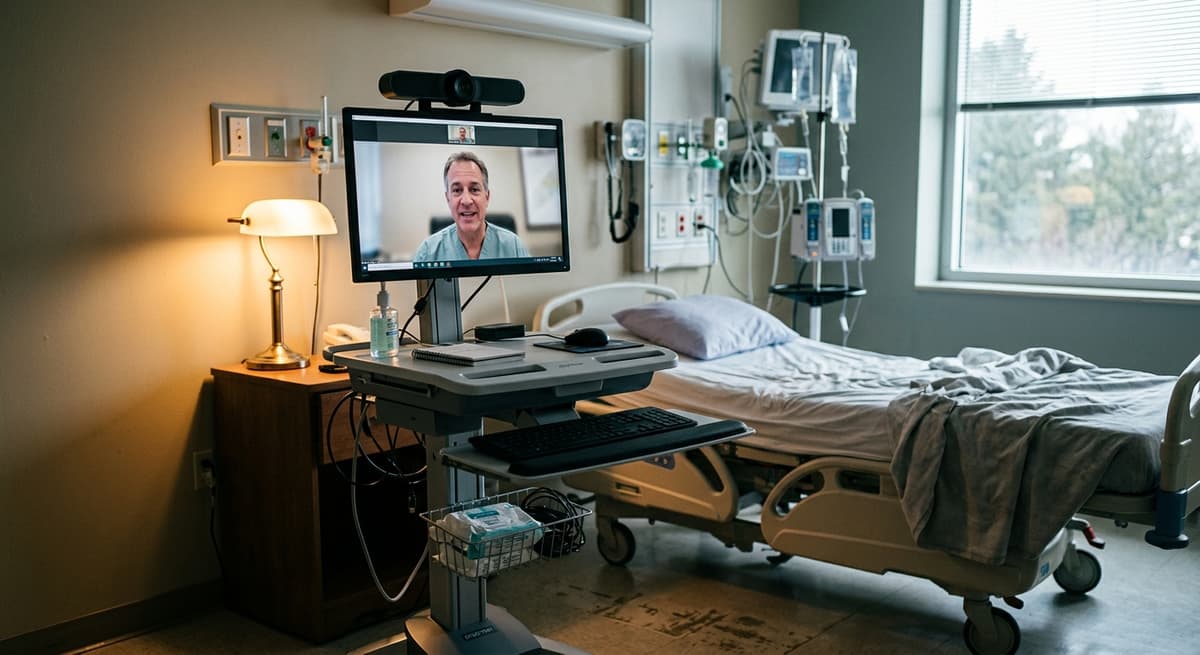
Patients can record their own telehealth visits under Virginia's one-party consent law. This applies to:
- Video consultations via platforms like MyChart, Teladoc, or Zoom
- Phone-based telehealth appointments
- Secure messaging conversations (though these are typically text-based and already documented)
For video telehealth, screen recording software or a second device can capture the session. The platform itself may also offer recording features that notify both parties.
The Phone Call Admissibility Issue
If your telehealth visit is conducted by phone (rather than video), the Va. Code 8.01-420.2 limitation on civil admissibility applies. A phone-based telehealth recording may not be admissible in a civil medical malpractice case unless all parties were aware of the recording. Video-based telehealth recordings are treated as in-person encounters and do not face this specific restriction.
Cross-State Telehealth
If you are in Virginia receiving telehealth services from a provider in another state, the recording laws of both states may apply. This is particularly relevant for Virginia patients near the Maryland border, where a provider licensed in Maryland may be subject to Maryland's all-party consent requirement.
Recording in Specific Medical Settings
Emergency Rooms
Patients can record their own ER interactions under one-party consent. ER recordings can document:
- Triage conversations and wait times
- Treatment discussions and discharge instructions
- Informed consent for emergency procedures
- Interactions with medical staff
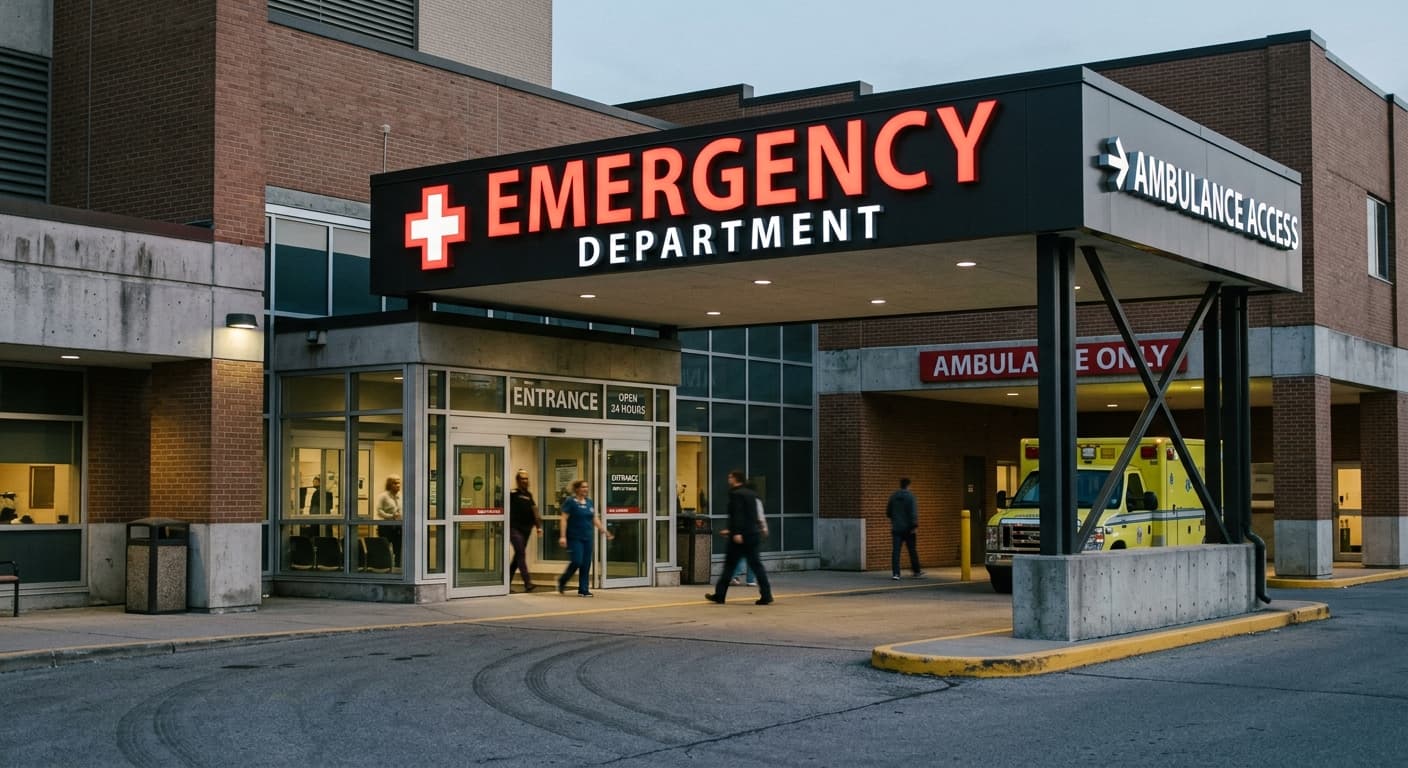
Hospital policies may restrict recording in emergency departments. Staff may ask you to stop recording, particularly if it interferes with treatment or captures other patients' information.
Mental Health Settings
Therapy and counseling sessions are protected by both doctor-patient privilege and Virginia's enhanced damages provision. While patients can record their own therapy sessions under one-party consent:
- Therapists may have strong objections to recording, arguing it affects the therapeutic process
- Mental health facility policies often specifically prohibit recording
- Recordings of therapy sessions are highly sensitive personal health information
- Sharing therapy recordings could harm the patient and violate the therapist's intellectual property in their treatment approach
Surgical Procedures
Some patients want to record surgical procedures. While Virginia law does not specifically prohibit this:
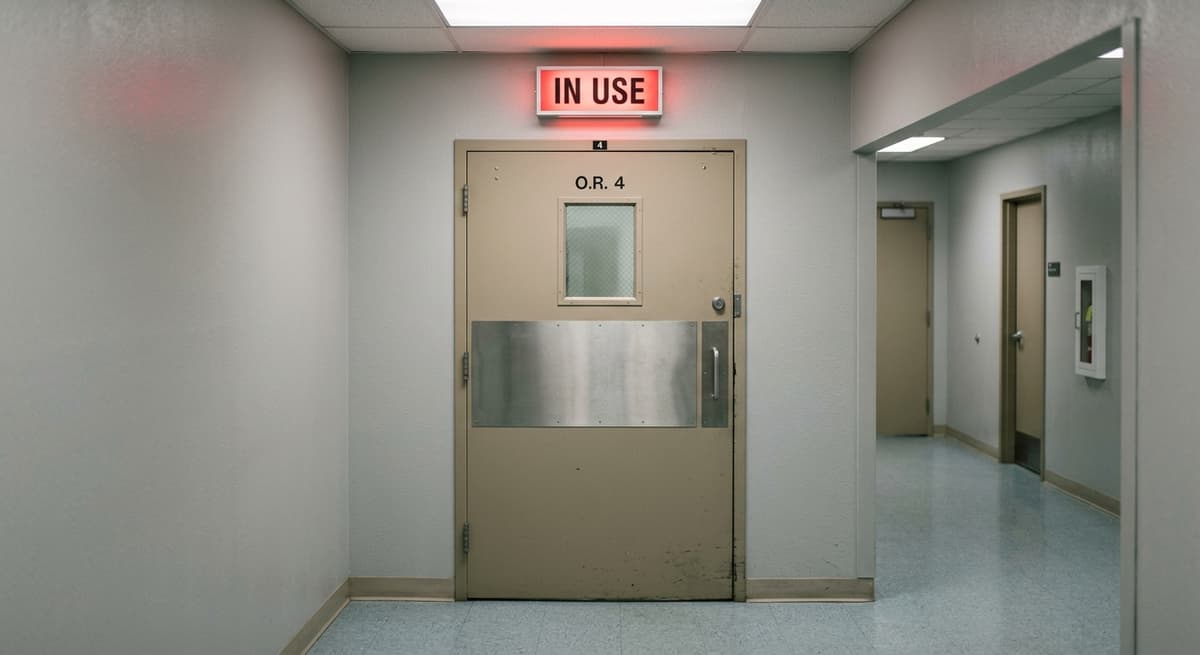
- The surgical team has legitimate safety concerns about recording devices in the operating room
- Hospital policies typically prohibit unauthorized devices in surgical suites
- Sterile environment requirements may preclude personal recording devices
- Patients under anesthesia cannot meaningfully consent to or participate in conversations, which limits the one-party consent framework
Nursing Homes and Long-Term Care
Family members and patients in nursing homes can record interactions with care staff. Virginia does not have a specific "granny cam" law, but the general legal framework applies:
- Patients who can consent can record their own interactions
- Family members with legal authority (power of attorney, guardianship) may act on the patient's behalf
- Hidden cameras in patient rooms raise complex issues involving the patient's privacy, roommate privacy, and facility policies
- Recordings can document neglect, abuse, or inadequate care
Medical Recordings as Evidence
Medical Malpractice Cases
Recordings can be powerful evidence in Virginia medical malpractice cases. They can document:
- What the doctor told the patient about risks and alternatives (informed consent)
- Promises or assurances about outcomes
- Discussions about recommended treatment vs. treatment actually provided
- Post-procedure conversations about complications
Important: If the recording is of a phone conversation, Va. Code 8.01-420.2 limits its admissibility in civil proceedings unless all parties knew about the recording. In-person recordings do not face this restriction.
Virginia medical malpractice cases are subject to Va. Code 8.01-581.1 et seq., which includes specific procedural requirements such as expert certification and a cap on damages.
Disability and Insurance Claims
Recordings of medical appointments can support:
- Social Security Disability claims
- Long-term disability insurance claims
- Workers' compensation cases involving medical treatment
- Health insurance coverage disputes
Administrative proceedings for these claims may have different evidentiary standards than Virginia civil courts, and the Va. Code 8.01-420.2 phone recording limitation may not apply.
Patient Complaints
Recordings can support complaints filed with:
- The Virginia Board of Medicine regarding physician conduct
- The Virginia Department of Health regarding facility conditions
- CMS (Centers for Medicare and Medicaid Services) regarding Medicare/Medicaid fraud
- The Office for Civil Rights regarding HIPAA violations
More Virginia Recording Laws
Audio Recording | Video Recording | Voyeurism and Hidden Cameras | Workplace Recording | Recording Police | Phone Call Recording | Security Cameras | Recording in Public | Landlord-Tenant Recording | Dashcam Laws | School Recording | Medical Recording
Back to Virginia Recording Laws
More Virginia Recording Topics
More Virginia Laws
Frequently Asked Questions
Can I record my doctor's appointment in Virginia?
Yes. Virginia's one-party consent law (Va. Code 19.2-62) allows you to record medical appointments you attend without notifying your healthcare provider. The recording is legal under state law. However, the healthcare facility may have its own no-recording policy, and violating that policy could affect your relationship with the provider.
Does HIPAA prevent patients from recording in Virginia?
No. HIPAA governs how healthcare providers handle protected health information. It does not apply to patient-initiated recordings. You are free to record your own medical encounters under Virginia law. HIPAA does apply to any recordings made by the healthcare provider that contain your health information.
What are the penalties for illegally recording a medical conversation in Virginia?
Illegally intercepting a doctor-patient communication (by a third party not involved in the conversation) carries enhanced civil damages of $800 per day with an $8,000 minimum under Va. Code 19.2-69, plus actual damages, punitive damages, and attorney fees. Criminal penalties include Class 6 felony charges under Va. Code 19.2-62.
Can I record a telehealth visit in Virginia?
Yes. You can record video telehealth visits and phone-based telehealth calls under one-party consent. However, phone call recordings face civil admissibility restrictions under Va. Code 8.01-420.2. Video-based telehealth recordings do not face this specific restriction.
Can I put a camera in my family member's nursing home room in Virginia?
Virginia does not have a specific granny cam law. The general legal framework allows the patient (or their legal representative) to install a camera in their own room. However, roommate privacy, facility policies, and audio recording concerns must all be addressed. Cameras should not capture the roommate's private activities.
Updates
Corrected the telehealth section: Virginia does not have a formally named 'Telehealth Act'; the cited statute is a medical-licensing exemptions provision, and we added the actual telehealth-specific law, which requires insurers to cover telemedicine on the same basis as in-person visits. Also relabeled a citation to match its actual official title (it covers five privileged relationships, not just medical communications).
Independently fact-checked against the cited primary sources; governing law re-checked for recent changes
Governing law re-checked for recent changes
Governing law re-checked for recent changes
Reviewed and approved by an editor
The Law Behind This Article
This article rests on the statutory provisions below, held in our own legal record and retrieved from the official source. Tap a section to read the operative text.
Code of Virginia, Title 19.2: Criminal Procedure
§ 19.2-62Interception, disclosure, etc., of wire, electronic or oral communications unlawful; penalties; exceptionsIn forcecited in 21 of our articles
A. Except as otherwise specifically provided in this chapter any person who: 1. Intentionally intercepts, endeavors to intercept or procures any other person to intercept or endeavor to intercept, any wire, electronic or oral communication; 2. Intentionally uses, endeavors to use, or procures any other person to use or endeavor to use any electronic, mechanical or other device to intercept any oral communication; 3. Intentionally discloses, or endeavors to disclose, to any other person the contents of any wire, electronic or oral communication knowing or having reason to know that the information was obtained through the interception of a wire, electronic or oral communication; or 4. Intentionally uses, or endeavors to use, the contents of any wire, electronic or oral communication, knowing or having reason to know that the information was obtained through the interception of a wire, electronic or oral communication; shall be guilty of a Class 6 felony. B. 1.
Official text (excerpt) · last checked 2026-08-31 · Read the full text in our law library · Verify at law.lis.virginia.gov
Cited in 11 court opinions in our collectionLatest citing opinion in our collection: 2025
In the courts (editorial summary, independently checked):Courts read Section 19.2-62 in step with the federal wiretap act. Global Policy Partners, LLC v. Yessin (2009) held that accessing email stored on a destination server is not an intercept, and Wilks v. Commonwealth (1977) held a conversation police recorded through a cooperating coconspirator was not a protected oral communication.
Opinions citing this section in our collection:
- Belmer v. Commonwealth (Court of Appeals of Virginia 2001, 36 Va. App. 448)✓A juvenile arrested for robbery whispered to his mother's boyfriend in a police interview room while a detective listened in; the court found no reasonable expectation of privacy, so Chapter 6, which carries the Section 19.2-62 ban, did not bar the detective's testimony.
- Wilks v. Commonwealth (Supreme Court of Virginia 1977, 217 Va. 885)✓An arson conspirator agreed to be wired and drew the defendant into a taped shop-talk about the fires; the court held the defendant had no justifiable expectation of noninterception, so the talk was not an oral communication protected by Chapter 6 and the tape was admissible.
- Bartnicki v. Vopper (Supreme Court of the United States 2001, 532 U.S. 514)“…16.02 (Supp. 2001); Utah Code Ann. § 77 23a4 (1982); Va. Code Ann. § 19.2-62 (1995); W. Va. Code § 62 -1D-3 (2000)…”
Identified automatically from the court opinions citing this section — not a ranking of which case controls.
Also relied on in: One-Party Consent States: Complete 2026 Guide, District of Columbia Phone Call Recording Laws: Consent Rules and Interstate Calls, Virginia Security Camera Laws: Home, Business, and HOA Rules
§ 19.2-69Civil action for unlawful interception, disclosure, or useIn forcecited in 9 of our articles
Any person whose wire, electronic, or oral communication is intercepted, disclosed, or used in violation of this chapter shall (i) have a civil cause of action against any person who intercepts, discloses, or uses, or procures any other person to intercept, disclose, or use, such communications and (ii) be entitled to recover from any such person: 1. Actual damages but not less than liquidated damages computed at the rate of $400 a day for each day of violation or $4,000, whichever is higher, provided that liquidated damages shall be computed at the rate of $800 a day for each day of violation or $8,000, whichever is higher, if the wire, electronic, or oral communication intercepted, disclosed, or used is between (i) persons married to each other; (ii) an attorney and client; (iii) a licensed practitioner of the healing arts and patient; (iv) a licensed professional counselor, licensed clinical social worker, licensed psychologist, or licensed marriage and family therapist and client; or (v) a clergy member and person seeking spiritual counsel or advice; 2. Punitive damages; and 3. A reasonable attorney fee and other litigation costs reasonably incurred.
Official text (excerpt) · last checked 2026-07-29 · Read the full text in our law library · Verify at law.lis.virginia.gov
Cited in 1 court opinions in our collectionLatest citing opinion in our collection: 2026
Opinions citing this section in our collection:
- Few (District Court, E.D. Virginia 2026)“…ing a civil claim for damages under Va. Code § 19.2-69. See Dkt. 1 at 1-3. Cc. Stat…”
Identified automatically from the court opinions citing this section — not a ranking of which case controls.
Also relied on in: Virginia Audio Recording Laws: One-Party Consent Rules and Penalties, Virginia Phone Call Recording Laws: What You Need to Know, Virginia Voyeurism and Hidden Camera Laws: Penalties and Protections
Code of Virginia, Title 32.1: Health
§ 32.1-127.1:03Health records privacyIn forcecited in 2 of our articles
A. There is hereby recognized an individual's right of privacy in the content of his health records. Health records are the property of the health care entity maintaining them, and, except when permitted or required by this section or by other provisions of state law, no health care entity, or other person working in a health care setting, may disclose an individual's health records. Pursuant to this subsection: 1. Health care entities shall disclose health records to the individual who is the subject of the health record, including an audit trail of any additions, deletions, or revisions to the health record, if specifically requested, except as provided in subsections E and F and subsection B of § 8.01-413. 2. Health records shall not be removed from the premises where they are maintained without the approval of the health care entity that maintains such health records, except in accordance with a court order or subpoena consistent with subsection C of § 8.01-413 or with this section or in accordance with the regulations relating to change of ownership of health records promulgated by a health regulatory board established in Title 54.1. 3.
Official text (excerpt) · last checked 2026-07-29 · Read the full text in our law library · Verify at law.lis.virginia.gov
Cited in 9 court opinions in our collectionLatest citing opinion in our collection: 2025
Opinions citing this section in our collection:
- Crystal Houston v. City of Newport News Department of Human Services (Court of Appeals of Virginia 2017)“…a. Code Section 8.01-399, Va. Code Section 8.01-400.2, and Va. Code Section 32.1-127.1:03(H), the patient privacy provisions of…”
- United States v. Sutherland (District Court, W.D. Virginia 2001, 143 F. Supp. 2d 609)“…notice of his or her rights and remedies under the statute. Va.Code Ann. § 32.1-127.1:03(H). The statute gives patients the righ…”
- Maple v. Colonial Orthopaedics, Inc. (In Re Maple) (United States Bankruptcy Court, E.D. Virginia 2010, 434 B.R. 363)“…l’s right of privacy in the content of his health records.” Va.Code Ann. § 32.1-127.1:03 (2010). “[N]o health care entity ... ma…”
Identified automatically from the court opinions citing this section — not a ranking of which case controls.
Also relied on in: Virginia Medical Records Retention Laws (2026 Guide)
Code of Virginia, Title 38.2: Insurance
§ 38.2-3418.16Coverage for telemedicine servicesIn force
A. Notwithstanding the provisions of § 38.2-3419, each insurer proposing to issue individual or group accident and sickness insurance policies providing hospital, medical and surgical, or major medical coverage on an expense-incurred basis; each corporation providing individual or group accident and sickness subscription contracts; and each health maintenance organization providing a health care plan for health care services shall provide coverage for the cost of such health care services provided through telemedicine services, as provided in this section. B. As used in this section: "Originating site" means the location where the patient is located at the time services are provided by a health care provider through telemedicine services. "Remote patient monitoring services" means the delivery of home health services using telecommunications technology to enhance the delivery of home health care, including monitoring of clinical patient data such as weight, blood pressure, pulse, pulse oximetry, blood glucose, and other condition-specific data; medication adherence monitoring; and interactive video conferencing with or without digital image upload.
Official text (excerpt) · last checked 2026-07-29 · Read the full text in our law library · Verify at law.lis.virginia.gov
Cited in 2 court opinions in our collectionLatest citing opinion in our collection: 2022
Opinions citing this section in our collection:
- Phonedoctorx, LLC v. Healthbridge Management, Inc. (District Court, D. Massachusetts 2014, 58 F. Supp. 3d 152)“…(4) (tel-emedicine does not include audio-only telephone); Va.Code Ann. § 38.2-3418.16(B) (telemedicine does not include audio…”
- Corradi v. Kolls (District Court, W.D. Virginia 2022)“…es delivered through real-time audio-only telephone. Va. Code Ann. § 38.2-3418.16. This code section defines the “origina…”
Identified automatically from the court opinions citing this section — not a ranking of which case controls.
Code of Virginia, Title 54.1: Professions and Occupations
§ 54.1-2901Exceptions and exemptions generallyIn force
A. The provisions of this chapter shall not prevent or prohibit: 1. Any person entitled to practice his profession under any prior law on June 24, 1944, from continuing such practice within the scope of the definition of his particular school of practice; 2. Any person licensed to practice naturopathy prior to June 30, 1980, from continuing such practice in accordance with regulations promulgated by the Board; 3. Any licensed advanced practice registered nurse from rendering care in accordance with the provisions of §§ 54.1-2957 and 54.1-2957.01, any advanced practice registered nurse licensed by the Boards of Medicine and Nursing in the category of certified nurse midwife practicing pursuant to subsection H of § 54.1-2957, or any advanced practice registered nurse licensed by the Boards of Medicine and Nursing in the category of clinical nurse specialist practicing pursuant to subsection J of § 54.1-2957 when such services are authorized by regulations promulgated jointly by the Boards of Medicine and Nursing; 4.
Official text (excerpt) · last checked 2026-07-29 · Read the full text in our law library · Verify at law.lis.virginia.gov
Cited in 1 court opinions in our collectionLatest citing opinion in our collection: 2002
Opinions citing this section in our collection:
- Monahan v. Obici Medical Management Services, Inc. (Virginia Circuit Court 2002, 59 Va. Cir. 307)“…between him and Dr. Weinstein should be recognized because Va. Code Ann. § 54.1-2901 (3) (Michie Supp. 2001) authorizes nurs…”
Identified automatically from the court opinions citing this section — not a ranking of which case controls.
Code of Virginia, Title 8.01: Civil Remedies and Procedure
§ 8.01-420.2Limitation on use of recorded conversations as evidenceIn forcecited in 13 of our articles
No mechanical recording, electronic or otherwise, of a telephone conversation shall be admitted into evidence in any civil proceeding unless (i) all parties to the conversation were aware the conversation was being recorded or (ii) the portion of the recording to be admitted contains admissions that, if true, would constitute criminal conduct which is the basis for the civil action, and one of the parties was aware of the recording and the proceeding is not one for divorce, separate maintenance or annulment of a marriage. The parties' knowledge of the recording pursuant to clause (i) shall be demonstrated by a declaration at the beginning of the recorded portion of the conversation to be admitted into evidence that the conversation is being recorded. This section shall not apply to emergency reporting systems operated by police and fire departments and by emergency medical services agencies, nor to any communications common carrier utilizing service observing or random monitoring pursuant to § 19.2-62.
Official text (excerpt) · last checked 2026-07-29 · Read the full text in our law library · Verify at law.lis.virginia.gov
Cited in 2 court opinions in our collectionLatest citing opinion in our collection: 1991
Opinions citing this section in our collection:
- Leitman v. McAusland (Court of Appeals for the Fourth Circuit 1991, 934 F.2d 46)“…transcript could not be admitted into evidence pursuant to Va.Code § 8.01-420.2. 5 A state evidentiary rule, such as…”
Identified automatically from the court opinions citing this section — not a ranking of which case controls.
Also relied on in: Virginia Dashcam Laws: Installation, Audio, and Evidence Rules, Virginia Landlord-Tenant Recording Laws: Surveillance and Privacy Rights, Virginia Workplace Recording Laws: Employee Rights and Employer Rules
§ 8.01-581.1DefinitionsIn force
As used in this chapter: "Health care" means any act, professional services in nursing homes, or treatment performed or furnished, or which should have been performed or furnished, by any health care provider for, to, or on behalf of a patient during the patient's medical diagnosis, care, treatment or confinement. "Health care provider" means (i) a person, corporation, facility or institution licensed by this Commonwealth to provide health care or professional services as a physician or hospital, a dentist, a pharmacist, a registered nurse or licensed practical nurse or a person who holds a multistate privilege to practice such nursing under the Nurse Licensure Compact, an advanced practice registered nurse, an optometrist, a podiatrist, a physician assistant, a chiropractor, a physical therapist, a physical therapy assistant, a clinical psychologist, a clinical social worker, a professional counselor, a licensed marriage and family therapist, a licensed dental hygienist, a health maintenance organization, or an emergency medical care attendant or technician who provides services on a fee basis; (ii) a professional corporation, all of whose shareholders or members are so…
Official text (excerpt) · last checked 2026-07-29 · Read the full text in our law library · Verify at law.lis.virginia.gov
Cited in 53 court opinions in our collectionLatest citing opinion in our collection: 2026
Opinions citing this section in our collection:
- Samuel v. V.C.U. Obstetrics & Gynecology Ass'n (Virginia Circuit Court 1988, 13 Va. Cir. 364)“…th care provider" under Virginia’s Medical Malpractice Act, Va. Code Section 8.01-581.1 et seq. ("the Act"). Defendant conten…”
- Mayr v. Osborne (Supreme Court of Virginia 2017, 293 Va. 74)“…within Virginia’s Medical Malpractice Act, Va. Code § 8.01-581.1 et seq., may not be pl…”
- Elliott v. Cook (Virginia Circuit Court 2002, 60 Va. Cir. 1)“…on for Judgment alleges that they operate a hospital. Under Va. Code § 8.01-581.1, a corporation that provides health car…”
Identified automatically from the court opinions citing this section — not a ranking of which case controls.
Search our full record of US law — 2.1 million sections, every state + federal →
Sources and References
- Va. Code Ann. 19.2-62(law.lis.virginia.gov).gov
- Va. Code Ann. 19.2-69 - Civil Action for Unlawful Interception(law.lis.virginia.gov).gov
- Va. Code Ann. 8.01-420.2(law.lis.virginia.gov).gov
- HHS - HIPAA(hhs.gov).gov
- Va. Code Ann. 32.1-127.1:03(law.lis.virginia.gov).gov
- Virginia Board of Medicine(dhp.virginia.gov).gov
- Virginia Department of Health(vdh.virginia.gov).gov