
Mississippi
Mississippi Video Recording Laws: Surveillance, Filming, and Consent Rules (2026)
Independently fact-checked against primary sources (last audited August 15, 2026). · Reviewed by the RecordingLaw editorial team. · Law checked current as of August 15, 2026. · 4 primary sources cited on this page. How we verify our legal content
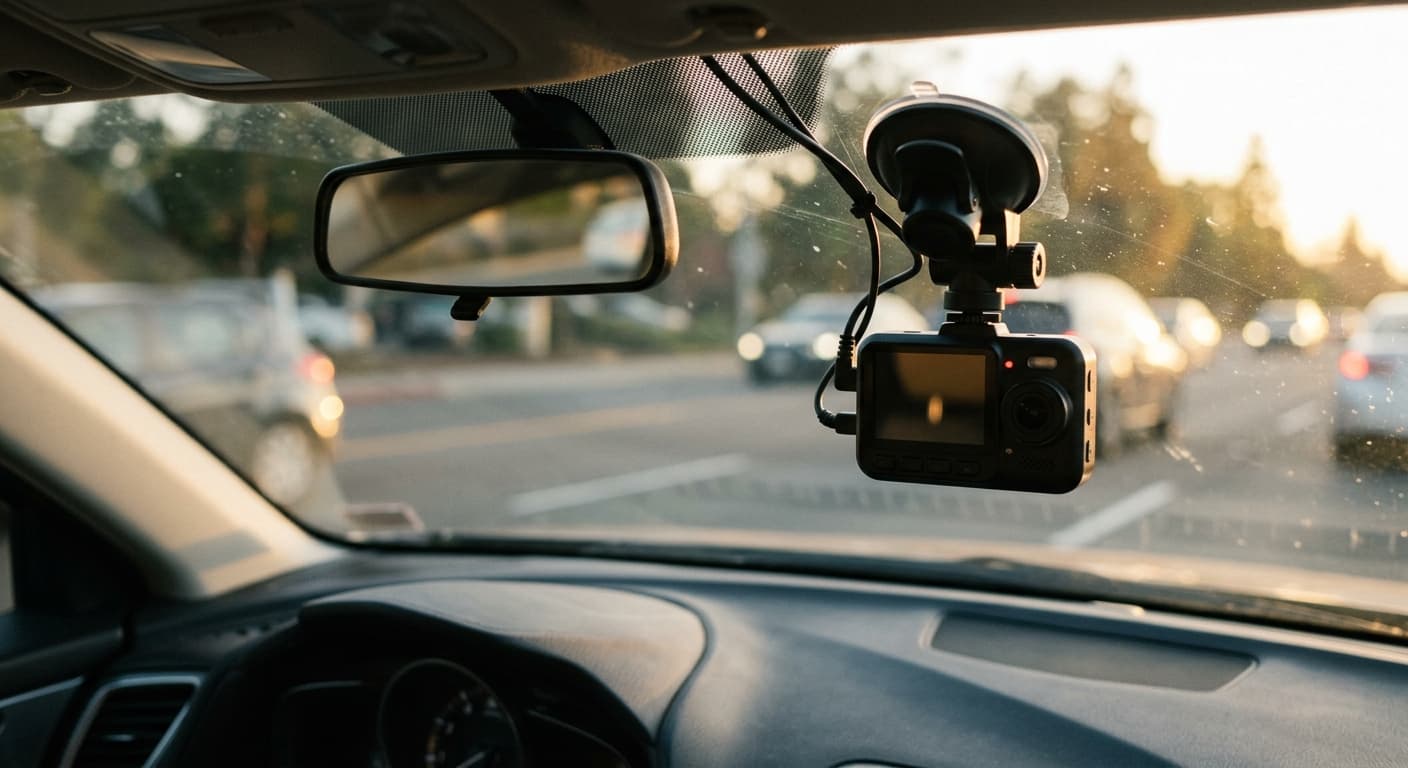
Mississippi allows video recording in public spaces without restriction. Recording someone in a private location where they have a reasonable expectation of privacy with lewd, licentious, or indecent intent is a felony under Miss. Code Ann. section 97-29-63. When video also captures audio, the one-party consent rule under section 41-29-531 applies.
Mississippi does not have a blanket law that prohibits video recording. Whether filming is legal depends on where you are, what you are recording, and whether the subject has a reasonable expectation of privacy. Public spaces are generally open to video recording without restriction, while private locations are protected by Mississippi's strong hidden camera statute.
This guide covers the rules for video recording across different settings in Mississippi, explains the distinction between public and private filming, and outlines the penalties for violations. Understanding these rules is essential whether you are a journalist, a business owner installing security cameras, or an individual who wants to document an important interaction.
Video Recording in Public Spaces
Your Right to Film in Public
Mississippi has no general prohibition on video recording in public spaces. The First Amendment to the U.S. Constitution protects your right to gather information in public, including through photography and video recording. In public spaces, you can:
- Film on public streets, sidewalks, and parks
- Record public meetings and government proceedings
- Film public protests, demonstrations, rallies, and events
- Photograph or film buildings and landmarks from public areas
- Record interactions with government officials performing their duties
- Livestream events happening in public view
The U.S. Court of Appeals for the Fifth Circuit, which covers Mississippi, recognized the First Amendment right to record in public in Turner v. Driver, 848 F.3d 678 (5th Cir. 2017). While that case specifically addressed recording police officers, the underlying principle protects public filming more broadly.
Limits on Public Filming
Even in public spaces, your right to record has boundaries:
- You cannot obstruct traffic, block sidewalks, or create safety hazards while filming.
- You must follow lawful orders from police regarding your physical location, even if you have a right to record.
- You cannot use filming as a pretext for harassment or stalking.
- Some government facilities may have security restrictions that limit recording in certain areas.
- Military installations and certain federal buildings may prohibit photography and video recording entirely.
No Expectation of Privacy in Public
A key legal concept in video recording law is the "reasonable expectation of privacy." When you are in a public space, you generally have no reasonable expectation of privacy for activities visible to others. This means:
- Passersby can be captured on video without their consent
- You do not need to get releases from everyone who appears in your footage
- Conversations held at normal volume in public can be overheard and recorded
- Activities visible from a public vantage point can be filmed
However, using technology to see or hear things that would not be visible or audible to the naked eye (such as telephoto lenses to see into private windows or directional microphones to capture distant private conversations) may cross legal boundaries.
Mississippi's Hidden Camera Law
Miss. Code Ann. Section 97-29-63
Miss. Code Ann. section 97-29-63 is Mississippi's primary statute governing video recording in private settings. This law specifically prohibits, when done with lewd, licentious, or indecent intent:
- Photographing, filming, or recording another person without their consent in a place where they have a reasonable expectation of privacy
- Recording in specific private locations including private dwellings, restrooms, bathrooms, shower rooms, tanning booths, locker rooms, fitting rooms, dressing rooms, and bedrooms
- Filming under or through a person's clothing without consent, sometimes called "upskirting" or "downblousing"
This statute is separate from Mississippi's wiretapping law (Title 41, Chapter 29) and carries its own penalties. While the wiretapping statute primarily governs audio interception, section 97-29-63 specifically addresses visual recordings.
Penalties for Hidden Camera Violations
The penalties under section 97-29-63 are severe and depend on the age of the victim:
| Offense | Penalty |
|---|---|
| Hidden camera recording (adult victim) | Felony: up to 5 years in prison, up to $5,000 fine |
| Hidden camera recording (victim under 16) | Felony: up to 10 years in prison, up to $5,000 fine |
These are felony charges. A conviction results in a permanent criminal record, potential prison time, and significant fines. Repeat offenders face enhanced penalties.
What Constitutes a "Reasonable Expectation of Privacy"
The statute hinges on whether the person being recorded has a reasonable expectation of privacy. Mississippi courts consider several factors:
- The location. Bathrooms, bedrooms, locker rooms, changing areas, and medical examination rooms carry a strong expectation of privacy.
- The circumstances. A person undressing, using the restroom, or engaging in intimate activities has a heightened privacy expectation.
- The person's conduct. If someone takes steps to ensure privacy (closing a door, drawing curtains), that strengthens their expectation.
- Social norms. Society generally recognizes that certain activities and locations are private, regardless of specific actions taken.
Video Recording on Private Property
Property Owner Rights
On private property, the property owner or authorized occupant sets the rules for video recording. A property owner can:
- Prohibit all video recording on their premises
- Require consent before filming
- Restrict recording to certain areas
- Ask you to stop recording and leave the property
- Establish recording policies for employees, tenants, and visitors
If you refuse to stop recording on private property after being asked, you may be subject to trespassing charges under Miss. Code Ann. section 97-17-87 rather than recording-specific charges.
Businesses and Commercial Properties
Businesses open to the public occupy a middle ground. While they are private property, they are generally open to the public during business hours. Businesses can:
- Post "No Photography" or "No Recording" signs and enforce those policies
- Ask customers to stop recording and leave if they refuse
- Install their own security cameras in common areas (but not in restrooms, fitting rooms, or other private spaces)
Business patrons generally have a reduced expectation of privacy in retail areas, restaurants, and lobbies. However, private areas within businesses such as restrooms, fitting rooms, and employee break rooms maintain their privacy protections.
Recording in Your Own Home
You have broad rights to install video cameras in your own home. As the property owner, you can place cameras in common areas like living rooms, kitchens, hallways, and exterior spaces. However, there are important limits:
- You cannot place cameras in bathrooms, guest bedrooms, or other areas where guests have a reasonable expectation of privacy.
- If you have roommates or tenants, you must respect their privacy in their private spaces.
- If your cameras capture audio, the one-party consent rule under section 41-29-531 applies to the audio portion.
- Cameras pointing at neighbors' private spaces (like bedroom windows) may violate privacy laws.
Video Recording and Audio: The Dual Consent Question
When Video Captures Sound
Many video recording devices also capture audio. In Mississippi, the legality of a recording that captures both video and audio depends on two separate legal frameworks:
- The video portion is governed by the hidden camera statute (section 97-29-63) for private settings and by general property and privacy law for other settings.
- The audio portion is governed by the wiretapping statute (sections 41-29-501 through 41-29-537) and the one-party consent rule.
This means a video recording in a public space where conversations are captured may be perfectly legal for the video but require one-party consent for the audio if the speakers have a reasonable expectation of privacy in their conversation.
Practical Implications
For most everyday situations, the dual framework does not create complications:
- Security cameras without audio in public or common areas: No consent issues.
- Security cameras with audio in common areas where you are present: One-party consent is satisfied because you (the property owner) are a party to conversations in your own space.
- Body cameras or wearable cameras: The video is legal in public spaces. Audio recording follows the one-party consent rule if you are participating in conversations.
- Dashcams with audio: Legal because you are in your own vehicle and consent to the recording of conversations occurring there.
Video Recording and Consent Forms
If you are recording someone's likeness for business or commercial purposes, you should get proper consent. A photo or video consent form typically includes:
- The identity of the person being recorded
- A description of how the recording will be used
- Whether the recording may be edited or modified
- The duration of the consent
- Any compensation provided
- A signature and date
Consent forms are not legally required for filming in public or for personal use, but they are strongly recommended for commercial, marketing, and media productions.
Video Evidence in Mississippi Courts
Admissibility Standards
Video recordings are generally admissible as evidence in Mississippi courts, provided they meet the standard requirements:
- Authentication. Under Mississippi Rules of Evidence Rule 901, you must show that the video is what you claim it to be. Testimony from the person who made the recording or from a witness who can identify the contents is typically sufficient.
- Relevance. The video must relate to an issue in the case.
- Not unfairly prejudicial. A judge can exclude video if its potential to inflame or mislead the jury substantially outweighs its probative value.
- Chain of custody. Maintaining a clear chain of custody helps establish that the video has not been tampered with.
Best Practices for Video Evidence
- Do not edit or alter the video. Preserve the original file in its native format.
- Record the date, time, and location of the filming as soon as possible.
- Save multiple copies in secure locations (cloud storage and a physical backup).
- Avoid posting the video on social media before legal proceedings, as this can complicate its use as evidence and potentially affect witness testimony.
Federal Considerations for Video Recording
Federal law does not impose a blanket prohibition on video recording. However, several federal statutes affect specific types of video recording:
- The Video Voyeurism Prevention Act, 18 U.S.C. section 1801, prohibits capturing images of a person's private areas without consent in circumstances where the person has a reasonable expectation of privacy. This applies on federal property and in federal jurisdictions.
- The Children's Online Privacy Protection Act (COPPA) restricts the collection of personal information (including video) from children under 13 online.
- Title III of the Omnibus Crime Control and Safe Streets Act (the federal Wiretap Act) governs the audio component of video recordings.
For most everyday video recording situations in Mississippi, federal law does not add restrictions beyond what state law requires.
Common Video Recording Scenarios
Recording at Concerts and Events
Public events like concerts, sporting events, and festivals are typically held in venues that set their own recording policies. The venue or event organizer can prohibit recording as a condition of entry. However, events held in public parks or on public streets generally cannot prohibit attendees from filming.
Recording Neighbors
You can point security cameras at your own property, including areas visible from the street. However, deliberately aiming cameras at a neighbor's private areas (such as into windows or over fences into private yards) may constitute invasion of privacy or, depending on the circumstances, a violation of section 97-29-63.
Drone Recording
Drone recording in Mississippi is subject to both state and federal regulations. The Federal Aviation Administration (FAA) regulates drone operations, and Mississippi follows federal guidelines. You must register your drone with the FAA, follow altitude restrictions, and avoid restricted airspace. Using a drone to record in areas where people have a reasonable expectation of privacy may violate section 97-29-63.
More Mississippi Recording Laws
Audio Recording | Video Recording | Voyeurism & Hidden Cameras | Workplace Recording | Recording Police | Phone Call Recording | Security Cameras | Recording in Public | Landlord-Tenant | Dashcam Laws | Schools | Medical Recording
Back to Mississippi Recording Laws
More Mississippi Recording Topics
More Mississippi Laws
Frequently Asked Questions
Is it legal to video record in public in Mississippi?
Yes. Mississippi has no general prohibition on video recording in public spaces. You can film on public streets, sidewalks, parks, and at public events. The First Amendment protects the right to record in public.
What are the penalties for hidden camera recording in Mississippi?
Hidden camera recording made with lewd, licentious, or indecent intent in a private place is a felony under Miss. Code Ann. section 97-29-63. For adult victims, the penalty is up to 5 years in prison and a $5,000 fine. If the victim is under 16, the penalty increases to up to 10 years in prison; the fine cap stays at $5,000 for both tiers.
Can a business prohibit video recording on its premises?
Yes. Private businesses can set their own recording policies. They can prohibit filming, post no-recording signs, and ask customers who refuse to comply to leave. Refusing to leave after being asked can result in trespassing charges.
Do I need consent to film someone in Mississippi?
In public spaces, no consent is needed. In private spaces where a person has a reasonable expectation of privacy, recording without consent and with lewd, licentious, or indecent intent is illegal under section 97-29-63. If the recording captures audio, the one-party consent rule under section 41-29-531 applies to the audio portion.
Can I use video footage as evidence in Mississippi court?
Yes. Video recordings are generally admissible if properly authenticated under Mississippi Rules of Evidence Rule 901. The video must be relevant, not unfairly prejudicial, and you should be able to testify about when, where, and how it was recorded.
Updates
Corrected the hidden-camera fine cap ($5,000 for both victim-age tiers under Miss. Code 97-29-63) and repointed a dead Turner v. Driver citation.
Independently fact-checked against the cited primary sources; governing law re-checked for recent changes
Restored Miss. Code Ann. 97-29-63's specific-intent element (lewd, licentious, or indecent intent) throughout the page; the article had described it as a strict-liability ban on recording in private places.
Governing law re-checked for recent changes
Governing law re-checked for recent changes
Spoke propagation from parent hub: replaced all Justia URLs with legislature.ms.gov canonical source; replaced FindLaw Turner v. Driver citation with ca5.uscourts.gov (No. 15-11311) on police, public-recording, and video spokes; corrected is_gov flags for legislature.ms.gov entries in SourcesList components; added keywords and citations arrays to [dashcam](/dashboard-camera-legality-and-privacy-laws-is-it-illegal-to-use-dashcams-in-north-america), landlord-tenant, and schools spokes; updated workplace spoke NLRB section to cite Stericycle, Inc., 372 NLRB No. 113 (2023) as the controlling work-rule standard replacing Boeing. No fabricated cases (Lewis v. State, Glazner v. Glazner) or SB 2437 references found. No 47 CFR 64.501 or FCC 23-107 references found.
Reviewed and approved by an editor
The Law Behind This Article
This article rests on the statutory provisions below, held in our own legal record and retrieved from the official source. Tap a section to read the operative text.
Mississippi Code of 1972 Annotated
§ 97-29-63Photographing or filming another without permission where there is expectation of privacy; when victim is adult; when victim is child under sixteen.In forcecited in 10 of our articles
(1)(a) It is a felony for any person with lewd, licentious or indecent intent to photograph, film, videotape, record or otherwise reproduces the image of another person without the permission of the other person when the other person is located in a place where a person would intend to be in a…
Official text (excerpt) · last checked 2026-08-31 · Read the full text in our law library · Verify at billstatus.ls.state.ms.us
Cited in 9 court opinions in our collectionLatest citing opinion in our collection: 2023
In the courts (editorial summary, independently checked):Gilmer v. State (2007) construed Section 97-29-63 on first impression, holding it has four elements and that proof the victim was in a listed place like a private dwelling satisfies the protected-location element as a matter of law, and rejected an overbreadth challenge. Nuckolls v. State (2015) reversed counts where venue was unproven.
Opinions citing this section in our collection:
- Gilmer v. State (Mississippi Supreme Court 2007, 955 So. 2d 829)✓A constable parked at night about 87 feet away and used a zoom camcorder to film a clothed woman inside her apartment; the court held that filming a victim in a private dwelling satisfies the statute's protected-location element as a matter of law, and affirmed the conviction.
- Eddie Gilmer v. State of Mississippi (Mississippi Supreme Court 2004)“…te Med. Ass'n, 381 So. 2d 1046, 1048 (Miss. 1980). ¶10. Miss. Code Ann. §97-29-63 (Rev. 2006) reads: Any person w…”
- Nuckolls v. State (Mississippi Supreme Court 2015, 179 So. 3d 1046)✓Nuckolls hid cameras and filmed women in bathrooms, then was convicted on ten counts charging he later reproduced the videos on a laptop; the court reversed those ten because the State never proved where the transfers occurred, and affirmed one filming count.
Identified automatically from the court opinions citing this section — not a ranking of which case controls.
Also relied on in: Mississippi Surveillance Camera Laws (2026 Guide), Mississippi Smart Glasses Recording Laws (2026), Mississippi Landlord-Tenant Recording Laws: Cameras, Audio, and Privacy Rights (2026)
§ 41-29-531Exceptions to civil liability for violation of this article.In forcecited in 18 of our articles
This article shall not apply to: An operator of a switchboard, or an officer, employee or agent of a communication common carrier whose facilities are used in the transmission of a wire communication, intercepts a communication, or who discloses or uses an intercepted communication in the normal…
Official text (excerpt) · last checked 2026-08-31 · Read the full text in our law library · Verify at billstatus.ls.state.ms.us
Cited in 4 court opinions in our collectionLatest citing opinion in our collection: 2026
Opinions citing this section in our collection:
- Campbell v. MESC (Court of Appeals of Mississippi 2000, 782 So. 2d 751)“…le involved in the conversation are aware of the recording. Miss.Code Ann. § 41-29-531(e) (the statute does not apply to a con…”
- Brian S. Pope v. Deborah Baird Martin a/k/a Deborah L. Martin a/k/a Deborah Martin Pope a/k/a Deborah L. Pope (Court of Appeals of Mississippi 2023)“…vides a list of those who are immune from civil liability. Miss. Code Ann. § 41-29-531 (Rev. 2018). Relevant to the present ca…”
- Rosenberg (District Court, S.D. Mississippi 2026)“…olation of the Mississippi Security of Communications Act, Miss. Code Ann. §§ 41-29-531 to -537 (Count IX). See id. at 40-47.…”
Identified automatically from the court opinions citing this section — not a ranking of which case controls.
Also relied on in: Mississippi Recording Laws (2026): One-Party Consent Rules, Mississippi AI Meeting Recording Laws (2026), Mississippi Ring Doorbell Laws: What You Need to Know in 2026
United States Code Title 18
§ 1801Video voyeurismIn forcecited in 79 of our articles
Whoever, in the special maritime and territorial jurisdiction of the United States, has the intent to capture an image of a private area of an individual without their consent, and knowingly does so under circumstances in which the individual has a reasonable expectation of privacy, shall be fined under this title or imprisoned not more than one year, or both. In this section— the term “capture”, with respect to an image, means to videotape, photograph, film, record by any means, or broadcast; the term “broadcast” means to electronically transmit a visual image with the intent that it be viewed by a person or persons; the term “a private area of the individual” means the naked or undergarment clad genitals, pubic area, buttocks, or female breast of that individual; the term “female breast” means any portion of the female breast below the top of the areola; and the term “under circumstances in which that individual has a reasonable expectation of privacy” means— circumstances in which a reasonable person would believe that he or she could disrobe in privacy, without being concerned that an image of a private area of the individual was being captured; or circumstances in which a…
Official text (excerpt) · last checked 2026-07-28 · Read the full text in our law library · Verify at uscode.house.gov
Cited in 53 court opinions in our collectionLatest citing opinion in our collection: 2026
In the courts (editorial summary, independently checked):Courts have applied 18 U.S.C. 1801 mainly at its edges. United States v. Johnson (2010) read it as Congress's answer to secretly filming nudity on federal property, acquitting on a child exploitation charge instead. EPIC v. Department of Homeland Security (2011) applied the Section 1801(c) law enforcement exception to a TSA scanner claim.
Opinions citing this section in our collection:
- United States v. Anthony Helton (Court of Appeals for the Fourth Circuit 2019, 944 F.3d 198)“…from this list of federal offenses is video voyeurism under 18 U.S.C. § 1801. Rather than list this statute as an enu…”
- United States v. Johnson (District Court, W.D. Missouri 2010, 719 F. Supp. 2d 1059)✓A weightlifting coach hid a camera to film minors weighing in nude; acquitting him under the child exploitation statute, the court called that conduct plain video voyeurism under section 1801, but noted the section reaches only federal maritime and territorial jurisdiction.
- Electronic Privacy Information Center v. United States Department of Homeland Security (Court of Appeals for the D.C. Circuit 2011, 653 F.3d 1)✓Privacy groups challenged TSA body scanners under the Video Voyeurism Prevention Act; the D.C. Circuit held the statute's exception for lawful law enforcement, correctional, or intelligence activity applied to airport screening, so the section 1801 claim failed.
Identified automatically from the court opinions citing this section — not a ranking of which case controls.
Also relied on in: Alaska Voyeurism and Hidden Camera Laws: AS 11.61.123 Explained (2026), Arizona Surreptitious Recording & Voyeurism Laws: ARS 13-3019 Penalties (2026), Arkansas Voyeurism Laws: Hidden Cameras, Penalties, and Defenses (2026)
Search our full record of US law — 2.1 million sections, every state + federal →
Sources and References
- Miss. Code Ann. section 97-29-63 - Hidden Camera Statute(law.justia.com)
- Miss. Code Ann. section 41-29-531 - One-Party Consent(law.justia.com)
- Turner v. Driver, 848 F.3d 678 (5th Cir. 2017)(courtlistener.com)
- 18 U.S.C. section 1801 - Video Voyeurism Prevention Act(law.cornell.edu)
- Mississippi Rules of Evidence(courts.ms.gov).gov
- Mississippi Legislature Official Site(legislature.ms.gov).gov
- FAA - Unmanned Aircraft Systems(faa.gov).gov
- FTC - COPPA Rule(ftc.gov).gov