
Mississippi
Mississippi Landlord-Tenant Recording Laws: Cameras, Audio, and Privacy Rights (2026)
Independently fact-checked against primary sources (last audited August 15, 2026). · Reviewed by the RecordingLaw editorial team. · Law checked current as of August 15, 2026. · 3 primary sources cited on this page. How we verify our legal content
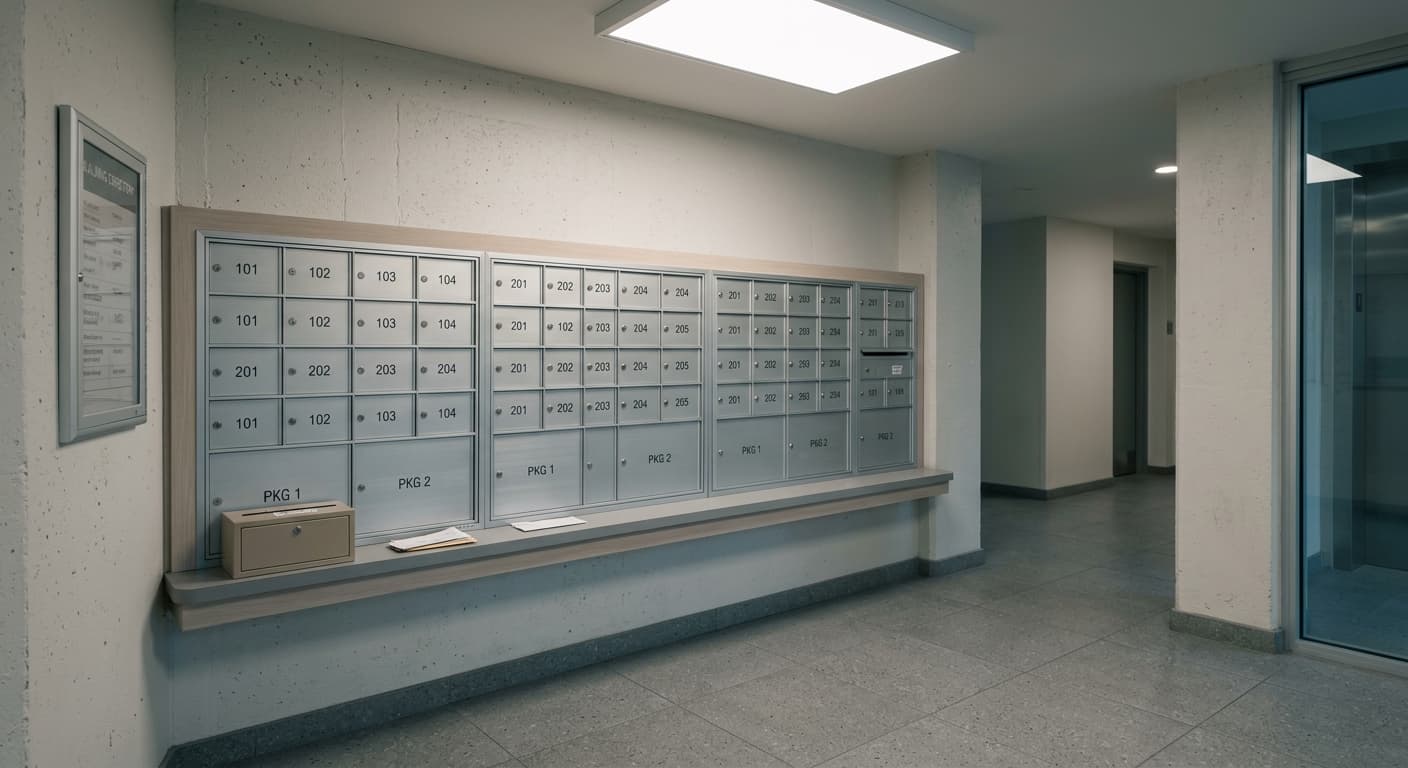
In Mississippi, both landlords and tenants may record conversations they participate in without notice under Miss. Code Ann. section 41-29-531(e). However, a landlord cannot install hidden cameras or microphones inside a rental unit where tenants hold a reasonable expectation of privacy.
Recording interactions between landlords and tenants in Mississippi is governed by the state's one-party consent wiretapping law, landlord-tenant statutes, and privacy principles. This guide covers when tenants and landlords can legally record, security camera rules for rental properties, and how recordings serve as evidence in housing disputes.
Can Tenants Record Their Landlord in Mississippi?
Yes. Mississippi is a one-party consent state under Miss. Code Ann. section 41-29-531(e). Tenants participating in conversations with their landlord can record without informing the landlord, provided the recording is not made with criminal or tortious intent.
What Tenants Can Record
- Conversations with landlords about rent, repairs, or lease terms
- Phone calls with property managers
- Interactions during inspections or walkthroughs
- Move-in and move-out inspections
- Conversations with maintenance workers
What Tenants Cannot Record
- Conversations between the landlord and other people when the tenant is not present
- Recordings made with intent to harass, blackmail, or extort
- Private conversations in areas where others have a reasonable expectation of privacy
Can Landlords Record Tenants?
Conversations
Landlords can record conversations they participate in under one-party consent, including discussions about lease terms, rent, and property rules.
Security Cameras
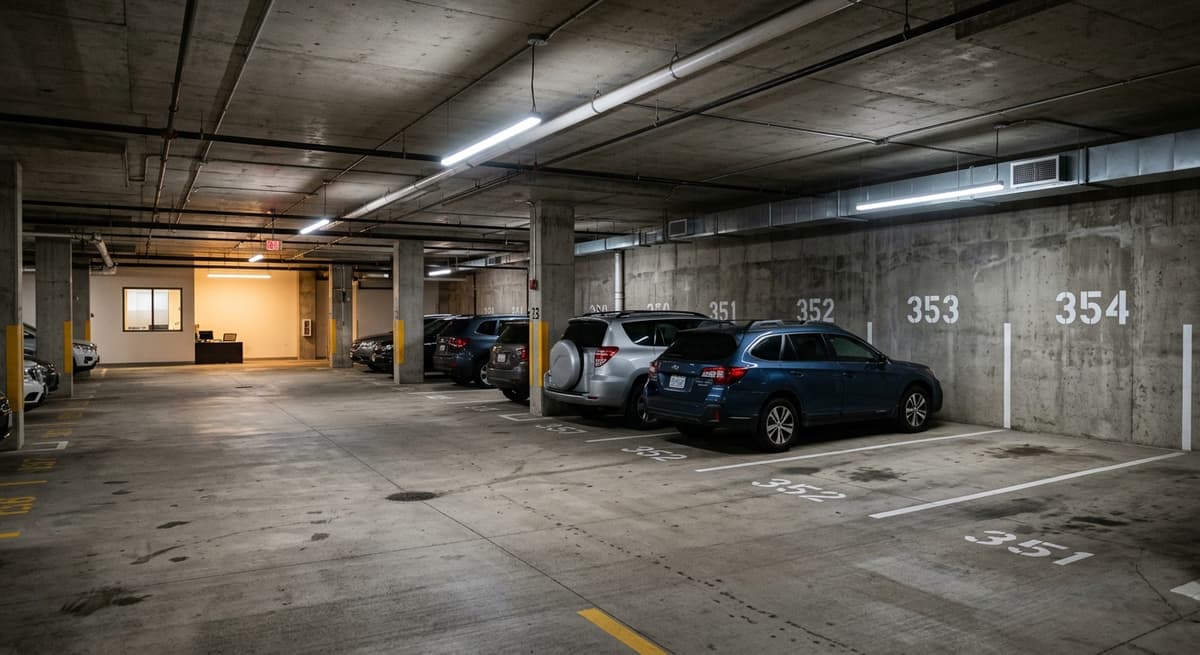
Landlords can install cameras on property exteriors and common areas but cannot place cameras inside individual rental units.
Permitted locations: Building exterior, parking lots, hallways, lobby, laundry rooms Prohibited locations: Inside rental units, bathrooms, any area where tenants expect privacy
Installing hidden cameras inside a rental unit could violate both wiretapping law (Miss. Code Ann. section 41-29-533) and the voyeurism statute (Miss. Code Ann. section 97-29-63).
Mississippi Landlord-Tenant Law Overview
Entry and Notice
Mississippi's Residential Landlord-Tenant Act (Miss. Code Ann. section 89-8-1 et seq.) covers security deposits, lease termination, landlord and tenant duties, and eviction procedures. It does not contain any provision on landlord right of entry or entry notice, unlike roughly 40 other states with a statutory 24- or 48-hour notice floor. In Mississippi, entry terms are set by the lease itself, and general common-law and trespass principles apply where the lease is silent.
Recording landlord entries can still document what actually happened, including whether the lease's own notice terms were followed and the condition of the property during inspections.
Security Deposits
Mississippi does not have a statutory cap on security deposits, but under Miss. Code Ann. section 89-8-21, landlords must return the deposit within 45 days after three things have happened: the tenancy has ended, the tenant has delivered possession of the unit, and the tenant has made a demand for the deposit. Video recordings of the unit at move-in and move-out are powerful evidence in deposit disputes.
Recordings as Evidence in Mississippi Housing Disputes

Eviction Proceedings
Recordings can document lease violations, improper notice, retaliatory eviction, and property conditions. Mississippi courts accept properly authenticated recordings in eviction cases.
Habitability and Repairs
Tenants can use recordings to document housing code violations, needed repairs, and landlord refusal to maintain the property. The Mississippi State Department of Health oversees certain housing health standards.
Discrimination Claims
The federal Fair Housing Act prohibits housing discrimination nationwide; Mississippi has no separate state fair-housing statute. Recordings of discriminatory statements by landlords can support complaints filed with the U.S. Department of Housing and Urban Development (HUD).
Penalties for Illegal Recording
| Violation | Statute | Penalty |
|---|---|---|
| Recording without consent (not a party) | Miss. Code Ann. section 41-29-533 | Misdemeanor: up to 1 year, $10,000 fine |
| Disclosing illegally intercepted recording | Miss. Code Ann. section 41-29-533 | Felony: up to 5 years, $10,000 fine |
| Hidden camera in private area | Miss. Code Ann. section 97-29-63 | Felony: up to 5 years |
Civil damages under Miss. Code Ann. section 41-29-529 include $100/day or $1,000 minimum, plus punitive damages and attorney fees.
More Mississippi Recording Laws
Audio Recording | Video Recording | Voyeurism Laws | Workplace Recording | Recording Police | Phone Call Recording | Security Cameras | Recording in Public | Landlord-Tenant Recording | Dashcam Laws | School Recording | Medical Recording
Back to Mississippi Recording Laws
More Mississippi Recording Topics
More Mississippi Laws
Frequently Asked Questions
Can I record a conversation with my landlord in Mississippi?
Yes. Mississippi is a one-party consent state under Miss. Code Ann. section 41-29-531(e). As a participant, you can record without informing your landlord. The recording must not be made with criminal or tortious intent.
Can my landlord put cameras inside my apartment in Mississippi?
No. A landlord cannot install cameras inside your rental unit. This could violate Mississippi wiretapping law and the hidden camera voyeurism statute (Miss. Code Ann. section 97-29-63). Landlords can place cameras in exterior and common areas.
Can I install a security camera at my apartment in Mississippi?
You can install cameras inside your own unit, subject to lease terms. Wireless cameras that do not require permanent modifications are generally acceptable. Do not aim cameras into other tenants' units or shared private spaces.
Can I use recordings in a Mississippi eviction case?
Yes. Recordings made legally under one-party consent are admissible in Mississippi courts. You must authenticate the recording as genuine and unaltered.
How long does a landlord have to return my security deposit in Mississippi?
Mississippi law (Miss. Code Ann. section 89-8-21) requires landlords to return security deposits within 45 days after the tenancy ends, possession is delivered, and the tenant makes a demand for the deposit. Video recordings of the unit condition at move-in and move-out can help resolve deposit disputes.
Updates
Corrected an unsupported claim that Mississippi law requires landlords to give reasonable notice before entering a rental unit; the state's Residential Landlord-Tenant Act has no entry-notice provision at all, so entry terms come from the lease. Also corrected the security-deposit return deadline to note that the 45-day clock requires the tenant to have delivered possession and demanded the deposit, not just that the tenancy ended. Separately, repointed every Mississippi Code citation on this page from the Legislature's bare homepage to the specific Justia section it names (except the Mississippi Fair Housing Act link, which could not be resolved to a specific section and was left unchanged).
Independently fact-checked against the cited primary sources; governing law re-checked for recent changes
Corrected the wiretapping-law citation for hidden cameras in a rental unit from Miss. Code Ann. section 41-29-505 (a narcotics wiretap court-order procedure) to section 41-29-533 (the actual general prohibition on interception).
Governing law re-checked for recent changes
Spoke propagation from parent hub: replaced all Justia URLs with legislature.ms.gov canonical source; replaced FindLaw Turner v. Driver citation with ca5.uscourts.gov (No. 15-11311) on police, public-recording, and video spokes; corrected is_gov flags for legislature.ms.gov entries in SourcesList components; added keywords and citations arrays to [dashcam](/dashboard-camera-legality-and-privacy-laws-is-it-illegal-to-use-dashcams-in-north-america), landlord-tenant, and schools spokes; updated workplace spoke NLRB section to cite Stericycle, Inc., 372 NLRB No. 113 (2023) as the controlling work-rule standard replacing Boeing. No fabricated cases (Lewis v. State, Glazner v. Glazner) or SB 2437 references found. No 47 CFR 64.501 or FCC 23-107 references found.
Reviewed and approved by an editor
The Law Behind This Article
This article rests on the statutory provisions below, held in our own legal record and retrieved from the official source. Tap a section to read the operative text.
Mississippi Code of 1972 Annotated
§ 41-29-531Exceptions to civil liability for violation of this article.In forcecited in 18 of our articles
This article shall not apply to: An operator of a switchboard, or an officer, employee or agent of a communication common carrier whose facilities are used in the transmission of a wire communication, intercepts a communication, or who discloses or uses an intercepted communication in the normal…
Official text (excerpt) · last checked 2026-08-31 · Read the full text in our law library · Verify at billstatus.ls.state.ms.us
Cited in 4 court opinions in our collectionLatest citing opinion in our collection: 2026
Opinions citing this section in our collection:
- Campbell v. MESC (Court of Appeals of Mississippi 2000, 782 So. 2d 751)“…le involved in the conversation are aware of the recording. Miss.Code Ann. § 41-29-531(e) (the statute does not apply to a con…”
- Brian S. Pope v. Deborah Baird Martin a/k/a Deborah L. Martin a/k/a Deborah Martin Pope a/k/a Deborah L. Pope (Court of Appeals of Mississippi 2023)“…vides a list of those who are immune from civil liability. Miss. Code Ann. § 41-29-531 (Rev. 2018). Relevant to the present ca…”
- Rosenberg (District Court, S.D. Mississippi 2026)“…olation of the Mississippi Security of Communications Act, Miss. Code Ann. §§ 41-29-531 to -537 (Count IX). See id. at 40-47.…”
Identified automatically from the court opinions citing this section — not a ranking of which case controls.
Also relied on in: Mississippi Recording Laws (2026): One-Party Consent Rules, Mississippi AI Meeting Recording Laws (2026), Mississippi Ring Doorbell Laws: What You Need to Know in 2026
§ 89-8-21Tenant’s security deposit.In force
(1) Any payment or deposit of money, the primary function of which is to secure the performance of a rental agreement or any part of such an agreement, other than a payment or deposit, including an advance payment of rent, made to secure the execution of a rental agreement shall be governed by the…
Official text (excerpt) · last checked 2020-07-08 · Read the full text in our law library
§ 97-29-63Photographing or filming another without permission where there is expectation of privacy; when victim is adult; when victim is child under sixteen.In forcecited in 10 of our articles
(1)(a) It is a felony for any person with lewd, licentious or indecent intent to photograph, film, videotape, record or otherwise reproduces the image of another person without the permission of the other person when the other person is located in a place where a person would intend to be in a…
Official text (excerpt) · last checked 2026-08-31 · Read the full text in our law library · Verify at billstatus.ls.state.ms.us
Cited in 9 court opinions in our collectionLatest citing opinion in our collection: 2023
In the courts (editorial summary, independently checked):Gilmer v. State (2007) construed Section 97-29-63 on first impression, holding it has four elements and that proof the victim was in a listed place like a private dwelling satisfies the protected-location element as a matter of law, and rejected an overbreadth challenge. Nuckolls v. State (2015) reversed counts where venue was unproven.
Opinions citing this section in our collection:
- Gilmer v. State (Mississippi Supreme Court 2007, 955 So. 2d 829)✓A constable parked at night about 87 feet away and used a zoom camcorder to film a clothed woman inside her apartment; the court held that filming a victim in a private dwelling satisfies the statute's protected-location element as a matter of law, and affirmed the conviction.
- Eddie Gilmer v. State of Mississippi (Mississippi Supreme Court 2004)“…te Med. Ass'n, 381 So. 2d 1046, 1048 (Miss. 1980). ¶10. Miss. Code Ann. §97-29-63 (Rev. 2006) reads: Any person w…”
- Nuckolls v. State (Mississippi Supreme Court 2015, 179 So. 3d 1046)✓Nuckolls hid cameras and filmed women in bathrooms, then was convicted on ten counts charging he later reproduced the videos on a laptop; the court reversed those ten because the State never proved where the transfers occurred, and affirmed one filming count.
Identified automatically from the court opinions citing this section — not a ranking of which case controls.
Also relied on in: Mississippi Surveillance Camera Laws (2026 Guide), Mississippi Smart Glasses Recording Laws (2026), Mississippi School Recording Laws: Student, Parent, and Teacher Rights (2026)
Search our full record of US law — 2.1 million sections, every state + federal →
Sources and References
- Miss. Code Ann. section 41-29-531 - One-Party Consent Exception(law.justia.com)
- Miss. Code Ann. section 89-8-21 - Security Deposits(law.justia.com)
- Miss. Code Ann. section 97-29-63 - Hidden Camera Voyeurism Statute(law.justia.com)
- Mississippi Legislature - Code Search(legislature.ms.gov).gov
- U.S. Department of Housing and Urban Development (HUD)(hud.gov).gov
- Mississippi State Department of Health(msdh.ms.gov).gov