
Mississippi
Mississippi Dashcam Laws: Mounting Rules, Audio Recording, and Evidence (2026)
Independently fact-checked against primary sources (last audited August 15, 2026). · Reviewed by the RecordingLaw editorial team. · Law checked current as of August 15, 2026. · 6 primary sources cited on this page. How we verify our legal content
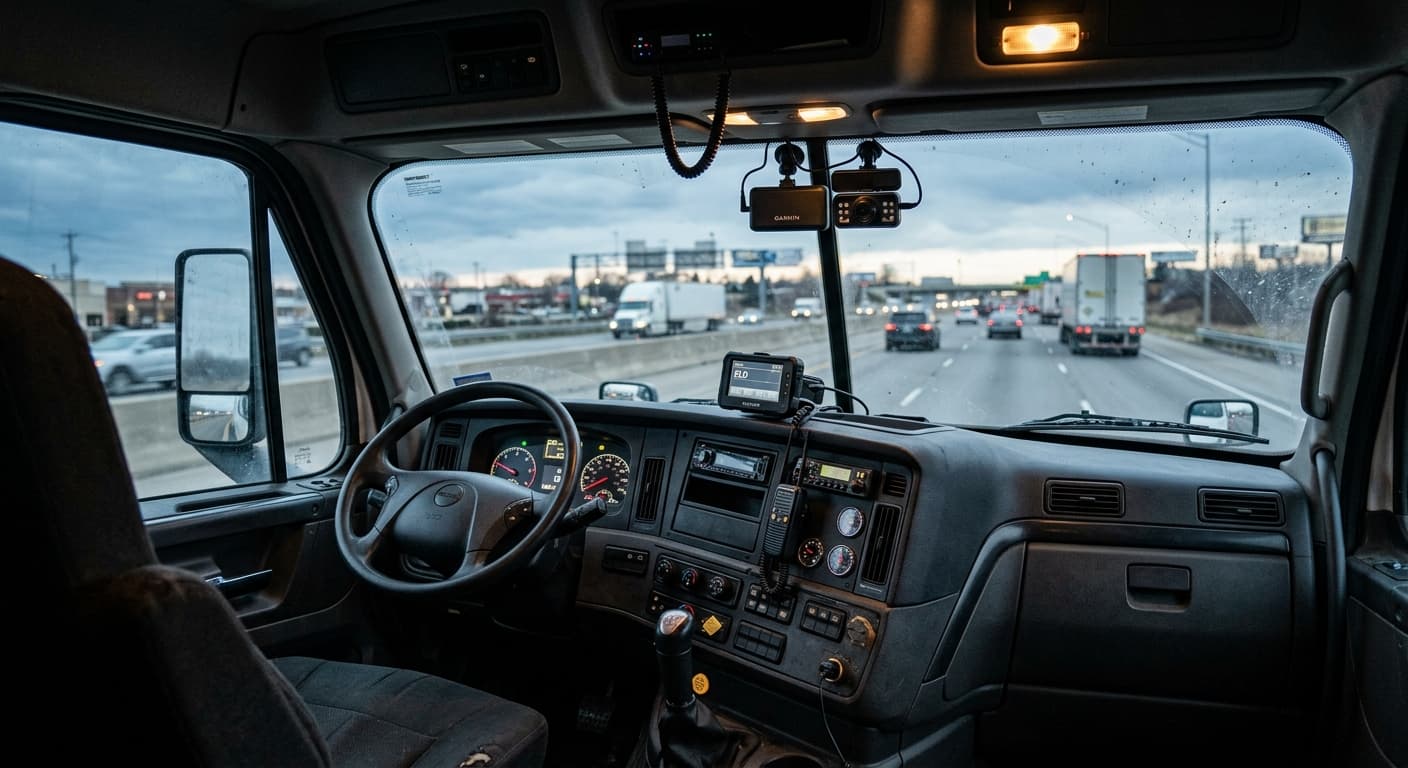
Dashcams are legal in Mississippi, and video recorded on public roads raises no state law concerns. Under Miss. Code Ann. section 41-29-531(e), the state's one-party consent rule lets a driver record in-vehicle audio of conversations they are part of without notifying passengers. Windshield mounting must comply with Miss. Code Ann. section 63-7-59.
Dashcams are legal and widely used in Mississippi. The state has no specific statute addressing dashboard cameras, so their use is governed by general traffic safety laws, the one-party consent wiretapping statute (Miss. Code Ann. section 41-29-531), and federal motor vehicle regulations.
Are Dashcams Legal in Mississippi?
Yes. Mississippi does not have any law prohibiting the installation or use of dashboard cameras. You can use a dashcam in your personal vehicle, commercial vehicle, or fleet vehicle on Mississippi roads.
No Specific Dashcam Statute
Mississippi has not enacted specific dashcam legislation. There are no state requirements for registration, notification, specifications, or data retention related to dashcam use.
Windshield Mounting Rules
Mississippi law under Miss. Code Ann. section 63-7-59 regulates windshield tinting and bans signs, posters, or mirrored glazing on the windshield; it does not set a general rule against mounted devices like dashcams. Mississippi has no statute specifically addressing dashcam placement, but a driver whose view is significantly blocked by any object can still be cited under general careless- or reckless-driving standards, so mount your dashcam where it does not block your forward view.
Best practices for mounting:
- Mount behind the rearview mirror where it does not block your view
- Use a compact camera that takes up minimal windshield space
- Ensure the camera does not cover inspection stickers or registration decals
- Test your field of vision after installation
Dashcam Audio Recording and Mississippi Consent Laws
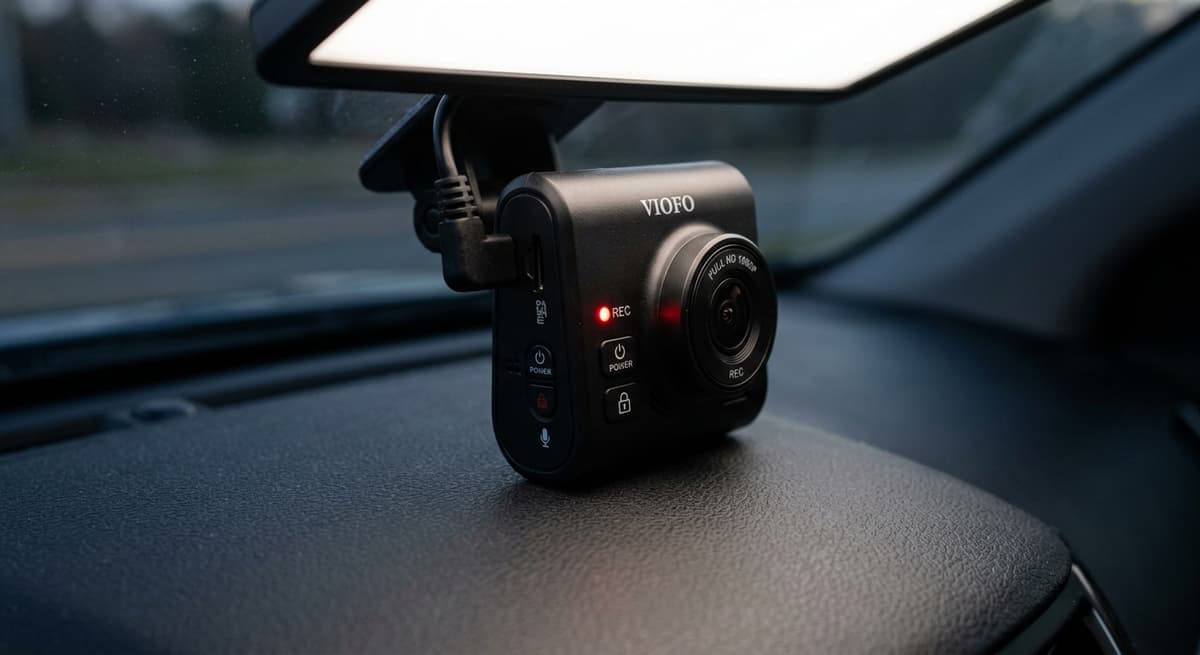
One-Party Consent for In-Vehicle Audio
Mississippi is a one-party consent state under Miss. Code Ann. section 41-29-531(e). As the vehicle owner and operator, your presence satisfies the consent requirement. You do not need to inform passengers that the dashcam is recording audio.
You can legally:
- Record conversations with passengers without telling them
- Capture audio during traffic stops with law enforcement
- Record verbal exchanges during road rage incidents or accidents
- Use continuous audio recording while driving
Criminal or Tortious Intent Exception
Mississippi's one-party consent exception does not apply when the recording is made for criminal or tortious purposes. Using dashcam audio recordings for blackmail, extortion, or harassment is illegal regardless of consent.
When Audio Recording Becomes Problematic
- Unattended vehicle recording. If your dashcam runs while you are not in the vehicle and captures others' conversations, you are no longer a party.
- Cross-state calls. Recording phone calls while driving through a two-party consent state may require additional consent.
Disabling Audio
Most dashcams allow disabling the microphone. This eliminates audio consent concerns while preserving video footage.
Using Dashcam Footage as Evidence in Mississippi
Traffic Accidents and Insurance Claims
Mississippi follows a pure comparative fault system under Miss. Code Ann. section 11-7-15. Dashcam footage showing how an accident occurred can help establish fault percentages.
How dashcam footage helps:
- Shows the sequence of events before a collision
- Captures traffic signals, stop signs, and road conditions
- Records the speed and behavior of other drivers
- Provides time-stamped, objective evidence
- Documents weather and visibility conditions
Admissibility in Mississippi Courts
For dashcam footage to be admissible, it must be authenticated under the Mississippi Rules of Evidence. The offering party must show:
- The recording device was functioning properly
- The footage has not been altered
- The date, time, and location are accurate
- The content is relevant to the case
Criminal Cases
Dashcam footage serves as evidence in DUI prosecutions, hit-and-run investigations, road rage cases, and traffic violations.
Commercial Dashcam Use in Mississippi
Fleet Operators
Commercial fleet operators use dashcams for safety monitoring, liability protection, and compliance with Federal Motor Carrier Safety Administration (FMCSA) guidelines.
Rideshare Drivers
Rideshare drivers in Mississippi can legally use dashcams. Your presence in the vehicle satisfies one-party consent for audio.
Dashcams and Law Enforcement
Recording During Traffic Stops
You have a First Amendment right to record police during traffic stops. Your dashcam can continue recording, and you do not need to turn it off.
Police Requests for Footage
You are generally under no obligation to provide footage voluntarily. A court subpoena or search warrant requires compliance.
Penalties for Improper Dashcam Use
| Violation | Statute | Penalty |
|---|---|---|
| Windshield obstruction (no dashcam-specific statute) | General careless-driving standards | Possible traffic citation |
| Audio recording without consent (not a party) | Miss. Code Ann. section 41-29-533 | Misdemeanor: up to 1 year jail, $10,000 fine |
| Disclosing illegally intercepted recording | Miss. Code Ann. section 41-29-533 | Felony: up to 5 years prison, $10,000 fine |
| Hidden camera voyeurism | Miss. Code Ann. section 97-29-63 | Felony: up to 5 years prison |
Civil liability under Miss. Code Ann. section 41-29-529 allows victims to recover $100/day or $1,000 minimum, plus punitive damages.
More Mississippi Recording Laws
Audio Recording | Video Recording | Voyeurism Laws | Workplace Recording | Recording Police | Phone Call Recording | Security Cameras | Recording in Public | Landlord-Tenant Recording | Dashcam Laws | School Recording | Medical Recording
Back to Mississippi Recording Laws
More Mississippi Recording Topics
More Mississippi Laws
Frequently Asked Questions
Do I need to tell passengers my dashcam is recording audio in Mississippi?
No. Mississippi is a one-party consent state under Miss. Code Ann. section 41-29-531(e). Your presence in the vehicle satisfies the consent requirement. You do not need to inform passengers.
Can dashcam footage be used as evidence in Mississippi courts?
Yes. Dashcam footage is admissible when properly authenticated under the Mississippi Rules of Evidence. The footage must be genuine, unaltered, relevant, and the device must have been working properly.
Where should I mount my dashcam in Mississippi?
Mississippi does not have a dashcam-specific mounting statute; Miss. Code Ann. section 63-7-59 addresses windshield tinting, not general obstructions. Mount behind the rearview mirror or in a lower corner where it does not obstruct your view, both as good practice and to avoid a careless-driving citation.
Can my dashcam record while parked if I am not in the car?
Video recording while parked is generally legal. Audio recording when you are absent could capture conversations without any party's consent, which may violate Mississippi wiretapping law. Consider disabling the microphone for parking mode.
Can police tell me to turn off my dashcam during a traffic stop?
No. The First Amendment protects your right to record law enforcement in public. Your dashcam can continue recording during a traffic stop.
Updates
Independently fact-checked against the cited primary sources; governing law re-checked for recent changes
Corrected the description of Miss. Code Ann. section 63-7-59: it regulates windshield tinting and bans signs/posters/mirrored glazing, not general windshield obstructions from mounted devices like dashcams.
Governing law re-checked for recent changes
Spoke propagation from parent hub: replaced all Justia URLs with legislature.ms.gov canonical source; replaced FindLaw Turner v. Driver citation with ca5.uscourts.gov (No. 15-11311) on police, public-recording, and video spokes; corrected is_gov flags for legislature.ms.gov entries in SourcesList components; added keywords and citations arrays to [dashcam](/dashboard-camera-legality-and-privacy-laws-is-it-illegal-to-use-dashcams-in-north-america), landlord-tenant, and schools spokes; updated workplace spoke NLRB section to cite Stericycle, Inc., 372 NLRB No. 113 (2023) as the controlling work-rule standard replacing Boeing. No fabricated cases (Lewis v. State, Glazner v. Glazner) or SB 2437 references found. No 47 CFR 64.501 or FCC 23-107 references found.
Reviewed and approved by an editor
The Law Behind This Article
This article rests on the statutory provisions below, held in our own legal record and retrieved from the official source. Tap a section to read the operative text.
Mississippi Code of 1972 Annotated
§ 41-29-531Exceptions to civil liability for violation of this article.In forcecited in 18 of our articles
This article shall not apply to: An operator of a switchboard, or an officer, employee or agent of a communication common carrier whose facilities are used in the transmission of a wire communication, intercepts a communication, or who discloses or uses an intercepted communication in the normal…
Official text (excerpt) · last checked 2026-08-31 · Read the full text in our law library · Verify at billstatus.ls.state.ms.us
Cited in 4 court opinions in our collectionLatest citing opinion in our collection: 2026
Opinions citing this section in our collection:
- Campbell v. MESC (Court of Appeals of Mississippi 2000, 782 So. 2d 751)“…le involved in the conversation are aware of the recording. Miss.Code Ann. § 41-29-531(e) (the statute does not apply to a con…”
- Brian S. Pope v. Deborah Baird Martin a/k/a Deborah L. Martin a/k/a Deborah Martin Pope a/k/a Deborah L. Pope (Court of Appeals of Mississippi 2023)“…vides a list of those who are immune from civil liability. Miss. Code Ann. § 41-29-531 (Rev. 2018). Relevant to the present ca…”
- Rosenberg (District Court, S.D. Mississippi 2026)“…olation of the Mississippi Security of Communications Act, Miss. Code Ann. §§ 41-29-531 to -537 (Count IX). See id. at 40-47.…”
Identified automatically from the court opinions citing this section — not a ranking of which case controls.
Also relied on in: Mississippi Recording Laws (2026): One-Party Consent Rules, Mississippi AI Meeting Recording Laws (2026), Mississippi Ring Doorbell Laws: What You Need to Know in 2026
§ 11-7-15Contributory negligence no bar to recovery of damages; jury may reduce damages.In forcecited in 8 of our articles
In all actions hereafter brought for personal injuries, or where such injuries have resulted in death, or for injury to property, the fact that the person injured, or the owner of the property, or person having control over the property may have been guilty of contributory negligence shall not bar…
Official text (excerpt) · last checked 2026-09-10 · Read the full text in our law library · Verify at billstatus.ls.state.ms.us
Cited in 67 court opinions in our collectionLatest citing opinion in our collection: 2026
Opinions citing this section in our collection:
- Tharp v. Bunge Corp. (Mississippi Supreme Court 1994, 641 So. 2d 20)“…tiff must be one hundred percent (100%) negligent himself. Miss. Code Ann. § 11-7-15 (1972). Mississippi Code Ann. § 11-7-1…”
- Downs v. Choo (Mississippi Supreme Court 1995, 656 So. 2d 84)“…ntiff must be one hundred percent (100%) negligent himself. Miss. Code Ann. § 11-7-15 (1972). Mississippi Code Ann. § 11-7-…”
- Horton v. American Tobacco Co. (Mississippi Supreme Court 1995, 667 So. 2d 1289)“…pon the average person seeking legal redress. For example, Miss. Code Ann. § 11-7-15 , 17 (1972), first enacted as Chapter…”
Identified automatically from the court opinions citing this section — not a ranking of which case controls.
Also relied on in: Mississippi Dog Bite Laws: Liability and Victim Rights, Mississippi Hit and Run Laws: Penalties and What to Do, Mississippi Car Accident Laws: Fault, Insurance, and Your Claim
§ 63-7-59Windows and window glass generally; windshield wipers; tinted or darkened windows prohibited unless certified; additional fee for inspection stations conducting tests of light transmittance of motor vehicle windows; exceptions; penalties; public awareness program.In forcecited in 3 of our articles
(1) No person shall drive any motor vehicle required to be registered in this state upon the public roads, streets or highways in this state with any sign or poster, or with any glazing material which causes a mirrored effect, upon the front windshield, side wings or side or rear windows of the…
Official text (excerpt) · last checked 2026-09-08 · Read the full text in our law library · Verify at billstatus.ls.state.ms.us
Cited in 2 court opinions in our collectionLatest citing opinion in our collection: 2023
Opinions citing this section in our collection:
- Fluker v. State (Court of Appeals of Mississippi 2010, 44 So. 3d 1029)“…applies only to vehicles registered in Mississippi. See Miss.Code Ann. § 63-7-59 (Supp.2009). When Patrolman Williams ar…”
- Harris v. Dobbins (District Court, S.D. Mississippi 2023)“…operly fastened safety seat belt system ....”); Miss. Code Ann. § 63-7-59 (proscribing certain wi…”
Identified automatically from the court opinions citing this section — not a ranking of which case controls.
Also relied on in: Mississippi Windshield Mounting Laws (2026 Guide), Mississippi Window Tint Laws (2026): Legal VLT Limits
Search our full record of US law — 2.1 million sections, every state + federal →
Sources and References
- Miss. Code Ann. section 41-29-531 - One-Party Consent Exception(legislature.ms.gov).gov
- Miss. Code Ann. section 63-7-59 - Windshield Tinting and Glazing Restrictions(legislature.ms.gov).gov
- Miss. Code Ann. section 11-7-15 - Comparative Fault(legislature.ms.gov).gov
- Federal Motor Carrier Safety Administration (FMCSA)(fmcsa.dot.gov).gov
- National Highway Traffic Safety Administration (NHTSA)(nhtsa.gov).gov
- Mississippi Legislature - Code Search(legislature.ms.gov).gov