
Mississippi
Mississippi School Recording Laws: Student, Parent, and Teacher Rights (2026)
Independently fact-checked against primary sources (last audited August 15, 2026). · Reviewed by the RecordingLaw editorial team. · Law checked current as of August 15, 2026. · 3 primary sources cited on this page. How we verify our legal content
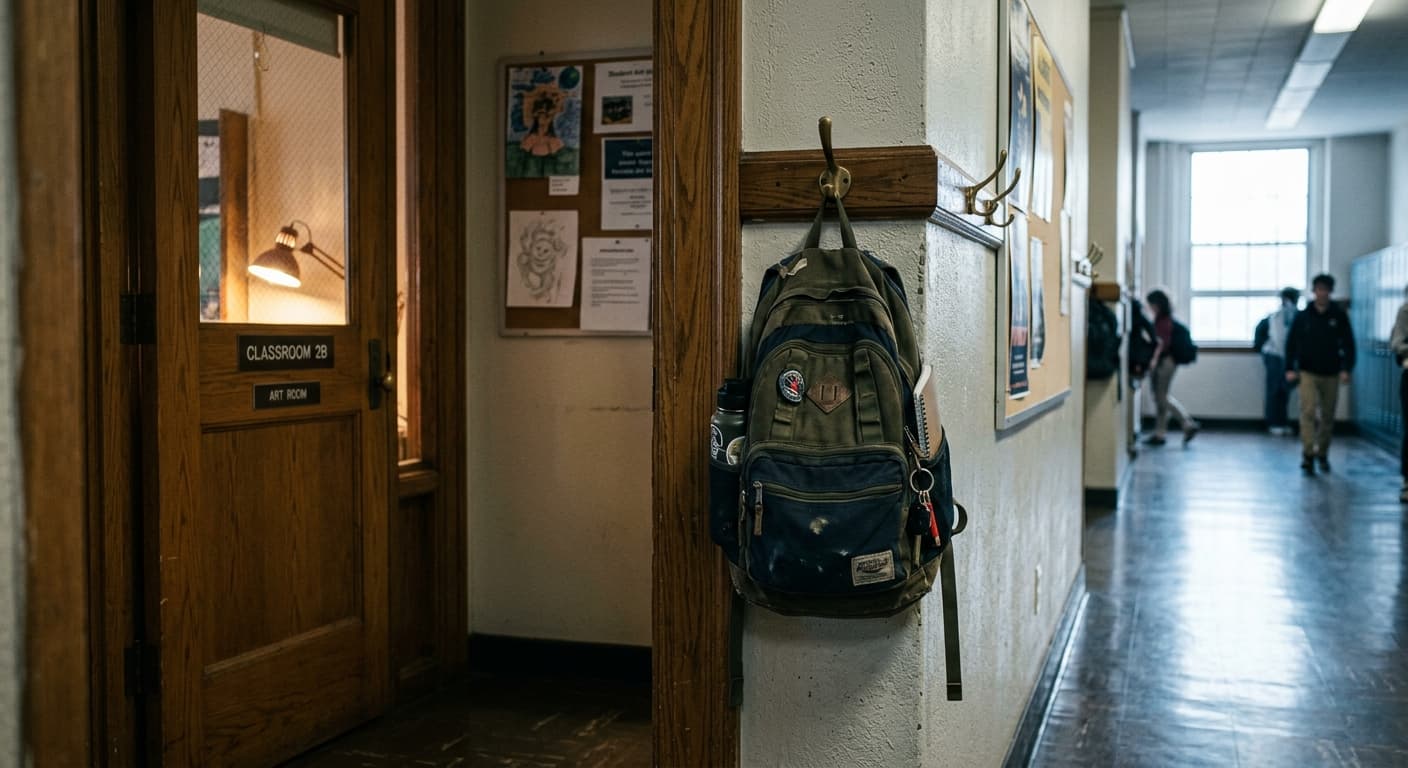
Mississippi one-party consent law (Miss. Code Ann. section 41-29-531(e)) lets any student, parent, or teacher who participates in a conversation record it without notice. School districts may restrict recording devices on campus through policy, and capturing other students can raise FERPA privacy concerns.
Recording in Mississippi schools involves a balance between the state's one-party consent wiretapping law, federal student privacy regulations, and individual school district policies. This guide covers Mississippi recording law as it applies to K-12 schools, school board meetings, special education meetings, and campus security.
Mississippi Recording Law in Schools
One-Party Consent Applies
Mississippi is a one-party consent state under Miss. Code Ann. section 41-29-531(e). Any participant in a conversation can record it without informing others. In a school context:
- Students can record conversations with teachers, counselors, or administrators
- Parents can record parent-teacher conferences or IEP meetings
- Teachers can record conversations with students, parents, or colleagues
- Administrators can record meetings with staff or parents
The recording must not be made with criminal or tortious intent. The person recording must be a participant.
School District Policies vs. State Law
School districts can set their own policies about electronic devices and recording. Many Mississippi districts restrict cell phones and recording during class. Violating school policy is a disciplinary matter, not criminal. A student who records in violation of policy may face school consequences, but the recording itself is not illegal.
Private Schools
Private schools in Mississippi can prohibit recording entirely as a condition of enrollment.
Recording at School Board Meetings
Mississippi Open Meetings Act
Mississippi's Open Meetings Act (Miss. Code Ann. section 25-41-1 et seq.) requires public bodies, including school boards, to conduct business in open meetings. The public has the right to attend and record these meetings.
School boards cannot prohibit recording at open meetings. They can set reasonable rules about equipment placement to avoid disruption.
Executive Sessions
School boards can enter executive sessions for personnel matters, litigation, or student discipline. Recording during executive sessions is not permitted.
Recording IEP and Special Education Meetings
Parents' Right to Record
Under Mississippi one-party consent, parents attending IEP meetings can record without informing others. The IDEA does not address recording and leaves it to state law and local policy.
Mississippi Department of Education Guidance
The Mississippi Department of Education (MDE) oversees special education services. MDE follows the principle that state one-party consent law applies to IEP meetings.
Best Practices for IEP Recording
- Check your district's policy on recording IEP meetings
- Consider informing the team as a courtesy
- Use a reliable device with sufficient battery
- Review recordings to verify agreed-upon services
- Keep recordings as part of your child's educational records
Student Recording Rights

Classroom Recording
Students can record conversations they participate in under state law, but school policies may restrict device use. Common scenarios include recording lectures for notes, documenting disciplinary discussions, and recording conversations with counselors.
Students with Disabilities
Students needing recording as an accommodation under Section 504 or IDEA have additional protections. If recording is in the IEP or 504 plan, the school cannot restrict it.
Teacher and Staff Recording
Teachers can record conversations they participate in. They should be aware that students and parents also have the right to record. Professional conduct provides protection regardless of recording.
Security Cameras in Mississippi Schools
Installation Authority
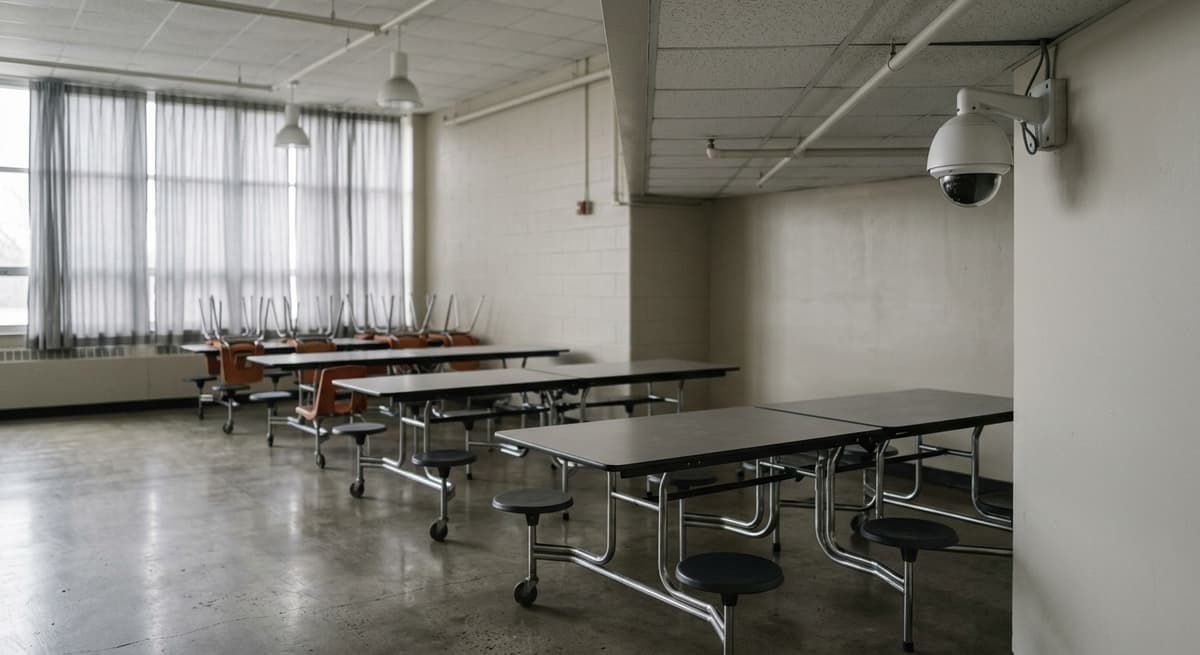
Mississippi schools can install security cameras for safety. Common locations include hallways, entrances, parking lots, cafeterias, and bus zones.
Prohibited Locations
Cameras cannot be placed where students expect privacy, including restrooms, bathrooms, shower rooms, locker rooms, fitting rooms, and dressing areas. Installing a camera in one of these spaces with lewd, licentious, or indecent intent is a felony under Miss. Code Ann. section 97-29-63. Health office examination areas are not among the locations the statute names, but districts should still treat them as privacy-sensitive as a matter of general school policy.
FERPA and Recording
FERPA governs what schools do with education records. It does not restrict parents or students from making their own recordings. Be careful about sharing recordings that capture other students' private information.
Recording School Events
School events open to the public (games, concerts, graduations) can generally be recorded. Schools may set reasonable restrictions on equipment and commercial use.
More Mississippi Recording Laws
Audio Recording | Video Recording | Voyeurism Laws | Workplace Recording | Recording Police | Phone Call Recording | Security Cameras | Recording in Public | Landlord-Tenant Recording | Dashcam Laws | School Recording | Medical Recording
Back to Mississippi Recording Laws
More Mississippi Recording Topics
More Mississippi Laws
Frequently Asked Questions
Can I record my child's IEP meeting in Mississippi?
Yes. Mississippi one-party consent law allows you to record any meeting you attend. IDEA does not address recording and leaves it to state law. Some districts may request advance notice.
Can a student record a teacher in Mississippi?
Under state law, a student participating in a conversation can record it. School policies may restrict device use during class. Violating policy may result in disciplinary action, but the recording is not criminal.
Can I record a school board meeting in Mississippi?
Yes. Mississippi's Open Meetings Act (section 25-41-1 et seq.) protects public access to government meetings including school boards. Recording cannot be prohibited at open meetings.
Can schools put security cameras in classrooms?
Yes, in classrooms and common areas. Cameras cannot be in restrooms, locker rooms, or changing areas. Audio on cameras raises one-party consent concerns if the school is not a party to recorded conversations.
Does FERPA prevent me from recording at school?
No. FERPA governs school handling of student records. It does not restrict parents or students from making their own recordings under Mississippi one-party consent law.
Updates
Clarified that Mississippi's hidden-camera felony statute (97-29-63) requires lewd, licentious, or indecent intent and does not name health office examination areas among its protected locations, and repointed every Mississippi Code citation on this page from the Legislature's bare homepage to the specific Justia section it names.
Independently fact-checked against the cited primary sources; governing law re-checked for recent changes
Governing law re-checked for recent changes
Spoke propagation from parent hub: replaced all Justia URLs with legislature.ms.gov canonical source; replaced FindLaw Turner v. Driver citation with ca5.uscourts.gov (No. 15-11311) on police, public-recording, and video spokes; corrected is_gov flags for legislature.ms.gov entries in SourcesList components; added keywords and citations arrays to [dashcam](/dashboard-camera-legality-and-privacy-laws-is-it-illegal-to-use-dashcams-in-north-america), landlord-tenant, and schools spokes; updated workplace spoke NLRB section to cite Stericycle, Inc., 372 NLRB No. 113 (2023) as the controlling work-rule standard replacing Boeing. No fabricated cases (Lewis v. State, Glazner v. Glazner) or SB 2437 references found. No 47 CFR 64.501 or FCC 23-107 references found.
Reviewed and approved by an editor
The Law Behind This Article
This article rests on the statutory provisions below, held in our own legal record and retrieved from the official source. Tap a section to read the operative text.
Mississippi Code of 1972 Annotated
§ 41-29-531Exceptions to civil liability for violation of this article.In forcecited in 18 of our articles
This article shall not apply to: An operator of a switchboard, or an officer, employee or agent of a communication common carrier whose facilities are used in the transmission of a wire communication, intercepts a communication, or who discloses or uses an intercepted communication in the normal…
Official text (excerpt) · last checked 2026-08-31 · Read the full text in our law library · Verify at billstatus.ls.state.ms.us
Cited in 4 court opinions in our collectionLatest citing opinion in our collection: 2026
Opinions citing this section in our collection:
- Campbell v. MESC (Court of Appeals of Mississippi 2000, 782 So. 2d 751)“…le involved in the conversation are aware of the recording. Miss.Code Ann. § 41-29-531(e) (the statute does not apply to a con…”
- Brian S. Pope v. Deborah Baird Martin a/k/a Deborah L. Martin a/k/a Deborah Martin Pope a/k/a Deborah L. Pope (Court of Appeals of Mississippi 2023)“…vides a list of those who are immune from civil liability. Miss. Code Ann. § 41-29-531 (Rev. 2018). Relevant to the present ca…”
- Rosenberg (District Court, S.D. Mississippi 2026)“…olation of the Mississippi Security of Communications Act, Miss. Code Ann. §§ 41-29-531 to -537 (Count IX). See id. at 40-47.…”
Identified automatically from the court opinions citing this section — not a ranking of which case controls.
Also relied on in: Mississippi Recording Laws (2026): One-Party Consent Rules, Mississippi AI Meeting Recording Laws (2026), Mississippi Ring Doorbell Laws: What You Need to Know in 2026
§ 25-41-1Legislative declaration.In forcecited in 2 of our articles
It being essential to the fundamental philosophy of the American constitutional form of representative government and to the maintenance of a democratic society that public business be performed in an open and public manner, and that citizens be advised of and be aware of the performance of public…
Official text (excerpt) · last checked 2020-07-08 · Read the full text in our law library
Cited in 18 court opinions in our collectionLatest citing opinion in our collection: 2025
Opinions citing this section in our collection:
- Hinds Cty. Bd. of Sup'rs v. Common Cause (Mississippi Supreme Court 1989, 551 So. 2d 107)“…ery court injunction to comply with the Open Meetings Act, Miss. Code Ann. § 25-41-1 , et seq., Ch. 481, Laws 1975, and the…”
- Gannett River States Pub. Corp., Inc. v. City of Jackson (Mississippi Supreme Court 2004, 866 So. 2d 462)“…ion of two important state statutes, the Open Meetings Act, Miss.Code Ann. §§ 25-41-1 to -17 (Rev.2003), and the Mississippi…”
- Mayor and City Council v. Commercial Dispatch (Mississippi Supreme Court 2017)“…cted at open meetings except as otherwise provided herein. Miss. Code Ann. § 25-41-1 (Rev. 2010). The City takes the positio…”
Identified automatically from the court opinions citing this section — not a ranking of which case controls.
Also relied on in: Mississippi Laws on Recording in Public: Rights, Limits, and Protections (2026)
§ 97-29-63Photographing or filming another without permission where there is expectation of privacy; when victim is adult; when victim is child under sixteen.In forcecited in 10 of our articles
(1)(a) It is a felony for any person with lewd, licentious or indecent intent to photograph, film, videotape, record or otherwise reproduces the image of another person without the permission of the other person when the other person is located in a place where a person would intend to be in a…
Official text (excerpt) · last checked 2026-08-31 · Read the full text in our law library · Verify at billstatus.ls.state.ms.us
Cited in 9 court opinions in our collectionLatest citing opinion in our collection: 2023
In the courts (editorial summary, independently checked):Gilmer v. State (2007) construed Section 97-29-63 on first impression, holding it has four elements and that proof the victim was in a listed place like a private dwelling satisfies the protected-location element as a matter of law, and rejected an overbreadth challenge. Nuckolls v. State (2015) reversed counts where venue was unproven.
Opinions citing this section in our collection:
- Gilmer v. State (Mississippi Supreme Court 2007, 955 So. 2d 829)✓A constable parked at night about 87 feet away and used a zoom camcorder to film a clothed woman inside her apartment; the court held that filming a victim in a private dwelling satisfies the statute's protected-location element as a matter of law, and affirmed the conviction.
- Eddie Gilmer v. State of Mississippi (Mississippi Supreme Court 2004)“…te Med. Ass'n, 381 So. 2d 1046, 1048 (Miss. 1980). ¶10. Miss. Code Ann. §97-29-63 (Rev. 2006) reads: Any person w…”
- Nuckolls v. State (Mississippi Supreme Court 2015, 179 So. 3d 1046)✓Nuckolls hid cameras and filmed women in bathrooms, then was convicted on ten counts charging he later reproduced the videos on a laptop; the court reversed those ten because the State never proved where the transfers occurred, and affirmed one filming count.
Identified automatically from the court opinions citing this section — not a ranking of which case controls.
Also relied on in: Mississippi Surveillance Camera Laws (2026 Guide), Mississippi Smart Glasses Recording Laws (2026), Mississippi Landlord-Tenant Recording Laws: Cameras, Audio, and Privacy Rights (2026)
Search our full record of US law — 2.1 million sections, every state + federal →
Sources and References
- Miss. Code Ann. section 41-29-531 - One-Party Consent Exception(law.justia.com)
- Miss. Code Ann. section 97-29-63 - Hidden Camera Voyeurism Statute(law.justia.com)
- Mississippi Open Meetings Act (section 25-41-1 et seq.)(law.justia.com)
- FERPA - U.S. Department of Education(studentprivacy.ed.gov).gov
- IDEA - Individuals with Disabilities Education Act(sites.ed.gov).gov
- Mississippi Department of Education(mdek12.org).gov