
Mississippi
Mississippi Laws on Recording Police: Your Rights and Limits (2026)
Independently fact-checked against primary sources (last audited August 15, 2026). · Reviewed by the RecordingLaw editorial team. · Law checked current as of August 9, 2026. · 3 primary sources cited on this page. How we verify our legal content
In Mississippi, the First Amendment gives you the right to film on-duty officers in public spaces, a protection confirmed by the Fifth Circuit in Turner v. Driver (2017). Mississippi's one-party consent law under Miss. Code Ann. section 41-29-531 permits you to audio record police interactions you participate in, provided you do not interfere with officers.
Recording police officers in Mississippi is a constitutionally protected activity. The First Amendment to the U.S. Constitution, as interpreted by the U.S. Court of Appeals for the Fifth Circuit in Turner v. Driver, 848 F.3d 678 (5th Cir. 2017), protects the right of individuals to film law enforcement officers performing their official duties in public spaces. Mississippi's own one-party consent law further supports your right to record conversations with police that you participate in.
This guide explains your legal rights when recording police in Mississippi, the practical limits on those rights, what to do if an officer orders you to stop recording, and how police body camera policies work in the state.
Your Constitutional Right to Record Police
The First Amendment Foundation
The right to record police is rooted in the First Amendment's protections for freedom of speech and freedom of the press. Courts have recognized that the right to gather information about government officials performing their duties is a fundamental aspect of free expression. This right belongs to everyone, not just professional journalists.
The U.S. Supreme Court has not issued a definitive ruling specifically on the right to record police, but multiple federal circuit courts have recognized this right. For Mississippi, the controlling authority is the Fifth Circuit's decision in Turner v. Driver.
Turner v. Driver: The Fifth Circuit's Ruling
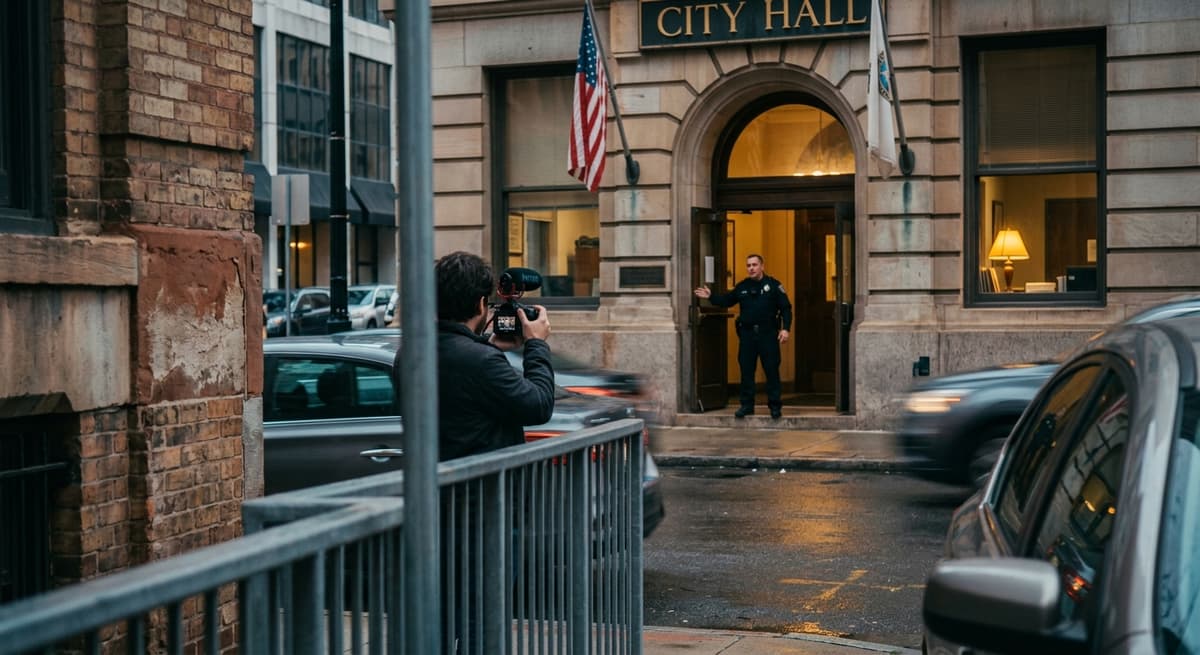
In Turner v. Driver, 848 F.3d 678 (5th Cir. 2017), the Fifth Circuit Court of Appeals held that the First Amendment protects the right to record police officers in the course of their official duties, subject to reasonable time, place, and manner restrictions. The case involved a civilian who was detained by police while filming a police station from a public sidewalk in Fort Worth, Texas in 2015.
The court's key findings:
- The First Amendment protects the right to film the police. The court stated that "filming the police contributes to the public's ability to hold the police accountable, ensure that police officers are not misusing their power, and make records of police encounters."
- The right extends to all individuals, not just members of the press. Private citizens have the same right to record as journalists.
- Reasonable time, place, and manner restrictions may apply. The right to record is not absolute and can be limited by reasonable restrictions.
- The officers in the case itself were granted qualified immunity. Because the right to record was not yet clearly established when Turner was detained in 2015, the court held the officers could not be held personally liable for that earlier conduct, so Turner did not win damages on his First Amendment claim. The panel declared the right clearly established only prospectively, for encounters going forward.
Because the Fifth Circuit covers Mississippi, Texas, and Louisiana, this ruling is binding law in Mississippi going forward, though it did not create liability for the officers in the underlying case.
What You Can Record
Under the First Amendment and Mississippi law, you can:
- Film traffic stops, including your own
- Record arrests happening in public view
- Document interactions with police officers during encounters
- Livestream police encounters on social media platforms
- Record from a safe distance when observing police activity
- Film police activity visible from public spaces, including events on private property that are visible from a public vantage point
- Record at protests and demonstrations where police are present
- Audio record your own conversations with officers under one-party consent
Practical Limits on Recording Police

Do Not Interfere With Police Operations
While you have the right to record, you must not physically interfere with law enforcement operations. Under Miss. Code Ann. section 97-9-73, obstructing or resisting a law enforcement officer in the performance of their duties is a criminal offense. Interference includes:
- Physically blocking an officer's path or movement
- Reaching into a police vehicle or area secured by officers
- Crossing police tape or barricades to get a better angle
- Touching or physically interacting with officers or detained persons
- Creating a safety hazard by your presence or actions
- Refusing to follow lawful orders about your physical location
Maintain a Safe Distance
Officers can direct you to move to a safe distance from an active scene. This is a legitimate time, place, and manner restriction. How far you must stand back depends on the situation:
- Traffic stops. Remaining on the sidewalk or across the street is generally sufficient.
- Arrests. Standing back far enough that you do not interfere with the officer's ability to safely control the situation.
- Crime scenes. Respecting any established perimeter while recording from outside it.
- Emergency situations. Following officer directions for safety during active emergencies.
The distance requirement must be reasonable. An officer cannot order you to move so far away that recording becomes impractical as a way to suppress your right to film.
Trespassing Restrictions
Your right to record does not give you the right to trespass on private property. You must record from public spaces or from private property where you have permission to be. You cannot enter private property to get a better angle on police activity without the property owner's consent.
What to Do If Police Order You to Stop Recording
Know Your Rights
If a police officer orders you to stop recording in a public place:
- Stay calm and respectful. Confrontational behavior can escalate the situation and create safety risks.
- Clearly state that you are exercising your First Amendment right to record. A simple statement like "I am recording from a public place and I am not interfering" is sufficient.
- Do not physically resist if an officer attempts to detain you or take your device. Comply physically while verbally asserting your rights.
- Remember the officer's name, badge number, and patrol car number if visible.
- File a complaint afterward through the department's internal affairs process or through a civil rights attorney.
Can Police Seize Your Camera or Phone?
Under the U.S. Supreme Court's decision in Riley v. California, 573 U.S. 373 (2014), police generally need a warrant to search the contents of your cell phone. This extends to accessing photos and videos stored on your device. An officer cannot:
- Order you to delete footage
- Scroll through your photos and videos without a warrant
- Seize your phone without a warrant or probable cause that it contains evidence of a crime
- Demand your phone's passcode
If police do seize your device, they must obtain a warrant before searching its contents. Note your rights, comply with the seizure to avoid additional charges, and contact an attorney immediately.
Filing Complaints and Legal Action
If your right to record is violated by a Mississippi police officer, you have several options:
- File an internal affairs complaint with the officer's department.
- Contact the ACLU of Mississippi for legal assistance.
- File a Section 1983 civil rights lawsuit in federal court for violations of your constitutional rights. Under 42 U.S.C. section 1983, you can sue state actors who violate your federal constitutional rights.
- File a complaint with the U.S. Department of Justice Civil Rights Division if you believe there is a pattern of constitutional violations.
Police Body Cameras in Mississippi
State Law and Body Camera Policies
Mississippi does not have a comprehensive statewide law mandating body cameras for all law enforcement officers. Body camera policies are set at the department level, meaning requirements vary across the state's local police departments, sheriff's offices, and state agencies.
Some Mississippi law enforcement agencies have adopted body cameras voluntarily or through federal grant programs. The Bureau of Justice Assistance has provided funding to help law enforcement agencies purchase and implement body camera programs.
Accessing Body Camera Footage
Mississippi's Public Records Act (Miss. Code Ann. section 25-61-1 et seq.) provides the framework for accessing government records, including body camera footage. Key points:
- Body camera footage is generally considered a public record subject to disclosure.
- Exemptions may apply for footage related to ongoing investigations, footage containing sensitive personal information, or footage taken inside private residences.
- Departments may charge reasonable fees for copying and providing footage.
- Response times vary, and departments have a reasonable period to respond to requests.
To request body camera footage, submit a public records request in writing to the law enforcement agency that made the recording. Include the date, time, location, and officers involved to help the agency locate the relevant footage.
Dashcam Footage From Police Vehicles
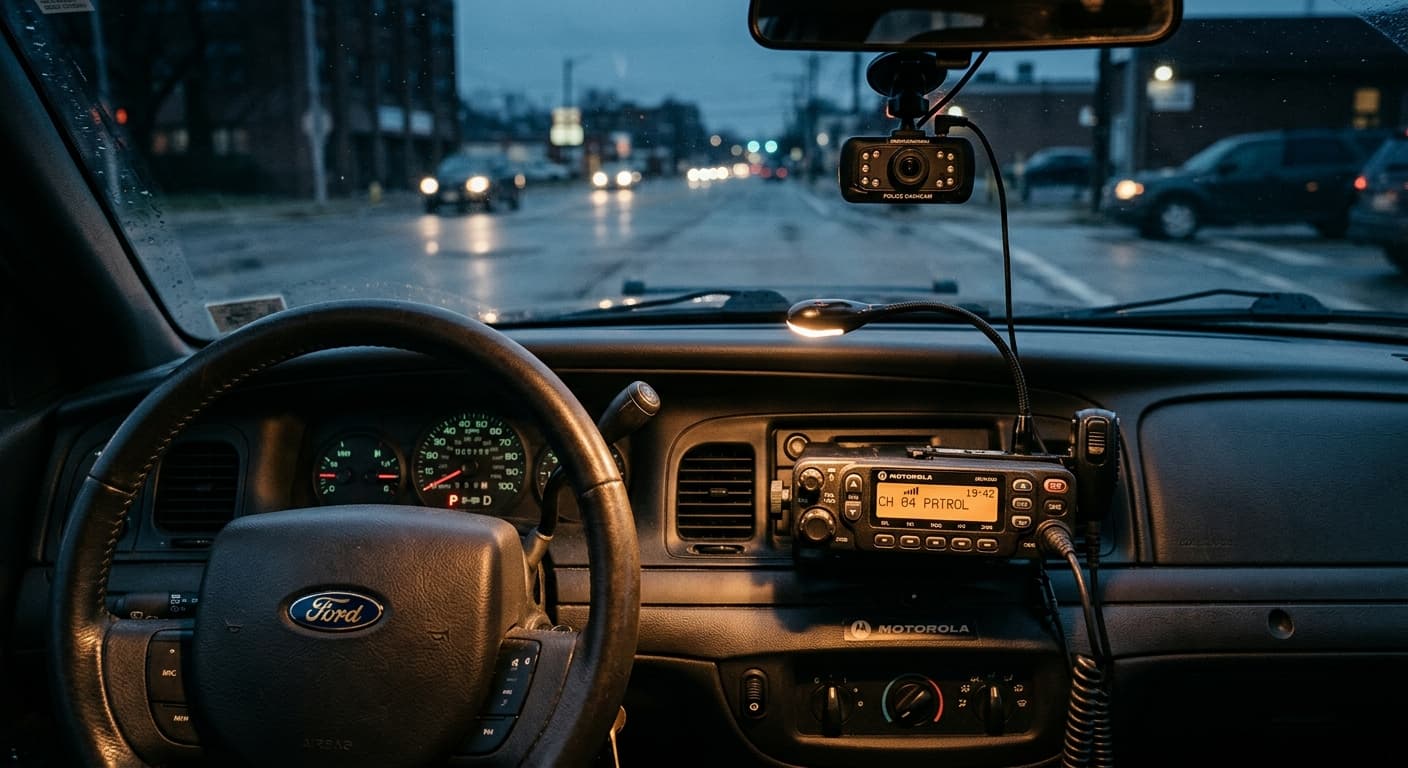
Many Mississippi law enforcement vehicles are equipped with dashcams. Like body camera footage, dashcam recordings are generally considered public records. The same public records request process applies. Dashcam footage from traffic stops, pursuits, and other incidents can be valuable evidence in both criminal and civil cases.
Recording Police During Specific Situations
Traffic Stops
When you are pulled over by a Mississippi police officer:
- You can record the interaction using your phone, dashcam, or another device.
- Place your phone in a visible mount or hold it where the officer can see you are recording (this reduces tension).
- Comply with all lawful orders regarding license, registration, and insurance.
- Do not reach for your phone in a way that could be misinterpreted as reaching for a weapon.
- Passengers in the vehicle can also record the interaction.
Protests and Public Demonstrations
At protests and demonstrations in Mississippi:
- You have the right to record both protesters and police from public spaces.
- Police may establish crowd control zones, and you must comply with lawful orders about your location.
- Journalists and citizen journalists have the same recording rights.
- Recording can serve as evidence if excessive force or unlawful arrests occur.
- Consider using a livestreaming app so that footage is preserved even if your device is seized.
When Police Come to Your Home
If police officers come to your door or enter your home:
- You can record conversations with officers at your door under one-party consent.
- If officers are executing a warrant and enter your home, you can continue recording as long as you do not interfere with the execution of the warrant.
- Officers cannot order you to stop recording inside your own home.
- If officers are present without a warrant, you can ask them to leave and record the interaction.
Mississippi Open Meetings and Government Recording
Open Meetings Act
Mississippi's Open Meetings Act (Miss. Code Ann. section 25-41-1 et seq.) requires most government body meetings to be open to the public. Under section 25-41-5, all official meetings of public bodies must be open to the public unless specifically declared an executive session.
You can record public government meetings, including:
- City council meetings
- County board of supervisors meetings
- School board meetings
- State legislative proceedings
- Public hearings and commission meetings
- Police and fire commission meetings
Executive sessions, where the public is excluded, may not be recorded without authorization.
Recording in Government Buildings
Recording is generally permitted in public areas of government buildings, such as lobbies, hearing rooms, and public service counters. Individual agencies may have policies about recording in certain areas. Courtrooms typically have strict rules about recording and may require the judge's permission.
Federal Protections for Recording Police
In addition to state law and Fifth Circuit case law, federal law provides protections for recording police:
- 42 U.S.C. section 1983 allows civil rights lawsuits against state actors who violate your constitutional rights, including the right to record.
- The DOJ has stated that policies restricting recording of police activity may violate the First and Fourth Amendments.
- Federal consent decrees with police departments across the country have reinforced the public's right to record officers.
More Mississippi Recording Laws
Audio Recording | Video Recording | Voyeurism & Hidden Cameras | Workplace Recording | Recording Police | Phone Call Recording | Security Cameras | Recording in Public | Landlord-Tenant | Dashcam Laws | Schools | Medical Recording
Back to Mississippi Recording Laws
More Mississippi Recording Topics
More Mississippi Laws
Frequently Asked Questions
Can I legally record police officers in Mississippi?
Yes. The First Amendment protects your right to record police officers performing their duties in public. The Fifth Circuit confirmed this right in Turner v. Driver (2017), which is binding law in Mississippi. You must not physically interfere with police operations.
Can a police officer order me to stop recording in Mississippi?
No, not in a public place. Officers can direct you to move to a safe distance for safety reasons, but they cannot order you to stop recording entirely. If an officer orders you to stop, calmly assert your First Amendment right while complying with any lawful orders about your physical location.
Can police delete my footage or seize my phone in Mississippi?
Police cannot order you to delete footage. Under Riley v. California (2014), officers generally need a warrant to search your phone. If your device is seized, the officer must obtain a warrant before accessing its contents. Comply with the seizure physically but contact an attorney immediately.
How do I get police body camera footage in Mississippi?
Submit a written public records request to the law enforcement agency under Mississippi's Public Records Act (section 25-61-1 et seq.). Include the date, time, location, and officers involved. The agency may charge a reasonable fee and has a reasonable period to respond.
Can I record police during a traffic stop in Mississippi?
Yes. You can use your phone, dashcam, or another device to record the traffic stop. Place your phone where the officer can see it to reduce tension. Comply with all lawful orders regarding your license and registration. Passengers can also record the interaction.
Updates
Fixed a dead case-law link and added the missing second half of the Turner v. Driver holding: the Fifth Circuit granted the officers qualified immunity for the plaintiff's own 2015 conduct because the right to record police was not yet clearly established, and made the right binding only going forward, subject to reasonable time, place, and manner limits. Separately, repointed every Mississippi Code citation on this page from the Legislature's bare homepage to the specific Justia section it names.
Independently fact-checked against the cited primary sources
Governing law re-checked for recent changes
Governing law re-checked for recent changes
Spoke propagation from parent hub: replaced all Justia URLs with legislature.ms.gov canonical source; replaced FindLaw Turner v. Driver citation with ca5.uscourts.gov (No. 15-11311) on police, public-recording, and video spokes; corrected is_gov flags for legislature.ms.gov entries in SourcesList components; added keywords and citations arrays to [dashcam](/dashboard-camera-legality-and-privacy-laws-is-it-illegal-to-use-dashcams-in-north-america), landlord-tenant, and schools spokes; updated workplace spoke NLRB section to cite Stericycle, Inc., 372 NLRB No. 113 (2023) as the controlling work-rule standard replacing Boeing. No fabricated cases (Lewis v. State, Glazner v. Glazner) or SB 2437 references found. No 47 CFR 64.501 or FCC 23-107 references found.
Reviewed and approved by an editor
The Law Behind This Article
This article rests on the statutory provisions below, held in our own legal record and retrieved from the official source. Tap a section to read the operative text.
Mississippi Code of 1972 Annotated
§ 41-29-531Exceptions to civil liability for violation of this article.In forcecited in 18 of our articles
This article shall not apply to: An operator of a switchboard, or an officer, employee or agent of a communication common carrier whose facilities are used in the transmission of a wire communication, intercepts a communication, or who discloses or uses an intercepted communication in the normal…
Official text (excerpt) · last checked 2026-08-31 · Read the full text in our law library · Verify at billstatus.ls.state.ms.us
Cited in 4 court opinions in our collectionLatest citing opinion in our collection: 2026
Opinions citing this section in our collection:
- Campbell v. MESC (Court of Appeals of Mississippi 2000, 782 So. 2d 751)“…le involved in the conversation are aware of the recording. Miss.Code Ann. § 41-29-531(e) (the statute does not apply to a con…”
- Brian S. Pope v. Deborah Baird Martin a/k/a Deborah L. Martin a/k/a Deborah Martin Pope a/k/a Deborah L. Pope (Court of Appeals of Mississippi 2023)“…vides a list of those who are immune from civil liability. Miss. Code Ann. § 41-29-531 (Rev. 2018). Relevant to the present ca…”
- Rosenberg (District Court, S.D. Mississippi 2026)“…olation of the Mississippi Security of Communications Act, Miss. Code Ann. §§ 41-29-531 to -537 (Count IX). See id. at 40-47.…”
Identified automatically from the court opinions citing this section — not a ranking of which case controls.
Also relied on in: Mississippi Recording Laws (2026): One-Party Consent Rules, Mississippi AI Meeting Recording Laws (2026), Mississippi Ring Doorbell Laws: What You Need to Know in 2026
United States Code Title 42
§ 1983Civil action for deprivation of rightsIn forcecited in 50 of our articles
Every person who, under color of any statute, ordinance, regulation, custom, or usage, of any State or Territory or the District of Columbia, subjects, or causes to be subjected, any citizen of the United States or other person within the jurisdiction thereof to the deprivation of any rights, privileges, or immunities secured by the Constitution and laws, shall be liable to the party injured in an action at law, suit in equity, or other proper proceeding for redress, except that in any action brought against a judicial officer for an act or omission taken in such officer’s judicial capacity, injunctive relief shall not be granted unless a declaratory decree was violated or declaratory relief was unavailable. For the purposes of this section, any Act of Congress applicable exclusively to the District of Columbia shall be considered to be a statute of the District of Columbia.
Official text (excerpt) · last checked 2026-07-28 · Read the full text in our law library · Verify at uscode.house.gov
Cited in 282,365 court opinions in our collectionLatest citing opinion in our collection: 2026
Opinions citing this section in our collection:
- Ashcroft v. Iqbal (Supreme Court of the United States 2009, 556 U.S. 662)“…its brought against state officials under Rev. Stat. §1979, 42 U. S. C. §1983.” Hartman, 547 U. S., at 254, n. 2. Cf.…”
- Celotex Corp. v. Catrett, Administratrix of the Estate of Catrett (Supreme Court of the United States 1986, 477 U.S. 317)“…policeman as she left. Petitioner brought an action under 42 U. S. C. § 1983 claiming that the refusal of service a…”
- Monell v. New York City Dept. of Social Servs. (Supreme Court of the United States 1978, 436 U.S. 658)“…decided less than two decades ago. Focusing new light on 42 U. S. C. § 1983 , that decision widened access to the f…”
Identified automatically from the court opinions citing this section — not a ranking of which case controls.
Also relied on in: Alabama Laws on Recording Police: Your Rights and Limits, Alaska Laws on Recording Police: Your Rights and Limits (2026), Arkansas Laws on Recording Police: Your Rights and Limits (2026)
Search our full record of US law — 2.1 million sections, every state + federal →
Sources and References
- Turner v. Driver, 848 F.3d 678 (5th Cir. 2017)(courtlistener.com)
- Miss. Code Ann. section 41-29-531(law.justia.com)
- 42 U.S.C. section 1983(law.cornell.edu)
- Riley v. California (2014)(supremecourt.gov).gov
- DOJ Civil Rights Division(civilrights.justice.gov).gov
- BJA Body-Worn Camera Programs(bja.ojp.gov).gov