
Mississippi
Mississippi Voyeurism and Hidden Camera Laws: Penalties and Protections (2026)
Independently fact-checked against primary sources (last audited August 15, 2026). · Reviewed by the RecordingLaw editorial team. · Law checked current as of August 15, 2026. · 3 primary sources cited on this page. How we verify our legal content

Mississippi law makes secret recording in private places a felony under Miss. Code Ann. section 97-29-63. Recording an adult victim carries a fine of up to $5,000, up to 5 years in prison, or both; recording a victim under 16 keeps the same $5,000 maximum fine but raises the maximum prison term to 10 years, or both.
Mississippi takes voyeurism and hidden camera offenses seriously. Under Miss. Code Ann. section 97-29-63, secretly photographing, filming, or recording another person with lewd, licentious, or indecent intent, in a place where they have a reasonable expectation of privacy, is a felony offense. The penalties are significant, and they increase substantially when the victim is a minor.
This guide explains what Mississippi law considers voyeurism, where the protections apply, how penalties are structured, and what rights victims have. Whether you are concerned about hidden cameras in a rental property, want to understand workplace privacy protections, or need to know what legal options exist if you are a victim, this page covers the essential information.
Mississippi's Voyeurism Statute: Section 97-29-63
What the Law Prohibits
Miss. Code Ann. section 97-29-63 makes it a crime to:
- Photograph, film, or record another person without their knowledge or consent, and with lewd, licentious, or indecent intent, in any place where that person has a reasonable expectation of privacy.
- Record another person in specific private locations including private dwellings, restrooms, bathrooms, shower rooms, tanning booths, locker rooms, fitting rooms, dressing rooms, and bedrooms.
- Film under or through a person's clothing without consent to view or capture images of the person's body or undergarments. This covers what is commonly known as "upskirting" or "downblousing."
The statute applies regardless of the technology used. Hidden cameras, smartphone cameras, body cameras, spy cameras disguised as everyday objects, and any other recording device are all covered.
Key Elements of the Offense
For a prosecutor to secure a conviction under section 97-29-63, they must prove:
- The recording was made without the victim's permission. If the person knew about and agreed to the recording, there is no violation.
- The victim was in a place where they had a reasonable expectation of privacy, such as a place where they would intend to be in a state of undress. Public spaces generally do not qualify, but private spaces do.
- The defendant acted with lewd, licentious, or indecent intent. This is a specific-intent element, not mere intent to record. A recording made for a non-sexual purpose, such as home security, does not satisfy this element even if it incidentally captures a private area.
Relationship to Mississippi's Wiretapping Law
Section 97-29-63 is separate from Mississippi's wiretapping and electronic surveillance statute found in Title 41, Chapter 29. Mississippi's wiretapping statute prohibits interception under section 41-29-507, which limits device interception to the Bureau of Narcotics; violating that prohibition is punishable under section 41-29-533, while section 41-29-505 itself is a narcotics-investigation wiretap court-order procedure, not a general audio-interception ban. The voyeurism statute specifically addresses visual recordings in private places. A single act of recording could violate both statutes if it captures both video of a person in a private place and audio of a private conversation.
Protected Locations Under Mississippi Law

Specifically Named Private Places
Section 97-29-63 identifies specific locations where recording without consent is prohibited:
- Private dwellings. This includes homes, apartments, hotel rooms, and any other residential space.
- Restrooms and bathrooms. Both private and commercial restrooms are protected.
- Shower rooms. Communal and private showers in gyms, pools, dormitories, and similar facilities.
- Tanning booths. Indoor tanning facilities where customers undress.
- Locker rooms. School, gym, pool, and workplace locker rooms.
- Fitting rooms and dressing rooms. Retail fitting rooms and any space designated for changing clothes.
- Bedrooms. Both in private homes and in facilities like hotels, dormitories, and assisted living centers.
Other Locations With Privacy Expectations
Beyond the specifically named locations, the statute protects any place where a person has a "reasonable expectation of privacy." Courts may find privacy expectations in:
- Medical examination rooms
- Private offices when the door is closed
- Hospital rooms
- Therapy and counseling offices
- Curtained or partitioned areas in shared spaces
- Any location where a person would reasonably believe they are not being observed
The key factor is whether a reasonable person in the same situation would expect not to be watched or recorded.
Penalties for Voyeurism in Mississippi
Criminal Penalties
The penalties under section 97-29-63 depend on the age of the victim:
| Offense | Classification | Maximum Prison | Maximum Fine |
|---|---|---|---|
| Voyeurism with adult victim (16+) | Felony | 5 years | $5,000 |
| Voyeurism with minor victim (under 16) | Felony | 10 years | $5,000 |
The statute's penalty is the fine, the prison term, or both, not a combined mandatory sentence. The $5,000 maximum fine is the same for both age tiers; only the maximum prison term increases when the victim is under 16.
Both offenses are felonies. A felony conviction in Mississippi carries serious collateral consequences beyond the prison sentence and fine, including:
- A permanent criminal record that appears on background checks
- Difficulty finding employment, especially in positions involving trust or working with vulnerable populations
- Potential loss of professional licenses
- Loss of the right to possess firearms under federal law
- Possible sex offender registration requirements, depending on the specific circumstances and whether the conviction falls under Mississippi's sex offender registry statute
Sex Offender Registration
Under Miss. Code Ann. section 45-33-23, Mississippi maintains a sex offender registry, and Miss. Code Ann. section 45-33-47 classifies a conviction under section 97-29-63 as a Tier Two offense, carrying a minimum 25-year registration period, regardless of the victim's age. By contrast, voyeurism under section 97-29-61(2) is classified as Tier One, with a minimum 15-year registration period, and applies only when the victim is a child under 16. Because of this, a 97-29-63 conviction generally triggers registration; consult a criminal defense attorney about how the registry statute applies to the specific charges in a case.
Federal Voyeurism Law
In addition to state charges, federal law may apply in certain circumstances. The Video Voyeurism Prevention Act, 18 U.S.C. section 1801, makes it a federal crime to capture an image of a person's private areas without consent when the person has a reasonable expectation of privacy. This federal statute applies specifically in the special maritime and territorial jurisdiction of the United States, which includes federal buildings, military installations, national parks, and other federal property.
The federal penalty is a fine, up to one year in prison, or both.
Upskirting and Related Offenses
What the Law Covers
Section 97-29-63 specifically addresses recording under or through a person's clothing. This provision covers:
- Upskirting. Using a camera placed below a person to capture images under their skirt or dress.
- Downblousing. Using a camera to capture images down a person's shirt or blouse.
- Any recording through clothing. Using any device to see or capture images of body parts or undergarments that are covered by clothing.
This provision applies regardless of location. Unlike the general voyeurism provision, which requires that the victim be in a private place, the clothing-penetration provision can apply in public spaces as well. A person wearing a skirt in a public mall still has a reasonable expectation that no one is photographing under their clothing.
Technology-Specific Concerns
Advances in technology have created new avenues for this type of offense:
- Miniature cameras hidden in shoes, bags, or other objects
- High-resolution cameras with zoom capabilities
- Infrared or thermal imaging that can see through certain fabrics
- Devices disguised as everyday objects (pens, buttons, glasses)
Mississippi's statute is technology-neutral, meaning it applies regardless of the specific device used.
Civil Remedies for Victims
Invasion of Privacy Claims
Victims of voyeurism in Mississippi can pursue civil lawsuits against the perpetrator. Common causes of action include:
- Intrusion upon seclusion. This tort applies when someone intentionally intrudes upon the solitude or private affairs of another in a manner that would be highly offensive to a reasonable person.
- Public disclosure of private facts. If the voyeuristic recordings are shared or distributed, the victim may have a claim for public disclosure of private facts.
- Intentional infliction of emotional distress. Voyeurism often causes severe emotional distress, and victims can seek compensatory damages.
Damages Available
In a civil lawsuit, victims may recover:
- Compensatory damages for emotional distress, therapy costs, lost wages, and other proven harms
- Punitive damages if the defendant's conduct was particularly egregious or malicious
- Attorney fees and litigation costs in some cases
- Injunctive relief ordering the defendant to destroy all recordings and cease any further intrusion
Relationship to Criminal Proceedings
A civil lawsuit is separate from criminal prosecution. Victims can pursue both simultaneously. A criminal conviction is not required before filing a civil lawsuit, and the burden of proof is lower in civil cases (preponderance of the evidence versus beyond a reasonable doubt).
Voyeurism in Specific Settings
Rental Properties and Hotels
Landlords and hotel operators are prohibited from placing hidden cameras in rental units and hotel rooms. If you discover a hidden camera in a rental property or hotel room, you should:
- Document the camera's location with your own photos (being careful not to disturb it).
- Contact local law enforcement immediately.
- Contact the property management or hotel management.
- Preserve any evidence of the camera and its placement.
- Consider contacting an attorney about civil remedies.
Landlords who install hidden cameras in tenant spaces can face both criminal charges under section 97-29-63 and civil liability for invasion of privacy.
Workplace Settings
Employers cannot place cameras in restrooms, locker rooms, changing areas, or other private spaces in the workplace. While employers may install security cameras in common work areas, the Mississippi Department of Employment Security and federal labor law guidelines establish that employee privacy must be respected in designated private areas.
Schools and Educational Facilities
Hidden cameras in school restrooms, locker rooms, or changing areas are criminal offenses. School administrators and staff who install or allow such cameras face felony charges. When students are the victims, the enhanced penalties for minors under 16 apply.
How to Detect Hidden Cameras
Physical Inspection
If you suspect hidden cameras in a private space, look for:
- Small holes or lenses in walls, ceilings, or objects
- Objects that seem out of place or are positioned to face private areas
- Devices that have been recently installed or moved
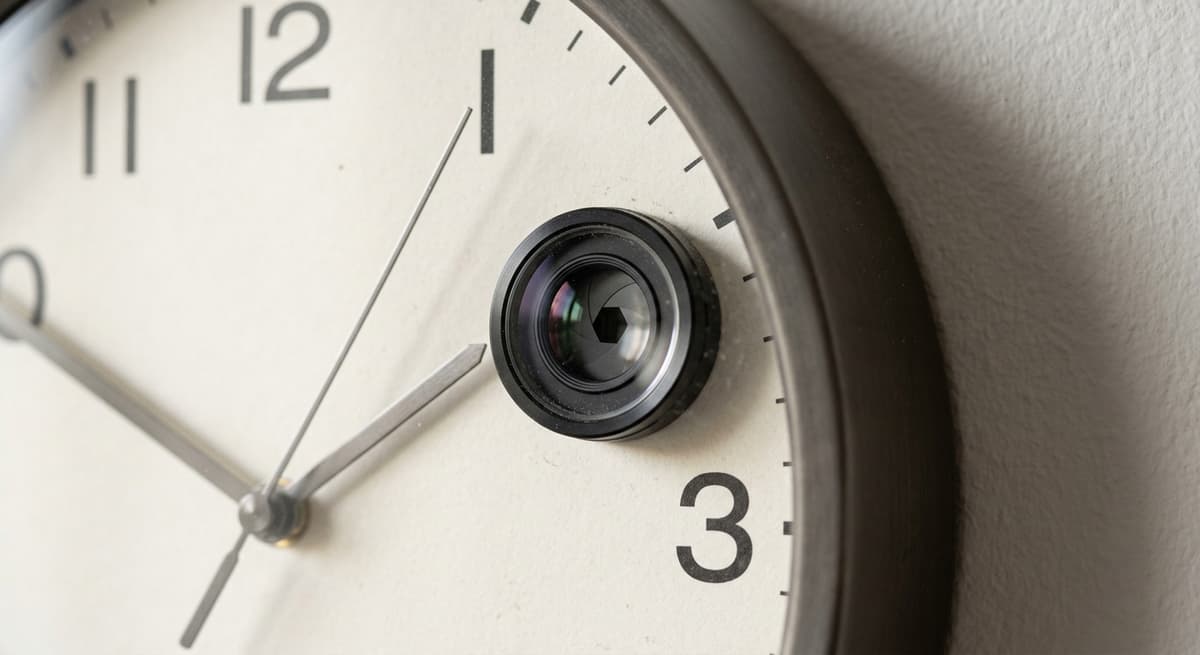
- Smoke detectors, clocks, or other objects that look different from standard models
- Small LED lights that may indicate a recording device is active
Electronic Detection
You can also use technology to detect hidden cameras:
- RF (radio frequency) detectors can identify wireless cameras that transmit a signal.
- Infrared scanners can detect the heat signature of an operating camera.
- Smartphone apps can sometimes detect camera lenses by reflecting light off them.
- Professional sweep services can conduct thorough electronic detection for a fee.
Reporting Voyeurism in Mississippi
How to Report
If you are a victim of voyeurism or discover hidden cameras, take these steps:
- Contact local law enforcement. Call 911 if you are in immediate danger, or your local police department's non-emergency number for ongoing situations.
- Preserve evidence. Do not remove or destroy the camera if possible. Document its location and appearance.
- Seek medical and emotional support. The Mississippi Coalition Against Sexual Assault at mscasa.org provides resources for victims.
- Consult an attorney. A lawyer can advise you on both criminal reporting and civil remedies.
Statute of Limitations
Mississippi's statute of limitations for felony voyeurism charges is generally governed by Miss. Code Ann. section 99-1-5. For most felonies, prosecution must begin within a certain time period after the offense. Consult with a local attorney about the specific limitations period that applies to your situation, as exceptions may apply.
More Mississippi Recording Laws
Audio Recording | Video Recording | Voyeurism & Hidden Cameras | Workplace Recording | Recording Police | Phone Call Recording | Security Cameras | Recording in Public | Landlord-Tenant | Dashcam Laws | Schools | Medical Recording
Back to Mississippi Recording Laws
More Mississippi Recording Topics
More Mississippi Laws
Frequently Asked Questions
What is the penalty for hidden camera voyeurism in Mississippi?
Hidden camera recording made with lewd, licentious, or indecent intent in a private place is a felony under Miss. Code Ann. section 97-29-63. For adult victims, the penalty is a fine of up to $5,000, up to 5 years in prison, or both. If the victim is under 16 years old, the maximum prison term rises to 10 years, but the maximum fine stays at $5,000.
Is upskirting illegal in Mississippi?
Yes. Section 97-29-63 specifically prohibits filming under or through a person's clothing without their consent. This applies regardless of whether the person is in a public or private location.
Can I sue someone for recording me with a hidden camera in Mississippi?
Yes. Victims of voyeurism can file civil lawsuits for invasion of privacy, intentional infliction of emotional distress, and other causes of action. You can seek compensatory damages, punitive damages, attorney fees, and injunctive relief. A civil lawsuit is separate from any criminal prosecution.
What should I do if I find a hidden camera in my rental or hotel room?
Document the camera's location with your own photos without disturbing it. Contact local law enforcement immediately. Notify the property management or hotel management. Preserve all evidence. Consider consulting an attorney about civil remedies for invasion of privacy.
Does a voyeurism conviction require sex offender registration in Mississippi?
Generally, yes. Under Miss. Code Ann. section 45-33-47, a conviction under section 97-29-63 is classified as a Tier Two registrable offense (minimum 25-year registration) without an age qualifier for the victim, while the separate voyeurism provision at section 97-29-61(2) is Tier One (minimum 15-year registration) and applies only when the victim is under 16. Consult with a criminal defense attorney for case-specific guidance.
Updates
Corrected the voyeurism penalty description throughout the page: Mississippi's hidden-camera statute imposes a fine, imprisonment, or both, not both together, and the $5,000 maximum fine is the same whether the victim is an adult or under 16 (only the maximum prison term rises to 10 years for a minor victim). Also corrected the federal video-voyeurism penalty to reflect its fine-or-prison-or-both structure, and a mischaracterized wiretapping citation (the substantive prohibition is section 41-29-507; section 41-29-533 is the penalty clause). Separately, repointed every Mississippi Code citation on this page from the Legislature's bare homepage to the specific Justia section it names.
Independently fact-checked against the cited primary sources; governing law re-checked for recent changes
Restored 97-29-63's specific-intent element throughout the page (this page's central subject, so the omission ran through the elements section, intro, KeyTakeaways, and FAQ) and corrected the sex-offender-registration section: 97-29-63 is a Tier I registrable offense with no victim-age qualifier, unlike the age-limited 97-29-61(2).
Corrected the sex-offender-registration tier labels: a 97-29-63 conviction is Tier Two (25-year minimum registration), not Tier I; 97-29-61(2) (child-victim voyeurism) is the Tier One offense (15-year minimum), verified against Miss. Code Ann. 45-33-47. Also corrected the description of 41-29-505 (narcotics wiretap court-order procedure, not a general audio-interception ban; the general prohibition is 41-29-533).
Governing law re-checked for recent changes
Governing law re-checked for recent changes
Spoke propagation from parent hub: replaced all Justia URLs with legislature.ms.gov canonical source; replaced FindLaw Turner v. Driver citation with ca5.uscourts.gov (No. 15-11311) on police, public-recording, and video spokes; corrected is_gov flags for legislature.ms.gov entries in SourcesList components; added keywords and citations arrays to [dashcam](/dashboard-camera-legality-and-privacy-laws-is-it-illegal-to-use-dashcams-in-north-america), landlord-tenant, and schools spokes; updated workplace spoke NLRB section to cite Stericycle, Inc., 372 NLRB No. 113 (2023) as the controlling work-rule standard replacing Boeing. No fabricated cases (Lewis v. State, Glazner v. Glazner) or SB 2437 references found. No 47 CFR 64.501 or FCC 23-107 references found.
Reviewed and approved by an editor
The Law Behind This Article
This article rests on the statutory provisions below, held in our own legal record and retrieved from the official source. Tap a section to read the operative text.
Mississippi Code of 1972 Annotated
§ 97-29-63Photographing or filming another without permission where there is expectation of privacy; when victim is adult; when victim is child under sixteen.In forcecited in 10 of our articles
(1)(a) It is a felony for any person with lewd, licentious or indecent intent to photograph, film, videotape, record or otherwise reproduces the image of another person without the permission of the other person when the other person is located in a place where a person would intend to be in a…
Official text (excerpt) · last checked 2026-08-31 · Read the full text in our law library · Verify at billstatus.ls.state.ms.us
Cited in 9 court opinions in our collectionLatest citing opinion in our collection: 2023
In the courts (editorial summary, independently checked):Gilmer v. State (2007) construed Section 97-29-63 on first impression, holding it has four elements and that proof the victim was in a listed place like a private dwelling satisfies the protected-location element as a matter of law, and rejected an overbreadth challenge. Nuckolls v. State (2015) reversed counts where venue was unproven.
Opinions citing this section in our collection:
- Gilmer v. State (Mississippi Supreme Court 2007, 955 So. 2d 829)✓A constable parked at night about 87 feet away and used a zoom camcorder to film a clothed woman inside her apartment; the court held that filming a victim in a private dwelling satisfies the statute's protected-location element as a matter of law, and affirmed the conviction.
- Eddie Gilmer v. State of Mississippi (Mississippi Supreme Court 2004)“…te Med. Ass'n, 381 So. 2d 1046, 1048 (Miss. 1980). ¶10. Miss. Code Ann. §97-29-63 (Rev. 2006) reads: Any person w…”
- Nuckolls v. State (Mississippi Supreme Court 2015, 179 So. 3d 1046)✓Nuckolls hid cameras and filmed women in bathrooms, then was convicted on ten counts charging he later reproduced the videos on a laptop; the court reversed those ten because the State never proved where the transfers occurred, and affirmed one filming count.
Identified automatically from the court opinions citing this section — not a ranking of which case controls.
Also relied on in: Mississippi Surveillance Camera Laws (2026 Guide), Mississippi Smart Glasses Recording Laws (2026), Mississippi Landlord-Tenant Recording Laws: Cameras, Audio, and Privacy Rights (2026)
§ 45-33-23Definitions.In force
For the purposes of this chapter, the following words shall have the meanings ascribed herein unless the context clearly requires otherwise: “Conviction” means that, regarding the person’s offense, there has been a determination or judgment of guilt as a result of a trial or the entry of a plea of…
Official text (excerpt) · last checked 2020-07-08 · Read the full text in our law library
Cited in 19 court opinions in our collectionLatest citing opinion in our collection: 2025
Opinions citing this section in our collection:
- Garrison v. State (Mississippi Supreme Court 2006, 950 So. 2d 990)“…laws do not even apply to offenders such as Garrison. Under Miss.Code Ann. § 45-33-23(d), "`[r]egistration' means providing i…”
- Forrest Thomas, III v. Mississippi Department of Corrections (Mississippi Supreme Court 2018, 248 So. 3d 786)“…There was no change to the language, only the location. See Miss. Code Ann. § 45-33-23 (Supp. 2017).…”
- Stephen Montalto v. State of Mississippi (Court of Appeals of Mississippi 2019, 272 So. 3d 132)“…een, kidnapping is statutorily defined as a “sex offense.” Miss. Code Ann. § 45-33-23(h)(i) (Supp. 2018).3 A person convicted…”
Identified automatically from the court opinions citing this section — not a ranking of which case controls.
United States Code Title 18
§ 1801Video voyeurismIn forcecited in 79 of our articles
Whoever, in the special maritime and territorial jurisdiction of the United States, has the intent to capture an image of a private area of an individual without their consent, and knowingly does so under circumstances in which the individual has a reasonable expectation of privacy, shall be fined under this title or imprisoned not more than one year, or both. In this section— the term “capture”, with respect to an image, means to videotape, photograph, film, record by any means, or broadcast; the term “broadcast” means to electronically transmit a visual image with the intent that it be viewed by a person or persons; the term “a private area of the individual” means the naked or undergarment clad genitals, pubic area, buttocks, or female breast of that individual; the term “female breast” means any portion of the female breast below the top of the areola; and the term “under circumstances in which that individual has a reasonable expectation of privacy” means— circumstances in which a reasonable person would believe that he or she could disrobe in privacy, without being concerned that an image of a private area of the individual was being captured; or circumstances in which a…
Official text (excerpt) · last checked 2026-07-28 · Read the full text in our law library · Verify at uscode.house.gov
Cited in 53 court opinions in our collectionLatest citing opinion in our collection: 2026
In the courts (editorial summary, independently checked):Courts have applied 18 U.S.C. 1801 mainly at its edges. United States v. Johnson (2010) read it as Congress's answer to secretly filming nudity on federal property, acquitting on a child exploitation charge instead. EPIC v. Department of Homeland Security (2011) applied the Section 1801(c) law enforcement exception to a TSA scanner claim.
Opinions citing this section in our collection:
- United States v. Anthony Helton (Court of Appeals for the Fourth Circuit 2019, 944 F.3d 198)“…from this list of federal offenses is video voyeurism under 18 U.S.C. § 1801. Rather than list this statute as an enu…”
- United States v. Johnson (District Court, W.D. Missouri 2010, 719 F. Supp. 2d 1059)✓A weightlifting coach hid a camera to film minors weighing in nude; acquitting him under the child exploitation statute, the court called that conduct plain video voyeurism under section 1801, but noted the section reaches only federal maritime and territorial jurisdiction.
- Electronic Privacy Information Center v. United States Department of Homeland Security (Court of Appeals for the D.C. Circuit 2011, 653 F.3d 1)✓Privacy groups challenged TSA body scanners under the Video Voyeurism Prevention Act; the D.C. Circuit held the statute's exception for lawful law enforcement, correctional, or intelligence activity applied to airport screening, so the section 1801 claim failed.
Identified automatically from the court opinions citing this section — not a ranking of which case controls.
Also relied on in: Alaska Voyeurism and Hidden Camera Laws: AS 11.61.123 Explained (2026), Arizona Surreptitious Recording & Voyeurism Laws: ARS 13-3019 Penalties (2026), Arkansas Voyeurism Laws: Hidden Cameras, Penalties, and Defenses (2026)
Search our full record of US law — 2.1 million sections, every state + federal →
Sources and References
- Miss. Code Ann. section 97-29-63 - Voyeurism Statute(law.justia.com)
- Miss. Code Ann. section 45-33-23 - Sex Offender Registry(law.justia.com)
- 18 U.S.C. section 1801 - Video Voyeurism Prevention Act(law.cornell.edu)
- Mississippi Department of Employment Security(mdes.ms.gov).gov
- Mississippi Rules of Evidence(courts.ms.gov).gov
- DOJ Citizens Guide to Federal Voyeurism Law(justice.gov).gov