
Maryland
Maryland Dashcam Laws: Legality, Audio Rules, and Evidence Use (2026)
Independently fact-checked against primary sources (last audited August 22, 2026). · Reviewed by the RecordingLaw editorial team. · Law checked current as of August 22, 2026. · 6 primary sources cited on this page. How we verify our legal content
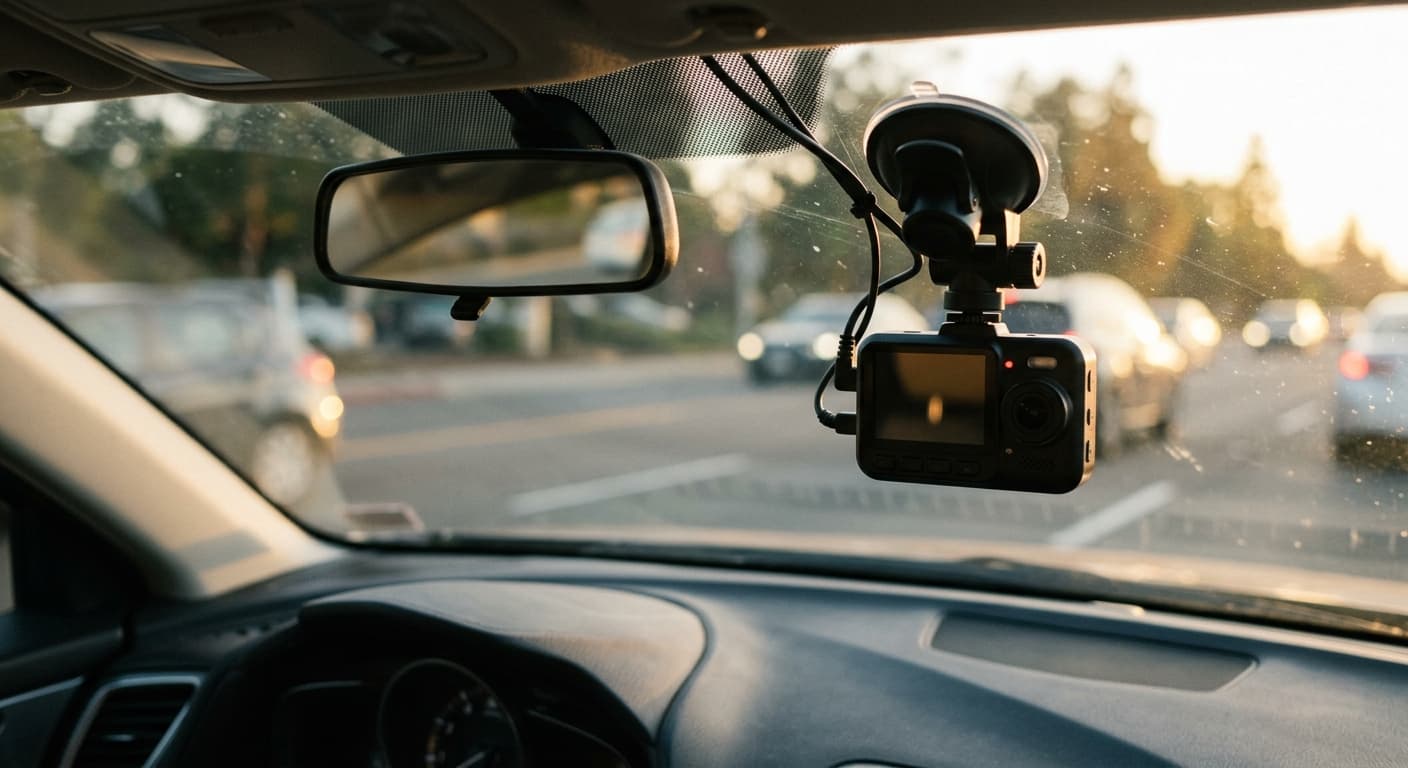
Maryland dashcams that record silent video on public roads are legal; the wiretapping statute targets oral communications, not visual recording. Dashcams that capture in-car audio require all-party consent under Md. Code, Cts. & Jud. Proc. 10-402, and windshield mounting must not obstruct the driver's view.
Dashcams are increasingly popular among Maryland drivers who want to document road conditions, traffic incidents, and interactions with other motorists or police. While dashcam use is legal in Maryland, the state's strict all-party consent wiretapping law creates important restrictions on audio recording that every dashcam user should understand.
This guide covers the rules for dashcam installation, audio recording limitations, and how dashcam footage can be used as evidence in Maryland.
Are Dashcams Legal in Maryland?
Video-Only Dashcams: Legal
Dashcams that record silent video while driving on Maryland roads are legal. The state's wiretapping statute under ss 10-402 targets the interception of oral communications, not visual recording. A dashcam pointed at the road that captures video without sound does not violate the wiretapping statute.
Dashcams with Audio: Consent Required
Most modern dashcams record audio by default. When a dashcam captures conversations inside the vehicle, Maryland's all-party consent law applies. Every person in the vehicle whose conversation is recorded must consent before recording begins.
This creates a practical obligation for dashcam users:
- Inform every passenger that the dashcam records audio
- Obtain verbal consent from each passenger before driving
- If any passenger objects, disable the audio recording feature
- Consider disabling audio by default and enabling it only when all passengers have consented
The Practical Reality
Many Maryland drivers use dashcams with audio enabled without obtaining consent from passengers. While enforcement of the wiretapping statute in the dashcam context is uncommon, the legal risk exists. A passenger who discovers they were recorded without consent could file criminal charges or a civil lawsuit.
Windshield Mounting Rules
Maryland Transportation Article ss 22-404
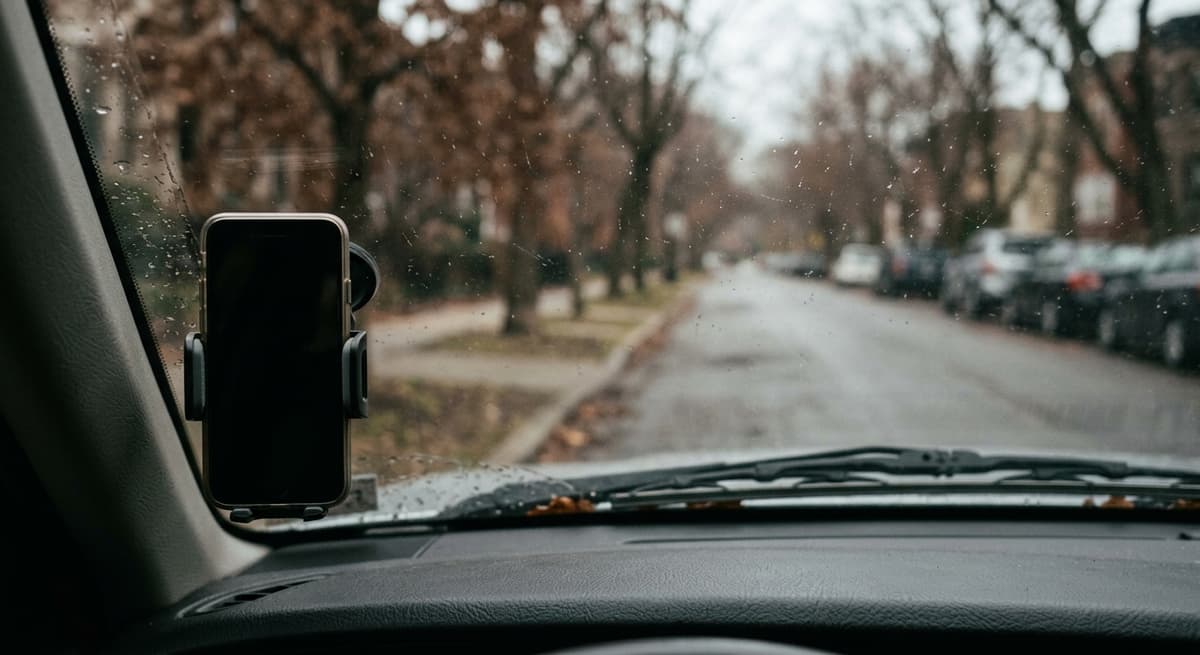
Maryland law restricts nontransparent signs, stickers, or other material placed on a vehicle's windshield. Transportation Article ss 22-404 addresses windshield obstructions and requires that any permitted material not interfere with the driver's clear view of traffic.
Key rules for dashcam mounting:
- The dashcam must not obstruct the driver's clear view of the road
- Mount the camera behind the rearview mirror or in a corner of the windshield where it minimizes obstruction
- The camera should not block a significant portion of the windshield
- Suction cup mounts, adhesive mounts, and clip-on mounts are all acceptable as long as they do not impair visibility
Best Mounting Practices
- Behind the rearview mirror: The most common and safest position. The dashcam sits in an area already partially blocked by the mirror.
- Upper corner of the passenger side: Keeps the camera out of the driver's direct line of sight.
- Dashboard mount: Placing the camera on the dashboard rather than the windshield avoids windshield obstruction entirely, though the recording angle may be different.
Tinting and Visibility
Maryland has specific window tinting laws under Transportation Article ss 22-406. Dashcam installation should not interfere with legal tinting requirements, and tinted windshields may affect dashcam video quality.
Recording Passengers and the Consent Requirement

In-Car Conversations
When passengers ride in your vehicle, they have a reasonable expectation that their conversations are private. Maryland's wiretapping statute protects these in-car communications.
Scenarios requiring passenger consent:
- A friend rides with you and discusses personal matters
- You give a coworker a ride to work and have a work conversation
- Family members talk in the car during a road trip
- A rideshare passenger has a phone call while in your vehicle
Scenarios where consent may not be required:
- You are alone in the vehicle, and the dashcam records only road sounds (no private conversation to intercept)
- You are recording a traffic stop, and the officer has no reasonable expectation of privacy in public statements (per the Graber principle)
Rideshare and Taxi Drivers
Maryland rideshare drivers (Uber, Lyft) and taxi operators who use dashcams face special considerations:
- Passengers must be informed of any audio recording before the ride begins
- Posting a visible sign inside the vehicle stating "Audio and video recording in progress" provides notice
- The sign alone may not satisfy Maryland's explicit consent standard
- Rideshare platform terms of service may address recording, but state law still applies independently
- Consider disabling audio and relying on video-only recording
Dashcam Footage as Evidence
Traffic Accidents
Dashcam footage can be valuable evidence in traffic accident cases. Maryland follows a contributory negligence standard, meaning that if a plaintiff is even partially at fault for an accident, they cannot recover damages. Dashcam footage that clearly shows the other driver's fault can be decisive.
Admissibility requirements:
- The video must be relevant to the case
- Someone must authenticate the footage (testify that it accurately depicts the events)
- The footage must not have been altered or tampered with
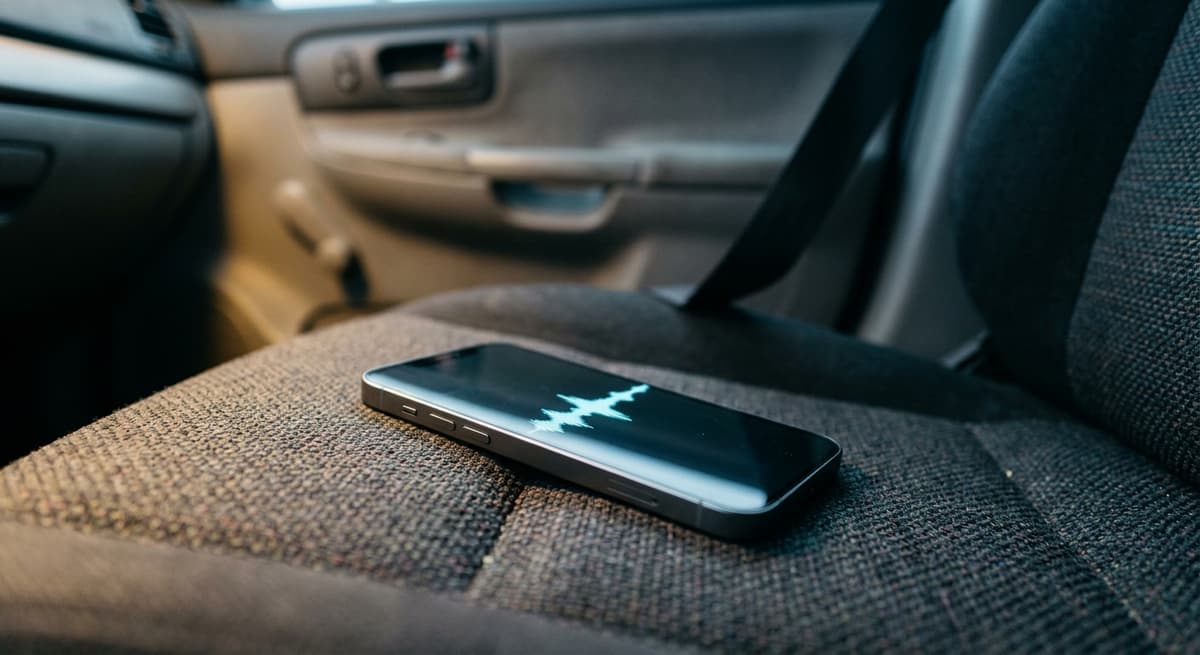
- Audio recorded without consent will be suppressed under ss 10-405
Insurance Claims
Maryland insurance companies increasingly accept dashcam footage as evidence for claims. Dashcam video can help:
- Prove fault in an accident
- Document road conditions at the time of the incident
- Show the severity of an impact
- Refute fraudulent claims
- Document hit-and-run incidents
Traffic Violations and Court Cases
Dashcam footage can be submitted as evidence in traffic court. If you receive a traffic citation and your dashcam footage shows that you did not commit the violation, the footage may help your case.
However, if the footage includes audio recorded without consent, the audio portion will be inadmissible. A court may admit only the video component.
Police Interactions
Dashcam footage of traffic stops and police encounters is valuable and generally admissible. The Graber case established that police officers have no reasonable expectation of privacy during public traffic stops. Dashcam footage of a police encounter can document:
- Whether the officer had probable cause for the stop
- The officer's conduct during the encounter
- Any use of force
- The statements made by both parties
Commercial Dashcams and Fleet Vehicles
Employer Requirements
Maryland businesses that install dashcams in company vehicles must comply with the wiretapping statute regarding their employees:
- Notification: Employees must be informed that the vehicle has a dashcam and whether it records audio
- Consent: If the dashcam records audio, employees must consent. This consent should be documented in writing.
- Driver-facing cameras: Some fleet dashcams include a cabin-facing camera that records the driver. These cameras are permissible with notice, but audio recording requires consent.
- GPS tracking: While not a recording issue under the wiretapping statute, GPS tracking in company vehicles should also be disclosed to employees.
Federal Motor Carrier Regulations
Commercial truck drivers operating in Maryland may also be subject to federal motor carrier safety regulations. The Federal Motor Carrier Safety Administration (FMCSA) does not mandate dashcams but does regulate electronic logging devices (ELDs). Some ELD systems include camera components.
Trucking Companies
Interstate trucking companies operating in Maryland should:
- Notify drivers of all recording equipment in the vehicle
- Obtain written consent for audio recording
- Follow Maryland's all-party consent law when the vehicle is within the state
- Establish clear policies about footage retention, access, and use
Rear-Facing and Multi-Camera Systems
Rear Dashcams
Rear-facing dashcams that record the road behind the vehicle follow the same rules as front-facing cameras:
- Silent video recording is legal
- Audio recording requires all-party consent
- Footage can serve as evidence for rear-end collisions and hit-and-run incidents
Cabin-Facing Cameras
Some dashcam systems include a camera that faces the vehicle's interior. This cabin camera raises additional privacy considerations:
- The camera captures passengers' faces and activities
- If the cabin camera records audio, all-party consent is required
- Inform all passengers about the cabin camera before they enter the vehicle
- Consider disabling the cabin camera when carrying passengers who have not consented
360-Degree Systems
Advanced dashcam systems with multiple cameras recording all angles of the vehicle and its interior present the highest level of privacy concern. These systems should be accompanied by:
- Clear notification to all vehicle occupants
- Consent for audio recording from all occupants
- A privacy policy explaining how footage is stored, used, and shared
Dashcam Footage and Privacy
Storing and Sharing Footage
Dashcam footage that captures other people, their license plates, and their activities raises general privacy considerations:
- Store dashcam footage securely and limit access
- Do not post footage that identifies other people online without a legitimate purpose
- Sharing footage of accidents or incidents with insurance companies and attorneys is generally appropriate
- Posting footage on social media for entertainment purposes could create liability if it reveals private information
Data Retention
Most dashcams use loop recording that overwrites old footage after the memory card fills up. If your dashcam captures an incident that may lead to a legal claim:
- Save the relevant footage immediately by locking the file or transferring it to another storage device
- Do not allow the loop recording to overwrite important footage
- If you know litigation is likely, preserve all footage from the relevant time period
Penalties for Violations
| Issue | Legal Basis | Consequence |
|---|---|---|
| Dashcam audio without passenger consent | ss 10-402 | Felony: up to 5 years prison, $10,000 fine |
| Windshield obstruction | Transportation ss 22-404 | Traffic citation |
| Using inadmissible audio evidence | ss 10-405 | Evidence suppressed by court |
| Civil liability for illegal recording | ss 10-410 | $100/day or $1,000 min + punitive + attorney fees |
More Maryland Recording Laws
Audio Recording | Video Recording | Voyeurism & Hidden Cameras | Workplace Recording | Recording Police | Phone Call Recording | Security Cameras | Recording in Public | Landlord-Tenant | Dashcam Laws | Schools | Medical Recording
Back to Maryland Recording Laws
More Maryland Recording Topics
More Maryland Laws
Frequently Asked Questions
Are dashcams legal in Maryland?
Yes, dashcams are legal in Maryland. Silent video dashcams are fully legal. Dashcams that record audio must comply with the all-party consent wiretapping law (ss 10-402), meaning every person in the vehicle must consent to audio recording. The dashcam must also be mounted in a way that does not obstruct the driver's view.
Do I need to tell passengers about my dashcam in Maryland?
If your dashcam records audio, yes. Maryland's all-party consent law requires you to inform every passenger and obtain their consent before recording their conversations. Even for video-only dashcams, informing passengers is a best practice, especially if the camera captures the vehicle interior.
Can dashcam footage be used as evidence in Maryland?
Yes. Silent video dashcam footage can be used as evidence in court if it is properly authenticated and relevant. However, audio recorded without consent is inadmissible under ss 10-405. A court may admit only the video portion if the audio was illegally captured. Dashcam footage is also commonly accepted by insurance companies for claims.
Where should I mount my dashcam in Maryland?
Mount your dashcam in a position that does not obstruct your view of the road. The most common location is behind the rearview mirror, which minimizes obstruction. You can also mount it in the upper corner of the passenger side windshield or on the dashboard. Maryland Transportation Article ss 22-404 prohibits windshield obstructions that impair the driver's view.
Can Uber and Lyft drivers use dashcams in Maryland?
Yes, rideshare drivers can use dashcams. For video-only recording, inform passengers with a visible sign. For audio recording, you need explicit consent from every passenger before the ride begins, which Maryland's strict standard makes challenging. The safest approach for rideshare drivers is to disable audio and use video-only recording.
Updates
Independently fact-checked against the cited primary sources; governing law re-checked for recent changes
Governing law re-checked for recent changes
Corrected the windshield-obstruction citation from Transportation Article ss 22-101 (a general unsafe-equipment provision that does not mention windshields) to the actual governing statute, ss 22-404, which restricts nontransparent material on windshields and requires an unobstructed driver view.
Governing law re-checked for recent changes
Reviewed and approved by an editor
The Law Behind This Article
This article rests on the statutory provisions below, held in our own legal record and retrieved from the official source. Tap a section to read the operative text.
Maryland Code, Courts and Judicial Proceedings Article
§ 10-402In forcecited in 26 of our articles
§10–402. (a) Except as otherwise specifically provided in this subtitle it is unlawful for any person to: (1) Willfully intercept, endeavor to intercept, or procure any other person to intercept or endeavor to intercept, any wire, oral, or electronic communication; (2) Willfully disclose, or endeavor to disclose, to any other person the contents of any wire, oral, or electronic communication, knowing or having reason to know that the information was obtained through the interception of a wire, oral, or electronic communication in violation of this subtitle; or (3) Willfully use, or endeavor to use, the contents of any wire, oral, or electronic communication, knowing or having reason to know that the information was obtained through the interception of a wire, oral, or electronic communication in violation of this subtitle. (b) Any person who violates subsection (a) of this section is guilty of a felony and is subject to imprisonment for not more than 5 years or a fine of not more than $10,000, or both.
Official text (excerpt) · last checked 2026-08-31 · Read the full text in our law library · Verify at mgaleg.maryland.gov
Cited in 12 court opinions in our collectionLatest citing opinion in our collection: 2026
In the courts (editorial summary, independently checked):Applying section 10-402, Fearnow v. Chesapeake & Potomac Telephone Co. (1995) held that liability under the Maryland Wiretap Act requires proof the defendant acted willfully, an intentional violation or reckless disregard of a known legal duty; an employee's failure to check for a court order was only a jury factor on willfulness.
Opinions citing this section in our collection:
- Fearnow v. Chesapeake & Potomac Telephone Co. (Court of Special Appeals of Maryland 1995, 104 Md. App. 1)✓Police hid a tape recorder on an officer's headquarters phone line with a phone company employee's help and no court order; the court held a section 10-402(a) claim requires proof of willful interception, and failing to ask about a court order went only to willfulness.
- Maryland Attorney General Opinion 110OAG60 (Maryland Attorney General Reports 2025)“…or wire communications without the consent of all parties. Md. Code Ann., Cts. & Jud. Proc. § 10-402(a). However, the Wiretap Act contains e…”
- Boehner, John A. v. McDermott, James A. (Court of Appeals for the D.C. Circuit 1999, 191 F.3d 463)“…1992); Me.Rev.Stat. Ann. tit. 15, §§ 710, 711 (West 1998); Md.Code Ann., Cts & Jud. Proc. § 10-402 (1998); Mass. Gen. Laws Ann. ch. 272,…”
Identified automatically from the court opinions citing this section — not a ranking of which case controls.
Also relied on in: US Recording Laws by State (2026): All 50 States Explained, Is Plaud HIPAA Compliant? Kind Of. Here's What to Know (2026), Maryland Audio Recording Laws: Two-Party Consent Rules and Penalties (2026)
§ 10-405In forcecited in 8 of our articles
§10–405. (a) Except as provided in subsection (b) of this section, whenever any wire, oral, or electronic communication has been intercepted, no part of the contents of the communication and no evidence derived therefrom may be received in evidence in any trial, hearing, or other proceeding in or before any court, grand jury, department, officer, agency, regulatory body, legislative committee, or other authority of this State, or a political subdivision thereof if the disclosure of that information would be in violation of this subtitle.
Official text (excerpt) · last checked 2026-07-29 · Read the full text in our law library · Verify at mgaleg.maryland.gov
Cited in 1 court opinions in our collectionLatest citing opinion in our collection: 2013
Opinions citing this section in our collection:
- King v. State (Court of Appeals of Maryland 2013, 434 Md. 472)“…that information would be in violation of this subtitle. Md.Code Ann., Cts. & Jud. Proc. § 10-405(a) (1957, 2013 Repl. Vol.).…”
Identified automatically from the court opinions citing this section — not a ranking of which case controls.
Also relied on in: Maryland Landlord-Tenant Recording Laws: Cameras, Audio, and Privacy (2026), Maryland Phone Call Recording Laws: Consent Rules for Calls (2026), Maryland School Recording Laws: Students, Teachers, and Campus Rules (2026)
§ 10-410In forcecited in 10 of our articles
§10–410. (a) Any person whose wire, oral, or electronic communication is intercepted, disclosed, or used in violation of this subtitle shall have a civil cause of action against any person who intercepts, discloses, or uses, or procures any other person to intercept, disclose, or use the communications, and be entitled to recover from any person: (1) Actual damages but not less than liquidated damages computed at the rate of $100 a day for each day of violation or $1,000, whichever is higher; (2) Punitive damages; and (3) A reasonable attorney’s fee and other litigation costs reasonably incurred. (b) A good faith reliance on a court order or legislative authorization shall constitute a complete defense to any civil or criminal action brought under this subtitle or under any other law.
Official text (excerpt) · last checked 2026-07-29 · Read the full text in our law library · Verify at mgaleg.maryland.gov
Cited in 2 court opinions in our collectionLatest citing opinion in our collection: 2023
In the courts (editorial summary, independently checked):Fearnow v. Chesapeake & Potomac Telephone Co. (1995) held that punitive damages under section 10-410(a) require malice, meaning a knowing and deliberate violation of the Maryland Wiretap Act, and that a reckless disregard of a known legal duty does not supply it. It also rejected reputational damages not caused by the interception itself.
Opinions citing this section in our collection:
- Fearnow v. Chesapeake & Potomac Telephone Co. (Court of Special Appeals of Maryland 1995, 104 Md. App. 1)✓A police chief had an officer's headquarters phone extension tapped with a telephone technician's help; the court held liability under section 10-410 requires proof the technician acted wilfully, a jury question, and that punitive damages require a showing of malice.
- Think Tank, Inc. v. ITegrity, Inc. (District Court, D. Maryland 2023)“…against Bawa and [Tegrity under the Maryland Wiretap Act, Md. Code Ann., Cts. & Jud. Proc. § 10-410 (West 2022), also related to Bawa’s use…”
Identified automatically from the court opinions citing this section — not a ranking of which case controls.
Also relied on in: Maryland Medical Recording Laws: Patient Rights, HIPAA, and Consent (2026), Maryland Laws on Recording in Public: Rights, Limits, and Exceptions (2026), Maryland Workplace Recording Laws: Employee and Employer Rules (2026)
Maryland Code, Transportation Article
§ 22-404In forcecited in 2 of our articles
§22–404. (a) (1) Except as provided in subsection (b) of this section, a person may not drive any motor vehicle with any sign, poster, card, sticker, or other nontransparent material on the front windshield, sidewings, or side or rear windows of the vehicle other than a certificate or other paper either required to be so displayed by law or authorized by the Administrator. (b) This section does not apply to: (1) Nontransparent material placed on the windshield of a motor vehicle above the AS1 line or not lower than 5 inches from the top of the windshield, whichever is less, if the materials are placed so as not to interfere with the driver’s clear view of traffic; (2) Materials placed on the windshield or rear window, within a 7 inch square area in the lower corner, if the materials are placed so as not to interfere with the driver’s clear view of traffic; (3) Materials placed on the side windows of a Class A (passenger) vehicle to the rear of the driver, if the materials are placed so as not to interfere with the driver’s clear view of traffic; (4) Materials placed on the side or rear windows of a Class M (multipurpose) vehicle or Class E (truck) vehicle provided that the…
Official text (excerpt) · last checked 2026-07-29 · Read the full text in our law library · Verify at mgaleg.maryland.gov
Also relied on in: Maryland Windshield Mounting Laws (2026 Guide)
§ 22-406In forcecited in 3 of our articles
§22–406. (a) (1) In this section the following words have the meanings indicated. (2) “Aftermarket safety glass replacement” means motor vehicle safety glass replacement services that occur after the original installation by a vehicle manufacturer. (3) “Safety glass” means: (i) Any glass product that is so made or treated as substantially to prevent the glass from shattering and flying when struck or broken; or (ii) Any similar or other product that the Administration approves. (b) A person may not drive on any highway in this State any motor vehicle manufactured or assembled after June 1, 1937, and registered in this State, unless the vehicle is equipped with safety glass wherever glass is used in the motor vehicle in doors, windows, windshields, and wings. (c) A person may not sell any motor vehicle manufactured or assembled after June 1, 1937, registered or intended to be registered in this State and driven or intended to be driven on any highway in this State, unless the vehicle is equipped with safety glass wherever glass is used in the motor vehicle in doors, windows, windshields, and wings. Each sale in violation of this provision is a separate offense.
Official text (excerpt) · last checked 2026-09-01 · Read the full text in our law library · Verify at mgaleg.maryland.gov
Cited in 3 court opinions in our collectionLatest citing opinion in our collection: 2026
Opinions citing this section in our collection:
- United States v. Antonio Walker-Bey, Jr. (Court of Appeals for the Fourth Circuit 2020)“…a light transmittance through the window of at least 35%.” Md. Code Ann., Transp. § 22-406(i)(1)(i) (LexisNexis 2009). A law enfor…”
- United States v. Michael Brandon (Court of Appeals for the Fourth Circuit 2026)“…believed violated Maryland’s window tint statute, Md. Code Ann., Transp. § 22-406(i). Stewart pulled behind the…”
- United States v. Daniel Taylor (Court of Appeals for the Fourth Circuit 2015, 601 F. App'x 212)“…and issue a safety equipment repair order. Md. Code Ann., Transp. § 22-406(i)(2) (2014). Taylor…”
Identified automatically from the court opinions citing this section — not a ranking of which case controls.
Also relied on in: Maryland Window Tint Laws (2026): Legal VLT Limits
Search our full record of US law — 2.1 million sections, every state + federal →
Sources and References
- Md. Code, Cts. & Jud. Proc. ss 10-402 - Interception of Communications(mgaleg.maryland.gov).gov
- Md. Code, Cts. & Jud. Proc. ss 10-405 - Suppression of Evidence(mgaleg.maryland.gov).gov
- Maryland Transportation Article ss 22-404 - Windshields Must Be Unobstructed(mgaleg.maryland.gov).gov
- Maryland Transportation Article ss 22-406 - Window Tinting(mgaleg.maryland.gov).gov
- Md. Code, Cts. & Jud. Proc. ss 10-410 - Civil Liability(law.justia.com).gov
- Md. Code, Cts. & Jud. Proc. ss 10-410 - Civil Liability(mgaleg.maryland.gov).gov