
Maryland
Maryland Video Recording Laws: Surveillance Rules and Privacy Limits (2026)
Independently fact-checked against primary sources (last audited August 22, 2026). · Reviewed by the RecordingLaw editorial team. · Law checked current as of August 22, 2026. · 8 primary sources cited on this page. How we verify our legal content
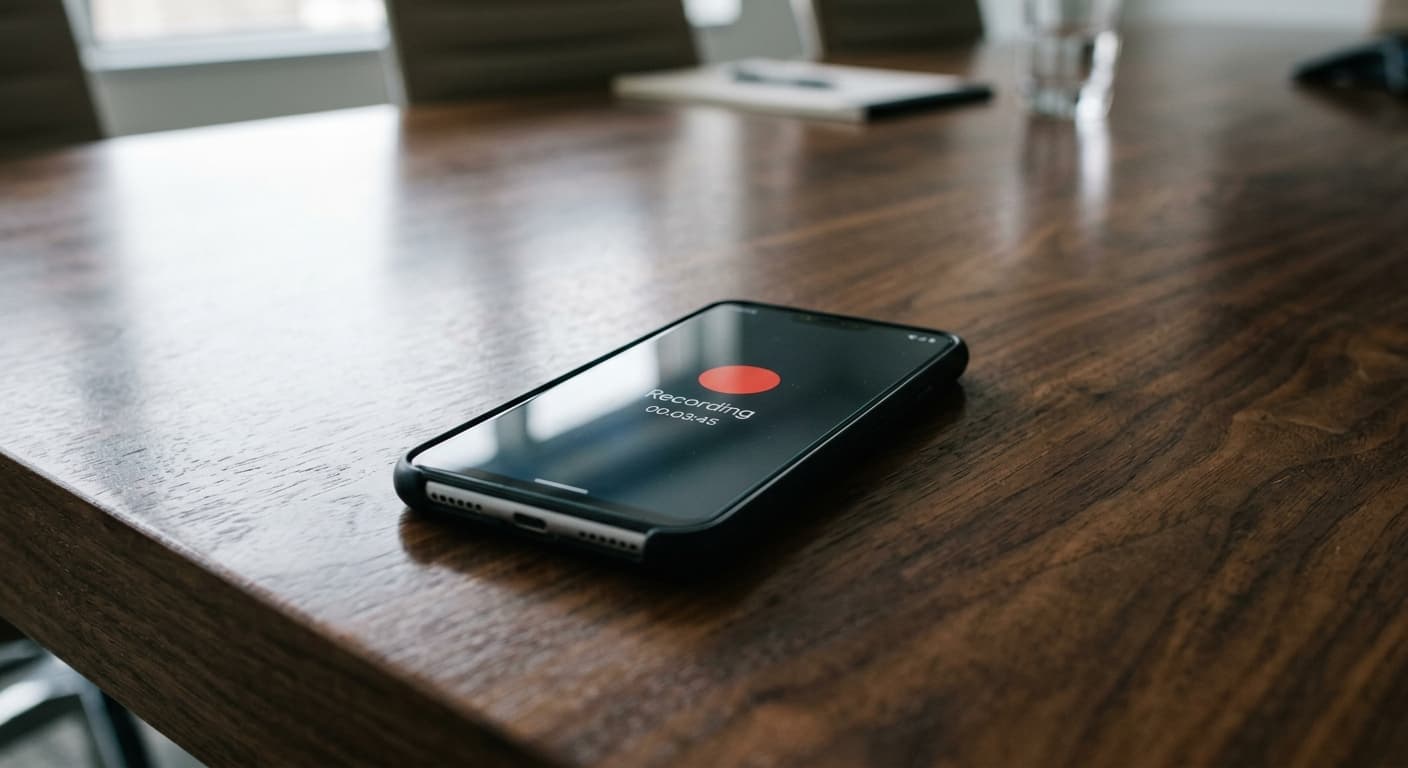
In Maryland, silent video recording in public is generally legal because Md. Code, Cts. & Jud. Proc. ss 10-402 targets audio interception, not visual images alone. Video that captures audio requires all-party consent, and Md. Crim. Law ss 3-903 bars placing a hidden camera on residential property to secretly observe a person inside a private residence, regardless of audio.
Maryland draws a clear legal line between video recording with audio and video recording without audio. The state's wiretapping statute, Md. Code, Cts. & Jud. Proc. ss 10-402, focuses on the interception of oral, wire, and electronic communications. Silent video recording falls outside the scope of the wiretapping statute, but other Maryland laws restrict visual surveillance in private settings.
This guide explains when video recording is legal in Maryland, what triggers the all-party consent requirement, and the separate privacy crimes that apply to visual surveillance.
When Is Video Recording Legal in Maryland?
Silent Video in Public
Recording silent video in a public space is generally legal in Maryland. Because ss 10-402 targets the interception of communications (audio), a camera that records only visual images does not violate the wiretapping statute.
Common examples of legal silent video recording include:
- Security cameras in retail stores that record video without sound
- Traffic cameras operated by government agencies
- Surveillance cameras in public parking lots
- Personal video recording on public sidewalks or in parks (without audio)
Video with Audio: All-Party Consent Required
The moment a video recording device captures audio of a private conversation, Maryland's all-party consent law applies. This distinction is critical for anyone using:
- Smartphone video recording (which almost always captures audio)
- Doorbell cameras with microphones (like Ring or Nest devices)
- Security cameras with built-in audio recording
- Dashcams with microphone capability
- Body cameras or wearable recording devices
If your video camera records sound, you must obtain consent from all parties whose conversations are captured, or you risk felony charges under the wiretapping statute.
Video in Private Settings: Additional Restrictions
Even silent video recording becomes illegal when it occurs in places where people have a reasonable expectation of visual privacy. Maryland Criminal Law Title 3, Subtitle 9 addresses these situations separately from the wiretapping statute.
Maryland's Visual Surveillance Laws

Criminal Law ss 3-902: Visual Surveillance with Prurient Intent
Maryland Criminal Law ss 3-902 prohibits conducting visual surveillance of another person without their knowledge or consent when:
- The surveillance is done with prurient intent (sexual gratification purposes)
- The person being observed is in a private place
- The person has a reasonable expectation of privacy
This statute targets peeping and voyeuristic behavior. It applies regardless of whether a recording device is used. Simply observing someone in a private place with prurient intent can violate this law.
Criminal Law ss 3-903: Camera Surveillance in Private Places
Maryland Criminal Law ss 3-903 prohibits placing, or procuring another person to place, a camera on real property where a private residence is located, in order to deliberately and surreptitiously observe someone inside that private residence. "Camera" is defined broadly as any electronic device that can be used surreptitiously to observe an individual.
The statute does not apply to an adult resident of the property, a placement made without intent for secret observation, a placement made with an adult resident's consent, law enforcement officers performing official duties, and a few other narrow exceptions.
Violations of ss 3-903 are misdemeanors punishable by up to 1 year in prison and a $2,500 fine. A person observed in violation of this statute also has a civil cause of action for damages and reasonable attorney's fees.
Criminal Law ss 3-809: Nonconsensual Distribution of Intimate Images
Maryland Criminal Law ss 3-809 criminalizes what is commonly called "revenge porn." This statute makes it illegal to intentionally distribute intimate images of another person without their consent when:
- The person depicted had a reasonable expectation that the image would remain private
- The distribution is made with the intent to harm, harass, intimidate, threaten, or coerce the person depicted
Penalties: Violations are misdemeanors punishable by up to 2 years in prison and a $5,000 fine. The statute does not set a separate, enhanced penalty tier for a second or subsequent offense.
The statute also provides a civil cause of action, allowing victims to sue for damages including economic losses, emotional distress, and attorney fees.
Video Recording and the Wiretapping Statute
How ss 10-402 Applies to Video
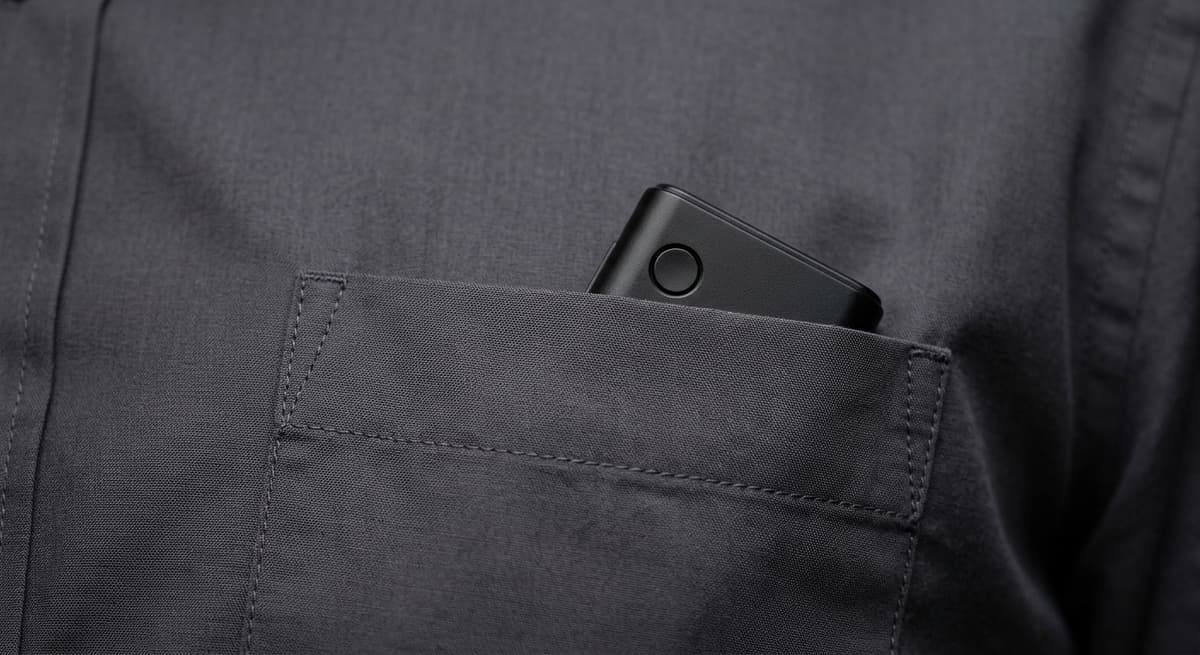
Maryland's wiretapping statute does not directly address video recording. Instead, it becomes relevant whenever a video recording captures audio of a private communication. The legal analysis involves two separate questions:
- Does the video capture audio? If yes, the wiretapping statute applies to the audio component.
- Is the audio captured from a private communication? If the people being recorded had a reasonable expectation of privacy, all-party consent is required.
The Audio-Video Distinction in Practice
This two-track analysis creates some counterintuitive results:
Legal: A silent security camera in a business lobby recording customers walking through the space. No audio is captured, and the location is not a private place under ss 3-903.
Illegal: The same security camera with a built-in microphone that captures conversations between customers. The audio component triggers ss 10-402, and the customers did not consent to being recorded.
Illegal: A hidden camera placed on residential property to secretly observe someone inside a private residence, even if it records only video with no audio. This violates ss 3-903 regardless of audio capture.
Legal (with consent): A video conference call where all participants agree to be recorded. Both the audio and video components are covered by the consent.
Home Security Cameras and Doorbell Cameras

Current Legal Status
Home security cameras and doorbell cameras that record audio present a significant legal issue under Maryland's current law. Devices like Ring, Nest, and Arlo cameras that capture both video and audio may violate ss 10-402 when they record conversations of visitors, delivery workers, or passersby without their consent.
As a practical matter, Maryland prosecutors have not widely pursued charges against homeowners for using standard doorbell cameras. However, the letter of the law technically makes audio-enabled security cameras a potential felony if they capture private conversations without consent.
What Homeowners Should Consider
If you use security cameras with audio recording in Maryland:
- Consider disabling the audio recording feature to avoid any legal risk
- Post visible signs notifying visitors that recording is in progress
- Understand that signs alone may not satisfy Maryland's explicit consent requirement
- Point cameras at your own property rather than neighbors' homes or public sidewalks where private conversations occur
- Review your camera footage retention policies
Proposed Legislative Changes
SB 61 (2025) would have created an explicit exception for home security cameras that capture audio on the owner's property. This bill addressed the growing disconnect between Maryland's 1977 wiretapping statute and modern home security technology.
The bill proposed allowing a person to use an electronic device on their own property to record oral communications when the device is used for security purposes. It died when the 2025 session adjourned sine die on April 7, 2025. A separate set of 2026-session reform bills also failed, at that session's April 13, 2026 sine die adjournment. As of May 2026, no home security camera exception has been enacted into law.
Workplace Video Surveillance
Employer Video Monitoring Rules
Maryland employers may use video surveillance in the workplace, subject to certain limitations:
Generally permitted:
- Video cameras in common work areas like lobbies, hallways, and warehouse floors
- Security cameras at building entrances and exits
- Cameras monitoring cash registers or high-value inventory areas
Generally prohibited:
- Cameras in restrooms, changing areas, or break rooms where employees have privacy expectations
- Hidden cameras placed to secretly monitor specific employees without notice
- Video cameras with audio recording unless all-party consent is obtained
Employee Notification Requirements
While Maryland does not have a specific workplace surveillance statute, best practices (and potential liability under the wiretapping statute) require employers to:
- Notify employees about the presence and location of video surveillance cameras
- Include surveillance policies in employee handbooks
- Obtain consent before recording audio in any workplace setting
- Avoid placing cameras in areas where employees have a reasonable expectation of privacy
Recording in Public Spaces
First Amendment Protections
The First Amendment protects the right to record video in public spaces where there is no reasonable expectation of privacy. This includes recording on public sidewalks, in parks, at government buildings, and at public events.
Maryland courts recognized this right in the context of police recording in State v. Graber (2010), where a judge dismissed wiretapping charges against a person who recorded a traffic stop with a helmet-mounted camera. The court found that police officers performing public duties have no reasonable expectation of privacy.
Limitations on Public Video Recording
Even in public spaces, video recording has limits:
- You cannot record in a way that constitutes stalking or harassment
- You cannot use video recording to facilitate a crime
- Recording on private property requires the property owner's permission
- Audio captured during public video recording may still trigger ss 10-402 if it captures a private conversation
Video Evidence in Maryland Courts
Admissibility Rules
Video evidence in Maryland courts follows the general rules of evidence, with one critical exception: if the video includes audio that was recorded in violation of ss 10-402, the audio component is inadmissible under ss 10-405.
For video evidence to be admissible in Maryland courts, it generally must:
- Be relevant to the case
- Be authenticated (someone must testify that the video accurately depicts what it claims to show)
- Not have been obtained in violation of the wiretapping statute (for the audio component)
- Not be unfairly prejudicial
Silent Video vs. Video with Audio
Courts can potentially admit the visual portion of a video recording while excluding the audio track if the audio was obtained in violation of the wiretapping statute. This split treatment means that silent security camera footage is generally easier to use as evidence than footage that includes captured conversations.
Penalties Summary
| Offense | Statute | Classification | Maximum Penalty |
|---|---|---|---|
| Video with illegal audio recording | ss 10-402 | Felony | 5 years prison, $10,000 fine |
| Hidden camera surveilling a private residence | ss 3-903 | Misdemeanor | 1 year prison, $2,500 fine |
| Visual surveillance with prurient intent | ss 3-902 | Misdemeanor | 1 year prison, $2,500 fine |
| Nonconsensual intimate image distribution | ss 3-809 | Misdemeanor | 2 years prison, $5,000 fine |
| Disclosure of illegally recorded video with audio | ss 10-402 | Felony | 5 years prison, $10,000 fine |
Practical Guidelines for Legal Video Recording
For Homeowners
- Use silent video mode for security cameras when possible
- Post clear signage if your cameras record audio
- Direct cameras toward your own property
- Review Maryland legislative updates for new security camera exceptions
For Businesses
- Notify employees and customers about video surveillance
- Disable audio recording features unless you have a system to obtain consent
- Never place cameras in restrooms, changing rooms, or other private areas
- Keep recorded footage secure and limit access to authorized personnel
For Individuals
- Understand that public video recording is generally protected by the First Amendment
- Disable audio when recording video if you have not obtained consent from all parties
- Never record in private spaces without the knowledge and consent of those present
- Be aware that distributing intimate images without consent is a crime under ss 3-809
More Maryland Recording Laws
Audio Recording | Video Recording | Voyeurism & Hidden Cameras | Workplace Recording | Recording Police | Phone Call Recording | Security Cameras | Recording in Public | Landlord-Tenant | Dashcam Laws | Schools | Medical Recording
Back to Maryland Recording Laws
More Maryland Recording Topics
More Maryland Laws
Frequently Asked Questions
Is it legal to record video in public in Maryland?
Yes, recording silent video in public spaces is generally legal in Maryland. The wiretapping statute (ss 10-402) targets audio interception, not visual recording. However, if your video captures audio of a private conversation, the all-party consent requirement applies. You also cannot record in a way that constitutes stalking or harassment.
Do security cameras with audio violate Maryland law?
Potentially, yes. Any security camera that records audio of private conversations may violate Md. Code, Cts. & Jud. Proc. ss 10-402 if the people being recorded did not consent. Proposed legislation (SB 61, 2025) would create an exception for home security cameras, but as of March 2026, the all-party consent law still applies to audio-enabled cameras.
Can I put a hidden camera in my own home in Maryland?
You can place cameras in common areas of your own home, but you cannot place hidden cameras in spaces where guests or residents have a reasonable expectation of privacy (like bathrooms or guest bedrooms). If the camera records audio, you must comply with the all-party consent law. Nanny cams and similar devices should be disclosed to anyone being recorded.
What is Maryland's revenge porn law?
Maryland Criminal Law ss 3-809 makes it illegal to distribute intimate images of someone without their consent when done to harm, harass, or intimidate them. A violation is a misdemeanor with up to 2 years in prison and a $5,000 fine; the statute does not set a higher penalty tier for repeat offenses. Victims can also file civil lawsuits for damages.
Can video recordings be used as evidence in Maryland courts?
Silent video recordings that are properly authenticated can generally be used as evidence. However, if a video includes audio recorded in violation of ss 10-402, the audio portion is inadmissible under ss 10-405. A court may exclude the entire recording or admit only the visual portion with the audio stripped out.
Updates
Fixed a citation that named one statute (Criminal Law section 3-902) but linked to a different one (3-901), added the exact 1-year/$2,500 penalty for prurient-intent visual surveillance instead of listing it as "varies," fixed a second broken statute link, and corrected the timeline for a proposed home-security-camera bill (SB 61, 2025), which had been misdated as failing alongside unrelated 2026 legislation.
Independently fact-checked against the cited primary sources; governing law re-checked for recent changes
Governing law re-checked for recent changes
Corrected the description of Md. Crim. Law ss 3-903 (it bars placing a hidden camera on residential property to surveil inside a private residence, not a general bathroom/changing-room ban, per the official statute text) and removed a fabricated repeat-offense penalty enhancement under ss 3-809.
Governing law re-checked for recent changes
Reviewed and approved by an editor
The Law Behind This Article
This article rests on the statutory provisions below, held in our own legal record and retrieved from the official source. Tap a section to read the operative text.
Maryland Code, Courts and Judicial Proceedings Article
§ 10-402In forcecited in 26 of our articles
§10–402. (a) Except as otherwise specifically provided in this subtitle it is unlawful for any person to: (1) Willfully intercept, endeavor to intercept, or procure any other person to intercept or endeavor to intercept, any wire, oral, or electronic communication; (2) Willfully disclose, or endeavor to disclose, to any other person the contents of any wire, oral, or electronic communication, knowing or having reason to know that the information was obtained through the interception of a wire, oral, or electronic communication in violation of this subtitle; or (3) Willfully use, or endeavor to use, the contents of any wire, oral, or electronic communication, knowing or having reason to know that the information was obtained through the interception of a wire, oral, or electronic communication in violation of this subtitle. (b) Any person who violates subsection (a) of this section is guilty of a felony and is subject to imprisonment for not more than 5 years or a fine of not more than $10,000, or both.
Official text (excerpt) · last checked 2026-08-31 · Read the full text in our law library · Verify at mgaleg.maryland.gov
Cited in 12 court opinions in our collectionLatest citing opinion in our collection: 2026
In the courts (editorial summary, independently checked):Applying section 10-402, Fearnow v. Chesapeake & Potomac Telephone Co. (1995) held that liability under the Maryland Wiretap Act requires proof the defendant acted willfully, an intentional violation or reckless disregard of a known legal duty; an employee's failure to check for a court order was only a jury factor on willfulness.
Opinions citing this section in our collection:
- Fearnow v. Chesapeake & Potomac Telephone Co. (Court of Special Appeals of Maryland 1995, 104 Md. App. 1)✓Police hid a tape recorder on an officer's headquarters phone line with a phone company employee's help and no court order; the court held a section 10-402(a) claim requires proof of willful interception, and failing to ask about a court order went only to willfulness.
- Maryland Attorney General Opinion 110OAG60 (Maryland Attorney General Reports 2025)“…or wire communications without the consent of all parties. Md. Code Ann., Cts. & Jud. Proc. § 10-402(a). However, the Wiretap Act contains e…”
- Boehner, John A. v. McDermott, James A. (Court of Appeals for the D.C. Circuit 1999, 191 F.3d 463)“…1992); Me.Rev.Stat. Ann. tit. 15, §§ 710, 711 (West 1998); Md.Code Ann., Cts & Jud. Proc. § 10-402 (1998); Mass. Gen. Laws Ann. ch. 272,…”
Identified automatically from the court opinions citing this section — not a ranking of which case controls.
Also relied on in: US Recording Laws by State (2026): All 50 States Explained, Is Plaud HIPAA Compliant? Kind Of. Here's What to Know (2026), Maryland Audio Recording Laws: Two-Party Consent Rules and Penalties (2026)
§ 10-405In forcecited in 8 of our articles
§10–405. (a) Except as provided in subsection (b) of this section, whenever any wire, oral, or electronic communication has been intercepted, no part of the contents of the communication and no evidence derived therefrom may be received in evidence in any trial, hearing, or other proceeding in or before any court, grand jury, department, officer, agency, regulatory body, legislative committee, or other authority of this State, or a political subdivision thereof if the disclosure of that information would be in violation of this subtitle.
Official text (excerpt) · last checked 2026-07-29 · Read the full text in our law library · Verify at mgaleg.maryland.gov
Cited in 1 court opinions in our collectionLatest citing opinion in our collection: 2013
Opinions citing this section in our collection:
- King v. State (Court of Appeals of Maryland 2013, 434 Md. 472)“…that information would be in violation of this subtitle. Md.Code Ann., Cts. & Jud. Proc. § 10-405(a) (1957, 2013 Repl. Vol.).…”
Identified automatically from the court opinions citing this section — not a ranking of which case controls.
Also relied on in: Maryland Dashcam Laws: Legality, Audio Rules, and Evidence Use (2026), Maryland Landlord-Tenant Recording Laws: Cameras, Audio, and Privacy (2026), Maryland Phone Call Recording Laws: Consent Rules for Calls (2026)
Maryland Code, Criminal Law Article
§ 3-809In forcecited in 5 of our articles
§3–809. (a) (1) In this section the following words have the meanings indicated. (2) “Distribute” means to give, sell, transfer, disseminate, publish, upload, circulate, broadcast, make available, allow access to, or engage in any other form of transmission, electronic or otherwise. (3) “Harm” means: (i) physical injury; (ii) serious emotional distress; or (iii) economic damages. (4) “Intimate parts” means the naked genitals, pubic area, buttocks, or female nipple. (5) “Sexual activity” means: (i) sexual intercourse, including genital–genital, oral–genital, anal–genital, or oral–anal; (ii) masturbation; or (iii) sadomasochistic abuse. (6) (i) “Visual representation” of an identifiable person means: 1. an unaltered image of the person; or 2. an image created with or without using other existing depictions of the person that is indistinguishable from the person, from the perspective of an ordinary person. (ii) “Visual representation” includes a computer–generated image. (iii) “Visual representation” does not include an image or depiction that is: 1. a drawing; 2. a cartoon; 3. a sculpture; or 4. a painting.
Official text (excerpt) · last checked 2026-08-30 · Read the full text in our law library · Verify at mgaleg.maryland.gov
Also relied on in: Maryland Voyeurism and Hidden Camera Laws: Penalties and Protections (2026), Maryland Deepfake Laws: AI Images, Voice Cloning & Penalties (2026), Maryland Sexting Laws: Legal Consequences and Penalties
§ 3-902In forcecited in 6 of our articles
§3–902. (a) (1) In this section the following words have the meanings indicated. (2) “Camera” includes any electronic device that can be used surreptitiously to observe an individual. (3) “Female breast” means a portion of the female breast below the top of the areola. (4) “Private area of an individual” means the naked or undergarment–clad genitals, pubic area, buttocks, or female breast of an individual. (5) (i) “Private place” means a room in which a person can reasonably be expected to fully or partially disrobe and has a reasonable expectation of privacy, in: 1. an office, business, or store; 2. a recreational facility; 3. a restaurant or tavern; 4. a hotel, motel, or other lodging facility; 5. a theater or sports arena; 6. a school or other educational institution; 7. a bank or other financial institution; 8. any part of a family child care home used for the care and custody of a child; 9. a residence; or 10. another place of private or public use or accommodation. (ii) “Private place” includes a tanning room, dressing room, bedroom, or restroom. (6) (i) “Visual surveillance” means the deliberate, surreptitious observation of an individual by any means.
Official text (excerpt) · last checked 2026-08-31 · Read the full text in our law library · Verify at mgaleg.maryland.gov
Cited in 1 court opinions in our collectionLatest citing opinion in our collection: 2026
Opinions citing this section in our collection:
- United States v. Watkins (Court of Appeals for the Tenth Circuit 2026)“…nn. tit. 17-A, § 511;1,3 Md. Code Ann., Crim. Law § 3-901;3 Md. Code Ann., Crim. Law § 3-902;2,3 Md. Code Ann., Crim. Law § 6-408;1…”
Identified automatically from the court opinions citing this section — not a ranking of which case controls.
Also relied on in: Maryland Smart Glasses Recording Laws 2026, Maryland Ring Doorbell Laws: What You Need to Know in 2026, Maryland Surveillance Camera Laws: What You Need to Know (2026)
§ 3-903In forcecited in 9 of our articles
§3–903. (a) In this section, “camera” includes any electronic device that can be used surreptitiously to observe an individual. (b) This section does not apply to: (1) an adult resident of the private residence where a camera is placed; (2) a person who places or procures another to place a camera on real property without the intent to conduct deliberate surreptitious observation of an individual inside the private residence; (3) a person who has obtained the consent of an adult resident, or the adult resident’s legal guardian, to place a camera on real property to conduct deliberate surreptitious observation of an individual inside the private residence; (4) any otherwise lawful observation with a camera conducted by a law enforcement officer while performing official duties; (5) filming conducted by a person by or for the print or broadcast media through use of a camera that is not secreted from view; (6) any part of a private residence used for business purposes, including any part of a private residence used as a family child care home for the care and custody of a child; (7) filming of a private residence by a person through use of a camera that is not located on the…
Official text (excerpt) · last checked 2026-07-29 · Read the full text in our law library · Verify at mgaleg.maryland.gov
Cited in 1 court opinions in our collectionLatest citing opinion in our collection: 2021
Opinions citing this section in our collection:
- Lancaster v. Baltimore County Maryland (District Court, D. Maryland 2021)“…t VII); and Violation of Maryland Camera Surveillance Act, Md. Code Ann., Crim. Law § 3-903 (Count VIII). (Am. Compl. ¶¶ 231–46).…”
Identified automatically from the court opinions citing this section — not a ranking of which case controls.
Also relied on in: Maryland Medical Recording Laws: Patient Rights, HIPAA, and Consent (2026), Maryland Recording Laws (2026): All-Party Consent Rules, Maryland School Recording Laws: Students, Teachers, and Campus Rules (2026)
Search our full record of US law — 2.1 million sections, every state + federal →
Sources and References
- Md. Code, Cts. & Jud. Proc. ss 10-402 - Interception of Communications(mgaleg.maryland.gov).gov
- Md. Code, Cts. & Jud. Proc. ss 10-405 - Suppression of Evidence(mgaleg.maryland.gov).gov
- Maryland Criminal Law ss 3-809 - Nonconsensual Distribution of Intimate Images(mgaleg.maryland.gov).gov
- Maryland Criminal Law Title 3, Subtitle 9 - Visual Surveillance(law.justia.com).gov
- Maryland Criminal Law ss 3-903 - Camera Surveillance in Private Places(law.justia.com).gov
- SB 61 (2025) - Wiretapping and Electronic Surveillance Reform(mgaleg.maryland.gov).gov
- Maryland Criminal Law ss 3-902 - Visual Surveillance with Prurient Intent(mgaleg.maryland.gov).gov
- Maryland Criminal Law ss 3-903 - Camera Surveillance in Private Places(mgaleg.maryland.gov).gov