
Maryland
Maryland Security Camera Laws: Home, Business, and HOA Rules (2026)
Independently fact-checked against primary sources (last audited August 22, 2026). · Reviewed by the RecordingLaw editorial team. · Law checked current as of August 22, 2026. · 6 primary sources cited on this page. How we verify our legal content
In Maryland, silent security cameras are generally legal for homes and businesses, but any camera that captures audio must comply with the all-party consent requirement under Md. Code, Cts. & Jud. Proc. ss 10-402. Criminal Law ss 3-903 bars a camera placed to secretly observe someone inside a private residence; a camera in a business's restroom or changing room instead falls under Criminal Law ss 3-902, which requires prurient intent.
Security cameras are everywhere in Maryland, from doorbell cameras on suburban homes to sophisticated surveillance systems in Baltimore businesses. While the technology is commonplace, Maryland's strict all-party consent wiretapping law creates legal complications that many camera owners do not realize exist.
This guide explains what Maryland law allows and prohibits for security cameras in residential, commercial, and community settings.
The Legal Framework for Security Cameras in Maryland
Two Separate Legal Issues
Security cameras in Maryland involve two distinct legal questions:
- Visual recording: Is the camera capturing video in a location where it is permitted?
- Audio recording: Does the camera capture sound, triggering the wiretapping statute?
The answers depend on where the camera is placed and what it records.
Visual Recording Rules
Maryland does not have a specific statute governing the placement of security cameras for visual recording. Instead, the legality depends on:
- Location: Cameras in public or semi-public areas are generally permitted. A camera placed to secretly observe someone inside a private residence is barred outright by Criminal Law ss 3-903; a camera in a bathroom or changing room outside a residence (a business, gym, or rented commercial space) instead falls under Criminal Law ss 3-902, which requires prurient intent.
- Purpose: Cameras installed for legitimate security purposes receive more favorable treatment than cameras placed to spy on specific individuals.
- Notice: While not always legally required for silent video, providing notice of surveillance is a best practice that reduces legal risk.
Audio Recording Rules
Any security camera that captures audio of private conversations must comply with ss 10-402. This means:
- All parties whose conversations are recorded must consent
- Recording audio without consent is a felony (up to 5 years in prison, $10,000 fine)
- Recorded audio obtained without consent is inadmissible in court under ss 10-405
Home Security Cameras
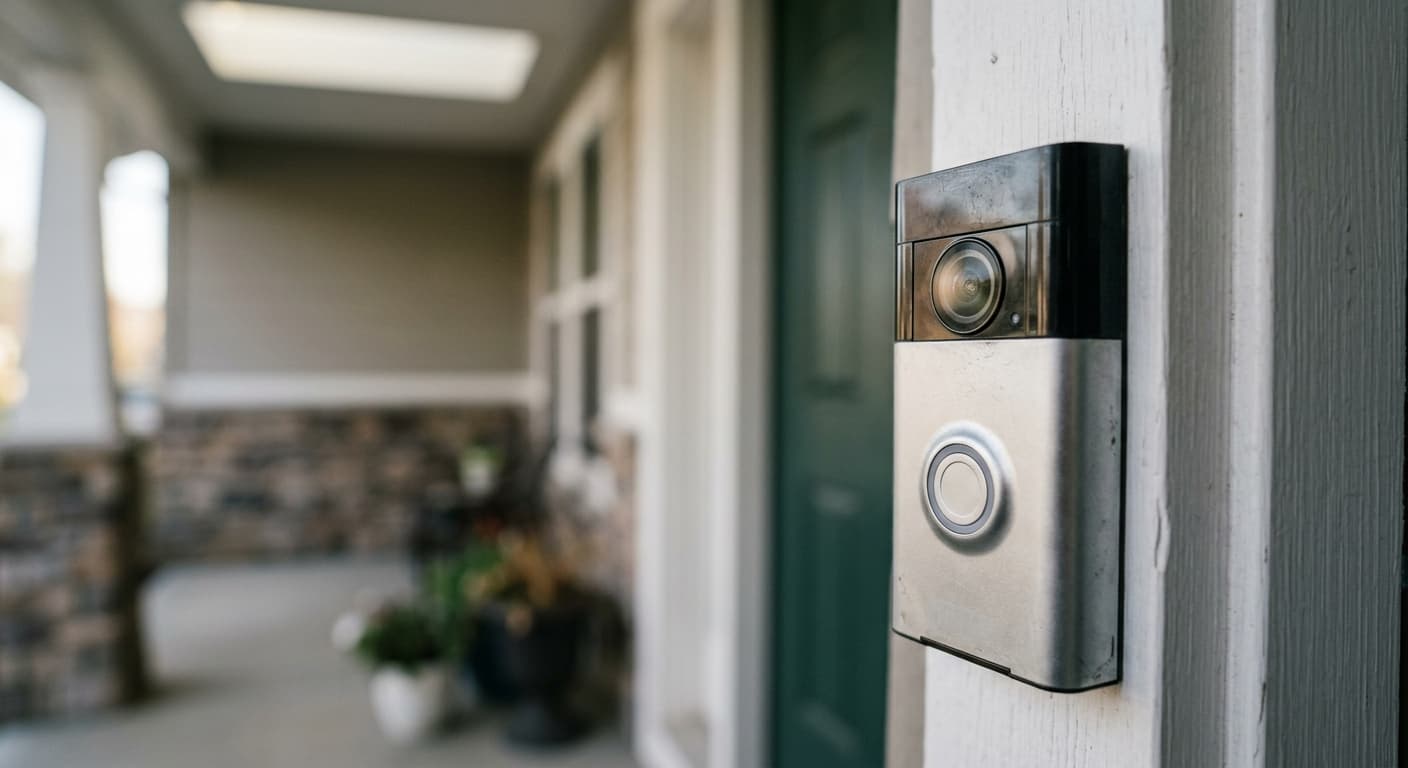
Doorbell Cameras (Ring, Nest, Arlo)
Doorbell cameras with audio recording capability present a significant legal issue in Maryland. These devices routinely capture conversations between visitors, delivery workers, neighbors, and passersby without obtaining consent.
Current legal status: Under the strict letter of Maryland law, a Ring doorbell camera that records audio of a visitor's conversation could violate ss 10-402 because the visitor did not consent to the audio recording. As a practical matter, Maryland prosecutors have not widely charged homeowners for using standard doorbell cameras, but the legal risk exists.
Steps to reduce legal risk:
- Disable the audio recording feature if your camera offers that option
- Post visible signage near the camera stating "Audio and video recording in progress"
- Understand that signage alone may not satisfy Maryland's explicit consent requirement
- Consider configuring your camera to record video only
Indoor Home Cameras
Homeowners can place security cameras inside their own homes with some restrictions:
Permitted locations:
- Living rooms, family rooms, and common areas
- Kitchens and dining areas
- Garages and basements
- Entryways and hallways
Prohibited locations:
- Bathrooms (violates ss 3-903, which bars a camera placed to secretly observe someone inside a private residence)
- Guest bedrooms where visitors sleep
- Any area where a guest, tenant, or household member has a reasonable expectation of visual privacy
Audio considerations: Indoor cameras that capture audio of conversations between household members, guests, or service workers (housekeepers, babysitters, contractors) trigger the all-party consent requirement. Inform everyone in your home that cameras are present and that audio is being recorded.
Outdoor Residential Cameras
Cameras on the exterior of your home that point toward your own property are generally permissible. However:
- Cameras that capture your neighbor's private areas (windows, backyards, patios) may create liability
- Audio capture of conversations occurring on neighboring properties or public sidewalks raises wiretapping concerns
- Local zoning ordinances or HOA rules may restrict camera placement
Business Security Cameras
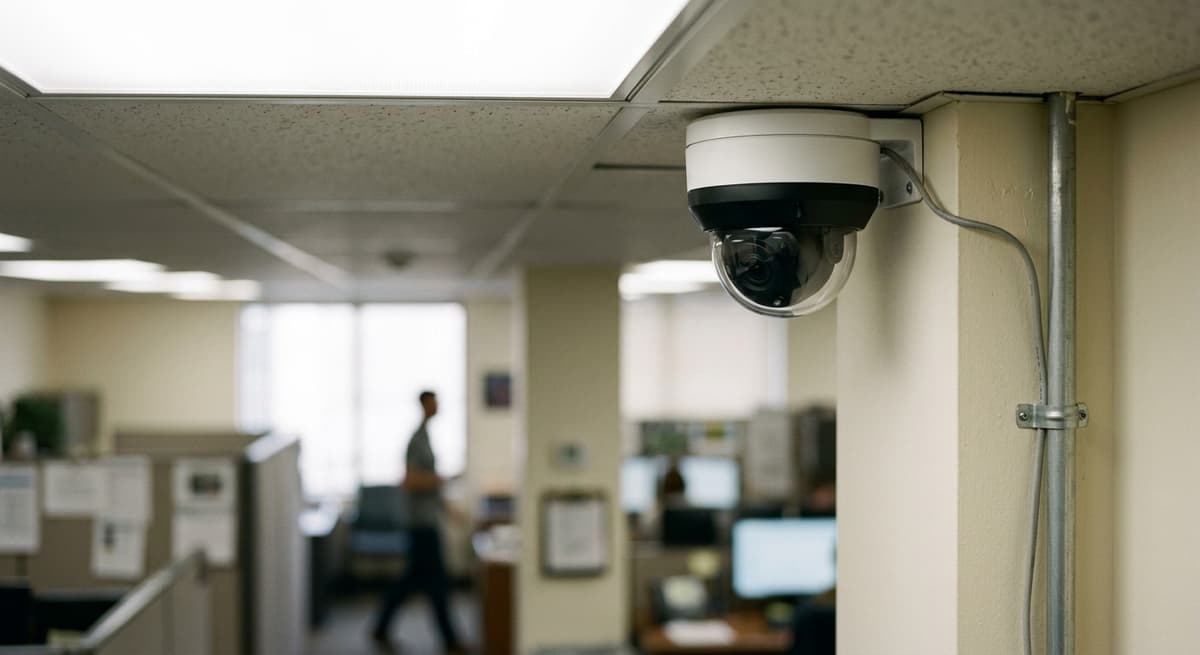
Retail and Commercial Properties
Maryland businesses commonly use security cameras for loss prevention, employee safety, and general security. Legal requirements include:
Employee notification: Businesses should inform employees about the presence and locations of security cameras. While Maryland does not have a specific workplace surveillance notification statute, failure to notify can create liability issues.
Customer notification: Posting visible signage informing customers that video surveillance is in progress is a best practice. Signs reading "Premises under video surveillance" or similar language help establish that customers have been informed.
Audio restriction: Business security cameras that capture audio of customer conversations must comply with ss 10-402. Most businesses disable the audio feature on their security systems to avoid wiretapping liability.
Private area prohibition: Cameras must never be placed in customer restrooms, fitting rooms, or other areas where customers have a reasonable expectation of privacy. Maryland's private-residence camera statute (Criminal Law ss 3-903) does not reach a business; a hidden camera in one of these spaces instead risks a Criminal Law ss 3-902 charge, which applies only if the camera was placed with prurient intent. Businesses avoid these areas regardless, since a camera capturing customers or employees in states of undress creates serious civil liability and reputational risk even without a criminal charge.
Specific Business Types
Retail stores: Cameras can be placed throughout sales floors, near cash registers, and at entrances and exits. Fitting room cameras are strictly prohibited.
Restaurants and bars: Cameras in dining areas and bar areas are generally permitted. Cameras in restrooms or employee changing areas are prohibited.
Office buildings: Cameras in lobbies, hallways, parking garages, and common areas are standard. Cameras in private offices should be disclosed to the occupant.
Warehouses and industrial facilities: Cameras throughout work areas are common and generally permissible with employee notice.
HOA and Community Security Camera Rules

HOA Authority
Homeowners associations in Maryland can adopt rules regarding security cameras within their communities. Common HOA camera rules address:
- Placement restrictions: HOAs may require cameras to be mounted at specific heights or locations
- Aesthetics: Rules about camera visibility, color, and size
- Direction: Requirements that cameras point toward the owner's property rather than neighboring homes
- Common area cameras: HOAs may install cameras in community common areas
- Approval requirements: Some HOAs require architectural review before installing exterior cameras
Challenging HOA Camera Rules
Maryland homeowners who disagree with their HOA's camera restrictions can:
- Review the HOA's declaration of covenants and bylaws for the specific authority governing cameras
- Attend HOA meetings and propose rule changes
- Consult with an attorney about whether the restrictions are enforceable
- File a complaint with the Maryland Attorney General's office if the HOA acts unlawfully
Security Camera Footage as Evidence
Admissibility in Court
Security camera footage can be used as evidence in Maryland courts if:
- The video component was recorded in a location where recording is permitted
- The audio component (if any) was recorded with proper consent under ss 10-402
- The footage is authenticated (someone testifies that it accurately depicts the events)
- The footage is relevant to the case
- The footage was preserved through a proper chain of custody
Audio Exclusion
If security camera footage includes audio recorded without consent, a Maryland court will suppress the audio under ss 10-405. The court may:
- Exclude the entire recording
- Admit only the visual component with the audio stripped
- Determine admissibility based on the specific circumstances
Retention Requirements
Maryland does not have a blanket statute requiring businesses to retain security camera footage for a specific period. However:
- Some industries have regulatory retention requirements
- Local jurisdictions may have their own retention rules
- Once footage becomes relevant to litigation or a government investigation, a duty to preserve arises
- Best practice for businesses is to retain footage for at least 30 to 90 days
Proposed Legislative Changes
SB 61 (2025): Home Security Camera Exception
SB 61 (2025) proposed creating a specific exception to the wiretapping statute for home security cameras. The bill would have allowed a person to use an electronic device on their own property to record oral communications for security purposes.
This bill directly addressed the tension between Maryland's 1977 wiretapping statute and modern home security technology. The proposal recognized that millions of Maryland residents use doorbell cameras and home security systems that routinely capture audio.
Current Status
As of May 2026, no home security camera exception has been enacted into law. SB 61 (2025) died when the 2025 session adjourned sine die on April 7, 2025. A separate set of 2026-session bills, SB 661, HB 802, HB 132, and HB 688 (a broader bill that would have reclassified the entire wiretapping offense from a felony to a misdemeanor statewide and passed the House 96-36 before stalling in the Senate), failed at the 2026 session's April 13, 2026 sine die adjournment. The all-party consent requirement under ss 10-402 continues to apply to security cameras that capture audio. Homeowners using audio-enabled security cameras operate in a legal gray area where the letter of the law conflicts with widespread common practice.
SB 661 / HB 802 (2026)
SB 661 (2026) and HB 802 (2026) are companion bills that would allow intercepted communications to be received as evidence in criminal proceedings. Both bills failed at the April 13, 2026 sine die adjournment. They did not change how security camera footage is treated in court. Audio captured without consent remains inadmissible under ss 10-405.
Local Ordinances
Maryland municipalities may have additional rules governing security cameras:
- Baltimore City has used public surveillance cameras extensively through its CitiWatch program and may have specific ordinances affecting private camera placement
- Montgomery County and Prince George's County may have zoning or permitting requirements for certain types of surveillance systems
- Annapolis and other historic districts may restrict visible camera installations for aesthetic reasons
Check with your local government before installing a security camera system to ensure compliance with all applicable rules.
Practical Recommendations
For Homeowners
- Use cameras with the option to disable audio recording and disable it
- Post visible signs near cameras indicating that recording is in progress
- Point cameras toward your own property, not your neighbors' private areas
- Check your HOA rules before installing exterior cameras
- Monitor proposed legislation for changes to the security camera rules
For Businesses
- Disable audio on all security cameras unless you have a system to obtain consent
- Post signage notifying customers and employees of video surveillance
- Never place cameras in restrooms, fitting rooms, or private areas
- Include surveillance policies in employee handbooks
- Establish footage retention policies and train staff on proper handling
For Property Managers
- Disclose all camera locations to tenants in the lease agreement
- Install cameras only in common areas, not inside individual units
- Disable audio recording on all cameras
- Provide tenants with access to footage of their own unit's entrance when needed
- Post visible notices in all areas under surveillance
More Maryland Recording Laws
Audio Recording | Video Recording | Voyeurism & Hidden Cameras | Workplace Recording | Recording Police | Phone Call Recording | Security Cameras | Recording in Public | Landlord-Tenant | Dashcam Laws | Schools | Medical Recording
Back to Maryland Recording Laws
More Maryland Recording Topics
See Also
- Maryland Surveillance Camera Laws covers home, HOA, neighbor, workplace, and landlord camera rules in Maryland.
More Maryland Laws
Frequently Asked Questions
Are Ring doorbell cameras legal in Maryland?
Ring cameras that record video only are generally legal. However, Ring cameras that record audio may violate Maryland's wiretapping statute (ss 10-402) because visitors do not consent to audio recording. Proposed legislation (SB 61, 2025) would create an exception for home security cameras, but as of March 2026, no such exception exists. The safest approach is to disable audio recording.
Do I need to post signs for security cameras in Maryland?
Maryland does not have a blanket requirement to post signage for silent video security cameras. However, posting signs is strongly recommended as a best practice. If your cameras record audio, signage alone will not satisfy the all-party consent requirement under ss 10-402, but it helps establish that visitors were on notice.
Can my neighbor point a security camera at my house in Maryland?
A neighbor's camera that captures the exterior of your home from a public vantage point may not violate Maryland law if it records silent video. However, a camera that captures audio of your private conversations could violate the wiretapping statute. Cameras that peer into private areas of your home (through windows, into your backyard) may violate privacy laws. Consult an attorney if this is happening.
Can security camera footage be used in court in Maryland?
Silent video footage from security cameras can generally be used as evidence if it is properly authenticated and relevant. However, audio recorded without consent is inadmissible under ss 10-405. A court may exclude the entire recording or admit only the video portion with the audio stripped out, depending on the circumstances.
Can a business record audio with security cameras in Maryland?
Only with the consent of all parties whose conversations are captured. Since obtaining consent from every person who enters a business is impractical, most Maryland businesses disable the audio feature on their security cameras. Recording audio without consent is a felony under ss 10-402 and exposes the business to both criminal and civil liability.
Updates
Corrected SB 61 (2025), a proposed home-security-camera exception, which had been misdated as failing alongside 2026 bills; it actually died a year earlier when the 2025 session ended. Clarified that HB 688 was a broader bill to reclassify the entire wiretapping offense from a felony to a misdemeanor, not a camera-specific proposal. Fixed a broken statute link for the hidden-camera law.
Independently fact-checked against the cited primary sources; governing law re-checked for recent changes
Corrected a statute misattribution: the page applied Criminal Law 3-903 to 'homes and businesses' undifferentiated. Section 3-903 only bars cameras placed to secretly observe someone inside a private residence. Business restrooms/changing rooms are instead governed by section 3-902, which requires prurient intent. Fixed 5 passages (intro, KeyTakeaways, Location rule, home-camera bullet, business private-area rule) and a broken statute-link URL parameter.
Governing law re-checked for recent changes
Governing law re-checked for recent changes
Reviewed and approved by an editor
The Law Behind This Article
This article rests on the statutory provisions below, held in our own legal record and retrieved from the official source. Tap a section to read the operative text.
Maryland Code, Courts and Judicial Proceedings Article
§ 10-402In forcecited in 26 of our articles
§10–402. (a) Except as otherwise specifically provided in this subtitle it is unlawful for any person to: (1) Willfully intercept, endeavor to intercept, or procure any other person to intercept or endeavor to intercept, any wire, oral, or electronic communication; (2) Willfully disclose, or endeavor to disclose, to any other person the contents of any wire, oral, or electronic communication, knowing or having reason to know that the information was obtained through the interception of a wire, oral, or electronic communication in violation of this subtitle; or (3) Willfully use, or endeavor to use, the contents of any wire, oral, or electronic communication, knowing or having reason to know that the information was obtained through the interception of a wire, oral, or electronic communication in violation of this subtitle. (b) Any person who violates subsection (a) of this section is guilty of a felony and is subject to imprisonment for not more than 5 years or a fine of not more than $10,000, or both.
Official text (excerpt) · last checked 2026-08-31 · Read the full text in our law library · Verify at mgaleg.maryland.gov
Cited in 12 court opinions in our collectionLatest citing opinion in our collection: 2026
In the courts (editorial summary, independently checked):Applying section 10-402, Fearnow v. Chesapeake & Potomac Telephone Co. (1995) held that liability under the Maryland Wiretap Act requires proof the defendant acted willfully, an intentional violation or reckless disregard of a known legal duty; an employee's failure to check for a court order was only a jury factor on willfulness.
Opinions citing this section in our collection:
- Fearnow v. Chesapeake & Potomac Telephone Co. (Court of Special Appeals of Maryland 1995, 104 Md. App. 1)✓Police hid a tape recorder on an officer's headquarters phone line with a phone company employee's help and no court order; the court held a section 10-402(a) claim requires proof of willful interception, and failing to ask about a court order went only to willfulness.
- Maryland Attorney General Opinion 110OAG60 (Maryland Attorney General Reports 2025)“…or wire communications without the consent of all parties. Md. Code Ann., Cts. & Jud. Proc. § 10-402(a). However, the Wiretap Act contains e…”
- Boehner, John A. v. McDermott, James A. (Court of Appeals for the D.C. Circuit 1999, 191 F.3d 463)“…1992); Me.Rev.Stat. Ann. tit. 15, §§ 710, 711 (West 1998); Md.Code Ann., Cts & Jud. Proc. § 10-402 (1998); Mass. Gen. Laws Ann. ch. 272,…”
Identified automatically from the court opinions citing this section — not a ranking of which case controls.
Also relied on in: US Recording Laws by State (2026): All 50 States Explained, Is Plaud HIPAA Compliant? Kind Of. Here's What to Know (2026), Maryland Audio Recording Laws: Two-Party Consent Rules and Penalties (2026)
§ 10-405In forcecited in 8 of our articles
§10–405. (a) Except as provided in subsection (b) of this section, whenever any wire, oral, or electronic communication has been intercepted, no part of the contents of the communication and no evidence derived therefrom may be received in evidence in any trial, hearing, or other proceeding in or before any court, grand jury, department, officer, agency, regulatory body, legislative committee, or other authority of this State, or a political subdivision thereof if the disclosure of that information would be in violation of this subtitle.
Official text (excerpt) · last checked 2026-07-29 · Read the full text in our law library · Verify at mgaleg.maryland.gov
Cited in 1 court opinions in our collectionLatest citing opinion in our collection: 2013
Opinions citing this section in our collection:
- King v. State (Court of Appeals of Maryland 2013, 434 Md. 472)“…that information would be in violation of this subtitle. Md.Code Ann., Cts. & Jud. Proc. § 10-405(a) (1957, 2013 Repl. Vol.).…”
Identified automatically from the court opinions citing this section — not a ranking of which case controls.
Also relied on in: Maryland Dashcam Laws: Legality, Audio Rules, and Evidence Use (2026), Maryland Landlord-Tenant Recording Laws: Cameras, Audio, and Privacy (2026), Maryland Phone Call Recording Laws: Consent Rules for Calls (2026)
Maryland Code, Criminal Law Article
§ 3-903In forcecited in 9 of our articles
§3–903. (a) In this section, “camera” includes any electronic device that can be used surreptitiously to observe an individual. (b) This section does not apply to: (1) an adult resident of the private residence where a camera is placed; (2) a person who places or procures another to place a camera on real property without the intent to conduct deliberate surreptitious observation of an individual inside the private residence; (3) a person who has obtained the consent of an adult resident, or the adult resident’s legal guardian, to place a camera on real property to conduct deliberate surreptitious observation of an individual inside the private residence; (4) any otherwise lawful observation with a camera conducted by a law enforcement officer while performing official duties; (5) filming conducted by a person by or for the print or broadcast media through use of a camera that is not secreted from view; (6) any part of a private residence used for business purposes, including any part of a private residence used as a family child care home for the care and custody of a child; (7) filming of a private residence by a person through use of a camera that is not located on the…
Official text (excerpt) · last checked 2026-07-29 · Read the full text in our law library · Verify at mgaleg.maryland.gov
Cited in 1 court opinions in our collectionLatest citing opinion in our collection: 2021
Opinions citing this section in our collection:
- Lancaster v. Baltimore County Maryland (District Court, D. Maryland 2021)“…t VII); and Violation of Maryland Camera Surveillance Act, Md. Code Ann., Crim. Law § 3-903 (Count VIII). (Am. Compl. ¶¶ 231–46).…”
Identified automatically from the court opinions citing this section — not a ranking of which case controls.
Also relied on in: Maryland Video Recording Laws: Surveillance Rules and Privacy Limits (2026), Maryland Smart Glasses Recording Laws 2026, Maryland Surveillance Camera Laws: What You Need to Know (2026)
Search our full record of US law — 2.1 million sections, every state + federal →
Sources and References
- Md. Code, Cts. & Jud. Proc. ss 10-402 - Interception of Communications(mgaleg.maryland.gov).gov
- Md. Code, Cts. & Jud. Proc. ss 10-405 - Suppression of Evidence(mgaleg.maryland.gov).gov
- Maryland Criminal Law ss 3-903 - Camera Surveillance in Private Places(mgaleg.maryland.gov).gov
- SB 61 (2025) - Home Security Camera Exception Proposal(mgaleg.maryland.gov).gov
- SB 661 (2026) - Intercepted Communications Admissibility(mgaleg.maryland.gov).gov
- HB 802 (2026) - Wiretapping and Electronic Surveillance(mgaleg.maryland.gov).gov