
South Carolina
South Carolina Dashcam Laws: Mounting Rules, Audio Recording, and Evidence (2026)
Independently fact-checked against primary sources (last audited August 15, 2026). · Reviewed by the RecordingLaw editorial team. · Law checked current as of August 15, 2026. · 4 primary sources cited on this page. How we verify our legal content
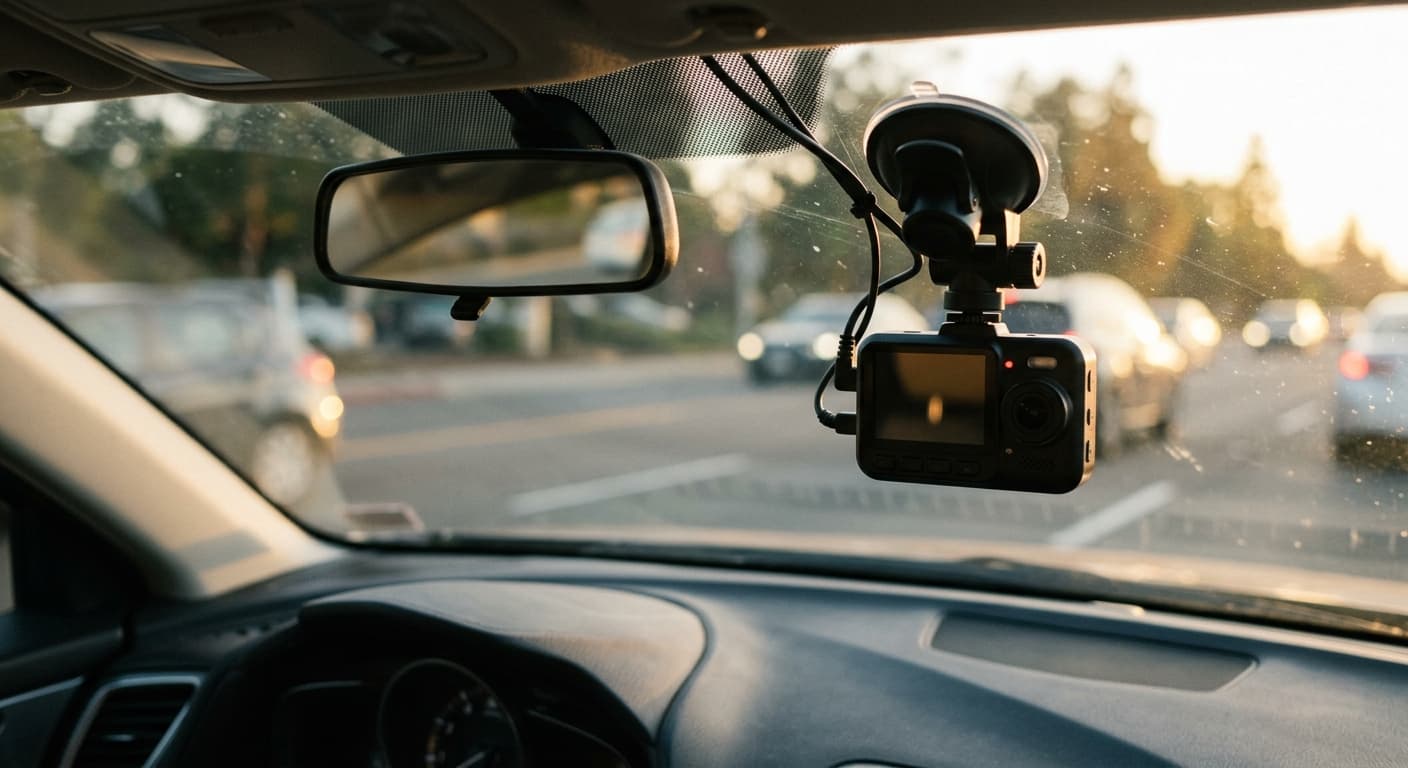
Dashcams are legal in South Carolina and no state law prohibits their use. Video on public roads is permissible, and audio recording inside your vehicle follows one-party consent under S.C. Code Ann. 17-30-30, so your presence as the driver satisfies the consent requirement. Mount the camera where it does not obstruct your view.
Dashcams are legal and widely used in South Carolina. The state has no specific dashcam statute, so their use is governed by traffic safety laws, the one-party consent wiretapping statute (S.C. Code Ann. 17-30-30), and federal regulations.
Are Dashcams Legal in South Carolina?
Yes. South Carolina does not prohibit dashcam use. No registration or notification is required.
Windshield Mounting
South Carolina law (S.C. Code Ann. 56-5-5000) addresses windshield obstructions. Mount your dashcam behind the rearview mirror or in a corner where it does not block visibility.
Audio Recording and Consent
One-Party Consent
South Carolina is a one-party consent state under S.C. Code Ann. 17-30-30. Your presence in the vehicle satisfies consent for audio recording. You can record passenger conversations and traffic stop audio without informing anyone.
Unattended Recording
If your dashcam runs while you are absent, you are no longer a party to captured conversations. Disable the microphone for parking mode.
Dashcam Footage as Evidence
Modified Comparative Fault
South Carolina follows a modified comparative fault system: under case law from the South Carolina Supreme Court (Nelson v. Concrete Supply Co., 303 S.C. 243 (1991)), a plaintiff cannot recover if their own fault is 51% or more. S.C. Code Ann. 15-38-15 is a related statute, but it governs how fault is apportioned among multiple defendants, not the plaintiff's own-fault bar. Dashcam footage is critical for fault determination.
Admissibility
Footage is admissible in South Carolina courts when authenticated under the SC Rules of Evidence as genuine, unaltered, and relevant.
Commercial Use

Fleet operators use dashcams for safety and FMCSA compliance. Rideshare drivers can use dashcams with one-party consent.
Law Enforcement
You have a First Amendment right to record police during traffic stops. Your dashcam can continue recording.
Penalties
| Violation | Statute | Penalty |
|---|---|---|
| Windshield obstruction | S.C. Code 56-5-5000 | Traffic citation |
| Audio recording without consent | S.C. Code 17-30-50 | Felony: up to 5 years, $5,000 fine |
Civil damages under S.C. Code Ann. 17-30-135 include $500/day or $25,000 minimum, plus punitive damages.
More South Carolina Recording Topics
More South Carolina Recording Laws
- South Carolina Audio Recording Laws
- South Carolina Video Recording Laws
- South Carolina Laws on Recording Police
More South Carolina Laws
Frequently Asked Questions
Do I need to tell passengers my dashcam records audio in South Carolina?
No. South Carolina one-party consent (S.C. Code 17-30-30) allows recording when you are a party.
Can dashcam footage be used in SC courts?
Yes. Footage is admissible when authenticated as genuine and relevant.
Where should I mount my dashcam?
Behind the rearview mirror or in a corner. S.C. Code 56-5-5000 restricts windshield obstructions.
Can my dashcam record while parked?
Video is fine. Audio when absent could violate wiretapping law. Disable the microphone.
Can police order me to turn off my dashcam?
No. The First Amendment protects recording police in public.
Updates
Corrected the windshield-mounting citation: the statute governing windshield obstructions is S.C. Code Ann. 56-5-5000, not the non-existent section previously cited. Also corrected the 51% comparative-fault rule's source: it comes from South Carolina case law (Nelson v. Concrete Supply Co.), not S.C. Code Ann. 15-38-15, which addresses fault apportionment among defendants.
Independently fact-checked against the cited primary sources; governing law re-checked for recent changes
Corrected the felony-penalty citation in the penalties table from S.C. Code 17-30-20 to S.C. Code 17-30-50. Section 17-30-20 is South Carolina's 'prohibited acts' section (it declares interception a felony but does not itself state the penalty); the actual 5-year/$5,000 felony penalty is set out in section 17-30-50.
Governing law re-checked for recent changes
Reviewed and approved by an editor
The Law Behind This Article
This article rests on the statutory provisions below, held in our own legal record and retrieved from the official source. Tap a section to read the operative text.
South Carolina Code of Laws, Title 17: CRIMINAL PROCEDURES
§ 17-30-30Interception by employee of Federal Communications Commission, by person acting under color or law, and when party has given prior consentIn forcecited in 16 of our articles
(A) It is lawful under this chapter for an officer, employee, or agent of the Federal Communications Commission, in the normal course of his employment and in discharge of the monitoring responsibilities exercised by the commission in the enforcement of 47 U.S.C. Chapter 5, to intercept a wire, oral, or electronic communication transmitted by radio or to disclose or use the information thereby obtained. (B) It is lawful under this chapter for a person acting under color of law to intercept a wire, oral, or electronic communication, where the person is a party to the communication or one of the parties to the communication has given prior consent to the interception. (C) It is lawful under this chapter for a person not acting under color of law to intercept a wire, oral, or electronic communication where the person is a party to the communication or where one of the parties to the communication has given prior consent to the interception.
Official text (excerpt) · last checked 2026-08-31 · Read the full text in our law library · Verify at scstatehouse.gov
Cited in 1 court opinions in our collectionLatest citing opinion in our collection: 2025
Opinions citing this section in our collection:
- McNeely (District Court, D. South Carolina 2025)“…a showing. The South Carolina statute cited by Plaintiff—S.C. Code § 17-30-30—provides “it is lawful . . . for a per…”
Identified automatically from the court opinions citing this section — not a ranking of which case controls.
Also relied on in: South Carolina AI Meeting Recording Laws (2026), South Carolina Smart Glasses Recording Laws 2026, South Carolina Recording Laws (2026): One-Party Consent Rules
South Carolina Code of Laws, Title 56: MOTOR VEHICLES
§ 56-5-5000Windows unobstructed; windshield wipersIn forcecited in 2 of our articles
No person shall drive any motor vehicle with any sign, poster or other nontransparent material upon the front windshield, sidewings or side or rear windows of such vehicle which obstructs the driver's clear view of the highway or any intersecting highway. The windshield on every motor vehicle shall be equipped with a device for cleaning rain, snow or other moisture from the windshield, which shall be so constructed as to be controlled or operated by the driver of the vehicle. Every windshield wiper upon a motor vehicle shall be maintained in good working order.
Official text (excerpt) · last checked 2026-09-08 · Read the full text in our law library · Verify at scstatehouse.gov
Also relied on in: South Carolina Windshield Mounting Laws (2026 Guide)
Search our full record of US law — 2.1 million sections, every state + federal →
Sources and References
- S.C. Code Ann. 17-30-30 - One-Party Consent Exception(scstatehouse.gov).gov
- S.C. Code Ann. 56-5-5000 - Windows Unobstructed; Windshield Wipers(scstatehouse.gov).gov
- FMCSA(fmcsa.dot.gov).gov
- NHTSA(nhtsa.gov).gov