Texas Security Camera Laws: Residential, Commercial, and Privacy Rules
Independently fact-checked against primary sources (last audited August 15, 2026). · Reviewed by the RecordingLaw editorial team. · Law checked current as of August 15, 2026. · 7 primary sources cited on this page. How we verify our legal content
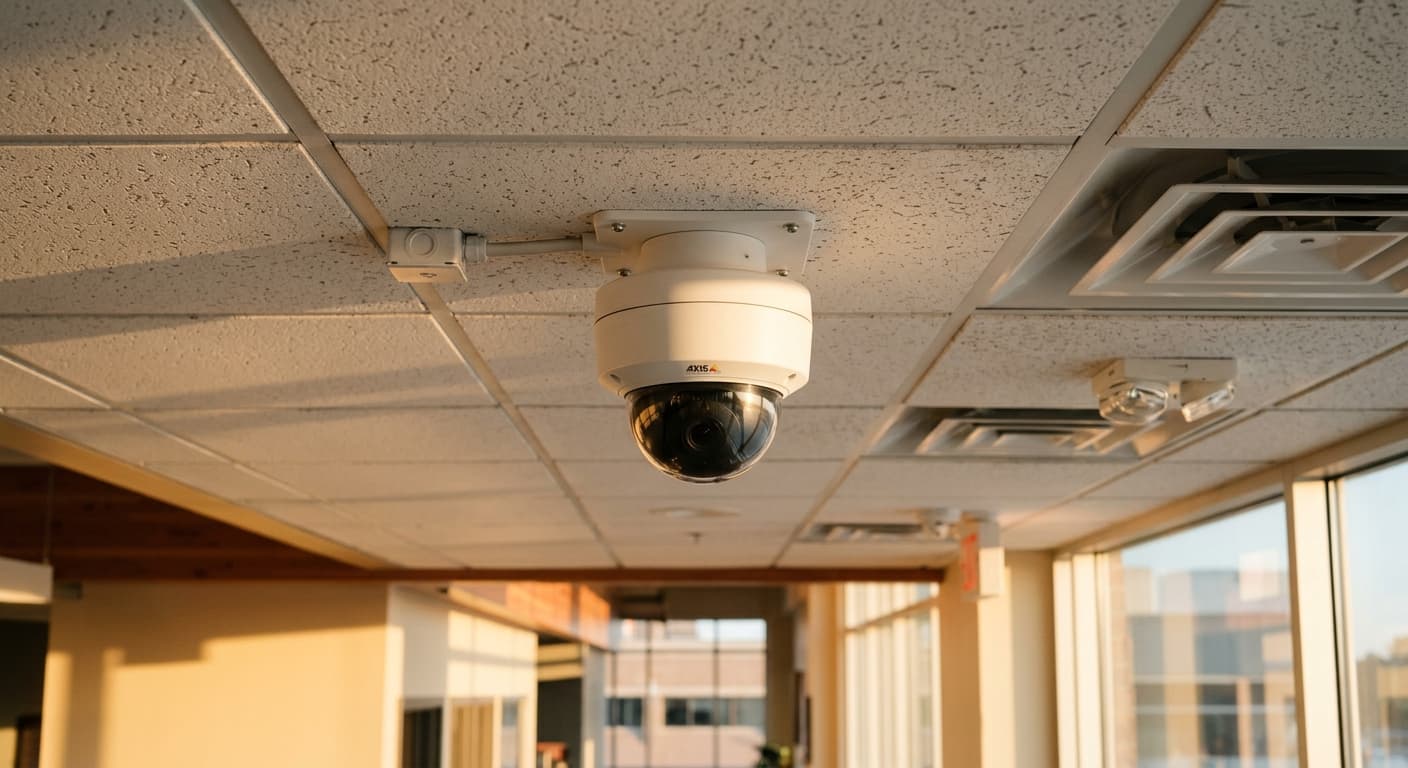
Texas law permits security cameras on residential and commercial property for security purposes. Audio recording by those cameras follows one-party consent under Tex. Penal Code Section 16.02, and cameras deliberately aimed to invade privacy are barred from bathrooms, changing rooms, and other private spaces under the invasive visual recording statute, Tex. Penal Code Section 21.15.
Overview of Texas Security Camera Laws
Texas does not have a single comprehensive security camera statute. Instead, the legality of security camera use depends on a combination of privacy laws, wiretapping statutes, property regulations, and licensing requirements. The general principle is straightforward: cameras are legal in areas where people do not have a reasonable expectation of privacy and prohibited in areas where they do.
For the broader context of recording law in the state, see the main Texas recording laws page. The Texas State Law Library maintains a guide specifically addressing security camera issues in the context of neighbor relations.
Residential Security Cameras
What Homeowners Can Record
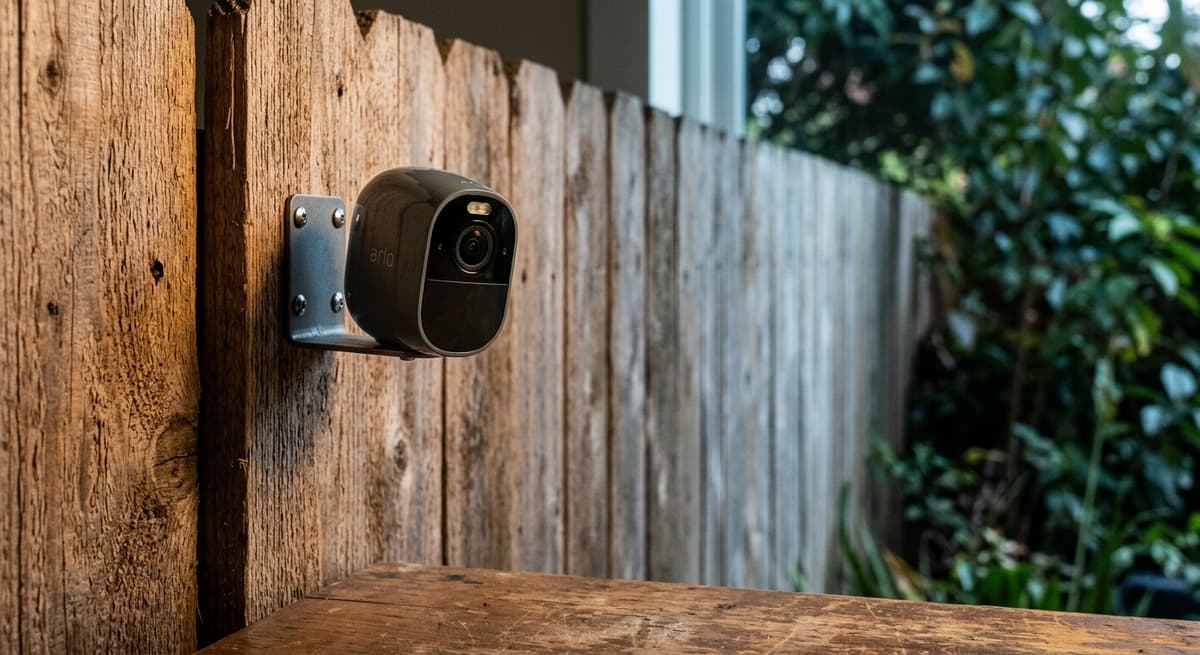
Texas homeowners have broad rights to install security cameras on their own property. Permissible camera placement includes:
- Front doors and entryways
- Driveways and garages
- Backyards and side yards
- Front porches and patios
- Interior common areas of the home
- Perimeter fencing and gates
Doorbell cameras (Ring, Nest, Arlo) are legal and increasingly common in Texas. These devices typically capture video and audio of the area immediately surrounding the front door.
Neighbor Privacy Considerations
While homeowners can install cameras on their property, those cameras should not be deliberately aimed at areas where neighbors have a reasonable expectation of privacy. Potentially problematic camera placements include:
- Cameras pointed directly at a neighbor's bedroom or bathroom windows
- Cameras angled to view the interior of a neighbor's fenced backyard
- Cameras positioned to see through a neighbor's open blinds or curtains
- Cameras with zoom capabilities focused on a neighbor's private activities
Wide-angle cameras that incidentally capture a portion of a neighbor's property while primarily monitoring the homeowner's own property are generally acceptable. The distinction lies between incidental capture and intentional surveillance of a neighbor's private spaces.
If a security camera is deliberately aimed to record intimate areas of a neighbor or their private spaces, the camera owner may face both criminal liability under Tex. Penal Code Section 21.15 (invasive visual recording) and civil liability for invasion of privacy.
Doorbell Cameras and Audio
Doorbell cameras that record audio present specific legal considerations under Texas law. Under the one-party consent rule in Tex. Penal Code Section 16.02, audio recording is legal when at least one party to the conversation consents.
When a homeowner uses a doorbell camera to speak with a visitor through the device, the homeowner is a party to the conversation and their consent satisfies the one-party requirement. However, a doorbell camera that passively records audio of conversations between visitors who are speaking to each other (without the homeowner participating) may capture communications without any party's consent.
Practical approaches to minimize legal risk with doorbell camera audio include:
- Posting signage indicating that audio and video recording is in progress
- Disabling audio recording when not actively using the two-way communication feature
- Reviewing HOA rules that may require specific notice for audio-capable cameras
Commercial Security Cameras
Business Surveillance Rights
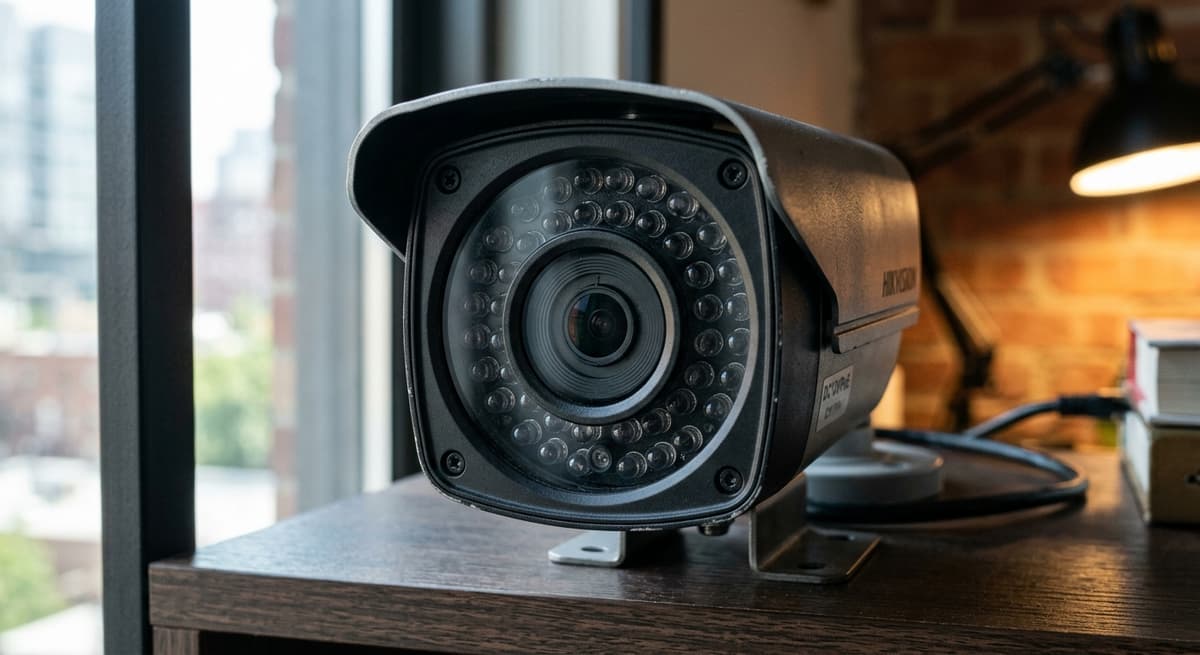
Texas businesses have extensive authority to install security cameras for legitimate purposes, including theft prevention, employee safety, liability protection, and operational monitoring. Standard commercial camera placement includes:
- Retail sales floors and merchandise areas
- Cash registers and point-of-sale locations
- Warehouses and storage facilities
- Loading docks and shipping areas
- Parking lots and building exteriors
- Lobbies, hallways, and common areas
- Office areas and workstations
Prohibited Locations in Commercial Settings
Commercial security cameras are prohibited in any area where individuals have a reasonable expectation of privacy:
- Customer and employee restrooms
- Changing rooms and fitting rooms
- Locker rooms and shower areas
- Private offices during personal activities
- Lactation rooms and medical spaces
Placing cameras in these locations with the intent to invade the privacy of customers or employees violates Tex. Penal Code Section 21.15, a state jail felony carrying 180 days to 2 years in prison and fines up to $10,000. As of September 1, 2025, a conviction for this offense generally requires a 10-year sex offender registration period; lifetime registration applies only if the person has a second reportable conviction of any kind.
Audio Recording in Commercial Settings
When commercial security systems include audio recording capabilities, the one-party consent requirement under Section 16.02 applies. A surveillance system that records audio of conversations between customers or employees, without any consenting party participating, may violate the wiretapping statute.
Businesses that want to record audio through surveillance systems should:
- Provide clear written notice to employees and visitors
- Post signage indicating audio recording is in progress
- Obtain employee acknowledgment through onboarding documents
- Consider disabling audio in areas where employees converse privately
HOA Security Camera Rules
Texas Property Code Protections
Tex. Property Code Section 202.023 provides important protections for homeowners in HOA-governed communities. Under this statute, a property owners' association cannot prohibit a homeowner from installing security measures on their property, including security cameras.
However, the statute does not give HOAs authority over camera appearance or wiring. Section 202.023(c) instead allows an association to:
- Off-property placement: Prohibit installing a security camera anywhere other than the property owner's own private property
- Fencing and gates: Regulate fencing type and placement and require driveway gates to be set back at least 10 feet, independent of any camera rules
Camera appearance requirements (color, size, design) and rules about concealing wiring are not authorized by this statute. Restrictions like those would have to come from a separate restrictive covenant or architectural-control provision, not Section 202.023 itself.
Balancing HOA Authority and Homeowner Rights
While Section 202.023 does not let HOAs ban security cameras outright, it does let an association prohibit installing a camera anywhere other than the owner's own private property, along with separate fencing and driveway-gate rules. Design standards, wiring requirements, or installation-approval processes beyond that would need to come from a covenant or architectural-control provision outside this statute.
Disputes between homeowners and HOAs over security camera installation are common. Homeowners who believe their HOA is imposing restrictions beyond what Section 202.023 or a valid covenant allows can challenge those restrictions.
Licensing Requirements for Security Camera Installation
Texas DPS Private Security Bureau
The Texas Department of Public Safety, Private Security Bureau regulates the security camera installation industry. Under the Texas Occupations Code, businesses and individuals who install, service, or maintain security camera systems for others must hold a valid private security license.
This licensing requirement applies to:
- Professional security system installers
- Companies that sell and install surveillance equipment for clients
- Alarm and monitoring companies
- IT firms that install commercial surveillance networks
- Contractors who include security cameras as part of larger projects
Exemptions from Licensing
The licensing requirement does not apply to:
- Homeowners installing cameras on their own property
- Business owners installing cameras in their own facilities
- Individuals setting up personal security systems
- IT professionals configuring cameras already installed by a licensed company
Penalties for Unlicensed Installation
Operating as an unlicensed security camera installer in Texas can result in administrative penalties, fines, and potential criminal charges. The Private Security Bureau conducts investigations and enforcement actions against unlicensed operators.
Security Camera Data and the TDPSA
Texas Data Privacy and Security Act
The Texas Data Privacy and Security Act (TDPSA), effective July 2024, established new requirements for businesses that process sensitive personal data. Security camera systems that incorporate biometric technology, such as facial recognition or gait analysis, fall under the TDPSA's requirements.
Businesses using biometric-capable surveillance must:
- Obtain affirmative consent before processing biometric data
- Provide clear privacy notices explaining what data is collected and how it is used
- Implement reasonable data security measures
- Honor consumer data rights requests, including deletion requests
CUBI Act Requirements
The Capture or Use of Biometric Identifier Act (Tex. Bus. & Com. Code Section 503.001) imposes additional requirements on entities that collect biometric identifiers through surveillance systems. This includes fingerprints, voiceprints, iris scans, and facial geometry captured by security cameras.
Security Camera Footage as Evidence
Admissibility
Security camera footage is regularly admitted as evidence in Texas courts for both criminal and civil cases. Authentication requirements under Texas Rules of Evidence Rule 901 include demonstrating:
- The camera was functioning properly at the time of recording
- The footage has not been altered or edited
- The date, time, and location stamps are accurate
- A chain of custody has been maintained
Doorbell Camera Evidence
Doorbell camera footage has become increasingly relevant in Texas legal proceedings, including criminal cases, insurance claims, package theft investigations, and custody disputes. Texas courts have accepted properly authenticated doorbell camera footage as evidence.
Retention Considerations
Texas does not impose a mandatory retention period for private security camera footage. However, once a legal proceeding is anticipated or underway, destruction of relevant footage can constitute spoliation of evidence, leading to adverse inferences or sanctions.
More Texas Recording Laws
Audio Recording | Video Recording | Voyeurism & Hidden Cameras | Workplace Recording | Recording Police | Phone Call Recording | Security Cameras | Recording in Public | Landlord-Tenant | Dashcam Laws | Schools | Medical Recording
← Back to Texas Recording Laws
More Texas Recording Topics
See Also
- Texas Surveillance Camera Laws covers home, HOA, neighbor, workplace, and landlord camera rules in Texas.
More Texas Laws
Frequently Asked Questions
Can I install security cameras on my home in Texas?
Yes. Texas homeowners can install security cameras on their own property for legitimate security purposes. Cameras can monitor driveways, porches, yards, and the interior of the home. Under Tex. Property Code Section 202.023, HOAs cannot prohibit security camera installation on the owner's own property, though the statute leaves separate fencing and driveway-gate rules intact.
Can my neighbor point a security camera at my house in Texas?
A neighbor can have cameras that incidentally capture portions of surrounding property. However, cameras deliberately aimed at private spaces like bedroom windows or a fenced backyard may create civil liability for invasion of privacy or criminal liability under Tex. Penal Code Section 21.15 if they capture intimate areas.
Do security cameras in Texas need a license to install?
Professional installation for others requires a license from the Texas DPS Private Security Bureau under the Occupations Code. Homeowners and business owners installing cameras on their own property do not need a license.
Can security cameras record audio in Texas?
Security cameras can record audio, but the one-party consent rule under Tex. Penal Code Section 16.02 applies. At least one participant in a recorded conversation must consent. Passive audio recording of conversations between other people without any party's knowledge may violate the wiretapping statute.
Can security camera footage be used as evidence in Texas?
Yes. Security camera footage is regularly admitted as evidence in Texas courts. The footage must be authenticated under Texas Rules of Evidence Rule 901, showing the camera was functioning properly, the footage is unaltered, and timestamps are accurate. This includes doorbell camera footage from devices like Ring and Nest.
Updates
Corrected an overstated claim that a first Penal Code Section 21.15 conviction requires lifetime sex-offender registration; it is a 10-year registration period, with lifetime registration applying only on a second reportable conviction.
Independently fact-checked against the cited primary sources; governing law re-checked for recent changes
Added the required intent element to the commercial-camera Section 21.15 statement, and corrected the description of HOA authority under Tex. Property Code Section 202.023: the statute lets an HOA restrict off-property camera placement plus fencing/gate rules, not camera appearance or wiring, which the article had incorrectly attributed to it in three places.
Corrected the last two restatements of two earlier-fixed overstatements: the KeyTakeaways HOA bullet still attributed camera-'appearance' authority to Section 202.023 (the statute covers only off-property placement plus fencing/driveway-gate rules), and the intro paragraph omitted Section 21.15's required intent-to-invade-privacy element.
Governing law re-checked for recent changes
Added note on [TAKE IT DOWN Act](/us-laws/take-it-down-act) (S. 146, signed May 19, 2025; platform compliance May 19, 2026) and H.B. 1465 § 21.15 expanded location definition (eff. Sept. 1, 2025). Core recording rules under § 16.02 and relevant primary law unchanged.
Reviewed and approved by an editor
The Law Behind This Article
This article rests on the statutory provisions below, held in our own legal record and retrieved from the official source. Tap a section to read the operative text.
Texas Penal Code
§ 21.15INVASIVE VISUAL RECORDINGIn forcecited in 13 of our articles
(a) In this section: (1) "Female breast" means any portion of the female breast below the top of the areola. (2) "Intimate area" means the naked or clothed genitals, pubic area, anus, buttocks, or female breast of a person. (3) "Changing room" means a room or portioned area provided for or primarily used for the changing of clothing and includes dressing rooms, locker rooms, and swimwear changing areas. (3-a) "Place in which a person has a reasonable expectation of privacy" means a place in which a reasonable person would believe that the person could disrobe in privacy, without being concerned that the act of undressing would be photographed or visually recorded by another or that a visual image of the person undressing would be broadcasted or transmitted by another. The term includes a bathroom, bedroom, and changing room. (4) "Promote" has the meaning assigned by Section 43.21.
Official text (excerpt) · last checked 2026-08-31 · Read the full text in our law library · Verify at statutes.capitol.texas.gov
Cited in 44 court opinions in our collectionLatest citing opinion in our collection: 2025
In the courts (editorial summary, independently checked):The Court of Criminal Appeals struck down the 2007 improper photography provision at Penal Code 21.15(b)(1), and Ex parte Shay (2016) set aside a conviction under it. The Legislature re-enacted the section in 2015, and Ex Parte Kamilah a Hamilton (2020) held the current subsection (b)(1) survives strict scrutiny and is not overbroad.
Opinions citing this section in our collection:
- Ex Parte Nyabwa (Texas Court of Appeals, 14th District (Houston) 2011, 366 S.W.3d 719)✓Charged with improper photography, Nyabwa attacked section 21.15(b)(1) by pretrial habeas; the court of appeals held the 2007 subsection regulated the photographer's intent rather than speech and was neither overbroad nor vague. Ex parte Thompson struck it down in 2014.
- Ex parte Shay (Court of Criminal Appeals of Texas 2016, 507 S.W.3d 731)✓Shay pleaded guilty under section 21.15(b)(1) before Ex parte Thompson struck that subsection down; the Court of Criminal Appeals held his favorable plea bargain did not estop habeas relief, set aside the conviction, and remanded to dismiss the indictment.
- Ex Parte Kamilah a Hamilton (Texas Court of Appeals, 14th District (Houston) 2020)✓Indicted under the 2015 version of section 21.15(b)(1) for broadcasting an image of a complainant's intimate area, Hamilton claimed facial overbreadth; the court held the rewritten subsection survives strict scrutiny, is not overbroad, and affirmed denial of relief.
Identified automatically from the court opinions citing this section — not a ranking of which case controls.
Also relied on in: Texas Landlord-Tenant Recording Laws: Cameras, Privacy, and Rights, Texas Laws on Recording in Public: Rights, Limits, and Exceptions, Texas School Recording Laws: Classrooms, Cameras, and Student Privacy
§ 16.02UNLAWFUL INTERCEPTION, USE, OR DISCLOSURE OF WIRE, ORAL, OR ELECTRONIC COMMUNICATIONSIn forcecited in 17 of our articles
(a) In this section: (1) "Communication common carrier," "computer trespasser," "contents," "covert entry," "electronic communication," "intercept," "interception device," "investigative or law enforcement officer," "oral communication," "protected computer," and "wire communication" have the meanings assigned by Article 18A.001, Code of Criminal Procedure. (2) "Immediate life-threatening situation" and "member of a law enforcement unit specially trained to respond to and deal with life-threatening situations" have the meanings assigned by Article 18A.201, Code of Criminal Procedure.
Official text (excerpt) · last checked 2026-08-31 · Read the full text in our law library · Verify at statutes.capitol.texas.gov
Cited in 39 court opinions in our collectionLatest citing opinion in our collection: 2026
In the courts (editorial summary, independently checked):Texas courts have applied Section 16.02 to contested recordings. Long v. State (2017) held the oral communication definition carries a reasonable expectation of privacy test, sustaining a conviction over a covert locker room recording. Banargent v. State (2007) held a jail inmate impliedly consented, so no Section 16.02 violation.
Opinions citing this section in our collection:
- Banargent v. State (Texas Court of Appeals, 14th District (Houston) 2007, 228 S.W.3d 393)✓Jail phone prompts and posted notices warned that calls could be recorded, and a recorded call captured the defendant admitting he stabbed the victim; the court held he impliedly consented, so the recording did not violate Section 16.02.
- Long v. State (Court of Criminal Appeals of Texas 2017, 535 S.W.3d 511)✓A school board member had her daughter hide a phone in a visiting locker room to record the coach's halftime speech and sent it to the board; the court held Section 16.02's 'oral communication' incorporates the expectation of privacy test, which the coach met.
- Siddiq v. State (Court of Appeals of Texas 2016, 502 S.W.3d 387)✓Police automatically recorded a DWI arrestee's call to his father from the jail book-in desk, capturing him saying he was drunk; the court applied the law enforcement exception to hold the recording did not violate Section 16.02, so admitting it was not error.
Identified automatically from the court opinions citing this section — not a ranking of which case controls.
Also relied on in: Texas Recording Laws (2026): One-Party Consent Rules, One-Party Consent States: Complete 2026 Guide, Texas Dashcam Laws: Legality, Placement Rules, and Evidence Use
Texas Property Code
§ 202.023SECURITY MEASURESIn forcecited in 3 of our articles
(a) This section does not apply to: (1) a condominium as defined by Section 81.002 or 82.003; or (2) a master mixed-use property owners' association subject to Chapter 215. (b) Except as provided by Subsection (c), a property owners' association may not adopt or enforce a restrictive covenant that prevents a property owner from building or installing security measures, including but not limited to a security camera, motion detector, or perimeter fence. (c) This section does not prohibit a property owners' association from: (1) prohibiting the installation of a security camera by a property owner in a place other than the property owner's private property; (2) regulating the type of fencing that a property owner may install; (3) prohibiting the placement of fencing that obstructs: (A) a license area, as defined by a written license agreement or plat; (B) a sidewalk in the public right-of-way or otherwise installed for public or community use; or (C) a drainage easement or drainage area; (4) requiring a driveway gate to be set back at least 10 feet from the right-of-way if the driveway intersects with a laned roadway, as defined by Section 541.302, Transportation Code;…
Official text (excerpt) · last checked 2026-07-28 · Read the full text in our law library · Verify at statutes.capitol.texas.gov
Cited in 2 court opinions in our collectionLatest citing opinion in our collection: 2025
Opinions citing this section in our collection:
- Benjamin J. Corbin and Cindy Nicole Kroth v. the Commons of Lake Houston Property Owners Association, Inc. (Texas Court of Appeals, 14th District (Houston) 2024)“…2) interpreting and applying Property Code section 202.023. Tex. Prop. Code Ann. § 202.023. We affirm the trial court’s order.…”
- WCH Master Community, Inc. v. Thomas Wolf and Eileen Wolf (Texas Court of Appeals, 15th District 2025)“…area, and without the approval of the Association. Texas Property Code §202.023 provides in relevant part, “(b)…”
Identified automatically from the court opinions citing this section — not a ranking of which case controls.
Also relied on in: HOA Security Camera Rules: Can They Make You Remove It?, Texas Surveillance Camera Laws (2026 Guide)
Search our full record of US law — 2.1 million sections, every state + federal →
Sources and References
- Tex. Penal Code Section 21.15(statutes.capitol.texas.gov).gov
- Tex. Penal Code Section 16.02(statutes.capitol.texas.gov).gov
- Tex. Property Code Section 202.023(statutes.capitol.texas.gov).gov
- CUBI Act - Biometric Identifiers(statutes.capitol.texas.gov).gov
- Texas DPS Private Security Bureau(dps.texas.gov).gov
- Texas State Law Library - Security Cameras(guides.sll.texas.gov).gov
- Tex. Occupations Code Chapter 1702(statutes.capitol.texas.gov).gov