
New York
New York Dashcam Laws: Legality, Mounting Rules, and Evidence Use
Independently fact-checked against primary sources (last audited August 15, 2026). · Reviewed by the RecordingLaw editorial team. · Law checked current as of August 15, 2026. · 3 primary sources cited on this page. How we verify our legal content
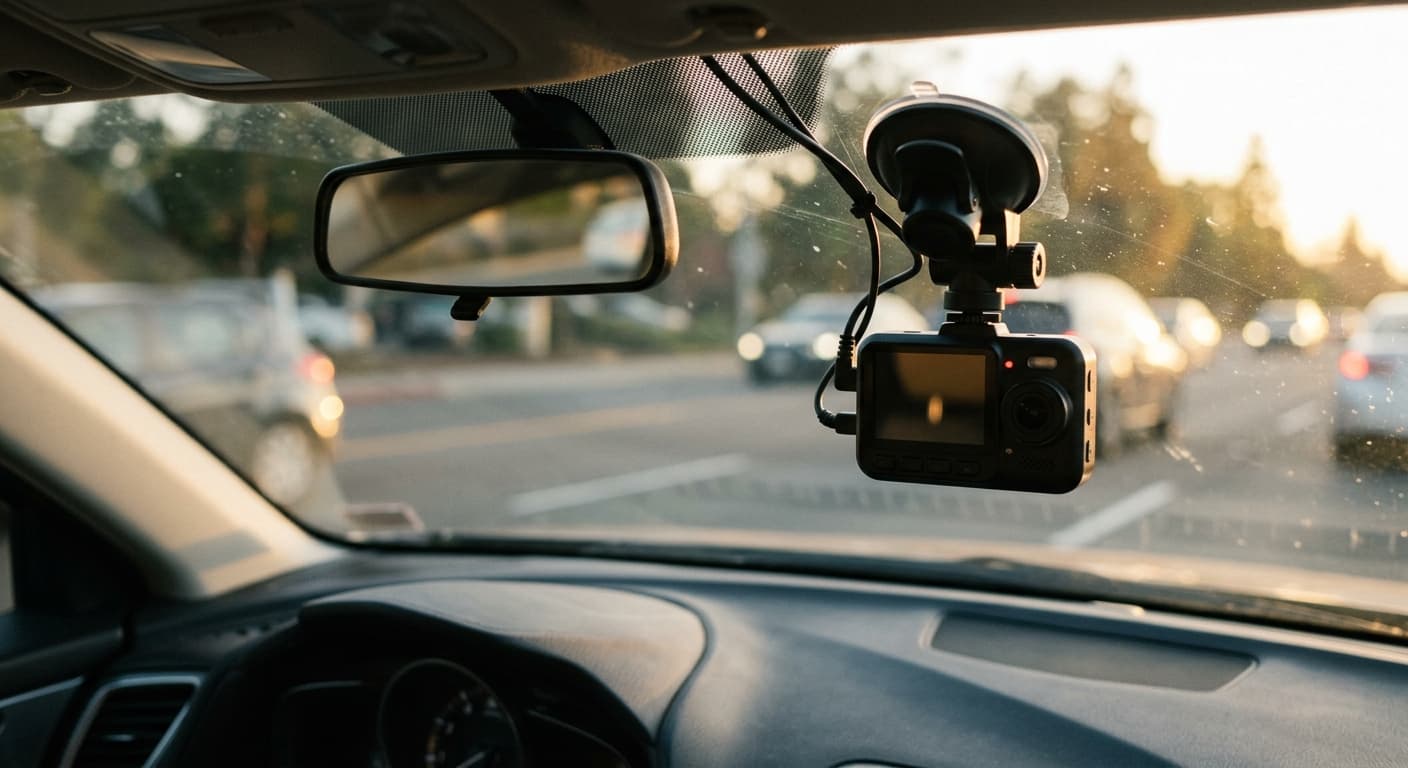
Dashcams are legal in New York. Video recording requires no consent, but mounting must not obstruct the driver's view under Vehicle and Traffic Law Section 375. Audio recording follows one-party consent under N.Y. Penal Law 250.05, so drivers can record conversations inside their own vehicles.
Dashcams are legal in New York. No state statute prohibits the use of dashboard cameras in personal or commercial vehicles. However, New York's Vehicle and Traffic Law Section 375 imposes restrictions on how dashcams and other devices can be mounted to avoid obstructing the driver's view. Audio recording by dashcams follows the state's one-party consent rule under Penal Law 250.05.
This guide covers the specific mounting requirements, audio recording rules, how dashcam footage works as evidence in court, insurance considerations, and special rules for commercial vehicles and ride-share drivers.
Dashcam Mounting Requirements
Vehicle and Traffic Law Section 375(30): Windshield Obstruction
VTL Section 375, subdivision 30 prohibits operating a motor vehicle with any object placed or hung in or upon the vehicle "in such a manner as to obstruct or interfere with the view of the operator through the windshield, or to prevent clear and full view of the road and condition of traffic behind such motor vehicle."
This provision applies to dashcams, GPS units, phone mounts, and any other device affixed to the windshield or dashboard area. A dashcam that blocks a meaningful portion of the driver's forward view could technically violate this provision.
Important Enforcement Limitation
New York law includes a notable enforcement limitation: a summons for a windshield obstruction violation under Section 375(30) can only be issued when there is reasonable cause to believe the driver has committed another violation of state law beyond the obstruction itself. This means police cannot stop you solely because you have a dashcam on your windshield. The obstruction charge can only be added to another traffic stop.
No Current DMV Rulemaking Authority Over Dashcams
New York law does not currently give the DMV Commissioner specific rulemaking authority over dashboard camera size or placement, and VTL Section 375 does not delegate any such authority. Unless and until the legislature enacts a law granting that authority, dashcam mounting is governed only by the general windshield-obstruction rule in VTL 375(30) above.
Best Practices for Mounting
To avoid any windshield obstruction issues:
- Mount the dashcam behind the rearview mirror so it sits in an area that is already partially obstructed by the mirror itself
- Use a small, compact dashcam that minimizes the area of windshield it covers
- Keep the dashcam as close to the top of the windshield as possible to avoid blocking your forward sight line
- Avoid suction-cup mounts that cover large areas of the windshield
- Consider a dashboard-mounted camera that sits on top of the dash rather than on the windshield
- Make sure the dashcam does not interfere with the rearview mirror or block your view of traffic signals and road signs
Audio Recording by Dashcams
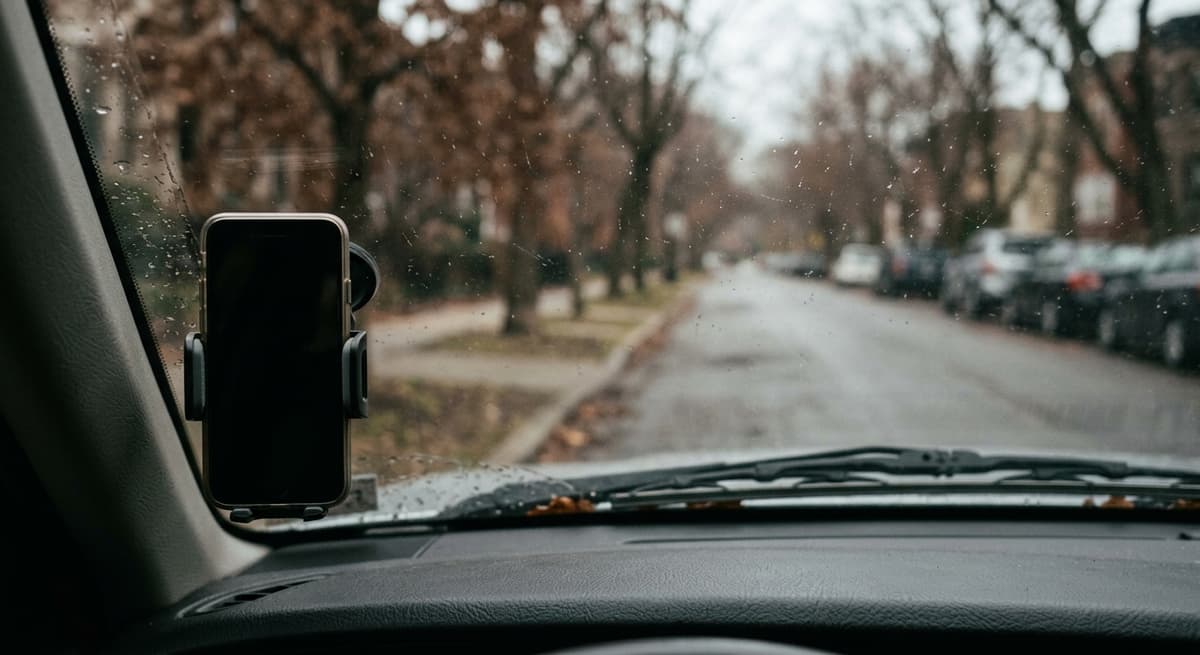
One-Party Consent Inside Your Vehicle
Many dashcams record audio alongside video. Under New York's one-party consent law (Penal Law 250.05), audio recording inside your own vehicle is legal as long as you are a participant in any conversations being captured. As the driver and vehicle owner, you can:
- Record conversations with passengers in your car
- Capture audio during traffic stops (you are a participant in the conversation with the officer)
- Record phone calls taken in the vehicle on speakerphone (as a party to the call)
When Audio Could Be an Issue
Audio recording becomes more legally complex when:
- Passengers in your vehicle have conversations with each other that you are not participating in (though as the driver, you are typically present and could be considered part of the conversation)
- Your dashcam captures conversations of people outside the vehicle (pedestrians, people in adjacent cars) that you are not part of
- You are a ride-share driver and record passengers' private conversations without participating (see ride-share section below)
Disabling Audio as a Precaution
If you want to eliminate any audio recording concerns, most dashcams allow you to disable the microphone and record video only. Video-only recording does not implicate the eavesdropping statutes.
Dashcam Footage as Evidence
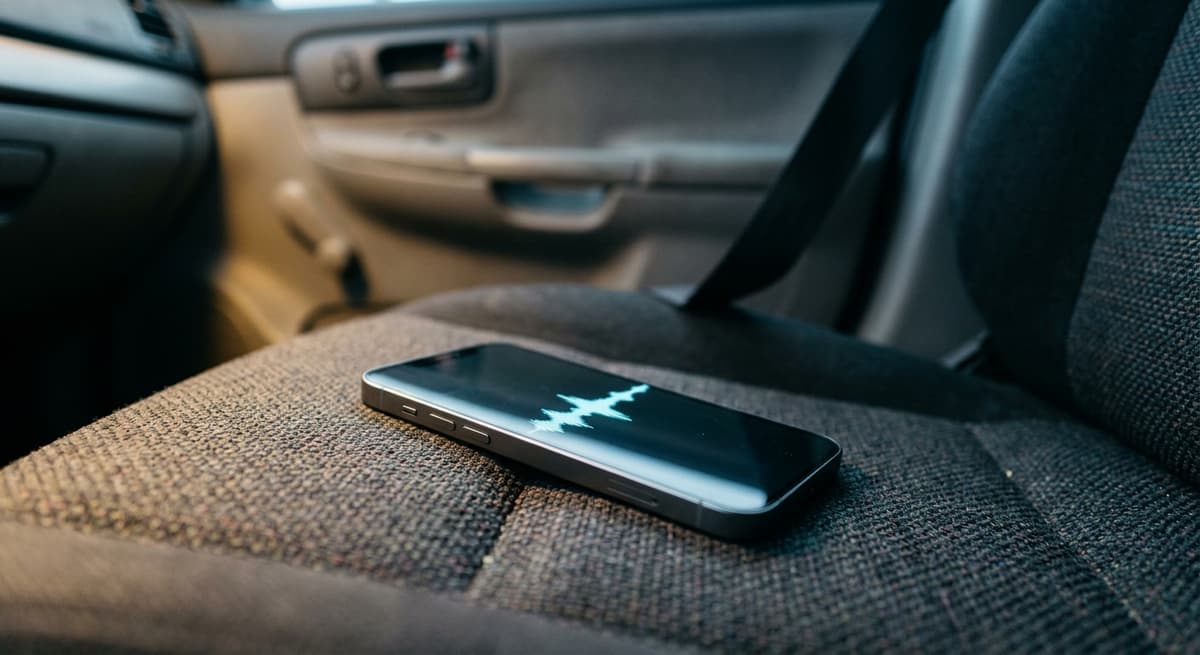
Traffic Accidents
Dashcam footage is one of the most valuable forms of evidence in traffic accident cases. In New York, dashcam video can:
- Prove who ran a red light or stop sign
- Show the speed and direction of vehicles involved in a collision
- Document road conditions, weather, and visibility at the time of the accident
- Capture the actions of other drivers, pedestrians, and cyclists
- Record the immediate aftermath of an accident, including vehicle positions and damage
- Provide time-stamped documentation of when and where the accident occurred
Insurance Claims
Insurance companies in New York regularly accept and consider dashcam footage when evaluating claims. Footage can:
- Speed up the claims process by providing clear evidence of fault
- Protect you from fraudulent claims (staged accidents, exaggerated injuries)
- Support your version of events when the other driver disputes what happened
- Document hit-and-run incidents, capturing the other vehicle's license plate or description
Court Admissibility
Dashcam footage is generally admissible in New York courts if it meets standard evidentiary requirements:
- Authentication: You must testify about the dashcam, its placement, and that the footage has not been altered
- Relevance: The footage must relate to the matter at issue
- Chain of custody: You should preserve the original footage and be able to show it has not been tampered with
- Completeness: Courts may want to see continuous footage rather than edited clips
Criminal Proceedings
Dashcam footage can be relevant in criminal cases including:
- DUI/DWI prosecutions or defenses
- Reckless driving charges
- Hit-and-run investigations
- Vehicular assault or homicide cases
- Road rage incidents
- Parking lot crimes captured by a parked vehicle's dashcam
Ride-Share and Commercial Vehicle Dashcams

Uber and Lyft Drivers
Ride-share drivers in New York can use dashcams to record their rides. Both Uber and Lyft permit (and in some cases encourage) the use of dashcams by drivers. Key considerations:
- Video recording of passengers is generally permitted as the interior of a ride-share vehicle is not a "place where a person has a reasonable expectation of privacy" under the unlawful surveillance statute
- Audio recording falls under one-party consent. As a participant in conversations with passengers, you can record. However, recording passengers' private conversations among themselves when you are not participating raises potential eavesdropping concerns
- Consider posting a small notice in your vehicle stating that audio and video recording is in progress. This provides transparency and may provide additional legal protection
- Check platform policies. Both Uber and Lyft have their own dashcam policies that drivers must follow in addition to state law
Commercial Trucking and Fleet Vehicles
Many commercial trucking companies and fleet operators use dashcams (both forward-facing and driver-facing cameras) for:
- Safety monitoring and accident documentation
- Driver training and performance evaluation
- Insurance compliance and risk management
- Compliance with Federal Motor Carrier Safety Administration (FMCSA) regulations
New York's employer electronic-monitoring notice law, Civil Rights Law Section 52-c*2, requires prior written notice before monitoring employees' telephone conversations, email, or internet usage. It does not squarely address dashcam video or audio, so whether it reaches a commercial dashcam that records employee conversations is an open question. As a best practice, employers should still give drivers the same kind of electronic monitoring notice.
Taxi and Livery Vehicles
New York City taxis and for-hire vehicles are subject to Taxi and Limousine Commission (TLC) regulations regarding cameras. The TLC has approved the use of certain camera systems in taxis and for-hire vehicles, and many vehicles are equipped with cameras as part of the city's safety and accountability requirements.
Parked Vehicle Dashcams
Parking Mode Recording
Many dashcams offer a "parking mode" that records when the vehicle is parked and the engine is off, activated by motion detection or impact sensors. In New York:
- Video recording while parked is generally legal as the camera captures activity visible from a public space (the road, a parking lot)
- Audio recording while parked and you are not in the vehicle is more legally sensitive. The one-party consent exception requires a party to the communication to consent, and if you are not in the vehicle, you are not a party to any conversations the microphone picks up
- Parking mode footage can capture vandalism, hit-and-run damage, and vehicle break-ins
Privacy Considerations for Parked Dashcams
While a dashcam recording the area immediately around your parked vehicle is legal, aiming a parked vehicle's camera at a neighbor's home or private property for extended periods could raise harassment or privacy concerns under common law, even if no specific statute is violated.
Rear-Facing and Interior Cameras
Rear Dashcams
Rear-facing dashcams that record the road behind your vehicle are legal in New York. They provide evidence of:
- Rear-end collisions
- Tailgating behavior
- Road rage from following vehicles
- Traffic conditions behind your vehicle
Interior Cameras
Cameras facing the vehicle interior are legal for personal vehicles. New York's employer electronic-monitoring notice law, CVR 52-c*2, is written around telephone, email, and internet monitoring and does not squarely address driver-facing video or audio cameras, so its application to interior dashcams in commercial vehicles is not settled. As a best practice, employers using driver-facing cameras should still provide the same kind of electronic monitoring notice to employees.
Dashcam Data and Law Enforcement
Police Requests for Dashcam Footage
If police request your dashcam footage during a traffic stop or accident investigation:
- You are not required to hand over your dashcam or memory card on the spot
- Police need a warrant to seize your dashcam or access its footage (under Riley v. California)
- You can voluntarily provide footage if you believe it supports your case
- If served with a subpoena, you must comply with the legal process to produce the footage
Preserving Footage
If you are involved in an accident or incident:
- Save the relevant footage immediately (dashcams often overwrite old footage on a loop)
- Copy the footage to a separate device or cloud storage
- Do not edit or alter the footage
- If litigation is anticipated, you have a duty to preserve the evidence
More New York Recording Laws
Audio Recording | Video Recording | Voyeurism and Hidden Cameras | Workplace Recording | Recording Police | Phone Call Recording | Security Cameras | Recording in Public | Landlord-Tenant Recording | Dashcam Laws | School Recording | Medical Recording
Back to New York Recording Laws
More New York Recording Topics
More New York Laws
Frequently Asked Questions
Are dashcams legal in New York?
Yes. There is no New York law that prohibits the use of dashcams. However, the dashcam must be mounted so it does not obstruct or interfere with the driver's view through the windshield under Vehicle and Traffic Law Section 375(30). The best placement is behind the rearview mirror or on the dashboard itself.
Can I get a ticket for having a dashcam on my windshield in New York?
A windshield obstruction summons under VTL 375(30) can only be issued when police have reasonable cause to believe you committed another traffic violation. You cannot be stopped solely for having a dashcam. However, if you are pulled over for speeding or another violation, the officer could add an obstruction charge if the dashcam significantly blocks your view.
Does my dashcam need to have audio disabled in New York?
No. Audio recording by a dashcam is legal in New York as long as you are a participant in the conversations being captured. As the driver, your presence in the vehicle and participation in conversations satisfies the one-party consent requirement under Penal Law 250.05. However, you can disable audio if you want to eliminate any potential concerns.
Can dashcam footage be used as evidence in a New York car accident case?
Yes. Dashcam footage is generally admissible in New York courts and is frequently used in traffic accident cases, insurance claims, and criminal proceedings. You must be able to authenticate the footage and show it has not been altered. Preserve the original footage as soon as possible after an incident.
Can Uber and Lyft drivers use dashcams in New York?
Yes. Both Uber and Lyft permit dashcam use by drivers. Video recording of passengers is generally allowed since the vehicle interior is not a private space under the unlawful surveillance statute. Audio recording follows one-party consent rules. Posting a small notice about recording in the vehicle is recommended for transparency.
Updates
Removed an inaccurate bill citation for proposed DMV dashcam-mounting rulemaking (the cited bill is actually about catalytic-converter theft) and clarified that New York's employer electronic-monitoring notice law (Civil Rights Law 52-c*2, distinct from the similarly-numbered deepfake-dissemination statute 52-c) is written around phone/email/internet monitoring and does not clearly extend to dashcam audio or video.
Independently fact-checked against the cited primary sources; governing law re-checked for recent changes
Governing law re-checked for recent changes
Corrected a fabricated VTL 375(52) DMV dashcam-rulemaking provision: no such subdivision exists in enacted New York law. It originates from a bill (S438, most recently S5601) that has been reintroduced in the Senate every session since 2017 and never passed.
Governing law re-checked for recent changes
Reviewed and approved by an editor
The Law Behind This Article
This article rests on the statutory provisions below, held in our own legal record and retrieved from the official source. Tap a section to read the operative text.
New York Penal Law
§ 250.05EavesdroppingIn forcecited in 14 of our articles
Eavesdropping. A person is guilty of eavesdropping when he unlawfully engages in wiretapping, mechanical overhearing of a conversation, or intercepting or accessing of an electronic communication. Eavesdropping is a class E felony.
Official text (excerpt) · last checked 2026-08-31 · Read the full text in our law library · Verify at legislation.nysenate.gov
Cited in 39 court opinions in our collectionLatest citing opinion in our collection: 2025
In the courts (editorial summary, independently checked):New York courts recognize a vicarious consent exception to the eavesdropping offense. The Appellate Term adopted it in People v. Clark (2008). The Court of Appeals then held in People v. Badalamenti (2016) that consent covers a parent with a good faith, objectively reasonable belief that recording serves the child's best interests.
Opinions citing this section in our collection:
- The People v. Anthony Badalamenti (New York Court of Appeals 2016, 27 N.Y.3d 423)✓A father's call to the mother's phone connected with no one speaking, and he recorded her boyfriend threatening to beat his five year old son; the court held that consent under Penal Law 250.05 includes a parent's vicarious consent, so the recording was admissible.
- People v. Badalamenti (Appellate Division of the Supreme Court of the State of New York 2015, 124 A.D.3d 672)✓Reviewing the same recording of a boyfriend threatening the father's young son, the Appellate Division adopted a vicarious consent exemption to Penal Law 250.05 where a parent has a good faith, objectively reasonable basis to believe recording serves the child's welfare.
- People v. Clark (Appellate Terms of the Supreme Court of New York 2008, 19 Misc. 3d 6)✓A mother slipped an audio recorder into the backpack of her nonverbal autistic eight year old before he boarded the school bus, capturing his bus matron; the Appellate Term held she could vicariously consent for him, so the recording did not violate Penal Law 250.05.
Identified automatically from the court opinions citing this section — not a ranking of which case controls.
Also relied on in: New York Audio Recording Laws: One-Party Consent Rules and Penalties, New York Smart Glasses Recording Laws 2026, New York AI Meeting Recording Laws (2026)
§ 250.00Eavesdropping; definitions of termsIn forcecited in 19 of our articles
Eavesdropping; definitions of terms. The following definitions are applicable to this article: 1. "Wiretapping" means the intentional overhearing or recording of a telephonic or telegraphic communication by a person other than a sender or receiver thereof, without the consent of either the sender or receiver, by means of any instrument, device or equipment. The normal operation of a telephone or telegraph corporation and the normal use of the services and facilities furnished by such corporation pursuant to its tariffs or necessary to protect the rights or property of said corporation shall not be deemed "wiretapping." 2. "Mechanical overhearing of a conversation" means the intentional overhearing or recording of a conversation or discussion, without the consent of at least one party thereto, by a person not present thereat, by means of any instrument, device or equipment. 3.
Official text (excerpt) · last checked 2026-07-29 · Read the full text in our law library · Verify at legislation.nysenate.gov
Cited in 56 court opinions in our collectionLatest citing opinion in our collection: 2023
Opinions citing this section in our collection:
- People v. Fata (New York County Courts 1988, 139 Misc. 2d 979)“…Fata had a justifiable expectation of privacy; and (c) that Penal Law § 250.00 et seq. prohibit the mechanical overh…”
- The People v. Anthony Badalamenti (New York Court of Appeals 2016, 27 N.Y.3d 423)“…t of “mechanical overhearing of a conversation” pursuant to Penal Law § 250.00 (2), includes vicarious consent, on beh…”
- Gurevich v. Gurevich (New York Supreme Court 2009, 24 Misc. 3d 808)“…11 ing” as they relate to Penal Law § 250.05 are defined in Penal Law § 250.00 (6) as: “the intentional acquiring, r…”
Identified automatically from the court opinions citing this section — not a ranking of which case controls.
Also relied on in: New York Landlord-Tenant Recording Laws: Rights for Renters and Property Owners, New York Medical Recording Laws: Patient Rights and Healthcare Privacy, New York Phone Call Recording Laws: Consent Rules for Landline, Cell, and VoIP
§ 250.45Unlawful surveillance in the second degreeIn forcecited in 18 of our articles
Unlawful surveillance in the second degree. A person is guilty of unlawful surveillance in the second degree when: 1. For his or her own, or another person's amusement, entertainment, or profit, or for the purpose of degrading or abusing a person, he or she intentionally uses or installs, or permits the utilization or installation of an imaging device to surreptitiously view, broadcast or record a person dressing or undressing or the sexual or other intimate parts of such person at a place and time when such person has a reasonable expectation of privacy, without such person's knowledge or consent; or 2. For his or her own, or another person's sexual arousal or sexual gratification, he or she intentionally uses or installs, or permits the utilization or installation of an imaging device to surreptitiously view, broadcast or record a person dressing or undressing or the sexual or other intimate parts of such person at a place and time when such person has a reasonable expectation of privacy, without such person's knowledge or consent; or 3.
Official text (excerpt) · last checked 2026-08-31 · Read the full text in our law library · Verify at legislation.nysenate.gov
Cited in 51 court opinions in our collectionLatest citing opinion in our collection: 2025
In the courts (editorial summary, independently checked):People v. Piznarski (2013) held Penal Law 250.45 reaches a participant who secretly records consensual sex, that the victim kept a reasonable expectation of privacy, and that the one-party consent rule for eavesdropping does not apply. People v. Evans (2006) applied section 250.45(3) to a camera hidden in a bedroom.
Opinions citing this section in our collection:
- People v. Evans (Appellate Division of the Supreme Court of the State of New York 2006, 27 A.D.3d 905)✓A man placed a video camera in his girlfriend's 12-year-old daughter's bedroom and recorded her undressing, then pleaded guilty under Section 250.45(3); the court affirmed, holding the plea needed no express admission of no legitimate purpose given the statutory presumption.
- People v. Lema (Appellate Division of the Supreme Court of the State of New York 2017, 152 A.D.3d 440)✓A man used a phone camera to record under women's skirts on a subway train, but dark lighting produced no image of intimate parts; the court affirmed, holding Section 250.45(4) is satisfied when a device is used for the purpose of making such a recording.
- People v. Piznarski (Appellate Division of the Supreme Court of the State of New York 2013, 113 A.D.3d 166)✓A student secretly recorded sex with two women using a camera left in view on his bedroom desk; the court affirmed under Section 250.45, holding the statute reaches a participant who records a consensual encounter and that a visible camera can still be used surreptitiously.
Identified automatically from the court opinions citing this section — not a ranking of which case controls.
Also relied on in: New York Laws on Recording in Public: Rights, Limits, and Privacy Rules, New York School Recording Laws: Student, Parent, and Teacher Rights, New York Workplace Recording Laws: Employee Rights and Employer Rules
New York Vehicle and Traffic Law
§ 375EquipmentIn forcecited in 5 of our articles
Equipment. 1. (a) Every motor vehicle, operated or driven upon the public highways of the state, shall be provided with adequate brakes and steering mechanism in good working order and sufficient to control such vehicle at all times when the same is in use, and a suitable and adequate horn or other device for signaling, which horn or device shall produce a sound sufficiently loud to serve as a danger warning but shall not be used other than as a reasonable warning nor be unnecessarily loud or harsh. (b) Every such motor vehicle shall be equipped with suitable wipers or other device which shall clear a sufficient area of the windshields to provide reasonable driving vision. (i) The use or placing of posters or stickers on windshields or rear windows of motor vehicles other than those authorized by the commissioner, is hereby prohibited. Notwithstanding any other provision of law, a summons for operating a motor vehicle in violation of this subparagraph shall only be issued when there is reasonable cause to believe that the person operating such motor vehicle has committed a violation of the laws of this state other than a violation of this subparagraph.
Official text (excerpt) · last checked 2026-09-08 · Read the full text in our law library · Verify at legislation.nysenate.gov
Cited in 254 court opinions in our collectionLatest citing opinion in our collection: 2026
In the courts (editorial summary, independently checked):New York courts apply section 375 mainly in suppression rulings. People v. Biggs (2022) applied the tint provision, section 375(12-a)(b), and stated the test is whether the officer reasonably believed the windows were over-tinted; People v. Bookman (2015) found probable cause under section 375(30) for an ornament hung from the mirror.
Opinions citing this section in our collection:
- The People v. Rebecca Guthrie (New York Court of Appeals 2015, 25 N.Y.3d 130)“…ng that its windows were excessively tinted in violation of Vehicle and Traffic Law § 375 (12-a) (b) (4) (People v Estrella,…”
- People v. Pealer (New York Court of Appeals 2013, 20 N.Y.3d 447)✓An officer following a gray Subaru stopped it for an illegal rear window sticker under section 375(1)(b)(i) and arrested the driver for DWI; a footnote rejected the suppression claim, stating that no exception exists for infractions characterized as de minimis.
- People v. Biggs (Appellate Division of the Supreme Court of the State of New York 2022, 175 N.Y.S.3d 117)✓Officers stopped a Nissan at night for dark rear window tint and a marijuana odor; the majority held the officer's testimony that he could not see into the car met the test of a reasonable belief the windows were over-tinted under section 375(12-a)(b).
Identified automatically from the court opinions citing this section — not a ranking of which case controls.
Also relied on in: Window Tint Laws by State (2026): Legal VLT Limits, New York Window Tint Laws (2026): Legal VLT Limits, New York Windshield Mounting Laws (2026 Guide)
Search our full record of US law — 2.1 million sections, every state + federal →
Sources and References
- N.Y. VTL 375 - Motor Vehicle Equipment(nysenate.gov).gov
- VTL 375 Full Text(law.justia.com)
- N.Y. Penal Law 250.00(nysenate.gov).gov
- N.Y. Civil Rights Law 52-c*2 - Employers Engaged in Electronic Monitoring; Prior Notice Required(law.justia.com)
- Penal Law 250.45(nysenate.gov).gov
- Riley v. California, 573 U.S. 373 (2014)(law.cornell.edu)