
New York
New York Voyeurism and Hidden Camera Laws: Penalties and Protections
Independently fact-checked against primary sources (last audited August 15, 2026). · Reviewed by the RecordingLaw editorial team. · Law checked current as of August 15, 2026. · 7 primary sources cited on this page. How we verify our legal content
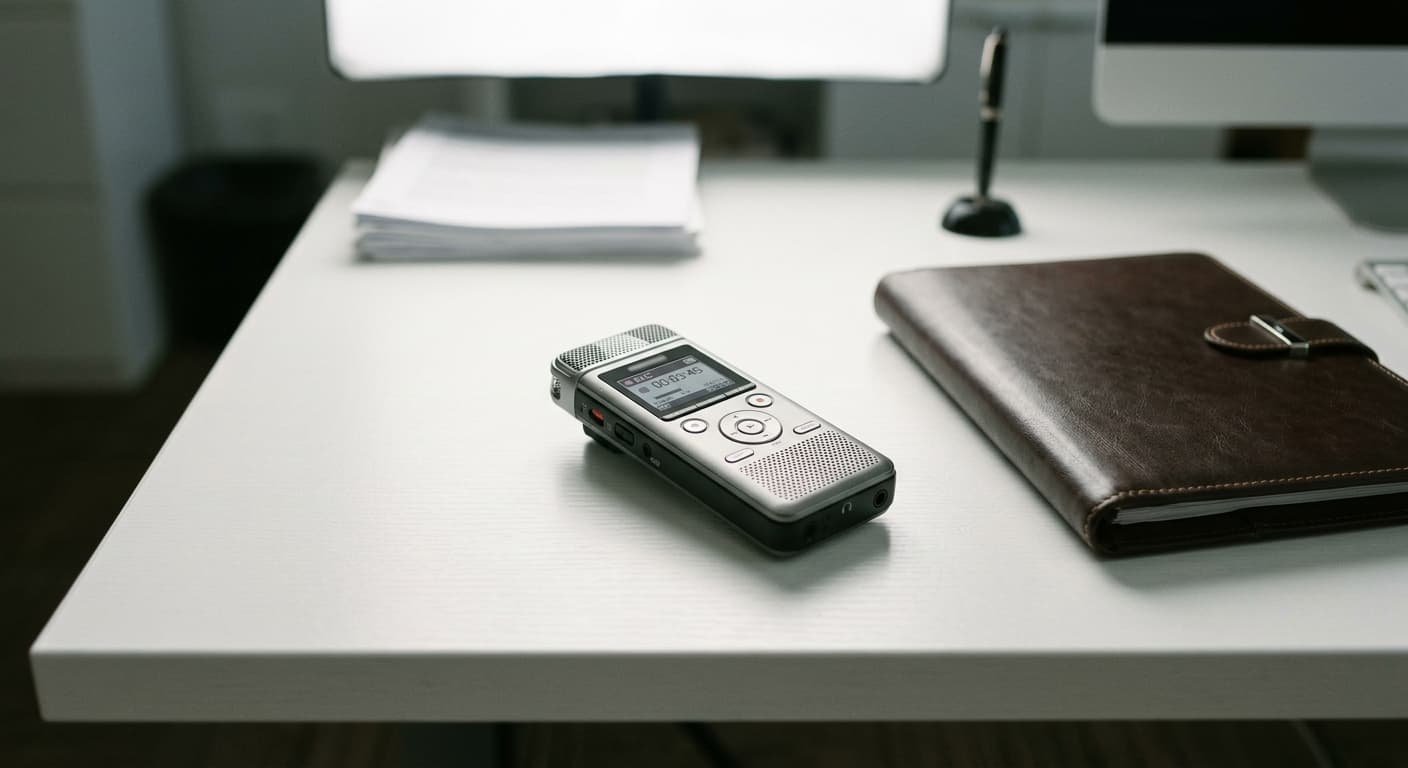
New York prohibits secret recordings of people in private spaces and upskirting under N.Y. Penal Law 250.45, unlawful surveillance in the second degree. Violations are a Class E felony punishable by up to 4 years in prison. Repeat offenders face a Class D felony with mandatory sex offender registration.
New York criminalizes voyeurism and hidden camera activity through its unlawful surveillance statutes in Penal Law Article 250. These laws target the secret recording of people in private settings, the recording of intimate body parts without consent, and the distribution of images obtained through illegal surveillance. New York also separately addresses the nonconsensual sharing of intimate images under Penal Law 245.15.
This guide covers the specific criminal statutes, penalties for each offense, pending legislation that would strengthen protections, and how New York law handles emerging threats like AI-generated intimate images.
Current Unlawful Surveillance Laws
Definitions: Penal Law 250.40
Penal Law Section 250.40 establishes the definitions that underpin New York's unlawful surveillance framework:
"Imaging device" means any mechanical, digital, or electronic viewing device, camera, cellular phone, or any other instrument capable of recording, storing, or transmitting visual images that can be used to observe a person.
"Place and time when a person has a reasonable expectation of privacy" means a place and time when a reasonable person would believe that they could fully disrobe in privacy. This includes bedrooms, bathrooms, fitting rooms, changing rooms, restrooms, showers, and hotel rooms.
"Intimate parts" means the naked or underwear-clad genitals, pubic area, buttocks, or female breast below the top of the nipple.
"Broadcast" means to electronically transmit a visual image with the intent that it be viewed by another person.
These definitions are precise and control which conduct falls within the criminal statutes. The "imaging device" requirement is particularly important because current law only criminalizes voyeurism that involves a recording or viewing device.
Unlawful Surveillance in the Second Degree: Penal Law 250.45
Penal Law Section 250.45 is the primary statute targeting hidden camera activity and voyeuristic recording. A person commits this offense in several distinct ways:
Recording in private spaces. Using or installing an imaging device to surreptitiously view, broadcast, or record a person dressing, undressing, or exposing intimate parts at a place and time when the person has a reasonable expectation of privacy, without that person's knowledge or consent.
Upskirting and similar conduct. Using or installing an imaging device to surreptitiously view, broadcast, or record under the clothing of another person at a place and time when a reasonable person would believe their intimate parts would not be visible. This applies regardless of whether the victim is in a public or private place. A person can be convicted of this offense for recording under someone's clothing on a subway platform, in a store, or anywhere else.
Hidden cameras in private rooms. Using or installing an imaging device in a bedroom, changing room, fitting room, restroom, toilet, bathroom, washroom, shower, or any room assigned to guests or patrons in a motel, hotel, inn, or other lodging establishment, for the purpose of surreptitiously recording.
Recording for improper purposes. Using or installing an imaging device to surreptitiously view, broadcast, or record a person in any of the above private spaces without knowledge or consent, for the purpose of amusement, entertainment, profit, sexual arousal, sexual gratification, or to degrade or abuse a person.
Each of these scenarios constitutes a Class E felony, punishable by:
- Up to 4 years in state prison (indeterminate sentence)
- Fines up to $5,000
- Probation as an alternative to incarceration in some cases
- A permanent criminal record
Unlawful Surveillance in the First Degree: Penal Law 250.50
Penal Law Section 250.50 applies when a person commits unlawful surveillance in the second degree and has a prior conviction for unlawful surveillance in either the first or second degree within the preceding 10 years.
This elevated charge is a Class D felony, carrying:
- 2 to 7 years in state prison (indeterminate sentence)
- Fines up to $5,000
- Mandatory registration as a sex offender under New York's Sex Offender Registration Act (SORA)
Sex offender registration is a lifelong consequence. Registered sex offenders face restrictions on where they can live and work, must regularly report to law enforcement, and appear on publicly searchable registries. This makes a second unlawful surveillance conviction far more damaging than the prison sentence alone.
Dissemination of Unlawful Surveillance Images
New York separately criminalizes the distribution of images obtained through unlawful surveillance:
Dissemination in the second degree (Penal Law 250.55) occurs when a person intentionally disseminates a recorded image of another identifiable person that was obtained through unlawful surveillance. The person must know the image was obtained through unlawful means and must distribute it without the subject's consent. This is a Class A misdemeanor, punishable by up to 1 year in jail.
Dissemination in the first degree (Penal Law 250.60) applies to repeat offenders who have a prior conviction for dissemination within the preceding 10 years. This is a Class E felony, punishable by up to 4 years in prison.
Owning or maintaining a website for dissemination (Penal Law 250.65) targets individuals who create or maintain websites or online services for the purpose of disseminating unlawful surveillance images. This is also a Class E felony.
Nonconsensual Intimate Images (Revenge Imagery)

Penal Law 245.15: Unlawful Dissemination of Intimate Images
Penal Law Section 245.15 addresses what is commonly called "revenge imagery" or nonconsensual pornography. This statute, separate from the unlawful surveillance laws, criminalizes the intentional dissemination of intimate images when:
- The image depicts another identifiable person with intimate parts exposed or engaging in sexual conduct
- The dissemination was done with intent to cause harm to the emotional, financial, or physical welfare of the depicted person
- The actor knew or reasonably should have known that the person depicted did not consent to the dissemination
- This includes images originally taken with consent when the depicted person had a reasonable expectation that the image would remain private
This offense is a Class A misdemeanor, carrying up to 1 year in jail and potential fines.
Exceptions Under the Intimate Image Law
Penal Law 245.15 does not apply to:
- Reporting unlawful conduct to law enforcement or other authorities
- Dissemination during lawful practices of law enforcement, legal proceedings, or medical treatment
- Images involving voluntary exposure in a public or commercial setting (such as professional adult content)
- Dissemination for a legitimate public purpose
The statute also preserves the protections of Section 230 of the Communications Decency Act (47 U.S.C. 230), meaning interactive computer services are not liable for intimate images posted by third-party users.
Pending Legislation
Senate Bill S524: Creating a Standalone Voyeurism Crime
Senate Bill S524 would create new sections 250.51 (voyeurism in the second degree) and 250.52 (voyeurism in the first degree) in the Penal Law. This bill addresses a significant gap in current law.
Currently, New York's unlawful surveillance statutes require the use of an "imaging device." This means that a person who physically watches (peeps at) someone in a private setting without using a camera or recording device does not commit unlawful surveillance under existing law. The proposed voyeurism statute would criminalize intentional viewing of another person without an imaging device when done for purposes like sexual arousal, entertainment, or to degrade the victim, in settings where the victim has an expectation of privacy.
Expanding the Revenge Imagery Statute
New York has already expanded the revenge imagery statute in some respects, and additional expansions are pending. The Hinchey amendment (S.1042-A, signed September 29, 2023, effective November 28, 2023) added AI-generated and digitized images to Penal Law section 245.15. Civil Rights Law section 52-c creates a related civil right of action against anyone who disseminates a nonconsensual sexually explicit deepfake of an identifiable person. The following additional changes have passed the Senate but are not yet fully enacted:
- Threats to distribute intimate images (pending). Pending legislation (referenced in Senate press releases) would make it illegal to threaten to share intimate images as a form of coercion or intimidation. This expansion has passed the Senate but is not yet enacted.
- AI-generated deepfakes (enacted). Penal Law section 245.15 was amended by Hinchey S.1042-A, signed September 29, 2023 and effective November 28, 2023 (60 days after signing), to expressly cover AI-generated and digitized intimate images. This is now in force. Additionally, Civil Rights Law section 52-c creates a private civil right of action against anyone who disseminates a sexually explicit AI-generated or digitally altered depiction of an identifiable person without consent.
- Tiered penalty structure. Proposed changes would create a misdemeanor for nonconsensual sharing without intent to harm (where the sharer knew or should have known the person did not consent) and a felony for sharing with intent to cause harm.
Hidden Camera Scenarios
Hidden Cameras in Rental Properties
Landlords and short-term rental hosts who install hidden cameras in tenant or guest spaces face serious criminal liability. Placing a camera in a bedroom, bathroom, or any room assigned to a guest or tenant triggers Penal Law 250.45. This applies to:
- Airbnb and VRBO rental properties
- Hotel and motel rooms
- Rented apartments and houses
- Guest rooms in bed-and-breakfast establishments
Guests and tenants who discover hidden cameras should contact local law enforcement immediately. The recording devices themselves are evidence of a felony.
Hidden Cameras in the Workplace
Employers who install cameras in areas where employees have a reasonable expectation of privacy (bathrooms, locker rooms, changing areas) violate the unlawful surveillance statutes. Standard security cameras in common work areas (lobbies, hallways, sales floors) are generally permissible as long as they are not positioned to capture intimate areas or private spaces.
Hidden Cameras in Domestic Settings
Domestic partners or spouses who install hidden cameras to record intimate activities without the other person's knowledge can be prosecuted under the unlawful surveillance statutes. New York courts have applied these laws in domestic situations where one partner secretly records the other in private settings.
Parents installing cameras to monitor childcare providers (nanny cams) in common areas of the home generally do not violate the statute, as common living spaces are not "places where a person has a reasonable expectation of privacy" for purposes of disrobing. However, cameras should never be placed in bathrooms, guest bedrooms, or changing areas.
Civil Remedies for Victims
Lawsuits for Unlawful Surveillance
Victims of voyeurism and hidden camera offenses in New York can file civil lawsuits seeking:
- Compensatory damages for emotional distress, psychological harm, therapy costs, and lost wages
- Punitive damages for willful, malicious, or outrageous conduct
- Injunctive relief requiring the defendant to remove cameras, delete images, and stop distribution
- Attorney's fees and court costs
New York courts recognize the tort of intrusion upon seclusion, which provides a common-law basis for privacy claims even beyond the criminal statutes.
Civil Remedies Under the Intimate Image Law
Victims of nonconsensual intimate image distribution may also have civil causes of action under:
- New York Civil Rights Law Section 52-b, which creates a private right of action against anyone who disseminates or publishes an intimate image without consent
- New York Civil Rights Law Section 52-c, a parallel private right of action covering sexually explicit AI-generated or digitally altered ('deepfake') depictions
- New York Civil Rights Law Section 50-b, which protects the identity of sex crime victims
- Common-law privacy torts, including public disclosure of private facts and intrusion upon seclusion
- Intentional infliction of emotional distress claims
Orders of Protection
Victims can seek orders of protection (restraining orders) in criminal or family court proceedings. These orders can prohibit the offender from contacting the victim, require deletion of images, and impose other restrictions.
Federal Law
Federal statutes provide additional protections beyond New York state law:
The Video Voyeurism Prevention Act (18 U.S.C. 1801) prohibits photographing or recording the intimate areas of another person without consent in the special maritime and territorial jurisdiction of the United States, including federal buildings, military installations, and national parks. Violations are punishable by a fine, up to one year in prison, or both.
The STOP CSAM Act and related federal legislation target the distribution of nonconsensual intimate images through interstate commerce, particularly on online platforms.
Penalty Summary Table
| Offense | Statute | Classification | Maximum Penalty |
|---|---|---|---|
| Unlawful surveillance, 2nd degree | PL 250.45 | Class E Felony | Up to 4 years in prison |
| Unlawful surveillance, 1st degree | PL 250.50 | Class D Felony | Up to 7 years; sex offender registration |
| Dissemination of surveillance image, 2nd degree | PL 250.55 | Class A Misdemeanor | Up to 1 year in jail |
| Dissemination of surveillance image, 1st degree | PL 250.60 | Class E Felony | Up to 4 years in prison |
| Unlawful dissemination of intimate image | PL 245.15 | Class A Misdemeanor | Up to 1 year in jail |
More New York Recording Laws
Audio Recording | Video Recording | Voyeurism and Hidden Cameras | Workplace Recording | Recording Police | Phone Call Recording | Security Cameras | Recording in Public | Landlord-Tenant Recording | Dashcam Laws | School Recording | Medical Recording
Back to New York Recording Laws
More New York Recording Topics
More New York Laws
Frequently Asked Questions
Is voyeurism a crime in New York?
Yes. Unlawful surveillance in the second degree under Penal Law 250.45 covers voyeuristic recording and is a Class E felony with up to 4 years in prison. However, current law requires the use of an imaging device. A pending bill (S524) would create a standalone voyeurism crime that covers peeping without a camera.
What is the penalty for a hidden camera in a bathroom or bedroom in New York?
Placing a hidden camera in a bathroom, bedroom, changing room, or hotel room is unlawful surveillance in the second degree, a Class E felony punishable by up to 4 years in state prison and fines up to $5,000. A second offense within 10 years becomes a Class D felony with up to 7 years in prison and mandatory sex offender registration.
Is sharing intimate images without consent illegal in New York?
Yes. Penal Law 245.15 makes it a Class A misdemeanor (up to 1 year in jail) to intentionally disseminate intimate images of an identifiable person without their consent when done with intent to cause harm. This applies even if the images were originally taken with consent. Pending legislation would expand this to cover threats to share and AI-generated deepfakes.
Can I install a nanny cam in my home in New York?
You can install cameras in common areas of your home (living room, kitchen, playroom) to monitor childcare providers. You cannot place cameras in bathrooms, guest bedrooms, or changing areas where the caregiver has a reasonable expectation of privacy. If the camera records audio, New York one-party consent rules apply, meaning you need to be a participant in any captured conversation or have consent from at least one participant.
What should I do if I find a hidden camera in a New York hotel room or rental?
Contact local law enforcement immediately. A hidden camera in a hotel room, Airbnb, or similar lodging is a Class E felony under Penal Law 250.45. Do not disturb the device, as it is evidence of a crime. Document its location with your own photos if possible. You may also have civil claims against the property owner for damages. Report the property to the hosting platform as well.
Updates
Corrected a mischaracterized statute in the AI/deepfake section: Civil Rights Law 50-f is New York's 2020 postmortem right-of-publicity law for deceased performers, not a December 2025 civil remedy for living people's AI digital replicas; replaced it with the actual controlling civil statutes, Civil Rights Law 52-b (nonconsensual intimate images) and 52-c (AI-generated/deepfake sexually explicit depictions). Also corrected the Hinchey amendment's signing and effective dates by a few days.
Independently fact-checked against the cited primary sources; governing law re-checked for recent changes
Governing law re-checked for recent changes
Reviewed and approved by an editor
The Law Behind This Article
This article rests on the statutory provisions below, held in our own legal record and retrieved from the official source. Tap a section to read the operative text.
New York Penal Law
§ 250.45Unlawful surveillance in the second degreeIn forcecited in 18 of our articles
Unlawful surveillance in the second degree. A person is guilty of unlawful surveillance in the second degree when: 1. For his or her own, or another person's amusement, entertainment, or profit, or for the purpose of degrading or abusing a person, he or she intentionally uses or installs, or permits the utilization or installation of an imaging device to surreptitiously view, broadcast or record a person dressing or undressing or the sexual or other intimate parts of such person at a place and time when such person has a reasonable expectation of privacy, without such person's knowledge or consent; or 2. For his or her own, or another person's sexual arousal or sexual gratification, he or she intentionally uses or installs, or permits the utilization or installation of an imaging device to surreptitiously view, broadcast or record a person dressing or undressing or the sexual or other intimate parts of such person at a place and time when such person has a reasonable expectation of privacy, without such person's knowledge or consent; or 3.
Official text (excerpt) · last checked 2026-08-31 · Read the full text in our law library · Verify at legislation.nysenate.gov
Cited in 51 court opinions in our collectionLatest citing opinion in our collection: 2025
In the courts (editorial summary, independently checked):People v. Piznarski (2013) held Penal Law 250.45 reaches a participant who secretly records consensual sex, that the victim kept a reasonable expectation of privacy, and that the one-party consent rule for eavesdropping does not apply. People v. Evans (2006) applied section 250.45(3) to a camera hidden in a bedroom.
Opinions citing this section in our collection:
- People v. Evans (Appellate Division of the Supreme Court of the State of New York 2006, 27 A.D.3d 905)✓A man placed a video camera in his girlfriend's 12-year-old daughter's bedroom and recorded her undressing, then pleaded guilty under Section 250.45(3); the court affirmed, holding the plea needed no express admission of no legitimate purpose given the statutory presumption.
- People v. Lema (Appellate Division of the Supreme Court of the State of New York 2017, 152 A.D.3d 440)✓A man used a phone camera to record under women's skirts on a subway train, but dark lighting produced no image of intimate parts; the court affirmed, holding Section 250.45(4) is satisfied when a device is used for the purpose of making such a recording.
- People v. Piznarski (Appellate Division of the Supreme Court of the State of New York 2013, 113 A.D.3d 166)✓A student secretly recorded sex with two women using a camera left in view on his bedroom desk; the court affirmed under Section 250.45, holding the statute reaches a participant who records a consensual encounter and that a visible camera can still be used surreptitiously.
Identified automatically from the court opinions citing this section — not a ranking of which case controls.
Also relied on in: New York Dashcam Laws: Legality, Mounting Rules, and Evidence Use, New York Landlord-Tenant Recording Laws: Rights for Renters and Property Owners, New York Medical Recording Laws: Patient Rights and Healthcare Privacy
§ 245.15Unlawful dissemination or publication of an intimate imageIn forcecited in 4 of our articles
Unlawful dissemination or publication of an intimate image. 1. A person is guilty of unlawful dissemination or publication of an intimate image when: (a) with intent to cause harm to the emotional, financial or physical welfare of another person, they intentionally disseminate or publish a still or video image depicting such other person with one or more intimate parts exposed or engaging in sexual conduct with another person, including an image created or altered by digitization, where such person may reasonably be identified from the still or video image itself or from information displayed in connection with the still or video image; and (b) the actor knew or reasonably should have known that the person depicted did not consent to such dissemination or publication, including the dissemination or publication of an image taken with the consent of the person depicted when such person had a reasonable expectation that the image would remain private, regardless of whether the actor was present when such image was taken. 2.
Official text (excerpt) · last checked 2026-08-30 · Read the full text in our law library · Verify at legislation.nysenate.gov
Cited in 3 court opinions in our collectionLatest citing opinion in our collection: 2025
Opinions citing this section in our collection:
- Matter of Samah DD. v. Mark VV. (Appellate Division of the Supreme Court of the State of New York 2025, 2025 NY Slip Op 01018)“…fter his conduct took place ( see L 2019, ch 109, § [*2]1; Penal Law § 245.15). [FN3] That argument misses the mar…”
- People v. Ramos (Tomas) (Appellate Terms of the Supreme Court of New York 2025, 2025 NY Slip Op 50634(U))“…l dissemination or publication of an intimate image (former Penal Law § 245.15 [1] [a] [i], [ii]), both in connection…”
- Marseet v. Rochester Institute of Technology (District Court, W.D. New York 2023)“…se the use of Sensitive Depictions is permitted by New York Penal Law Section 245.15(3) and because the Court’s July 8, 202…”
Identified automatically from the court opinions citing this section — not a ranking of which case controls.
Also relied on in: New York Deepfake Laws: AI Images, Voice Cloning & Penalties (2026), New York Recording Laws (2026): One-Party Consent Rules, New York Pornography Laws (2026): Legality and Penalties
§ 250.50Unlawful surveillance in the first degreeIn forcecited in 6 of our articles
Unlawful surveillance in the first degree. A person is guilty of unlawful surveillance in the first degree when he or she commits the crime of unlawful surveillance in the second degree and has been previously convicted within the past ten years of unlawful surveillance in the first or second degree. Unlawful surveillance in the first degree is a class D felony.
Official text (excerpt) · last checked 2026-07-29 · Read the full text in our law library · Verify at legislation.nysenate.gov
Cited in 3 court opinions in our collectionLatest citing opinion in our collection: 2018
Opinions citing this section in our collection:
- People v. Diaz (New York Court of Appeals 2018, 32 N.Y.3d 538)“…stration for first-degree unlawful surveillance pursuant to Penal Law § 250.50]). Thus, SORA's overall purpose of "pro…”
- People v. Williams (Appellate Division of the Supreme Court of the State of New York 2005, 20 A.D.3d 72)“…into the statutory definition of criminal assistance under Penal Law § 250.50 (4). We also think a proper distincti…”
- People v. Morriale (Criminal Court of the City of New York 2008, 20 Misc. 3d 558)“…of the crime of unlawful surveillance in the first degree, Penal Law § 250.50 cannot serve as a predicate for the one…”
Identified automatically from the court opinions citing this section — not a ranking of which case controls.
Also relied on in: New York Video Recording Laws: Surveillance Rules and Privacy Limits, Is It Illegal to Video Record Someone Without Their Consent? (2026), New York Ring Doorbell Laws: What You Need to Know in 2026
§ 250.55Dissemination of an unlawful surveillance image in the second degreeIn forcecited in 3 of our articles
Dissemination of an unlawful surveillance image in the second degree. A person is guilty of dissemination of an unlawful surveillance image in the second degree when he or she, with knowledge of the unlawful conduct by which an image or images of the sexual or other intimate parts of another person or persons were obtained and such unlawful conduct would satisfy the essential elements of the crime of unlawful surveillance in the first or second degree, as defined, respectively, in section 250.50 or 250.45 of this article, intentionally disseminates such image or images. Dissemination of an unlawful surveillance image in the second degree is a class A misdemeanor.
Official text (excerpt) · last checked 2026-07-29 · Read the full text in our law library · Verify at legislation.nysenate.gov
Cited in 1 court opinions in our collectionLatest citing opinion in our collection: 2008
Opinions citing this section in our collection:
- People v. Morriale (Criminal Court of the City of New York 2008, 20 Misc. 3d 558)“…ul surveillance image in the second degree, in violation of Penal Law § 250.55. This statute was enacted in 2003 as pa…”
Identified automatically from the court opinions citing this section — not a ranking of which case controls.
Also relied on in: New York Surveillance Camera Laws (2026 Guide)
United States Code Title 18
§ 1801Video voyeurismIn forcecited in 79 of our articles
Whoever, in the special maritime and territorial jurisdiction of the United States, has the intent to capture an image of a private area of an individual without their consent, and knowingly does so under circumstances in which the individual has a reasonable expectation of privacy, shall be fined under this title or imprisoned not more than one year, or both. In this section— the term “capture”, with respect to an image, means to videotape, photograph, film, record by any means, or broadcast; the term “broadcast” means to electronically transmit a visual image with the intent that it be viewed by a person or persons; the term “a private area of the individual” means the naked or undergarment clad genitals, pubic area, buttocks, or female breast of that individual; the term “female breast” means any portion of the female breast below the top of the areola; and the term “under circumstances in which that individual has a reasonable expectation of privacy” means— circumstances in which a reasonable person would believe that he or she could disrobe in privacy, without being concerned that an image of a private area of the individual was being captured; or circumstances in which a…
Official text (excerpt) · last checked 2026-07-28 · Read the full text in our law library · Verify at uscode.house.gov
Cited in 53 court opinions in our collectionLatest citing opinion in our collection: 2026
In the courts (editorial summary, independently checked):Courts have applied 18 U.S.C. 1801 mainly at its edges. United States v. Johnson (2010) read it as Congress's answer to secretly filming nudity on federal property, acquitting on a child exploitation charge instead. EPIC v. Department of Homeland Security (2011) applied the Section 1801(c) law enforcement exception to a TSA scanner claim.
Opinions citing this section in our collection:
- United States v. Anthony Helton (Court of Appeals for the Fourth Circuit 2019, 944 F.3d 198)“…from this list of federal offenses is video voyeurism under 18 U.S.C. § 1801. Rather than list this statute as an enu…”
- United States v. Johnson (District Court, W.D. Missouri 2010, 719 F. Supp. 2d 1059)✓A weightlifting coach hid a camera to film minors weighing in nude; acquitting him under the child exploitation statute, the court called that conduct plain video voyeurism under section 1801, but noted the section reaches only federal maritime and territorial jurisdiction.
- Electronic Privacy Information Center v. United States Department of Homeland Security (Court of Appeals for the D.C. Circuit 2011, 653 F.3d 1)✓Privacy groups challenged TSA body scanners under the Video Voyeurism Prevention Act; the D.C. Circuit held the statute's exception for lawful law enforcement, correctional, or intelligence activity applied to airport screening, so the section 1801 claim failed.
Identified automatically from the court opinions citing this section — not a ranking of which case controls.
Also relied on in: Alaska Voyeurism and Hidden Camera Laws: AS 11.61.123 Explained (2026), Arizona Surreptitious Recording & Voyeurism Laws: ARS 13-3019 Penalties (2026), Arkansas Voyeurism Laws: Hidden Cameras, Penalties, and Defenses (2026)
United States Code Title 47
§ 230Protection for private blocking and screening of offensive materialIn forcecited in 7 of our articles
The Congress finds the following: The rapidly developing array of Internet and other interactive computer services available to individual Americans represent an extraordinary advance in the availability of educational and informational resources to our citizens. These services offer users a great degree of control over the information that they receive, as well as the potential for even greater control in the future as technology develops. The Internet and other interactive computer services offer a forum for a true diversity of political discourse, unique opportunities for cultural development, and myriad avenues for intellectual activity. The Internet and other interactive computer services have flourished, to the benefit of all Americans, with a minimum of government regulation. Increasingly Americans are relying on interactive media for a variety of political, educational, cultural, and entertainment services.
Official text (excerpt) · last checked 2026-07-28 · Read the full text in our law library · Verify at uscode.house.gov
Cited in 853 court opinions in our collectionLatest citing opinion in our collection: 2026
Opinions citing this section in our collection:
- Nemet Chevrolet, Ltd. v. Consumeraffairs. Com, Inc. (Court of Appeals for the Fourth Circuit 2009, 591 F.3d 250)“…cation of information created and developed by others.2 See 47 U.S.C. § 230(c)(1), (e)(3), & (f)(3); Zeran v. Am. O…”
- Reno v. American Civil Liberties Union (Supreme Court of the United States 1997, 521 U.S. 844)“…entitled "Online Family Empowerment." See 110 Stat. 137 , 47 U. S. C. § 230 (1994 ed., Supp. II); 141 Cong. Rec. 2…”
- Doe v. MySpace, Inc. (Court of Appeals for the Fifth Circuit 2008, 528 F.3d 413)“…aims were barred by the Communications Decency Act (“CDA”), 47 U.S.C § 230, and Texas common law. For the followin…”
Identified automatically from the court opinions citing this section — not a ranking of which case controls.
Also relied on in: xAI Sues Grok User Over Alleged AI-Generated Child Sexual Abuse Material, Illinois Voyeurism and Hidden Camera Laws: Penalties and BIPA Rules (2026), Deepfake & AI Voice Cloning Laws by State (2026)
Search our full record of US law — 2.1 million sections, every state + federal →
Sources and References
- N.Y. Penal Law Article 250 - Offenses Against the Right to Privacy(nysenate.gov).gov
- N.Y. Penal Law 250.45 - Unlawful Surveillance Second Degree(nysenate.gov).gov
- N.Y. Penal Law 250.50 - Unlawful Surveillance First Degree(nysenate.gov).gov
- N.Y. Penal Law 245.15 - Unlawful Dissemination of Intimate Image(nysenate.gov).gov
- Senate Bill S524 - Voyeurism Crime Proposal(nysenate.gov).gov
- NYS Senate - Expanding Revenge Imagery Statute(nysenate.gov).gov
- 18 U.S.C. 1801 - Video Voyeurism Prevention Act(law.cornell.edu)
- N.Y. Penal Law 250.55 - Dissemination Second Degree(law.justia.com)
- N.Y. Civil Rights Law 52-c - Private Right of Action for Sexually Explicit AI-Generated/Digitized Depictions(nysenate.gov).gov
- 47 U.S.C. 230 - Communications Decency Act Section 230(law.cornell.edu)