
New York
New York Phone Call Recording Laws: Consent Rules for Landline, Cell, and VoIP
Independently fact-checked against primary sources (last audited August 15, 2026). · Reviewed by the RecordingLaw editorial team. · Law checked current as of August 15, 2026. · 3 primary sources cited on this page. How we verify our legal content

New York follows a one-party consent rule for recording phone calls. Under N.Y. Penal Law 250.00, any participant in a call may record it without notifying the other party. Recording a call you are not part of is eavesdropping, a Class E felony under N.Y. Penal Law 250.05, punishable by up to four years.
New York's one-party consent law applies to all types of phone calls. Under Penal Law Section 250.00, you can record any phone call you participate in without informing or getting consent from the other person. The law defines "wiretapping" as the intentional overhearing or recording of a telephonic communication by a person other than the sender or receiver, without the consent of either party. Since you are a party to any call you make or receive, your own knowledge of the recording satisfies the consent requirement.
This guide covers the rules for recording landline, cell phone, and VoIP calls in New York, what happens when you call someone in a different state, business call recording obligations, and the penalties for illegal phone recording.
The Core Rule: One-Party Consent for Phone Calls
What the Statute Says
Penal Law Section 250.00 defines "wiretapping" as the intentional overhearing or recording of a telephonic or telegraphic communication by a person other than the sender or receiver, without the consent of either the sender or receiver, by means of any instrument, device, or equipment.
The critical phrase is "without the consent of either the sender or receiver." As a participant in a phone call, you are either the sender or the receiver. Your decision to record constitutes consent from at least one party, which satisfies the statute.
What This Means in Practice
- You can record any phone call you are on without telling the other person
- You can use a smartphone recording app, dedicated call recorder, or external recording device
- You can record calls on any platform: landline, cell phone, VoIP, satellite phone
- No beep tone, announcement, or warning is legally required in New York
- The recording is legal from the moment the call connects
What Is Illegal
Recording a phone call is illegal in New York when:
- You intercept a call between two other people and you are not a participant
- You use a wiretap device to monitor someone else's phone line
- You access someone's stored voicemail or call recordings without authorization
- You record a phone call without the consent of either the caller or the recipient (i.e., as a third party with no participant's consent)
Types of Phone Calls Covered

Landline Calls
Traditional landline phone calls fall squarely within the "telephonic communication" definition in Penal Law 250.00. You can record any landline call you participate in. This includes:
- Home phone calls
- Office phone calls
- Conference calls routed through a landline system
- Calls through traditional PBX (private branch exchange) systems
Cell Phone Calls
Cell phone calls receive the same treatment as landline calls under New York law. The statute's reference to "telephonic communication" encompasses all voice calls, regardless of the technology used. You can record:
- Standard cellular voice calls
- Wi-Fi calling
- Calls through cellular data connections
- Conference calls on your cell phone
VoIP and Video Calls
Voice over Internet Protocol (VoIP) calls and video calls with audio fall under the "electronic communication" provisions of Penal Law 250.00. The statute defines the interception of electronic communications as the intentional acquiring, receiving, collecting, overhearing, or recording of an electronic communication without the consent of the sender or intended receiver. As a participant, your consent satisfies this requirement. Covered platforms include:
- Zoom meetings and calls
- Microsoft Teams calls
- Google Meet sessions
- Skype calls
- FaceTime calls
- WhatsApp and Signal voice calls
- Discord voice channels
- Any other internet-based voice or video platform
Conference Calls and Group Calls
On a conference call with multiple participants, the one-party consent rule still applies. Your participation and knowledge of the recording is sufficient. You do not need consent from every participant on the call. However, if any participant is located in a two-party consent state, the stricter law may apply to your recording of that person.
Cross-State Phone Call Recording
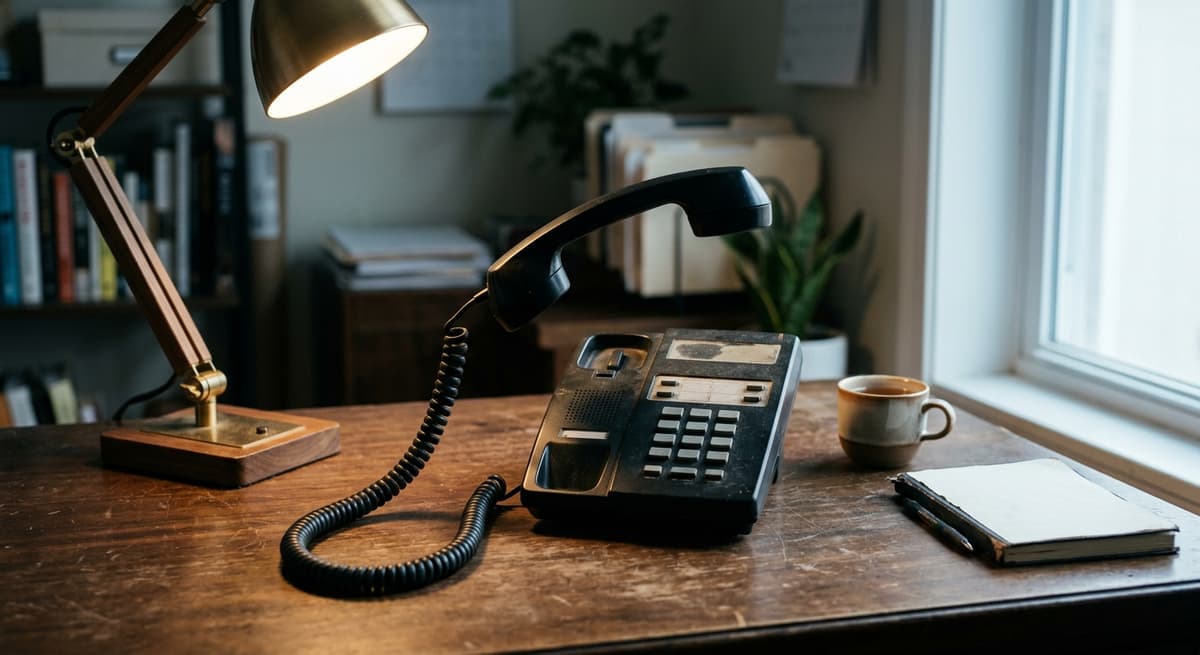
The Challenge of Interstate Calls
New York borders several states with different recording consent requirements. When you make or receive a call that crosses state lines, the question of which state's law applies becomes critical.
Neighboring States and Their Requirements
| State | Consent Type | Key Consideration |
|---|---|---|
| Connecticut | Two-party consent | Adjacent to NYC metro area |
| Massachusetts | Two-party consent | Border state, strict wiretap law |
| New Jersey | One-party consent | Compatible with NY law |
| Pennsylvania | Two-party consent | Border state |
| Vermont | One-party consent | Compatible with NY law |
Which Law Applies?
Courts do not have a single universal rule for determining which state's law applies to interstate phone calls. The general principles are:
- The stricter law typically governs. If you are in New York (one-party consent) and call someone in Pennsylvania (two-party consent), the Pennsylvania law may apply to the interaction, exposing you to liability if you record without consent from all parties.
- Where the recording occurs matters. Some courts focus on where the recording device is located. If you are recording in New York, New York law applies to your act of recording.
- Where the parties are located matters. Some courts apply the law of the state where each party is located. A party in Pennsylvania can invoke Pennsylvania's wiretap law even if the recording occurred in New York.
- Intent and knowledge. If you know or should know that the other party is in a two-party consent state, recording without disclosure carries greater legal risk.
Best Practices for Interstate Calls
To minimize legal risk when making calls that may involve parties in other states:
- Determine where the other party is located before recording
- If the other party is in a two-party consent state, inform them that the call is being recorded
- Get verbal consent at the start of the call ("I'm recording this call, is that OK with you?")
- If you record customer service calls, note that many businesses already announce recording, giving you implied consent to record as well
- When in doubt, disclose the recording
Business Phone Call Recording in New York
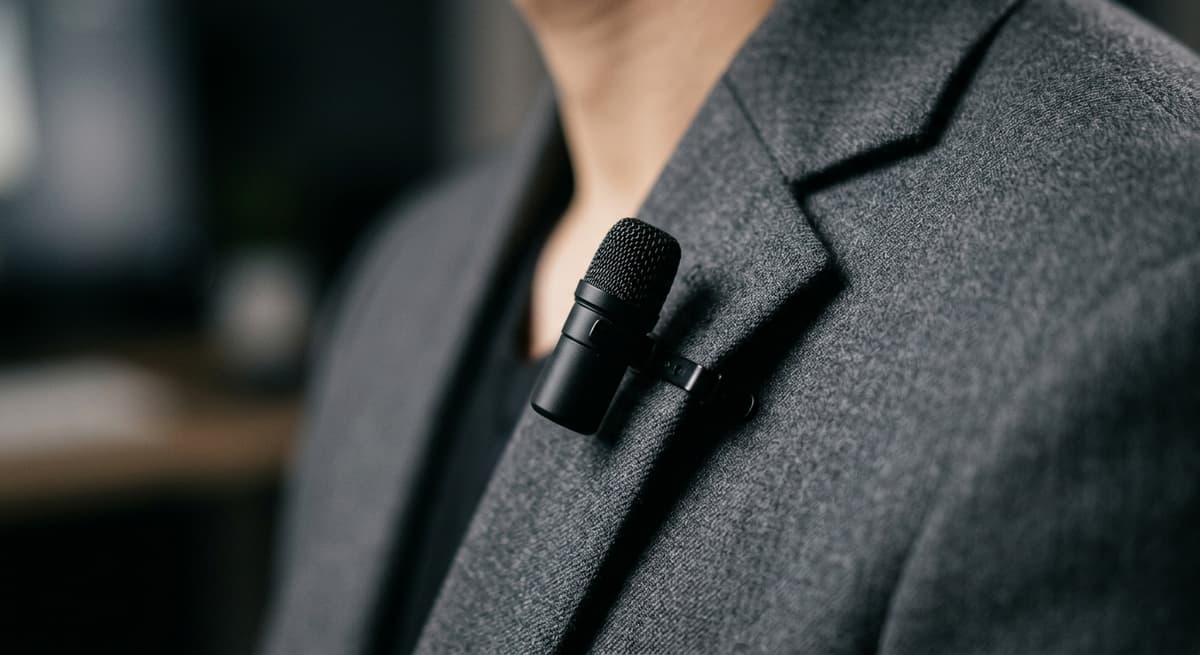
Employer and Business Obligations
New York businesses can record phone calls with customers, clients, and partners under one-party consent. As long as the business (through its employee on the call) is a party, the recording is legal without notice. However, many businesses choose to provide notice as a best practice because:
- It protects the business when callers are in two-party consent states
- It builds trust and demonstrates transparency
- Industry regulations may require disclosure (financial services, healthcare)
- Federal FCC regulations: FCC 24-24 (the one-to-one consent rule) was vacated by the Eleventh Circuit in Insurance Marketing Coalition Ltd. v. FCC (decided Jan. 24, 2025; mandate April 30, 2025) and formally eliminated by the FCC in September 2025, so it is no longer in force; 47 CFR section 64.501 was also removed in 2017, so that older consent regulation no longer applies either
Common Notice Methods
Businesses typically satisfy notice requirements through:
- Pre-call announcement: "This call may be recorded for quality assurance and training purposes." If the caller stays on the line after hearing this message, they have given implied consent.
- Verbal disclosure by the representative: The employee informs the caller that the call is being recorded and asks if they consent.
- Terms of service: Some businesses include call recording disclosures in their terms of service or privacy policies, though this alone may not satisfy two-party consent states.
Call Center Compliance
Businesses operating call centers in New York that handle calls from across the country should implement universal notice procedures. The safest approach is to treat every call as if it is subject to two-party consent by providing a recording announcement at the start of each call. This eliminates the need to determine each caller's location.
Civil Rights Law 52-c
If the business is monitoring employee phone calls (not just customer calls), Civil Rights Law Section 52-c requires the employer to provide written notice to employees upon hiring. This applies to monitoring of telephone conversations as well as email and internet usage.
Recording Customer Service and Business Calls as a Consumer
Your Right to Record
When you call a business and hear "this call may be recorded," the business is exercising its one-party consent right. You have the exact same right. As a participant in the call, you can record:
- Customer service calls
- Insurance company calls
- Bank and financial institution calls
- Utility company calls
- Calls with contractors, vendors, and service providers
Practical Benefits of Recording Business Calls
Recording business calls can protect you by:
- Creating a record of verbal promises or commitments
- Documenting customer service interactions that may be disputed later
- Preserving evidence of billing disputes or service complaints
- Recording insurance claim discussions
- Documenting conversations about warranties, returns, or refunds
Criminal Penalties for Illegal Phone Recording
Eavesdropping: Penal Law 250.05
Penal Law Section 250.05 makes eavesdropping a Class E felony. For phone call recording, eavesdropping occurs when a person who is not a party to the call records it without the consent of either party. Penalties include:
- Up to 4 years in state prison for a first offense
- Fines up to $5,000
- A permanent felony criminal record
Possession of Eavesdropping Devices: Penal Law 250.10
Possessing equipment designed for wiretapping with the intent to use it illegally is a Class A misdemeanor under Penal Law 250.10, carrying up to 1 year in jail.
Civil Liability
Victims of illegal phone recording can file civil lawsuits seeking actual damages, punitive damages, attorney's fees, and injunctive relief. Unlike some states that provide statutory per-violation damages, New York courts assess damages based on the specific facts of each case.
Phone Recordings as Evidence
Admissibility in Court
Phone recordings made legally under one-party consent are admissible in New York courts. To use a phone recording as evidence, you must:
- Authenticate the recording by testifying about when, where, and how you made it
- Identify the speakers on the recording
- Demonstrate the recording is unaltered and complete
- Show that the recording is relevant to the case
CPLR 4506 Exclusionary Rule
CPLR Section 4506 makes illegally obtained phone recordings inadmissible in both criminal and civil proceedings. If a recording was made in violation of the eavesdropping statute, it will be suppressed on motion. The one exception: illegally obtained recordings are admissible against the person who committed the eavesdropping.
Federal Law and Phone Recording
The federal Wiretap Act (18 U.S.C. 2511) follows a one-party consent model, consistent with New York's approach. Under federal law, recording a phone call is legal as long as at least one party consents. The federal Stored Communications Act (18 U.S.C. 2701) separately addresses unauthorized access to stored voicemail and other stored communications.
More New York Recording Laws
Audio Recording | Video Recording | Voyeurism and Hidden Cameras | Workplace Recording | Recording Police | Phone Call Recording | Security Cameras | Recording in Public | Landlord-Tenant Recording | Dashcam Laws | School Recording | Medical Recording
Back to New York Recording Laws
More New York Recording Topics
More New York Laws
Frequently Asked Questions
Can I record a phone call in New York without telling the other person?
Yes. New York is a one-party consent state under Penal Law 250.00. As a participant in the call, your own knowledge of the recording constitutes consent. You do not need to inform the other person or get their permission. This applies to landline, cell phone, and VoIP calls.
Can I record a Zoom or Teams call in New York?
Yes. VoIP and video calls follow the same one-party consent rules as traditional phone calls. If you are a participant in the Zoom or Teams call, you can record it without telling the other participants. However, if participants are in two-party consent states, the stricter law may apply to your recording of those individuals.
What happens if I record a call with someone in a two-party consent state?
The stricter law typically applies. If you are in New York calling someone in Connecticut, Massachusetts, or Pennsylvania (all two-party consent states), recording without the other party's consent could expose you to liability under that state's wiretap law. The safest approach is to inform the other party and get consent when calling someone in a stricter state.
Do businesses in New York have to tell me they are recording my call?
Under New York law, no. A business can record your call without notice because one-party consent applies. However, many businesses provide notice as a best practice, especially because they receive calls from two-party consent states. If a business announces that the call may be recorded, you also have the right to record the call.
Can I use a recorded phone call as evidence in a New York court?
Yes, if the recording was made legally under one-party consent. You must authenticate the recording, identify the speakers, and show it is relevant and unaltered. Illegally obtained recordings are inadmissible under CPLR 4506, except when used as evidence against the person who made the illegal recording.
Updates
Independently fact-checked against the cited primary sources; governing law re-checked for recent changes
Updated a stale claim that FCC Order 24-24 is 'currently in force' — it was vacated by the Eleventh Circuit in January 2025 and formally eliminated by the FCC in September 2025, consistent with this cluster's own New York hub page.
Governing law re-checked for recent changes
Reviewed and approved by an editor
The Law Behind This Article
This article rests on the statutory provisions below, held in our own legal record and retrieved from the official source. Tap a section to read the operative text.
New York Penal Law
§ 250.05EavesdroppingIn forcecited in 14 of our articles
Eavesdropping. A person is guilty of eavesdropping when he unlawfully engages in wiretapping, mechanical overhearing of a conversation, or intercepting or accessing of an electronic communication. Eavesdropping is a class E felony.
Official text (excerpt) · last checked 2026-08-31 · Read the full text in our law library · Verify at legislation.nysenate.gov
Cited in 39 court opinions in our collectionLatest citing opinion in our collection: 2025
In the courts (editorial summary, independently checked):New York courts recognize a vicarious consent exception to the eavesdropping offense. The Appellate Term adopted it in People v. Clark (2008). The Court of Appeals then held in People v. Badalamenti (2016) that consent covers a parent with a good faith, objectively reasonable belief that recording serves the child's best interests.
Opinions citing this section in our collection:
- The People v. Anthony Badalamenti (New York Court of Appeals 2016, 27 N.Y.3d 423)✓A father's call to the mother's phone connected with no one speaking, and he recorded her boyfriend threatening to beat his five year old son; the court held that consent under Penal Law 250.05 includes a parent's vicarious consent, so the recording was admissible.
- People v. Badalamenti (Appellate Division of the Supreme Court of the State of New York 2015, 124 A.D.3d 672)✓Reviewing the same recording of a boyfriend threatening the father's young son, the Appellate Division adopted a vicarious consent exemption to Penal Law 250.05 where a parent has a good faith, objectively reasonable basis to believe recording serves the child's welfare.
- People v. Clark (Appellate Terms of the Supreme Court of New York 2008, 19 Misc. 3d 6)✓A mother slipped an audio recorder into the backpack of her nonverbal autistic eight year old before he boarded the school bus, capturing his bus matron; the Appellate Term held she could vicariously consent for him, so the recording did not violate Penal Law 250.05.
Identified automatically from the court opinions citing this section — not a ranking of which case controls.
§ 250.00Eavesdropping; definitions of termsIn forcecited in 19 of our articles
Eavesdropping; definitions of terms. The following definitions are applicable to this article: 1. "Wiretapping" means the intentional overhearing or recording of a telephonic or telegraphic communication by a person other than a sender or receiver thereof, without the consent of either the sender or receiver, by means of any instrument, device or equipment. The normal operation of a telephone or telegraph corporation and the normal use of the services and facilities furnished by such corporation pursuant to its tariffs or necessary to protect the rights or property of said corporation shall not be deemed "wiretapping." 2. "Mechanical overhearing of a conversation" means the intentional overhearing or recording of a conversation or discussion, without the consent of at least one party thereto, by a person not present thereat, by means of any instrument, device or equipment. 3.
Official text (excerpt) · last checked 2026-07-29 · Read the full text in our law library · Verify at legislation.nysenate.gov
Cited in 56 court opinions in our collectionLatest citing opinion in our collection: 2023
Opinions citing this section in our collection:
- People v. Fata (New York County Courts 1988, 139 Misc. 2d 979)“…Fata had a justifiable expectation of privacy; and (c) that Penal Law § 250.00 et seq. prohibit the mechanical overh…”
- The People v. Anthony Badalamenti (New York Court of Appeals 2016, 27 N.Y.3d 423)“…t of “mechanical overhearing of a conversation” pursuant to Penal Law § 250.00 (2), includes vicarious consent, on beh…”
- Gurevich v. Gurevich (New York Supreme Court 2009, 24 Misc. 3d 808)“…11 ing” as they relate to Penal Law § 250.05 are defined in Penal Law § 250.00 (6) as: “the intentional acquiring, r…”
Identified automatically from the court opinions citing this section — not a ranking of which case controls.
§ 250.10Possession of eavesdropping devicesIn forcecited in 5 of our articles
Possession of eavesdropping devices. A person is guilty of possession of eavesdropping devices when, under circumstances evincing an intent to use or to permit the same to be used in violation of section 250.05, he possesses any instrument, device or equipment designed for, adapted to or commonly used in wiretapping or mechanical overhearing of a conversation. Possession of eavesdropping devices is a class A misdemeanor.
Official text (excerpt) · last checked 2026-07-29 · Read the full text in our law library · Verify at legislation.nysenate.gov
Cited in 1 court opinions in our collectionLatest citing opinion in our collection: 2022
Opinions citing this section in our collection:
- The People v. Marc Mitchell (New York Court of Appeals 2022)“…ther person” (Bartlett Commission, Staff Notes on Proposed Penal Law § 250.10, at 387-390 [1964]). It is inconceivab…”
Identified automatically from the court opinions citing this section — not a ranking of which case controls.
New York Civil Practice Law and Rules
§ 4506Eavesdropping evidence; admissibility; motion to suppress in certain casesIn forcecited in 6 of our articles
Eavesdropping evidence; admissibility; motion to suppress in certain cases. 1. The contents of any overheard or recorded communication, conversation or discussion, or evidence derived therefrom, which has been obtained by conduct constituting the crime of eavesdropping, as defined by section 250.05 of the penal law, may not be received in evidence in any trial, hearing or proceeding before any court or grand jury, or before any legislative committee, department, officer, agency, regulatory body, or other authority of the state, or a political subdivision thereof; provided, however, that such communication, conversation, discussion or evidence, shall be admissible in any civil or criminal trial, hearing or proceeding against a person who has, or is alleged to have, committed such crime of eavesdropping. 2.
Official text (excerpt) · last checked 2026-07-29 · Read the full text in our law library · Verify at legislation.nysenate.gov
United States Code Title 18
§ 2511Interception and disclosure of wire, oral, or electronic communications prohibitedIn forcecited in 418 of our articles
Except as otherwise specifically provided in this chapter any person who— intentionally intercepts, endeavors to intercept, or procures any other person to intercept or endeavor to intercept, any wire, oral, or electronic communication; intentionally uses, endeavors to use, or procures any other person to use or endeavor to use any electronic, mechanical, or other device to intercept any oral communication when— such device is affixed to, or otherwise transmits a signal through, a wire, cable, or other like connection used in wire communication; or such device transmits communications by radio, or interferes with the transmission of such communication; or such person knows, or has reason to know, that such device or any component thereof has been sent through the mail or transported in interstate or foreign commerce; or such use or endeavor to use (A) takes place on the premises of any business or other commercial establishment the operations of which affect interstate or foreign commerce; or (B) obtains or is for the purpose of obtaining information relating to the operations of any business or other commercial establishment the operations of which affect interstate or foreign…
Official text (excerpt) · last checked 2026-08-28 · Read the full text in our law library · Verify at uscode.house.gov
Cited in 2,045 court opinions in our collectionLatest citing opinion in our collection: 2026
In the courts (editorial summary, independently checked):Griggs-Ryan v. Smith (1990) applied the Section 2511(2)(d) prior-consent exception, treating a tenant repeatedly told that all incoming calls were taped as having impliedly consented. United States v. United States District Court (1972) read the then-current Section 2511(3) as conferring no presidential surveillance power.
Opinions citing this section in our collection:
- Mitchell v. Forsyth (Supreme Court of the United States 1985, 472 U.S. 511)✓The Attorney General authorized a warrantless 1970 national security wiretap that caught the plaintiff's calls; the Court held the since-repealed Section 2511(3) disclaimer left the tap lawful under Title III, and that Mitchell had qualified immunity.
- United States v. United States District Court for the Eastern District of Michigan (Supreme Court of the United States 1972, 407 U.S. 297)✓The Attorney General approved warrantless wiretaps on members of a domestic group accused of bombing a CIA office; the Court read Section 2511(3) as a congressional disclaimer conferring no surveillance power, then held the Fourth Amendment required prior judicial approval.
- Forsyth v. Barr (Court of Appeals for the Fifth Circuit 1994, 19 F.3d 1527)✓Dallas police used, in an internal affairs probe of an officer, calls private parties allegedly intercepted illegally; assuming that was unlawful, the Fifth Circuit held Section 2517(1) and (2) allowed the disclosure and use, defeating the Section 2511(1)(c) and (d) claims.
Identified automatically from the court opinions citing this section — not a ranking of which case controls.
§ 2701Unlawful access to stored communicationsIn forcecited in 19 of our articles
Except as provided in subsection (c) of this section whoever— intentionally accesses without authorization a facility through which an electronic communication service is provided; or intentionally exceeds an authorization to access that facility; and thereby obtains, alters, or prevents authorized access to a wire or electronic communication while it is in electronic storage in such system shall be punished as provided in subsection (b) of this section. The punishment for an offense under subsection (a) of this section is— if the offense is committed for purposes of commercial advantage, malicious destruction or damage, or private commercial gain, or in furtherance of any criminal or tortious act in violation of the Constitution or laws of the United States or any State— a fine under this title or imprisonment for not more than 5 years, or both, in the case of a first offense under this subparagraph; and a fine under this title or imprisonment for not more than 10 years, or both, for any subsequent offense under this subparagraph; and in any other case— a fine under this title or imprisonment for not more than 1 year or both, in the case of a first offense under this paragraph;…
Official text (excerpt) · last checked 2026-07-28 · Read the full text in our law library · Verify at uscode.house.gov
Cited in 724 court opinions in our collectionLatest citing opinion in our collection: 2026
Opinions citing this section in our collection:
- United States v. Warshak (Court of Appeals for the Sixth Circuit 2010, 631 F.3d 266)“…ied in good faith on the Stored Communications Act (“SCA”), 18 U.S.C. §§ 2701 et seq., a statute that allows the gove…”
- Guest v. Leis (Court of Appeals for the Sixth Circuit 2001, 255 F.3d 325)“…7 *340 In their brief, plaintiffs mention in passing 18 U.S.C. § 2701 , which prohibits intentional unlawful…”
- City of Ontario v. Quon (Supreme Court of the United States 2010, 560 U.S. 746)“…Raising claims under Rev. Stat. §1979, 42 U. S. C. §1983; 18 U. S. C. §2701 et seq., popularly known as the Stored…”
Identified automatically from the court opinions citing this section — not a ranking of which case controls.
Search our full record of US law — 2.1 million sections, every state + federal →
Sources and References
- N.Y. Penal Law 250.00 - Wiretapping Definitions(nysenate.gov).gov
- N.Y. Penal Law 250.05 - Eavesdropping(nysenate.gov).gov
- CPLR 4506 - Eavesdropping Evidence(law.justia.com)
- CVR 52-c - Employer Monitoring(law.justia.com)
- 18 U.S.C. 2511 - Federal Wiretap Act(law.cornell.edu)
- Senate Bill S5070(nysenate.gov).gov
- N.Y. Penal Law 250.10 - Possession of Eavesdropping Devices(law.justia.com)
- 18 U.S.C. 2701 - Stored Communications Act(law.cornell.edu)