
Colorado
Colorado Dashcam Laws: Legality, Mounting Rules, and Evidence Use
Independently fact-checked against primary sources (last audited August 15, 2026). · Reviewed by the RecordingLaw editorial team. · Law checked current as of August 15, 2026. · 3 primary sources cited on this page. How we verify our legal content
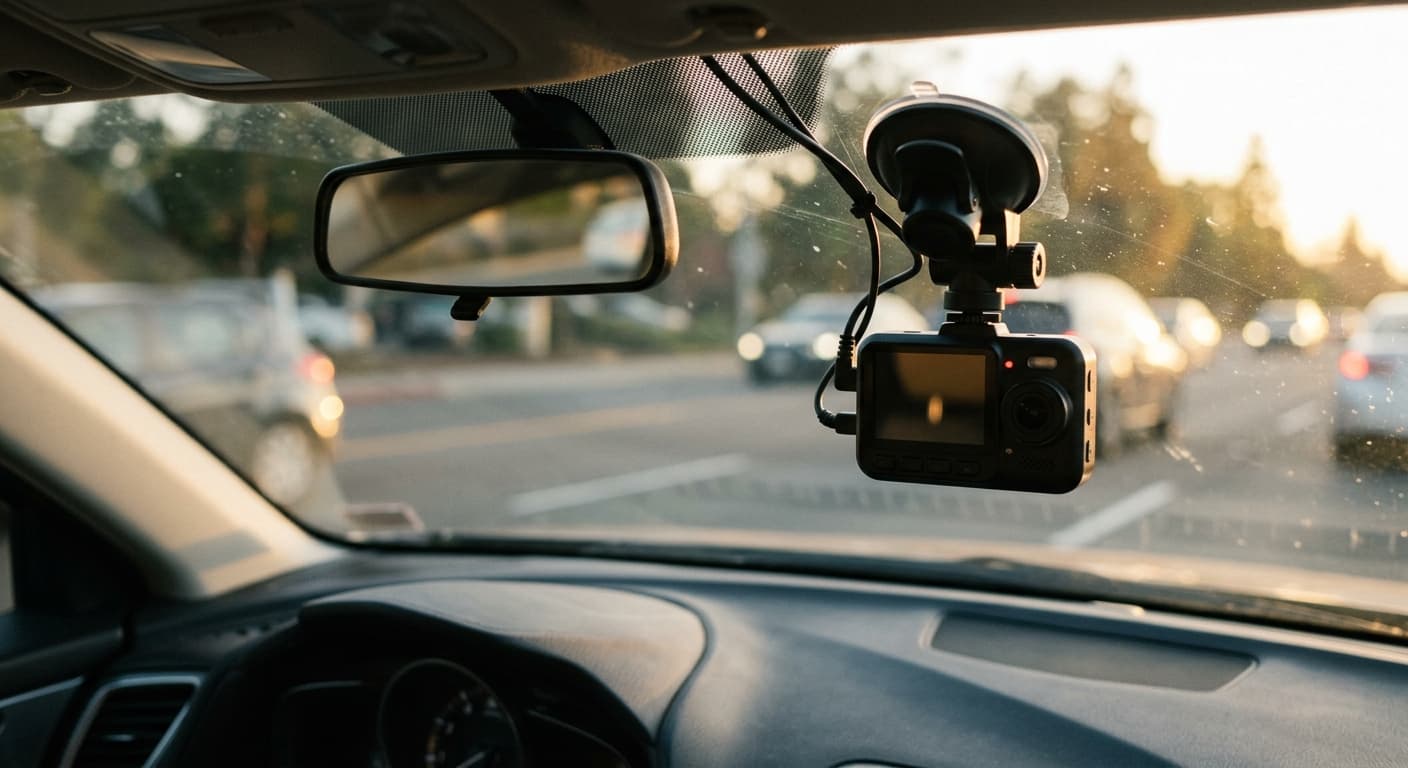
Dashcams are legal in Colorado; no state law prohibits their use in private vehicles. Audio recorded inside the vehicle is governed by Colorado's eavesdropping statute, C.R.S. 18-9-304, which is broken only by someone who is not visibly present and records without the consent of a principal party, so a driver taking part in the conversation is not covered. Mount the camera so it does not obstruct the driver's view of the road.
Quick Answer
Dashcams are legal in Colorado. There is no state statute that prohibits the use of dashboard cameras in private vehicles. You can mount a dashcam on your windshield, dashboard, or rearview mirror area as long as it does not obstruct your view of the road. Audio recording inside the vehicle is governed by Colorado's eavesdropping statute, C.R.S. 18-9-304, which a driver who is present and taking part in the conversation does not violate.
Legality of Dashcams in Colorado
No Specific Dashcam Statute
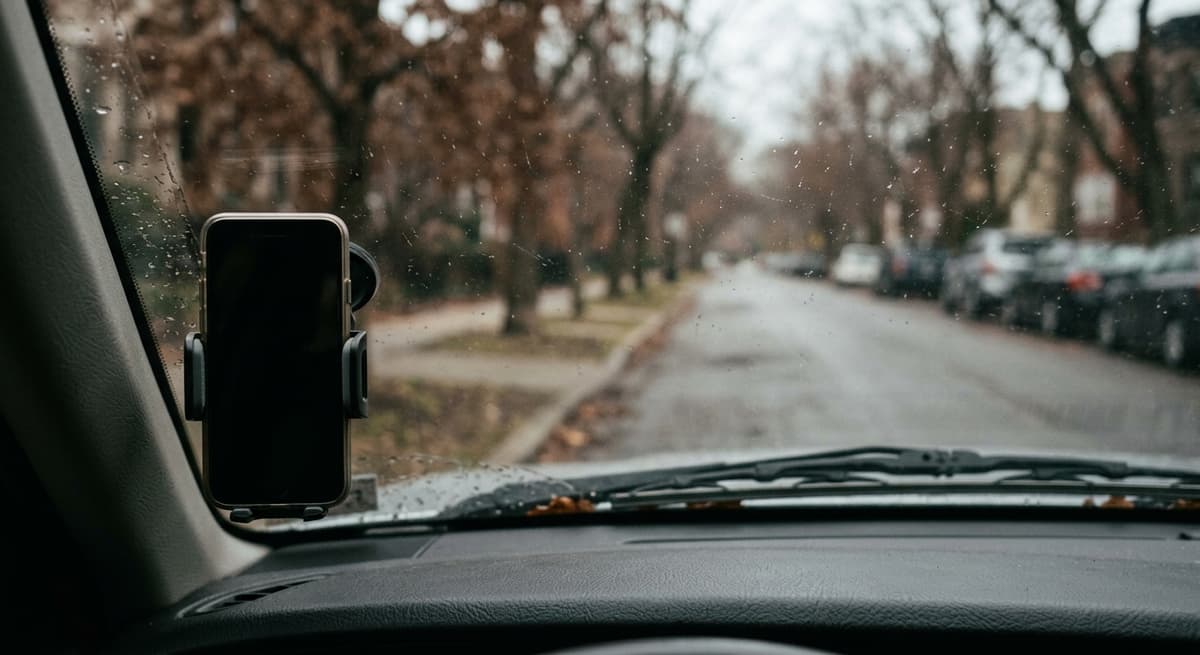
Colorado does not have a dedicated dashcam statute. Unlike some states that specifically address dashboard camera legality and placement, Colorado simply has no law that prohibits them. This means:
- You can purchase and install a dashcam in any personal vehicle
- No registration or notification to any government agency is required
- You can record continuously while driving
- Both front-facing and rear-facing cameras are permitted
- Dual-camera systems that record inside and outside the vehicle are legal
Windshield Mounting Rules
Colorado does not have a statute written specifically for dashcams or windshield-mounted objects. The closest general authority is C.R.S. 42-4-201, titled Obstruction of view or driving mechanism, which requires that a vehicle not be loaded and a driver's vision through required glass equipment not be blocked in a way that obstructs the driver's view or interferes with control of the vehicle. C.R.S. 42-4-227, sometimes cited for this, is actually Colorado's window-tint statute and governs light transmittance through window materials and films, not mounted objects.
Best practices for dashcam mounting in Colorado:
- Mount the camera behind the rearview mirror where it does not block your forward view
- Keep the camera as small and unobtrusive as possible
- Ensure mounting hardware does not create glare or reflections
- Avoid placing the camera in the direct line of sight between the driver and the road
- Suction cup mounts, adhesive mounts, and clip-on mounts are all acceptable
Tinted Windows and Dashcams
Colorado's window tint law (C.R.S. 42-4-227(1)(b)) allows non-reflective tint on the top 4 inches of the windshield. If you mount a dashcam in this tinted strip area, ensure it can still record clearly through the tint. Rear-facing dashcams are not affected by Colorado's rear window tint rules, as Colorado allows any level of tint on rear windows.
Audio Recording with Dashcams
One-Party Consent Inside Your Vehicle
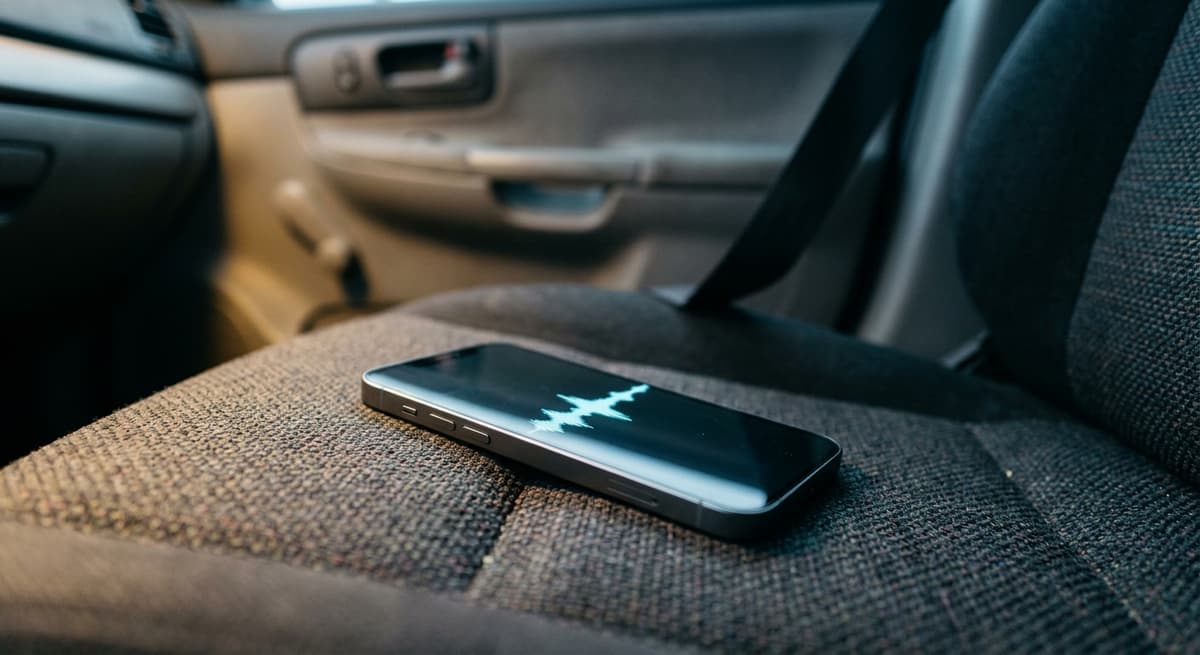
Many dashcams have built-in microphones that record audio inside the vehicle. Spoken conversations inside a car fall under Colorado's eavesdropping statute, C.R.S. 18-9-304, which reaches only a person "not visibly present during a conversation" who records it "without the consent of at least one of the principal parties." C.R.S. 18-9-303 is the wiretapping statute and covers telephone, telegraph, and electronic communications rather than in-person speech. Because you are present in the car and taking part, you can record conversations you participate in without notifying passengers.
This means:
- You can record your conversations with passengers without telling them
- Your consent as the driver satisfies the one-party consent requirement
- Both planned and spontaneous conversations can be recorded
When Audio Might Be a Concern
There are limited scenarios where dashcam audio could create legal issues:
- Rideshare drivers: If you drive for Uber or Lyft, passengers are in your vehicle temporarily. While one-party consent allows you to record as a participant, some passengers may be from two-party consent states. Posting a small notice in the vehicle that audio recording is in progress is a common best practice for rideshare drivers.
- Vehicle left unattended with recording active: If your dashcam continues recording audio when you leave the vehicle and passengers remain, you are no longer a participant in their conversations. The audio component could constitute eavesdropping under C.R.S. 18-9-304.
- Children and minors: Recording children's conversations in the vehicle raises no special legal issues under Colorado law, as one-party consent still applies when you are present.
Disabling Audio
If you want to avoid any audio recording concerns, most dashcams allow you to turn off the microphone. Video-only dashcam recording does not trigger any consent requirements under Colorado law.
Dashcam Footage as Evidence

Traffic Accidents
Dashcam footage is one of the most valuable forms of evidence in traffic accident cases in Colorado. Footage can:
- Prove who was at fault in a collision
- Document road conditions, weather, and visibility at the time of the accident
- Capture traffic signal status and traffic sign visibility
- Record the speed and behavior of other vehicles
- Preserve evidence that might otherwise be disputed
Colorado follows a modified comparative negligence system under C.R.S. 13-21-111. Dashcam footage can be critical in establishing fault percentages. If you are less than 50% at fault, you can recover damages proportional to the other party's fault.
Insurance Claims
Dashcam footage strengthens insurance claims by providing objective evidence of:
- The events leading up to an accident
- Hit-and-run incidents (capturing license plates of fleeing vehicles)
- Road rage incidents
- Vandalism or theft from your vehicle
- Weather-related damage events
Many insurance companies in Colorado accept dashcam footage as supporting evidence for claims. Some insurers offer discounts for vehicles equipped with dashcams, though this varies by provider.
Admissibility Standards
Dashcam footage is generally admissible in Colorado courts under the same rules as other video evidence:
- Authentication: Someone must testify that the footage accurately represents what the dashcam recorded. The dashcam owner or a forensic expert can provide this testimony.
- Relevance: The footage must relate to the issues in the case.
- Unaltered: The footage must be presented in its original form without editing or manipulation.
- Metadata preservation: Timestamps and GPS data embedded in dashcam files strengthen authenticity claims.
Police Reports and Dashcam Footage
If you have dashcam footage of an accident or traffic incident, you can:
- Show the footage to responding officers at the scene
- Provide a copy to the investigating officer
- Submit footage to your insurance company
- Preserve the original file for potential court proceedings
You are not legally required to share dashcam footage with police unless served with a warrant or subpoena, but sharing voluntarily can help establish your account of events.
Commercial Vehicle Dashcams
Employer-Installed Dashcams
Many Colorado trucking companies, delivery services, and fleet operators install dashcams in company vehicles. Legal considerations include:
- Employers can install dashcams in company-owned vehicles without employee consent for the video component
- Audio recording requires compliance with Colorado's eavesdropping statute. An employer who is not visibly present in the cab and has the consent of no principal party may violate C.R.S. 18-9-304 through continuous in-cab audio monitoring
- The Federal Motor Carrier Safety Administration (FMCSA) allows but does not mandate dashcams in commercial vehicles
- Colorado follows FMCSA regulations for commercial vehicle safety equipment
Employee Privacy Considerations
While employers can monitor company vehicles with dashcams, employees retain certain expectations:
- Employers should provide written notice that dashcams are installed
- Interior-facing cameras that record driver behavior should be disclosed in employee handbooks
- Audio recording policies should be clearly communicated
- Dashcam footage of employee activity should be handled as confidential personnel data
FMCSA Electronic Logging Devices
Commercial vehicles subject to the FMCSA's Electronic Logging Device (ELD) mandate already have tracking equipment installed. Dashcams are separate from ELDs but often work alongside them. The Colorado State Patrol Motor Carrier Safety Unit enforces FMCSA regulations in Colorado.
Dashcams and Police Encounters
Recording Traffic Stops
Your dashcam can continue recording during a traffic stop. Under C.R.S. 16-3-311, you have the right to record any incident involving a peace officer. Key points:
- You do not need to turn off your dashcam during a traffic stop
- An officer cannot order you to turn off the dashcam
- If the officer notices the dashcam, you can say it is always recording for safety purposes
- Dashcam footage of a traffic stop can serve as evidence if you dispute a citation
Police Requesting Dashcam Footage
If police request your dashcam footage at the scene of an incident:
- You can share voluntarily, which is often helpful if the footage supports your account
- You can decline and wait for a warrant or subpoena
- You should preserve the footage either way, as deleting footage that might be relevant to a criminal investigation could have legal consequences
Dashcam Types and Features
Front-Facing Cameras
The most common dashcam type, recording the road ahead. These cameras capture:
- Traffic conditions and other vehicles' behavior
- Road signs, signals, and markings
- Weather and visibility conditions
- Pedestrians and cyclists near the roadway
Dual-Camera Systems
Dual cameras record both front and rear (or front and interior). Interior cameras are common in:
- Rideshare vehicles (documenting passenger behavior)
- Commercial vehicles (monitoring driver alertness)
- Family vehicles (recording in-car activities)
Parking Mode Cameras
Some dashcams have a parking mode that activates when the vehicle detects motion or impact while parked. In Colorado:
- Video recording of the area around your parked vehicle is legal
- Audio recording while you are not in the vehicle could raise eavesdropping concerns if conversations are captured
- Parking mode footage has been used successfully in hit-and-run and vandalism cases
More Colorado Recording Laws
Audio Recording | Video Recording | Voyeurism & Hidden Cameras | Workplace Recording | Recording Police | Phone Call Recording | Security Cameras | Recording in Public | Landlord-Tenant | Dashcam Laws | Schools | Medical Recording
Back to Colorado Recording Laws
More Colorado Recording Topics
More Colorado Laws
Frequently Asked Questions
Are dashcams legal in Colorado?
Yes. Colorado has no law prohibiting dashcams. You can install and use a dashcam in any personal vehicle. Mount it so it does not obstruct your view of the road.
Can I use dashcam footage as evidence in Colorado?
Yes. Dashcam footage is admissible in Colorado courts and is widely accepted by insurance companies. The footage must be authentic, unaltered, and relevant to the case. Preserve the original file with its metadata for the strongest evidentiary value.
Do I need to tell passengers my dashcam records audio in Colorado?
Not legally. Colorado's eavesdropping statute, C.R.S. 18-9-304, reaches only a person who is not visibly present and who records without the consent of a principal party. As the driver taking part in the conversation, you are neither, so no notice is required. However, rideshare drivers commonly post notices as a best practice.
Where should I mount a dashcam in Colorado?
Mount it behind the rearview mirror or on the dashboard where it does not block your view. Colorado does not have a statute written specifically for dashcam placement. The general rule against obstructing the driver's view is C.R.S. 42-4-201, not C.R.S. 42-4-227, which is Colorado's window-tint statute.
Can police take my dashcam during a traffic stop in Colorado?
Not without your consent, a warrant, or a subpoena. Under C.R.S. 16-3-311, you have the right to record police incidents and maintain custody of your recording device. Officers cannot order you to turn off your dashcam.
Updates
Corrected the statute governing in-vehicle dashcam audio: Colorado's eavesdropping law, C.R.S. 18-9-304, applies to spoken conversations in a car, not the wiretapping law at C.R.S. 18-9-303, which covers telephone and electronic communications.
Corrected the citation for Colorado's windshield-obstruction rule: C.R.S. 42-4-227 is actually the window-tint statute, and the honest general authority is C.R.S. 42-4-201, which the page now cites, along with the correct subsection for the windshield tint-strip allowance and a working link to the Colorado State Patrol's motor-carrier-safety page.
Independently fact-checked against the cited primary sources; governing law re-checked for recent changes
Governing law re-checked for recent changes
Reviewed and approved by an editor
The Law Behind This Article
This article rests on the statutory provisions below, held in our own legal record and retrieved from the official source. Tap a section to read the operative text.
Colorado Revised Statutes, Title 18: Criminal Code
§ 18-9-304Eavesdropping prohibited - penaltyIn forcecited in 14 of our articles
(1) Any person not visibly present during a conversation or discussion commits eavesdropping if he: (a) Knowingly overhears or records such conversation or discussion without the consent of at least one of the principal parties thereto, or attempts to do so; or (b) Intentionally overhears or records such conversation or discussion for the purpose of committing, aiding, or abetting the commission of an unlawful act; or (c) Knowingly uses for any purpose, discloses, or attempts to use or disclose to any other person the contents of any such conversation or discussion while knowing or having reason to know the information was obtained in violation of this section; or (d) Knowingly aids, authorizes, agrees with, employs, permits, or intentionally conspires with any person to violate the provisions of this section. (2) Eavesdropping is a class 2 misdemeanor.
Official text (excerpt) · last checked 2026-08-31 · Read the full text in our law library · Verify at olls.info
Also relied on in: Colorado Security Camera Laws: Residential, Commercial, and Privacy Rules, Colorado Audio Recording Laws: One-Party Consent Rules and Penalties, Colorado Medical Recording Laws: Patient Rights, HIPAA, and Provider Rules
§ 18-9-303Wiretapping prohibited - penaltyIn forcecited in 16 of our articles
(1) Any person not a sender or intended receiver of a telephone or telegraph communication commits wiretapping if he: (a) Knowingly overhears, reads, takes, copies, or records a telephone, telegraph, or electronic communication without the consent of either a sender or a receiver thereof or attempts to do so; or (b) Intentionally overhears, reads, takes, copies, or records a telephone, telegraph, or electronic communication for the purpose of committing or aiding or abetting the commission of an unlawful act; or (c) Knowingly uses for any purpose or discloses to any person the contents of any such communication, or attempts to do so, while knowing or having reason to know the information was obtained in violation of this section; or (d) Knowingly taps or makes any connection with any telephone or telegraph line, wire, cable, or instrument belonging to another or with any electronic, mechanical, or other device belonging to another or installs any device whether connected or not which permits the interception of messages; or (e) Repealed.
Official text (excerpt) · last checked 2026-08-28 · Read the full text in our law library · Verify at olls.info
Cited in 4 court opinions in our collectionLatest citing opinion in our collection: 2001
Opinions citing this section in our collection:
- Bartnicki v. Vopper (Supreme Court of the United States 2001, 532 U.S. 514)“…5-60-120 (1997); Cal. Penal Code Ann. §631 (West 1999); Colo. Rev. Stat. §18-9-303 (2000); Del. Code Ann., Tit. 11, § 133…”
- Boehner, John A. v. McDermott, James A. (Court of Appeals for the D.C. Circuit 1999, 191 F.3d 463)“…oncert with them); Cal.Penal Code §§ 631, 632 (West 1999); Colo. Rev. Stat. § 18-9-303 (1986 & Supp.1995); Conn. Gen. Stat. §…”
- Sequa Corp. v. Lititech, Inc. (District Court, D. Colorado 1992, 807 F. Supp. 653)“…Menaman. Defendants rely on Colorado’s wiretapping statute, C.R.S. § 18-9-303, which provides in relevant part:…”
Identified automatically from the court opinions citing this section — not a ranking of which case controls.
Also relied on in: Colorado Landlord-Tenant Recording Laws: Cameras, Privacy, and Rights, Colorado School Recording Laws: Classrooms, IEP Meetings, and Surveillance, Colorado Video Recording Laws: What Is Legal and What Is Not
Colorado Revised Statutes, Title 13: Courts and Court Procedure
§ 13-21-111Negligence cases - comparative negligence as measure of damagesIn forcecited in 6 of our articles
(1) Contributory negligence shall not bar recovery in any action by any person or his legal representative to recover damages for negligence resulting in death or in injury to person or property, if such negligence was not as great as the negligence of the person against whom recovery is sought, but any damages allowed shall be diminished in proportion to the amount of negligence attributable to the person for whose injury, damage, or death recovery is made. (2) In any action to which subsection (1) of this section applies, the court, in a nonjury trial, shall make findings of fact or, in a jury trial, the jury shall return a special verdict which shall state: (a) The amount of the damages which would have been recoverable if there had been no contributory negligence; and (b) The degree of negligence of each party, expressed as a percentage.
Official text (excerpt) · last checked 2026-09-08 · Read the full text in our law library · Verify at olls.info
Cited in 26 court opinions in our collectionLatest citing opinion in our collection: 2026
Opinions citing this section in our collection:
- Lyons v. Nasby (Supreme Court of Colorado 1989, 13 Brief Times Rptr. 324)“…statute and is himself negligent as a matter of law. See C.R.S. section 13-21-111(1) (1973).” 8 Id. In our view,…”
- Colorado Flying Academy, Inc., a Colorado Corporation, Federal Insurance Company, and Associated Aviation Underwriters v. The United States of America (Court of Appeals for the Tenth Circuit 1984, 724 F.2d 871)“…lorado comparative negligence statute. See Colo.Rev.Stat. § 13-21-111 (1973). 10 . Plain…”
- Weaver v. Blake Ex Rel. Blake (Court of Appeals for the Tenth Circuit 2006, 454 F.3d 1087)“…percentage of responsibility is fifty percent or more. See Colo. Rev. Stat. § 13-21-111(1) (2005) (“Contributory negligence sha…”
Identified automatically from the court opinions citing this section — not a ranking of which case controls.
Also relied on in: Colorado Dog Bite Laws: Liability and Victim Rights, Colorado Car Accident Laws: Fault, Insurance, and Your Claim, Colorado Slip and Fall Laws: Proving Premises Liability Under the PLA
Colorado Revised Statutes, Title 16: Criminal Proceedings
§ 16-3-311Peace officer incident recordingsIn forcecited in 5 of our articles
(1) A person has the right to lawfully record any incident involving a peace officer and to maintain custody and control of that recording and the device used to record the recording. A peace officer shall not seize a recording or recording device without consent, without a search warrant or subpoena, or without a lawful exception to the warrant requirement. (2) (a) If a peace officer seeks to obtain from a person a device used to record an incident involving a peace officer in order to access the recording as possible evidence in an investigation, the officer shall first: (I) Advise the person of his or her name, his or her badge number or other identifying number, and the name of the law enforcement agency; (II) Identify the legal reason for which the information is requested; and (III) If practicable under the circumstances, inquire whether the person will voluntarily provide the officer with a copy of the specific recording that is relevant to the investigation either by voluntarily providing the device to the officer or immediately electronically transferring the information to the officer or the law enforcement agency so that the person may retain possession of his or…
Official text (excerpt) · last checked 2026-07-29 · Read the full text in our law library · Verify at olls.info
Also relied on in: Colorado Phone Call Recording Laws: One-Party Consent and Interstate Rules, Colorado Laws on Recording in Public: Rights, Limits, and Exceptions, Colorado Laws on Recording Police: Rights, Protections, and Body Cameras
Colorado Revised Statutes, Title 42: Vehicles and Traffic
§ 42-4-227Windows unobstructed - certain materials prohibited - windshield wiper requirementsIn forcecited in 3 of our articles
(1) (a) (I) Except as otherwise provided in this paragraph (a), no person shall operate a motor vehicle registered in Colorado on which any window, except the windshield, is composed of, covered by, or treated with any material or component that presents an opaque, nontransparent, or metallic or mirrored appearance in such a way that it allows less than twenty-seven percent light transmittance. The windshield shall allow at least seventy percent light transmittance. (II) Notwithstanding subparagraph (I) of this paragraph (a), the windows to the rear of the driver, including the rear window, may allow less than twenty-seven percent light transmittance if the front side windows and the windshield on such vehicles allow at least seventy percent light transmittance. (III) A law enforcement vehicle may have its windows, except the windshield, treated in such a manner so as to allow less than twenty-seven percent light transmittance only for the purpose of providing a valid law enforcement service. A law enforcement vehicle with such window treatment shall not be used for any traffic law enforcement operations, including operations concerning any offense in this article.
Official text (excerpt) · last checked 2026-09-01 · Read the full text in our law library · Verify at olls.info
Cited in 2 court opinions in our collectionLatest citing opinion in our collection: 2023
Opinions citing this section in our collection:
- United States v. Ramirez (Court of Appeals for the Tenth Circuit 2004, 86 F. App'x 384)“…w tinting did not violate Colorado's less restrictive law. Colo. Rev. Stat. Ann. § 42-4-227(1)(a) (prohibiting window treatments t…”
- Collins v. Barela (District Court, D. Colorado 2023)“…excessive tint of the automobile windows, in violation of Colo. Rev. Stat. § 42-4-227. [#62, 6-8] Based upon the excessive…”
Identified automatically from the court opinions citing this section — not a ranking of which case controls.
Also relied on in: Colorado Window Tint Laws (2026): Legal VLT Limits, Colorado Windshield Mounting Laws (2026 Guide)
Explore the law
This article also draws on these acts and chapters (opening at their first section): Colorado Revised Statutes, Title 42: Vehicles and Traffic § 42-1-101 (Short title)
Related law for further reading — not part of this article’s citations.
Search our full record of US law — 2.1 million sections, every state + federal →
Sources and References
- C.R.S. 42-4-227 - Windshield Obstructions(law.justia.com)
- C.R.S. 18-9-303 - Wiretapping Prohibited(law.justia.com)
- C.R.S. 16-3-311 - Peace Officer Recordings(law.justia.com)
- FMCSA(fmcsa.dot.gov).gov
- Colorado State Patrol - Motor Carrier Safety(csp.colorado.gov).gov
- Colorado Title 42 Vehicles and Traffic(content.leg.colorado.gov).gov
- C.R.S. 13-21-111 - Comparative Negligence(law.justia.com)
- C.R.S. 18-9-304 - Eavesdropping Prohibited(law.justia.com)
- Colorado Revised Statutes Title 18, Article 9, Part 3 (Office of Legislative Legal Services)(olls.info)