
New York
New York Windshield Mounting Laws (2026 Guide)
Independently fact-checked against primary sources (last audited August 17, 2026). · Reviewed by the RecordingLaw editorial team. · Law checked current as of August 7, 2026. · 6 primary sources cited on this page. How we verify our legal content
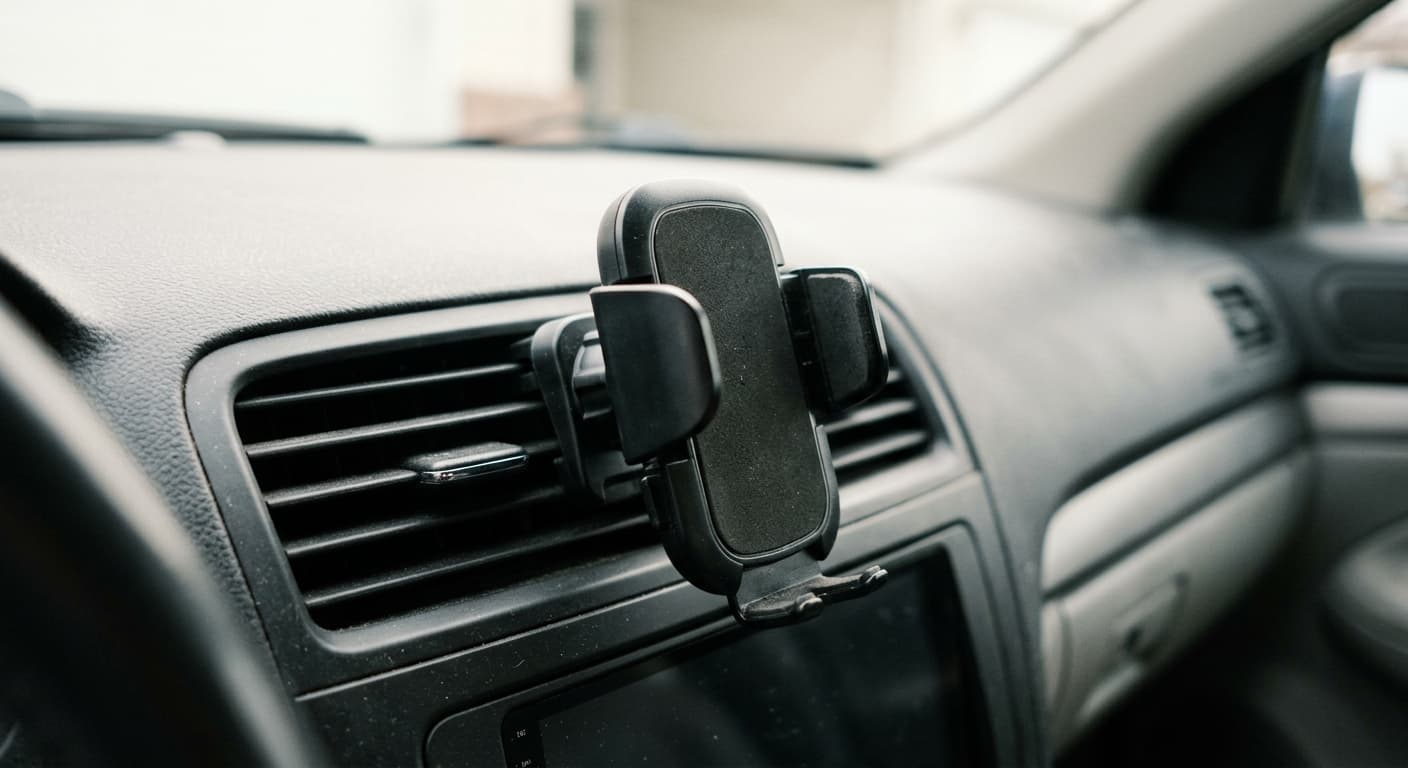
New York prohibits windshield-mounted objects that obstruct the driver's view under VTL 375(30), but does not ban all mounts. GPS units, phone holders, and dashcams are permitted when placed in the lower left corner of the windshield or on the dashboard, away from the driver's primary line of sight.
New York has some of the most restrictive windshield and window regulations in the country. The state requires 70% visible light transmission (VLT) on the windshield and front side windows, does not provide a specific exemption for GPS devices or phone mounts, and aggressively enforces its handheld device laws with a 5-point penalty per conviction.
While New York does not outright ban all windshield-mounted devices, any object that obstructs or interferes with the driver's view through the windshield is illegal. Combined with the strict 70% VLT standard and annual inspection enforcement, drivers in New York face significant compliance requirements.
New York Windshield Obstruction Law
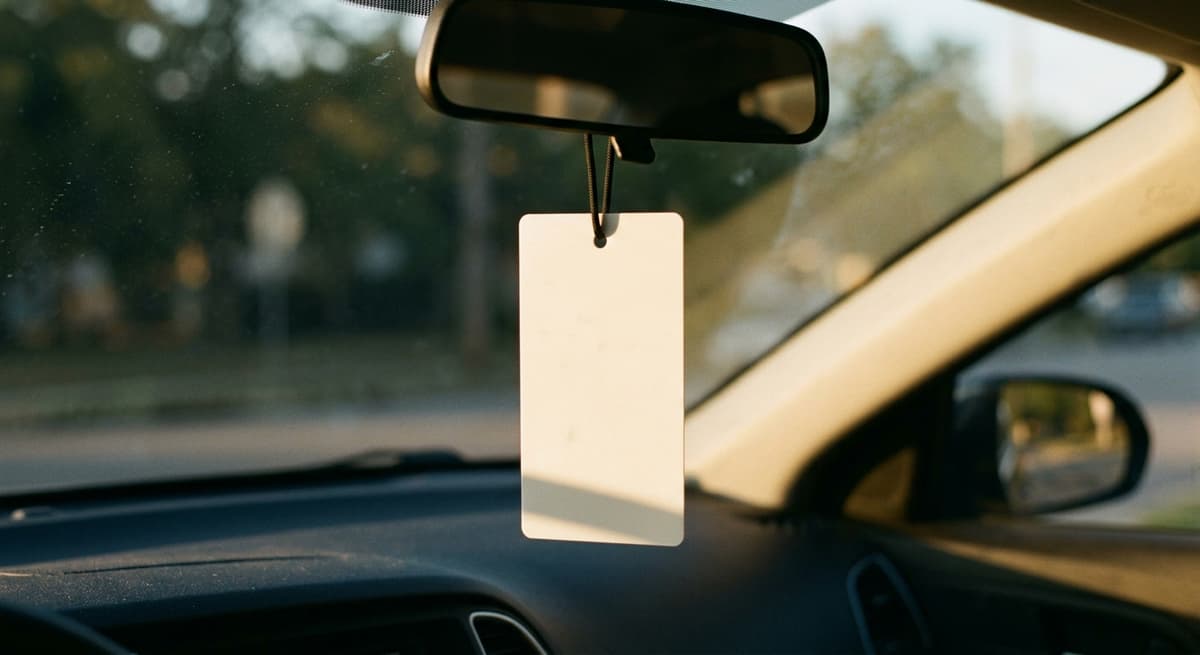
VTL Section 375(30) is the primary windshield obstruction statute. It states that it is unlawful for any person to operate a motor vehicle with any object placed or hung in or upon the vehicle, except required or permitted equipment of the vehicle, in such a manner as to obstruct or interfere with the view of the operator through the windshield, or to prevent the operator from having a clear and full view of the road and condition of traffic behind such vehicle.
Key Elements of the Law
The statute has several important components:
- Objects placed or hung: This covers anything attached to the windshield, hung from the rearview mirror, or placed on the dashboard if it blocks the view
- Except required or permitted equipment: Factory-installed equipment, inspection stickers, toll transponders, and other legally mandated items are exempt
- Obstruct or interfere: The test is whether the object actually impairs the driver's view, not simply whether something is present on the windshield
- View behind the vehicle: The law also covers objects that block the driver's ability to see traffic behind them through the rear window
Secondary Enforcement Note
An important amendment to VTL 375(30) provides that a summons for violating this subdivision shall only be issued when there is reasonable cause to believe the driver has committed another violation of state law. This means police generally cannot stop a vehicle solely for a windshield obstruction unless they also observe another traffic violation. However, a windshield obstruction charge can be added to any other traffic stop.
GPS and Phone Mount Rules
New York does not have a statute specifically addressing GPS or phone windshield mounts. The legality of mounting a device on the windshield depends on whether it obstructs the driver's view under VTL 375(30).
Recommended Placement
Based on guidance from New York traffic attorneys and law enforcement practice, GPS and phone mounts should be placed:
- In the lower left corner of the windshield: This is widely cited as the safest legal position because it is outside the driver's primary line of sight
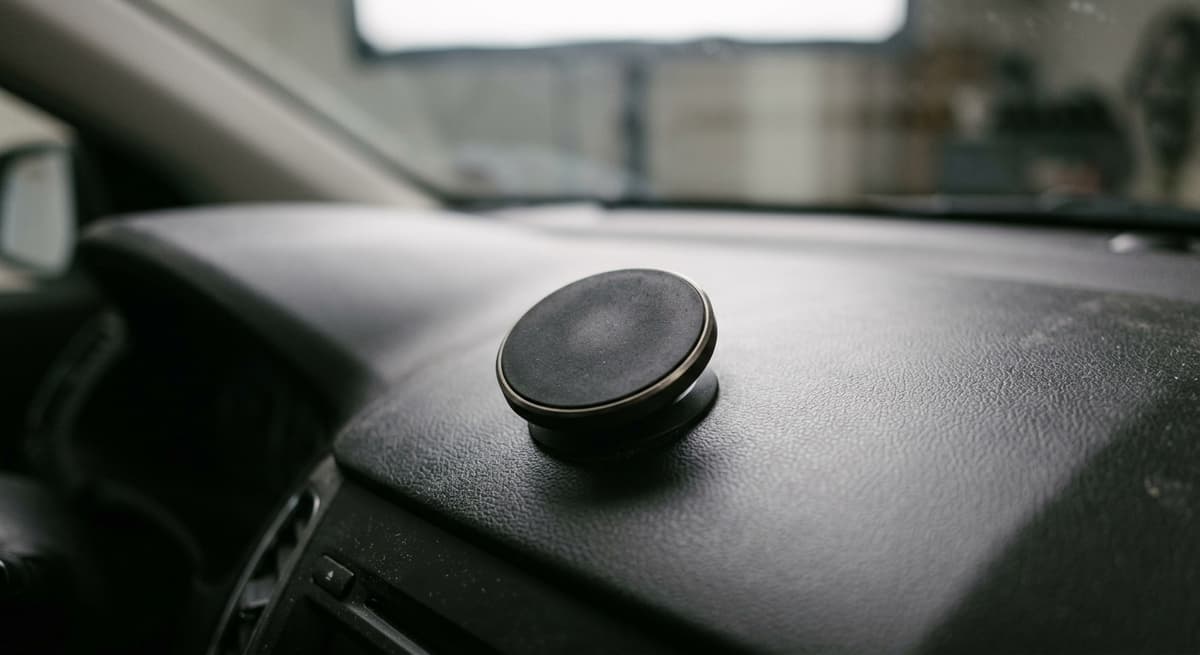
- On the dashboard: A dashboard mount avoids the windshield entirely and eliminates any risk under VTL 375(30)
- On a vent clip: Attaching the device to a dashboard air vent keeps it accessible without touching the windshield
Mounting a device in the center of the windshield, near the rearview mirror, or anywhere that blocks the driver's forward view creates significant legal risk.
Hands-Free Requirement
Even with a properly mounted device, New York strictly limits how drivers interact with phones and electronic devices. You may not hold or manually interact with a phone or portable electronic device while the vehicle is in motion.
Dashcam Placement
Dashcams are legal in New York, but placement matters. Under VTL 375(30), a dashcam mounted on the windshield must not obstruct the driver's view. The safest placements are:
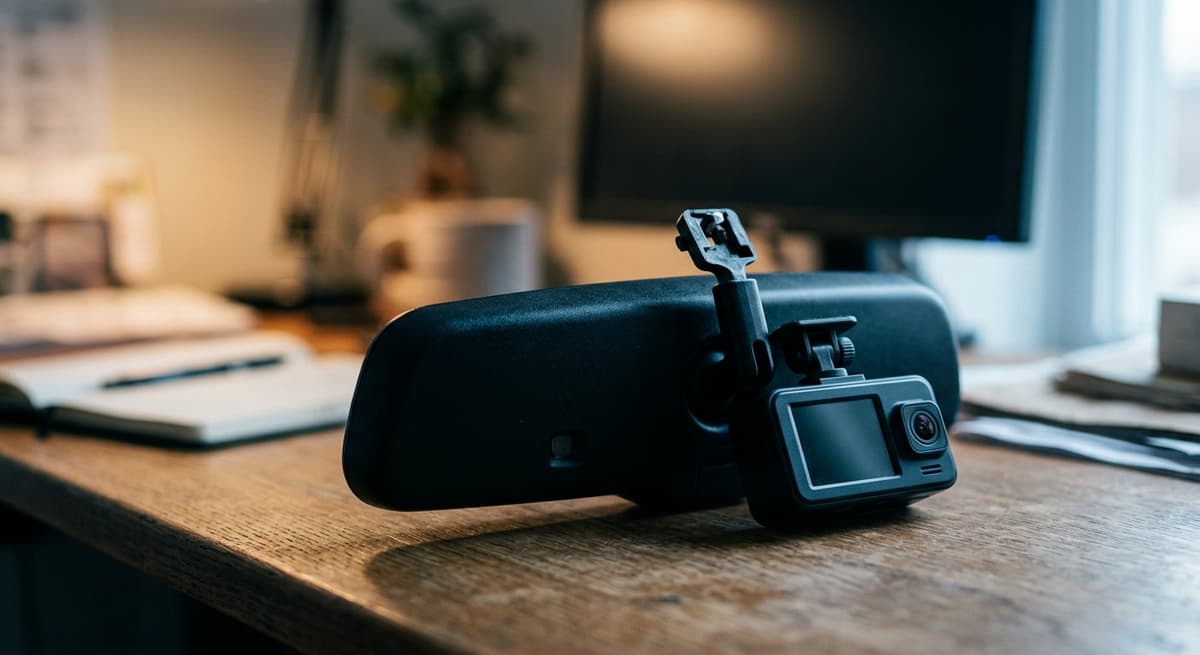
- Behind the rearview mirror, where the mirror already blocks the driver's view in that spot
- On the dashboard facing forward through the windshield
- In the lower corner on the passenger side of the windshield
A dashcam that is small and mounted discreetly behind the rearview mirror is generally considered compliant because it does not add any new obstruction beyond what the mirror itself already creates.
Audio Recording
New York is a one-party consent state for recording. Under New York Penal Law 250.00, you may record a conversation as long as one party (including yourself) consents. A dashcam with audio recording enabled is legal as long as the driver consents to the recording.
Window Tinting Law: The 70% VLT Standard
VTL Section 375(12-a) establishes one of the strictest window tinting standards in the nation. The key requirements are:
Windshield
- Tint material may be applied to the uppermost 6 inches of the windshield, which is exempt from the light transmittance limit
- Below that 6-inch strip, the windshield must allow at least 70% of outside light to pass through
- VTL 375(12-a)(a) separately bars any sign or other nontransparent material on the windshield and the front side windows
Front Side Windows
- Must allow at least 70% of light to pass through (70% VLT)
- No aftermarket tinting that reduces light transmission below 70% is permitted
Rear Side Windows and Rear Window
- Rear side windows must also allow at least 70% of outside light through if the vehicle is classified as a station wagon, sedan, hardtop, coupe, hatchback or convertible under VTL 375(12-a)(b)(3). That list covers most ordinary passenger cars
- Body styles outside that list, such as SUVs, vans and pickup trucks, are not reached by the rear side window limit, so darker tint on those windows is permitted
- The rear window may have any level of darkness, but only if the vehicle is equipped with outside rear-view mirrors on both sides
Reflectivity
VTL 375(12-a) sets light transmittance percentages only. It does not impose a separate reflectivity standard, and it does not ban metallic or mirrored film as such. A reflective film still has to meet the 70% light transmittance requirement wherever that requirement applies. The nearest related rule is VTL 375(12-a)(a), which bars any sign or other nontransparent material on the windshield and front side windows, and that is a rule about opacity rather than reflectance.
70% VLT in Context
The 70% VLT standard means the window must allow at least 70% of exterior light to pass through. For practical purposes, this means almost no aftermarket tinting is legal on the windshield or front side windows, since even a light tint film typically reduces VLT below 70% when combined with the slight tinting already present in factory glass.
| Window Location | Maximum Tint Darkness (VLT) | Notes |
|---|---|---|
| Windshield (top 6 inches) | Any darkness | Strip is exempt from the light transmittance limit |
| Windshield (below strip) | 70% VLT minimum | Virtually no aftermarket tint allowed |
| Front side windows | 70% VLT minimum | Virtually no aftermarket tint allowed |
| Rear side windows (station wagon, sedan, hardtop, coupe, hatchback, convertible) | 70% VLT minimum | Covers most ordinary passenger cars |
| Rear side windows (other body styles, such as SUVs, vans, pickups) | Any darkness | Not reached by VTL 375(12-a)(b)(3) |
| Rear window | Any darkness | Allowed only if the vehicle has outside mirrors on both sides |
Annual Inspection Enforcement
Starting in January 2017, New York incorporated window tint testing into the annual vehicle inspection program. During inspection, a light meter is used to test the VLT of the windshield and front side windows.
If your vehicle's front windows do not meet the 70% VLT standard, the vehicle will fail inspection. You cannot legally drive a vehicle that has failed inspection, and you must remove the noncompliant tint and pass a re-inspection before returning to the road.
This is a significant enforcement mechanism that other states lack. Even if you avoid a traffic stop for tinted windows, the annual inspection will catch the violation.
Medical Exemptions
New York provides a medical exemption process for drivers who need darker window tinting due to a qualifying medical condition. The process is administered by the New York DMV.
Qualifying Conditions
Conditions that may qualify for a tint exemption include:
- Albinism
- Chronic actinic dermatitis or actinic reticuloid
- Dermatomyositis
- Lupus erythematosus
- Porphyria
- Xeroderma pigmentosum
- Severe drug photosensitivity (expected to be of prolonged duration)
- Photophobia associated with an ophthalmic or neurological disorder
- Any other condition causing severe photosensitivity
Application Process
- Obtain the Application for Tinted Window Exemption (Form MV-80W) from the DMV
- Have page 2 completed by a New York State licensed physician, physician assistant, or nurse practitioner
- Submit the completed application to the DMV
- If approved, carry the exemption documentation in the vehicle at all times
The medical exemption permits window tinting below the 70% VLT standard on specified windows. The physician must indicate which windows need treatment and the recommended VLT level.
Handheld Device and Hands-Free Laws
New York has two statutes that govern phone and electronic device use while driving, both of which directly affect how drivers interact with windshield-mounted devices.
VTL 1225-c: Mobile Telephone Use
VTL Section 1225-c prohibits operating a motor vehicle while using a mobile telephone to engage in a call. "Using" is defined as holding the phone to or in the immediate proximity of the user's ear.
Hands-free phone use is permitted. A phone mounted on the dashboard or in a cradle that allows the driver to talk without holding the device is legal.
VTL 1225-d: Portable Electronic Devices
VTL Section 1225-d is the broader prohibition. It bans operating a motor vehicle while using any portable electronic device. "Using" includes texting, emailing, browsing the internet, viewing or transmitting images, and playing games.
The only way to legally use a phone for navigation while driving in New York is through a hands-free setup where the device is mounted and the driver uses voice commands or interacts with it only when the vehicle is stopped.
Penalties for Handheld Device Use
| Offense | Fine | Surcharge | Points |
|---|---|---|---|
| First offense (VTL 1225-c or 1225-d) | Up to $200 | $93 | 5 |
| Second offense (within 18 months) | Up to $250 | $93 | 5 |
| Third or subsequent offense (within 18 months) | Up to $450 | $93 | 5 |
The 5-point penalty is severe. Accumulating 11 points within 24 months triggers a license suspension, reflecting the DMV's February 16, 2026 update that extended the persistent-violator lookback window from 18 to 24 months. Two cell phone tickets within that window bring a driver to 10 points, just one point short of suspension.
Drivers Under 21
Drivers with a learner's permit or junior license face a 120-day suspension of their license or permit for the first conviction of using a handheld device while driving. A second conviction within 6 months results in revocation for at least one year.
Penalties for Windshield and Tint Violations
| Violation | Fine | Surcharge | Points |
|---|---|---|---|
| Windshield obstruction (VTL 375-30) | Up to $150 | $50 to $55 | 0 |
| Window tint violation (VTL 375 12-a) | Up to $150 per window | $50 to $55 | 0 |
| Failed inspection (driving uninspected vehicle) | Up to $300 | $93 | 0 |
A window tint violation can be costly when you add up fines across multiple windows plus the surcharge. Additionally, the vehicle will fail its next inspection, creating ongoing compliance issues until the tint is removed.
Exemptions Summary
| Exemption | Authority |
|---|---|
| Required equipment (inspection stickers, toll transponders) | VTL 375(30) |
| Tint on the uppermost 6 inches of the windshield | VTL 375(12-a) |
| Any tint on the rear window, if the vehicle has outside mirrors on both sides | VTL 375(12-a) |
| Any tint on rear side windows of vehicles not classified as a station wagon, sedan, hardtop, coupe, hatchback or convertible | VTL 375(12-a) |
| Medical exemption (DMV-approved, Form MV-80W) | VTL 375(12-a) |
| Hands-free device use (phone calls and navigation) | VTL 1225-c, VTL 1225-d |
| Law enforcement and emergency vehicles | VTL 375 |
Comparison With Neighboring States
New York's 70% VLT standard for front windows is among the most restrictive in the nation:
| State | Front Side Window VLT | Windshield Mount Allowed | Specific GPS Exemption |
|---|---|---|---|
| New York | 70% | Limited (lower left corner) | No |
| New Jersey | No aftermarket tint | No | No |
| Connecticut | 35% | Yes (with restrictions) | Yes |
| Pennsylvania | 70% | No | No |
| Massachusetts | 35% | No | No |
New Jersey and Pennsylvania share similarly strict approaches, while Connecticut and Massachusetts are more permissive on side window tinting.
More New York Laws
Frequently Asked Questions
Can I mount a GPS or phone on my windshield in New York?
New York does not specifically ban GPS or phone mounts on the windshield, but any device that obstructs the driver's view violates VTL 375(30). The safest legal placement is in the lower left corner of the windshield or on the dashboard. You must use the device hands-free while driving.
What is the 70% VLT rule in New York?
VTL 375(12-a) requires the windshield (below the top 6-inch strip) and front side windows to allow at least 70% of outside light to pass through. This effectively bans almost all aftermarket tinting on those windows. Rear side windows must also meet the 70% standard if the vehicle is a station wagon, sedan, hardtop, coupe, hatchback or convertible, while other body styles such as SUVs, vans and pickups are not covered. The rear window may be any darkness if the vehicle has outside mirrors on both sides.
What happens if my windows fail the tint test during inspection?
Your vehicle will fail the annual New York State inspection. You cannot legally drive a vehicle that has failed inspection. You must remove the noncompliant tint and pass a re-inspection before returning the vehicle to the road. Driving an uninspected vehicle carries fines up to $300.
How many points is a cell phone ticket in New York?
Using a handheld phone or portable electronic device while driving carries 5 points per conviction under VTL 1225-c or VTL 1225-d. The fine for a first offense is up to $200 plus a $93 surcharge. Accumulating 11 points within 24 months triggers a license suspension, following the DMV's February 16, 2026 update to the lookback window.
Can I get a medical exemption for darker window tint in New York?
Yes. You must apply through the DMV using Form MV-80W, which requires completion by a New York State licensed physician, physician assistant, or nurse practitioner. Qualifying conditions include albinism, lupus, porphyria, and other photosensitivity disorders. The approved exemption documentation must be carried in the vehicle at all times.
Updates
Corrected the New York window tint rules: rear side windows on station wagons, sedans, hardtops, coupes, hatchbacks and convertibles must meet the same 70% light transmittance standard, and removed a stated reflective-film ban, a limousine exemption and a VTL 1213 penalty entry that do not exist in the statute.
Updated the license-point lookback window from 18 to 24 months to match the DMV's February 16, 2026 rule change, and corrected the windshield-obstruction ticket (VTL 375-30) penalties-table entry from 2 points to the correct 0 points (it is an equipment violation, unlike the separate 2-point VTL 1213 obstructed-view violation).
Independently fact-checked against the cited primary sources
Governing law re-checked for recent changes
Reviewed and approved by an editor
The Law Behind This Article
This article rests on the statutory provisions below, held in our own legal record and retrieved from the official source. Tap a section to read the operative text.
New York Vehicle and Traffic Law
§ 375EquipmentIn forcecited in 5 of our articles
Equipment. 1. (a) Every motor vehicle, operated or driven upon the public highways of the state, shall be provided with adequate brakes and steering mechanism in good working order and sufficient to control such vehicle at all times when the same is in use, and a suitable and adequate horn or other device for signaling, which horn or device shall produce a sound sufficiently loud to serve as a danger warning but shall not be used other than as a reasonable warning nor be unnecessarily loud or harsh. (b) Every such motor vehicle shall be equipped with suitable wipers or other device which shall clear a sufficient area of the windshields to provide reasonable driving vision. (i) The use or placing of posters or stickers on windshields or rear windows of motor vehicles other than those authorized by the commissioner, is hereby prohibited. Notwithstanding any other provision of law, a summons for operating a motor vehicle in violation of this subparagraph shall only be issued when there is reasonable cause to believe that the person operating such motor vehicle has committed a violation of the laws of this state other than a violation of this subparagraph.
Official text (excerpt) · last checked 2026-09-08 · Read the full text in our law library · Verify at legislation.nysenate.gov
Cited in 254 court opinions in our collectionLatest citing opinion in our collection: 2026
In the courts (editorial summary, independently checked):New York courts apply section 375 mainly in suppression rulings. People v. Biggs (2022) applied the tint provision, section 375(12-a)(b), and stated the test is whether the officer reasonably believed the windows were over-tinted; People v. Bookman (2015) found probable cause under section 375(30) for an ornament hung from the mirror.
Opinions citing this section in our collection:
- The People v. Rebecca Guthrie (New York Court of Appeals 2015, 25 N.Y.3d 130)“…ng that its windows were excessively tinted in violation of Vehicle and Traffic Law § 375 (12-a) (b) (4) (People v Estrella,…”
- People v. Pealer (New York Court of Appeals 2013, 20 N.Y.3d 447)✓An officer following a gray Subaru stopped it for an illegal rear window sticker under section 375(1)(b)(i) and arrested the driver for DWI; a footnote rejected the suppression claim, stating that no exception exists for infractions characterized as de minimis.
- People v. Biggs (Appellate Division of the Supreme Court of the State of New York 2022, 175 N.Y.S.3d 117)✓Officers stopped a Nissan at night for dark rear window tint and a marijuana odor; the majority held the officer's testimony that he could not see into the car met the test of a reasonable belief the windows were over-tinted under section 375(12-a)(b).
Identified automatically from the court opinions citing this section — not a ranking of which case controls.
Also relied on in: New York Dashcam Laws: Legality, Mounting Rules, and Evidence Use, Window Tint Laws by State (2026): Legal VLT Limits, New York Window Tint Laws (2026): Legal VLT Limits
§ 1225-cUse of mobile telephonesIn force
Use of mobile telephones. 1. For purposes of this section, the following terms shall mean: (a) "Mobile telephone" shall mean the device used by subscribers and other users of wireless telephone service to access such service. (b) "Wireless telephone service" shall mean two-way real time voice telecommunications service that is interconnected to a public switched telephone network and is provided by a commercial mobile radio service, as such term is defined by 47 C.F.R. § 20.3. (c) "Using" shall mean (i) holding a mobile telephone to, or in the immediate proximity of, the user's ear; and (ii) with respect to a person operating a commercial motor vehicle, holding a mobile telephone to, or in the immediate proximity of, the user's ear, or dialing or answering a mobile telephone by pressing more than a single button, or reaching for a mobile telephone in a manner that requires such person to maneuver so that he or she is no longer in a seated driving position, restrained by a seat belt that is installed in accordance with section 393.93 of title 49 of the code of federal regulations and adjusted in accordance with the vehicle manufacturer's instructions.
Official text (excerpt) · last checked 2026-07-29 · Read the full text in our law library · Verify at legislation.nysenate.gov
Cited in 45 court opinions in our collectionLatest citing opinion in our collection: 2024
Opinions citing this section in our collection:
- Smilow v. New York State Department of Motor Vehicles (Appellate Division of the Supreme Court of the State of New York 2012, 95 A.D.3d 1023)“…w judge, made after a hearing, that the petitioner violated Vehicle and Traffic Law § 1225-c (2) (a), and imposed a penalty. Adjud…”
- Matter of Snitow v. New York State Dept. of Motor Vehs. (Appellate Division of the Supreme Court of the State of New York 2014, 121 A.D.3d 1008)“…after a hearing, finding that the petitioner had violated Vehicle and Traffic Law § 1225-c (2) (a), and imposed a penalty.…”
- People v. Wells (Appellate Terms of the Supreme Court of New York 2017, 57 Misc. 3d 21)“…h using a mobile telephone while operating a motor vehicle (Vehicle and Traffic Law § 1225-c [2] [a]). At a nonjury trial, a New Yor…”
Identified automatically from the court opinions citing this section — not a ranking of which case controls.
New York Penal Law
§ 250.00Eavesdropping; definitions of termsIn forcecited in 19 of our articles
Eavesdropping; definitions of terms. The following definitions are applicable to this article: 1. "Wiretapping" means the intentional overhearing or recording of a telephonic or telegraphic communication by a person other than a sender or receiver thereof, without the consent of either the sender or receiver, by means of any instrument, device or equipment. The normal operation of a telephone or telegraph corporation and the normal use of the services and facilities furnished by such corporation pursuant to its tariffs or necessary to protect the rights or property of said corporation shall not be deemed "wiretapping." 2. "Mechanical overhearing of a conversation" means the intentional overhearing or recording of a conversation or discussion, without the consent of at least one party thereto, by a person not present thereat, by means of any instrument, device or equipment. 3.
Official text (excerpt) · last checked 2026-07-29 · Read the full text in our law library · Verify at legislation.nysenate.gov
Cited in 56 court opinions in our collectionLatest citing opinion in our collection: 2023
Opinions citing this section in our collection:
- People v. Fata (New York County Courts 1988, 139 Misc. 2d 979)“…Fata had a justifiable expectation of privacy; and (c) that Penal Law § 250.00 et seq. prohibit the mechanical overh…”
- The People v. Anthony Badalamenti (New York Court of Appeals 2016, 27 N.Y.3d 423)“…t of “mechanical overhearing of a conversation” pursuant to Penal Law § 250.00 (2), includes vicarious consent, on beh…”
- Gurevich v. Gurevich (New York Supreme Court 2009, 24 Misc. 3d 808)“…11 ing” as they relate to Penal Law § 250.05 are defined in Penal Law § 250.00 (6) as: “the intentional acquiring, r…”
Identified automatically from the court opinions citing this section — not a ranking of which case controls.
Also relied on in: New York Audio Recording Laws: One-Party Consent Rules and Penalties, New York Landlord-Tenant Recording Laws: Rights for Renters and Property Owners, New York Medical Recording Laws: Patient Rights and Healthcare Privacy
Search our full record of US law — 2.1 million sections, every state + federal →
Sources and References
- New York Vehicle and Traffic Law Section 375 - Equipment(nysenate.gov).gov
- New York DMV - Tinted Windows(dmv.ny.gov).gov
- New York DMV - Medical Exemptions(dmv.ny.gov).gov
- New York DMV - Application for Tinted Window Exemption (MV-80W)(dmv.ny.gov).gov
- VTL Section 1225-c - Use of Mobile Telephones(law.justia.com)
- VTL Section 1225-d - Use of Portable Electronic Devices(nysenate.gov).gov
- New York Penal Law 250.00 - Eavesdropping definitions(nysenate.gov).gov
- New York DMV - About the NYS Driver Point System(dmv.ny.gov)