
New Mexico
New Mexico Phone Call Recording Laws: One-Party Consent Guide (2026)
Independently fact-checked against primary sources (last audited August 15, 2026). · Reviewed by the RecordingLaw editorial team. · Law checked current as of August 15, 2026. · 3 primary sources cited on this page. How we verify our legal content

Under N.M. Stat. Ann. 30-12-1, New Mexico follows a one-party consent rule for phone call recording. Any participant in a call may record the conversation without notifying or obtaining permission from the other parties. Recording by someone who is not a party to the call remains illegal.
New Mexico is a one-party consent state for phone call recording. Under N.M. Stat. Ann. § 30-12-1, you can legally record any telephone conversation you participate in without informing or getting permission from the other parties on the call. The statute specifically addresses "telegraph or telephone" communications, making phone calls the primary type of communication governed by New Mexico's wiretapping law.
This guide covers the complete rules for recording phone calls in New Mexico, including personal calls, business calls, VoIP and video calls, interstate call recording, and the criminal and civil penalties for violations.
How One-Party Consent Works for Phone Calls
The Basic Rule
Under N.M. Stat. Ann. § 30-12-1, it is illegal to knowingly and without lawful authority intercept telephone communications without the consent of the sender or intended recipient. The one-party consent exception means that if you are a party to the phone call, your own consent satisfies the legal requirement. You can record:
- Without announcing "this call is being recorded"
- Without getting verbal or written permission
- Without playing a beep tone
- Using any recording device or software
Who Qualifies as a "Party" to the Call
A party to the call is someone who is actively participating in the conversation. This includes:
- The person who made the call
- The person who answered the call
- Anyone added to a conference call or group call
- Someone listening on speakerphone who is known to the participants
You are not a party to the call if you are secretly listening on an extension without anyone's knowledge, or if you have tapped a phone line to intercept calls between other people.
Three Exceptions to the Wiretap Law
Section 30-12-1 provides three exceptions where interception of phone communications is lawful:
- Court order authorized under Sections 30-12-2 through 30-12-11
- Common carriers acting in the normal course of employment (telephone company employees, etc.)
- Law enforcement acting under color of law in the investigation of a crime, where the officer is a party or one party has given prior consent
Types of Phone Calls Covered
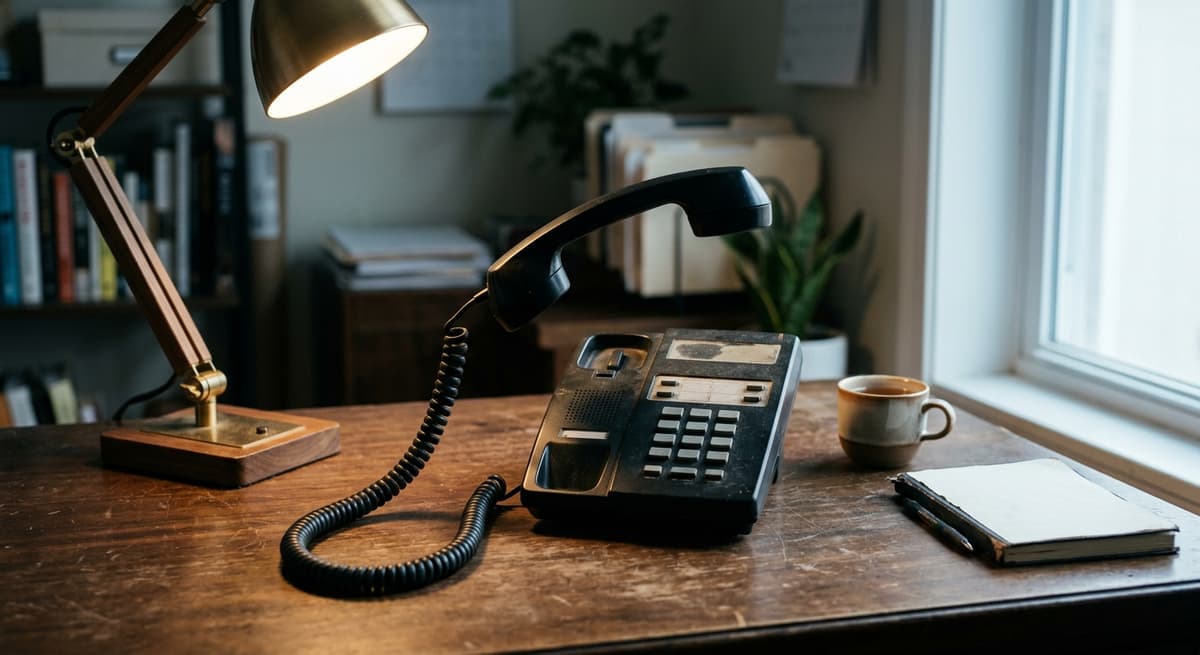
Landline Calls
Traditional landline telephone calls are clearly covered by the statute's reference to "telegraph or telephone line, wire, cable or instrument." One-party consent applies. You can record any landline call you participate in.
Cell Phone Calls
The statute's language references "telegraph or telephone line, wire, cable or instrument." Some legal scholars have noted that purely wireless cellular communications may not fit neatly within this language because they do not travel over a physical wire at every point.
New Mexico courts have not issued a definitive ruling on this question. As a practical matter, treat all cell phone calls as requiring one-party consent. This approach keeps you in compliance regardless of how courts eventually interpret the statutory language.
VoIP and Video Calls
Voice over Internet Protocol (VoIP) calls through platforms like Zoom, Microsoft Teams, Google Meet, Skype, and similar services are treated the same as traditional phone calls for consent purposes. One-party consent applies. You can record:
- Zoom meetings you participate in
- Microsoft Teams calls you are on
- Google Meet sessions you attend
- Skype and WhatsApp audio or video calls
- FaceTime and other video calling apps
Conference Calls and Group Calls
For multi-party calls, only one participant needs to consent. If you are on a conference call with five other people, your consent as a participant is sufficient to make the recording legal under New Mexico law. You do not need consent from the other five participants.
Interstate Phone Call Recording
The Problem of Conflicting State Laws
When you are in New Mexico calling someone in another state, both states' recording laws may apply. If the other person is in a state that requires all-party consent, the stricter law typically controls.
Two-Party Consent States to Watch
The following states require all parties to consent to recording:
| State | Key Statute |
|---|---|
| California | Cal. Penal Code § 632 |
| Florida | Fla. Stat. § 934.03 |
| Illinois | 720 ILCS 5/14-2 |
| Maryland | Md. Code, Cts. & Jud. Proc. § 10-402 |
| Massachusetts | Mass. Gen. Laws ch. 272, § 99 |
| Montana | Mont. Code Ann. § 45-8-213 |
| New Hampshire | N.H. Rev. Stat. Ann. § 570-A:2 |
| Pennsylvania | 18 Pa.C.S. § 5703 |
| Washington | Wash. Rev. Code § 9.73.030 |
A few states do not fit cleanly into either column and deserve a closer look before you rely on this table:
- Nevada is functionally an all-party state for phone calls under Lane v. Allstate Insurance Co., 177 P.3d 1213 (Nev. 2008), even though its statute, Nev. Rev. Stat. § 200.620, reads as one-party on its face.
- Connecticut is criminally one-party but exposes you to civil liability for recording a phone call without all-party consent under Conn. Gen. Stat. § 52-570d.
- Oregon is one-party for phone calls but requires all-party consent for in-person conversations under ORS 165.540.
- Delaware's status is contested between its wiretap and privacy statutes.
Best Practices for Interstate Calls
If you regularly call people in two-party consent states:
- Announce the recording at the start of the call
- Get verbal consent before proceeding
- Document consent by recording the other person's agreement on the tape
- If the other person objects, stop recording or end the call
Business Phone Call Recording
Employer Recording of Calls
New Mexico businesses can record phone calls for legitimate business purposes including:
- Quality assurance and performance monitoring
- Training new employees
- Compliance with industry regulations
- Dispute resolution with customers or vendors
- Documentation of verbal agreements
The employee participating in the call provides the one-party consent. Many businesses announce recording to customers as a best practice, but New Mexico law does not require it.
Customer Service Call Recording
The familiar "this call may be recorded for quality assurance" message is not legally required in New Mexico for one-party consent compliance. However, businesses use it for several reasons:
- Interstate compliance. Customers may be calling from two-party consent states.
- Consumer trust. Transparency about recording builds goodwill.
- FCC compliance. The FCC recommends notification for interstate calls.
- Industry regulations. Some industries (finance, healthcare) have specific recording notification requirements.
Call Center Operations
New Mexico call centers should implement clear recording policies:
- Inform agents about what calls are recorded
- Establish retention policies for recorded calls
- Secure recorded call data against unauthorized access
- Train agents on handling calls with participants in two-party consent states
- Comply with PCI DSS requirements if recording calls that include payment card information
Recording Apps and Technology
Smartphone Call Recording
Several methods exist for recording phone calls on smartphones:
- Built-in recording features available on some Android devices
- Third-party call recording apps for iOS and Android
- External recording devices that connect to your phone
- VoIP service recording features built into Zoom, Teams, and similar platforms
Apple's iOS does not natively support call recording, so iPhone users typically need a third-party app or service. Android devices vary by manufacturer and carrier.
AI Transcription Services
AI-powered services that record and transcribe phone calls are legal in New Mexico under the same one-party consent rules. Your consent as a participant is sufficient. The AI transcription and summarization features do not change the legal analysis.
Penalties for Illegal Phone Call Recording
Criminal Penalties
Illegal interception of phone calls is a misdemeanor under N.M. Stat. Ann. § 30-12-1:
| Offense | Classification | Maximum Penalty |
|---|---|---|
| Intercepting phone communications | Misdemeanor | Up to 364 days jail, fine |
| Disclosing intercepted communications | Misdemeanor | Up to 364 days jail, fine |
Civil Liability
Victims of illegal phone call recording can sue under N.M. Stat. Ann. § 30-12-11 for:
- Actual damages suffered
- Liquidated damages of $100 per day of violation or $1,000 minimum
- Punitive damages for willful violations
- Attorney fees and litigation costs
Federal Penalties
The federal Wiretap Act (18 U.S.C. § 2511) provides additional penalties:
- Up to 5 years in federal prison
- Minimum statutory damages of $10,000 per violation under 18 U.S.C. § 2520
- Attorney fees and punitive damages
Using Phone Recordings as Evidence
Admissibility in New Mexico Courts
Lawfully recorded phone calls are generally admissible under N.M. Stat. Ann. § 30-12-8. Courts evaluate recordings based on authentication, relevance, hearsay rules, and whether the probative value outweighs any prejudicial effect.
Best Practices
- Save the original recording file without editing
- Note the date, time, and parties involved
- Back up the recording to multiple locations
- Preserve metadata from the recording device or app
- Provide recordings to your attorney early in proceedings
More New Mexico Recording Laws
Audio Recording | Video Recording | Voyeurism & Hidden Cameras | Workplace Recording | Recording Police | Phone Call Recording | Security Cameras | Recording in Public | Landlord-Tenant | Dashcam Laws | Schools | Medical Recording
Back to New Mexico Recording Laws
More New Mexico Recording Topics
More New Mexico Laws
Frequently Asked Questions
Can I record a phone call in New Mexico without telling the other person?
Yes. New Mexico is a one-party consent state under N.M. Stat. Ann. § 30-12-1. You can record any phone call you participate in without informing or getting permission from the other parties. Your participation satisfies the consent requirement.
Can I record a Zoom or Teams call in New Mexico?
Yes. VoIP and video conference calls are treated the same as traditional phone calls. One-party consent applies, so you can record Zoom, Teams, Google Meet, and similar calls you participate in. Be aware that participants in two-party consent states may require notification.
What happens if I call someone in California from New Mexico and record the call?
California requires all-party consent for phone call recording. When you call from New Mexico to a two-party consent state, the stricter law typically applies. You should either inform the California participant or get their consent before recording.
Can my employer record my work phone calls in New Mexico?
Yes. Under one-party consent, your employer can record work phone calls as long as at least one participant (typically an employee on the call) consents. Many employers announce recording as a best practice, but it is not required under New Mexico law.
What is the penalty for illegally recording a phone call in New Mexico?
Illegal phone call interception is a misdemeanor carrying up to 364 days in jail. Civil liability under § 30-12-11 includes $100 per day of violation or $1,000 minimum, plus punitive damages and attorney fees. Federal penalties under the Wiretap Act can reach 5 years in prison.
Updates
Reconciled the interstate all-party-consent state list with the hub and audio guides, adding hedged notes for Nevada, Connecticut, Oregon, and Delaware, and corrected the misdemeanor jail-time figure from 'up to 1 year' to the statute's actual cap of 364 days.
Independently fact-checked against the cited primary sources; governing law re-checked for recent changes
Governing law re-checked for recent changes
Governing law re-checked for recent changes
Reviewed and approved by an editor
The Law Behind This Article
This article rests on the statutory provisions below, held in our own legal record and retrieved from the official source. Tap a section to read the operative text.
New Mexico Statutes Annotated 1978, Chapter 30
§ 30-12-1Interference with communications; exceptionIn forcecited in 37 of our articles
Interference with communications consists of knowingly and without lawful authority: A. displacing, removing, injuring or destroying any radio station, television tower, antenna or cable, telegraph or telephone line, wire, cable, pole or conduit belonging to another, or the material or property appurtenant thereto; B. cutting, breaking, tapping or making any connection with any telegraph or telephone line, wire, cable or instrument belonging to or in the lawful possession or control of another, without the consent of such person owning, possessing or controlling such property; C. reading, interrupting, taking or copying any message, communication or report intended for another by telegraph or telephone without the consent of a sender or intended recipient thereof; D. preventing, obstructing or delaying the sending, transmitting, conveying or delivering in this state of any message, communication or report by or through telegraph or telephone; or E. using any apparatus to do or cause to be done any of the acts hereinbefore mentioned or to aid, agree with, comply or conspire with any person to do or permit or cause to be done any of the acts hereinbefore mentioned.
Official text (excerpt) · last checked 2026-08-28 · Read the full text in our law library · Verify at nmonesource.com
Cross-referenced in the statute itself: § 30-12-11, § 30-12-2
Cited in 19 court opinions in our collectionLatest citing opinion in our collection: 2025
In the courts (editorial summary, independently checked):State v. Johnson (2010) held the consent exception in 30-12-1(E)(3) applies to jail calls where the caller impliedly consents by calling with knowledge the call is recorded. State v. Templeton (2007) found a call from the booking area, recorded with no notice, violated the Act, while a call placed after a recorded notice did not.
Opinions citing this section in our collection:
- State v. Johnson (New Mexico Supreme Court 2010, 148 N.M. 50)✓A jail inmate awaiting a murder retrial made recorded calls asking others to appear at trial and influence testimony; the court held the statute was not violated because an automated message warned both sides, so its prior consent exception applied.
- State v. Ocon (New Mexico Court of Appeals 2021, 493 P.3d 448)“…63); and interference with communications, in violation of NMSA 1978, Section 30-12-1 (1979). On those charges, the jury only…”
- State v. Templeton (New Mexico Court of Appeals 2007, 142 N.M. 369)✓Two of a jailed defendant's phone calls were recorded; the court held the statute was violated as to the booking-area call, where no notice was given and guarded speech did not imply consent, but not as to a later call from a phone that announced monitoring.
Identified automatically from the court opinions citing this section — not a ranking of which case controls.
§ 30-12-11Right of privacy; damagesIn forcecited in 14 of our articles
A. Any person whose wire or oral communication is intercepted, disclosed or used in violation of this act [30-12-1 to 30-12-11 NMSA 1978] shall: (1) have a civil cause of action against any person who intercepts, discloses or uses, or procures any other person to intercept, disclose or use such communications; and (2) be entitled to recover from any such person actual damages, but not less than liquidated damages computed at the rate of one hundred dollars ($100) for each day of violation or one thousand dollars ($1,000), whichever is higher; punitive damages; and a reasonable attorney's fee and other litigation costs reasonably incurred. B. A good faith reliance on a court order or on the provisions of this act shall constitute a complete defense to any civil or criminal action. C. Any communications common carrier which in good faith acts in reliance upon a court order or in compliance with any of the provisions of this act shall not be liable for any civil or criminal action.
Official text (excerpt) · last checked 2026-07-30 · Read the full text in our law library · Verify at nmonesource.com
Cross-referenced in the statute itself: § 30-12-1
Cited in 3 court opinions in our collectionLatest citing opinion in our collection: 2007
Opinions citing this section in our collection:
- Templin v. Mountain Bell Telephone Co. (New Mexico Court of Appeals 1982, 97 N.M. 699)“…pted, disclosed or used in violation of this act [30-12-1 to 30-12-11 NMSA 1978] shall; (1) have a civil cause of act…”
- State v. Templeton (New Mexico Court of Appeals 2007, 142 N.M. 369)“…under a court order as provided in Sections 30-12-2 through 30-12-11 NMSA 1978; or (2) by an operator of a swit…”
- State v. Coyazo (New Mexico Court of Appeals 1997, 123 N.M. 200)“…under a court order as provided in Sections 30-12-2 through 30-12-11 NMSA 1978; or (2) by an operator of a swit…”
Identified automatically from the court opinions citing this section — not a ranking of which case controls.
§ 30-12-2Grounds for order of interceptionIn forcecited in 4 of our articles
An ex parte order for wiretapping, eavesdropping or the interception of any wire or oral communication may be issued by any judge of a district court upon application of the attorney general or a district attorney, stating that there is probable cause to believe that: A. evidence may be obtained of the commission of: (1) the crime of murder, kidnapping, extortion, robbery, trafficking or distribution of controlled substances or bribery of a witness; (2) the crime of burglary, aggravated burglary, criminal sexual penetration, arson, mayhem, receiving stolen property or commercial gambling, if punishable by imprisonment for more than one year; or (3) an organized criminal conspiracy to commit any of the aforementioned crimes; or B. the communication, conversation or discussion is itself an element of any of the above specified crimes.
Official text (excerpt) · last checked 2026-07-30 · Read the full text in our law library · Verify at nmonesource.com
Cited in 2 court opinions in our collectionLatest citing opinion in our collection: 2018
Opinions citing this section in our collection:
- State v. Knight (New Mexico Court of Appeals 2000, 128 N.M. 591)“…p is controlled by the New Mexico Abuse of Privacy Act. See NMSA 1978, §§ 30-12-2 to 30-12-6 (1973, as amended through 19…”
- State v. Moten (New Mexico Court of Appeals 2018)“…mmunications, pursuant to the 16 Abuse of Privacy Act. See NMSA 1978, Section 30-12-2 to -11 (1973, as amended 17 through 19…”
Identified automatically from the court opinions citing this section — not a ranking of which case controls.
§ 30-12-8Use of contents as evidence; disclosure; motion to suppress.In forcecited in 3 of our articles
A. The contents of any intercepted wire or oral communication or evidence derived therefrom shall not be received in evidence or otherwise disclosed in any trial, hearing or other proceeding in a state court unless each party, not less than ten days before the trial, hearing or proceeding has been furnished with a copy of the court order and accompanying application, under which interception was authorized or approved. This ten-day period may be waived by the court if it finds that it was not possible to furnish the party with such information ten days before the trial, hearing or proceeding, and that the party will not be prejudiced by the delay in receiving such information. B.
Official text (excerpt) · last checked 2026-07-30 · Read the full text in our law library · Verify at nmonesource.com
Cited in 3 court opinions in our collectionLatest citing opinion in our collection: 1991
Opinions citing this section in our collection:
- State v. Trevino (New Mexico Court of Appeals 1991, 113 N.M. 804)“…fendant has raised no issue concerning the applicability of NMSA 1978, Section 30-12-8 (Repl.Pamp.1984) in the instant case.…”
- State v. Manes (New Mexico Court of Appeals 1991, 112 N.M. 161)“…p information at least ten days prior to the hearing. See NMSA 1978, § 30-12-8(A) (Repl.Pamp. 1984). This delay should…”
- State v. Anderson (New Mexico Court of Appeals 1989, 110 N.M. 382)“…ppressed pursuant to the district court’s interpretation of NMSA 1978, Section 30-12-8(A) (Repl.Pamp.1984). We reverse.…”
Identified automatically from the court opinions citing this section — not a ranking of which case controls.
Florida Statutes
§ 934.03Interception and disclosure of wire, oral, or electronic communications prohibited.In forcecited in 51 of our articles
(1) Except as otherwise specifically provided in this chapter, any person who:(a) Intentionally intercepts, endeavors to intercept, or procures any other person to intercept or endeavor to intercept any wire, oral, or electronic communication; (b) Intentionally uses, endeavors to use, or procures any other person to use or endeavor to use any electronic, mechanical, or other device to intercept any oral communication when:1. Such device is affixed to, or otherwise transmits a signal through, a wire, cable, or other like connection used in wire communication; or 2.
Official text (excerpt) · last checked 2026-08-31 · Read the full text in our law library · Verify at leg.state.fl.us
Cited in 74 court opinions in our collectionLatest citing opinion in our collection: 2026
In the courts (editorial summary, independently checked):State v. Walls (1978) held that recording an in-home oral communication without the consent of all parties violated section 934.03 and required suppression, and State v. Inciarrano (1985) held the statute protects only communications uttered with a reasonable expectation of privacy.
Opinions citing this section in our collection:
- State v. Walls (Supreme Court of Florida 1978, 356 So. 2d 294)✓An extortion victim secretly recorded threats made to him in his own home; the court held that was a protected oral communication, that recording it without every party's consent violated Section 934.03, and that Section 934.06 barred using the tape as evidence.
- SHARRON TASHA FORD v. CITY OF BOYNTON BEACH (District Court of Appeal of Florida 2021)“…ng oral communications in violation of the wiretap statute, section 934.03, Florida Statutes (2009), and for obstructing without vio…”
- State v. Calhoun (Circuit Court for the Judicial Circuits of Florida 1984, 7 Fla. Supp. 2d 3)“…hall not be violated” . . . (emphasis mine) Furthermore, section 934.03, Florida Statutes, makes it unlawful for *6 any person (…”
Identified automatically from the court opinions citing this section — not a ranking of which case controls.
United States Code Title 18
§ 2511Interception and disclosure of wire, oral, or electronic communications prohibitedIn forcecited in 418 of our articles
Except as otherwise specifically provided in this chapter any person who— intentionally intercepts, endeavors to intercept, or procures any other person to intercept or endeavor to intercept, any wire, oral, or electronic communication; intentionally uses, endeavors to use, or procures any other person to use or endeavor to use any electronic, mechanical, or other device to intercept any oral communication when— such device is affixed to, or otherwise transmits a signal through, a wire, cable, or other like connection used in wire communication; or such device transmits communications by radio, or interferes with the transmission of such communication; or such person knows, or has reason to know, that such device or any component thereof has been sent through the mail or transported in interstate or foreign commerce; or such use or endeavor to use (A) takes place on the premises of any business or other commercial establishment the operations of which affect interstate or foreign commerce; or (B) obtains or is for the purpose of obtaining information relating to the operations of any business or other commercial establishment the operations of which affect interstate or foreign…
Official text (excerpt) · last checked 2026-08-28 · Read the full text in our law library · Verify at uscode.house.gov
Cited in 2,045 court opinions in our collectionLatest citing opinion in our collection: 2026
In the courts (editorial summary, independently checked):Griggs-Ryan v. Smith (1990) applied the Section 2511(2)(d) prior-consent exception, treating a tenant repeatedly told that all incoming calls were taped as having impliedly consented. United States v. United States District Court (1972) read the then-current Section 2511(3) as conferring no presidential surveillance power.
Opinions citing this section in our collection:
- Mitchell v. Forsyth (Supreme Court of the United States 1985, 472 U.S. 511)✓The Attorney General authorized a warrantless 1970 national security wiretap that caught the plaintiff's calls; the Court held the since-repealed Section 2511(3) disclaimer left the tap lawful under Title III, and that Mitchell had qualified immunity.
- United States v. United States District Court for the Eastern District of Michigan (Supreme Court of the United States 1972, 407 U.S. 297)✓The Attorney General approved warrantless wiretaps on members of a domestic group accused of bombing a CIA office; the Court read Section 2511(3) as a congressional disclaimer conferring no surveillance power, then held the Fourth Amendment required prior judicial approval.
- Forsyth v. Barr (Court of Appeals for the Fifth Circuit 1994, 19 F.3d 1527)✓Dallas police used, in an internal affairs probe of an officer, calls private parties allegedly intercepted illegally; assuming that was unlawful, the Fifth Circuit held Section 2517(1) and (2) allowed the disclosure and use, defeating the Section 2511(1)(c) and (d) claims.
Identified automatically from the court opinions citing this section — not a ranking of which case controls.
§ 2520Recovery of civil damages authorizedIn forcecited in 115 of our articles
Except as provided in section 2511(2)(a)(ii), any person whose wire, oral, or electronic communication is intercepted, disclosed, or intentionally used in violation of this chapter may in a civil action recover from the person or entity, other than the United States, which engaged in that violation such relief as may be appropriate. In an action under this section, appropriate relief includes— such preliminary and other equitable or declaratory relief as may be appropriate; damages under subsection (c) and punitive damages in appropriate cases; and a reasonable attorney’s fee and other litigation costs reasonably incurred.
Official text (excerpt) · last checked 2026-07-28 · Read the full text in our law library · Verify at uscode.house.gov
Cited in 860 court opinions in our collectionLatest citing opinion in our collection: 2026
In the courts (editorial summary, independently checked):Walker v. Darby (1990) held a 2520 plaintiff need not prove the contents of intercepted conversations, only interception and a justified expectation against it. Bartnicki v. Vopper (2001) barred 2520 damages against defendants who took no part in the interception, obtained the tape lawfully, and disclosed a matter of public concern.
Opinions citing this section in our collection:
- Jessie Walker v. Thomas E. Darby, Hugh L. Robinson, Jr., and Kenneth Day (Court of Appeals for the Eleventh Circuit 1990, 911 F.2d 1573)✓A postal letter carrier said three supervisors wired an intercom near his workstation to listen in. Reversing summary judgment, the Eleventh Circuit held a section 2520 plaintiff can show interception without proving the contents of specific conversations.
- Gelbard v. United States (Supreme Court of the United States 1972, 408 U.S. 41)“…disclosure, or use is entitled to recover civil damages, 18 U. S. C. § 2520 . Title III also bars the use as eviden…”
- DirecTV, Inc. v. Hoa Huynh (Court of Appeals for the Ninth Circuit 2007, 503 F.3d 847)“…7 U.S.C. § 605 (e)(4), or alternatively, for violations of 18 U.S.C. § 2520 (a), or alternatively, for violations o…”
Identified automatically from the court opinions citing this section — not a ranking of which case controls.
Search our full record of US law — 2.1 million sections, every state + federal →
Sources and References
- N.M. Stat. Ann. § 30-12-1(nmonesource.com).gov
- FCC Recording Guide(fcc.gov).gov
- NM Legislature(nmlegis.gov).gov
- 18 U.S.C. § 2511(law.cornell.edu)
- N.M. Stat. Ann. § 30-12-11 - Right of Privacy; Damages(law.justia.com)
- N.M. Stat. Ann. § 30-12-8 - Use of Contents as Evidence(law.justia.com)