
New Mexico
New Mexico Dog Bite Laws: Liability and Victim Rights
Independently fact-checked against primary sources (last audited August 23, 2026). · Reviewed by the RecordingLaw editorial team. · Law checked current as of August 23, 2026. · 2 primary sources cited on this page. How we verify our legal content
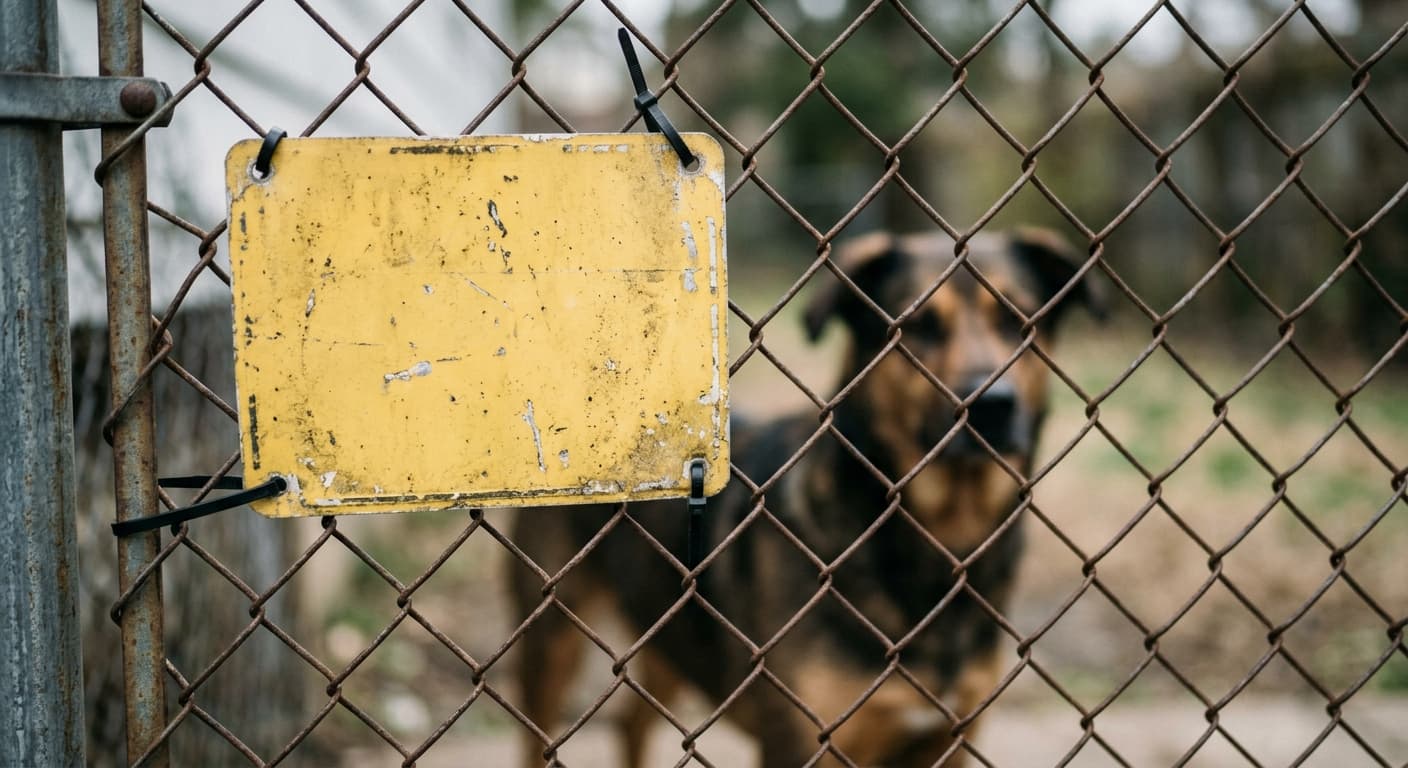
New Mexico holds dog owners liable under two common law theories rather than a strict liability statute: the scienter rule, codified in Uniform Jury Instruction 13-506, requires proof the owner knew of the dog's vicious tendencies, while negligence allows recovery even without that prior knowledge.
Estimate your claim: Use our free New Mexico Dog Bite Settlement Calculator to see a rough settlement range based on the medical bills, the bite location, the victim's age, and New Mexico's liability rule.
How New Mexico Handles Dog Bite Liability
New Mexico does not have a specific dog bite statute that imposes automatic liability on dog owners. Instead, the state relies on two common law theories to determine when a dog owner must pay for injuries their animal causes: the scienter (one-bite) rule and general negligence.
This dual-track system means that victims have more than one path to recover compensation. Understanding each theory and how they work together is critical for anyone bitten by a dog in New Mexico.
The One-Bite Rule (Scienter)
The primary basis for dog bite liability in New Mexico is the scienter cause of action. "Scienter" is a Latin term meaning "knowledge." Under this rule, a dog owner is liable for bite injuries if the owner knew, or should have known, that the dog was vicious or had a tendency to be vicious.

New Mexico's Uniform Jury Instruction (UJI 13-506) codifies this standard. It states that an owner of a dog is liable for damages proximately caused by the dog if the owner knew, or should have known, of the dog's vicious tendencies or natural inclination to be vicious.
What Counts as Prior Knowledge
A victim does not need to prove the dog previously bit someone. Evidence that the owner knew of dangerous tendencies can include:
- Previous lunging, snapping, or aggressive behavior toward people or animals
- Complaints from neighbors or visitors about the dog's behavior
- The owner keeping the dog restrained with heavy chains or behind special fencing
- Warning signs posted on the property about the dog
- Prior reports to animal control about the dog
Once prior knowledge is established, the owner faces strict liability for the resulting injuries. The victim does not need to prove the owner was careless in addition to having knowledge.
Negligence as an Alternative Claim
Even when a dog owner had no knowledge of their dog's dangerous propensities, a victim can still recover damages through a negligence claim. Under this theory, a dog owner is liable if they failed to use reasonable care to prevent a foreseeable bite.
Examples of negligence that can support a claim include:
- Allowing a dog to roam without a leash in violation of a local ordinance
- Failing to secure a gate or fence that the dog escaped through
- Leaving a dog unattended in a public area
- Allowing children to interact with an unfamiliar dog without supervision
- Failing to follow veterinary recommendations about managing an anxious or reactive dog
This is an important distinction from the scienter claim. A negligence claim focuses on the owner's behavior rather than the dog's history.
Note: Governmental entities in New Mexico cannot be held liable under the scienter theory but can be held liable under negligence. This matters when a government-owned dog or a dog on government property causes injury.
The Dangerous Dog Act (NMSA 77-1A)
New Mexico's Dangerous Dog Act, found at NMSA 77-1A-1 through 77-1A-6, creates a regulatory framework for dogs that have already shown dangerous behavior. The Act establishes two categories of dogs with escalating requirements.
Potentially Dangerous Dogs
Under NMSA 77-1A-2, a "potentially dangerous dog" is one that may reasonably be assumed to pose a threat to public safety based on specific behaviors, including:
- Causing an injury to a person or domestic animal that is less severe than a serious injury
- Chasing or menacing a person or domestic animal in an aggressive manner without provocation
Owners of potentially dangerous dogs must obtain a certificate of registration from their local animal control authority. Registration requirements include paying an annual fee, microchipping the dog, and enrolling the dog in an approved socialization and behavior program.
Dangerous Dogs
A "dangerous dog" under the Act is one that has caused serious injury to a person or domestic animal. Owners of dangerous dogs face stricter requirements:
| Requirement | Details |
|---|---|
| Registration | Must obtain and maintain a valid certificate of registration |
| Confinement | Dog must be kept exclusively on owner's property |
| Transport | Must be caged or muzzled with a lead no longer than four feet when off property |
| Property permission | Must have written permission from the property owner to keep the dog |
| Annual fee | Must pay an annual registration fee |
Criminal Penalties Under the Dangerous Dog Act
NMSA 77-1A-6 establishes criminal penalties for violations:
| Violation | Penalty |
|---|---|
| Keeping a dangerous or potentially dangerous dog without valid registration | Misdemeanor (first offense); fourth-degree felony (second or subsequent) |
| Dangerous dog causes serious injury or death to a domestic animal | Fourth-degree felony |
| Dangerous dog causes serious injury to a human | Third-degree felony |
| Dangerous dog causes death of a human | Third-degree felony resulting in death |
Prosecution requires proving that the owner knew of the dog's propensity to inflict serious injury or that the dog had previously been found by a court to be dangerous or potentially dangerous.
Vicious Animals Statute (NMSA 77-1-10)
Separate from the Dangerous Dog Act, NMSA 77-1-10 makes it unlawful for any person to keep any animal known to be vicious and liable to attack or injure human beings unless the animal is securely kept to prevent injury. Violations of this section are classified as misdemeanors.
This statute applies broadly to all animals, not just dogs, and provides an additional basis for both criminal charges and civil liability when an owner fails to secure a known vicious animal.
Dog Owner Responsibilities in New Mexico
New Mexico imposes several legal duties on dog owners at both the state and municipal level.
Rabies Vaccination
Under NMSA 77-1-3, every person who owns or keeps a dog over the age of three months must have the dog vaccinated against rabies. The vaccine must be administered by or under the supervision of a licensed veterinarian, who issues a numbered certificate and tag.
Failure to vaccinate is a misdemeanor and may also serve as evidence of negligence in a dog bite case.
Local Leash Laws
New Mexico does not have a statewide leash law, but most municipalities enforce their own. For example, Albuquerque's HEART Ordinance requires all animals in public places to be on a leash shorter than eight feet. Violations carry fines starting at $200 for a first offense, $300 for a second, and $500 for each additional violation.
Violating a local leash law can establish negligence per se in a dog bite case, meaning the violation itself serves as proof of negligent behavior.
Pure Comparative Negligence in New Mexico
New Mexico courts have adopted a pure comparative negligence rule for personal injury claims, including dog bites, dating to Scott v. Rizzo (N.M. 1981). This means a dog bite victim can recover damages even if they were partially at fault for the incident. The victim's recovery is reduced by their percentage of fault. When more than one defendant shares fault, NMSA 41-3A-1 abolishes joint and several liability as the general rule and holds each defendant severally liable only for its own share of the damages. That abolition is not absolute. Subsection C preserves joint and several liability for defendants who acted with the intention of inflicting injury or damage, for defendants whose relationship to each other makes one vicariously liable for the acts of the other, for defendants strictly liable for the manufacture and sale of a defective product, and for situations having a sound basis in public policy. The vicarious liability exception can matter in a dog bite case, because the Dangerous Dog Act defines the owner of a dog to include the parent or guardian of an owner who is under eighteen.

For example, if a court determines that a victim was 20% responsible for provoking the dog and the total damages are $50,000, the victim would recover $40,000. Unlike modified comparative negligence states, New Mexico does not bar recovery at any fault threshold. Even a victim who is 90% at fault can still recover the remaining 10% of damages.
Defenses Available to Dog Owners
Dog owners in New Mexico can raise several defenses to reduce or eliminate liability.
Provocation
If the victim provoked the dog through teasing, hitting, tormenting, or other aggressive actions, the owner may avoid liability entirely. The provocation must be sufficient to cause a normally calm dog to bite.
Trespassing
Dog owners generally have reduced or no liability when their dog bites someone who is trespassing on private property. However, this defense may be weaker when the trespasser is a child who may not understand property boundaries.
Assumption of Risk
Professionals who work with dogs, such as veterinarians, groomers, and kennel workers, may be found to have assumed the risk of being bitten. This defense can limit or bar their recovery.
Damages Available to Dog Bite Victims
Dog bite victims in New Mexico can pursue both economic and non-economic damages.
Economic Damages
- Medical bills, including emergency care, surgery, and rehabilitation
- Future medical costs for ongoing treatment or reconstructive surgery
- Lost wages from missed work during recovery
- Loss of future earning capacity
- Property damage
Non-Economic Damages
- Pain and suffering
- Emotional distress and psychological trauma
- Scarring and disfigurement
- Loss of enjoyment of life
New Mexico does not impose a statutory cap on damages in dog bite cases brought against a private dog owner. The full value of both economic and non-economic losses is available to successful claimants.
One important exception applies when the defendant is a governmental entity or a public employee acting within the scope of their duties. Under NMSA 41-4-19, recovery under the Tort Claims Act cannot exceed $300,000 for all past and future medical and medically related expenses arising out of a single occurrence, or $400,000 to any person for all other damages besides real property damage, and the combined total for real property damage and those other damages is limited to $750,000 for a single occurrence. That section also bars any award of punitive or exemplary damages and any pre-judgment interest against a government defendant.
Landlord Liability for Dog Bites
In New Mexico, a landlord can be held liable for injuries caused by a tenant's dog under specific circumstances. Courts have held that a landlord must pay damages if all three conditions are met:
- The landlord knew, or should have known, that the tenant's dog was vicious
- The landlord failed to have the dog removed from the property
- The landlord retained control over the area where the attack occurred
Once a landlord transfers exclusive control of the premises to a tenant, the landlord's liability is generally limited to common areas such as hallways, stairwells, and shared yards. A landlord who knew about a dangerous dog and failed to enforce a lease provision requiring the tenant to remove the animal may face liability.
Statute of Limitations
Under NMSA 37-1-8, dog bite victims in New Mexico have three years from the date of the bite to file a personal injury lawsuit.
Important exceptions to this deadline:
- Minors: The statute of limitations is tolled (paused) until the minor turns 18, then they have one additional year to file
- Government claims: If the dog owner is a government entity, the victim has only two years to file under NMSA § 41-4-15, and must separately provide written notice of the claim within 90 days of the incident under NMSA § 41-4-16
- Discovery rule: In rare cases where the full extent of injuries is not immediately apparent, the clock may start when the victim discovers or reasonably should have discovered the injury
Missing the filing deadline permanently bars the claim in most circumstances.
How to File a Dog Bite Claim in New Mexico
If you have been bitten by a dog in New Mexico, take these steps to protect your legal rights:
- Get medical treatment immediately. Medical records documenting your injuries become critical evidence.
- Report the bite to local animal control. This creates an official record and may trigger a dangerous dog investigation.
- File a police report. Law enforcement documentation supports both civil and criminal proceedings.
- Photograph your injuries. Take pictures of the wound at the scene, during treatment, and throughout the healing process.
- Identify witnesses. Collect contact information from anyone who saw the attack.
- Gather the dog owner's information. Record their name, address, phone number, and homeowner's insurance details.
- Preserve physical evidence. Keep torn or bloodied clothing and any other items damaged in the attack.
- Request the dog's vaccination records. This is important for determining rabies risk and can also reveal prior incidents.
Breed-Specific Legislation in New Mexico
Some New Mexico municipalities have enacted breed-specific legislation (BSL) that restricts or bans certain dog breeds. However, the trend across the state has been moving away from breed-specific bans in favor of behavior-based dangerous dog laws. Check your local ordinances for specific restrictions in your area.
The Dangerous Dog Act itself is breed-neutral and focuses on individual dog behavior rather than breed classification.
More New Mexico Laws
Frequently Asked Questions
Does New Mexico have a strict liability dog bite law?
No. New Mexico does not have a strict liability dog bite statute. Dog bite liability is determined through the common law one-bite rule (scienter) and negligence. Under the one-bite rule, the owner must have known or should have known about the dog's dangerous tendencies. Under negligence, the owner must have failed to use reasonable care to prevent the bite.
How long do I have to file a dog bite lawsuit in New Mexico?
You have three years from the date of the bite to file a personal injury lawsuit under NMSA 37-1-8. If you are filing against a government entity, the deadline is two years under NMSA § 41-4-15, and you must separately provide written notice within 90 days of the incident under NMSA § 41-4-16. Minors have until one year after turning 18.
Can I still recover damages if I was partly at fault for the dog bite?
Yes. New Mexico courts follow a pure comparative negligence rule established in Scott v. Rizzo (1981). Your damages will be reduced by your percentage of fault, but you can still recover. For example, if you are found 30% at fault for provoking the dog and total damages are $100,000, you would receive $70,000.
What happens to a dog that bites someone in New Mexico?
The dog may be classified as dangerous or potentially dangerous under the Dangerous Dog Act (NMSA 77-1A). A dangerous dog designation requires the owner to register the dog, keep it confined on their property, muzzle it in public, and comply with strict handling rules. The dog may be ordered destroyed if it causes serious injury or death.
Can a landlord be held liable for a tenant's dog bite in New Mexico?
A landlord can be held liable if they knew the tenant's dog was dangerous, had the ability to have the dog removed, and retained control over the area where the attack happened. Once the landlord transfers exclusive control of the premises to the tenant, liability is generally limited to common areas like hallways or shared yards.
Injured in New Mexico? Get a free case review from a personal-injury attorney
If someone else's negligence caused your injury, you may be owed compensation for medical bills, lost wages, and pain and suffering. Get a free, no-obligation review from a New Mexico personal-injury attorney. Most work on contingency, so there is no upfront cost.
Updates
Corrected the Dangerous Dog Act summary (the Act imposes no insurance requirement), added the Tort Claims Act damages caps that apply when the defendant is a government entity, removed a rabies tag-display duty that is not in NMSA 77-1-3, noted the statutory exceptions to New Mexico’s several liability rule, and fixed a statute link that pointed to the wrong chapter of the NMSA.
Independently fact-checked against the cited primary sources; governing law re-checked for recent changes
Split an incomplete citation: the 2-year government-claim filing deadline is NMSA section 41-4-15, but the 90-day written-notice requirement is a separate provision, NMSA section 41-4-16 ('Notice of claims'), not section 41-4-15 as the article previously implied. Fixed in the Statute of Limitations section and the FAQ; also removed a justia.com link.
Corrected the source of New Mexico's pure comparative negligence rule: it comes from the courts' adoption in Scott v. Rizzo (1981), not from NMSA 41-3A-1, which instead governs how liability is divided among multiple at-fault defendants.
Governing law re-checked for recent changes
Reviewed and approved by an editor
The Law Behind This Article
This article rests on the statutory provisions below, held in our own legal record and retrieved from the official source. Tap a section to read the operative text.
New Mexico Statutes Annotated 1978, Chapter 37
§ 37-1-8Actions against sureties on fiduciary bonds; injuries to person or reputation.In forcecited in 17 of our articles
Actions must be brought against sureties on official bonds and on bonds of guardians, conservators, personal representatives and persons acting in a fiduciary capacity, within two years after the liability of the principal or the person for whom they are sureties is finally established or determined by a judgment or decree of the court, and for an injury to the person or reputation of any person, within three years.
Official text (excerpt) · last checked 2026-07-30 · Read the full text in our law library · Verify at nmonesource.com
Cited in 172 court opinions in our collectionLatest citing opinion in our collection: 2026
In the courts (editorial summary, independently checked):Roberts v. Southwest Community Health Services (1992) applied Section 37-1-8's three-year period to a malpractice claim against a nonqualified health care provider and held such a claim accrues when the plaintiff knows or should know of the injury and its cause. Williams v. Stewart (2005) applied that period to distress claims.
Opinions citing this section in our collection:
- Maestas v. Zager (New Mexico Court of Appeals 2005, 136 N.M. 764)“…tes are the general personal injury statute of limitations, NMSA 1978, § 37-1-8 (1976); the Medical Malpractice Act sta…”
- Garcia on Behalf of Garcia v. La Farge (New Mexico Supreme Court 1995, 119 N.M. 532)✓A cardiologist twice told a boy's parents he was fine; after cardiac arrest left him brain damaged, the court held the Malpractice Act limit unconstitutional as applied and used Section 37-1-8's three year accrual period instead, making the suit timely.
- Williams v. Stewart (New Mexico Court of Appeals 2005, 137 N.M. 420)✓Relatives sued over a Los Alamos program that took organs during autopsies without consent; the court applied Section 37-1-8's three year personal injury period to their claims and held news publicity did not, as a matter of law, trigger a duty to inquire that started it running.
Identified automatically from the court opinions citing this section — not a ranking of which case controls.
Also relied on in: New Mexico Recording Laws (2026): One-Party Consent Rules, New Mexico Car Accident Laws: Fault, Insurance, and Your Claim, New Mexico Defamation Laws: Libel & Slander (2026)
New Mexico Statutes Annotated 1978, Chapter 41
§ 41-3A-1Several liabilityIn forcecited in 6 of our articles
A. In any cause of action to which the doctrine of comparative fault applies, the doctrine imposing joint and several liability upon two or more wrongdoers whose conduct proximately caused an injury to any plaintiff is abolished except as otherwise provided hereafter. The liability of any such defendants shall be several. B. In causes of action to which several liability applies, any defendant who establishes that the fault of another is a proximate cause of a plaintiff's injury shall be liable only for that portion of the total dollar amount awarded as damages to the plaintiff that is equal to the ratio of such defendant's fault to the total fault attributed to all persons, including plaintiffs, defendants and persons not party to the action. C.
Official text (excerpt) · last checked 2026-07-30 · Read the full text in our law library · Verify at nmonesource.com
Cited in 51 court opinions in our collectionLatest citing opinion in our collection: 2025
Opinions citing this section in our collection:
- Saiz Ex Rel. Estate of Saiz v. Belen School District (New Mexico Supreme Court 1992, 113 N.M. 387)“…under two theories: (1) for vicarious liability pursuant to NMSA 1978, Section 41-3A-1(C)(2) (Repl.Pamp.1989), for the acts of…”
- Lewis v. Samson (New Mexico Court of Appeals 1999, 128 N.M. 269)“…M. at 426-27 , 902 P.2d at 1029-30 . {47} Similarly, NMSA 1978, § 41-3A-1(A) (1987), enacted after Bartlett…”
- Herrera Ex Rel. Estate of Ruiz v. Quality Pontiac (New Mexico Supreme Court 2003, 134 N.M. 43)“…intiffs, defendants, and persons not party to the action. NMSA 1978, § 41-3A-1(B) (1987). We hold that New Mexico's ad…”
Identified automatically from the court opinions citing this section — not a ranking of which case controls.
Also relied on in: New Mexico Slip and Fall Laws: Proving Premises Liability Under Pure Comparative Negligence, New Mexico Wrongful Death Laws (2026): Deadlines
§ 41-4-15Statute of limitationsIn forcecited in 6 of our articles
A. Actions against a governmental entity or a public employee for torts shall be forever barred, unless such action is commenced within two years after the date of occurrence resulting in loss, injury or death, except that a minor under the full age of seven years shall have until his ninth birthday in which to file. This subsection applies to all persons regardless of minority or other legal disability. B. The provisions of Subsection A of this section shall not apply to any occurrence giving rise to a claim which occurred before July 1, 1976.
Official text (excerpt) · last checked 2026-07-30 · Read the full text in our law library · Verify at nmonesource.com
Cited in 59 court opinions in our collectionLatest citing opinion in our collection: 2026
Opinions citing this section in our collection:
- Marrujo v. New Mexico State Highway Transportation Department (New Mexico Supreme Court 1994, 118 N.M. 753)“…stitutional challenge to the Tort Claims Act notice statute NMSA 1978, Section 41-4-15(A) (Repl.Pamp.1989), which allowed two…”
- Celaya v. Hall (New Mexico Supreme Court 2004, 135 N.M. 115)“…ilure to comply with the two-year statute of limitations in NMSA 1978, Section 41-4-15 (1977) of the Tort Claims Act (“TCA”).…”
- Blea v. Fields (New Mexico Supreme Court 2005, 138 N.M. 348)“…r statute of limitations in the New Mexico Tort Claims Act. NMSA 1978, § 41-4-15 (1977). In response, Plaintiff disputed…”
Identified automatically from the court opinions citing this section — not a ranking of which case controls.
Also relied on in: New Mexico Statute of Limitations: Filing Deadlines by Case Type, Truck Accident Laws in New Mexico (2026): Deadlines & Liability
§ 41-4-16Notice of claimsIn forcecited in 5 of our articles
A. Every person who claims damages from the state or any local public body under the Tort Claims Act shall cause to be presented to the risk management division for claims against the state, the mayor of the municipality for claims against the municipality, the superintendent of the school district for claims against the school district, the county clerk of a county for claims against the county, or to the administrative head of any other local public body for claims against such local public body, within ninety days after an occurrence giving rise to a claim for which immunity has been waived under the Tort Claims Act, a written notice stating the time, place and circumstances of the loss or injury. B. No suit or action for which immunity has been waived under the Tort Claims Act shall be maintained and no court shall have jurisdiction to consider any suit or action against the state or any local public body unless notice has been given as required by this section, or unless the governmental entity had actual notice of the occurrence.
Official text (excerpt) · last checked 2026-07-30 · Read the full text in our law library · Verify at nmonesource.com
Cited in 53 court opinions in our collectionLatest citing opinion in our collection: 2026
Opinions citing this section in our collection:
- Erwin v. City of Santa Fe (New Mexico Court of Appeals 1993, 115 N.M. 596)“…ental entity involved within ninety days of the occurrence. NMSA 1978, § 41-4-16 (Repl.Pamp.1989). The City received not…”
- Marrujo v. New Mexico State Highway Transportation Department (New Mexico Supreme Court 1994, 118 N.M. 753)“…nstitutionality of the New Mexico Notice of Claims Statute, NMSA 1978, Section 41-4-16 (Repl.Pamp.1989), which requires those…”
- Tafoya Ex Rel. Tafoya v. Doe (New Mexico Court of Appeals 1983, 100 N.M. 328)“…tal eight years earlier; (4) The notice provision of NMSA 1978, § 41-4-16 of the Tort Claims Act is unconstitutio…”
Identified automatically from the court opinions citing this section — not a ranking of which case controls.
New Mexico Statutes Annotated 1978, Chapter 77
§ 77-1-10Vicious animals; rabid or unvaccinated dogs and cats; failure to destroy.In forcecited in 2 of our articles
A. It is unlawful for any person to keep any animal known to be vicious and liable to attack or injure human beings unless such animal is securely kept to prevent injury to any person. B. It is unlawful to keep any unvaccinated dog or cat or any animal with any symptom of rabies. C. It is unlawful to fail or to refuse to destroy vicious animals or unvaccinated dogs or cats with symptoms of rabies as prescribed by regulation of the health and environment department [department of health] for the protection of public health and safety.
Official text (excerpt) · last checked 2026-07-30 · Read the full text in our law library · Verify at nmonesource.com
§ 77-1-3Vaccination of dogs and cats requiredIn forcecited in 2 of our articles
Any person who owns or keeps a dog or cat over the age of three months in this state shall have the dog or cat vaccinated against rabies as prescribed by regulation of the health and environment department [department of health]. All antirabies vaccine shall be administered by or under the supervision of a licensed veterinarian who shall issue a serially numbered certificate and tag for each such administration.
Official text (excerpt) · last checked 2026-07-30 · Read the full text in our law library · Verify at nmonesource.com
§ 77-1A-1Short titleIn forcecited in 2 of our articles
This act [77-1A-1 to 77-1A-6 NMSA 1978] may be cited as the "Dangerous Dog Act".
Official text (excerpt) · last checked 2026-07-30 · Read the full text in our law library · Verify at nmonesource.com
Cross-referenced in the statute itself: § 77-1A-6
§ 77-1A-2DefinitionsIn forcecited in 2 of our articles
As used in the Dangerous Dog Act: A. "animal control authority" means an entity authorized to enforce the animal control laws of a city, county or state, whether acting alone or in concert with other governmental authorities. In those areas not served by an animal control authority, the sheriff or municipal law enforcement shall carry out the duties of the animal control authority under the Dangerous Dog Act; B. "dangerous dog" means a dog that caused a serious injury to a person or domestic animal; C. "owner" means a person who possesses, harbors, keeps or has control or custody of a dog or, if that person is under the age of eighteen, that person's parent or guardian; D. "potentially dangerous dog" means a dog that may reasonably be assumed to pose a threat to public safety as demonstrated by the following behaviors: (1) causing an injury to a person or domestic animal that is less severe than a serious injury; (2) chasing or menacing a person or domestic animal in an aggressive manner and without provocation; or (3) acting in a highly aggressively [aggressive] manner within a fenced yard or enclosure and appearing able to jump out of the yard or enclosure; E.
Official text (excerpt) · last checked 2026-07-30 · Read the full text in our law library · Verify at nmonesource.com
§ 77-1A-6Prohibited acts; penaltiesIn forcecited in 2 of our articles
A. It is unlawful for an owner of a dangerous or potentially dangerous dog to: (1) keep the dog without a valid certificate of registration; (2) violate the registration and handling requirements for the dog; (3) fail to notify the animal control authority immediately upon: (a) the escape of the dog; or (b) an attack by the dog upon a human being or a domestic animal; (4) fail to notify the animal control authority of the dog's death within five business days; (5) fail to notify the animal control authority within twenty-four hours if the dog has been sold or given away and provide the name, address and telephone number of the new owner of the dog; (6) fail to surrender the dog to an animal control authority for safe confinement pending a determination of the case when there is reason to believe that the dog poses an imminent threat to public safety; or (7) fail to comply with special handling or care requirements for the dog that a court has ordered. B.
Official text (excerpt) · last checked 2026-07-30 · Read the full text in our law library · Verify at nmonesource.com
Explore the law
The laws cited above reference these related sections in their own text:
- New Mexico Statutes Annotated 1978, Chapter 31 § 31-18-15 — Sentencing authority; noncapital felonies; basic sentences and fines; parole authority; meritorious deductions. view in our statute record · read at the official source
Related law for further reading — not part of this article’s citations.
Search our full record of US law — 2.1 million sections, every state + federal →
Sources and References
- NMSA 77-1A-6 - Dangerous Dog Act: Prohibited Acts and Penalties(law.justia.com)
- NMSA 77-1-10 - Vicious Animals; Rabid or Unvaccinated Dogs(law.justia.com)
- NMSA 77-1-3 - Vaccination of Dogs and Cats Required(law.justia.com)
- NMSA 37-1-8 - Statute of Limitations for Personal Injury(law.justia.com)
- NMSA 41-3A-1 - Several Liability Among Multiple Defendants(law.justia.com)
- NMSA 77-1A-2 - Dangerous Dog Act Definitions(nmonesource.com).gov
- City of Albuquerque HEART Ordinance(cabq.gov).gov
- NMSA 41-4-15 - Statute of Limitations for Government Claims(law.justia.com)
- NMSA Chapter 77 (Animals and Livestock), including the Dangerous Dog Act, Sections 77-1A-1 to 77-1A-6(nmonesource.com)
- NMSA Chapter 41 (Torts), including 41-4-19 Tort Claims Act maximum liability and 41-3A-1 several liability(nmonesource.com)