
Nebraska
Nebraska Laws on Recording Police: Your Rights and Limits (2026)
Independently fact-checked against primary sources (last audited August 15, 2026). · Reviewed by the RecordingLaw editorial team. · Law checked current as of August 15, 2026. · 7 primary sources cited on this page. How we verify our legal content
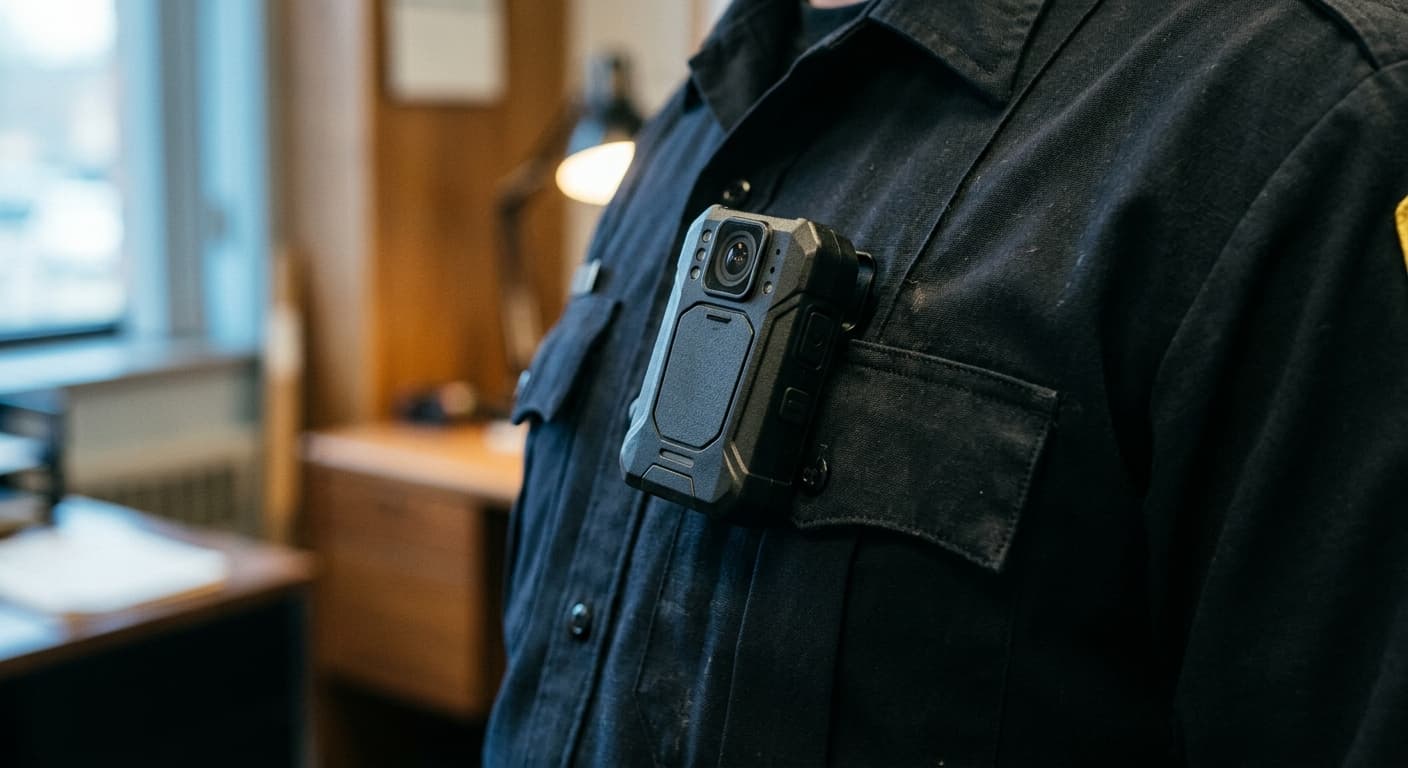
Nebraska residents have a First Amendment right to record police officers performing their duties in public. Nebraska's one-party consent law, Neb. Rev. Stat. 86-290, also permits recording any conversation you participate in, including traffic stops and police encounters. You may not physically interfere with officers or trespass to obtain footage.
Quick Answer
Yes, you can record police officers in Nebraska. The First Amendment to the U.S. Constitution protects the right to photograph and make video and audio recordings of law enforcement officers performing their duties in public places. Nebraska's one-party consent law under Neb. Rev. Stat. 86-290 also permits you to record any conversation you participate in, including interactions with officers. In the Eighth Circuit (which covers Nebraska), the right's status for qualified-immunity purposes is contested rather than settled: a divided 2023 panel held it was not clearly established as of a 2015 incident, even though the underlying constitutional right to observe and record police is widely recognized nationwide.
| Detail | Answer |
|---|---|
| Can you record police in public? | Yes |
| Legal basis | First Amendment; Neb. Rev. Stat. 86-290 |
| Must you identify yourself? | Not solely for recording |
| Can police confiscate your phone? | Not without a warrant (Riley v. California) |
| Can you livestream police activity? | Yes |
| Must you maintain a distance? | Must not physically interfere |
The Constitutional Right to Record Police
First Amendment Foundation
The right to record police officers performing their duties in public is grounded in the First Amendment's protections of free speech and freedom of the press. Federal appellate courts across the country have consistently recognized this right, holding that the act of recording government officials in public spaces is a form of protected expression and news gathering.
The ACLU of Nebraska confirms that individuals have the right to take photographs and make video and audio recordings of police officers and other government officials performing their duties in public. This right belongs to everyone, not just credentialed journalists.
Eighth Circuit Court of Appeals
Nebraska falls within the jurisdiction of the U.S. Court of Appeals for the Eighth Circuit, where the right to record police is contested rather than settled for qualified-immunity purposes. In Molina v. Book, 59 F.4th 334 (8th Cir. 2023), a divided 2-1 panel held that, as of a 2015 incident, the right to observe and record police was not yet clearly established, so the officers involved kept qualified immunity on that claim; the dissent argued binding circuit precedent already established the right, and one of the three plaintiffs won his First Amendment retaliation claim outright. That majority holding narrowed earlier language in Chestnut v. Wallace, 947 F.3d 1085 (8th Cir. 2020), where the Eighth Circuit upheld the denial of qualified immunity and recognized a clearly established right to watch police-citizen interactions at a distance without interfering. In practice, you can still record in Nebraska, but if an officer retaliates and you sue them individually, how the claim fares depends on facts and timing the Eighth Circuit has not resolved the same way in every case.
Other federal circuits with direct rulings on this issue include:
- First Circuit -- Glik v. Cunniffe, 655 F.3d 78 (1st Cir. 2011): Clearly established that filming police in public is protected by the First Amendment
- Third Circuit -- Fields v. City of Philadelphia, 862 F.3d 353 (3d Cir. 2017): Recording police is protected even without an expressive intent to criticize
- Fifth Circuit -- Turner v. Lieutenant Driver, 848 F.3d 678 (5th Cir. 2017): First Amendment right to record police is clearly established
- Seventh Circuit -- ACLU of Illinois v. Alvarez, 679 F.3d 583 (7th Cir. 2012): Audio recording of police in public is protected speech
- Eleventh Circuit -- Smith v. City of Cumming, 212 F.3d 1332 (11th Cir. 2000): First Amendment right to gather information about public officials
U.S. Supreme Court Guidance
The U.S. Supreme Court has addressed related issues that reinforce the right to record police. In Riley v. California, 573 U.S. 373 (2014), the Court held that police generally cannot search a cell phone seized during an arrest without a warrant. This ruling directly protects the recordings on your phone from warrantless police searches.
What You Can Record

Traffic Stops
You can record your own traffic stops in Nebraska. As a participant in the interaction, Nebraska's one-party consent law permits you to record the audio of your conversation with the officer, and your First Amendment rights protect the video recording. You can:
- Use your smartphone to record the entire encounter
- Use a dashcam to capture the stop
- Livestream the interaction
If you are a passenger in a vehicle that has been stopped, you also have the right to record. Your First Amendment rights do not depend on being the person directly interacting with the officer.
Bystander Recording of Arrests and Interactions
You do not need to be involved in the police interaction to record it. Bystanders have the right to record arrests, uses of force, traffic stops, and other police activities occurring in public. This includes:
- Recording from a sidewalk, street, or other public area
- Filming from your own property
- Recording from inside a business with the owner's permission
- Capturing police activity visible from any lawful vantage point
Protests and Demonstrations
Recording police activity at public protests and demonstrations is protected. Law enforcement agencies cannot single out individuals for recording or order them to stop. At major public events, police may establish reasonable time, place, and manner restrictions for crowd control, but these restrictions cannot specifically target recording activity.
Police Stations and Government Buildings
Recording inside police stations, courthouses, and other government buildings is more restricted. While public areas of government buildings (lobbies, hallways, public counters) are generally open to recording, agencies may establish reasonable restrictions. Courtroom recording is subject to the presiding judge's discretion. Secure areas of police stations may have legitimate restrictions on photography and recording.
Rules and Limitations

Do Not Interfere with Police Operations
The most important limitation on your right to record is that you cannot physically interfere with police operations. Nebraska law criminalizes obstruction of a peace officer under Neb. Rev. Stat. 28-906. Actions that cross the line from recording to interference include:
- Physically positioning yourself in a way that blocks an officer's movement or access
- Reaching for or touching an officer or their equipment
- Inciting bystanders to interfere with police activity
- Entering a secured crime scene or accident scene
- Refusing to comply with a lawful order to move back when you are genuinely obstructing operations
The key distinction is between recording (protected) and interfering (not protected). Standing at a reasonable distance and quietly filming does not constitute interference.
Follow Lawful Orders
If an officer orders you to move back or relocate, you should generally comply as long as the order is reasonable and does not effectively prevent you from recording. An order to move 10 feet back is reasonable. An order to leave the area entirely or to stop recording is not a lawful order if you are not interfering with police operations.
If you believe an officer's order is unlawful, the safest approach is to comply in the moment and challenge the order later through legal channels. Arguing with an officer on the scene can escalate the situation and potentially lead to arrest for obstruction, even if the arrest would ultimately be found unconstitutional.
Do Not Trespass
Your right to record does not give you the right to enter private property or restricted areas. You can record from any location where you have a legal right to be, including:
- Public sidewalks, streets, and parks
- Your own property
- A business with the owner's permission
- Any publicly accessible area
You cannot enter private property, climb fences, enter crime scenes, or go into restricted areas to get a better angle for recording.
No Duty to Identify Yourself
Nebraska does not have a "stop and identify" statute that requires you to provide identification to police simply because you are recording. However, officers may ask for your identification in the course of an investigation. If you are not suspected of a crime, you are generally not required to identify yourself solely because you are recording.
What Police Cannot Do
Cannot Order You to Stop Recording
Police officers cannot lawfully order you to stop recording if you are in a public place, not interfering with their operations, and not trespassing. An order to stop recording that is based solely on the fact that you are recording violates the First Amendment.
Cannot Delete Your Footage
Police officers cannot demand that you delete photos, videos, or audio recordings from your device. Ordering the deletion of recordings may constitute destruction of evidence and a violation of your constitutional rights. If an officer demands that you delete footage:
- Politely decline and state that you believe you have a right to record
- Do not physically resist if the officer takes your device
- Note the officer's name, badge number, and department
- File a complaint and consult with an attorney afterward
Cannot Confiscate Your Device Without a Warrant
Under Riley v. California, police generally need a warrant to search or seize your cell phone or recording device. There are narrow exceptions for exigent circumstances (such as imminent destruction of evidence or a threat to public safety), but routine confiscation of a recording device during a police encounter is not lawful.
If police seize your device without a warrant, you may have grounds for a civil rights claim under 42 U.S.C. 1983, which allows individuals to sue government officials for violations of constitutional rights.
Cannot Retaliate Against You for Recording
Officers who arrest, ticket, or threaten individuals solely for recording police activity may be subject to civil rights lawsuits. Retaliatory actions against individuals exercising their First Amendment right to record can result in:
- Section 1983 civil rights claims
- Internal affairs investigations
- Department disciplinary action
- Federal Department of Justice investigations in pattern-or-practice cases
Recording Police Audio: One-Party Consent
Nebraska's one-party consent law under Neb. Rev. Stat. 86-290 directly applies to audio recording of police interactions. If you are speaking with a police officer, you are a party to that conversation and can record the audio without informing the officer.
For bystander recordings where you are not directly conversing with the officer, the audio component raises different considerations. In public settings, officers generally do not have a reasonable expectation of privacy in their communications. Public interactions between officers and citizens are not "confidential communications" protected by the wiretap statute.
Body Cameras and Police Recordings
Nebraska Body Camera Policy
Nebraska does not have a comprehensive statewide law mandating body-worn cameras for all law enforcement officers. Individual agencies set their own policies. Several Nebraska law enforcement agencies, including the Omaha Police Department and the Lincoln Police Department, have implemented body camera programs.
Access to Police Recordings
Police body camera footage and dashcam recordings are generally subject to Nebraska's public records laws. Under the Nebraska Public Records Statutes, the public has the right to access government records, including law enforcement recordings, with certain exceptions for:
- Active investigation records
- Recordings that would identify confidential informants
- Footage involving minors or victims of sexual assault
- Records protected by court order
Requests for police recordings can be made through a formal public records request to the relevant law enforcement agency.
2024 Legislative Developments
In 2024, a Nebraska legislative proposal sought to restrict bystanders from filming police activity within 10 feet of an officer. The proposal was criticized by civil liberties organizations and constitutional law scholars as an unconstitutional restriction on the right to record. The measure did not advance in the legislature.
This proposal was similar to laws passed in Arizona (later struck down as unconstitutional) and bills introduced in other states. The consistent judicial trend nationwide is to protect the right to record police from close proximity, as long as the recorder does not physically interfere with operations.
Practical Tips for Recording Police in Nebraska
Before You Record
- Know your rights -- Familiarize yourself with the information in this article
- Charge your device -- Ensure your phone or camera has sufficient battery
- Enable cloud backup -- Set your phone to automatically upload recordings to the cloud, so footage is preserved even if your device is confiscated or damaged
- Use a recording app -- Dedicated recording apps can be configured to save directly to cloud storage
During the Recording
- Stay calm and respectful -- De-escalation benefits everyone
- Maintain a safe distance -- Stand far enough away that you cannot be accused of interfering, but close enough to capture meaningful footage
- Do not put your hands on anyone -- Keep your hands visible and on your recording device
- Narrate if helpful -- Quietly stating the date, time, location, and what you observe can add context to the recording
- Do not provoke -- Recording is protected; taunting, interfering, or deliberately provoking officers is not
After the Recording
- Save and back up -- Immediately save the recording and create a backup copy
- Do not edit -- Preserve the original, unedited file
- Document details -- Write down the date, time, location, officers' names and badge numbers, and a description of what occurred
- Seek legal counsel -- If you witnessed misconduct or believe your rights were violated, contact an attorney or the ACLU of Nebraska
More Nebraska Recording Laws
Audio Recording | Video Recording | Voyeurism & Hidden Cameras | Workplace Recording | Recording Police | Phone Call Recording | Security Cameras | Recording in Public | Landlord-Tenant | Dashcam Laws | Schools | Medical Recording
Back to Nebraska Recording Laws
More Nebraska Recording Topics
More Nebraska Laws
Frequently Asked Questions
Can I record police officers in Nebraska?
Yes. The First Amendment protects your right to record law enforcement officers performing their duties in public. You can film traffic stops, arrests, and other police activities from any location where you have a legal right to be, as long as you do not physically interfere with police operations.
Can police make me stop recording in Nebraska?
No. Officers cannot lawfully order you to stop recording if you are in a public place and not interfering with their operations. They also cannot demand that you delete footage or confiscate your device without a warrant. If an officer orders you to stop, you can politely decline, but comply with reasonable orders to move back.
Do I need to tell a police officer I am recording them in Nebraska?
No. Nebraska is a one-party consent state, so you can record conversations you participate in without notification. For bystander recording, the First Amendment protects your right to openly record without announcing it. However, being transparent about recording can sometimes help de-escalate situations.
Can police search my phone for recordings in Nebraska?
Not without a warrant. The U.S. Supreme Court held in Riley v. California (2014) that police generally need a warrant to search a cell phone, even during a lawful arrest. There are narrow exceptions for exigent circumstances, but routine searches of your phone to access recordings are not permitted.
What should I do if a police officer violates my right to record in Nebraska?
Stay calm and comply in the moment to avoid escalation. Note the officer's name, badge number, and department. After the encounter, file a formal complaint with the officer's department, consult with a civil rights attorney, and contact the ACLU of Nebraska. You may have grounds for a civil rights lawsuit under 42 U.S.C. 1983.
Updates
Corrected our description of Eighth Circuit case law on recording police: named the actual controlling case (Molina v. Book, a divided 2023 ruling) and the earlier, more favorable Chestnut v. Wallace decision it narrowed, replacing a claim that the right was settled and enforceable with an accurate, contested framing. Also repaired a dead Riley v. California citation link.
Independently fact-checked against the cited primary sources; governing law re-checked for recent changes
Governing law re-checked for recent changes
Reviewed and approved by an editor
The Law Behind This Article
This article rests on the statutory provisions below, held in our own legal record and retrieved from the official source. Tap a section to read the operative text.
Nebraska Revised Statutes, Chapter 86: TELECOMMUNICATIONS AND TECHNOLOGY
§ 86-290Unlawful acts; penaltyIn forcecited in 18 of our articles
(1) Except as otherwise specifically provided in sections 86-271 to 86-295, it is unlawful to: (a) Intentionally intercept, endeavor to intercept, or procure any other person to intercept or endeavor to intercept any wire, electronic, or oral communication; (b) Intentionally use, endeavor to use, or procure any other person to use or endeavor to use any electronic, mechanical, or other device to intercept any oral communication when (i) such device is affixed to, or otherwise transmits a signal through, a wire, cable, or other like connection used in wire communication or (ii) such device transmits communications by radio or interferes with the transmission of such communication; (c) Intentionally disclose or endeavor to disclose to any other person the contents of any wire, electronic, or oral communication, knowing or having reason to know that the information was obtained through the interception of a wire, electronic, or oral communication in violation of this subsection; (d) Intentionally use or endeavor to use the contents of any wire, electronic, or oral communication, knowing or having reason to know that the information was obtained through the interception of a wire,…
Official text (excerpt) · last checked 2026-08-31 · Read the full text in our law library · Verify at nebraskalegislature.gov
Cited in 3 court opinions in our collectionLatest citing opinion in our collection: 2022
Opinions citing this section in our collection:
- Hays v. Hays (Nebraska Court of Appeals 2022)“…to her. We address these arguments, in turn. Under Neb. Rev. Stat. § 86-290(2)(c) (Reissue 2016), “it is not unlawf…”
- Ades v. Omni Hotels Management Corp. (District Court, C.D. California 2014, 46 F. Supp. 3d 999)“…f the carrier or provider of such communication services.”' Neb.Rev.Stat. § 86-290(2)(a). Based on this provision, Omni co…”
- Lewton Ex Rel. Lewton v. Divingnzzo (District Court, D. Nebraska 2011, 772 F. Supp. 2d 1046)“…7) to exclude the recordings as illegally intercepted under Neb.Rev.Stat. § 86-290(a) (see Doc. 137-16 at p.…”
Identified automatically from the court opinions citing this section — not a ranking of which case controls.
Also relied on in: Nebraska Recording Laws (2026): One-Party Consent Rules, Nebraska Audio Recording Laws: One-Party Consent Rules and Penalties (2026), Nebraska Dashcam Laws: Mounting Rules, Audio Recording, and Evidence (2026)
Nebraska Revised Statutes, Chapter 28: CRIMES AND PUNISHMENTS
§ 28-906Obstructing a peace officer; penaltyIn force
(1) A person commits the offense of obstructing a peace officer, when, by using or threatening to use violence, force, physical interference, or obstacle, he or she intentionally obstructs, impairs, or hinders (a) the enforcement of the penal law or the preservation of the peace by a peace officer or judge acting under color of his or her official authority or (b) a police animal assisting a peace officer acting pursuant to the peace officer's official authority. (2) For purposes of this section, police animal means a horse or dog owned or controlled by the State of Nebraska or any county, city, or village for the purpose of assisting a peace officer acting pursuant to his or her official authority. (3) Obstructing a peace officer is a Class I misdemeanor.
Official text (excerpt) · last checked 2026-07-29 · Read the full text in our law library · Verify at nebraskalegislature.gov
Cited in 38 court opinions in our collectionLatest citing opinion in our collection: 2025
Opinions citing this section in our collection:
- State v. Ferrin (Nebraska Supreme Court 2020, 942 N.W.2d 404)“…Sheriffs: Judges: Proof: Intent. To show a violation of Neb. Rev. Stat. § 28-906(1) (Reissue 2016), the State must p…”
- In re Interest of Elijahking F. (Nebraska Supreme Court 2022, 313 Neb. 60)“…Proof: Intent. To show a violation of Neb. Rev. Stat. § 28-906(1) (Reissue 2016),…”
- State v. Campbell (Nebraska Supreme Court 2001, 260 Neb. 1021)“…(Cum. Supp. 2000); and obstructing a peace officer under Neb. Rev. Stat. § 28-906 (Reissue 1995). Campbell pled not guil…”
Identified automatically from the court opinions citing this section — not a ranking of which case controls.
Nebraska Revised Statutes, Chapter 84: STATE OFFICERS
§ 84-1407Act, how citedIn forcecited in 4 of our articles
Sections 84-1407 to 84-1414 shall be known and may be cited as the Open Meetings Act.
Official text (excerpt) · last checked 2026-07-29 · Read the full text in our law library · Verify at nebraskalegislature.gov
Cited in 12 court opinions in our collectionLatest citing opinion in our collection: 2024
Opinions citing this section in our collection:
- Salem Grain Co. v. City of Falls City (Nebraska Supreme Court 2019, 302 Neb. 548)“…ued thereto, are null and void”; and (3) a permanent 4 Neb. Rev. Stat. §§ 84-1407 to 84-1414 (Reissue 2008 & Supp. 2011).…”
- Kocontes v. McQuaid (Nebraska Supreme Court 2010, 279 Neb. 335)“…130(1) (Reissue 2008). [49] § 83-1,127(4). [50] See, Neb.Rev.Stat. §§ 84-1407 through 84-1414 (Reissue 2008 & Supp. 2…”
- City of Elkhorn v. City of Omaha (Nebraska Supreme Court 2007, 272 Neb. 867)“…ped the gun” by violating the Open Meetings Act (the Act), Neb. Rev. Stat. §§ 84-1407 to 84-1414 (Reissue 1999 & Cum. Supp.…”
Identified automatically from the court opinions citing this section — not a ranking of which case controls.
Also relied on in: Nebraska Public Recording Laws: Filming in Public Spaces and Government Meetings (2026), Nebraska School Recording Laws: Student, Parent, and Teacher Rights (2026), Nebraska Video Recording Laws: What You Can and Cannot Film (2026)
§ 84-712Public records; free examination; memorandum and abstracts; copies; feesIn forcecited in 6 of our articles
(1) Except as otherwise expressly provided by statute, all residents of this state and all other persons interested in the examination of the public records as defined in section 84-712.01 are hereby fully empowered and authorized to (a) examine such records, and make memoranda, copies using their own copying or photocopying equipment in accordance with subsection (2) of this section, and abstracts therefrom, all free of charge, during the hours the respective offices may be kept open for the ordinary transaction of business and (b) except if federal copyright law otherwise provides, obtain copies of public records in accordance with subsection (3) of this section during the hours the respective offices may be kept open for the ordinary transaction of business. (2) Copies made by residents or other persons using their own copying or photocopying equipment pursuant to subdivision (1)(a) of this section shall be made on the premises of the custodian of the public record or at a location mutually agreed to by the requester and the custodian. (3)(a) Copies may be obtained pursuant to subdivision (1)(b) of this section only if the custodian has copying equipment reasonably available.
Official text (excerpt) · last checked 2026-09-02 · Read the full text in our law library · Verify at nebraskalegislature.gov
Cited in 43 court opinions in our collectionLatest citing opinion in our collection: 2024
In the courts (editorial summary, independently checked):State ex rel. BH Media Group v. Frakes (2020) held the execution team confidentiality statute is an "other statute" under section 84-712(1) but only a narrow exemption, with the burden on the agency. Nebraska Journalism Trust v. Dept. of Envt. & Energy (2024) read section 84-712(3) to allow fees for nonattorney review past four hours.
Opinions citing this section in our collection:
- State ex rel. BH Media Group v. Frakes (Nebraska Supreme Court 2020, 943 N.W.2d 231)✓News organizations sought corrections records on lethal injection drug purchases. The court held the execution team confidentiality statute is an exemption, not a complete exception to section 84-712, and that the director failed to prove it justified withholding the records.
- Nebraska Journalism Trust v. Dept. of Envt. & Energy (Nebraska Supreme Court 2024, 316 Neb. 174)✓A nonprofit newsroom challenged a $44,000 fee estimate for keyword email searches. The court held section 84-712 lets an agency charge for nonattorney staff time beyond four cumulative hours spent reviewing records for a statutory basis to withhold, and vacated the writ.
- Jacob v. Nebraska Bd. of Parole (Nebraska Supreme Court 2022, 313 Neb. 109)✓An inmate sought the record of his first-step parole review. The court held the interview record could be withheld as an examination record, and that the statute making parole files confidential is an "other statute" under section 84-712(1), so those files are not public records.
Identified automatically from the court opinions citing this section — not a ranking of which case controls.
Also relied on in: Nebraska Police Body Camera Laws: Retention & Records, Public Records Laws by State: FOIA Guide for All 50 States (2026), Nebraska Public Records Law: How to Request Government Records (2026)
United States Code Title 42
§ 1983Civil action for deprivation of rightsIn forcecited in 50 of our articles
Every person who, under color of any statute, ordinance, regulation, custom, or usage, of any State or Territory or the District of Columbia, subjects, or causes to be subjected, any citizen of the United States or other person within the jurisdiction thereof to the deprivation of any rights, privileges, or immunities secured by the Constitution and laws, shall be liable to the party injured in an action at law, suit in equity, or other proper proceeding for redress, except that in any action brought against a judicial officer for an act or omission taken in such officer’s judicial capacity, injunctive relief shall not be granted unless a declaratory decree was violated or declaratory relief was unavailable. For the purposes of this section, any Act of Congress applicable exclusively to the District of Columbia shall be considered to be a statute of the District of Columbia.
Official text (excerpt) · last checked 2026-07-28 · Read the full text in our law library · Verify at uscode.house.gov
Cited in 282,365 court opinions in our collectionLatest citing opinion in our collection: 2026
Opinions citing this section in our collection:
- Ashcroft v. Iqbal (Supreme Court of the United States 2009, 556 U.S. 662)“…its brought against state officials under Rev. Stat. §1979, 42 U. S. C. §1983.” Hartman, 547 U. S., at 254, n. 2. Cf.…”
- Celotex Corp. v. Catrett, Administratrix of the Estate of Catrett (Supreme Court of the United States 1986, 477 U.S. 317)“…policeman as she left. Petitioner brought an action under 42 U. S. C. § 1983 claiming that the refusal of service a…”
- Monell v. New York City Dept. of Social Servs. (Supreme Court of the United States 1978, 436 U.S. 658)“…decided less than two decades ago. Focusing new light on 42 U. S. C. § 1983 , that decision widened access to the f…”
Identified automatically from the court opinions citing this section — not a ranking of which case controls.
Also relied on in: Alabama Laws on Recording Police: Your Rights and Limits, Alaska Laws on Recording Police: Your Rights and Limits (2026), Arkansas Laws on Recording Police: Your Rights and Limits (2026)
Search our full record of US law — 2.1 million sections, every state + federal →
Sources and References
- Neb. Rev. Stat. 86-290 -- Interception of communications(nebraskalegislature.gov).gov
- Neb. Rev. Stat. 84-1407 -- Open Meetings Act(nebraskalegislature.gov).gov
- Neb. Rev. Stat. 28-906 -- Obstructing a peace officer(nebraskalegislature.gov).gov
- Neb. Rev. Stat. 84-712 -- Nebraska Public Records Statutes(nebraskalegislature.gov).gov
- Riley v. California, 573 U.S. 373 (2014)(supremecourt.gov).gov
- 42 U.S.C. 1983 -- Civil action for deprivation of rights(law.cornell.edu)
- ACLU of Nebraska -- Recording and Documenting Police(aclunebraska.org)
- Molina v. Book, 59 F.4th 334 (8th Cir. 2023)(ecf.ca8.uscourts.gov).gov
- Chestnut v. Wallace, 947 F.3d 1085 (8th Cir. 2020)(ecf.ca8.uscourts.gov).gov