
District of Columbia
How to Get a Police Report in DC (2026): PD-10 & PD-251 Reports
Independently fact-checked against primary sources (last audited August 11, 2026). · Law checked current as of August 11, 2026. · 2 primary sources cited on this page. How we verify our legal content
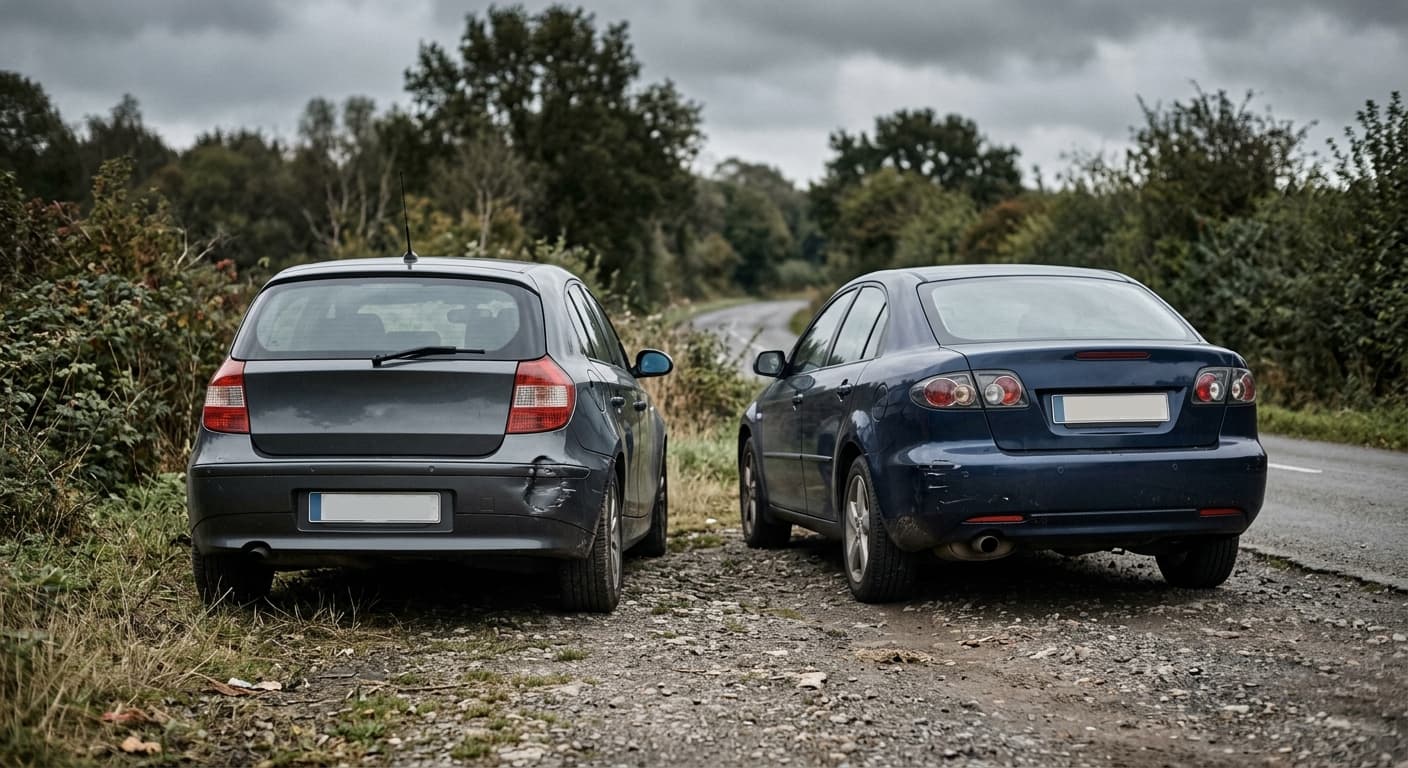
The District of Columbia's Metropolitan Police Department (MPD) uses two report forms with two very different access rules, which makes DC's structure unlike most states in this cluster. The PD-10 accident report is available only to a first party (an involved person or their attorney); the PD-251 incident or offense report is open to the general public. Confusing the two, or assuming the same eligibility rule applies to both, is the single most common mistake a DC requester makes.
DC's body-worn camera framework runs on two tracks as well: a proactive public-release rule for the most serious incidents, and a separate, in-person-only viewing process for the person shown in ordinary footage. Neither track guarantees a copy without a formal FOIA request.
Information last verified on 2026-08-11. This article has not yet been reviewed by a licensed lawyer.
How to Get a DC Crash Report (PD-10)
Eligibility, the key restriction: A PD-10/Traffic Crash Report may be requested by a First Party ONLY, meaning an involved party, or that party's attorney, attorney staff, or investigator, confirmed directly on MPD's own service page. A third party who was not involved must instead submit a FOIA request through MPD's FOIA Office.
Fee: No fee for first-party requestors. MPD's own page separately states that copies are 'usually available to first party requestors at no charge and insurance companies for claim purposes at a fee $3 for each PD requested,' resolving what otherwise reads as a contradiction between a free-copy figure and a $3 figure: both are correct, for different categories of requester.
How to request: By email to mpd.public-docs@dc.gov, or by mail with a self-addressed stamped envelope to MPD Public Documents Section, ATTN: Accident/Incident Reports, 441 4th Street NW, Room 550 South, Washington, DC 20001. Include your full name, the date, location, and time of the crash, and the six-digit report number (CCN) if you have it, plus a copy of valid government-issued photo ID and a completed 'PD Form 10B, Application for PD Form 10 Accident Report.' In-person requests require an appointment, scheduled by calling (202) 671-6705.
Timeline: Allow six weeks for processing from the date a mail-in request is made, confirmed directly on MPD's own page.
Confidentiality layer: D.C. Code § 50-1401.01b, confirmed directly against the statute's text, bars MPD and the DC Department of Motor Vehicles from 'knowingly disclosing or otherwise making available personal information' from an accident report except to a defined permitted-use list mirroring the federal Driver's Privacy Protection Act, involved parties and their representatives, insurers investigating a claim, attorneys investigating potential litigation, and government agencies among them.
Talk to a family-law attorney: free case review
Every case has details a formula cannot capture. Get a free, no-obligation review from a family-law attorney.
How to Get a DC Incident Report (PD-251)
This is the structural opposite of the PD-10 rule above. A PD-251 Incident/Offense Report, DC's analogue to a general police incident report, is available to the general public, not first-party-only, confirmed directly on MPD's own page. Fees associated with producing a PD-251 are currently temporarily waived.
That public access is not only agency practice; a police-specific statute sits underneath it. D.C. Code § 5-113.06(a) provides that the records MPD is required to keep under § 5-113.01(a)(1), (2), and (4), meaning the general complaint files (every complaint made upon personal knowledge, with the complainant's name and residence), the records of lost, missing, or stolen property, and the arrest books, are "open to public inspection when not in actual use." The same subsection makes that requirement "enforceable by mandatory injunction issued by the Superior Court of the District of Columbia on the application of any person." A requester refused inspection of those records has a direct court remedy under the police statute, separate from the DC FOIA appeal route described below.

Submission uses the same channels as a PD-10: email to mpd.public-docs@dc.gov, mail with a self-addressed stamped envelope to the same Public Documents Section address, or an in-person appointment. To make an in-person request, provide either your name plus the date, location, and time of the incident, or the six-digit report number. The same six-week mail-processing estimate applies.
If a request is denied or you need records beyond what a PD-251 covers, DC's Freedom of Information Act applies instead. D.C. Code § 2-534(a)(3), confirmed directly against the statute's text, exempts 'investigatory records compiled for law-enforcement purposes' from disclosure, but only to the extent releasing them would interfere with an enforcement proceeding, deprive someone of a fair trial, invade personal privacy, disclose a confidential source, reveal investigative techniques, or endanger law-enforcement personnel, a case-by-case standard rather than a blanket exemption.
DC Police Bodycam Footage
DC runs two separate tracks for body-worn camera access, and neither one is a simple public-request system.
Proactive release for the most serious incidents: D.C. Code § 5-116.33, confirmed directly against the statute's text, requires that within 5 business days after an officer-involved death or a serious use of force, the Mayor 'publicly release: the names and body-worn camera recordings of all Metropolitan Police Department officers... directly involved,' along with a description of the incident, unless the decedent's next of kin, or the person against whom serious force was used (or their next of kin, if a minor or unable to consent), objects to release. The Metropolitan Police Department must offer the decedent's next of kin a private opportunity to view the recording before any public release.
Currency flag on that 5-day rule: the official DC Code entry for § 5-116.33 carries the notice that the section "includes amendments by temporary legislation that will expire on January 22, 2027," and the section also sets a transitional deadline for incidents occurring between August 1, 2025, and March 23, 2026, which are released within 10 business days after March 23, 2026. Confirm the current text of § 5-116.33 before relying on the 5-business-day deadline after January 22, 2027.
Viewing process for other footage: For an incident that does not meet the death or serious-use-of-force threshold, MPD's administrative body-worn-camera viewing process lets the person shown in a recording, or their legal representative, or a parent if the person is a minor, view it in person at the district station where the incident occurred, no earlier than 48 hours after the incident. This is a viewing right only; MPD does not provide a copy through this process.
Getting an actual copy: A copy requires a standard DC FOIA request through MPD's FOIA Office, subject to D.C. Code § 2-534(a)(2A), a dedicated body-worn-camera FOIA exemption for recordings made inside a personal residence or related to a domestic violence, stalking, or sexual assault incident. A FOIA request for body-worn-camera video runs on a longer statutory clock than an ordinary DC FOIA request, and the base deadline drives more of that difference than the extension does. Under D.C. Code § 2-532(c)(2)(A), MPD has 25 business days to respond to a body-worn camera request, against the 15 business days subsection (c)(1) allows for other public records. Under § 2-532(d)(1), the "unusual circumstances" extension for a body-worn camera request is capped at 15 business days in place of the 10 business days allowed for other records, not in addition to them. Subsection (c)(2)(B) also limits where the request may go: a request for a body-worn camera recording may only be submitted to the Metropolitan Police Department. See DC Police Bodycam Laws and our guide to requesting body camera footage for the fuller framework.
Corrections and Practical Notes
No DC-specific statutory process for correcting a factual error on a PD-10 or PD-251 was found; contact MPD's Public Documents Section directly at (202) 727-4357.

The PD-10/PD-251 access-tier split functions as DC's own version of a request trap: assuming a crash report is publicly available the way an incident report is, or that a third party can obtain a PD-10 directly rather than through FOIA, is the most common way a DC request gets rejected.
For the aftermath of a crash beyond the report itself, see District of Columbia Car Accident Laws. For the broader public-records framework, see District of Columbia Public Records Laws and District of Columbia Court Records. For the general process of filing or reading a report, see How to File a Police Report and How to Read a Police Report.
Disclaimer
This article provides general legal information about how to obtain a police crash report, incident report, or body camera footage in the District of Columbia as verified on 2026-08-11. It does not constitute legal advice and does not create an attorney-client relationship. Readers with a specific records dispute, or who need advice about a specific incident, should consult a lawyer licensed in the District of Columbia.

Last updated: 2026-08-11. Fees and portals reflect their published status as of August 2026.
Frequently Asked Questions
Who can request a DC PD-10 accident report?
A PD-10 may be requested by a First Party ONLY, meaning an involved party or that party's attorney, attorney staff, or investigator. A third party who was not involved must submit a FOIA request through MPD's FOIA Office instead.
Is there a fee for a DC accident report?
No fee for first-party requestors, confirmed directly on MPD's own service page. Insurance companies requesting a PD-10 for claim purposes pay $3 per report.
Can the public get a DC police incident report?
Yes. Unlike the PD-10, a PD-251 Incident/Offense Report is available to the general public, not just an involved party, and production fees are currently temporarily waived. Public inspection of MPD's general complaint files and arrest books is also backed by statute: D.C. Code § 5-113.06(a) makes those records open to public inspection when not in actual use, enforceable by mandatory injunction in the Superior Court of the District of Columbia on the application of any person.
How fast does DC release bodycam footage of an officer-involved death?
D.C. Code § 5-116.33 requires the Mayor to publicly release the names and body-worn camera recordings of the involved MPD officers within 5 business days, unless the decedent's next of kin objects to release. The official DC Code entry for § 5-116.33 flags amendments by temporary legislation that expire on January 22, 2027, so verify the deadline still reads 5 business days if you are relying on it after that date.
Can I get a copy of DC bodycam footage that does not involve a death or serious use of force?
MPD's citizen-viewing process only lets the person shown in the recording view it in person at the district station, no earlier than 48 hours after the incident. A copy requires a separate DC FOIA request, subject to a dedicated body-worn-camera exemption.
Updates
Corrected the body-worn camera FOIA timeline (D.C. Code § 2-532 sets a 25-business-day base deadline and a 15-business-day extension that replaces, rather than adds to, the standard 10-day extension), added the statutory right of public inspection under D.C. Code § 5-113.06 behind PD-251 access, and flagged that the 5-business-day bodycam release rule rests on temporary legislation expiring January 22, 2027.
Independently fact-checked against the cited primary sources; governing law re-checked for recent changes
The Law Behind This Article
This article rests on the statutory provisions below, held in our own legal record and retrieved from the official source. Tap a section to read the operative text.
Code of the District of Columbia, Title 2: Government Administration. - Chapter 5: Administrative Procedure. - Subchapter II: Freedom of Information.
§ 2-532Right of access to public records; allowable costs; time limits.In forcecited in 5 of our articles
(a) Any person has a right to inspect, and at his or her discretion, to copy any public record of a public body, except as otherwise expressly provided by § 2-534, in accordance with reasonable rules that shall be issued by a public body after notice and comment, concerning the time and place of access. (a-1) In making any record available to a person pursuant to this section, a public body shall provide the record in any form or format requested by the person, provided that the person shall pay the costs of reproducing the record in that form or format. (a-2) In responding to a request for records pursuant to this section, a public body shall make reasonable efforts to search for the records in electronic form or format, except when the efforts would significantly interfere with the operation of the public body’s automated information system.
Official text (excerpt) · last checked 2026-09-02 · Read the full text in our law library · Verify at github.com
Cited in 14 court opinions in our collectionLatest citing opinion in our collection: 2025
In the courts (editorial summary, independently checked):The D.C. Court of Appeals has construed section 2-532(c) in Fraternal Order of Police litigation: its 2013 decision held a good-faith production plus Vaughn index within 15 business days is timely even if more records follow, and its 2016 decision rejected reading "reasonably describing" as a specificity screen that voids a request.
Opinions citing this section in our collection:
- Fraternal Order of Police, Metropolitan Police Labor Committee v. The District of Columbia (District of Columbia Court of Appeals 2013, 79 A.3d 347)✓The police union argued the District's later document productions were untimely; the court held section 2-532(c) is met when a public body responds in good faith within the fifteen business days, and that releasing more responsive records afterward does not breach the deadline.
- Dubose, DDS v. District of Columbia (District of Columbia Court of Appeals 2023)“…ic record of a public body,” except as expressly provided. D.C. Code § 2-532(a). Agencies may charge a reasonable f…”
- FRATERNAL ORDER OF POLICE, METROPOLITAN POLICE LABOR COMMITTEE v. DISTRICT OF COLUMBIA (District of Columbia Court of Appeals 2016, 139 A.3d 853)“…1 Ms. Cenatus appears to have been referring to D.C. Code § 2-532 (c) (2006 Repl.), which provides that ―…”
Identified automatically from the court opinions citing this section — not a ranking of which case controls.
Also relied on in: District of Columbia Laws on Recording Police: Your Rights and Limits, DC Police Body Camera Laws: Rules & Public Access (2026), Public Records Laws by State: FOIA Guide for All 50 States (2026)
§ 2-534Exemptions from disclosure.In force
(a) The following matters may be exempt from disclosure under the provisions of this subchapter: (1) Trade secrets and commercial or financial information obtained from outside the government, to the extent that disclosure would result in substantial harm to the competitive position of the person from whom the information was obtained; (2) Information of a personal nature where the public disclosure thereof would constitute a clearly unwarranted invasion of personal privacy; (2A) Any body-worn camera recordings recorded by the Metropolitan Police Department: (A) Inside a personal residence; or (B) Related to an incident involving domestic violence as defined in § 4-551(1), stalking as defined in § 22-3133, or sexual assault as defined in § 23-1907(a)(7).
Official text (excerpt) · last checked 2026-07-30 · Read the full text in our law library · Verify at github.com
Cited in 10 court opinions in our collectionLatest citing opinion in our collection: 2025
Opinions citing this section in our collection:
- Fraternal Order of Police, Metropolitan Labor Committee v. District of Columbi (District of Columbia Court of Appeals 2014, 82 A.3d 803)“…1 The investigatory records exemption is found in D.C. Code § 2-534 (a)(3): (a) The follo…”
- Fraternal Order of Police, Metropolitan Police Labor Committee v. The District of Columbia (District of Columbia Court of Appeals 2013, 79 A.3d 347)“…ey-client privilege and the personal privacy exemption. See D.C. Code § 2-534 (a)(2), (a)(4), and (e) (2012 Repl.). I…”
- Kane v. Dist. of Columbia (District of Columbia Court of Appeals 2018, 180 A.3d 1073)“…on for inter-agency and intra-agency memoranda set forth in D.C. Code § 2-534 (a)(4). 6 See D.C. Code…”
Identified automatically from the court opinions citing this section — not a ranking of which case controls.
Code of the District of Columbia, Title 50: Motor and Non-Motor Vehicles and Traffic. - Chapter 14: Operators’ Permits and Identification Cards. - Subchapter I: General.
§ 50-1401.01bProhibition on release and use of certain personal information from motor vehicle records and accident reports.In force
(a) For the purposes of this section, the term: (1) “Accident report” means any record prepared as a result of a vehicular accident, also known as the Metropolitan Police Department Form PD-10. (1A) “Information relating to legal presence” means any information that may reveal whether a person is legally present in the United States, including whether a person’s driver’s license or identification card was issued under § 50-1401.05, and the documentation provided by an applicant to prove identity, date of birth, and residence in connection with an application for a driver’s license or identification card. (2) “Motor vehicle record” means any record that pertains to a motor vehicle operator’s application, permit, motor vehicle title, motor vehicle registration, or identification card issued by the Department of Motor Vehicles. (A) “Personal information” shall include an individual’s photograph or image, social security number, driver identification number or identification card number, name, address, telephone number, medical or disability information, and emergency contact information.
Official text (excerpt) · last checked 2026-07-30 · Read the full text in our law library · Verify at github.com
Code of the District of Columbia, Title 5: Police, Firefighters, Medical Examiner, and Forensic Sciences. - Chapter 1: Metropolitan Police. - Subchapter VIII-B: Body-Worn Cameras. - Part A: Regulation and Reporting Requirements.
§ 5-116.33Body-Worn Camera Program; reporting requirements; access.In forcecited in 5 of our articles
*NOTE: This section includes amendments by temporary legislation that will expire on January 22, 2027. To view the text of this section after the expiration of all emergency and temporary legislation, click this link: Past Permanent Version.* (a) By October 1, 2015, and every 6 months thereafter, the Mayor shall collect, and make available in a publicly accessible format, data on the Metropolitan Police Department’s Body-Worn Camera Program, including: (1) How many hours of body-worn camera recordings were collected; (2) How many times body-worn cameras failed while officers were on shift and the reasons for the failures; (3) How many times internal investigations were opened for a failure to turn on body-worn cameras during interactions, and the results of those internal investigations, including any discipline imposed; (4) How many times body-worn camera recordings were used by the Metropolitan Police Department in internal affairs investigations; (5) How many times body-worn camera recordings were used by the Metropolitan Police Department to investigate complaints made by an individual or group; (6) How many body-worn cameras are assigned to each police district and…
Official text (excerpt) · last checked 2026-08-31 · Read the full text in our law library · Verify at github.com
Cited in 1 court opinions in our collectionLatest citing opinion in our collection: 2023
Opinions citing this section in our collection:
- Fraternal Order of Police-Metropolitan Police Department Labor Committee v. District of Columbia (District of Columbia Court of Appeals 2023)“…e B of the Emergency Act amended 24 D.C.M.R. § 3900.10 and D.C. Code § 5-116.33 and required the Mayor to “publicly re…”
Identified automatically from the court opinions citing this section — not a ranking of which case controls.
Also relied on in: District of Columbia Recording Laws (2026): One-Party Consent Rules, District of Columbia Video Recording Laws: What You Need to Know
Search our full record of US law — 2.1 million sections, every state + federal →
Sources and References
- D.C. Code § 50-1401.01b (personal information from motor vehicle records and accident reports)(github.com)
- D.C. Code § 2-534 (Exemptions from disclosure, DC Freedom of Information Act)(github.com)
- D.C. Code § 5-116.33 (Body-Worn Camera Program; reporting requirements; access)(github.com)
- Metropolitan Police Department, Request an Accident Report (PD-10) or an Incident/Offense Report (PD-251)(mpdc.dc.gov).gov
- Metropolitan Police Department, Body-Worn Camera Viewing Process(mpdc.dc.gov).gov
- D.C. Code § 2-532 (Public record; public inspection; response deadlines for body-worn camera requests)(code.dccouncil.gov)
- D.C. Code § 5-113.06 (Records open to public inspection; enforcement by mandatory injunction)(code.dccouncil.gov)
- D.C. Code § 5-113.01 (Records required to be kept by the Metropolitan Police Department)(code.dccouncil.gov)
- D.C. Code § 5-116.33 (Body-worn camera program; public release after officer-involved death or serious use of force)(code.dccouncil.gov)