DC Dashcam Laws: Recording Rules, Windshield Mounting, and Legal Limits (2026)
Independently fact-checked against primary sources (last audited August 15, 2026). · Reviewed by the RecordingLaw editorial team. · Law checked current as of August 15, 2026. · 4 primary sources cited on this page. How we verify our legal content
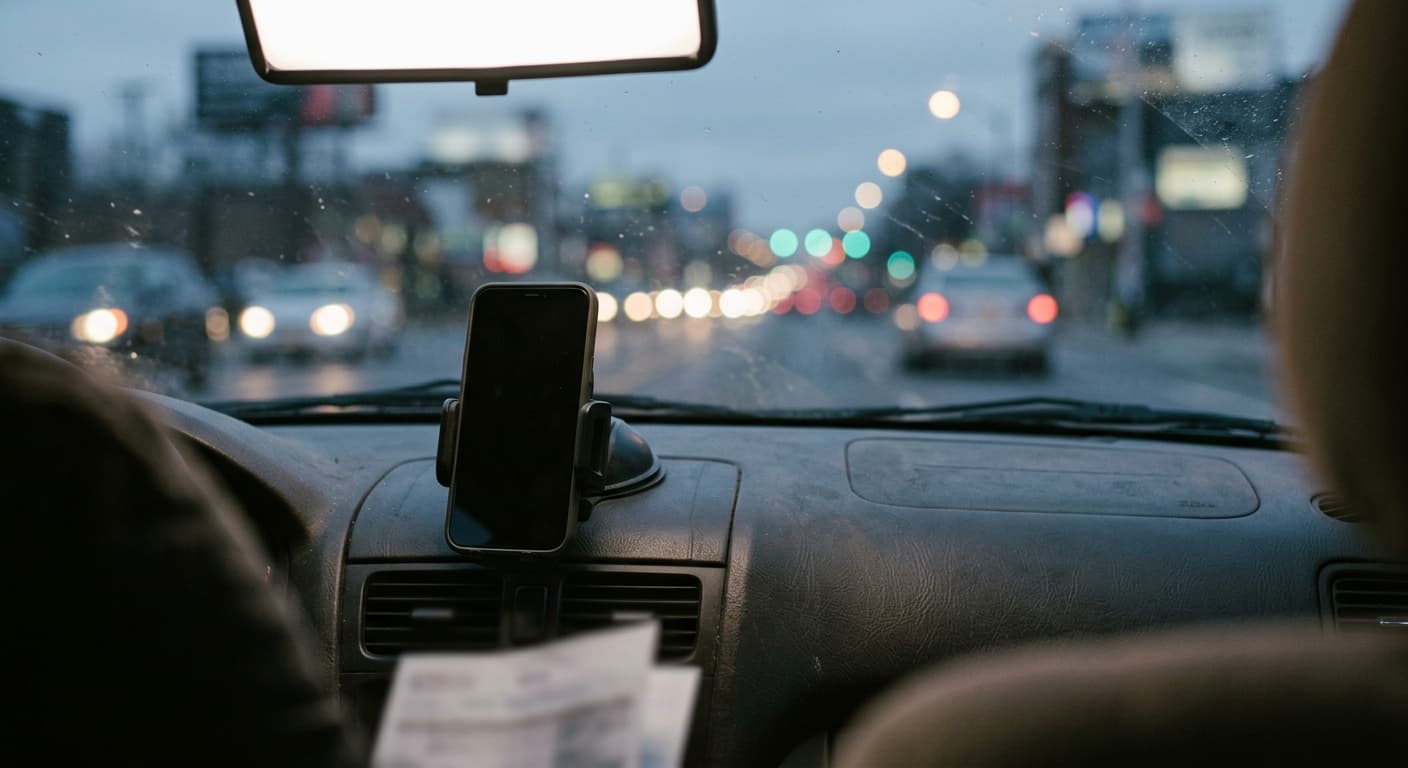
Dashcam use is legal in the District of Columbia. Drivers may record both video and audio under the one-party consent rule in D.C. Code Section 23-542, meaning no passenger notification is required. Mount behind the rearview mirror or on the dashboard to avoid obstructing your view under 18 DCMR § 2213.
The District of Columbia does not have a standalone dashcam law, but dashboard cameras are fully legal throughout the jurisdiction. As a one-party consent jurisdiction, D.C. allows you to record any conversation you participate in under D.C. Code Section 23-542. This means you can use an audio-enabled dashcam in your vehicle without informing passengers.
D.C.'s dense urban environment, heavy traffic, and frequent interactions with government vehicles and law enforcement make dashcams particularly useful for District residents and commuters.
DC Dashcam Legality Overview
Is It Legal to Use a Dashcam in DC?
Yes. D.C. law does not prohibit the installation or use of dashboard cameras. Drivers use dashcams for accident documentation, insurance protection, and recording interactions during traffic stops.
Under one-party consent, the driver is a party to any conversation in the vehicle, and the driver's consent is sufficient to make the recording legal.
Video-Only vs. Audio-Enabled Dashcams
| Feature | Legal Status in DC |
|---|---|
| Video-only dashcam | Legal on public roads |
| Dashcam with audio recording passengers | Legal (driver is a party) |
| Exterior audio on public roads | Legal (no privacy expectation) |
| Dashcam recording when driver is absent | May raise issues for third-party conversations |
The only scenario creating legal risk is when a dashcam records conversations between passengers while the driver is away from the vehicle. With no consenting party present, the recording could violate D.C. Code Section 23-542.
Windshield Mounting Rules in DC
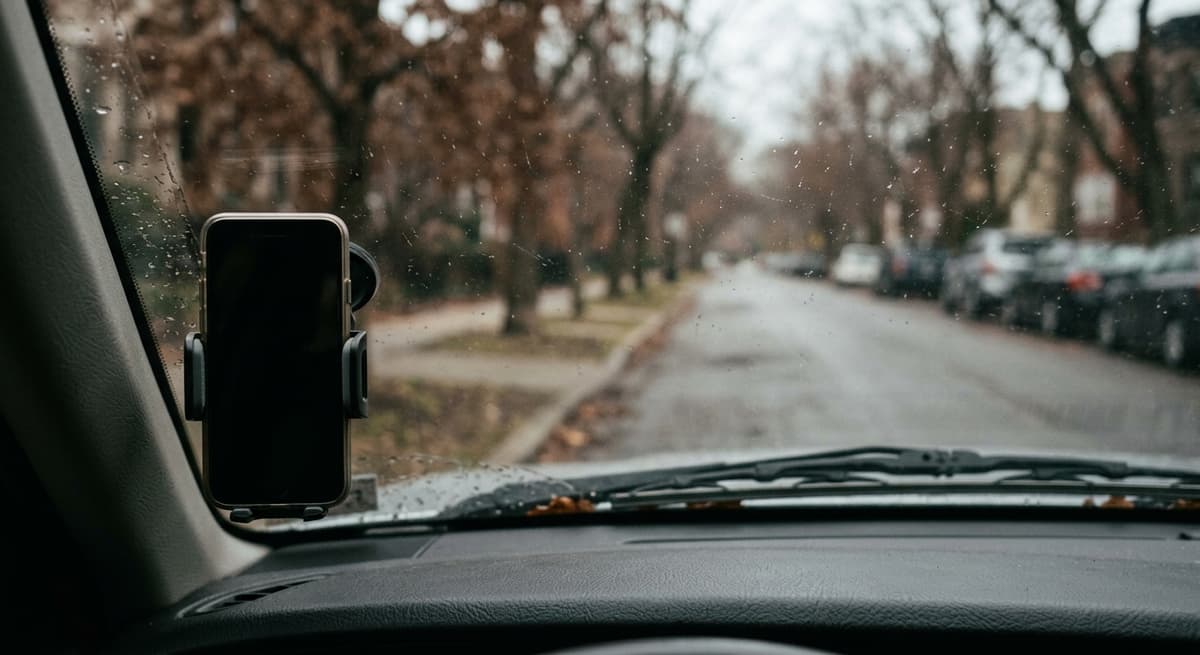
18 DCMR § 2213
D.C.'s traffic regulations under 18 DCMR § 2213 prohibit driving with any object in a position that obstructs a significant portion of the driver's view to the front or sides, or that interferes with control over the driving mechanism. While the regulation does not specifically mention dashcams, any device that materially obstructs the driver's view may result in a citation.
Best Practices for Dashcam Placement
D.C.'s congested streets and frequent stops make proper dashcam placement essential:
- Behind the rearview mirror: Most common and safest placement
- Dashboard mount: Avoids windshield entirely
- Lower passenger-side corner: Keeps camera out of driver's direct view
- Avoid center windshield: Most likely to draw a citation in D.C.
D.C. Parking and Red Light Cameras
D.C. has one of the most extensive automated traffic enforcement systems in the country. The District Department of Transportation (DDOT) operates speed cameras, red light cameras, and stop sign cameras throughout the city. Your personal dashcam footage can complement or challenge the evidence from these automated systems if you receive a ticket.
Audio Recording and One-Party Consent
How D.C. Code Section 23-542 Applies
D.C. Code Section 23-542 permits recording by a party to the communication or with the consent of one party. The critical limitation is that the recording cannot be made for criminal, tortious, or injurious purposes.
For dashcam users:
- You can record conversations with passengers without notification
- You can record phone calls while driving
- You cannot leave the dashcam recording to capture conversations when you are absent
- Recording for the purpose of harassment or other illegal activity is prohibited even under one-party consent
Rideshare and Taxi Dashcams
D.C.'s rideshare and taxi market is substantial. Drivers can record under one-party consent without passenger notification. The D.C. Department of For-Hire Vehicles regulates rideshare and taxi operations but does not specifically address dashcam use. Posting a visible notice about recording is a best practice for professional drivers.
Cross-Jurisdictional Considerations
D.C. drivers frequently cross into Maryland and Virginia, and the two neighboring jurisdictions have opposite rules:
- Maryland is an all-party (two-party) consent state for the interception of oral communications under Md. Code Cts. & Jud. Proc. Section 10-402. A dashcam with audio that captures private conversations inside the vehicle when the dashcam crosses into Maryland may need consent from all parties on the recording, not just the driver. The Maryland statute also reaches conduct that has a nexus to Maryland even when the recorder is sitting in D.C.
- Virginia is a one-party consent state under Virginia Code Section 19.2-62, matching D.C. and creating no conflict for cross-border recordings.
- For dashcams operating cross-border, the prudent rule is to obtain consent from passengers when any portion of the trip is in Maryland. Exterior audio captured on a public roadway is generally outside the wiretap statute regardless of jurisdiction because the speakers have no reasonable expectation of privacy.
Violations of Maryland's wiretap statute carry penalties of up to 5 years in prison and fines of up to $10,000 per offense.
Using Dashcam Footage as Evidence in DC
Accident and Insurance Claims
Dashcam footage is valuable evidence in D.C. accident claims. D.C. follows a contributory negligence system, one of the strictest in the country, where any fault on the claimant's part can bar recovery. Dashcam video clearly showing the other driver's fault can be critical.
To maximize evidentiary value:
- Enable date and time stamps
- Use a camera with resolution sufficient for license plates
- Preserve original footage without editing
- Back up recordings to prevent overwriting
Admissibility in DC Courts
For dashcam footage to be admissible in D.C. Superior Court or D.C. Court of Appeals:
- The footage must be relevant
- Authenticity must be established
- The footage must be unaltered
- Proper chain of custody must be maintained
- Audio recorded under one-party consent is generally admissible
Law Enforcement Interactions
D.C. Metropolitan Police may request dashcam footage during investigations. You are not required to provide footage voluntarily, but a court order may compel production. The Metropolitan Police Department (MPD) uses its own in-car and body-worn camera systems, and footage from these systems may be obtainable through D.C.'s public records process.
Criminal Penalties for Illegal Dashcam Recording
D.C. Code Section 23-542 Violations
Using a dashcam to intercept communications you are not a party to, or recording for criminal or tortious purposes, violates D.C. law:
| Offense | Max Prison | Max Fine |
|---|---|---|
| Illegal interception of communications | 5 years | $12,500 |
| Illegal disclosure of intercepted communications | 5 years | $12,500 |
Civil Liability Under D.C. Code Section 23-554(c)
Victims of illegal recording can sue under D.C. Code Section 23-554(c) for the greater of:
- Actual damages, or statutory damages of $100 per day of violation, or a $1,000 floor;
- Punitive damages;
- Reasonable attorney fees and litigation costs.
Subsection (c) waives sovereign immunity, so the District itself is a "person" liable when government-owned or government-operated dashcams are involved. A good-faith reliance on a court order is a defense for the recording party.
Commercial Vehicle Dashcams in DC
Fleet and Delivery Vehicles
D.C.'s busy streets see heavy commercial traffic. Fleet operators and delivery companies use dashcams for safety, liability, and route documentation. The FMCSA does not mandate or prohibit dashcams in commercial vehicles.
Government Vehicle Dashcams
Many D.C. government vehicles are equipped with dashcams and GPS tracking. Footage from government vehicles may be subject to D.C.'s Freedom of Information Act (D.C. Code Section 2-532).
Dashcam Privacy Considerations
Parking Mode in DC
D.C.'s parking density means many vehicles are parked on public streets. Parking mode recording is generally legal on public streets. Recording in private parking garages or on private property without the property owner's knowledge may raise additional concerns.
Sharing Dashcam Footage
Posting dashcam footage online is legal if lawfully recorded. Avoid sharing footage that could be used to identify and harass specific individuals. D.C.'s anti-stalking laws (D.C. Code Section 22-3133) prohibit using recordings to stalk or intimidate.
Explore More DC Recording Laws
Audio Recording | Video Recording | Voyeurism Laws | Workplace Recording | Recording Police | Phone Call Recording | Security Cameras | Recording in Public | Landlord-Tenant Recording | Dashcam Laws | School Recording | Medical Recording
More District of Columbia Laws
Frequently Asked Questions
Are dashcams legal in DC?
Yes. D.C. does not prohibit dashcams. Both video-only and audio-enabled dashcams are legal. Under one-party consent (D.C. Code Section 23-542), you can record audio in your vehicle without informing passengers.
Do I need to tell passengers my dashcam records audio in DC?
No. D.C. follows one-party consent, so the driver's consent is sufficient. You can record conversations in your vehicle without notifying passengers.
Where should I mount my dashcam in DC?
Mount your dashcam behind the rearview mirror or on the dashboard. 18 DCMR § 2213 prohibits any object that obstructs a significant portion of the driver's view. Avoid center placements that obstruct your view.
Can dashcam footage be used in DC courts?
Yes. Dashcam footage is admissible in D.C. courts if it is relevant, authentic, and unaltered. Given D.C.'s strict contributory negligence system, dashcam evidence can be critical in accident cases.
What are the penalties for illegal dashcam recording in DC?
Illegal interception of communications carries up to 5 years in prison and a $12,500 fine. Victims can also sue for civil damages of at least $100 per day or $1,000 (whichever is greater), plus punitive damages and attorney fees.
Updates
Removed a citation that mislabeled D.C. Code 50-1703 (D.C.'s child car-seat law) as a vehicle-equipment/windshield-obstruction authority; it does not address dashcam mounting or windshield obstruction and was never referenced in the article body.
Independently fact-checked against the cited primary sources; governing law re-checked for recent changes
Corrected two wrong statute citations: the windshield-mounting guidance was anchored to D.C.'s child-restraint-seat statute (D.C. Code § 50-1703) and now cites the actual obstruction-of-view regulation (18 DCMR § 2213); the Maryland all-party-consent cross-reference pointed to Maryland's burial-remains statute and now cites the correct wiretap statute (Md. Cts. & Jud. Proc. § 10-402).
Governing law re-checked for recent changes
Reviewed and approved by an editor
The Law Behind This Article
This article rests on the statutory provisions below, held in our own legal record and retrieved from the official source. Tap a section to read the operative text.
Code of the District of Columbia, Title 23: Criminal Procedure. - Chapter 5: Warrants and Arrests. - Subchapter III: Wire Interception and Interception of Oral Communications.
§ 23-542Interception, disclosure, and use of wire or oral communications prohibited.In forcecited in 22 of our articles
(a) Except as otherwise specifically provided in this subchapter, any person who in the District of Columbia — (1) willfully intercepts, endeavors to intercept, or procures any other person to intercept or endeavor to intercept any wire or oral communication; (2) willfully discloses or endeavors to disclose to any other person the contents of any wire or oral communication, or evidence derived therefrom, knowing or having reason to know that the information was obtained through the interception of a wire or oral communication; or (3) willfully uses or endeavors to use the contents of any wire or oral communication, or evidence derived therefrom, knowing or having reason to know, that the information was obtained through the interception of a wire or oral communication; shall be fined not more than the amount set forth in [§ 22-3571.01] or imprisoned not more than five years, or both; except that paragraphs (2) and (3) of this subsection shall not apply to the contents of any wire or oral communication, or evidence derived therefrom, that has become common knowledge or public information.
Official text (excerpt) · last checked 2026-08-31 · Read the full text in our law library · Verify at github.com
Cited in 16 court opinions in our collectionLatest citing opinion in our collection: 2024
In the courts (editorial summary, independently checked):District of Columbia courts have construed the one-party consent provision of D.C. Code 23-542(b)(2). United States v. Sell (1985) held the consent must be voluntary, the government meeting its burden by showing the party cooperated knowing what officers were doing. Thomas v. United States (2017) applied it to an interstate call.
Opinions citing this section in our collection:
- United States v. Sell (District of Columbia Court of Appeals 1985, 487 A.2d 225)✓Police recorded a woman's calls with an officer she accused of coercing sex acts. Construing the one-party consent provision for the first time, the court held the government need only show she cooperated knowing what police were doing, and reversed the suppression order.
- David Thomas v. United States (District of Columbia Court of Appeals 2017)“…s. & .lud. Proc. § 10- 402 [c)(.'£)(ii) (West 2015). Under D.C. Code § 23-542." the legislature has clearly defined w…”
- Thomas v. United States (District of Columbia Court of Appeals 2017, 171 A.3d 151)✓Police in the District recorded a call between a voyeurism victim and the defendant, who was in Maryland and did not consent. The court held this section governs admissibility in District courts and does not incorporate Maryland's two-party rule, so suppression was denied.
Identified automatically from the court opinions citing this section — not a ranking of which case controls.
Also relied on in: District of Columbia Recording Laws (2026): One-Party Consent Rules, One-Party Consent States: Complete 2026 Guide, District of Columbia Laws on Recording Police: Your Rights and Limits
§ 23-554Authorization for recovery of civil damages.In forcecited in 14 of our articles
(a) Any person whose wire or oral communication is intercepted, disclosed, or used in violation of this subchapter shall — (1) have a civil cause of action against any person who intercepts, discloses, or uses, or procures any other person to intercept, disclose, or use, such communications; and (2) be entitled to recover from any such person — (A) actual damages, but not less than liquidated damages computed at the rate of $100 a day for each day of violation, or $1,000 whichever is higher; (B) punitive damages; and (C) a reasonable attorney’s fee and other litigation costs reasonably incurred. (b) Good faith reliance on a court order or legislative authorization shall constitute a complete defense to an action brought under this section or any other law. (c) As used in this section, the term “person” includes the District of Columbia. The District of Columbia shall not assert any governmental immunity to avoid liability under this section. Judgment against the District of Columbia shall not constitute a bar to action against any other person.
Official text (excerpt) · last checked 2026-07-30 · Read the full text in our law library · Verify at github.com
Cited in 3 court opinions in our collectionLatest citing opinion in our collection: 2022
Opinions citing this section in our collection:
- Democracy Partners, LLC v. Project Veritas Action Fund (District Court, District of Columbia 2020)“…each day of violation, or $1,000, whichever is higher. See D.C. Code § 23-554(a)(2)(A). Both statutes also allow for…”
- Council on American-Islamic Relations Action Network, Inc. v. Gaubatz (District Court, District of Columbia 2022)“…oral or wire communication.” D.C. Code § 23-542(a)(2)-(3); D.C. Code § 23-554(a)(1) (authorizing civil action for re…”
Identified automatically from the court opinions citing this section — not a ranking of which case controls.
Also relied on in: District of Columbia Audio Recording Laws: Complete Legal Guide, DC Landlord-Tenant Recording Laws: Cameras, Privacy Rights, and Disputes (2026), DC Medical Recording Laws: Patient Rights, HIPAA, and One-Party Consent (2026)
Code of the District of Columbia, Title 50: Motor and Non-Motor Vehicles and Traffic. - Chapter 17: Child Restraint.
§ 50-1703Requirements.In force
(a) The operator of a motor vehicle may not transport any child of less than 3 years of age unless the child is properly restrained in a child restraint seat; provided, that, if the child weighs less than 40 pounds or measures less than 40 inches in length, and is under 2 years of age, the child shall be properly restrained in a rear-facing child restraint seat. (b) The operator of a motor vehicle shall not transport any child under 16 years of age unless the child is properly restrained in an approved child safety restraint system or restrained in a seat belt. Children under 8 years of age shall be properly seated in an installed infant, convertible (toddler) or booster child safety seat, according to the manufacturer’s instructions. A booster seat shall only be used with both a lap and shoulder belt. (c) A parent or legal guardian may transport his or her own child without restraint herein if that person is transporting a number of his or her own children of less than 16 years of age which exceeds the number of passenger positions equipped with safety belts in the motor vehicle. However, an unrestrained child may not be transported in the front seat of a motor vehicle.
Official text (excerpt) · last checked 2026-07-30 · Read the full text in our law library · Verify at github.com
Search our full record of US law — 2.1 million sections, every state + federal →
Sources and References
- D.C. Code Section 23-542 - Interception of Communications(code.dccouncil.gov).gov
- D.C. Code Section 23-554 - Civil Liability(code.dccouncil.gov).gov
- DC Metropolitan Police Department(mpdc.dc.gov).gov
- District Department of Transportation(ddot.dc.gov).gov