
Florida
Florida Laws on Recording Police: Halo Law and Your Rights (2026)
Independently fact-checked against primary sources (last audited August 22, 2026). · Reviewed by the RecordingLaw editorial team. · Law checked current as of August 22, 2026. · 7 primary sources cited on this page. How we verify our legal content
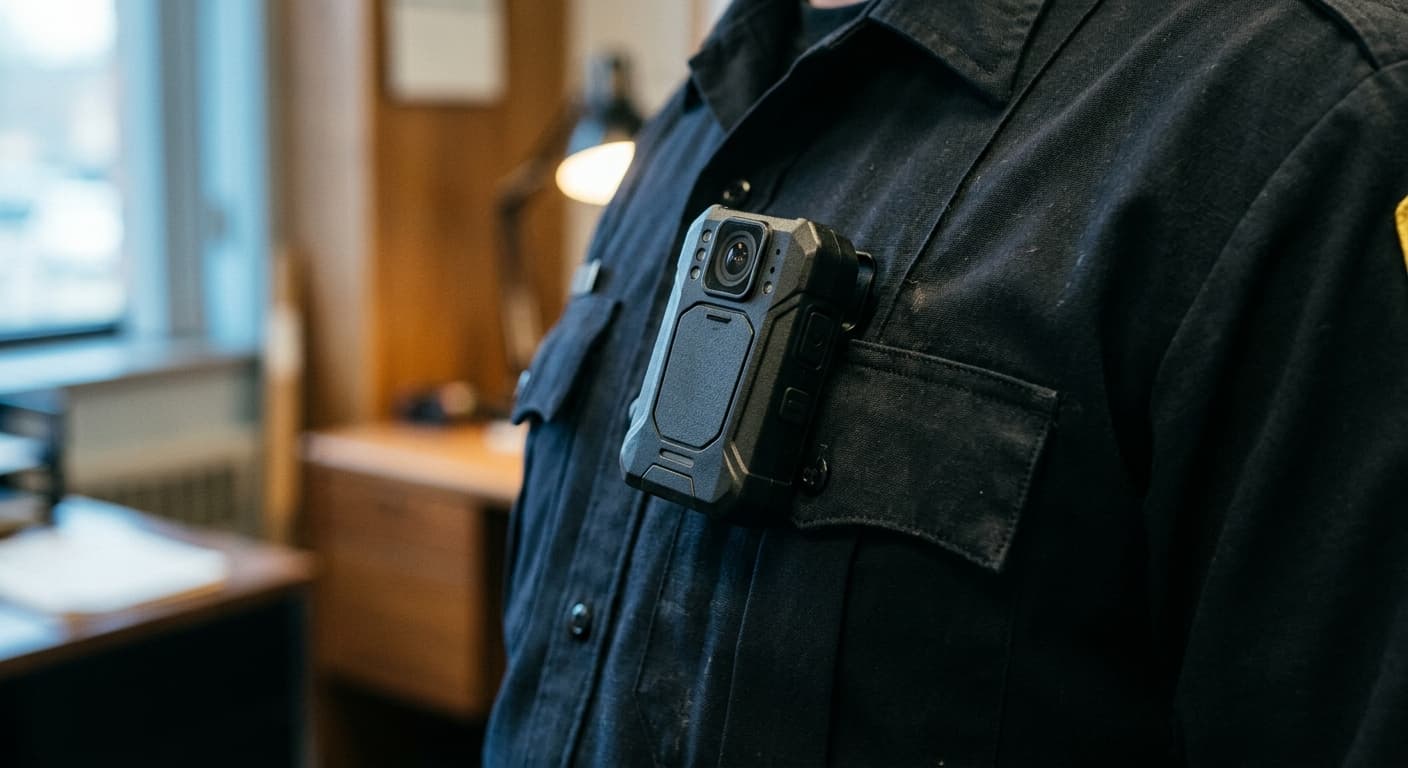
Recording police officers performing public duties in Florida is protected by the First Amendment, even though Florida is an all-party consent state under F.S. 934.03. On-duty officers in public have no reasonable expectation of privacy in their conduct, as confirmed by the Eleventh Circuit in Smith v. City of Cumming.
Recording police officers in Florida involves the intersection of constitutional rights, state wiretapping law, and a new proximity restriction. The First Amendment protects your right to record law enforcement performing public duties, and the U.S. Court of Appeals for the Eleventh Circuit (which covers Florida) has repeatedly affirmed this right. However, Florida's Halo Law, which took effect on January 1, 2025, imposes a physical distance requirement that affects how close you can stand while recording.
This guide explains your rights, the limitations, and the penalties for both unlawful recording and unlawful interference with first responders.
Your Constitutional Right to Record Police
The First Amendment Foundation
The First Amendment to the U.S. Constitution protects the right to gather information about the conduct of government officials, including police officers, when they are performing their duties in public. Multiple federal courts have recognized this right as a fundamental component of free speech and a free press.
The U.S. Court of Appeals for the Eleventh Circuit, which has jurisdiction over Florida, has held that individuals have "a First Amendment right, subject to reasonable time, manner, and place restrictions, to photograph or videotape police conduct." This right extends to both professional journalists and private citizens.
Two key 11th Circuit decisions define how far that right extends in Florida:
- Smith v. City of Cumming, 212 F.3d 1332 (11th Cir. 2000): The court recognized a First Amendment right to film police conducting official business in public, subject to reasonable time, place, and manner restrictions.
- Crocker v. Beatty, 995 F.3d 1232 (11th Cir. 2021): The court held that Smith v. City of Cumming's general language did not apply with "obvious clarity" to Crocker's specific facts (photographing a highway crash scene from the interstate median), so the right to record was not clearly established there, and granted the deputy qualified immunity on the First Amendment claim. Crocker separately prevailed on an unrelated Fourth Amendment claim over the warrantless seizure of his phone, for which a jury awarded him $1,000.
Smith v. City of Cumming is binding precedent in Florida for the general First Amendment right to record police in public, subject to reasonable restrictions; whether that right was clearly established enough to defeat qualified immunity still turns on the specific facts, as Crocker shows.
What You Can Record
You may lawfully record police officers when:
- Officers are in public spaces performing official duties (traffic stops, arrests, crowd control, responding to calls)
- You are standing on public property or in a location where you have a legal right to be
- You do not physically interfere with police operations
- You maintain a safe and legal distance from the officers
What You Cannot Do While Recording
Your right to record is not absolute. While recording, you may not:
- Physically interfere with or obstruct police operations
- Tamper with evidence or a crime scene
- Violate lawful orders related to public safety (such as orders to evacuate an area)
- Trespass on private property to obtain a recording vantage point
- Incite violence or create a dangerous situation
- Approach within 25 feet of a first responder after receiving a verbal warning (under the Halo Law)
Florida's Halo Law (F.S. 843.31)
Background and Enactment
Florida's Halo Law originated as Senate Bill 184 during the 2024 legislative session. Governor Ron DeSantis signed the bill in April 2024, and it became effective on January 1, 2025. The law created a new section in the Florida Statutes: Section 843.31.
The stated purpose of the law is to protect first responders from interference, threats, and harassment while they perform their duties. Civil liberties organizations have criticized the law, arguing it could be used to prevent effective documentation of police conduct. As of May 2026, the constitutionality of the Halo Law has been challenged but no court has issued a final ruling on its facial validity under the First Amendment. The law stands and is enforceable unless and until a court enjoins it.
What the Halo Law Requires
Under F.S. 843.31, it is unlawful for a person, after receiving a verbal warning not to approach from a first responder who is engaged in the lawful performance of a legal duty, to knowingly and willfully:
- Approach or remain within 25 feet of the first responder with the intent to interrupt, disrupt, hinder, impede, or interfere with the first responder's ability to perform their duty
- Approach or remain within 25 feet of the first responder with the intent to threaten the first responder with physical harm
- Approach or remain within 25 feet of the first responder with the intent to harass the first responder
The 25-foot distance is measured from the first responder.
Key Elements of the Offense
For a Halo Law violation to occur, all of the following must be present:
- Verbal warning: The first responder must have given you a verbal warning not to approach
- Knowledge: You must know or reasonably should know the person is a first responder
- Performance of duty: The first responder must be engaged in the lawful performance of a legal duty at the time
- Intent: You must have the intent to interfere with, impede, threaten with physical harm, or harass the first responder
- Proximity: You must approach or remain within 25 feet after receiving the warning
Who Qualifies as a "First Responder"?
The Halo Law defines "first responder" to include:
- Law enforcement officers
- Correctional probation officers
- Firefighters
- Emergency medical care providers (EMTs, paramedics)
The definition covers all levels of law enforcement, from local police and county sheriffs to state law enforcement officers.
Penalties for Violating the Halo Law
Violating F.S. 843.31 is a second-degree misdemeanor, punishable by:
- Up to 60 days in county jail
- Up to $500 in fines
- Or both
This is a significantly less severe penalty than the felony charges associated with violating Florida's wiretapping statute (F.S. 934.03), but it still creates a criminal record.
What the Halo Law Does NOT Prohibit
The Halo Law does not:
- Ban recording of first responders from any distance
- Prohibit photographing or videotaping police conduct
- Apply to people who are beyond 25 feet from the first responder
- Apply before a verbal warning has been given
- Restrict recording of public government meetings or court proceedings
- Override the First Amendment right to record police in public
You remain free to record police activity from more than 25 feet away, and officers cannot confiscate your recording device simply because you are recording them.
Recording Audio of Police Interactions

When Audio Recording Is Legal
Silent video recording of police in public is legal at any distance (outside the 25-foot Halo zone after a warning). Audio recording adds a layer of complexity under F.S. 934.03:
- Public police announcements: Audio recording of officers making public statements, giving orders to crowds, or communicating through loudspeakers does not violate F.S. 934.03 because the officers have no reasonable expectation of privacy in those communications
- Public interactions: When officers are speaking at normal volume in public during the performance of their duties, there is a strong argument that no reasonable expectation of privacy exists
- Private conversations: If officers step aside for a private conversation that is not part of their public duties, recording the audio of that conversation without consent could violate F.S. 934.03
Practical Guidance
When recording police, the safest approach is to:
- Record from a distance of more than 25 feet (or comply with any verbal warning)
- Keep your camera or phone visible rather than concealed
- Do not interfere with police operations in any way
- If an officer asks you to stop recording, you may continue recording but should comply with lawful orders related to safety and distance
- Know that recording audio of public police conduct in public is generally protected
Law Enforcement Body Cameras
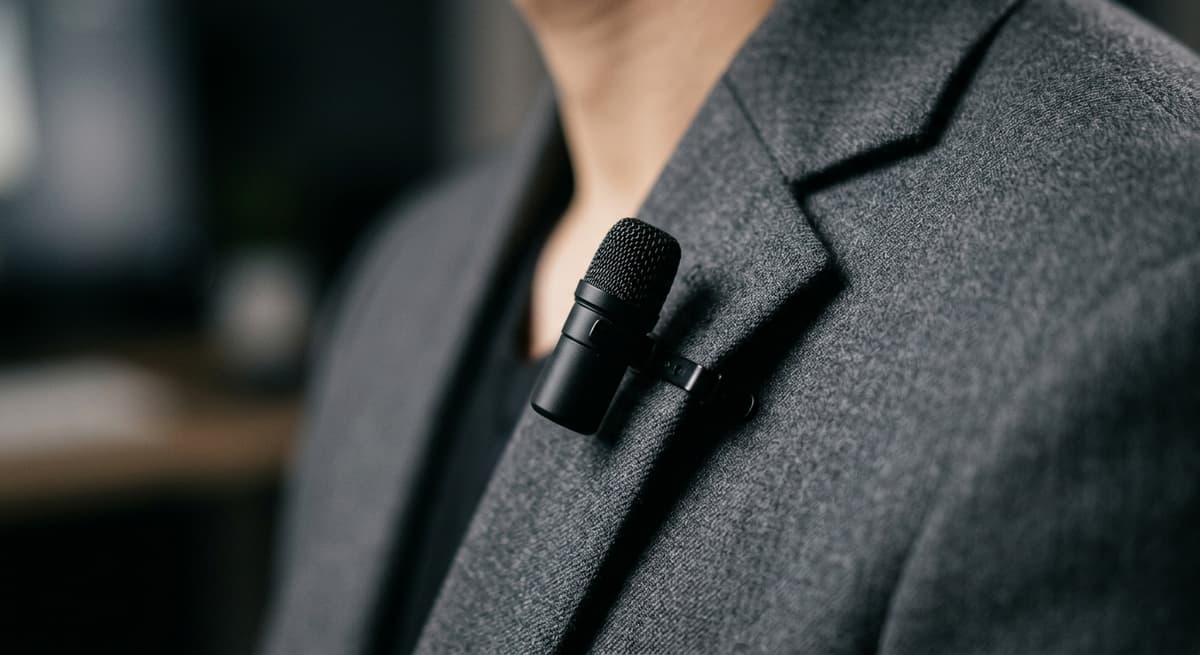
Florida has established a statutory framework for law enforcement body cameras under F.S. 943.1718. This statute requires law enforcement agencies that use body cameras to develop and adopt written policies that address:
- When officers must activate body cameras
- Situations in which body cameras may be deactivated
- Storage and retention periods for body camera footage
- Public records access to body camera recordings
- Accountability measures for officers who fail to activate cameras when required
Body camera footage is generally a public record in Florida under the state's broad public records laws, though certain exemptions apply to protect the privacy of victims, minors, and individuals recorded in sensitive locations. Under F.S. 119.071(2)(l), body camera recordings that depict the interior of a primary residence, a medical facility, or a mental health facility are exempt from public records disclosure. The same exemption applies to recordings depicting the killing or serious bodily injury of a person, or recordings that could identify a confidential informant.
Accessing Body Camera Footage
Members of the public may request body camera footage through Florida's public records process. Under F.S. 119.07, the custodial agency must provide access to public records upon request. Fees may be charged for copies, and certain exemptions may limit what portions of the footage can be released.
Recording in Police Stations and Government Buildings
The Eleventh Circuit addressed recording restrictions in government buildings in the 2025 case involving the City of Punta Gorda's ordinance prohibiting audio and video recording within municipal buildings. The court held that the ordinance was a reasonable, viewpoint-neutral regulation within a limited public forum.
This means that while you have a strong right to record police in outdoor public spaces, recording restrictions inside police stations and other government buildings may be enforceable if they are content-neutral and serve legitimate security or operational purposes.
Recording Court Proceedings in Florida
Florida state courts generally permit cameras and recording devices in courtrooms under Florida Rule of General Practice and Judicial Administration 2.450. Key provisions include:
- Electronic media coverage of judicial proceedings is allowed
- The presiding judge has discretion to limit or prohibit recording if it adversely affects the fairness of proceedings
- Recording participants must comply with the judge's orders regarding placement, movement, and noise levels
Federal courts in Florida follow separate rules and are generally more restrictive about cameras and recording devices in courtrooms.
Recording Public Meetings (Sunshine Law)
Florida's Government-in-the-Sunshine Law (F.S. 286.011) guarantees public access to meetings of government boards and commissions. Citizens have the right to attend and unobtrusively record these meetings, including:
- City council meetings
- County commission meetings
- School board meetings
- Public hearings and workshops
- Other meetings of public bodies
The Florida Attorney General has confirmed that a public board may not prohibit citizens from recording public meetings through the use of nondisruptive recording devices. Recording must not disrupt the meeting, and reasonable time, manner, and place restrictions may apply.
What to Do If Police Interfere with Your Recording
If a police officer attempts to stop you from recording or confiscate your device:
- Remain calm and polite. Do not physically resist.
- State clearly that you are exercising your First Amendment right to record in a public place.
- Comply with lawful orders related to your physical position (move back if ordered), but you are not required to stop recording.
- Do not consent to a search of your device. Police generally need a warrant to search the contents of your phone or camera under Riley v. California, 573 U.S. 373 (2014).
- Document the encounter by noting the officer's name, badge number, time, and location.
- File a complaint with the department's internal affairs division if appropriate.
- Consult a civil rights attorney if your rights were violated.
Penalties Summary
| Offense | Classification | Maximum Penalty |
|---|---|---|
| Recording police in public (legal) | No offense | N/A |
| Approaching within 25 ft after warning (Halo Law) | Second-degree misdemeanor | 60 days jail, $500 fine |
| Obstructing or interfering with police (F.S. 843.02) | First-degree misdemeanor | 1 year jail, $1,000 fine |
| Secret audio recording of private police conversation | Third-degree felony | 5 years prison, $5,000 fine |
More Florida Recording Laws
Audio Recording | Video Recording | Voyeurism & Hidden Cameras | Workplace Recording | Recording Police | Phone Call Recording | Security Cameras | Recording in Public | Landlord-Tenant | Dashcam Laws | Schools | Medical Recording
Back to Florida Recording Laws
More Florida Recording Topics
More Florida Laws
Frequently Asked Questions
Can I legally record police officers in Florida?
Yes. The First Amendment protects your right to record police officers performing their duties in public. The U.S. Court of Appeals for the Eleventh Circuit, which covers Florida, has affirmed this right. You may record from any distance, but Florida's Halo Law (F.S. 843.31) makes it a misdemeanor to approach within 25 feet of a first responder after receiving a verbal warning.
What is Florida's Halo Law?
The Halo Law (F.S. 843.31), effective January 1, 2025, prohibits a person from approaching or remaining within 25 feet of a first responder (police, firefighters, EMTs) after receiving a verbal warning to stay back. The intent element requires that the person approached with the purpose of interfering with or harassing the first responder. Violating the Halo Law is a second-degree misdemeanor with up to 60 days in jail and a $500 fine.
Can police officers order me to stop recording in Florida?
Police cannot order you to stop recording in a public place solely because they do not want to be recorded. However, they can issue lawful orders related to safety and public order, such as directing you to move back from an active scene. If an officer tells you to move back 25 feet or more under the Halo Law, you should comply with the distance requirement while continuing to record.
Can police confiscate my phone or camera in Florida?
Police may seize your recording device on probable cause, but the U.S. Supreme Court held in Riley v. California (2014) that they generally need a warrant to search its contents, even after an arrest. An officer who seizes your device solely to prevent recording, rather than to preserve evidence, may still violate your First Amendment rights.
Can I request police body camera footage in Florida?
Yes. Body camera footage is generally a public record in Florida under the state's public records laws (F.S. 119.07). You can submit a public records request to the law enforcement agency. Certain exemptions may limit what portions of the footage are released, particularly to protect victims, minors, or individuals recorded in sensitive locations.
Updates
Corrected the description of Crocker v. Beatty, which actually granted the officer qualified immunity because the right to record was not clearly established on those facts, and fixed a related passage that incorrectly stated police cannot seize a recording device without a warrant (only searching its contents requires one, under Riley v. California).
Independently fact-checked against the cited primary sources; governing law re-checked for recent changes
Restored the Halo Law's (F.S. 843.31) third disjunctive intent ground, threatening a first responder with physical harm, which the article had dropped from both the 'What the Halo Law Requires' list and the numbered elements of the offense.
Governing law re-checked for recent changes
Title updated to 2026. Added 11th Circuit controlling cases: Smith v. City of Cumming (212 F.3d 1332), which established the First Amendment right to record police, and Crocker v. Beatty (995 F.3d 1232), in which the court granted the deputy qualified immunity on the First Amendment claim because that right was not clearly established with obvious clarity on Crocker's specific facts. Added F.S. 119.071(2)(l) body cam public records exemption reference. Added note on Halo Law constitutionality challenge status.
Reviewed and approved by an editor
The Law Behind This Article
This article rests on the statutory provisions below, held in our own legal record and retrieved from the official source. Tap a section to read the operative text.
Florida Statutes
§ 934.03Interception and disclosure of wire, oral, or electronic communications prohibited.In forcecited in 51 of our articles
(1) Except as otherwise specifically provided in this chapter, any person who:(a) Intentionally intercepts, endeavors to intercept, or procures any other person to intercept or endeavor to intercept any wire, oral, or electronic communication; (b) Intentionally uses, endeavors to use, or procures any other person to use or endeavor to use any electronic, mechanical, or other device to intercept any oral communication when:1. Such device is affixed to, or otherwise transmits a signal through, a wire, cable, or other like connection used in wire communication; or 2.
Official text (excerpt) · last checked 2026-08-31 · Read the full text in our law library · Verify at leg.state.fl.us
Cited in 74 court opinions in our collectionLatest citing opinion in our collection: 2026
In the courts (editorial summary, independently checked):State v. Walls (1978) held that recording an in-home oral communication without the consent of all parties violated section 934.03 and required suppression, and State v. Inciarrano (1985) held the statute protects only communications uttered with a reasonable expectation of privacy.
Opinions citing this section in our collection:
- State v. Walls (Supreme Court of Florida 1978, 356 So. 2d 294)✓An extortion victim secretly recorded threats made to him in his own home; the court held that was a protected oral communication, that recording it without every party's consent violated Section 934.03, and that Section 934.06 barred using the tape as evidence.
- SHARRON TASHA FORD v. CITY OF BOYNTON BEACH (District Court of Appeal of Florida 2021)“…ng oral communications in violation of the wiretap statute, section 934.03, Florida Statutes (2009), and for obstructing without vio…”
- State v. Calhoun (Circuit Court for the Judicial Circuits of Florida 1984, 7 Fla. Supp. 2d 3)“…hall not be violated” . . . (emphasis mine) Furthermore, section 934.03, Florida Statutes, makes it unlawful for *6 any person (…”
Identified automatically from the court opinions citing this section — not a ranking of which case controls.
Also relied on in: Florida Recording Laws (2026): All-Party Consent Rules, Florida Dashcam Laws: Rules for Dashboard Cameras (2026), Can an Employer Record Conversations Without Consent? (2026)
§ 119.07Inspection and copying of records; photographing public records; fees; exemptions.In forcecited in 2 of our articles
(1)(a) Every person who has custody of a public record shall permit the record to be inspected and copied by any person desiring to do so, at any reasonable time, under reasonable conditions, and under supervision by the custodian of the public records. (b) A custodian of public records or a person having custody of public records may designate another officer or employee of the agency to permit the inspection and copying of public records, but must disclose the identity of the designee to the person requesting to inspect or copy public records. (c) A custodian of public records and his or her designee must acknowledge requests to inspect or copy records promptly and respond to such requests in good faith. A good faith response includes making reasonable efforts to determine from other officers or employees within the agency whether such a record exists and, if so, the location at which the record can be accessed.
Official text (excerpt) · last checked 2026-09-02 · Read the full text in our law library · Verify at leg.state.fl.us
Cited in 86 court opinions in our collectionLatest citing opinion in our collection: 2026
In the courts (editorial summary, independently checked):State Ex Rel. Veale v. City of Boca Raton (1977) read Section 119.07 to permit withholding only under an exemption provided by statute, rejecting judicially created public-policy exceptions. Palm Beach Newspapers, Inc. v. Burk (1987) held Chapter 119 gives no right of access to unfiled criminal discovery depositions.
Opinions citing this section in our collection:
- State Ex Rel. Veale v. City of Boca Raton (District Court of Appeal of Florida 1977, 353 So. 2d 1194)“…personal inspection by any person. [emphasis supplied]." Fla. Stat. § 119.07 (1) (1975) requires the public official…”
- Rose v. D'ALESSANDRO (District Court of Appeal of Florida 1978, 364 So. 2d 763)“…copying as a "public record" pursuant to the provisions of Section 119.07, Florida Statutes (Supp. 1978). The trial court entered j…”
- Ivester v. State (District Court of Appeal of Florida 1981, 398 So. 2d 926)✓A man charged with resisting arrest was denied an order compelling the arresting officer to answer deposition questions, partly on Public Records Act grounds; the court held deposition answers are not public records and Section 119.07 does not limit Rule 3.220 discovery.
Identified automatically from the court opinions citing this section — not a ranking of which case controls.
Also relied on in: Florida Public Records Laws: The Public Records Act (Chapter 119) Explained
§ 286.011Public meetings and records; public inspection; criminal and civil penalties.In forcecited in 6 of our articles
(1) All meetings of any board or commission of any state agency or authority or of any agency or authority of any county, municipal corporation, or political subdivision, except as otherwise provided in the Constitution, including meetings with or attended by any person elected to such board or commission, but who has not yet taken office, at which official acts are to be taken are declared to be public meetings open to the public at all times, and no resolution, rule, or formal action shall be considered binding except as taken or made at such meeting. The board or commission must provide reasonable notice of all such meetings. (2) The minutes of a meeting of any such board or commission of any such state agency or authority shall be promptly recorded, and such records shall be open to public inspection. The circuit courts of this state shall have jurisdiction to issue injunctions to enforce the purposes of this section upon application by any citizen of this state. (3)(a) Any public officer who violates any provision of this section is guilty of a noncriminal infraction, punishable by fine not exceeding $500.
Official text (excerpt) · last checked 2026-07-28 · Read the full text in our law library · Verify at leg.state.fl.us
Cited in 115 court opinions in our collectionLatest citing opinion in our collection: 2023
Opinions citing this section in our collection:
- Town of Palm Beach v. Gradison (Supreme Court of Florida 1974, 296 So. 2d 473)“…nsidered binding except as taken or made at such meeting." Fla. Stat. § 286.011 , F.S.A. The only question to be dete…”
- City of Miami Beach v. Berns (Supreme Court of Florida 1971, 245 So. 2d 38)“…ment." We must first determine whether the provisions of Fla. Stat. § 286.011 , F.S.A., supersedes or repeals Fla. S…”
- Wood v. Marston (Supreme Court of Florida 1983, 442 So. 2d 934)“…At issue is the applicability of Florida's Sunshine Law, section 286.011, Florida Statutes (1979), to a faculty committee which se…”
Identified automatically from the court opinions citing this section — not a ranking of which case controls.
Also relied on in: Florida Audio Recording Laws: All-Party Consent Rules and Penalties (2026), Florida Laws on Recording in Public: Your Rights and Limits (2026), Florida School Recording Laws: Classroom, Campus, and Student Privacy (2026)
§ 843.31Approaching a first responder with specified intent after a warning.In forcecited in 3 of our articles
(1) As used in this section, the term:(a) “First responder” includes a law enforcement officer as defined in s. 943.10(1), a correctional probation officer as defined in s. 943.10(3), a firefighter as defined in s. 784.07(1), and an emergency medical care provider as defined in s. 784.07(1). (b) “Harass” means to willfully engage in a course of conduct directed at a first responder which intentionally causes substantial emotional distress in that first responder and serves no legitimate purpose. (2)(a) It is unlawful for a person, after receiving a verbal warning not to approach from a person he or she knows or reasonably should know is a first responder, who is engaged in the lawful performance of a legal duty, to knowingly and willfully violate such warning and approach or remain within 25 feet of the first responder with the intent to:1. Impede or interfere with the first responder’s ability to perform such duty; 2. Threaten the first responder with physical harm; or 3. Harass the first responder. (b) A person who violates this subsection commits a misdemeanor of the second degree, punishable as provided in s. 775.082 or s. 775.083.
Official text (excerpt) · last checked 2026-07-28 · Read the full text in our law library · Verify at leg.state.fl.us
§ 943.1718Body cameras; policies and procedures.In forcecited in 4 of our articles
(1) As used in this section, the term:(a) “Body camera” means a portable electronic recording device that is worn on a law enforcement officer’s person that records audio and video data of the officer’s law-enforcement-related encounters and activities. (b) “Law enforcement agency” means an agency that has a primary mission of preventing and detecting crime and enforcing the penal, criminal, traffic, and motor vehicle laws of the state and in furtherance of that primary mission employs law enforcement officers as defined in s. 943.10. (c) “Law enforcement officer” has the same meaning as provided in s. 943.10. (2) A law enforcement agency that permits its law enforcement officers to wear body cameras shall establish policies and procedures addressing the proper use, maintenance, and storage of body cameras and the data recorded by body cameras. The policies and procedures must include:(a) General guidelines for the proper use, maintenance, and storage of body cameras. (b) Any limitations on which law enforcement officers are permitted to wear body cameras.
Official text (excerpt) · last checked 2026-07-28 · Read the full text in our law library · Verify at leg.state.fl.us
Also relied on in: Florida Video Recording Laws: What You Can and Cannot Record (2026), Florida Police Bodycam Laws & Public Records, Florida Police Reports: How to Get a Copy, Fees, and What's Public
Search our full record of US law — 2.1 million sections, every state + federal →
Sources and References
- Florida Statute 843.31 - Halo Law(leg.state.fl.us).gov
- Senate Bill 184 (2024)(flsenate.gov).gov
- Governor DeSantis Signs Halo Law(flgov.com).gov
- Florida Statute 934.03(flsenate.gov).gov
- Florida Statute 943.1718 - Body Cameras(flsenate.gov).gov
- Florida Statute 286.011 - Sunshine Law(leg.state.fl.us).gov
- Florida Statute 119.07 - Public Records(flsenate.gov).gov