
Florida
Florida Laws on Recording in Public: Your Rights and Limits (2026)
Independently fact-checked against primary sources (last audited August 22, 2026). · Reviewed by the RecordingLaw editorial team. · Law checked current as of August 22, 2026. · 7 primary sources cited on this page. How we verify our legal content
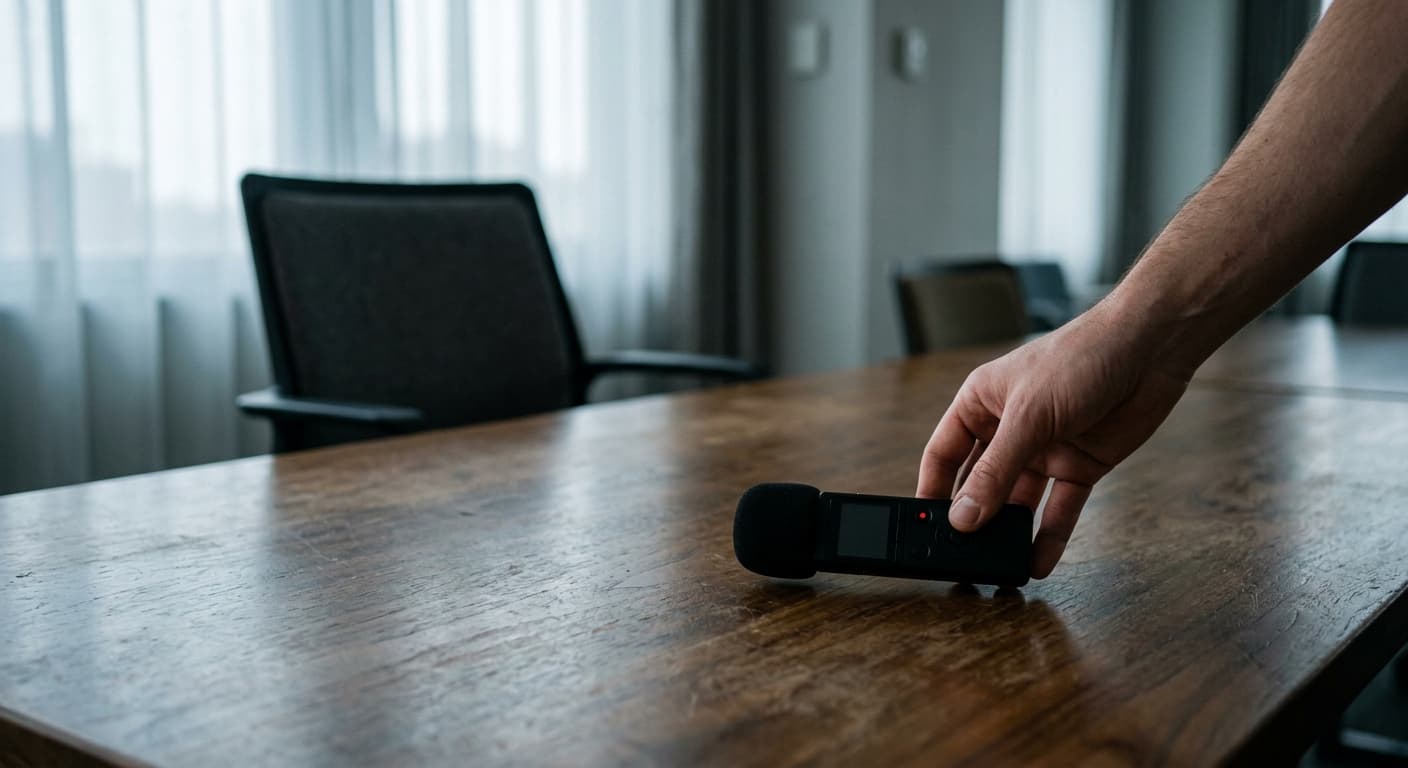
In Florida, recording silent video in public spaces is legal under First Amendment protections. Audio recording of conversations is governed by Fla. Stat. 934.03, which requires all-party consent only where a reasonable expectation of privacy exists; most public conversations lack that expectation, making audio recording of them generally lawful.
Florida provides broad protections for recording in public spaces, grounded in the First Amendment and reinforced by the state's Sunshine Law. You can generally photograph, film, and record video in public areas such as streets, parks, sidewalks, and government buildings. However, Florida's strict all-party consent law creates important limitations on audio recording, even in public settings. Understanding where the line falls between protected public recording and illegal interception is essential for anyone who records in Florida.
The First Amendment and Public Recording
Constitutional Protection
The First Amendment protects the right to gather information about matters of public interest, including the right to record in public spaces. The U.S. Court of Appeals for the Eleventh Circuit, which covers Florida, has recognized a First Amendment right to photograph and videotape matters of public interest occurring on public property. Smith v. City of Cumming, 212 F.3d 1332 (11th Cir. 2000), is the binding 11th Circuit authority establishing that right. Crocker v. Beatty, 995 F.3d 1232 (11th Cir. 2021), does not extend it: there, the court granted the deputy qualified immunity on the First Amendment claim because Smith's general language did not apply with obvious clarity to Crocker's specific facts (filming a highway crash scene from the interstate median), so the right was not clearly established on those facts. Crocker separately prevailed only on an unrelated Fourth Amendment claim over the warrantless seizure of his phone.
This right extends to:
- Filming public events, rallies, and demonstrations
- Photographing buildings, infrastructure, and public spaces
- Recording police and government officials performing public duties
- Livestreaming public activities
- Documenting news events and matters of public concern
Limits on the First Amendment Right
The right to record in public is not unlimited. It is subject to reasonable time, manner, and place restrictions, meaning the government can regulate:
- Where you stand while recording (not in restricted areas, not obstructing traffic)
- When you record (not during lawful curfews or emergency evacuations)
- How you record (not in a manner that constitutes harassment, stalking, or interference with official duties)
These restrictions must be content-neutral, meaning the government cannot restrict recording based on what you are recording, only on the circumstances of how you record.
Audio Recording in Public Spaces
The Reasonable Expectation of Privacy
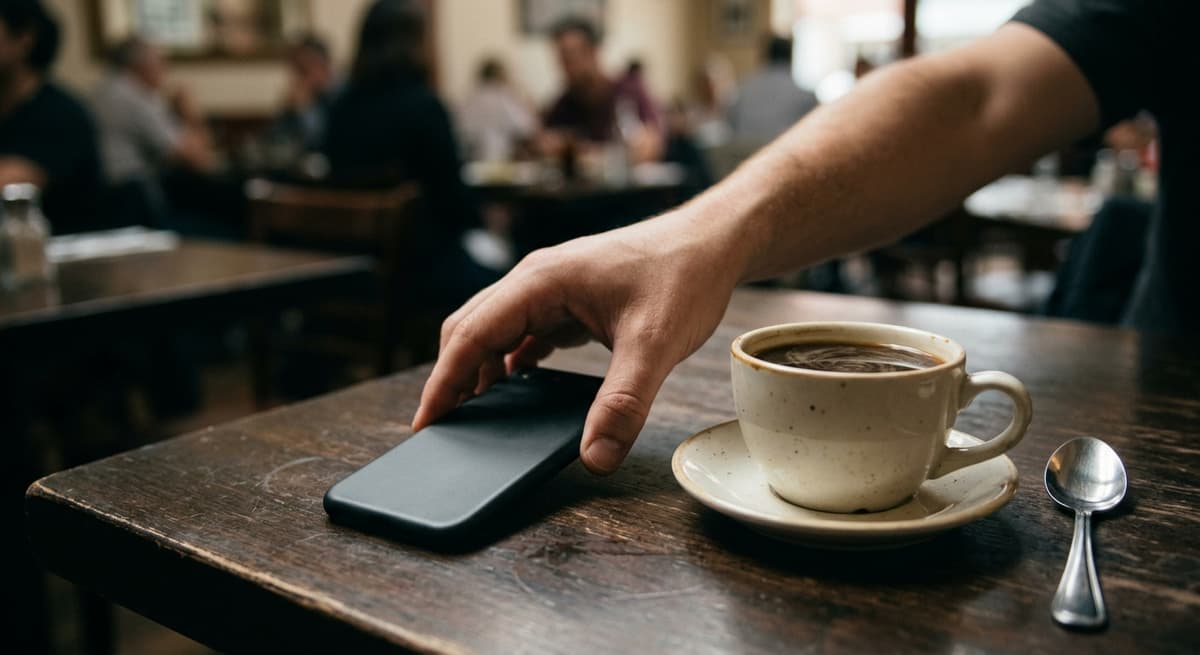
Florida's all-party consent law under F.S. 934.03 protects "oral communications" that are made with a reasonable expectation of privacy. The critical question for public recording is whether the people whose voices are captured have a reasonable expectation of privacy in their communication.
When audio recording in public is legal:
- Recording public speeches, announcements, and performances
- Recording conversations held in a loud, open setting where others can easily overhear
- Recording public statements by government officials at press conferences or public meetings
- Recording your own conversations when all participants consent
- Recording sounds and ambient noise that do not constitute private conversations
When audio recording in public may be illegal:
- Recording two people having a quiet, private conversation on a park bench
- Using a directional microphone to capture conversations from a distance
- Recording a private phone call someone is having in a public space
- Capturing conversations between people who have stepped aside for privacy, even in a public area
The Case-by-Case Analysis
Courts evaluate whether a reasonable expectation of privacy existed based on the totality of the circumstances:
- Volume of the conversation: Loud conversations in public are less likely to be protected
- Number of people nearby: The more crowded the area, the less reasonable an expectation of privacy
- Steps taken to achieve privacy: People who lower their voices, step aside, or move to a secluded spot demonstrate an expectation of privacy
- Nature of the location: A quiet park bench offers more privacy than the middle of a busy intersection
- Cultural and social norms: What a reasonable person would expect in that specific situation
Recording Government Meetings (Sunshine Law)
F.S. 286.011: Government in the Sunshine
Florida's Government-in-the-Sunshine Law, codified at F.S. 286.011, is one of the strongest open-government laws in the nation. It requires that:
- Meetings of public boards or commissions must be open to the public
- Reasonable notice of meetings must be given
- Minutes of meetings must be taken and promptly recorded
The Florida Attorney General has confirmed that a public board may not prohibit citizens from recording public meetings through the use of nondisruptive recording devices.
What You Can Record Under the Sunshine Law
Citizens have the right to attend and record:
- City council meetings and workshops
- County commission meetings
- School board meetings
- State agency board meetings
- Public hearings
- Any meeting of a public body where official business is discussed
Both video and audio recording of these meetings is protected. The consent requirement of F.S. 934.03 does not apply to public government meetings because participants in open government meetings do not have a reasonable expectation of privacy.
Limitations on Recording Government Meetings
While recording is protected, the presiding officer may impose reasonable restrictions on:
- The placement of recording equipment (to avoid obstructing views or disrupting proceedings)
- Movement during the meeting
- Use of lighting equipment that interferes with the proceedings
- Noise from recording devices
The restrictions must be content-neutral and must not effectively prevent recording. A rule banning all recording devices would violate the Sunshine Law.
Recording on Private Property Open to the Public

Businesses, Malls, and Commercial Properties
Private property owners, including businesses open to the public, retain the right to restrict recording on their premises. This means:
- A store can prohibit customers from recording inside the store
- A mall can restrict photography and filming on its property
- A restaurant can ask patrons not to record other diners
- A concert venue can prohibit recording during performances
If a property owner or their representative asks you to stop recording on private property and you refuse, you may be asked to leave. Refusing to leave after being asked constitutes trespass under F.S. 810.08.
However, if a business does not prohibit recording and you record video without audio in common customer areas, you are generally not violating any law. The key is whether the property owner has communicated a restriction on recording.
Theme Parks and Tourist Attractions
Florida's major theme parks and tourist attractions (Walt Disney World, Universal Studios, etc.) have their own policies on recording. These are private properties, and their recording policies are enforceable as conditions of entry. Visitors who violate recording policies can be asked to leave.
Recording at Protests and Public Demonstrations
Your Rights
The First Amendment provides strong protection for recording protests, demonstrations, and rallies in public spaces. You may:
- Record from public sidewalks, streets, and parks
- Photograph and film demonstrators, counter-protestors, and onlookers
- Livestream events on social media
- Record police interactions with demonstrators
Practical Considerations
- Stay on public property or property where you have permission to be
- Do not obstruct pedestrian or vehicle traffic
- Comply with police orders related to safety (move behind a police line, clear an intersection)
- If police declare an unlawful assembly, you should move away from the assembly area but may continue recording from a lawful location
- The Halo Law requires you to stay at least 25 feet from first responders after receiving a verbal warning
Recording in Public Transportation
Florida's public transit systems (buses, trains, transit stations) are generally considered public spaces where video recording is permitted. However:
- Individual transit agencies may have policies restricting recording
- Audio recording of private conversations on public transit follows the same rules as any other public space: if the conversation has a reasonable expectation of privacy, consent is required
- Recording in a manner that constitutes harassment of other passengers is prohibited
Street Photography and Public Photography
Legal Protections
Florida law allows public photography, including:
- Photographing people in public places (streets, parks, sidewalks)
- Photographing buildings, landmarks, and public art
- Street photography that captures scenes of public life
People in public places have a diminished expectation of privacy regarding their visual appearance. You generally do not need permission to photograph someone who is visible in a public space.
Commercial Use
Using photographs of people for commercial purposes (advertising, marketing) without their consent may create liability under Florida's right of publicity statute (F.S. 540.08), which prohibits using a person's name or likeness for commercial purposes without express written or oral consent.
Editorial and newsworthy use of photographs is protected by the First Amendment and does not require consent.
Recording in Hospitals and Emergency Rooms
Hospitals and emergency rooms are private property, and administrators can restrict recording. Florida's medical privacy laws and HIPAA add additional layers of restriction:
- Hospitals may prohibit recording to protect patient privacy
- Recording other patients without consent may violate both privacy laws and F.S. 810.145 if patients are in areas where they expect privacy
- Audio recording of medical conversations requires all-party consent under F.S. 934.03
See the full guide on medical recording laws.
Public Recording Quick Reference
| Location | Video Legal? | Audio Legal? | Key Consideration |
|---|---|---|---|
| Public streets and sidewalks | Yes | Depends on context | Audio of private conversations may need consent |
| Public parks | Yes | Depends on context | Quiet private conversations may be protected |
| Government meetings | Yes | Yes | Sunshine Law protects recording |
| Private businesses | Owner's discretion | All-party consent for private conversations | Owner can ask you to stop or leave |
| Police performing public duties | Yes | Generally yes | Must stay 25 ft after warning (Halo Law) |
| Protests and rallies | Yes | Generally yes for public statements | Comply with safety orders |
| Public transportation | Generally yes | Depends on context | Agency policies may apply |
| Hospitals (private property) | Hospital's discretion | All-party consent | Patient privacy protections apply |
More Florida Recording Laws
Audio Recording | Video Recording | Voyeurism & Hidden Cameras | Workplace Recording | Recording Police | Phone Call Recording | Security Cameras | Recording in Public | Landlord-Tenant | Dashcam Laws | Schools | Medical Recording
Back to Florida Recording Laws
More Florida Recording Topics
More Florida Laws
Frequently Asked Questions
Can I record video in public in Florida?
Yes. The First Amendment protects your right to record video in public spaces such as streets, parks, sidewalks, and government buildings. You do not need permission to film in a public area. However, audio recording of private conversations requires all-party consent under F.S. 934.03, even if the conversation takes place in a public setting.
Can I record a government meeting in Florida?
Yes. Florida's Government-in-the-Sunshine Law (F.S. 286.011) guarantees the right to attend and record public government meetings. Public boards cannot prohibit citizens from using nondisruptive recording devices. This includes city council meetings, county commission meetings, school board meetings, and other public body sessions.
Can a store manager tell me to stop recording in their store in Florida?
Yes. Private property owners, including businesses open to the public, can restrict recording on their premises. If you are asked to stop recording and refuse, you may be asked to leave. Refusing to leave after being told to do so constitutes trespass under Florida law. The store's right to control recording on their property overrides your desire to record.
Can I take photos of people in public in Florida without their permission?
Generally yes. People in public spaces have a diminished expectation of privacy regarding their visual appearance. You can photograph anyone visible in a public place for personal, editorial, or newsworthy purposes. However, using someone's likeness for commercial purposes (advertising) without their express written or oral consent may violate Florida's right of publicity statute (F.S. 540.08).
Is it legal to livestream in public in Florida?
Yes, livestreaming video in public spaces is protected by the First Amendment. The same rules apply as for any public recording: you may stream from public areas, but audio of private conversations requires all-party consent. If livestreaming a police encounter, you must comply with the Halo Law's 25-foot distance requirement after a verbal warning.
Updates
Corrected the description of Crocker v. Beatty, which actually granted the officer qualified immunity because the right to record was not clearly established on those facts, rather than confirming a clearly established right as the page previously stated.
Independently fact-checked against the cited primary sources; governing law re-checked for recent changes
Corrected F.S. 540.08's consent requirement: the statute allows express WRITTEN OR ORAL consent for commercial use of a person's name or likeness, not written consent only.
Governing law re-checked for recent changes
Title updated to 2026. Added Smith v. City of Cumming (11th Cir. 2000) as binding 11th Circuit authority for the First Amendment right to record in public, and Crocker v. Beatty (11th Cir. 2021), in which the court granted the officer qualified immunity because the right was not clearly established with obvious clarity on Crocker's specific facts. Halo Law constitutionality challenge status noted.
Reviewed and approved by an editor
The Law Behind This Article
This article rests on the statutory provisions below, held in our own legal record and retrieved from the official source. Tap a section to read the operative text.
Florida Statutes
§ 934.03Interception and disclosure of wire, oral, or electronic communications prohibited.In forcecited in 51 of our articles
(1) Except as otherwise specifically provided in this chapter, any person who:(a) Intentionally intercepts, endeavors to intercept, or procures any other person to intercept or endeavor to intercept any wire, oral, or electronic communication; (b) Intentionally uses, endeavors to use, or procures any other person to use or endeavor to use any electronic, mechanical, or other device to intercept any oral communication when:1. Such device is affixed to, or otherwise transmits a signal through, a wire, cable, or other like connection used in wire communication; or 2.
Official text (excerpt) · last checked 2026-08-31 · Read the full text in our law library · Verify at leg.state.fl.us
Cited in 74 court opinions in our collectionLatest citing opinion in our collection: 2026
In the courts (editorial summary, independently checked):State v. Walls (1978) held that recording an in-home oral communication without the consent of all parties violated section 934.03 and required suppression, and State v. Inciarrano (1985) held the statute protects only communications uttered with a reasonable expectation of privacy.
Opinions citing this section in our collection:
- State v. Walls (Supreme Court of Florida 1978, 356 So. 2d 294)✓An extortion victim secretly recorded threats made to him in his own home; the court held that was a protected oral communication, that recording it without every party's consent violated Section 934.03, and that Section 934.06 barred using the tape as evidence.
- SHARRON TASHA FORD v. CITY OF BOYNTON BEACH (District Court of Appeal of Florida 2021)“…ng oral communications in violation of the wiretap statute, section 934.03, Florida Statutes (2009), and for obstructing without vio…”
- State v. Calhoun (Circuit Court for the Judicial Circuits of Florida 1984, 7 Fla. Supp. 2d 3)“…hall not be violated” . . . (emphasis mine) Furthermore, section 934.03, Florida Statutes, makes it unlawful for *6 any person (…”
Identified automatically from the court opinions citing this section — not a ranking of which case controls.
Also relied on in: Florida Recording Laws (2026): All-Party Consent Rules, Florida Dashcam Laws: Rules for Dashboard Cameras (2026), Can an Employer Record Conversations Without Consent? (2026)
§ 286.011Public meetings and records; public inspection; criminal and civil penalties.In forcecited in 6 of our articles
(1) All meetings of any board or commission of any state agency or authority or of any agency or authority of any county, municipal corporation, or political subdivision, except as otherwise provided in the Constitution, including meetings with or attended by any person elected to such board or commission, but who has not yet taken office, at which official acts are to be taken are declared to be public meetings open to the public at all times, and no resolution, rule, or formal action shall be considered binding except as taken or made at such meeting. The board or commission must provide reasonable notice of all such meetings. (2) The minutes of a meeting of any such board or commission of any such state agency or authority shall be promptly recorded, and such records shall be open to public inspection. The circuit courts of this state shall have jurisdiction to issue injunctions to enforce the purposes of this section upon application by any citizen of this state. (3)(a) Any public officer who violates any provision of this section is guilty of a noncriminal infraction, punishable by fine not exceeding $500.
Official text (excerpt) · last checked 2026-07-28 · Read the full text in our law library · Verify at leg.state.fl.us
Cited in 115 court opinions in our collectionLatest citing opinion in our collection: 2023
Opinions citing this section in our collection:
- Town of Palm Beach v. Gradison (Supreme Court of Florida 1974, 296 So. 2d 473)“…nsidered binding except as taken or made at such meeting." Fla. Stat. § 286.011 , F.S.A. The only question to be dete…”
- City of Miami Beach v. Berns (Supreme Court of Florida 1971, 245 So. 2d 38)“…ment." We must first determine whether the provisions of Fla. Stat. § 286.011 , F.S.A., supersedes or repeals Fla. S…”
- Wood v. Marston (Supreme Court of Florida 1983, 442 So. 2d 934)“…At issue is the applicability of Florida's Sunshine Law, section 286.011, Florida Statutes (1979), to a faculty committee which se…”
Identified automatically from the court opinions citing this section — not a ranking of which case controls.
Also relied on in: Florida Audio Recording Laws: All-Party Consent Rules and Penalties (2026), Florida Laws on Recording Police: Halo Law and Your Rights (2026), Florida School Recording Laws: Classroom, Campus, and Student Privacy (2026)
§ 540.08Unauthorized publication of name or likeness.In forcecited in 3 of our articles
(1) No person shall publish, print, display or otherwise publicly use for purposes of trade or for any commercial or advertising purpose the name, portrait, photograph, or other likeness of any natural person without the express written or oral consent to such use given by:(a) Such person; or (b) Any other person, firm or corporation authorized in writing by such person to license the commercial use of her or his name or likeness; or (c) If such person is deceased, any person, firm or corporation authorized in writing to license the commercial use of her or his name or likeness, or if no person, firm or corporation is so authorized, then by any one from among a class composed of her or his surviving spouse and surviving children.
Official text (excerpt) · last checked 2026-07-28 · Read the full text in our law library · Verify at leg.state.fl.us
Cited in 67 court opinions in our collectionLatest citing opinion in our collection: 2025
Opinions citing this section in our collection:
- Weinstein Design Group, Inc. v. Fielder (District Court of Appeal of Florida 2004, 884 So. 2d 990)“…mercial purposes without his authorization, in violation of section 540.08, Florida Statutes, and for the common law tort of name mi…”
- Tyne v. Time Warner Entertainment Co. (Supreme Court of Florida 2005, 901 So. 2d 802)“…f's section 540.08 argument, reasoning as follows: Under Fla. Stat. § 540.08 , the terms "trade," "commercial," or "…”
- Emma Gayle Weaver, etc. v. Stephen C. Myers, M.D. (Supreme Court of Florida 2017, 229 So. 3d 1118)“…person to control the use of his or her name and likeness. Section 540.08, Florida Statutes, authorizes the surviving spouse of a d…”
Identified automatically from the court opinions citing this section — not a ranking of which case controls.
Also relied on in: Deepfake & AI Voice Cloning Laws by State (2026), Florida Deepfake Laws: AI Images, Voice Cloning & Penalties (2026)
§ 810.08Trespass in structure or conveyance.In force
(1) Whoever, without being authorized, licensed, or invited, willfully enters or remains in any structure or conveyance, or, having been authorized, licensed, or invited, is warned by the owner or lessee of the premises, or by a person authorized by the owner or lessee, to depart and refuses to do so, commits the offense of trespass in a structure or conveyance. (2)(a) Except as otherwise provided in this subsection, trespass in a structure or conveyance is a misdemeanor of the second degree, punishable as provided in s. 775.082 or s. 775.083. (b) If there is a human being in the structure or conveyance at the time the offender trespassed, attempted to trespass, or was in the structure or conveyance, the trespass in a structure or conveyance is a misdemeanor of the first degree, punishable as provided in s. 775.082 or s. 775.083. (c) If the offender is armed with a firearm or other dangerous weapon, or arms himself or herself with such while in the structure or conveyance, the trespass in a structure or conveyance is a felony of the third degree, punishable as provided in s. 775.082, s. 775.083, or s. 775.084.
Official text (excerpt) · last checked 2026-07-28 · Read the full text in our law library · Verify at leg.state.fl.us
Cited in 46 court opinions in our collectionLatest citing opinion in our collection: 2026
Opinions citing this section in our collection:
- I.T. v. State (Supreme Court of Florida 1997, 22 Fla. L. Weekly Supp. 244)“…a permissive lesser included offense of grand theft. Under section 810.08, Florida Statutes (1993), whoever, without authorization,…”
- G.C. v. State (District Court of Appeal of Florida 1990, 560 So. 2d 1186)“…rglary charges cannot be sustained, G.C.’s conduct violated section 810.08, Florida Statutes (1987), which prohibits trespass to a c…”
- Rozier v. State (District Court of Appeal of Florida 1981, 402 So. 2d 539)“…e words "without being authorized, licensed, or invited" in section 810.08, Florida Statutes (1979), and that the word "willfully" a…”
Identified automatically from the court opinions citing this section — not a ranking of which case controls.
§ 843.31Approaching a first responder with specified intent after a warning.In forcecited in 3 of our articles
(1) As used in this section, the term:(a) “First responder” includes a law enforcement officer as defined in s. 943.10(1), a correctional probation officer as defined in s. 943.10(3), a firefighter as defined in s. 784.07(1), and an emergency medical care provider as defined in s. 784.07(1). (b) “Harass” means to willfully engage in a course of conduct directed at a first responder which intentionally causes substantial emotional distress in that first responder and serves no legitimate purpose. (2)(a) It is unlawful for a person, after receiving a verbal warning not to approach from a person he or she knows or reasonably should know is a first responder, who is engaged in the lawful performance of a legal duty, to knowingly and willfully violate such warning and approach or remain within 25 feet of the first responder with the intent to:1. Impede or interfere with the first responder’s ability to perform such duty; 2. Threaten the first responder with physical harm; or 3. Harass the first responder. (b) A person who violates this subsection commits a misdemeanor of the second degree, punishable as provided in s. 775.082 or s. 775.083.
Official text (excerpt) · last checked 2026-07-28 · Read the full text in our law library · Verify at leg.state.fl.us
Search our full record of US law — 2.1 million sections, every state + federal →
Sources and References
- Florida Statute 934.03(flsenate.gov).gov
- Florida Statute 286.011 - Sunshine Law(leg.state.fl.us).gov
- Florida AG - Sunshine Law(myfloridalegal.com).gov
- Florida Statute 843.31 - Halo Law(leg.state.fl.us).gov
- Florida Statute 810.08 - Trespass(flsenate.gov).gov
- Florida Statute 540.08 - Right of Publicity(flsenate.gov).gov
- Florida AG - Citizen Guide(myfloridalegal.com).gov