
Florida
Florida Police Reports: How to Get a Copy, Fees, and What's Public
Independently fact-checked against primary sources (last audited August 11, 2026). · Law checked current as of August 11, 2026. · 5 primary sources cited on this page. How we verify our legal content
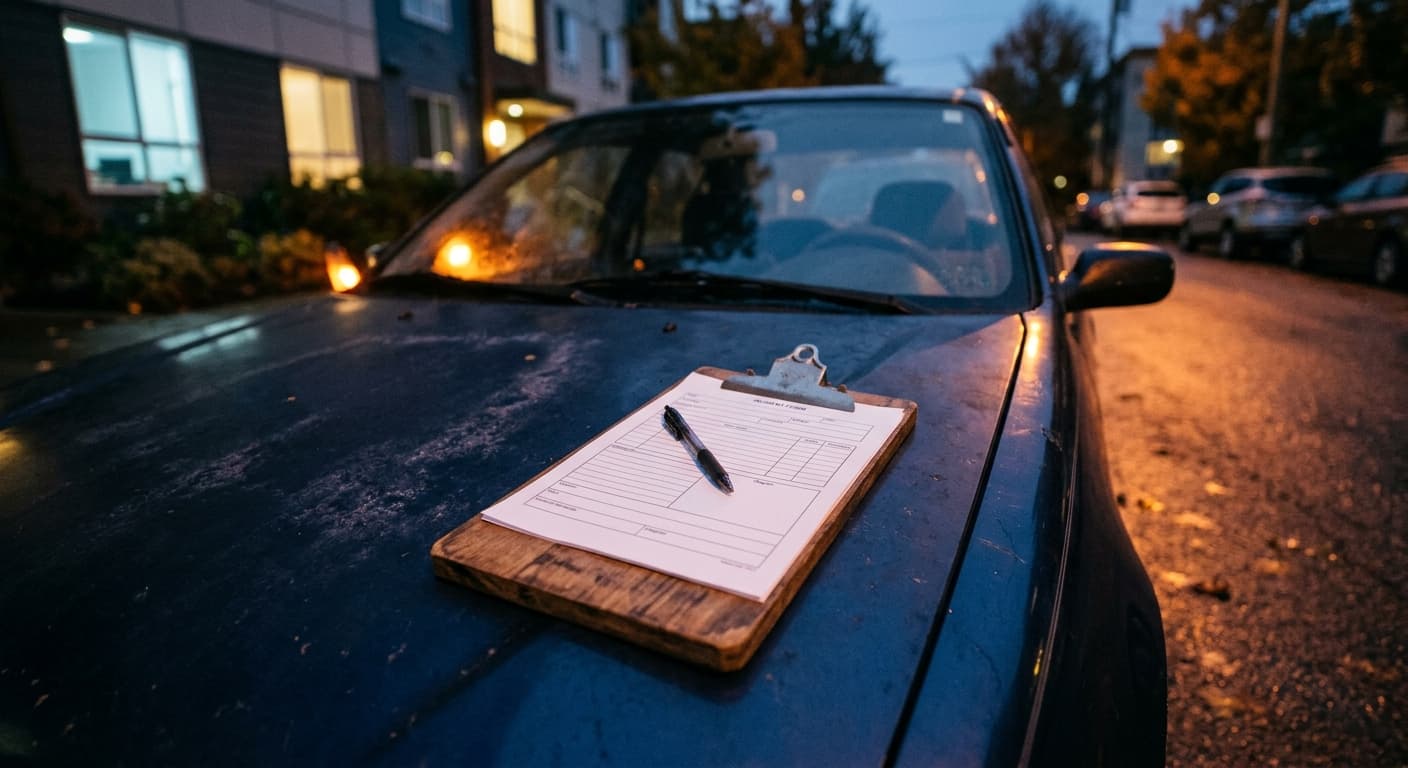
Florida splits police records into two separate systems. A traffic crash report is a state form filed by the investigating officer and stored in a state repository under Florida Statutes section 316.066; almost every driver looking for a report after a wreck wants this one. A police incident report, covering anything from a burglary to an assault, is held by the local agency that responded and released under Florida's Public Records Act, Chapter 119.
This guide covers both channels: the FLHSMV Crash Portal for crash reports, the local records-unit process for incident reports, and Florida's separate framework for body camera footage.
Information last verified on 2026-08-11. This article has not yet been reviewed by a licensed lawyer.
How to Get a Copy of a Florida Crash Report
The Florida Highway Safety and Motor Vehicles department (FLHSMV) operates the Florida Crash Portal at flhsmv.gov/traffic-crash-reports, the state's official repository for traffic crash reports under section 316.066. Reports cost $10.00 each under section 321.23, plus a $2.00 convenience fee per online transaction, with a maximum of 10 reports per transaction. A report typically becomes available online within 10 days of the crash; once purchased, it must be downloaded within 48 hours. Drivers can also request reports by mail or in person: up to 10 records at any Florida Highway Patrol Troop Station, or more than 10 by mail to FLHSMV's Crash Records unit at 2900 Apalachee Parkway, MS 28, Tallahassee, FL 32399, with a signed statement, taking four to six weeks to process.
Not every crash produces the same kind of report. Section 316.066(1)(a) requires a Florida Traffic Crash Report, Long Form only when the crash resulted in death, personal injury, or any indication of complaints of pain or discomfort; involved a violation of section 316.061(1) or section 316.193, Florida's leaving-the-scene and DUI statutes; rendered a vehicle inoperable to a degree that required a wrecker to remove it from the scene; or involved a commercial motor vehicle. There is no dollar threshold anywhere in that list. For any other crash on a public roadway, section 316.066(1)(c) directs the officer to complete a short form crash report or provide a driver exchange of information form, no matter how large the property damage is. The dollar figure most drivers have heard of comes from a different statute: section 316.065(1) makes it the driver's own duty to notify law enforcement immediately of a crash causing injury, death, or apparent damage of at least $500 to any vehicle or other property. If no officer responds at all, Florida lets drivers file a Driver Self Report of Traffic Crash by mail or email with FLHSMV, and section 316.066(1)(e) separately requires a driver to submit a written report to the department within 10 days after a crash that did not require a law enforcement report.
Who Can Get a Florida Crash Report, and When
FLHSMV's own portal describes access in plain terms: crash reports are exempt from public disclosure except for parties involved in the crash and other specific parties outlined in the statute. The statute itself, section 316.066(2), is more detailed than that summary suggests. Before the 60 day mark, an eligible report is available not only to the parties themselves but also to their legal representatives, any insurer a party has applied to or is insured by, licensed insurance agents, contracted claims and underwriting vendors, law enforcement and their contractors, victim services programs, and any government agency or a private entity acting on a government agency's behalf. A redacted version, with no address, driver's license number, date of birth, or phone number, goes to FCC licensed broadcasters and legal notice newspapers even sooner.
Being on that list is not enough by itself. Section 316.066(2)(d) sets a condition precedent that applies to every requester, including a driver asking for their own crash report: the person must present a valid driver license or other photographic identification, proof of status, or identification demonstrating their qualification to access the information, and must file a written sworn statement with the agency holding the report stating that the information will not be used for any commercial solicitation of accident victims or knowingly disclosed to a third party for that purpose. That sworn statement has to be completed and sworn to for each individual crash report requested, so asking for three reports means three separate statements.
After 60 days, section 316.066(2)(f) opens the report further, to anyone eligible under paragraph (b) or under any of the permissible uses listed in the federal Driver's Privacy Protection Act, 18 U.S.C. section 2721(b), which covers uses like litigation, insurance underwriting and claims, and government functions. In practice, Florida crash reports move from a defined eligible party list in the first two months to a broad DPPA style access standard afterward.
One dated caveat worth noting: section 316.066(2)(h) subjects all of subsection (2), meaning the 60 day confidentiality window, the eligible party list, and the post 60 day DPPA standard together, to the Open Government Sunset Review Act under section 119.15. Subsection (2) stands repealed on October 2, 2027 unless the Legislature reviews it and saves it from repeal by reenactment, so the access rules described in this section should be rechecked against the current statute on or after that date.
Talk to a family-law attorney: free case review
Every case has details a formula cannot capture. Get a free, no-obligation review from a family-law attorney.
How to Get a Florida Police Incident Report
A police incident report, covering anything other than a traffic crash, is requested from the responding agency's own records unit, not FLHSMV. Requests are made under Florida's Public Records Act, Chapter 119. Section 119.071(2)(c) lets an agency withhold a record only while it constitutes active criminal intelligence information or active criminal investigative information; once an investigation closes, the exemption generally no longer applies. FLHSMV also fields broader public records requests beyond the standard crash report purchase through its CrashRecords@flhsmv.gov address, and offers a separate Signal 4 portal for government and contractor users and a Crash Dashboard for aggregate crash data, neither of which replaces a records request to the agency that handled a non-crash incident.

Body Camera Footage in Florida
Florida does not have a dedicated body camera access statute the way some states do. Section 943.1718 requires any agency that equips its officers with body cameras to adopt policies covering their use, maintenance, and storage, with retention governed by the cross-referenced section 119.021, Florida's general records retention statute. The section also confirms that Chapter 934, Florida's wiretapping act, does not apply to body camera recordings. Disclosure of the footage itself runs through the general Chapter 119 exemption framework, principally the 119.071 family used for other law enforcement records, rather than a separate bodycam specific fee and timeline schedule. For the fuller legal picture, see Florida's body camera laws, and for the request process generally, see how to file a police report, how to read a police report, and how to request body camera footage.
Corrections, Redactions, and Anti-Solicitation Rules
Florida's crash report statute is unusually explicit about misuse. Section 316.066(2)(d) makes the photo identification and per report sworn no solicitation statement described above a condition of access for every requester, not only bulk purchasers. Third party vendors are the one route around the sworn statement: in lieu of requiring it, an agency may release crash reports electronically under a memorandum of understanding to vendors under contract with one or more insurers, but only where that contract itself bars using the information to solicit accident victims and a copy of the contract is furnished to the agency as proof of the vendor's claimed status. Sections 316.066(3)(c) and (d) make it a third degree felony to knowingly obtain or attempt to obtain confidential crash report information unlawfully, and section (3)(e) creates a private civil cause of action, with a minimum of $2,500 in liquidated damages plus potential punitive damages and attorney's fees, measured against the DPPA's permissible use standards. This is a notably stronger anti-solicitation regime than many states carry.

No dedicated statutory form for correcting a Florida crash report was located for this guide. If a report contains an error, contact the investigating agency's records unit directly to ask about its correction or supplement process.
Related Resources
Police Reports by State covers the full 50-state picture. See also how to file a police report, how to read a police report, are police reports public, how to request body camera footage, Florida bodycam laws, Florida car accident laws, Florida public records laws, and Florida court records.
Disclaimer
This article provides general information about Florida's police report and public records process. It is not legal advice. Fees, portals, and eligibility rules change; verify current details with the agencies named above or a licensed Florida attorney before relying on anything here for a specific situation.

Last updated: 2026-08-11. Fees and portals reflect their published status as of August 2026.
Frequently Asked Questions
How much does a Florida crash report cost?
$10.00 per report through the FLHSMV Crash Portal, plus a $2.00 online convenience fee, under section 321.23 of the Florida Statutes.
How long does it take to get a Florida crash report?
Most reports are available online within about 10 days of the crash, and a purchased copy must be downloaded within 48 hours. Mail requests take four to six weeks.
Who can get a copy of a Florida crash report?
For the first 60 days, an eligible list that includes the parties, their insurers and legal representatives, and law enforcement. After 60 days, anyone eligible under the federal Driver's Privacy Protection Act's permitted uses. Either way, section 316.066(2)(d) requires the requester to show photo identification and file a sworn statement, for each report requested, promising not to use it to solicit accident victims.
Does a Florida officer have to write a report for a minor crash?
Section 316.066(1)(a) reserves the Long Form for crashes involving death, injury or complaints of pain, a leaving-the-scene or DUI violation, a wrecker removal, or a commercial motor vehicle. Any other crash on a public roadway gets a short form report or a driver exchange of information form under section 316.066(1)(c), regardless of the damage amount. Separately, section 316.065(1) requires the driver to notify law enforcement of a crash causing injury, death, or at least $500 in apparent damage.
Where do I get a Florida police incident report that is not a crash?
From the responding agency's records unit, under Chapter 119, Florida's Public Records Act, not from FLHSMV.
Does Florida have a body camera access law?
Not a dedicated one. Section 943.1718 requires agencies that use body cameras to adopt use and storage policies, and disclosure runs through Florida's general public records exemption framework in Chapter 119.
What happens if someone misuses a Florida crash report?
Knowingly obtaining or misusing confidential crash report information is a third degree felony, and the statute also allows a private civil claim with a minimum of $2,500 in liquidated damages.
Updates
Corrected Florida's crash reporting thresholds: the $500 figure is the driver's own notification duty under section 316.065(1), not a trigger in section 316.066, which sets no dollar threshold; clarified that every requester must show photo ID and file a per-report sworn no-solicitation statement; and noted that the confidentiality regime stands repealed on October 2, 2027 unless reenacted.
Independently fact-checked against the cited primary sources; governing law re-checked for recent changes
The Law Behind This Article
This article rests on the statutory provisions below, held in our own legal record and retrieved from the official source. Tap a section to read the operative text.
Florida Statutes
§ 316.066Written reports of crashes.In force
(1)(a) A Florida Traffic Crash Report, Long Form must be completed and submitted to the department within 10 days after an investigation is completed by the law enforcement officer who in the regular course of duty investigates a motor vehicle crash that:1. Resulted in death of, personal injury to, or any indication of complaints of pain or discomfort by any of the parties or passengers involved in the crash; 2. Involved a violation of s. 316.061(1) or s. 316.193; 3. Rendered a vehicle inoperable to a degree that required a wrecker to remove it from the scene of the crash; or 4. Involved a commercial motor vehicle. (b) The Florida Traffic Crash Report, Long Form must include:1. The date, time, and location of the crash. 2. A description of the vehicles involved. 3. The names and addresses of the parties involved, including all drivers and passengers, and the identification of the vehicle in which each was a driver or a passenger. 4. The names and addresses of witnesses. 5. The name, badge number, and law enforcement agency of the officer investigating the crash. 6. The names of the insurance companies for the respective parties involved in the crash.
Official text (excerpt) · last checked 2026-09-02 · Read the full text in our law library · Verify at leg.state.fl.us
Cited in 44 court opinions in our collectionLatest citing opinion in our collection: 2025
In the courts (editorial summary, independently checked):The Florida Supreme Court in Brackin v. Boles (1984) held section 316.066 privilege reaches only statements a driver, owner, or occupant must make to satisfy the crash-report duty, so blood alcohol results were admissible. City of Tamarac v. Garchar (1981) held the section did not cover a remark volunteered to a treating physician.
Opinions citing this section in our collection:
- Brackin v. Boles (Supreme Court of Florida 1984, 452 So. 2d 540)✓A driver's blood alcohol result was excluded from his civil injury trial under section 316.066; the court held the statute shields only communications a driver must make to satisfy the reporting duty, and a blood test is not one, so the result was admissible.
- Martinez v. State (District Court of Appeal of Florida 1982, 420 So. 2d 637)“…as part of an accident investigation and inadmissible under Section 316.066, Florida Statutes (1979); (4) a motion to suppress statem…”
- State v. Harvell (Circuit Court for the Judicial Circuits of Florida 1987, 22 Fla. Supp. 2d 128)“…er than his admission, which was inadmissible by virtue of Fla. Stat. § 316.066 (4). The Defendant apparently also file…”
Identified automatically from the court opinions citing this section — not a ranking of which case controls.
§ 119.071General exemptions from inspection or copying of public records.In forcecited in 5 of our articles
(1) AGENCY ADMINISTRATION.—(a) Examination questions and answer sheets of examinations administered by a governmental agency for the purpose of licensure, certification, or employment are exempt from s. 119.07(1) and s. 24(a), Art. I of the State Constitution. A person who has taken such an examination has the right to review his or her own completed examination. (b)1. For purposes of this paragraph, “competitive solicitation” means the process of requesting and receiving sealed bids, proposals, or replies in accordance with the terms of a competitive process, regardless of the method of procurement. 2. Sealed bids, proposals, or replies received by an agency pursuant to a competitive solicitation are exempt from s. 119.07(1) and s. 24(a), Art. I of the State Constitution until such time as the agency provides notice of an intended decision or until 30 days after opening the bids, proposals, or final replies, whichever is earlier. 3.
Official text (excerpt) · last checked 2026-08-31 · Read the full text in our law library · Verify at leg.state.fl.us
Cited in 13 court opinions in our collectionLatest citing opinion in our collection: 2024
In the courts (editorial summary, independently checked):Rameses, Inc. v. Demings (2010) held that giving a criminal defendant unredacted undercover surveillance recordings in discovery does not destroy section 119.071's exemptions for undercover law enforcement identity. Ingram v. State (2014) addressed how the section 119.071(2)(j) minor victim exemption applies to a defendant.
Opinions citing this section in our collection:
- State v. Wooten (District Court of Appeal of Florida 2018, 260 So. 3d 1060)✓The state tried to keep cell phone tracking details redacted from search warrant papers; the court held the section 119.071(2)(d) surveillance exemption was unpreserved and inapplicable here, since rule 2.420 on court records does not adopt it, and ordered unredacted release.
- Rameses, Inc. v. Demings (District Court of Appeal of Florida 2010, 29 So. 3d 418)✓A nightclub sought undercover surveillance tapes already given unredacted to charged dancers in discovery; the court held that discovery disclosure does not destroy section 119.071's exemptions for undercover personnel, so the officers' faces could be obscured.
- Ingram v. State (District Court of Appeal of Florida 2014, 164 So. 3d 676)✓An inmate serving life for sexual battery of a child sought the victim's recorded interview; the court quashed the denial for lack of a hearing and, as guidance on remand, read section 119.071(2)(j)2.b. to authorize releasing the minor's identifying video to the defendant.
Identified automatically from the court opinions citing this section — not a ranking of which case controls.
Also relied on in: Florida Public Records Laws: The Public Records Act (Chapter 119) Explained, Florida Police Bodycam Laws & Public Records, Police Reports by State: How to Get a Copy, What They Cost, and What's Public
§ 943.1718Body cameras; policies and procedures.In forcecited in 4 of our articles
(1) As used in this section, the term:(a) “Body camera” means a portable electronic recording device that is worn on a law enforcement officer’s person that records audio and video data of the officer’s law-enforcement-related encounters and activities. (b) “Law enforcement agency” means an agency that has a primary mission of preventing and detecting crime and enforcing the penal, criminal, traffic, and motor vehicle laws of the state and in furtherance of that primary mission employs law enforcement officers as defined in s. 943.10. (c) “Law enforcement officer” has the same meaning as provided in s. 943.10. (2) A law enforcement agency that permits its law enforcement officers to wear body cameras shall establish policies and procedures addressing the proper use, maintenance, and storage of body cameras and the data recorded by body cameras. The policies and procedures must include:(a) General guidelines for the proper use, maintenance, and storage of body cameras. (b) Any limitations on which law enforcement officers are permitted to wear body cameras.
Official text (excerpt) · last checked 2026-07-28 · Read the full text in our law library · Verify at leg.state.fl.us
Also relied on in: Florida Laws on Recording Police: Halo Law and Your Rights (2026), Florida Video Recording Laws: What You Can and Cannot Record (2026)
United States Code Title 18
§ 2721Prohibition on release and use of certain personal information from State motor vehicle recordsIn forcecited in 11 of our articles
A State department of motor vehicles, and any officer, employee, or contractor thereof, shall not knowingly disclose or otherwise make available to any person or entity: personal information, as defined in 18 U.S.C. 2725(3), about any individual obtained by the department in connection with a motor vehicle record, except as provided in subsection (b) of this section; or highly restricted personal information, as defined in 18 U.S.C. 2725(4), about any individual obtained by the department in connection with a motor vehicle record, without the express consent of the person to whom such information applies, except uses permitted in subsections (b)(1), (b)(4), (b)(6), and (b)(9): Provided, That subsection (a)(2) shall not in any way affect the use of organ donation information on an individual’s driver’s license or affect the administration of organ donation initiatives in the States.
Official text (excerpt) · last checked 2026-07-28 · Read the full text in our law library · Verify at uscode.house.gov
Cited in 377 court opinions in our collectionLatest citing opinion in our collection: 2026
In the courts (editorial summary, independently checked):Maracich v. Spears (2013) held an attorney's solicitation of clients is not a permissible purpose under the DPPA litigation exception in 2721(b)(4). Reno v. Condon (2000) upheld the statute's restrictions on disclosing state motor vehicle records as a valid exercise of the commerce power that does not conscript state officers.
Opinions citing this section in our collection:
- Maracich v. Spears (Supreme Court of the United States 2013, 570 U.S. 48)✓Lawyers used South Carolina DMV records to mail over 34,000 car buyers letters recruiting them as clients; the Supreme Court held that sending communications with the predominant purpose of solicitation is not a use exempt under the section 2721(b)(4) litigation exception.
- Reno v. Condon (Supreme Court of the United States 2000, 528 U.S. 141)✓South Carolina, whose law let almost anyone buy DMV records, argued the federal driver-privacy law commandeered the states; the Supreme Court held section 2721 regulates states as owners of databases and upheld it under the Commerce Clause.
- Pichler v. UNITE (Court of Appeals for the Third Circuit 2008)✓Union organizers copied license plates from a company parking lot and pulled the owners' DMV records to make house calls; the Third Circuit held union organizing is not among the permissible uses in section 2721(b), and a parallel lawful purpose does not excuse it.
Identified automatically from the court opinions citing this section — not a ranking of which case controls.
Also relied on in: How to Request Body Cam Footage: State Laws and the Request Process, Are Police Reports Public Record? What's Open and What's Not, Alabama Traffic Camera Tickets: Work Zone Pilot and City Camera Laws
Search our full record of US law — 2.1 million sections, every state + federal →
Sources and References
- Florida Statutes section 316.066, Written reports of crashes(leg.state.fl.us).gov
- Florida Statutes section 119.071, General exemptions from inspection or copying of public records(leg.state.fl.us).gov
- Florida Statutes section 943.1718, Body cameras; policies and procedures(leg.state.fl.us).gov
- Florida Highway Safety and Motor Vehicles, Traffic Crash Reports(flhsmv.gov).gov
- 18 U.S.C. section 2721, Driver's Privacy Protection Act(uscode.house.gov).gov
- Florida Statutes section 316.065, Crashes; reports; penalties(leg.state.fl.us)