
Florida
Florida Dashcam Laws: Rules for Dashboard Cameras (2026)
Independently fact-checked against primary sources (last audited August 22, 2026). · Reviewed by the RecordingLaw editorial team. · Law checked current as of August 22, 2026. · 6 primary sources cited on this page. How we verify our legal content
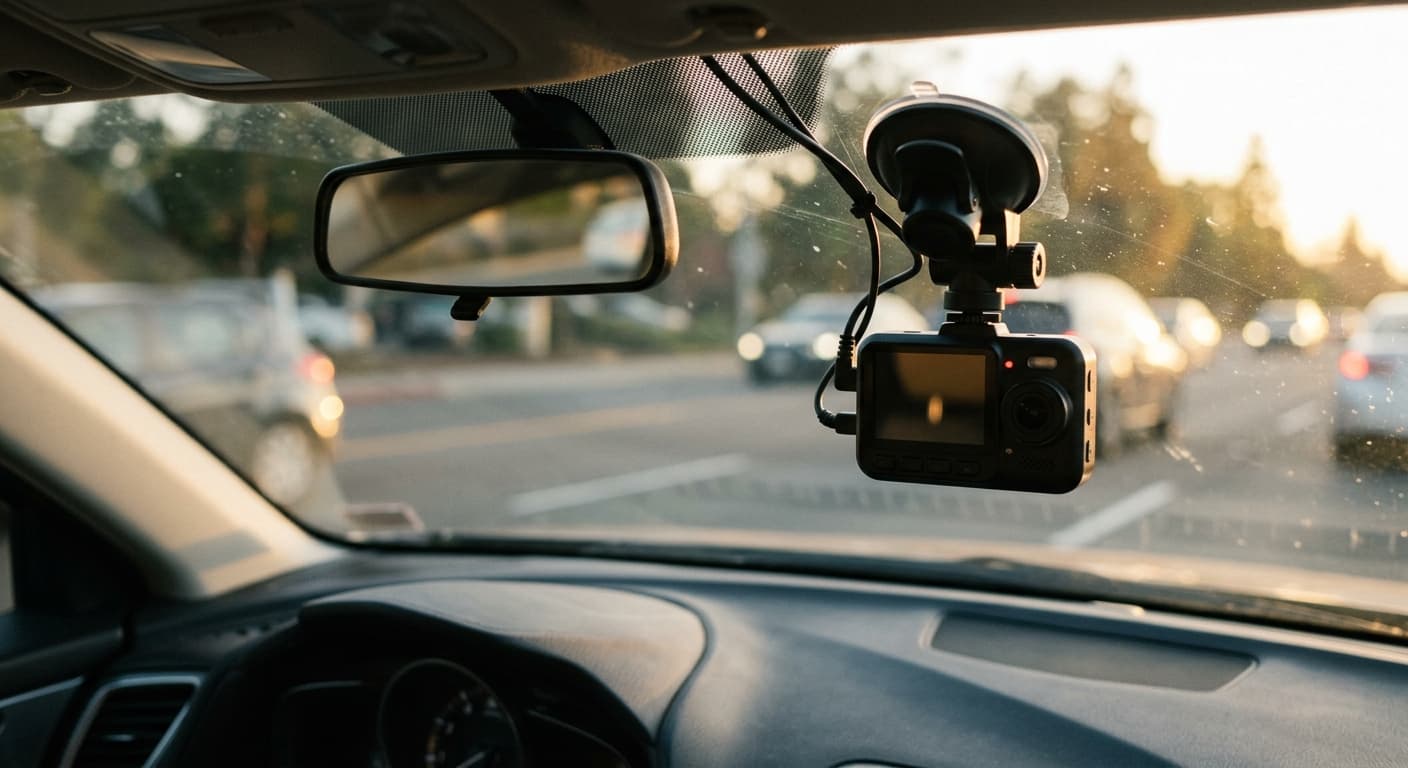
Florida dashcams recording video only are legal on public roads; no state law restricts them. If your dashcam captures in-vehicle audio, every passenger must consent before recording begins under Fla. Stat. 934.03. Windshield placement must not materially obstruct your view of the road under F.S. 316.2004.
Dashboard cameras are increasingly common on Florida roads, used by private drivers, rideshare operators, trucking companies, and commercial fleets. Florida does not have a specific "dashcam law," but several existing statutes govern how dashcams can be used. The two primary legal considerations are audio recording consent under Florida Statute 934.03 and windshield obstruction under Florida Statute 316.2004.
Understanding these rules helps Florida drivers use dashcams legally while maximizing their value as safety and evidence tools.
Are Dashcams Legal in Florida?
Video-Only Dashcams
Yes, dashcams that record video without audio are legal in Florida. No Florida statute prohibits the use of dashboard cameras for video recording. Drivers may use dashcams to:
- Record traffic conditions and road events
- Document accidents and near-misses
- Capture evidence of reckless driving or road rage
- Monitor the road for insurance and liability protection
- Record scenic drives and road trips
Video-only dashcams do not trigger F.S. 934.03 because the wiretapping statute only governs the interception of wire, oral, and electronic communications. Pure video without audio is not a "communication" under the statute.
Dashcams with Audio Recording
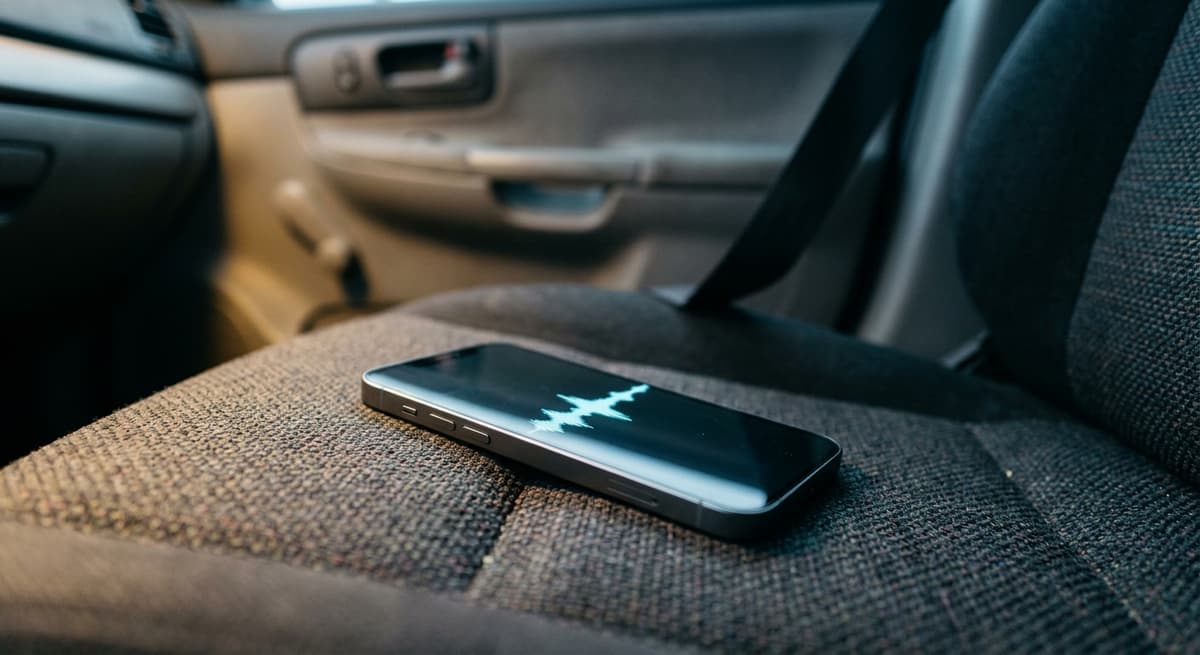
Dashcams that also record audio create legal complications under Florida's all-party consent law. If the dashcam's microphone captures private conversations inside the vehicle, every person in the vehicle must consent to the recording.
Driving alone: If you are the only person in the vehicle, audio recording is legal because you consent to recording your own speech.
Driving with passengers: Every passenger must consent to audio recording before the dashcam's microphone is activated. This applies to:
- Family members and friends
- Rideshare passengers (Uber, Lyft)
- Commercial vehicle passengers
- Anyone else riding in the vehicle
Practical tip: If you want to use a dashcam with audio, inform every passenger before they enter the vehicle or when they first get in. Alternatively, disable the audio recording feature and record video only.
Windshield Placement Rules
F.S. 316.2004: Windshield Obstruction
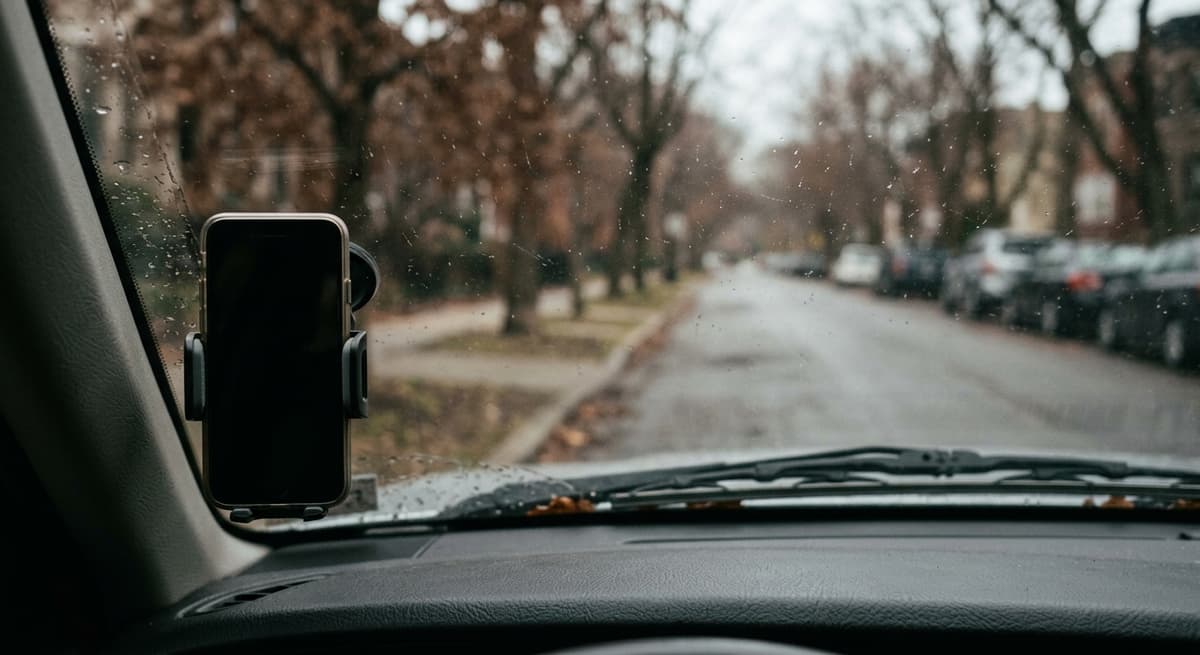
Florida Statute 316.2004 prohibits placing any "sign, poster, or other nontransparent material upon the front windshield, side wings, or side or rear windows" of a motor vehicle that "materially obstructs, obscures, or impairs the driver's clear view of the highway or any intersecting highway."
How This Applies to Dashcams
While the statute does not specifically mention dashcams, a dashboard camera mounted on the windshield could violate this law if it materially obstructs the driver's view. To stay compliant:
- Mount the dashcam as small and unobtrusive as possible. Compact dashcams are less likely to create a material obstruction.
- Position the dashcam behind the rearview mirror or in the upper corner of the windshield where it does not block your view of the road.
- Avoid mounting large dashcams or multiple devices on the windshield that collectively create a significant obstruction.
- Keep the dashcam's mounting area clean and free of additional clutter (suction cups, cables hanging down).
Penalties for Windshield Obstruction
A violation of F.S. 316.2004 is a noncriminal traffic infraction punishable as a nonmoving violation under Chapter 318. This typically results in a fine rather than points on your driving record. However, if a dashcam was found to have materially obstructed the driver's view and contributed to an accident, it could affect liability determinations.
Dashcam Footage as Evidence in Florida
Admissibility in Court
Dashcam footage is frequently used as evidence in Florida courts for:
- Motor vehicle accident cases
- Personal injury claims
- Insurance disputes
- Traffic violation defenses
- Road rage and reckless driving prosecutions
- Hit-and-run investigations
For dashcam footage to be admissible, it must be:
- Authentic: A witness (usually the dashcam owner) must verify the footage is a true and accurate recording of the events
- Unaltered: The footage must not have been edited, spliced, or tampered with
- Relevant: The footage must relate to the matter being litigated
- Legally obtained: If the footage includes audio, the audio must have been captured with all-party consent under F.S. 934.03
Audio Admissibility Issues
If your dashcam recorded audio of an in-vehicle conversation without the consent of all passengers, the audio portion may be inadmissible and could expose you to criminal liability. However, the video portion may still be admissible if it can be separated from the audio.
Courts may also exclude dashcam footage if it was obtained in violation of another law, such as if the dashcam was mounted in a way that materially obstructed the driver's view and contributed to the incident being litigated.
Insurance Claims
Many insurance companies accept dashcam footage when processing claims. Footage can help:
- Prove you were not at fault in an accident
- Document the actions of the other driver
- Show road conditions, traffic signals, and speed at the time of an incident
- Counter fraudulent claims (staged accidents, exaggerated injuries)
Florida is a no-fault insurance state under F.S. 627.736, meaning personal injury protection (PIP) coverage pays for injuries regardless of fault. However, dashcam footage becomes particularly important when injuries exceed PIP limits and a fault determination is needed for additional recovery.
Rideshare Dashcams (Uber, Lyft)
Driver Dashcam Use
Florida rideshare drivers who use dashcams should:
- Disable audio recording or obtain explicit consent from every passenger. Rideshare passengers have a reasonable expectation that their in-vehicle conversations are private.
- Post visible notice inside the vehicle (a small sign on the dashboard or window) stating that video recording is in use. This provides transparency and can support implied consent arguments for video.
- Review platform policies. Both Uber and Lyft have policies regarding dashcam use by drivers. These policies typically allow video recording with notice to passengers.
Passenger Audio Consent
Because rideshare passengers enter the vehicle for a brief period and may not expect to be recorded, the safest approach for Florida rideshare drivers is to:
- Post a visible sign stating "Video recording in progress for safety purposes"
- Disable the audio microphone on the dashcam
- If audio is desired, verbally inform each passenger before they enter the vehicle and obtain their consent
Failing to obtain audio consent from rideshare passengers exposes the driver to felony liability under F.S. 934.03.
Commercial Vehicle Dashcams
Employer-Installed Dashcams
Florida employers who install dashcams in company vehicles (trucks, delivery vans, service vehicles, fleet cars) must:
- Notify employees in writing that dashcams are installed and operational
- Obtain consent for audio recording. If dashcams have microphones, every employee and passenger whose conversations may be captured must consent under F.S. 934.03.
- Include dashcam policies in employee handbooks or fleet management agreements
- Limit recordings to legitimate business purposes (safety, liability, fleet management)
Trucking and Fleet Dashcams
The trucking industry increasingly uses forward-facing and driver-facing dashcams. In Florida:
- Forward-facing video cameras recording road conditions are legal
- Driver-facing cameras recording video of the driver are generally legal with notice
- Audio recording from either camera requires consent from the driver and any passengers
- The Federal Motor Carrier Safety Administration (FMCSA) does not mandate dashcams but does not prohibit them
Rear-Facing and Multi-Camera Systems
Many dashcam systems include multiple cameras (front, rear, interior, side). Each camera is subject to the same legal analysis:
- Front-facing (road view): Video recording is legal; no consent issues for capturing the road
- Rear-facing (road view): Same as front-facing; video recording of the road behind your vehicle is legal
- Interior/cabin camera: Video recording of passengers requires consideration of privacy expectations; audio recording requires all-party consent
- Side cameras: Recording the exterior environment is generally legal
Dashcam Tips for Florida Drivers
- Choose a compact dashcam that does not obstruct your windshield view
- Mount behind the rearview mirror for the least intrusive placement
- Disable audio recording unless you are prepared to obtain consent from every passenger
- Check your dashcam regularly to ensure it is recording properly and has sufficient storage
- Save important footage immediately after an incident; dashcams with loop recording overwrite old files
- Do not share dashcam footage on social media without considering privacy implications for identifiable individuals
- Provide footage to police and insurance promptly after an accident
More Florida Recording Laws
Audio Recording | Video Recording | Voyeurism & Hidden Cameras | Workplace Recording | Recording Police | Phone Call Recording | Security Cameras | Recording in Public | Landlord-Tenant | Dashcam Laws | Schools | Medical Recording
Back to Florida Recording Laws
More Florida Recording Topics
More Florida Laws
Frequently Asked Questions
Are dashcams legal in Florida?
Yes. Video-only dashcams are legal in Florida. No state law prohibits dashboard camera use for video recording. However, dashcams that record audio require consent from every person in the vehicle under F.S. 934.03. The dashcam must also be mounted in a way that does not materially obstruct the driver's view of the road under F.S. 316.2004.
Can my dashcam record audio in Florida?
Only with consent from everyone in the vehicle. Florida's all-party consent law (F.S. 934.03) applies to audio captured by dashcams. If you drive alone, there is no issue. If you have passengers, each one must consent before the microphone is activated. Many Florida dashcam users disable audio recording to avoid this legal risk.
Where should I mount my dashcam to comply with Florida law?
Mount your dashcam behind the rearview mirror or in the upper corner of the windshield where it does not block your view of the road. F.S. 316.2004 prohibits placing nontransparent material on the windshield that materially obstructs the driver's view. A compact, well-positioned dashcam is unlikely to violate this statute.
Can dashcam footage be used in court in Florida?
Yes. Dashcam video footage is frequently admitted as evidence in Florida courts for accident cases, insurance claims, and traffic violations. The footage must be authentic, unaltered, and relevant. If the footage includes audio recorded without all-party consent, the audio portion may be inadmissible, but the video may still be accepted.
Do Uber and Lyft drivers need passenger consent for dashcams in Florida?
For video-only dashcams, posting a visible notice inside the vehicle is the best practice, and many rideshare platforms allow this. For audio recording, Florida law requires explicit consent from every passenger under F.S. 934.03. The safest approach for rideshare drivers is to disable audio and post a sign stating that video recording is in use.
Updates
Independently fact-checked against the cited primary sources; governing law re-checked for recent changes
Governing law re-checked for recent changes
Title updated to 2026. No substantive dashcam law changes since original publication; F.S. 316.2004 windshield rule and F.S. 934.03 audio consent requirement unchanged.
Reviewed and approved by an editor
The Law Behind This Article
This article rests on the statutory provisions below, held in our own legal record and retrieved from the official source. Tap a section to read the operative text.
Florida Statutes
§ 934.03Interception and disclosure of wire, oral, or electronic communications prohibited.In forcecited in 51 of our articles
(1) Except as otherwise specifically provided in this chapter, any person who:(a) Intentionally intercepts, endeavors to intercept, or procures any other person to intercept or endeavor to intercept any wire, oral, or electronic communication; (b) Intentionally uses, endeavors to use, or procures any other person to use or endeavor to use any electronic, mechanical, or other device to intercept any oral communication when:1. Such device is affixed to, or otherwise transmits a signal through, a wire, cable, or other like connection used in wire communication; or 2.
Official text (excerpt) · last checked 2026-08-31 · Read the full text in our law library · Verify at leg.state.fl.us
Cited in 74 court opinions in our collectionLatest citing opinion in our collection: 2026
In the courts (editorial summary, independently checked):State v. Walls (1978) held that recording an in-home oral communication without the consent of all parties violated section 934.03 and required suppression, and State v. Inciarrano (1985) held the statute protects only communications uttered with a reasonable expectation of privacy.
Opinions citing this section in our collection:
- State v. Walls (Supreme Court of Florida 1978, 356 So. 2d 294)✓An extortion victim secretly recorded threats made to him in his own home; the court held that was a protected oral communication, that recording it without every party's consent violated Section 934.03, and that Section 934.06 barred using the tape as evidence.
- SHARRON TASHA FORD v. CITY OF BOYNTON BEACH (District Court of Appeal of Florida 2021)“…ng oral communications in violation of the wiretap statute, section 934.03, Florida Statutes (2009), and for obstructing without vio…”
- State v. Calhoun (Circuit Court for the Judicial Circuits of Florida 1984, 7 Fla. Supp. 2d 3)“…hall not be violated” . . . (emphasis mine) Furthermore, section 934.03, Florida Statutes, makes it unlawful for *6 any person (…”
Identified automatically from the court opinions citing this section — not a ranking of which case controls.
Also relied on in: Florida Recording Laws (2026): All-Party Consent Rules, Can an Employer Record Conversations Without Consent? (2026), Can You Record ICE Agents? Know Your Rights by State (2026)
§ 316.2004Obstruction to driver’s view or driving mechanism.In forcecited in 2 of our articles
(1) No person shall drive a vehicle when it is so loaded, or when there are in the front seat such a number of persons, as to obstruct the view of the driver to the front or sides of the vehicle or as to interfere with the driver’s control over the driving mechanism of the vehicle. (2)(a) No passenger in a vehicle shall ride in such position as to interfere with the driver’s view ahead or to the sides or with the driver’s control over the driving mechanism of the vehicle. (b) No person shall drive any motor vehicle with any sign, poster, or other nontransparent material upon the front windshield, side wings, or side or rear windows of such vehicle which materially obstructs, obscures, or impairs the driver’s clear view of the highway or any intersecting highway. (3) A violation of this section is a noncriminal traffic infraction, punishable as a nonmoving violation as provided in chapter 318.
Official text (excerpt) · last checked 2026-07-28 · Read the full text in our law library · Verify at leg.state.fl.us
Also relied on in: Florida Windshield Mounting Laws (2026 Guide)
§ 627.736Required personal injury protection benefits; exclusions; priority; claims.In forcecited in 3 of our articles
(1) REQUIRED BENEFITS.—An insurance policy complying with the security requirements of s. 627.733 must provide personal injury protection to the named insured, relatives residing in the same household unless excluded under s. 627.747, persons operating the insured motor vehicle, passengers in the motor vehicle, and other persons struck by the motor vehicle and suffering bodily injury while not an occupant of a self-propelled vehicle, subject to subsection (2) and paragraph (4)(e), to a limit of $10,000 in medical and disability benefits and $5,000 in death benefits resulting from bodily injury, sickness, disease, or death arising out of the ownership, maintenance, or use of a motor vehicle as follows:(a) Medical benefits.—Eighty percent of all reasonable expenses for medically necessary medical, surgical, X-ray, dental, and rehabilitative services, including prosthetic devices and medically necessary ambulance, hospital, and nursing services if the individual receives initial services and care pursuant to subparagraph 1. within 14 days after the motor vehicle accident. The medical benefits provide reimbursement only for:1.
Official text (excerpt) · last checked 2026-09-08 · Read the full text in our law library · Verify at leg.state.fl.us
Cited in 189 court opinions in our collectionLatest citing opinion in our collection: 2026
Opinions citing this section in our collection:
- Nunez v. Geico General Insurance (Supreme Court of Florida 2013, 38 Fla. L. Weekly Supp. 440)“…t. We answer the certified question in the negative as to section 627.736, Florida Statutes (2008), and confirm our statement in C…”
- Williams v. Gateway Insurance Company (Supreme Court of Florida 1976, 331 So. 2d 301)“…for personal injury protection benefits paid, pursuant to Fla. Stat. § 627.736 (3)(b). The circuit court later entered…”
- Mercury Insurance Co. v. Emergency Physicians of Central (District Court of Appeal of Florida 2015, 182 So. 3d 661)“…tion for payment to emergency physicians (emphasis added). Fla. Stat. § 627.736 (4)(c). This amount must be used to pay…”
Identified automatically from the court opinions citing this section — not a ranking of which case controls.
Also relied on in: Florida Car Accident Laws: No-Fault, PIP, and Your Claim, Motorcycle Accident Laws in Florida (2026): Deadlines & Helmets
§ 934.10Civil remedies.In forcecited in 12 of our articles
(1) Any person whose wire, oral, or electronic communication is intercepted, disclosed, or used in violation of ss. 934.03-934.09 shall have a civil cause of action against any person or entity who intercepts, discloses, or uses, or procures any other person or entity to intercept, disclose, or use, such communications and shall be entitled to recover from any such person or entity which engaged in that violation such relief as may be appropriate, including:(a) Preliminary or equitable or declaratory relief as may be appropriate; (b) Actual damages, but not less than liquidated damages computed at the rate of $100 a day for each day of violation or $1,000, whichever is higher; (c) Punitive damages; and (d) A reasonable attorney’s fee and other litigation costs reasonably incurred. (2) A good faith reliance on:(a) A court order, subpoena, or legislative authorization as provided in ss. 934.03-934.09, (b) A request of an investigative or law enforcement officer under s. 934.09(7), or (c) A good faith determination that Florida or federal law, other than 18 U.S.C. s.
Official text (excerpt) · last checked 2026-07-28 · Read the full text in our law library · Verify at leg.state.fl.us
Cited in 33 court opinions in our collectionLatest citing opinion in our collection: 2026
In the courts (editorial summary, independently checked):Minotty v. Baudo (2010) held the civil action reaches only actual interception, not attempts, and does not cover silent video surveillance. Jatar v. Lamaletto (2000) affirmed summary judgment where the plaintiff had no reasonable expectation of privacy. Burgess v. Burgess (1984) held interspousal immunity does not bar the action.
Opinions citing this section in our collection:
- Burgess v. Burgess (Supreme Court of Florida 1984, 447 So. 2d 220)“…mages brought by one spouse against the other spouse, under Section 934.10, Florida Statutes (1979)? Burgess v. Burgess, 417 S…”
- Minotty v. Baudo (District Court of Appeal of Florida 2010, 42 So. 3d 824)✓A doctor hid cameras in colleagues' offices, but the microphones never worked, so only silent video was captured. The court held section 934.10 gives a civil claim only for actual interception of oral communications, not attempts or silent video, and reversed those judgments.
- Roberts v. Jardine (District Court of Appeal of Florida 1978, 358 So. 2d 588)✓Sued under section 934.10 for secretly taping a phone call, the defendant refused to answer interrogatories. The court held she could invoke the Fifth Amendment, since interception is also a crime, and could not be defaulted for it, but had to produce the tape already played.
Identified automatically from the court opinions citing this section — not a ranking of which case controls.
Also relied on in: Florida Audio Recording Laws: All-Party Consent Rules and Penalties (2026), Florida Landlord-Tenant Recording Laws: Cameras and Privacy Rules (2026), Florida Medical Recording Laws: Patient Rights and HIPAA Rules (2026)
Explore the law
This article also draws on these acts and chapters (opening at their first section): Florida Statutes § 316.001 (Short title.) · Florida Statutes § 318.11 (Short title.)
Related law for further reading — not part of this article’s citations.
Search our full record of US law — 2.1 million sections, every state + federal →
Sources and References
- Florida Statute 934.03(flsenate.gov).gov
- Florida Statute 316.2004 - Windshield Obstruction(leg.state.fl.us).gov
- Florida Statute 934.10 - Civil Remedies(flsenate.gov).gov
- Florida Chapter 318 - Traffic Infractions(leg.state.fl.us).gov
- Florida Statute 627.736 - PIP(flsenate.gov).gov
- Florida Chapter 316 - Traffic Control(leg.state.fl.us).gov