
Connecticut
Connecticut Laws on Recording Police: Your Rights and Limits (2026)
Independently fact-checked against primary sources (last audited August 22, 2026). · Reviewed by the RecordingLaw editorial team. · Law checked current as of August 22, 2026. · 8 primary sources cited on this page. How we verify our legal content
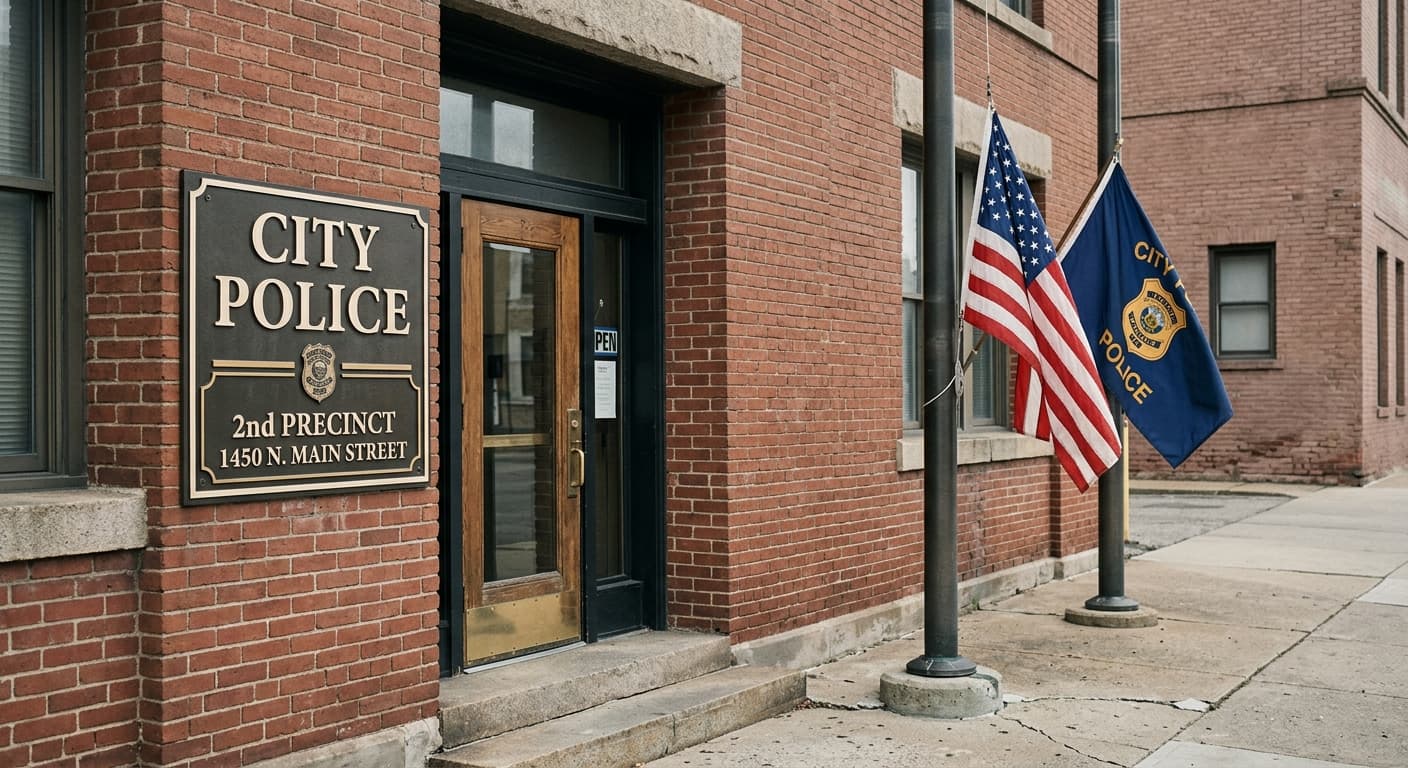
Connecticut residents are widely understood to have a First Amendment right to record police officers performing their duties in public, based on rulings from other federal circuits, though the Second Circuit, which covers Connecticut, has not issued its own controlling ruling on the question. Separately, because a police encounter is an in-person interaction, Connecticut's criminal eavesdropping offense (CGS 53a-189, which incorporates the definitions in CGS 53a-187) does not reach a participant who is present, so your presence at the scene is legally sufficient to record without the officer's permission.
Recording police officers is one of the most important rights available to civilians in a democracy. In Connecticut, this right is protected by the First Amendment to the U.S. Constitution and supported by the state's own recording laws. Because police interactions in public are typically in-person rather than telephone-based, Connecticut's one-party consent rule makes recording officers straightforward from a legal standpoint.
This guide explains your rights to record police in Connecticut, the legal framework that protects those rights, practical guidelines for safe and legal recording, and what you should know about police body cameras.
The First Amendment Right to Record Police
Federal Court Protections
The right to record police officers performing their public duties is grounded in the First Amendment, which protects the freedom of the press and the right to gather information about government conduct. Multiple federal circuit courts have recognized this right, and while the Second Circuit (which covers Connecticut) has not issued a landmark ruling specifically on this issue, the weight of federal authority strongly supports the right to record police.
The First, Third, Fifth, Seventh, Ninth, and Eleventh Circuits have all recognized a First Amendment right to record police activity in public. This near-unanimous consensus among federal appellate courts provides strong protection for Connecticut residents who record police.
Connecticut State Law Support
Connecticut's recording laws further support the right to record police. Connecticut's criminal eavesdropping offense, CGS 53a-189, reaches only wiretapping or "mechanical overhearing of a conversation" as defined in CGS 53a-187, and that definition excludes a recorder who is present. When you are present during a police encounter and record the interaction, your own presence and participation take you outside that definition entirely.
This means you do not need to ask the officer for permission to record. Your presence at the scene and your participation in or observation of the encounter is legally sufficient.
ACLU of Connecticut Guidance
The ACLU of Connecticut has published guidance confirming that taking photographs and videos of things plainly visible from public spaces is a constitutional right. This includes recording police activity on streets, sidewalks, in parks, and in other public areas.
When You Can Record Police in Connecticut
Public Spaces
You have the clearest right to record police in public spaces where there is no reasonable expectation of privacy:
- Streets and sidewalks: You may stand on any public sidewalk or street and record police activity
- Parks and public areas: Public parks, plazas, and other open spaces are fair game for recording
- Government buildings: Public areas of government buildings, including courthouses (though individual courtrooms may have their own rules), police station lobbies, and other areas open to the public
- Traffic stops: You may record a traffic stop from a safe distance, whether you are the driver being stopped, a passenger, or a bystander
During Your Own Interaction with Police
If you are the person being stopped, questioned, or otherwise engaged by police, you have the right to record the encounter. This applies whether you are a pedestrian being stopped on the street, a driver during a traffic stop, or a person being questioned at your home.
Connecticut's one-party consent rule means your own consent is sufficient to legally record the interaction. You do not need the officer's agreement.
At Protests and Public Events
Recording police activity at protests, demonstrations, and public events is constitutionally protected. This protection extends to recording arrests, use of force, crowd control measures, and other police actions at these events.
What Officers Cannot Do

Cannot Order You to Stop Recording
A police officer in Connecticut cannot lawfully order you to stop recording their public activities. The First Amendment right to record is not contingent on the officer's permission. An officer who orders you to stop recording or who threatens you with arrest for recording is violating your constitutional rights.
Cannot Demand You Delete Footage
Officers have no legal authority to order you to delete photographs, video, or audio recordings. Your recordings are your property, and destroying them without your consent or a court order may constitute destruction of evidence or deprivation of civil rights.
Cannot Confiscate Your Device Without a Warrant
The U.S. Supreme Court held in Riley v. California, 573 U.S. 373 (2014) that police generally need a warrant to search a cell phone seized incident to arrest. This ruling protects the contents of your phone, including recordings, from warrantless police access.
An officer who confiscates your phone or camera without a warrant to prevent you from recording or to access your recordings is likely violating the Fourth Amendment.
Cannot Retaliate Against You
Retaliating against someone for exercising their First Amendment right to record, such as by arresting them on fabricated charges, using excessive force, or threatening them, violates both constitutional law and Connecticut state law.
Your Responsibilities While Recording
Do Not Interfere with Police Operations
While you have the right to record, you do not have the right to physically interfere with police operations. Interference can include:
- Physically blocking an officer or moving into the path of an arrest
- Reaching for an officer's equipment or touching them
- Entering a crime scene or crossing police tape
- Disrupting a lawful police operation in a way that creates a safety hazard
Connecticut's interference with a police officer statute, CGS 53a-167a, makes it illegal to obstruct, resist, or interfere with a peace officer in the performance of their duties. Recording from a safe distance does not constitute interference.
Maintain a Safe Distance
You should remain far enough away from the police action that you are not creating a safety risk for yourself, the officers, or the public. There is no specific distance requirement in Connecticut law, but a general guideline is to remain at least 10 to 15 feet away from active police operations.
Follow Lawful Orders
If an officer gives you a lawful order unrelated to your recording, such as directing you to move back for safety reasons, you should comply. Courts have recognized that officers may impose reasonable time, place, and manner restrictions for legitimate public safety purposes. What they cannot do is use these restrictions as a pretext to prevent recording entirely.
Identify Yourself if Asked
Connecticut does not have a "stop and identify" statute, meaning you are not legally required to provide identification to police simply because they ask. However, if you are lawfully stopped or detained, cooperation can help de-escalate the situation. You are never required to explain why you are recording or justify your exercise of a constitutional right.
What to Do If Police Violate Your Rights
Stay Calm and Document
If an officer orders you to stop recording, verbally object but do not physically resist. State clearly: "I am exercising my First Amendment right to record." If the officer persists, comply to avoid escalation, but document the encounter as soon as possible afterward.
File a Complaint
You can file a complaint with the officer's department, the Connecticut Civilian Police Review Board, or the Office of the Inspector General (established to investigate police use of force and civil rights issues).
Contact the ACLU
The ACLU of Connecticut handles cases involving violations of the right to record police. If your rights were violated, they may be able to provide legal assistance or refer you to an attorney.
Civil Rights Lawsuit
Under 42 U.S.C. 1983, you may file a civil rights lawsuit against officers who violate your constitutional rights. Remedies can include compensatory damages, punitive damages, and attorney fees.
Police Body Cameras in Connecticut
Current Body Camera Policies
Connecticut State Police and many municipal police departments have adopted body-worn camera programs. These programs are governed by departmental policies that specify when cameras must be activated, how footage is stored, retention periods, and access procedures.
Body Camera Footage and FOIA
Body camera footage from Connecticut police departments is generally subject to the state's Freedom of Information Act (FOIA). Members of the public can request body camera footage through FOIA requests to the relevant police department. However, departments may redact or withhold footage that would compromise ongoing investigations, violate individual privacy rights, or endanger public safety.
The Connecticut Freedom of Information Commission oversees FOIA compliance and can hear appeals if a request for body camera footage is denied.
Police Accountability Act
Connecticut's Police Accountability Act (P.A. 20-1, Special Session) introduced significant reforms including requirements for body-worn cameras, restrictions on use of force, and expanded civilian oversight. Body-worn camera programs are now codified under Conn. Gen. Stat. § 29-6d, which governs activation requirements, data retention, and public access to footage. The act represents a legislative commitment to police transparency that aligns with the public's right to record police activity.
Recording Police During Traffic Stops

As the Driver
If you are pulled over by police, you have the right to record the encounter. You may use your phone to record video and audio of the interaction. Practical tips:
- Inform the officer that you are recording, though you are not legally required to do so
- Keep your hands visible and avoid sudden movements
- Mount your phone on the dashboard or place it in a visible location rather than holding it while also handling documents
- Do not reach for your phone if the officer might interpret it as reaching for a weapon
As a Passenger
Passengers in a vehicle have the same First Amendment right to record a traffic stop. You may record using your phone without the officer's permission.
As a Bystander
If you observe a traffic stop from a public location, you may record it. Maintain a safe distance and do not approach the vehicles or officers in a way that could be interpreted as interference.
Recording Police in Private Settings
Your Home
If police come to your home, you may record the interaction. Whether officers are at your door or lawfully inside your home, you retain the right to record. The one-party consent rule applies because you are a participant in the conversation.
Private Businesses
If you witness police activity inside a private business, your right to record depends on the property owner's rules. The business owner can restrict recording on their premises, but they cannot restrict you from recording from a public space, such as the sidewalk outside.
Recording 911 Calls and Police Radio
911 Calls
Emergency 911 calls are recorded by dispatchers as part of standard operating procedure. Under Connecticut's FOIA, these recordings may be accessible through public records requests, subject to exemptions for ongoing investigations and privacy.
Police Scanner and Radio Communications
Listening to police radio communications using a scanner is legal in Connecticut. However, using information from a scanner to interfere with police operations is not.
Recordings as Evidence Against Police
Admissibility
In-person recordings of police encounters made with one-party consent are generally admissible in Connecticut courts, subject to standard authentication and relevance requirements. These recordings can serve as evidence in:
- Civil rights lawsuits under 42 U.S.C. 1983
- Criminal defense cases where police conduct is at issue
- Internal affairs investigations
- Civilian review board proceedings
- FOIA disputes over government transparency
Preserving Your Recording
If your recording may become evidence, take steps to preserve it:
- Back up the recording to cloud storage immediately
- Do not edit, crop, or alter the original file
- Note the date, time, and location of the recording
- Identify any witnesses who were present
More Connecticut Recording Laws
Audio Recording | Video Recording | Voyeurism & Hidden Cameras | Workplace Recording | Recording Police | Phone Call Recording | Security Cameras | Recording in Public | Landlord-Tenant | Dashcam Laws | Schools | Medical Recording
Back to Connecticut Recording Laws
More Connecticut Recording Topics
More Connecticut Laws
Frequently Asked Questions
Can I record police in Connecticut?
Generally, yes. The First Amendment is widely understood to protect your right to record police officers performing their duties in public, based on rulings from other federal circuits; the Second Circuit, which covers Connecticut, has not issued its own controlling ruling confirming the right. Separately, because a police encounter is in-person, a participant who is present falls outside Connecticut's criminal eavesdropping offense (CGS 53a-189, incorporating the definitions in CGS 53a-187), so your own presence is sufficient and you do not need the officer's permission to record. However, you must not physically interfere with police operations while recording.
Can a police officer in Connecticut tell me to stop recording?
An officer can ask, but they cannot lawfully order you to stop recording their public activities. The First Amendment protects the right to record government officials, including police, in public settings. If an officer orders you to stop, verbally assert your right but do not physically resist. Document the encounter and consider filing a complaint or contacting the ACLU of Connecticut.
Can police confiscate my phone if I record them in Connecticut?
No, not without a warrant. The U.S. Supreme Court ruled in Riley v. California (2014) that police generally need a warrant to search a cell phone, even one seized incident to arrest. An officer who takes your phone to prevent recording or access your footage without a warrant is likely violating the Fourth Amendment.
Do I have to tell a police officer I am recording in Connecticut?
No. Connecticut's one-party consent rule for in-person conversations does not require you to notify the other party. You may record openly or discreetly. However, some people choose to announce they are recording to promote transparency and reduce the chance of a confrontation.
Can I get body camera footage from Connecticut police?
Yes, generally through a Freedom of Information Act (FOIA) request to the relevant police department. Body camera footage is considered a public record, but departments may redact or withhold portions that could compromise investigations, violate privacy, or endanger safety. If your request is denied, you can appeal to the Connecticut Freedom of Information Commission.
Updates
Hedged this page's claim that the First Amendment right to record police in public is settled in Connecticut; the Second Circuit, which covers Connecticut, has not issued its own controlling ruling, unlike the other circuits the page cites. Also corrected the citation for the in-person recording rule (the criminal eavesdropping offense is CGS 53a-189; CGS 53a-187 is only the definitions section it relies on).
Independently fact-checked against the cited primary sources; governing law re-checked for recent changes
Governing law re-checked for recent changes
Reviewed and approved by an editor
The Law Behind This Article
This article rests on the statutory provisions below, held in our own legal record and retrieved from the official source. Tap a section to read the operative text.
Connecticut General Statutes, Title 53a (Penal Code), Chapter 952
§ 53a-189Eavesdropping: Class D felony.In forcecited in 16 of our articles
(a) A person is guilty of eavesdropping when he unlawfully engages in wiretapping or mechanical overhearing of a conversation. (b) Eavesdropping is a class D felony.
Official text (excerpt) · last checked 2026-08-31 · Read the full text in our law library · Verify at cga.ct.gov
Cited in 14 court opinions in our collectionLatest citing opinion in our collection: 2020
In the courts (editorial summary, independently checked):Washington v. Meachum (1996) held the eavesdropping statutes, section 53a-189 among them, are violated only when neither party to a call knows it is being monitored. State v. McLoughlin (1998), a trial court ruling on a scanner intercept, read 53a-189 to cover cordless calls, a question no Connecticut appellate court had decided.
Opinions citing this section in our collection:
- State v. McLoughlin (Connecticut Superior Court 1998, 45 Conn. Super. Ct. 497)“…on. Subsequently, the defendant was charged in violation of General Statutes § 53a-189, eavesdropping, which is a class D felo…”
- Rado v. Board of Education of the Borough of Naugatuck (Supreme Court of Connecticut 1990, 216 Conn. 541)✓A tenured teacher acquitted of eavesdropping was fired after a panel found he tampered with the school phone system to overhear staff calls; the court treated that conduct as proscribed by section 53a-189 and upheld the moral-misconduct finding.
- Washington v. Meachum (Supreme Court of Connecticut 1996, 238 Conn. 692)✓Inmates challenged prison rules allowing officials to monitor and record their nonprivileged phone calls; the Connecticut Supreme Court held the eavesdropping statutes are violated only when neither party knows the call is being monitored, so the noticed recording was lawful.
Identified automatically from the court opinions citing this section — not a ranking of which case controls.
Also relied on in: Connecticut Recording Laws (2026): Hybrid Consent Rules Explained, Connecticut Phone Call Recording Laws: All-Party Consent Rules and Penalties (2026), Connecticut Audio Recording Laws: Mixed Consent Rules and Penalties (2026)
§ 53a-167aInterfering with an officer: Class A misdemeanor or class D felony.In force
(a) A person is guilty of interfering with an officer when such person obstructs, resists, hinders or endangers any peace officer or firefighter in the performance of such peace officer's or firefighter's duties. (b) Interfering with an officer is a class A misdemeanor, except that, if such violation causes the death or serious physical injury of another person, such person shall be guilty of a class D felony.
Official text (excerpt) · last checked 2026-07-29 · Read the full text in our law library · Verify at cga.ct.gov
Cited in 311 court opinions in our collectionLatest citing opinion in our collection: 2026
Opinions citing this section in our collection:
- State v. Williams (Supreme Court of Connecticut 1987, 205 Conn. 456)“…nt’s waiver of a trial by jury and the constitutionality of General Statutes § 53a-167a, 1 which proscribes interfering with a…”
- State v. Flynn (Connecticut Appellate Court 1988, 14 Conn. App. 10)“…53a-181, and interfering with an officer in violation of General Statutes § 53a-167a. The defendant claims that the trial co…”
- State v. Gallagher (Supreme Court of Connecticut 1983, 191 Conn. 433)“…cer is not in the performance of his duties, as required by General Statutes § 53a-167a for the offense of interference with a…”
Identified automatically from the court opinions citing this section — not a ranking of which case controls.
§ 53a-187Definitions. Applicability.In forcecited in 18 of our articles
(a) The following definitions are applicable to sections 53a-188 and 53a-189: (1) “Wiretapping” means the intentional overhearing or recording of a telephonic or telegraphic communication or a communication made by cellular radio telephone by a person other than a sender or receiver thereof, without the consent of either the sender or receiver, by means of any instrument, device or equipment. The normal operation of a telephone or telegraph corporation and the normal use of the services and facilities furnished by such corporation pursuant to its tariffs shall not be deemed “wiretapping”. (2) “Mechanical overhearing of a conversation” means the intentional overhearing or recording of a conversation or discussion, without the consent of at least one party thereto, by a person not present thereat, by means of any instrument, device or equipment. (3) “Unlawfully” means not specifically authorized by law. For purposes of this section, “cellular radio telephone” means a wireless telephone authorized by the Federal Communications Commission to operate in the frequency bandwidth reserved for cellular radio telephones.
Official text (excerpt) · last checked 2026-07-29 · Read the full text in our law library · Verify at cga.ct.gov
Cited in 12 court opinions in our collectionLatest citing opinion in our collection: 2021
In the courts (editorial summary, independently checked):Connecticut courts read section 53a-187's definitions to reach only surreptitious, nonconsensual monitoring. State v. Grullon (1989) applied it to place one-party-consent recordings outside the eavesdropping statutes, and Washington v. Meachum (1996) held those statutes are violated only when neither party knows the call is monitored.
Opinions citing this section in our collection:
- State v. Grullon (Supreme Court of Connecticut 1989, 212 Conn. 195)✓Police recorded the defendant's calls with his brother, who consented; the court held that replacing the older wiretap penal statute with section 53a-187, which reaches recording only when no party consents, gave no reason to exclude the transcripts.
- Washington v. Meachum (Supreme Court of Connecticut 1996, 238 Conn. 692)✓Inmates challenged prison rules allowing nonprivileged collect calls to be monitored after posted signs, signed forms and a recurring tone; reading section 53a-187's consent-based definitions, the court held the eavesdropping statutes are violated only when neither party knows.
- State v. McVeigh (Supreme Court of Connecticut 1993, 224 Conn. 593)✓Police used a scanner in a neighbor's apartment to record a couple's cordless phone calls; the court rejected the State's argument that a 1989 amendment adding cellular phones to section 53a-187's wiretapping definition left cordless calls unprotected, and ordered suppression.
Identified automatically from the court opinions citing this section — not a ranking of which case controls.
Also relied on in: Connecticut Dashcam Laws: Mounting Rules, Audio Recording, and Evidence (2026), Connecticut Landlord-Tenant Recording and Surveillance Laws (2026), Connecticut Medical Recording Laws: Patients, Doctors, and HIPAA Rules (2026)
Connecticut General Statutes, Title 29 (Public Safety and State Police), Chapter 529
§ 29-6dUse of body-worn recording equipment and dashboard cameras. When recording prohibited. Retention of data.In forcecited in 4 of our articles
(a) For purposes of this section and section 7-277b: (1) “Law enforcement unit” has the same meaning as provided in section 7-294a; (2) “Police officer” means a sworn member of a law enforcement unit or any member of a law enforcement unit who performs police duties; (3) “Body-worn recording equipment” means an electronic recording device that is capable of recording audio and video; (4) “Dashboard camera” means a dashboard camera with a remote recorder, as defined in section 7-277b; (5) “Digital data storage device or service” means a device or service that retains the data from the recordings made by body-worn recording equipment using computer data storage; and (6) “Police patrol vehicle” means any state or local police vehicle other than an administrative vehicle in which an occupant is wearing body-worn camera equipment, a bicycle, a motor scooter, an all-terrain vehicle, an electric personal assistive mobility device, as defined in subsection (a) of section 14-289h, or an animal control vehicle.
Official text (excerpt) · last checked 2026-08-31 · Read the full text in our law library · Verify at cga.ct.gov
Cited in 1 court opinions in our collectionLatest citing opinion in our collection: 2021
Opinions citing this section in our collection:
- State v. Bouvier (Connecticut Appellate Court 2021, 209 Conn. App. 9)“…royed it must be preexisting. 16 We are aware that General Statutes § 29-6d contains various provisions discussing…”
Identified automatically from the court opinions citing this section — not a ranking of which case controls.
Also relied on in: Connecticut Video Recording Laws: Consent, Surveillance, and Privacy Rules (2026), Connecticut Police Body Camera Laws: Rules & Public Access (2026), How to Get a Police Report in Connecticut (2026): Crash & Incident Reports
United States Code Title 42
§ 1983Civil action for deprivation of rightsIn forcecited in 50 of our articles
Every person who, under color of any statute, ordinance, regulation, custom, or usage, of any State or Territory or the District of Columbia, subjects, or causes to be subjected, any citizen of the United States or other person within the jurisdiction thereof to the deprivation of any rights, privileges, or immunities secured by the Constitution and laws, shall be liable to the party injured in an action at law, suit in equity, or other proper proceeding for redress, except that in any action brought against a judicial officer for an act or omission taken in such officer’s judicial capacity, injunctive relief shall not be granted unless a declaratory decree was violated or declaratory relief was unavailable. For the purposes of this section, any Act of Congress applicable exclusively to the District of Columbia shall be considered to be a statute of the District of Columbia.
Official text (excerpt) · last checked 2026-07-28 · Read the full text in our law library · Verify at uscode.house.gov
Cited in 282,365 court opinions in our collectionLatest citing opinion in our collection: 2026
Opinions citing this section in our collection:
- Ashcroft v. Iqbal (Supreme Court of the United States 2009, 556 U.S. 662)“…its brought against state officials under Rev. Stat. §1979, 42 U. S. C. §1983.” Hartman, 547 U. S., at 254, n. 2. Cf.…”
- Celotex Corp. v. Catrett, Administratrix of the Estate of Catrett (Supreme Court of the United States 1986, 477 U.S. 317)“…policeman as she left. Petitioner brought an action under 42 U. S. C. § 1983 claiming that the refusal of service a…”
- Monell v. New York City Dept. of Social Servs. (Supreme Court of the United States 1978, 436 U.S. 658)“…decided less than two decades ago. Focusing new light on 42 U. S. C. § 1983 , that decision widened access to the f…”
Identified automatically from the court opinions citing this section — not a ranking of which case controls.
Also relied on in: Alabama Laws on Recording Police: Your Rights and Limits, Alaska Laws on Recording Police: Your Rights and Limits (2026), Arkansas Laws on Recording Police: Your Rights and Limits (2026)
Search our full record of US law — 2.1 million sections, every state + federal →
Sources and References
- Conn. Gen. Stat. 53a-187 - Eavesdropping Definitions(cga.ct.gov).gov
- Conn. Gen. Stat. 53a-167a - Interfering with a Police Officer(cga.ct.gov).gov
- Connecticut Freedom of Information Commission(portal.ct.gov).gov
- Connecticut Office of the Inspector General(portal.ct.gov).gov
- 42 U.S.C. 1983 - Civil Rights Remedies(uscode.house.gov).gov
- Riley v. California, 573 U.S. 373 (2014)(supremecourt.gov).gov
- Conn. Gen. Stat. 29-6d - Body-Worn Cameras(cga.ct.gov).gov
- ACLU of Connecticut - Recording the Police(acluct.org)
- Conn. Gen. Stat. 53a-189 - Eavesdropping: Class D Felony(cga.ct.gov).gov