
Connecticut
Connecticut Police Body Camera Laws: Rules & Public Access (2026)
Independently fact-checked against primary sources (last audited August 20, 2026). · Reviewed by the RecordingLaw editorial team. · Law checked current as of August 20, 2026. · 3 primary sources cited on this page. How we verify our legal content
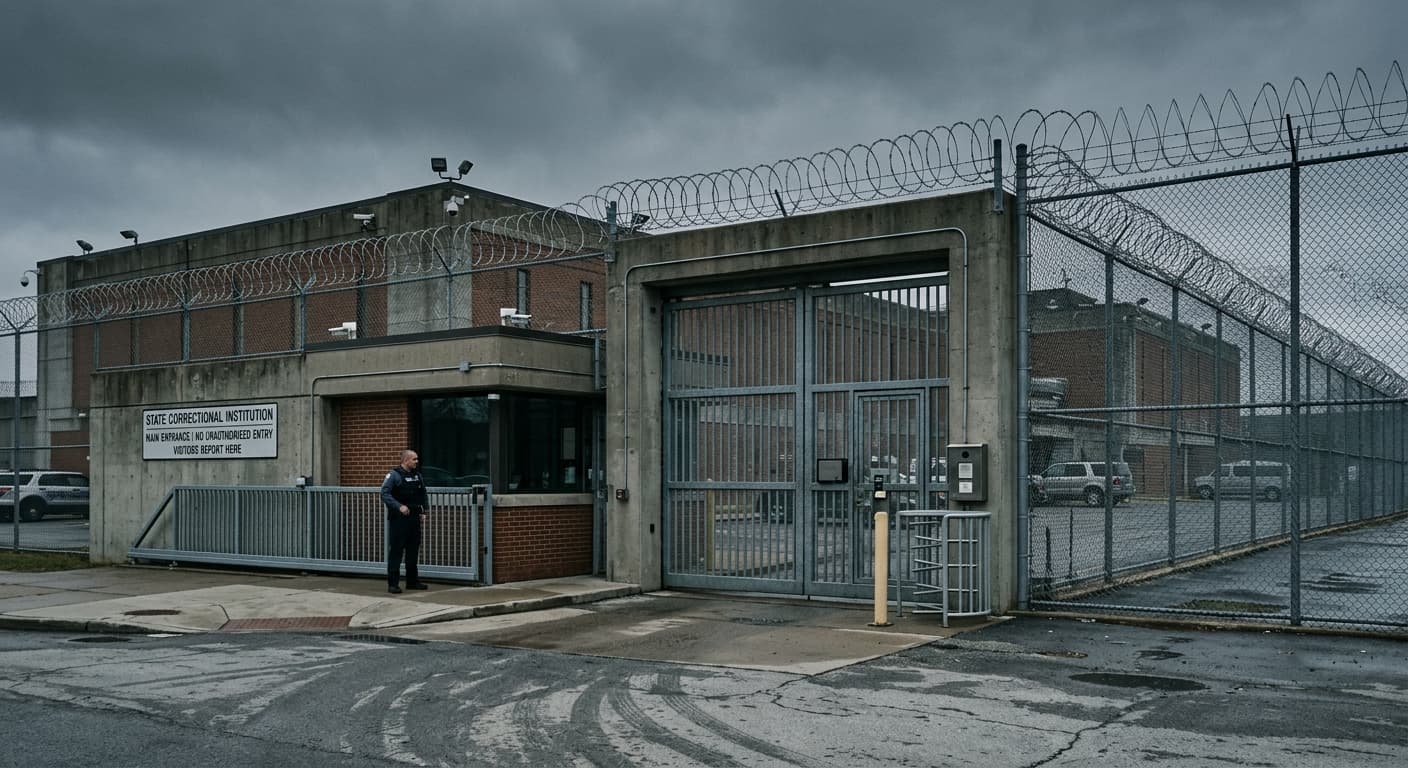
Connecticut has required every state and municipal law enforcement unit to equip its sworn officers with body cameras since full statewide compliance took effect July 1, 2022, under Conn. Gen. Stat. § 29-6d. For a municipal department, an officer's day-to-day duty to use the camera while interacting with the public runs through that department's own policy, adopted under the statewide guidelines. Footage generally stays out of public view unless disclosure serves the public interest under the state's Freedom of Information Act.
Information last verified on 2026-07-08. This article presents general legal information, not legal advice.
This article addresses body-worn camera law under Connecticut General Statutes § 29-6d and the state's Freedom of Information Act, Conn. Gen. Stat. § 1-210(b)(3), as they apply to state and municipal police in Connecticut. It does not address a civilian's right to record an on-duty officer, a separate question covered in Is It Illegal to Record Someone?. For other states' body camera rules, see the Police Bodycam Laws by State hub.
Does Connecticut Require Police to Wear Body Cameras?
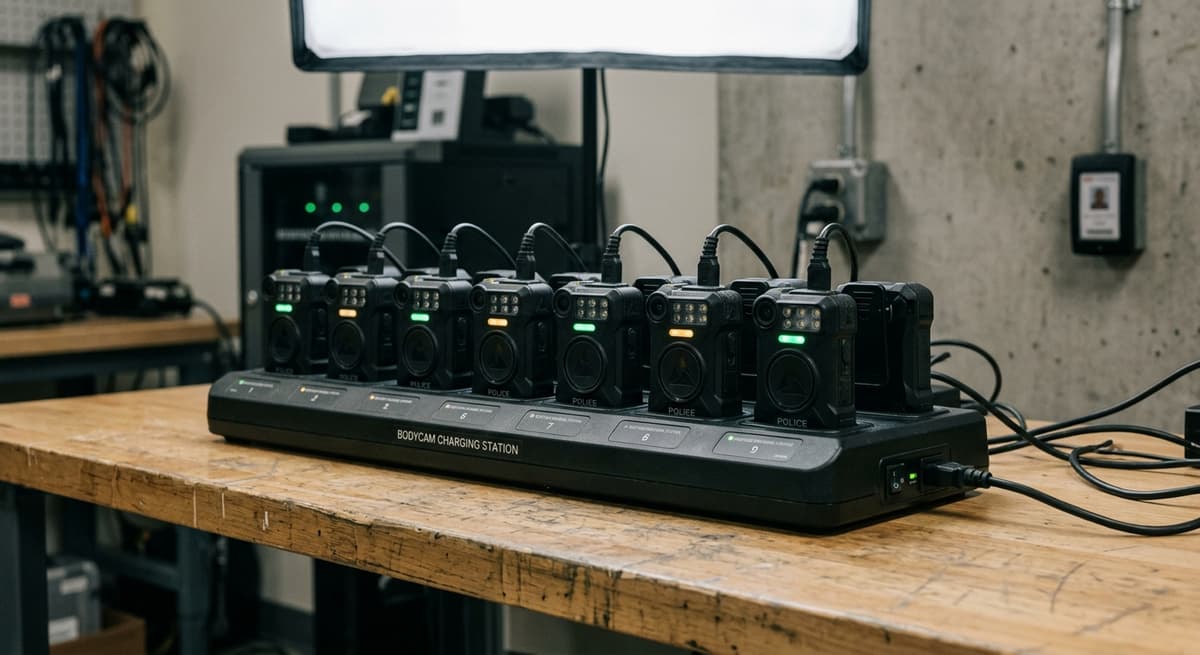
Yes. Conn. Gen. Stat. § 29-6d requires every law enforcement unit in the state, meaning every state and municipal police department, to equip sworn officers with body-worn recording equipment and to require dashboard cameras in patrol vehicles under the unit's own policy. The Commissioner of the Department of Emergency Services and Public Protection (DESPP) and the Police Officer Standards and Training (POST) Council jointly approve minimum technical specifications and jointly maintain statewide guidelines governing use of the equipment. Connecticut phased the mandate in department by department, and full statewide compliance has been required since July 1, 2022. An officer must wear the camera on the outermost garment, positioned above the midline of the torso, so the device has an unobstructed view of the encounter. The equipment mandate reaches every sworn officer who performs police duties and interacts with the public, not only patrol officers assigned to a dedicated unit. One qualifier matters for most readers: § 29-6d(c)(1) directs an officer to use the equipment while interacting with the public in a law enforcement capacity, except as provided in subsection (g) or, in the case of a municipal police department, in accordance with the department's own policy adopted under the subsection (j) guidelines. Because most Connecticut officers serve municipal departments, the operative activation rules for a given encounter usually come from that local policy rather than directly from the statutory sentence.
| Quick facts | Connecticut |
|---|---|
| Statute | Conn. Gen. Stat. § 29-6d |
| Mandate | Statewide, every law enforcement unit equips its sworn officers; full compliance since July 1, 2022. Municipal officers' use of the camera runs through the department's policy adopted under the statewide guidelines |
| Camera placement | Outermost garment, above the torso midline |
| Retention baseline | Guidelines may not require storage beyond 1 year; that ceiling does not apply when the unit knows the footage is pertinent to an ongoing matter |
| Public access route | Mandatory release under § 29-6d(f), 48/96 hours after officer review or process start (whichever earlier); a medical/physical/psychological-response delay can push this to 144 hours after the event at most; FOIA exemption (§ 1-210(b)(3)) applies outside that clock |
When Must Officers Turn the Camera On?
Section 29-6d(c)(1) directs an officer to use body-worn recording equipment while interacting with the public in a law enforcement capacity, subject to the limited exceptions in subsection (g) for situations such as encounters with confidential informants or undercover officers, personal breaks, and medical or mental health settings, and, in the case of a municipal police department, in accordance with the department's own policy adopted under the statewide guidelines. For an officer of a municipal department, then, the practical question of when the camera must be running is answered by that department's policy built on the guidelines, not by a flat statutory trigger. The joint DESPP and POST Council guidelines fill in the operational detail agencies must follow, including when an officer may pause a recording and what an agency's policy must require if a camera is not activated during a qualifying interaction. Dashboard cameras follow a similar structure: each law enforcement unit must require dashboard camera use in every patrol vehicle, with the specific activation triggers set by the unit's own policy rather than dictated directly by the statute.
Because the activation duty is framed around interacting with the public rather than a narrower list of triggers like a warrant execution or a use-of-force incident, Connecticut's activation standard is broader than in some states that limit mandatory recording to specific categories of encounters such as traffic stops or arrests.
How Long Does Connecticut Keep Body Camera Footage?
Connecticut's retention rule works as a ceiling rather than a floor. The statewide guidelines cannot require a law enforcement unit to store footage for longer than one year, except where the unit knows the recording is pertinent to an ongoing civil, criminal, or administrative matter. That exception lifts a ceiling rather than creating a duty: it frees the guidelines to require longer retention for footage tied to an open matter, but § 29-6d does not itself order indefinite preservation. A duty to hold that footage until the matter concludes comes instead from the agency's own retention policy, state records-retention schedules, or an ordinary litigation hold. This differs from states that set a short minimum retention period and escalate it for serious incidents; Connecticut instead limits how long agencies can be compelled to hold ordinary footage by default, while protecting anything connected to an open case, complaint, or lawsuit from early deletion.
In practice, this means routine footage from an uneventful traffic stop or welfare check may be purged after a year, while footage from an arrest that leads to prosecution, a use-of-force incident, or a citizen complaint is typically held for as long as that matter remains open, which can run well past a year. Because that longer hold rests on agency policy and litigation-hold practice rather than a fixed statutory period, confirm the specific retention window with the department holding the recording.
Can the Public Get a Copy of Connecticut Body Camera Footage?
Connecticut does have a body-camera-specific public records rule: Conn. Gen. Stat. § 29-6d(f) sets its own mandatory release clock, separate from the general Freedom of Information Act. For footage tied to a use-of-force statement or a disciplinary investigation, § 29-6d(f)(1) requires disclosure to the public no later than 48 hours after the officer reviews the recording, or 96 hours after the disciplinary process begins if the officer does not review it, whichever is earlier. For any other recording, § 29-6d(f)(2) sets a parallel 48/96-hour clock running from the public's request instead of a disciplinary investigation. In either case, disclosure may be delayed only if the officer, due to a medical or physical response or an acute psychological stress response to the incident, is not reasonably able to review the recording, and even then the statute never allows that delay to push disclosure more than 144 hours after the recorded event. Both clocks apply subject to the confidentiality carve-outs in § 29-6d(g). Requests that fall outside those clocks can also run through the state's general law enforcement records exemption, Conn. Gen. Stat. § 1-210(b)(3), which allows an agency to withhold records compiled in detecting or investigating crime when disclosure is not otherwise required by law and would not serve the public interest, such as by revealing the identity of an informant or mandated reporter, or of a witness whose safety would be endangered or who would be subject to threat or intimidation, or by disclosing uncorroborated allegations subject to destruction under Conn. Gen. Stat. § 1-216.
Section 29-6d(g) layers an additional, mandatory confidentiality rule on top of those disclosure clocks. Footage that depicts a victim of domestic or sexual abuse, a victim of homicide or suicide, or a deceased victim of an accident is confidential if disclosure could reasonably be expected to be an unwarranted invasion of that person's privacy, and the statute lists no consent, misconduct-allegation, or discovery exception for this category. Those three exceptions apply only to footage that depicts a minor, which may be disclosed if the minor and a parent or guardian consent, in connection with a misconduct allegation the minor or their parent or guardian made against an officer, or through criminal discovery.
Connecticut's Office of Inspector General, created by the state's 2020 police accountability law, adds a separate and often faster route to disclosure. The OIG independently investigates every police use of deadly force in the state and has repeatedly released body camera footage as part of those investigations, including footage from a New Britain detective-involved shooting released in June 2026 and a Hartford officer-involved shooting during a mental health call released in March 2026. Connecticut State Police also released hours of footage in October 2025 covering a highway protester's arrest after public questions were raised about the encounter, illustrating that agencies frequently release footage voluntarily in high-interest cases even without a court order compelling disclosure.
What Happens If an Officer Fails to Activate the Camera?
Section 29-6d does not spell out a standalone statutory penalty for a missed activation. Compliance runs through each department's internal policy adopted under the joint DESPP and POST Council guidelines, and a failure to activate typically becomes an internal affairs matter for the officer's own department. When the incident falls within the Office of Inspector General's jurisdiction, such as a death or serious injury from a police use of force, a gap in body camera coverage becomes a fact the OIG's investigation and public report will address directly. That has made non-activation a visible accountability issue in Connecticut even without a dedicated civil or criminal penalty written into the statute itself.
Related articles
Last updated: 2026-07-08.
More Connecticut Laws
Frequently Asked Questions
Does every Connecticut police department have to use body cameras?
Yes. Conn. Gen. Stat. § 29-6d required every state and municipal law enforcement unit in Connecticut to adopt body-worn cameras, with full statewide compliance in effect since July 1, 2022. Each municipal department must also maintain its own policy, based on the statewide guidelines, governing how its officers use the equipment.
How long does Connecticut keep police body camera footage?
State guidelines cannot require an agency to store footage for more than one year by default. That one-year ceiling does not apply where the unit knows the recording is pertinent to an ongoing civil, criminal, or administrative matter, so footage tied to an open case can be required to be held longer. Section 29-6d does not itself set an indefinite preservation duty; a longer hold comes from the agency's own policy, records-retention schedules, or a litigation hold.
Can I request Connecticut police body camera footage through a public records request?
Generally yes. Conn. Gen. Stat. § 29-6d(f) requires most footage to be disclosed to the public within 48 hours of the officer's review, or 96 hours after the disciplinary process or request begins, whichever is earlier, subject to the confidentiality carve-outs in § 29-6d(g). That clock can only be pushed later, up to a maximum of 144 hours after the recorded event, if the officer cannot reasonably review the footage due to a medical, physical, or acute psychological stress response to the incident; the state's Freedom of Information Act law enforcement exemption, Conn. Gen. Stat. § 1-210(b)(3), can also apply outside that clock. Footage showing victims of domestic or sexual abuse, homicide, suicide, or a deceased accident victim is confidential under § 29-6d(g); the statute's listed disclosure exceptions apply only to footage of a minor, not to this victim category.
Is body camera footage of a domestic violence victim public in Connecticut?
Generally no. Section 29-6d(g) makes footage depicting a victim of domestic or sexual abuse confidential when disclosure would be an unwarranted invasion of that person's privacy, and the statute lists no consent, misconduct-allegation, or discovery exception for this category; those exceptions apply only to footage of a minor.
Who investigates when a Connecticut police officer uses deadly force?
The state Office of Inspector General, created under Connecticut's 2020 police accountability law, independently investigates every police use of deadly force and has released body camera footage from several 2025 and 2026 investigations as part of that process.
Does a Connecticut officer need my consent to record me on a body camera?
No. On-duty recording by law enforcement does not require the consent of the person being recorded. That is a distinct question from whether a civilian may record an on-duty officer, addressed in this site's separate coverage of recording police.
Do Connecticut patrol cars have dashboard cameras too?
Yes. Section 29-6d also requires every law enforcement unit to require dashboard camera use in patrol vehicles, with the specific activation practices set by each department's own policy.
Updates
Corrected the retention rule (the one-year limit is a ceiling on what state guidelines may require, not an indefinite preservation mandate), added the municipal-department policy qualifier to the camera-use requirement, and fixed the description of the FOIA law enforcement exemption.
Clarified Connecticut's bodycam release clock: the 144-hour figure in Conn. Gen. Stat. section 29-6d(f) is the outer limit on a specific medical or psychological-response delay, not a universal cap on every disclosure request.
Independently fact-checked against the cited primary sources; governing law re-checked for recent changes
Governing law re-checked for recent changes
Corrected the claim that Connecticut has no body-camera-specific public records statute (Conn. Gen. Stat. 29-6d(f) sets a mandatory 48/96/144-hour public release clock) and rescoped the consent/misconduct/discovery disclosure exceptions, which apply only to footage of a minor, not to footage of abuse, homicide, or accident victims.
Clarified that Conn. Gen. Stat. 29-6d(g)'s disclosure exceptions apply only to footage of a minor, not to the victim-confidentiality category.
Governing law re-checked for recent changes
Reviewed and approved by an editor
The Law Behind This Article
This article rests on the statutory provisions below, held in our own legal record and retrieved from the official source. Tap a section to read the operative text.
Connecticut General Statutes, Title 29 (Public Safety and State Police), Chapter 529
§ 29-6dUse of body-worn recording equipment and dashboard cameras. When recording prohibited. Retention of data.In forcecited in 4 of our articles
(a) For purposes of this section and section 7-277b: (1) “Law enforcement unit” has the same meaning as provided in section 7-294a; (2) “Police officer” means a sworn member of a law enforcement unit or any member of a law enforcement unit who performs police duties; (3) “Body-worn recording equipment” means an electronic recording device that is capable of recording audio and video; (4) “Dashboard camera” means a dashboard camera with a remote recorder, as defined in section 7-277b; (5) “Digital data storage device or service” means a device or service that retains the data from the recordings made by body-worn recording equipment using computer data storage; and (6) “Police patrol vehicle” means any state or local police vehicle other than an administrative vehicle in which an occupant is wearing body-worn camera equipment, a bicycle, a motor scooter, an all-terrain vehicle, an electric personal assistive mobility device, as defined in subsection (a) of section 14-289h, or an animal control vehicle.
Official text (excerpt) · last checked 2026-08-31 · Read the full text in our law library · Verify at cga.ct.gov
Cited in 1 court opinions in our collectionLatest citing opinion in our collection: 2021
Opinions citing this section in our collection:
- State v. Bouvier (Connecticut Appellate Court 2021, 209 Conn. App. 9)“…royed it must be preexisting. 16 We are aware that General Statutes § 29-6d contains various provisions discussing…”
Identified automatically from the court opinions citing this section — not a ranking of which case controls.
Also relied on in: Connecticut Laws on Recording Police: Your Rights and Limits (2026), Connecticut Video Recording Laws: Consent, Surveillance, and Privacy Rules (2026), How to Get a Police Report in Connecticut (2026): Crash & Incident Reports
Connecticut General Statutes, Title 01 (Provisions of General Application), Chapter 14
§ 1-210(Formerly Sec. 1-19). Access to public records. Exempt records.In forcecited in 4 of our articles
(a) Except as otherwise provided by any federal law or state statute, all records maintained or kept on file by any public agency, whether or not such records are required by any law or by any rule or regulation, shall be public records and every person shall have the right to (1) inspect such records promptly during regular office or business hours, (2) copy such records in accordance with subsection (g) of section 1-212, or (3) receive a copy of such records in accordance with section 1-212. Any agency rule or regulation, or part thereof, that conflicts with the provisions of this subsection or diminishes or curtails in any way the rights granted by this subsection shall be void. Each such agency shall keep and maintain all public records in its custody at its regular office or place of business in an accessible place and, if there is no such office or place of business, the public records pertaining to such agency shall be kept in the office of the clerk of the political subdivision in which such public agency is located or of the Secretary of the State, as the case may be.
Official text (excerpt) · last checked 2026-09-02 · Read the full text in our law library · Verify at cga.ct.gov
Cited in 107 court opinions in our collectionLatest citing opinion in our collection: 2024
In the courts (editorial summary, independently checked):Comm'r of Emergency Servs. & Pub. Prot. v. Freedom of Info. Comm'n (2018) held 1-210(a)'s clause for records confidential under another statute must be read narrowly, and that the search and seizure statutes create no exemption; Department of Public Safety v. FOIC (2010) applied the clause to Megan's Law.
Opinions citing this section in our collection:
- Department of Public Safety v. Freedom of Information Commission (Supreme Court of Connecticut 2010, 298 Conn. 703)✓A reporter sought court records on 41 sex offenders whose registry information a court had restricted; the court held section 1-210(a)'s access right yields where another state statute provides otherwise, and section 54-258(a)(4) stripped that information of public record status.
- Comm'r of Emergency Servs. & Pub. Prot. v. Freedom of Info. Comm'n (Supreme Court of Connecticut 2018, 330 Conn. 372)✓A newspaper sought documents seized from the Sandy Hook shooter and cited in the state police report; the court held the search and seizure statutes impose no confidentiality and so are not a statute that otherwise provides under section 1-210(a), leaving the records disclosable.
- Rocque v. Freedom of Information Commission (Supreme Court of Connecticut 2001, 255 Conn. 651)✓A newspaper sought records of a state agency's sexual harassment investigation; applying section 1-210(b)(2), the court held the complainant's identity and the sexually explicit portions were exempt, but rejected a rule treating such material as always exempt.
Identified automatically from the court opinions citing this section — not a ranking of which case controls.
Also relied on in: Are 911 Calls Public Records? State Access Guide (2026), Connecticut Freedom of Information Act: Requests and FOI Commission Appeals
Search our full record of US law — 2.1 million sections, every state + federal →
Sources and References
- Conn. Gen. Stat. § 29-6d (Use of body-worn recording equipment and dashboard cameras)(cga.ct.gov).gov
- Conn. Gen. Stat. § 1-210(b)(3) (Freedom of Information Act, law enforcement records exemption)(portal.ct.gov).gov
- Connecticut Division of Criminal Justice, Office of Inspector General(portal.ct.gov).gov
- WFSB, "Inspector general releases bodycam footage of New Britain detective shooting" (June 2026)(wfsb.com)
- WFSB, "Hartford inspector general releases bodycam video of officer-involved shooting during mental health call" (March 2026)(wfsb.com)
- Connecticut Public, "Video: Body cam footage shows arrest of Connecticut highway protester" (October 2025)(ctpublic.org)
- Conn. Gen. Stat. § 1-210(b)(3) (full text of the law enforcement records exemption, Chapter 14)(cga.ct.gov)