Dog Laws
Independently fact-checked against primary sources (last audited August 4, 2026). · Law checked current as of August 8, 2026. · 1 primary source cited on this page. How we verify our legal content
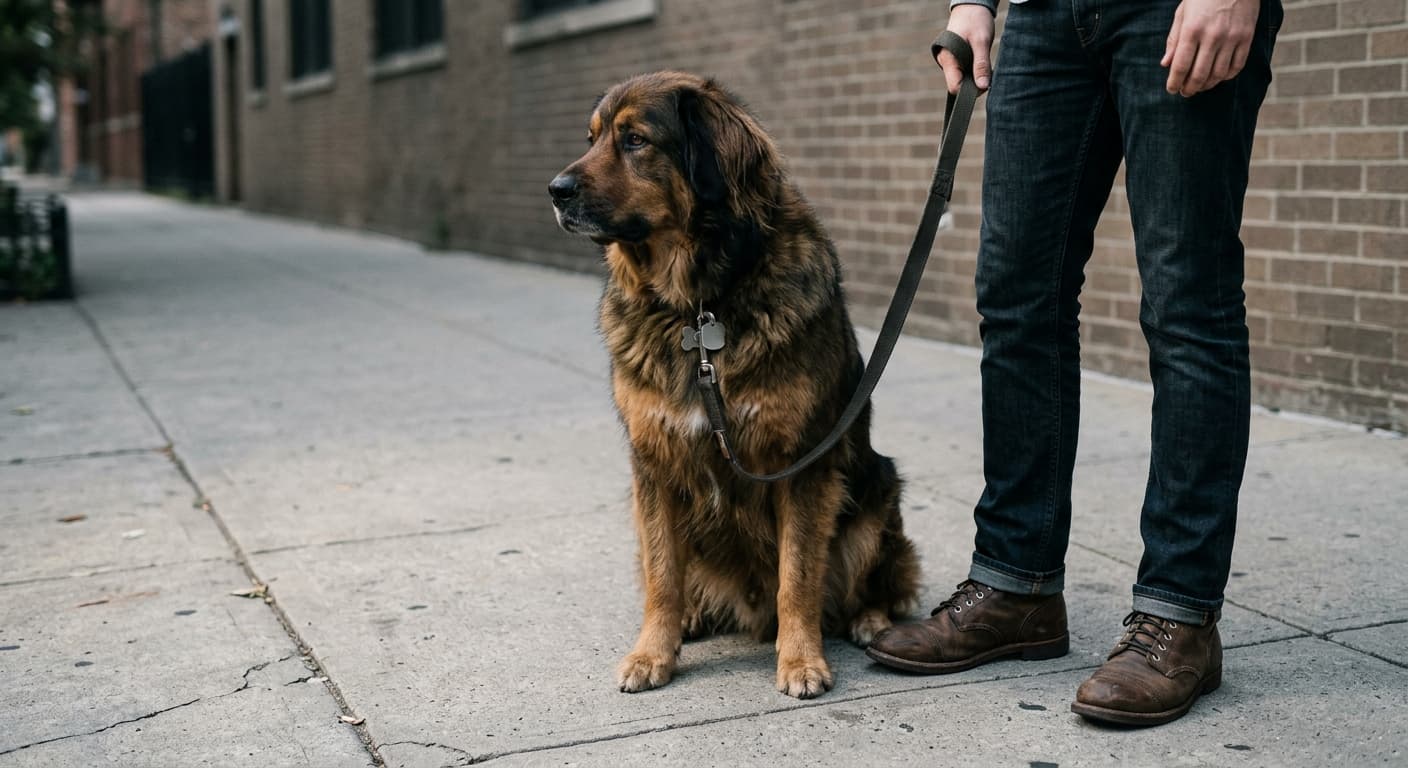
Dog laws vary by state and cover dog bite liability, owner responsibilities such as leash and licensing requirements, dangerous dog classifications, victim rights, and legal defenses. This section provides state-by-state guides for all 50 US states.
Dog ownership comes with legal responsibilities that vary significantly from state to state. Understanding these laws is essential for pet owners, landlords, businesses, and anyone who may encounter dogs in their daily life.
What This Section Covers
Our comprehensive dog law guides cover the legal framework for dog ownership across all 50 US states, including:

- Dog Bite Liability: Who is responsible when a dog injures someone
- Owner Responsibilities: Leash laws, containment requirements, and licensing
- Dangerous Dog Classifications: How states define and handle aggressive dogs
- Victim Rights: What compensation bite victims may be entitled to
- Legal Defenses: Circumstances that may reduce or eliminate owner liability
Browse Dog Laws by Topic
🐕 Dog Bite Laws by State
Our main resource covering dog bite liability, owner responsibilities, and victim rights for all 50 states. Includes detailed breakdowns of strict liability vs. one-bite rule states. Browse the full state-by-state guide.
Understanding Dog Bite Liability
When it comes to dog bite laws, states generally fall into one of three categories. The breakdown below is our own, built from the state-by-state guides in this section, where each state is tied to the statute or case law that governs it:
| Liability Type | What It Means | How Many States |
|---|---|---|
| Strict Liability | Owner is liable regardless of whether they knew the dog was dangerous | 25 states |
| One-Bite Rule | Owner is liable only if they knew or should have known the dog was dangerous | 14 states |
| Mixed or Split Liability | Strict liability applies only in certain circumstances, such as where the bite happened, how severe the injury was, or which damages are claimed | 11 states |
Those three groups cover all 50 states, and every state appears in exactly one of them. To see which states are in which group, with the governing statute for each, use our state-by-state dog bite guide.
Why published state counts disagree
You will find different tallies in other places, and the disagreement is real rather than sloppy. The National Conference of State Legislatures, in a survey last updated January 26, 2026, reports that "35 states, Washington, D.C., and four territories have enacted strict liability statutes" and that "About 10 states still follow the one-bite rule or some version of it," with the remaining states using negligence rules. Those are national counts only. NCSL does not say which states fall into which category, so its groups cannot be matched against ours state by state.
The gap comes from where each source draws the line on statutes that are limited in scope. Our 25 strict liability states and our 11 split-liability states together come to 36, within one state of NCSL's 35, which is what you would expect from a count that treats a limited strict liability statute as a strict liability statute rather than as a split rule. That is an explanation of the gap rather than a verified mapping, because NCSL does not name the states it is counting.
New York is the clearest example of the underlying problem. Under Agriculture and Markets Law section 123(10), the owner of a dog that has been judicially declared dangerous is, with narrow exceptions, "strictly liable for medical costs resulting from injury caused by such dog." That strict liability reaches medical costs only, and it applies only after a dangerous-dog determination. Other damages, such as lost earnings or pain and suffering, still require proof that the owner knew of the dog's propensities or was negligent. A survey that counts New York as strict liability and one that counts it as a mixed or negligence state are both defensible. Our guide places New York in the split-liability group for that reason.
Pennsylvania sits in the same group in our guide, for a similar split between medical costs and other damages. See our Pennsylvania dog bite laws guide for that state's specifics.
Watch out: Treat the three-category summary above as orientation, not as the rule that governs your case. The category label matters far less than the text of your own state's statute, any local dangerous-dog ordinance, and the exceptions for trespassers, provocation, and working police or military dogs. Start with your state guide below.
Quick Facts About Dog Bite Laws
- 4.5 million Americans are bitten by dogs each year, "most of them children," according to the Insurance Information Institute
- $1,116 million, about $1.1 billion, paid by homeowners insurers for dog bites and other dog-related injuries in 2023, across 19,062 claims. That is the most recent year in the Institute's data
- Average cost per claim: $58,545 in 2023, up from $33,230 in 2016, an increase of roughly 76 percent
- Statute of limitations: Commonly 2 to 3 years, but the deadline is set by each state and some are shorter. Missing it normally ends the claim permanently, so confirm the deadline for your state early rather than close to it
Select Your State
Click on any state below to view detailed dog bite laws, owner responsibilities, and victim rights:
- Alabama
- Alaska
- Arizona
- Arkansas
- California
- Colorado
- Connecticut
- Delaware
- Florida
- Georgia
- Hawaii
- Idaho
- Illinois
- Indiana
- Iowa
- Kansas
- Kentucky
- Louisiana
- Maine
- Maryland
- Massachusetts
- Michigan
- Minnesota
- Mississippi
- Missouri
- Montana
- Nebraska
- Nevada
- New Hampshire
- New Jersey
- New Mexico
- New York
- North Carolina
- North Dakota
- Ohio
- Oklahoma
- Oregon
- Pennsylvania
- Rhode Island
- South Carolina
- South Dakota
- Tennessee
- Texas
- Utah
- Vermont
- Virginia
- Washington
- West Virginia
- Wisconsin
- Wyoming
Last updated: August 2026
Estimate a dog bite settlement
If you were bitten, our free dog bite settlement calculator gives a rough payout range based on medical bills, bite severity, and your state liability rule. It is an estimate only, not a prediction.
Updates
Governing law re-checked for recent changes
Corrected the national dog bite liability breakdown, which previously listed state counts that added up to 51 states and conflicted with our own state-by-state guide; the page now uses the same 25 strict liability, 14 one-bite, and 11 split-liability breakdown as that guide, and explains why outside surveys report different tallies. Also corrected the insurance claims figure to the $1,116 million reported for 2023 by the Insurance Information Institute, replacing an unsupported $1.8 billion figure, and removed an uncited claim about victim ages.
Independently fact-checked against the cited primary sources
Corrected the national liability breakdown. The page previously reported roughly 30 strict liability states, roughly 19 one-bite states, and 2 mixed states, which added to 51 rather than 50 and conflicted with our own state-by-state guide. The table now matches that guide: 25 strict liability states, 14 one-bite states, and 11 mixed or split-liability states, a set that covers all 50 states exactly once and ties each state to its governing statute. Added a section explaining why published state counts legitimately disagree, which quotes the National Conference of State Legislatures survey updated January 26, 2026 (35 states plus Washington, D.C., and four territories with strict liability statutes, about 10 one-bite states) and notes that NCSL publishes national counts only and does not say which states fall into which category. Used New York's medical-costs-only rule under Agriculture and Markets Law section 123(10) as the worked example, and added citations to NCSL and the New York statute. Corrected the insurance figure: the page claimed more than $1.8 billion paid annually as of 2025, but the cited Insurance Information Institute data reports $1,116 million across 19,062 claims in 2023, which is the most recent year available. Replaced the imprecise claim that average claim cost had nearly doubled since 2016 with the actual figures, $33,230 in 2016 and $58,545 in 2023. Removed the uncited statement that children ages 5 to 9 are the most common victims and replaced it with the cited finding that most bite victims are children. Added a practical warning that filing deadlines are set state by state and that missing one normally ends the claim.
Fixed 54 broken links left over from the original WordPress migration that had degraded into bare, unclickable URLs in the text: 50 state guide links and the state-by-state hub link. Corrected 9 of those state links (Alabama, Alaska, Arizona, Arkansas, California, Colorado, Connecticut, Delaware, Florida) that pointed to a nonexistent URL path; the live pages for those states use a different slug structure than the rest of the states. Removed 3 orphaned WordPress image references that pointed to images that no longer exist. Updated the dog bite insurance claims figure to current 2025 data and added a supporting citation from the Insurance Information Institute.
The Law Behind This Article
This article rests on the statutory provisions below, held in our own legal record and retrieved from the official source. Tap a section to read the operative text.
New York Agriculture and Markets Law
§ 123Dangerous dogsIn forcecited in 3 of our articles
Dangerous dogs. 1. Any person who witnesses an attack or threatened attack, or in the case of a minor, an adult acting on behalf of such minor, may make a complaint of an attack or threatened attack upon a person, companion animal as defined in section three hundred fifty of this chapter, farm animal as defined in such section three hundred fifty, or a domestic animal as defined in subdivision seven of section one hundred eight of this article to a dog control officer or police officer of the appropriate municipality. Such officer shall immediately inform the complainant of his or her right to commence a proceeding as provided in subdivision two of this section and, if there is reason to believe the dog is a dangerous dog, the officer shall forthwith commence such proceeding himself or herself. 2. Any person who witnesses an attack or threatened attack, or in the case of a minor, an adult acting on behalf of such minor, may, and any dog control officer or police officer as provided in subdivision one of this section shall, make a complaint under oath or affirmation to any municipal judge or justice of such attack or threatened attack.
Official text (excerpt) · last checked 2026-08-28 · Read the full text in our law library · Verify at legislation.nysenate.gov
Also relied on in: Dog Bite Laws by State: Liability and Victim Rights, New York Dog Bite Laws: Liability and Victim Rights
Search our full record of US law — 2.1 million sections, every state + federal →
Sources and References
- Insurance Information Institute - Spotlight on Dog Bite Liability (4.5 million bites annually, most of them children; $1,116 million in homeowners liability claims across 19,062 claims in 2023; average cost per claim $58,545 in 2023 vs $33,230 in 2016)(iii.org)
- National Conference of State Legislatures - Bite by Bite: Dog Owners' Liability by State (35 states, Washington, D.C., and four territories have strict liability statutes; about 10 states follow the one-bite rule; updated January 26, 2026). Supports the national counts only: the survey names no states apart from Florida in a note on English common law, and does not say which states fall into which category.(ncsl.org)
- New York Agriculture and Markets Law Sec. 123(10) - owner of a dog declared dangerous is strictly liable for medical costs resulting from injury caused by the dog(nysenate.gov).gov