
Kansas
Kansas Dog Bite Laws: Liability and Victim Rights
Independently fact-checked against primary sources (last audited August 23, 2026). · Reviewed by the RecordingLaw editorial team. · Law checked current as of August 23, 2026. · 6 primary sources cited on this page. How we verify our legal content
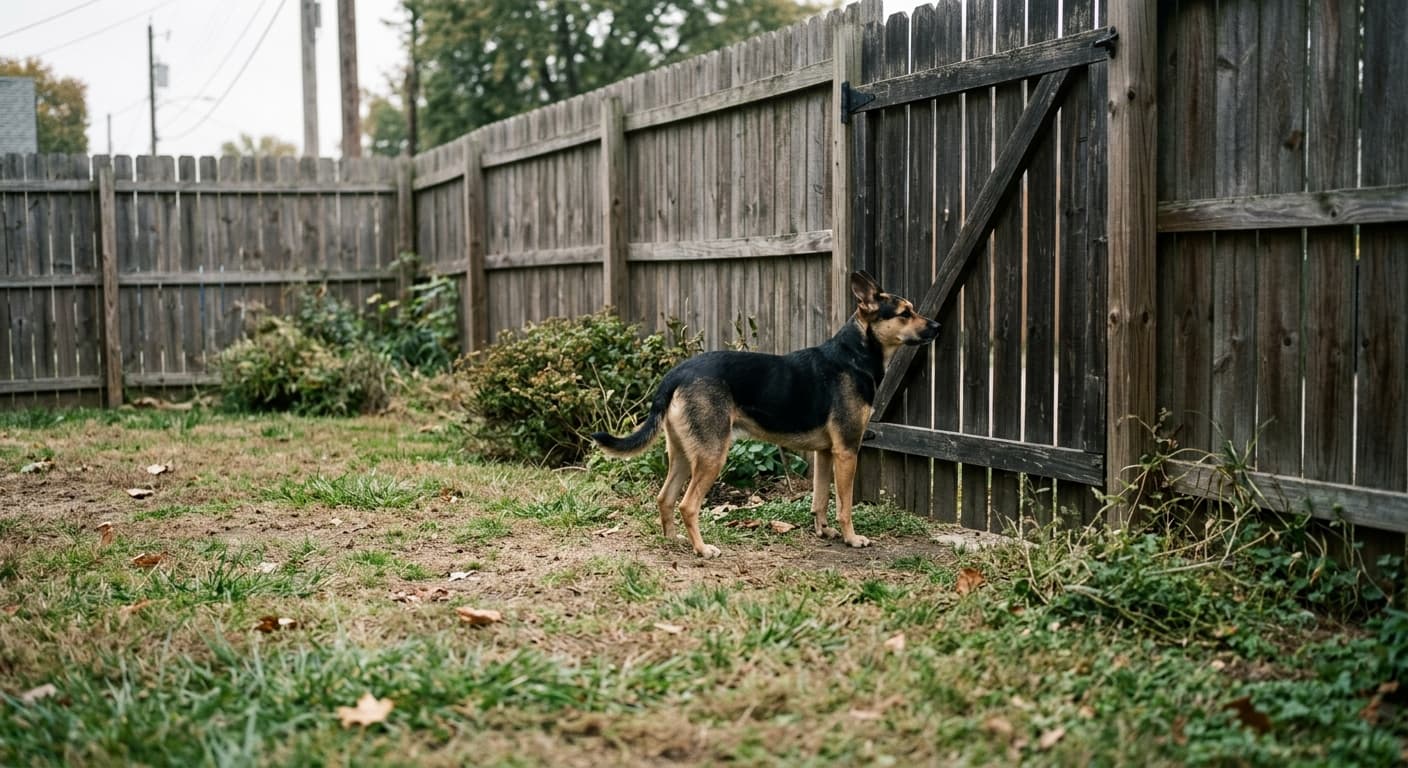
Kansas has no dog bite statute for human injuries. Dog bite victims must rely on either the one-bite rule, which holds owners liable when they knew or should have known of a dog's dangerous propensities, or ordinary negligence under Kansas common law.
Estimate your claim: Use our free Kansas Dog Bite Settlement Calculator to see a rough settlement range based on the medical bills, the bite location, the victim's age, and Kansas's liability rule.
How Kansas Dog Bite Liability Works
Kansas does not have a specific dog bite statute that covers injuries to people. Instead, the state relies on two common law theories of liability: the one-bite rule (strict liability based on knowledge of vicious propensities) and ordinary negligence.
Under the one-bite rule, a dog owner becomes strictly liable for bite injuries if the owner knew or should have known that the dog had dangerous or vicious tendencies. The name "one-bite rule" is somewhat misleading. A prior bite is not required. If the owner has witnessed aggressive behaviors such as growling, lunging, or charging at people, that can be enough to establish knowledge of dangerous propensities.
Alternatively, a victim can pursue a negligence claim. Under Kansas negligence law, the victim must show that the dog owner failed to exercise reasonable care to prevent foreseeable harm. A negligence claim does not require proof that the owner knew the dog was dangerous. The focus is on whether the owner acted responsibly under the circumstances.
Who Can Be Held Liable
In Kansas, liability for a dog bite can extend beyond the dog's registered owner. The following people may face legal responsibility:

- Owner: The person who holds legal ownership of the dog.
- Possessor: Anyone in physical possession or control of the dog at the time of the bite.
- Keeper: A person who has assumed responsibility for the care, custody, or control of the dog.
- Harborer: Anyone who makes the dog a part of their household. For example, if an adult child lives with a parent and brings a dog into the home, both the parent (as harborer) and the adult child (as owner) can be held liable if the dog bites someone.
This broad definition means that dog sitters, temporary caretakers, and household members may all face potential liability.
Kansas Dog Owner Responsibilities
Dog owners in Kansas must follow several legal requirements designed to protect public safety:
- Leash Laws: Many Kansas cities and counties require dogs to be leashed when off the owner's property. Requirements vary by jurisdiction.
- Confinement: Dogs must be securely confined on the owner's property to prevent them from running at large.
- Rabies Vaccination: Kansas does not impose a statewide rabies vaccination mandate. However, at least 10 of the state's 105 counties and over 194 municipalities require rabies vaccination for dogs. Check with your local health department or city clerk for specific requirements.
- Licensing: Most Kansas jurisdictions require dogs to be licensed and registered with the local government.
- Quarantine After a Bite: When a dog bites a person in Kansas, the animal must be isolated for 10 days as directed by the local health officer. Quarantine may take place at the owner's residence (if the dog was not running at large and has a current rabies certificate), a veterinary hospital, or a licensed shelter. The owner pays for quarantine costs.
Violating any of these requirements can strengthen a victim's negligence claim and may result in additional penalties.
Damages Available to Dog Bite Victims
Dog bite victims in Kansas may recover both economic and non-economic damages.

Economic Damages
Economic damages cover measurable financial losses:
- Emergency room visits, surgery, hospitalization, and rehabilitation costs
- Future medical treatment and ongoing care
- Lost wages during recovery
- Loss of future earning capacity
- Property damage (torn clothing, broken personal items)
Non-Economic Damages
Non-economic damages compensate for intangible harm:
- Physical pain and suffering
- Emotional distress and psychological trauma
- Scarring and permanent disfigurement
- Loss of enjoyment of life
Kansas does not impose a statutory cap on damages in most dog bite personal injury cases. The total amount depends on the severity of the injuries, the strength of the evidence, and the specific facts of each case.
Statute of Limitations for Dog Bite Claims
Under K.S.A. 60-513, Kansas sets a two-year statute of limitations for personal injury claims, including dog bite injuries. The deadline runs from the date of the bite.
Key exceptions to be aware of:
- Minors: Under K.S.A. 60-515, a minor generally has one year after turning 18 to file a claim. However, the claim cannot be filed more than eight years after the original incident.
- Discovery Rule: Under K.S.A. 60-513(b), if the injury was not immediately discoverable, the two-year clock may start from the date the victim reasonably discovered (or should have discovered) the injury.
- Government Entities: Claims against government entities (such as a city-owned dog or a government employee's dog on duty) may have shorter notice requirements and different deadlines.
Missing the filing deadline almost always bars the claim permanently.
Comparative Negligence in Kansas Dog Bite Cases
Kansas applies a modified comparative negligence rule under K.S.A. 60-258a. This rule can reduce or eliminate a victim's recovery based on their share of fault.
Here is how the rule works:
- If the victim is found to be less than 50% at fault, their damages are reduced by their percentage of fault.
- If the victim is found to be 50% or more at fault, they cannot recover any damages at all.
For example, if a court determines that a bite victim provoked the dog and assigns 30% fault to the victim with total damages of $50,000, the victim would recover $35,000 (a 30% reduction).
Common situations where comparative negligence applies in dog bite cases include:
- The victim was trespassing on private property.
- The victim provoked the dog through teasing, hitting, or other aggressive behavior.
- The victim ignored clear warning signs about the dog.
- The victim attempted to interact with a restrained or confined dog.
Legal Defenses Available to Dog Owners
Kansas dog owners have several defenses they can raise in a dog bite lawsuit:

Provocation
If the victim provoked the dog by teasing, tormenting, hitting, or acting aggressively toward the animal, the owner may avoid liability. The provocation must be significant enough that a normally calm dog would react.
Trespassing
Dog owners generally face reduced or no liability when a dog bites someone who is trespassing on the owner's property. Courts may treat child trespassers differently because children may not fully understand property boundaries or the risks involved.
Assumption of Risk
If the victim knowingly accepted the risk of a dog bite, this defense may limit or prevent recovery. This often applies to professionals such as veterinarians, dog groomers, kennel workers, and dog trainers who voluntarily interact with unfamiliar animals.
Lack of Knowledge
In one-bite rule claims specifically, the owner can argue they had no prior knowledge and no reason to believe the dog was dangerous. Without evidence of prior aggressive behavior, a strict liability claim under the one-bite rule will likely fail. However, this defense does not apply to negligence claims.
KSA 47-645: Liability for Damage to Domestic Animals
While Kansas common law governs dog bite injuries to people, the state does have a statute that addresses dog attacks on animals. Under K.S.A. 47-645, if any dog kills, wounds, or worries any domestic animal, the dog's owner is liable to the animal's owner for all damages sustained.
This is a strict liability statute. The owner of the attacking dog is responsible regardless of whether they knew the dog was dangerous.
A related statute, K.S.A. 47-646, allows any person to lawfully kill a dog that is found injuring or attempting to injure livestock as defined in K.S.A. 47-1001.
Dangerous Dog Designations and Local Ordinances
Kansas does have a statewide criminal statute covering dangerous animals. Under K.S.A. 21-6418, it is a class B nonperson misdemeanor for the owner or custodian of an animal with dangerous or vicious propensities, knowing of those propensities, to permit the animal to go at large or to keep it without taking ordinary care to restrain it. That prohibition applies everywhere in the state.
What Kansas does not have is a statewide dangerous dog designation or registration system. The formal process for labeling a particular dog "dangerous" or "vicious," and the restrictions that follow from that label, come from city and county ordinances rather than state law.
These local ordinances typically allow animal control authorities to designate a dog as "dangerous" or "vicious" if it has:
- Bitten a person without provocation
- Killed or seriously injured a domestic animal while off the owner's property
- Been previously identified as potentially dangerous and continued to exhibit threatening behavior
Owners of dogs designated as dangerous under local ordinances often face requirements such as:
- Maintaining liability insurance (commonly $100,000 or more)
- Keeping the dog in a secure, enclosed structure
- Using a muzzle and short leash in public
- Posting visible warning signs on the property
- Microchipping the dog for identification
- Paying annual dangerous dog registration fees
Violating dangerous dog ordinance requirements can result in fines, mandatory impoundment, or in severe cases, court-ordered euthanasia of the animal.
Breed-Specific Legislation in Kansas
Kansas state law does not ban or restrict any specific dog breeds. However, many cities across the state have enacted breed-specific legislation (BSL) that restricts or bans certain breeds.
According to breed-specific legislation tracking data, at least 35 Kansas cities and townships have adopted some form of BSL. Notable examples include:
- Topeka: Restricts pit bull ownership. Owners may transport pit bulls through the city with adequate safety measures. Violations can result in fines up to $499 and jail time up to 179 days.
- Wichita: Adopted pit bull restrictions in 2009. Pit bull owners must have their dogs microchipped.
- Overland Park, Salina, and Park City: Have also enacted breed-specific restrictions.
Breeds commonly targeted by Kansas BSL include pit bulls and pit bull mixes, American Staffordshire Terriers, and Presa Canarios. Some communities have moved away from breed-specific bans in favor of behavior-based dangerous dog ordinances.
Always check with your local city or county government for the current rules in your area.
Landlord Liability for Dog Bites in Kansas
Kansas courts have generally held that landlords are not liable for injuries caused by a tenant's dog. Under Kansas law, only the owner, possessor, keeper, or harborer of a dog can be held responsible for bite injuries. A landlord who merely rents property to a tenant with a dog is typically not considered a harborer of that dog.
This means that even if a landlord knows a tenant has a dog, the landlord usually cannot be sued if the tenant's dog bites someone on or off the property.
However, landlords should still take reasonable precautions:
- Include clear pet policies in lease agreements.
- Require tenants with dogs to carry renter's insurance that includes liability coverage.
- Address dangerous animal complaints promptly.
- Follow local ordinances regarding animals on rental properties.
Criminal Penalties for Dog Owners in Kansas
In addition to civil liability, dog owners in Kansas may face criminal consequences. The main state-law offense is K.S.A. 21-6418, permitting a dangerous animal to be at large, which applies statewide no matter what a particular city or county has adopted. Local leash, confinement, licensing, and dangerous dog ordinances add a second layer of penalties on top of the state offense.
Misdemeanor Charges
A dog owner may face misdemeanor charges when:
- Under state law (K.S.A. 21-6418): the owner or custodian knew the dog had dangerous or vicious propensities and either permitted it to go at large or kept it without taking ordinary care to restrain it. This is a class B nonperson misdemeanor.
- Under local ordinance: the dog causes injury because the owner violated a city or county leash law or confinement ordinance.
- Under local ordinance: the owner failed to comply with the conditions attached to a local dangerous dog designation.
Felony Charges
Kansas has no dog-specific felony. Permitting a dangerous animal to be at large is capped at a class B nonperson misdemeanor, and no state animal statute raises the charge because a dog killed or seriously injured someone.
Felony exposure in a Kansas dog case would have to come from a general criminal statute instead. For example, K.S.A. 21-5413 makes it aggravated battery, a person felony, to knowingly cause great bodily harm to another person, or to knowingly cause bodily harm with a deadly weapon or in any manner whereby great bodily harm, disfigurement or death can be inflicted. A charge like that turns on the owner's own criminal mental state, a far higher bar than the negligence standard that governs a civil claim, and it is rarely met in an ordinary dog bite case.
Criminal penalties can include fines, probation, and imprisonment. They are separate from and in addition to any civil liability for damages.
How to File a Dog Bite Claim in Kansas
If you have been bitten by a dog in Kansas, take these steps to protect your legal rights:
- Get Medical Treatment: Seek emergency care immediately. Dog bites carry risks of infection, nerve damage, and scarring. Keep all medical records and bills.
- Report the Bite: File a report with your local animal control agency and police department. This creates an official record of the incident and triggers the mandatory 10-day quarantine.
- Document the Scene: Take photographs of your injuries, the location where the bite occurred, and the dog if it is safe to do so.
- Gather Information: Obtain the dog owner's name, address, phone number, and homeowner's or renter's insurance information.
- Identify Witnesses: Collect names and contact information from anyone who saw the attack.
- Preserve Physical Evidence: Keep torn or bloodied clothing, damaged personal items, and any other physical evidence.
- Track Your Losses: Maintain a written log of all expenses, missed workdays, medical appointments, and how the injury affects your daily life.
- Consult a Personal Injury Attorney: A Kansas dog bite attorney can evaluate the strength of your claim, identify all potentially liable parties, negotiate with insurance companies, and pursue full compensation.
Many personal injury attorneys offer free initial consultations and work on a contingency fee basis, meaning you pay legal fees only if you recover compensation.
More Kansas Laws
Frequently Asked Questions
Does Kansas have a dog bite statute?
No. Kansas does not have a specific statute governing dog bite injuries to humans. Liability is determined by common law under two theories: the one-bite rule (strict liability when the owner knew of the dog''s dangerous propensities) and ordinary negligence (failure to exercise reasonable care). K.S.A. 47-645 applies only to dogs that injure or kill domestic animals or livestock. Kansas does have a criminal statute, K.S.A. 21-6418, that punishes letting a known dangerous animal go at large, but it sets a criminal penalty and does not by itself create a civil cause of action for a bite victim.
How long do I have to file a dog bite lawsuit in Kansas?
You have two years from the date of the bite to file a personal injury lawsuit under K.S.A. 60-513. Minors generally have one year after turning 18, but cannot file more than eight years after the incident under K.S.A. 60-515.
Can I sue if the dog has never bitten anyone before?
Yes. You can file a negligence claim without proving the dog had a history of biting. Under negligence theory, you must show the owner failed to exercise reasonable care to prevent the bite. You may also pursue a strict liability claim if the owner knew of other aggressive behaviors such as growling, lunging, or charging at people, even without a prior bite.
What happens if I was partially at fault for the dog bite?
Kansas uses modified comparative negligence under K.S.A. 60-258a. If you were less than 50% at fault, your damages are reduced by your percentage of fault. If you were 50% or more at fault (for example, by provoking the dog or trespassing), you cannot recover any damages.
Are landlords liable for a tenant''s dog bite in Kansas?
Generally, no. Kansas courts have held that only the owner, possessor, keeper, or harborer of a dog can be held liable for bite injuries. A landlord who simply rents property to a tenant with a dog is typically not considered a harborer and cannot be held responsible for the tenant''s dog.
Injured in Kansas? Get a free case review from a personal-injury attorney
If someone else's negligence caused your injury, you may be owed compensation for medical bills, lost wages, and pain and suffering. Get a free, no-obligation review from a Kansas personal-injury attorney. Most work on contingency, so there is no upfront cost.
Updates
Corrected the criminal-law sections: Kansas does have a statewide dangerous-animal statute, K.S.A. 21-6418, which makes it a class B nonperson misdemeanor to let a known dangerous animal go at large, and we removed an unsupported list of felony charges that Kansas law does not provide for dog attacks.
Independently fact-checked against the cited primary sources; governing law re-checked for recent changes
Governing law re-checked for recent changes
Governing law re-checked for recent changes
Reviewed and approved by an editor
The Law Behind This Article
This article rests on the statutory provisions below, held in our own legal record and retrieved from the official source. Tap a section to read the operative text.
Kansas Statutes Annotated, Chapter 21: CRIMES AND PUNISHMENTS
§ 21-6418Permitting a dangerous animal to be at large.In force
(a) Permitting a dangerous animal to be at large is the act or omission of the owner or custodian of an animal of dangerous or vicious propensities who, knowing of such propensities, permits such animal to go at large or keeps such animal without taking ordinary care to restrain it. (b) Permitting a dangerous animal to be at large is a class B nonperson misdemeanor.
Official text (excerpt) · last checked 2026-07-29 · Read the full text in our law library · Verify at ksrevisor.gov
Kansas Statutes Annotated, Chapter 47: LIVESTOCK AND DOMESTIC ANIMALS
§ 47-1001Definitions.In force
As used in this act, except where the context clearly indicates a different meaning: (a) "Commissioner" means the animal health commissioner of the Kansas department of agriculture. (b) "Livestock" means and includes cattle, bison, swine, sheep, goats, horses, mules, domesticated deer, camelids, domestic poultry, domestic waterfowl, all creatures of the ratite family that are not indigenous to this state, including, but not limited to, ostriches, emus and rheas, and any other animal as deemed necessary by the commissioner established through rules and regulations. (c) "Person" means and includes any individual, partnership, corporation or association. (d) "Producer" means any person engaged in the business of breeding, grazing or feeding livestock. (e) "Consignor" means any person who ships or delivers to any public livestock market livestock for handling, sale or resale at a public livestock market.
Official text (excerpt) · last checked 2026-07-29 · Read the full text in our law library · Verify at ksrevisor.gov
Cited in 2 court opinions in our collectionLatest citing opinion in our collection: 1995
Opinions citing this section in our collection:
- Weber v. Board of County Commissioners (Court of Appeals of Kansas 1994, 20 Kan. App. 2d 152)“…any other animal as deemed necessary by the commissioner.” K.S.A. 47-1001(b). For purposes of humane slaughter,…”
- Attorney General Opinion No. (Kansas Attorney General Reports 1995)“…idual as well as a partnership, corporation or association. K.S.A. 47-1001 (c). Thus a not-for-profit organizatio…”
Identified automatically from the court opinions citing this section — not a ranking of which case controls.
§ 47-645Liability of owner of dog for damages.In force
If any dog shall kill, wound or worry any domestic animal the owners of such dog shall be liable to the owner of such animal for all damages that may be sustained, thereby to be recovered by the parties so injured before any court having competent jurisdiction.
Official text (excerpt) · last checked 2026-07-29 · Read the full text in our law library · Verify at ksrevisor.gov
Cited in 1 court opinions in our collectionLatest citing opinion in our collection: 1976
Opinions citing this section in our collection:
- Webber Ex Rel. Witwer v. Patton (Supreme Court of Kansas 1976, 221 Kan. 79)“…ict in this area can also be supported by the provisions of K. S. A. 47-645, which make the owner of a dog liable f…”
Identified automatically from the court opinions citing this section — not a ranking of which case controls.
§ 47-646Killing dog lawful, when.In force
It shall be lawful for any person at any time to kill any dog which may be found injuring or attempting to injure any livestock as defined in K.S.A. 47-1001, and amendments thereto.
Official text (excerpt) · last checked 2026-07-29 · Read the full text in our law library · Verify at ksrevisor.gov
Cited in 3 court opinions in our collectionLatest citing opinion in our collection: 2016
Opinions citing this section in our collection:
- McDonald v. Bauman (Supreme Court of Kansas 1967, 199 Kan. 628)“…on appeal concern: (1) The construction and application of K. S. A. 47-646 to- the facts in this case; (2) instruc…”
- State v. Jones (Supreme Court of Kansas 1981, 229 Kan. 528)“…all property, only “farm” property. We disagree. K.S.A. 47-646 makes it lawful to kill a dog “which ma…”
- Mayfield v. Bethards (Court of Appeals for the Tenth Circuit 2016, 826 F.3d 1252)“…be found injuring or attempting to injure any livestock.” Kan. Stat. Ann. § 47-646. According to Deputy Bethards, the Kan…”
Identified automatically from the court opinions citing this section — not a ranking of which case controls.
Kansas Statutes Annotated, Chapter 60: PROCEDURE, CIVIL
§ 60-258aComparative negligence.In forcecited in 10 of our articles
(a) Effect of contributory negligence. The contributory negligence of a party in a civil action does not bar that party or its legal representative from recovering damages for negligence resulting in death, personal injury, property damage or economic loss, if that party's negligence was less than the causal negligence of the party or parties against whom a claim is made, but the award of damages to that party must be reduced in proportion to the amount of negligence attributed to that party. If a party claims damages for a decedent's wrongful death, the negligence of the decedent, if any, must be imputed to that party. (b) Special verdicts or findings required. When the comparative negligence of the parties is an issue, the jury must return special verdicts, or in the absence of a jury, the court must make special findings, determining the percentage of negligence attributable to each party and the total amount of damages sustained by each claimant. The court must determine the appropriate judgment. (c) Joining additional parties.
Official text (excerpt) · last checked 2026-09-08 · Read the full text in our law library · Verify at ksrevisor.gov
Cited in 247 court opinions in our collectionLatest citing opinion in our collection: 2026
In the courts (editorial summary, independently checked):Brown v. Keill (1978) held that under K.S.A. 60-258a joint and several liability no longer applies, each defendant paying in proportion to its own fault, with the fault of persons not joined still compared. Kennedy v. City of Sawyer (1980) applied those comparative fault principles to strict liability and implied warranty claims.
Opinions citing this section in our collection:
- Brown v. Keill (Supreme Court of Kansas 1978, 224 Kan. 195)✓A car owner sued the other driver over damage to his Jaguar; his son drove it and drew 90 percent of the fault at trial. The court held K.S.A. 60-258a abolished joint and several liability, capping the defendant at 10 percent, and let the unjoined son's fault be compared.
- Kennedy v. City of Sawyer (Supreme Court of Kansas 1980, 228 Kan. 439)✓A city employee sprayed an arsenic herbicide by its sewage lagoons and neighboring cattle died. Reading K.S.A. 60-258a, the court held its fault comparison reaches products claims joined with negligence, and replaced all-or-nothing implied indemnity with apportionment.
- Wooderson v. Ortho Pharmaceutical Corp. (Supreme Court of Kansas 1984, 235 Kan. 387)✓A woman who suffered kidney failure after taking an oral contraceptive won a failure-to-warn verdict. Applying K.S.A. 60-258a, the court held the trial judge properly refused to compare the fault of her settled physicians or of the plaintiff, since no causal negligence was shown.
Identified automatically from the court opinions citing this section — not a ranking of which case controls.
Also relied on in: Motorcycle Accident Laws in Kansas (2026): Deadlines & Helmets, Kansas Hit and Run Laws: Penalties and What to Do, Personal Injury Settlement Amounts: What Injuries Are Worth
§ 60-513Actions limited to two years.In forcecited in 11 of our articles
(a) The following actions shall be brought within two years: (1) An action for trespass upon real property. (2) An action for taking, detaining or injuring personal property, including actions for the specific recovery thereof. (3) An action for relief on the ground of fraud, but the cause of action shall not be deemed to have accrued until the fraud is discovered. (4) An action for injury to the rights of another, not arising on contract, and not herein enumerated. (5) An action for wrongful death. (6) An action to recover for an ionizing radiation injury as provided in K.S.A. 60-513a, 60-513b and 60-513c, and amendments thereto. (7) An action arising out of the rendering of or failure to render professional services by a health care provider, not arising on contract.
Official text (excerpt) · last checked 2026-09-08 · Read the full text in our law library · Verify at ksrevisor.gov
Cited in 762 court opinions in our collectionLatest citing opinion in our collection: 2026
Opinions citing this section in our collection:
- Martindale v. Tenny (Supreme Court of Kansas 1992, 250 Kan. 621)“…two-year and four-year statutes of limitation set forth in K.S.A. 60-513(a)(7) and K.S.A. 60-513(c) barred the a…”
- Kansas Public Employees Retirement System v. Reimer & Koger Associates, Inc. (Supreme Court of Kansas 1997, 262 Kan. 635)“…der the general statutes of limitations of K.S.A 60-512 and K.S.A. 60-513. The parties framed the issues in such…”
- Samsel v. Wheeler Transport Services, Inc. (Supreme Court of Kansas 1990, 246 Kan. 336)“…imitations was shortened as to medical malpractice actions (K.S.A. 60-513); and the collateral source rule was mo…”
Identified automatically from the court opinions citing this section — not a ranking of which case controls.
Also relied on in: Kansas Car Accident Laws: No-Fault, PIP, Insurance, and Your Claim, Medical Malpractice Laws in Kansas (2026): Deadlines & Caps, Truck Accident Laws in Kansas (2026): Deadlines & Liability
§ 60-515Persons under legal disability.In forcecited in 4 of our articles
(a) Effect. Except as provided in K.S.A. 60-523, if any person entitled to bring an action, other than for the recovery of real property or a penalty or a forfeiture, at the time the cause of action accrued or at any time during the period the statute of limitations is running, is less than 18 years of age, an incapacitated person or imprisoned for a term less than such person's natural life, such person shall be entitled to bring such action within one year after the person's disability is removed, except that no such action shall be commenced by or on behalf of any person under the disability more than eight years after the time of the act giving rise to the cause of action. Notwithstanding the foregoing provision, if a person imprisoned for any term has access to the court for purposes of bringing an action, such person shall not be deemed to be under legal disability. (b) Death of person under disability.
Official text (excerpt) · last checked 2026-07-29 · Read the full text in our law library · Verify at ksrevisor.gov
Cited in 114 court opinions in our collectionLatest citing opinion in our collection: 2026
Opinions citing this section in our collection:
- Martin v. Naik (Supreme Court of Kansas 2013, 297 Kan. 241)“…nally, I disagree with the concurring justices’ reliance on K.S.A. 60-515. The plain language of K.S.A. 60-515 li…”
- Bonin v. Vannaman (Supreme Court of Kansas 1996, 261 Kan. 199)“…n all issues. This appeal involves the constitutionality of K.S.A. 60-515(a) (statute of repose); a claim of frau…”
- Gilger v. Lee Construction, Inc. (Supreme Court of Kansas 1991, 249 Kan. 307)“…d Unger was barred by an eight-year statute of limitations, K.S.A. 60-515, because the negligent act giving rise…”
Identified automatically from the court opinions citing this section — not a ranking of which case controls.
Also relied on in: Kansas Statute of Limitations: Filing Deadlines by Case Type, Kansas Slip and Fall Laws: Proving Premises Liability Under the Reasonable-Care Standard
Search our full record of US law — 2.1 million sections, every state + federal →
Sources and References
- K.S.A. 47-645: Liability of owner of dog for damages(ksrevisor.gov).gov
- K.S.A. 47-646: Killing dog lawful, when(ksrevisor.gov).gov
- K.S.A. 60-513: Statute of limitations for personal injury(ksrevisor.gov).gov
- K.S.A. 60-258a: Comparative negligence(ksrevisor.gov).gov
- K.S.A. 60-515: Disability tolling for minors(ksrevisor.gov).gov
- Kansas Department of Health and Environment: Rabies Control Requirements(kdhe.ks.gov).gov
- Rabies Aware: Kansas rabies vaccination requirements(rabiesaware.org)
- Animal Legal and Historical Center: Kansas Consolidated Dog Laws(animallaw.info)
- K.S.A. 21-6418: Permitting a dangerous animal to be at large(ksrevisor.gov)
- K.S.A. 21-5413: Battery; aggravated battery(ksrevisor.gov)