
Nevada
Nevada Dog Bite Laws: Liability and Victim Rights
Independently fact-checked against primary sources (last audited August 23, 2026). · Reviewed by the RecordingLaw editorial team. · Law checked current as of August 23, 2026. · 6 primary sources cited on this page. How we verify our legal content

Nevada holds dog owners liable through negligence, not strict liability. Nevada has no dog bite statute, so courts apply the common-law rule for domestic animals: a victim must show the owner failed to use reasonable care, even if the dog has never bitten before.
Estimate your claim: Use our free Nevada Dog Bite Settlement Calculator to see a rough settlement range based on the medical bills, the bite location, the victim's age, and Nevada's liability rule.
How Nevada Dog Bite Liability Works
Nevada does not have a single statewide dog bite statute that creates automatic liability for dog owners. Instead, the state relies on common law negligence principles to determine whether a dog owner is responsible for injuries their animal causes.
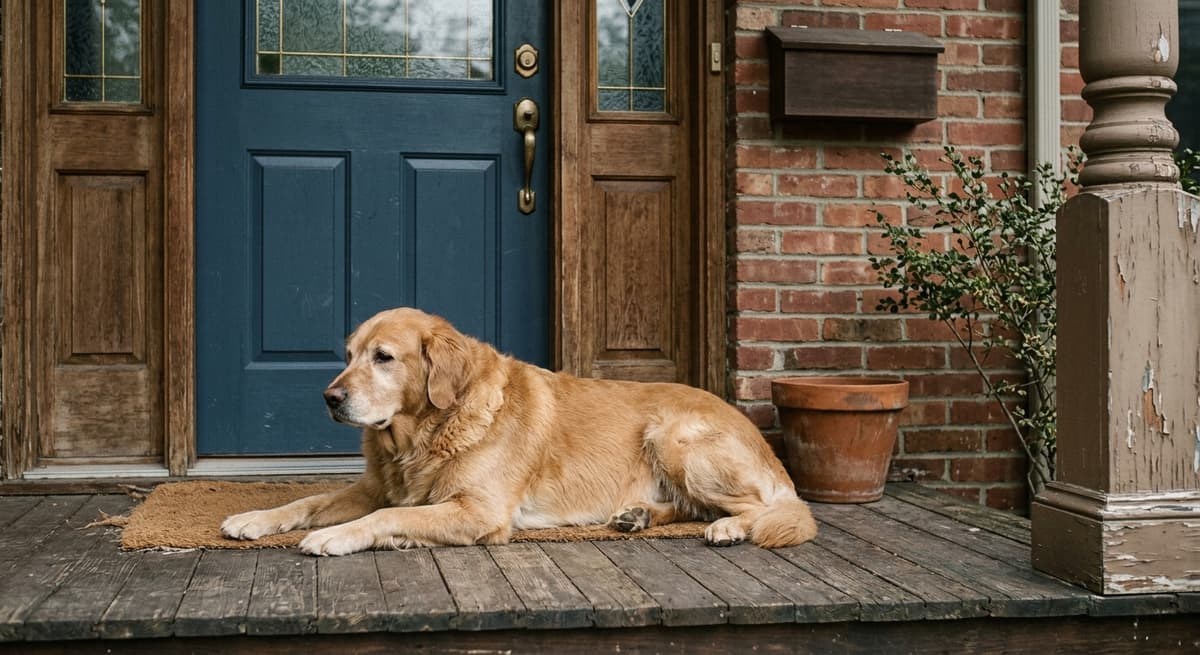
Nevada has never enacted a dog-bite statute, so its courts apply the general common-law rule for domestic animals: liability turns on whether the owner acted reasonably, not on whether the dog had bitten before. Nevada Supreme Court dog-bite cases, including Wright v. Schum, 105 Nev. 611, 781 P.2d 1142 (1989), have proceeded on this negligence footing rather than an automatic strict-liability theory. This means that even if a dog has never bitten anyone before, the owner can still face liability if they failed to exercise reasonable care.
What the One-Bite Rule Actually Means in Nevada
Nevada is still commonly described as a "one-bite rule" state. This label is somewhat misleading. The one-bite rule in Nevada does not mean a dog gets one free bite with no consequences.
What it actually means is that Nevada applies a negligence standard rather than strict liability. In strict liability states, a dog owner is automatically responsible for any bite regardless of precautions taken. In Nevada, the victim must show that the owner was negligent.
Proving Negligence in a Dog Bite Case
To recover damages, a dog bite victim in Nevada must prove that:
- The dog owner had a duty to exercise reasonable care to prevent the dog from injuring others
- The owner breached that duty through action or inaction
- The breach directly caused the victim's injuries
- The victim suffered actual damages as a result
Evidence that can help establish negligence includes:
- The owner knew or should have known the dog had aggressive tendencies (growling, lunging, snapping, or prior bites)
- The owner violated a local leash law or animal control ordinance
- The owner failed to properly confine the dog on their property
- The owner allowed a known dangerous dog to interact with strangers without precautions
Negligence Per Se
When a dog owner violates a local ordinance, such as a leash law, that violation can establish negligence automatically. This legal principle is called "negligence per se." The victim does not need to separately prove that the owner was careless. The ordinance violation itself serves as proof of negligence.
For example, Clark County Code 10.36.040 requires all dogs to be leashed when off the owner's premises, with leashes no longer than six feet. If an unleashed dog bites someone in Clark County, the owner is presumed negligent because they violated this ordinance.
Nevada's Dangerous and Vicious Dog Law: NRS 202.500
While Nevada does not have a general dog bite liability statute, it does have NRS 202.500, which addresses dangerous and vicious dogs. This statute creates specific definitions, requirements, and criminal penalties.
Dangerous Dog Definition
Under NRS 202.500, a dog is classified as "dangerous" if, without provocation, on two separate occasions within 18 months, it behaves menacingly to a degree that would lead a reasonable person to defend against substantial bodily harm. The dog must be off the owner's premises or not confined in a cage, pen, or vehicle at the time of the incidents.
A dog may also be declared dangerous by a law enforcement agency if it is used in the commission of a crime by its owner or keeper.
Under NRS 202.500(3), a dog cannot be found dangerous or vicious solely because of its breed, or because of a defensive act against a person who was committing or attempting to commit a crime, or who provoked the dog.
Vicious Dog Definition
A dog is classified as "vicious" under NRS 202.500 if:
- Without provocation, it kills or inflicts substantial bodily harm on a human being
- After the owner has been notified by law enforcement that the dog is dangerous, the dog continues the threatening behavior
NRS 202.500 does not apply to a dog used by a law enforcement officer in the performance of official duties.
Criminal Penalties Under NRS 202.500
The penalties for owning a dangerous or vicious dog depend on the severity of the situation:
| Violation | Classification | Penalty |
|---|---|---|
| Knowingly keeping a vicious dog more than 7 days after actual notice, or knowingly transferring a vicious dog after actual notice (no injury) | Misdemeanor | Up to 6 months in jail and/or up to $1,000 fine |
| Vicious dog attack causing substantial bodily harm | Category D felony | 1 to 4 years in prison and up to $5,000 fine (NRS 193.130) |
| Court-ordered destruction | Judicial discretion | Judge may order the vicious dog to be humanely destroyed |
Local Requirements for Owners of Dangerous Dogs
NRS 202.500 itself imposes no ongoing duties on the owner of a dog that has been declared dangerous or vicious. Its eight subsections cover the definitions, the law enforcement declaration, the limits on what cannot support a finding, the misdemeanor, the felony, the ban on breed-based ordinances, the police-dog exemption, and one further definition. Any confinement, muzzling, signage, or insurance requirement comes from a local ordinance instead, so the obligations vary by county and city and may include:
- Keeping the dog in a secure enclosure that prevents escape
- Using a muzzle and leash whenever the dog is in public
- Posting visible warning signs on the property
- Microchipping the dog for identification
- Carrying liability insurance, where the county requires it
On insurance, NRS 244.359(1)(e) lets a board of county commissioners designate an animal as inherently dangerous and require its owner to carry a liability policy in an amount determined by that board. State law sets no dollar figure, so check the ordinance in the county where the dog is kept. Failure to comply with a local requirement can carry its own penalty and strengthens any civil liability claim if the dog injures someone.
Damages Available to Dog Bite Victims
Dog bite victims in Nevada who can prove negligence may recover both economic and non-economic damages.
Economic Damages
These cover measurable financial losses:
- Emergency room visits, surgery, and hospitalization costs
- Ongoing medical treatment including physical therapy and rehabilitation
- Prescription medications and medical devices
- Lost wages from missed work during recovery
- Reduced earning capacity if injuries cause long-term disability
- Property damage (torn clothing, broken glasses, damaged personal items)
- Future medical expenses for scarring treatment or reconstructive surgery
Non-Economic Damages
These compensate for subjective losses that do not have a specific dollar amount:
- Physical pain and suffering
- Emotional distress and psychological trauma
- Post-traumatic stress, anxiety, or fear of dogs
- Permanent scarring and disfigurement
- Loss of enjoyment of life
Nevada does not cap non-economic damages in most personal injury cases, including dog bite claims. However, the victim must still prove negligence to recover these damages.
Modified Comparative Fault: NRS 41.141
Nevada follows a modified comparative fault system under NRS 41.141. This law directly affects how much a dog bite victim can recover.
The 51% Bar Rule
Under NRS 41.141, a dog bite victim can recover damages as long as they are not more than 50% at fault for the incident. If the victim is found to be 51% or more at fault, they are completely barred from recovering any compensation.
If the victim is 50% or less at fault, their damages award is reduced by their percentage of fault. For example, if a victim suffers $100,000 in damages but is found 30% at fault for provoking the dog, they would receive $70,000.
How Comparative Fault Applies to Dog Bites
Common scenarios where a victim's fault percentage might be reduced include:
- Teasing, tormenting, or hitting the dog before the bite
- Ignoring posted warning signs about a dangerous dog
- Entering a clearly marked restricted area where a dog is confined
- Approaching an unfamiliar dog without the owner's permission
Statute of Limitations for Dog Bite Claims
Under NRS 11.190(4)(e), dog bite victims in Nevada have exactly 2 years from the date of the bite to file a lawsuit. This deadline applies to all personal injury claims in the state.
Important Timing Considerations
- The 2-year clock starts on the date of the attack, not when you discover the full extent of your injuries
- Minors (children under 18) generally have until their 20th birthday to file, because the statute of limitations is tolled during minority
- Claims against government entities (such as a city animal control officer's dog) do not carry a shorter Nevada deadline. Under NRS 41.036, a tort claim against the State or against a political subdivision must be filed within 2 years after the cause of action accrues, and subsection 3 provides that filing that claim is not a condition precedent to bringing an action under NRS 41.031
- Missing the deadline almost always results in permanent dismissal of your claim, regardless of how strong your evidence is
Landlord Liability for Tenant Dog Bites
Landlords in Nevada can face liability for dog bite injuries caused by a tenant's dog under certain circumstances. A landlord is not automatically liable simply because a tenant owns a dog. However, liability may attach when:
- The landlord knew or should have known the tenant's dog was dangerous
- The landlord had the authority and ability to remove the dog or require the tenant to do so
- The landlord failed to take reasonable action to protect other tenants or visitors
- The landlord failed to maintain the property in a way that allowed the dog to escape (such as not repairing a broken fence)
Landlords should include clear pet policies in lease agreements. Requiring tenants with dogs to carry renter's insurance with adequate liability coverage provides an additional layer of protection.
Dog Owner Responsibilities Under Nevada Law
Dog owners in Nevada have several legal obligations that help protect the public and can affect liability if a bite occurs.
- Leash laws: Most Nevada municipalities, including Clark County and the City of Las Vegas, require dogs to be leashed in public areas. Clark County requires leashes of six feet or shorter.
- Confinement: Dogs must be securely confined on the owner's property. This means adequate fencing, closed gates, and secure enclosures.
- Rabies vaccination: Nevada law requires dogs to be vaccinated against rabies. Failure to vaccinate can result in additional penalties after a bite.
- Licensing: Most Nevada jurisdictions require dogs to be licensed and registered with the local animal control authority.
- Warning signs: Owners of dogs with a dangerous or vicious designation should post visible warning signs on their property.
Violating any of these requirements strengthens a victim's negligence claim and may establish negligence per se.
Legal Defenses Available to Dog Owners
Dog owners in Nevada have several potential defenses that can reduce or eliminate their liability.
Provocation
If the victim provoked the dog through teasing, hitting, tormenting, or other aggressive behavior, the owner may have a complete or partial defense. The provocation must be significant enough that it would cause a normally calm dog to react aggressively.
Trespassing
Dog owners generally have reduced or no liability when their dog bites someone who is trespassing on their property. This defense is strongest when the property is clearly marked with "No Trespassing" signs. However, this defense may not fully apply to children, who may not understand property boundaries.
Comparative Negligence
As discussed above, Nevada's modified comparative fault system under NRS 41.141 can reduce the victim's recovery based on their share of fault, or bar recovery entirely if they are more than 50% at fault.
Assumption of Risk
If the victim knowingly and voluntarily assumed the risk of being bitten, this may limit or bar recovery. This defense commonly applies to veterinarians, dog groomers, kennel workers, and others who work professionally with animals.
Breed-Specific Legislation in Nevada
Nevada law expressly prohibits breed-specific legislation (BSL) at the local level. Under NRS 202.500, no local authority may adopt or enforce an ordinance that deems a dog dangerous or vicious based solely on its breed.
This means that cities and counties in Nevada cannot ban specific breeds such as pit bulls, Rottweilers, or German Shepherds. Instead, all dog regulations must focus on the individual dog's behavior rather than its breed.
This statewide preemption reflects a growing trend away from breed-based restrictions and toward behavior-based dangerous dog laws.
How to File a Dog Bite Claim in Nevada
If you are bitten by a dog in Nevada, taking the right steps immediately after the incident strengthens your ability to recover damages.
-
Seek medical attention. Get treatment right away, even for minor bites. Dog bites carry a high risk of infection. Keep all medical records and receipts.
-
Report the incident. File a report with local animal control and law enforcement. In Clark County, call CCAPS Dispatch at 702-455-7710. This creates an official record of the attack.
-
Document everything. Take photographs of your injuries, the location where the bite occurred, and the dog if you can do so safely. Note the date, time, and circumstances.
-
Gather information. Get the dog owner's name, address, phone number, and homeowner's or renter's insurance information. Ask if the dog is current on rabies vaccinations.
-
Identify witnesses. Collect contact information from anyone who saw the attack. Witness testimony can be critical in proving negligence.
-
Preserve evidence. Keep torn or bloodied clothing and any other physical evidence of the attack.
-
Consult an attorney. A personal injury attorney can evaluate your case, identify all potentially liable parties, and handle negotiations with insurance companies. Many dog bite attorneys offer free consultations and work on a contingency fee basis.
Criminal Penalties for Dog Owners
Beyond civil liability for damages, Nevada dog owners can face criminal charges in serious cases.
Misdemeanor Charges
Misdemeanor charges may apply when:
- A dog causes injury due to the owner's negligence, such as violating a leash law
- An owner knowingly keeps a vicious dog for more than 7 days after receiving actual notice it is vicious, or knowingly transfers a vicious dog after receiving actual notice it is vicious
- An owner allows a vicious or dangerous animal to escape or run at large (NRS 575.020)
Misdemeanor penalties in Nevada include up to 6 months in jail and fines up to $1,000.
Felony Charges
NRS 202.500(5) contains the only felony in the section. It applies in a single situation:
- Substantial bodily harm results from an attack by a dog known to be vicious. The dog's owner or keeper is then guilty of a category D felony.
Nothing else in NRS 202.500 is a felony. A dog that has only been declared dangerous, rather than vicious, carries no penalty at all under the section, and the statute sets out no list of required precautions whose breach is a crime. A dog used in the commission of a crime by its owner or keeper may be declared dangerous under NRS 202.500(2), but that declaration is not itself an offense.
A category D felony carries 1 to 4 years in state prison and fines up to $5,000. The court may also order the dog to be humanely destroyed.
Related Nevada Animal Laws
Nevada has additional statutes that may apply to dog bite situations:
- NRS 575.020: Makes it a misdemeanor for any person having care or custody of an animal known to possess vicious or dangerous tendencies to allow it to escape or run at large
- NRS 574 (Animal Cruelty): Addresses cruelty to animals. In 2025, the Nevada Legislature passed "Reba's Law" (Assembly Bill 381) to strengthen animal cruelty penalties
- Local ordinances: Individual cities and counties may impose additional requirements beyond state law, including licensing, vaccination, and confinement rules
More Nevada Laws
Frequently Asked Questions
Is Nevada a strict liability state for dog bites?
No. Nevada uses a negligence-based system for dog bite liability. The victim must prove the owner failed to exercise reasonable care. Nevada has no dog bite statute, so this rule comes from the common-law negligence principles Nevada courts have applied in dog-bite cases such as Wright v. Schum, 105 Nev. 611 (1989). Even if a dog has never bitten before, the owner can be held liable if they were negligent.
How long do I have to file a dog bite lawsuit in Nevada?
You have 2 years from the date of the bite to file a personal injury lawsuit under NRS 11.190(4)(e). Minors generally have until their 20th birthday. A tort claim against the State of Nevada or a political subdivision must also be filed within 2 years under NRS 41.036, and filing it is not a condition precedent to suing. Missing the deadline typically bars your claim permanently.
What makes a dog legally dangerous or vicious in Nevada?
Under NRS 202.500, a dog is dangerous if it behaves menacingly without provocation on two separate occasions within 18 months while off the owner's premises. A dog is vicious if it kills or inflicts substantial bodily harm on a person without provocation, or if it continues dangerous behavior after the owner has been notified by law enforcement.
Can I recover damages if I was partially at fault for the dog bite?
Yes, as long as you were not more than 50% at fault. Under Nevada's modified comparative fault rule (NRS 41.141), your damages award is reduced by your percentage of fault. If you are found to be 51% or more at fault, you cannot recover any compensation.
Can a Nevada city ban specific dog breeds like pit bulls?
No. NRS 202.500 expressly prohibits local authorities from adopting or enforcing ordinances that deem a dog dangerous or vicious based solely on its breed. All Nevada dog regulations must focus on the individual dog's behavior, not its breed.
Injured in Nevada? Get a free case review from a personal-injury attorney
If someone else's negligence caused your injury, you may be owed compensation for medical bills, lost wages, and pain and suffering. Get a free, no-obligation review from a Nevada personal-injury attorney. Most work on contingency, so there is no upfront cost.
Updates
Corrected the felony triggers under NRS 202.500 to the statute's single felony, replaced an incorrect short notice deadline for claims against Nevada government entities with the 2-year rule under NRS 41.036, reattributed dangerous-dog owner requirements to local ordinances and removed an unsourced insurance figure, and removed a reference to a court ruling the article never cited.
Corrected a fabricated case citation: the claim that Nevada's negligence-based dog bite standard traces to 'Glass v. Eighth Judicial District Court' was wrong (that 1971 case is an unrelated obscenity-law ruling), and the framing now rests on Nevada's lack of a dog-bite statute and common-law negligence principles. Also added two statutory exceptions omitted from NRS 202.500's dangerous/vicious dog definitions (the crime-victim/provocation defensive-act exception and the law-enforcement-dog exemption), and corrected the vicious-dog misdemeanor description to state the actual-notice and 7-day-grace conditions the statute actually requires.
Independently fact-checked against the cited primary sources; governing law re-checked for recent changes
Governing law re-checked for recent changes
Reviewed and approved by an editor
The Law Behind This Article
This article rests on the statutory provisions below, held in our own legal record and retrieved from the official source. Tap a section to read the operative text.
Nevada Revised Statutes, Chapter 202: CRIMES AGAINST PUBLIC HEALTH AND SAFETY
§ 202.500Dangerous or vicious dogs: Unlawful acts; penalties.In force
1. For the purposes of this section, a dog is: (a) “Dangerous” if: (1) It is so declared pursuant to subsection 2; or (2) Without provocation, on two separate occasions within 18 months, it behaved menacingly, to a degree that would lead a reasonable person to defend himself or herself against substantial bodily harm, when the dog was: (I) Off the premises of its owner or keeper; or (II) Not confined in a cage, pen or vehicle. (b) “Provoked” when it is tormented or subjected to pain. (c) “Vicious” if: (1) Without being provoked, it killed or inflicted substantial bodily harm upon a human being; or (2) After its owner or keeper had been notified by a law enforcement agency that the dog is dangerous, the dog continued the behavior described in paragraph (a). 2. A dog may be declared dangerous by a law enforcement agency if it is used in the commission of a crime by its owner or keeper. 3. A dog may not be found dangerous or vicious: (a) Based solely on the breed of the dog; or (b) Because of a defensive act against a person who was committing or attempting to commit a crime or who provoked the dog.
Official text (excerpt) · last checked 2026-07-29 · Read the full text in our law library · Verify at leg.state.nv.us
Nevada Revised Statutes, Chapter 041: ACTIONS AND PROCEEDINGS IN PARTICULAR CASES CONCERNING PERSONS
§ 41.141When comparative negligence not bar to recovery; jury instructions; liability of multiple defendants.In forcecited in 7 of our articles
1. In any action to recover damages for death or injury to persons or for injury to property in which comparative negligence is asserted as a defense, the comparative negligence of the plaintiff or the plaintiff’s decedent does not bar a recovery if that negligence was not greater than the negligence or gross negligence of the parties to the action against whom recovery is sought. 2. In those cases, the judge shall instruct the jury that: (a) The plaintiff may not recover if the plaintiff’s comparative negligence or that of the plaintiff’s decedent is greater than the negligence of the defendant or the combined negligence of multiple defendants. (b) If the jury determines the plaintiff is entitled to recover, it shall return: (1) By general verdict the total amount of damages the plaintiff would be entitled to recover without regard to the plaintiff’s comparative negligence; and (2) A special verdict indicating the percentage of negligence attributable to each party remaining in the action.
Official text (excerpt) · last checked 2026-09-08 · Read the full text in our law library · Verify at leg.state.nv.us
Cited in 64 court opinions in our collectionLatest citing opinion in our collection: 2025
Opinions citing this section in our collection:
- Ges, Inc. v. Corbitt (Nevada Supreme Court 2001, 117 Nev. 265)“…ng it jointly and severally liable with Powerline/VIP under NRS 41.141(5)(d), which permits such liability for…”
- State v. State Farm Mutual Automobile Insurance (Nevada Supreme Court 2000, 1 Nev. 290)“…but was, in fact, in conflict with NRS 687B.385 as well as NRS 41.141, the Nevada comparative negligence stat…”
- Davies v. Butler (Nevada Supreme Court 1979, 95 Nev. 763)“…hat with the passage of the comparative negligence statute, NRS 41.141, [3] the legislature intended that hen…”
Identified automatically from the court opinions citing this section — not a ranking of which case controls.
Also relied on in: Nevada Car Accident Laws: Fault, Insurance, and Your Claim, Medical Malpractice Laws in Nevada (2026): Deadlines & Caps, Motorcycle Accident Laws in Nevada (2026): Deadlines
Nevada Revised Statutes, Chapter 011: LIMITATION OF ACTIONS
§ 11.190Periods of limitation.In forcecited in 9 of our articles
Except as otherwise provided in NRS 40.4639, 125B.050 and 217.007, actions other than those for the recovery of real property, unless further limited by specific statute, may only be commenced as follows: 1. Within 6 years: (a) Except as otherwise provided in NRS 62B.420 and 176.275, an action upon a judgment or decree of any court of the United States, or of any state or territory within the United States, or the renewal thereof. (b) An action upon a contract, obligation or liability founded upon an instrument in writing, except those mentioned in the preceding sections of this chapter. 2. Within 4 years: (a) An action on an open account for goods, wares and merchandise sold and delivered. (b) An action for any article charged on an account in a store. (c) An action upon a contract, obligation or liability not founded upon an instrument in writing.
Official text (excerpt) · last checked 2026-09-08 · Read the full text in our law library · Verify at leg.state.nv.us
Cited in 553 court opinions in our collectionLatest citing opinion in our collection: 2026
Opinions citing this section in our collection:
- Edwards v. Emperor's Garden Restaurant (Nevada Supreme Court 2006, 122 Nev. 317)“…44483, the district court dismissed Edwards’ action under NRS 11.190(4)(b), which requires a party to commen…”
- Petersen v. Bruen (Nevada Supreme Court 1990, 106 Nev. 271)“…the statute of limitations to the facts of Petersen's case. NRS 11.190(4)(e) expressly declares that civil act…”
- Leven v. Frey (Nevada Supreme Court 2007, 123 Nev. 399)“…ent or its renewal must be commenced within six years under NRS 11.190(1)(a); thus a judgment expires by limit…”
Identified automatically from the court opinions citing this section — not a ranking of which case controls.
Also relied on in: Nevada Defamation Laws: Libel & Slander (2026), Nevada Slip and Fall Laws: Proving Premises Liability After Foster v. Costco, Truck Accident Laws in Nevada (2026): Deadlines & Liability
Nevada Revised Statutes, Chapter 575: MISCELLANEOUS PROVISIONS; COLLECTION OF TAXES
§ 575.020Allowing vicious animal to escape or run at large; penalty; vicious animal may be killed; liability of person having care or custody of animal which chases, worries, injures or kills livestock of another.In force
1. Every person having the care or custody of any animal known to possess any vicious or dangerous tendencies, who allows it to escape or run at large in any place or manner liable to endanger the safety of any person, is guilty of a misdemeanor. 2. Any person may lawfully and without liability for damages kill such an animal when reasonably necessary to protect his or her own safety or the public safety, or if the animal chases, worries, injures or kills the person’s livestock on the land of any person other than that of the owner of the animal. 3. Every person having the care or custody of an animal which chases, worries, injures or kills the livestock of another on land other than his or her own is liable to the owner of the livestock for damage to it. 4. As used in this section, “livestock” means all animals of the bovine, caprine, equine, ovine and porcine species, and all domesticated fowl and rabbits.
Official text (excerpt) · last checked 2026-07-29 · Read the full text in our law library · Verify at leg.state.nv.us
Nevada Revised Statutes, Chapter 193: CRIMINALITY GENERALLY
§ 193.130Categories and punishment of felonies.In forcecited in 3 of our articles
1. Except when a person is convicted of a category A felony, and except as otherwise provided by specific statute, a person convicted of a felony shall be sentenced to a minimum term and a maximum term of imprisonment which must be within the limits prescribed by the applicable statute, unless the statute in force at the time of commission of the felony prescribed a different penalty. The minimum term of imprisonment that may be imposed must not exceed 40 percent of the maximum term imposed. 2. Except as otherwise provided by specific statute, for each felony committed on or after July 1, 1995: (a) A category A felony is a felony for which a sentence of death or imprisonment in the state prison for life with or without the possibility of parole may be imposed, as provided by specific statute. (b) A category B felony is a felony for which the minimum term of imprisonment in the state prison that may be imposed is not less than 1 year and the maximum term of imprisonment that may be imposed is not more than 20 years, as provided by specific statute.
Official text (excerpt) · last checked 2026-07-29 · Read the full text in our law library · Verify at leg.state.nv.us
Cited in 97 court opinions in our collectionLatest citing opinion in our collection: 2026
Opinions citing this section in our collection:
- State v. SECOND JUDICIAL DIST. CT.(PULLIN) (Nevada Supreme Court 2008, 124 Nev. 564)“…ral savings statutes adopted *568 in 1967 as NRS 193.130, 15 193.140, 16…”
- Washington v. State (Nevada Supreme Court 2001, 117 Nev. 735)“…of a category C felony and shall be punished as provided in NRS 193.130. 3. A person who offers, agrees or ar…”
- Hudson v. Warden (Nevada Supreme Court 2001, 117 Nev. 387)“…le I, II, III or IV, for a category E felony as provided in NRS 193.130. (b) For a third or subsequent offens…”
Identified automatically from the court opinions citing this section — not a ranking of which case controls.
Also relied on in: Nevada Voyeurism and Hidden Camera Laws: NRS 200.604 Penalties (2026), Nevada GPS Tracking Laws: Is It Legal to Put a Tracker on a Car? (2026)
Search our full record of US law — 2.1 million sections, every state + federal →
Sources and References
- NRS 202.500 - Dangerous or vicious dogs: Unlawful acts; penalties(leg.state.nv.us).gov
- NRS 11.190 - Statute of limitations for personal injury claims(leg.state.nv.us).gov
- NRS 41.141 - Modified comparative negligence(leg.state.nv.us).gov
- NRS 193.130 - Categories and punishment of felonies(leg.state.nv.us).gov
- NRS 575.020 - Vicious animals; escape and liability(leg.state.nv.us).gov
- Clark County Code Title 10 - Animals(library.municode.com)
- Clark County Animal Protection Services FAQ(clarkcountynv.gov).gov
- Wright v. Schum, 105 Nev. 611, 781 P.2d 1142 (1989)(courtlistener.com)
- NRS 41.036 - Filing tort claim against State or political subdivision(leg.state.nv.us)
- NRS 244.359 - County ordinances on animal control and liability insurance for inherently dangerous animals(leg.state.nv.us)