
New Jersey
New Jersey Dog Bite Laws: Liability and Victim Rights
Independently fact-checked against primary sources (last audited August 23, 2026). · Reviewed by the RecordingLaw editorial team. · Law checked current as of August 23, 2026. · 2 primary sources cited on this page. How we verify our legal content
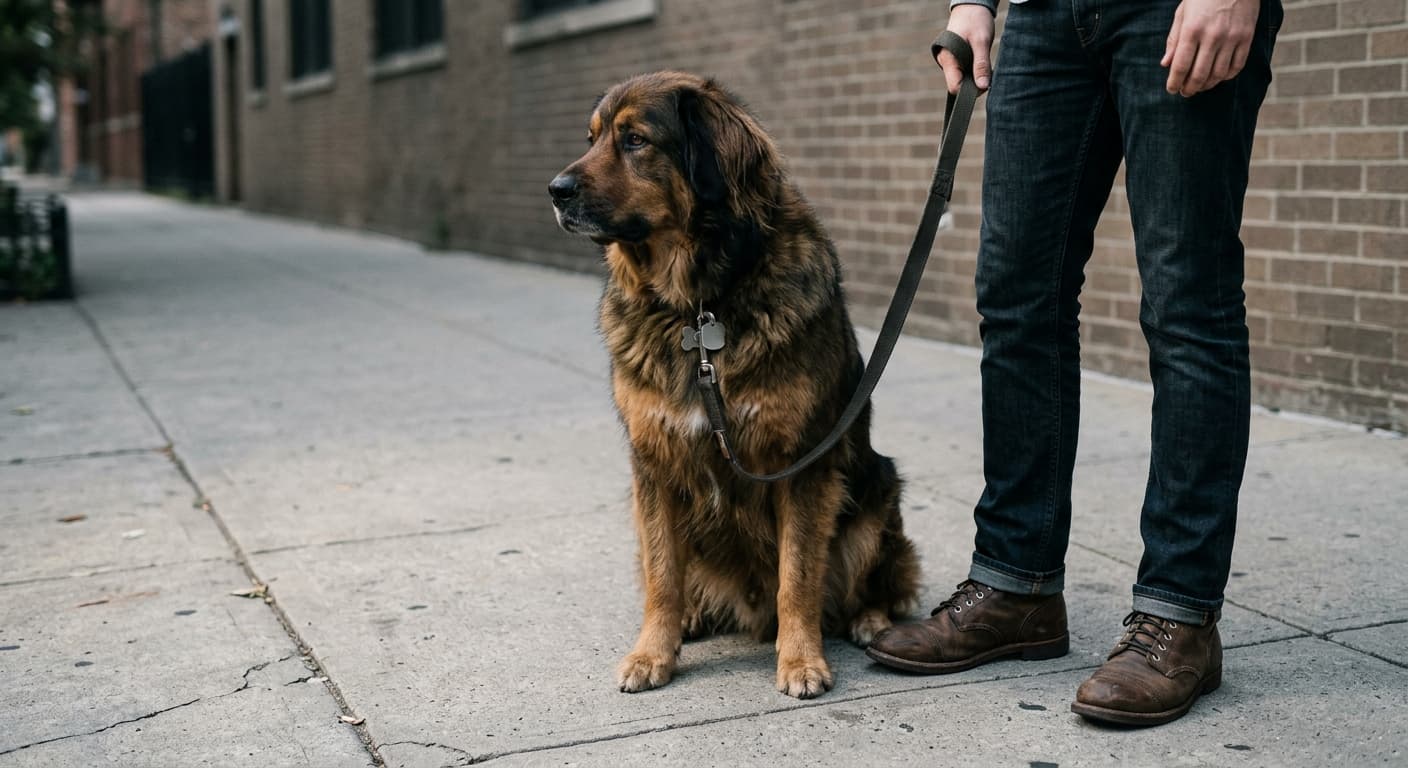
Under N.J.S.A. 4:19-16, New Jersey holds dog owners strictly liable for bite injuries when the victim was in a public place or lawfully on private property. Victims do not need to prove the owner knew the dog was dangerous, and the one-bite rule does not apply.
Estimate your claim: Use our free New Jersey Dog Bite Settlement Calculator to see a rough settlement range based on the medical bills, the bite location, the victim's age, and New Jersey's liability rule.
How New Jersey Dog Bite Liability Works
New Jersey is a strict liability state for dog bite injuries. Under N.J.S.A. 4:19-16, the owner of any dog that bites a person is liable for damages, regardless of whether the owner knew the dog had dangerous tendencies.

This means a dog bite victim does not need to prove:
- The owner was negligent in controlling the dog
- The owner knew the dog had bitten someone before
- The dog had previously shown aggressive behavior
The statute eliminates the "one-bite rule" that some other states follow. In those states, an owner only becomes liable after the dog has bitten once and the owner is on notice. New Jersey provides broader protection for victims by holding owners responsible from the very first bite.
Three Elements a Victim Must Prove
To recover damages under N.J.S.A. 4:19-16, a victim must establish three things:
- The defendant owned the dog. The statute applies specifically to owners, not to temporary caretakers or dog walkers in most situations.
- The dog bit the victim. The statute covers bites specifically. Other injuries caused by dogs (such as being knocked down) may require a separate negligence claim.
- The victim was in a public place or lawfully on private property. This is the key limitation of the statute.
Who Counts as "Lawfully on Private Property"
The statute defines a person as lawfully on private property when they are:
- Performing a duty imposed by New Jersey state law or federal law, including U.S. postal regulations (mail carriers, utility workers, police officers)
- On the property by express or implied invitation of the property owner (guests, delivery workers, contractors, neighbors visiting)
A person who is trespassing at the time of the bite generally cannot recover under this strict liability statute. However, a trespasser may still pursue a claim under general negligence principles in some circumstances.
Damages Available to Dog Bite Victims
Dog bite victims in New Jersey can recover both economic and non-economic damages. Because the state follows strict liability, victims do not need to prove the owner was at fault to collect compensation.
Economic Damages
| Category | Examples |
|---|---|
| Medical expenses | Emergency room visits, surgery, stitches, antibiotics, rehabilitation |
| Future medical costs | Plastic surgery for scarring, ongoing therapy, follow-up procedures |
| Lost wages | Time missed from work during recovery |
| Lost earning capacity | Reduced ability to work due to permanent injury |
| Property damage | Torn clothing, broken personal items |
Non-Economic Damages
| Category | Description |
|---|---|
| Pain and suffering | Physical pain from the bite and medical treatment |
| Emotional distress | Anxiety, fear of dogs, PTSD, nightmares |
| Scarring and disfigurement | Permanent visible scars, especially on the face or hands |
| Loss of enjoyment of life | Inability to participate in activities due to injury or fear |
New Jersey does not cap damages in dog bite cases. The amount of compensation depends on the severity of the injury, the extent of medical treatment, and the long-term impact on the victim.
Comparative Negligence in Dog Bite Cases
New Jersey follows a modified comparative negligence system under N.J.S.A. 2A:15-5.1. This rule applies to dog bite claims and can reduce or eliminate a victim's recovery.
Here is how it works:
- If the victim is 50% or less at fault, damages are reduced by the victim's percentage of fault. For example, a victim found 30% at fault for a $100,000 judgment would receive $70,000.
- If the victim is 51% or more at fault, the victim recovers nothing.
Common situations where comparative negligence may apply include:
- The victim was teasing, tormenting, or hitting the dog
- The victim ignored warning signs or fencing
- The victim reached into a car or enclosure to touch the dog
Special rule for children: Under New Jersey law, children under the age of seven are presumed incapable of negligence. Children aged four and younger carry a near-irrebuttable presumption of no negligence. This makes it very difficult for a dog owner to argue comparative fault when the victim is a young child.
Legal Defenses Available to Dog Owners
Even under strict liability, dog owners in New Jersey can raise several defenses.
Trespassing
If the victim was trespassing on the owner's property at the time of the bite, the strict liability statute does not apply. The owner must show the victim was not invited and was not performing a legal duty on the property.
Provocation
If the victim provoked the dog through teasing, hitting, tormenting, or other aggressive behavior, the owner may avoid liability. The provocation must be sufficient to cause a normally calm dog to bite. Minor actions like accidentally stepping on a dog's tail typically do not constitute provocation.
Assumption of Risk Is No Longer a Defense Against Dog Professionals
New Jersey once recognized an exception that barred strict liability claims by independent contractors hired to care for a dog. The New Jersey Supreme Court eliminated it in Goldhagen v. Pasmowitz, 247 N.J. 580 (2021), a case brought by a groomer and kennel assistant. The Court held that "[t]he Dog Bite Statute's strict liability standard applies to the claim of an independent contractor who agrees to care for a dog," and that the statute's plain language "reveals no legislative intent to recognize an exception to strict liability under the Dog Bite Statute for any category of injured plaintiffs." That reversed the independent contractor exception the Appellate Division had recognized in Reynolds v. Lancaster County Prison, 325 N.J. Super. 298 (App. Div. 1999).
A veterinarian, groomer, kennel worker, or other dog professional therefore has the same strict liability claim as any other bite victim. Their experience with dogs, the warnings the owner gave, and their handling of the dog are relevant only to an allocation of fault under the Comparative Negligence Act. New Jersey's Model Civil Jury Charge 5.60A now cites Goldhagen for that point.
Comparative Negligence
As described above, the owner can argue the victim's own conduct contributed to the bite, reducing or eliminating the damages owed.
Statute of Limitations for Dog Bite Claims
Under N.J.S.A. 2A:14-2, victims have two years from the date of the dog bite to file a personal injury lawsuit. This deadline is firm, and missing it will almost certainly bar the claim.
Important exceptions to know:
- Minors: If the victim was under 18 at the time of the bite, the two-year clock does not start until the victim turns 18. The victim then has until age 20 to file.
- Government entities: Claims against government entities (for example, a police dog bite or a dog at a government facility) require filing a tort claim notice within 90 days of the incident under the New Jersey Tort Claims Act.
- Discovery rule: In rare cases where the full extent of an injury is not immediately apparent, the statute of limitations may begin when the victim discovers or should have discovered the injury.
The Vicious and Potentially Dangerous Dog Act
New Jersey's Vicious and Potentially Dangerous Dog Act (N.J.S.A. 4:19-17 through 4:19-37) creates a separate legal framework for dogs that pose a threat to public safety. This law operates alongside the strict liability bite statute.
Potentially Dangerous Dog Designation
A municipal court can declare a dog "potentially dangerous" under N.J.S.A. 4:19-23 if it finds, by clear and convincing evidence, that the dog:
- Caused bodily injury to a person during an unprovoked attack and poses a serious threat of serious bodily injury or death to a person
- Caused serious bodily injury to another domestic animal or killed another domestic animal, and poses a serious threat of serious bodily injury or death to a person, or a serious threat of death to another domestic animal
"Bodily injury" and "serious bodily injury" are separately defined in the statute by reference to N.J.S.A. 2C:11-1, so the two thresholds are not interchangeable.
A third criterion (a dog trained, tormented, badgered, baited, or encouraged to engage in unprovoked attacks) was removed from the statute by a 2019 amendment (P.L.2019, c.82) and is no longer a basis for a potentially dangerous designation.
Statutory Exceptions That Block a Designation
N.J.S.A. 4:19-23(b) bars a potentially dangerous declaration entirely in five situations. A dog shall not be declared potentially dangerous for:
- Causing bodily injury to a person if the dog was provoked
- Causing serious bodily injury to, or killing, a domestic animal if that domestic animal was the aggressor
- Causing bodily injury to a person who was committing or attempting to commit a crime or offense against the owner or the person with custody or control of the dog, or a trespass or other criminal offense on that person's property
- Causing bodily injury to a person or domestic animal who was abusing, assaulting, or physically threatening the dog or the dog's offspring
- Causing bodily injury to a person who was intervening between two or more dogs engaged in aggressive behavior or fighting
On the provocation exception, the municipality bears the burden of proving that the dog was not provoked. For an owner facing a designation hearing, these exceptions are the operative defenses.
Requirements for Owners of Potentially Dangerous Dogs
Once a dog is declared potentially dangerous, the owner must comply with strict conditions under N.J.S.A. 4:19-24:
- Apply for a special municipal potentially dangerous dog license and red identification tag
- Have a municipal registration number tattooed on the dog in a prominent location
- Display a conspicuous warning sign on the property indicating a potentially dangerous dog is present
- Build and maintain a secure enclosure with sound sides, top, and bottom, inside a fence at least six feet high and separated by at least three feet from the confined area
- Keep the dog securely muzzled and restrained with an approved tether whenever outside the enclosure
- Maintain liability insurance in an amount set by the municipal court to cover any damage or injury caused by the dog
The liability insurance policy must name the municipality as an additional insured so the town receives notice if the policy is canceled, terminated, or expires.
Vicious Dog Designation
A dog is declared "vicious" under N.J.S.A. 4:19-22 if the court finds, by clear and convincing evidence, that the dog killed a person or caused serious bodily injury to a person. The exception is if the dog was provoked, and the municipality bears the burden of proving the dog was not provoked.
If a dog is declared vicious, the court may:
- Order the owner to comply with restrictions at least as strict as those for potentially dangerous dogs
- Order the dog to be euthanized in a humane and expeditious manner
No dog may be euthanized while an appeal is pending.
Breed-Specific Legislation in New Jersey
New Jersey is one of approximately 22 states that have enacted state preemption laws prohibiting municipalities from passing breed-specific legislation (BSL). Under the Vicious and Potentially Dangerous Dog Act, a dog cannot be declared dangerous based on breed alone.
This means New Jersey municipalities cannot:
- Ban specific breeds such as pit bulls, Rottweilers, or German Shepherds
- Impose special licensing or insurance requirements based solely on breed
- Require breed-specific muzzling or confinement rules
All dangerous dog determinations in New Jersey must be based on the individual dog's behavior, not its breed. Some older municipal ordinances that predate the state preemption may still exist on the books, but they are unenforceable under current state law.
Landlord Liability for Dog Bites in New Jersey
The strict liability statute (N.J.S.A. 4:19-16) applies specifically to dog owners. Landlords who do not own the dog are not automatically liable under this statute. However, landlords can face liability under general negligence principles.
A landlord may be held liable if:
- The landlord knew the tenant's dog was dangerous through complaints, prior incidents, or the dog's designation as potentially dangerous or vicious
- The landlord had the authority to remove the dog under the lease or local ordinances
- The landlord failed to take action to protect tenants, guests, or the public
- The attack occurred in a common area such as a hallway, shared yard, or parking lot that the landlord maintains
The two published decisions that set the standard are Linebaugh v. Hyndman, 213 N.J. Super. 117 (App. Div. 1986), which held that a landlord who permits a tenant to harbor a vicious animal and fails to take curative measures may be liable under ordinary negligence principles, and Hyun Na Seo v. Yozgadlian, 320 N.J. Super. 68 (App. Div. 1999), which held that "in the absence of proof that the landlord was aware of the dog's vicious propensities, or perhaps that the dog was inherently vicious, liability should not be imposed upon the landlord." Knowledge is the hinge: once a landlord becomes aware of dangerous behavior, the duty to act arises. Landlords should include pet policies in lease agreements and consider requiring tenants with dogs to carry renter's insurance with adequate liability coverage.
Criminal Penalties for Dog Owners
Beyond civil liability, New Jersey dog owners can face criminal consequences when their dog causes serious harm.
Under the Vicious and Potentially Dangerous Dog Act
The Act is enforced through the municipal court, not through the criminal code. Under N.J.S.A. 4:19-29, an owner of a potentially dangerous dog who is found by clear and convincing evidence to have violated the Act, a rule adopted under it, or a court order faces:
- A fine of not more than $1,000 per day of violation, with each day the violation continues counting as a separate violation
- Seizure and impoundment of the dog by an animal control officer
- A municipal court order that the seized and impounded dog be destroyed in an expeditious and humane manner
The Act does not authorize imprisonment, community service, or a ban on owning dogs.
Under General Criminal Law
Separate charges under the Code of Criminal Justice can apply where a dog owner's own conduct is criminal. New Jersey has no offense called "reckless endangerment," so the charges that actually reach this conduct are:
- Assault under N.J.S.A. 2C:12-1, which covers purposely, knowingly, or recklessly causing bodily injury to another, and which can reach an owner who sets a dog on someone or whose recklessness with a dangerous dog results in injury
- Manslaughter under N.J.S.A. 2C:11-4, where a dog kills a person and the owner acted recklessly, or acted recklessly under circumstances manifesting extreme indifference to human life
The severity of criminal charges depends on the circumstances, including the extent of injury, the owner's prior knowledge of the dog's dangerous tendencies, and whether the owner was in compliance with applicable laws.
Steps to Take After a Dog Bite in New Jersey
If you are bitten by a dog in New Jersey, these steps help protect your health and your legal rights:
- Get medical attention immediately. Dog bites carry risks of infection, nerve damage, and scarring. Keep all medical records and receipts.
- Report the bite to local animal control. New Jersey municipalities have animal control officers who investigate dog bites and can initiate dangerous dog proceedings.
- File a police report. A police report creates an official record of the incident that supports any future legal claim.
- Document everything. Photograph your injuries, the location, the dog (if safe to do so), and any torn clothing or damaged property.
- Gather witness information. Get names, phone numbers, and statements from anyone who saw the attack.
- Identify the dog and owner. Obtain the owner's name, address, phone number, and homeowner's or renter's insurance information.
- Preserve evidence. Keep torn clothing, bloody bandages, and other physical evidence in a safe place.
- Watch the filing deadline. You have two years from the date of the bite to file a lawsuit. Claims against government entities require a 90-day tort claim notice.
Dog Owner Responsibilities Under New Jersey Law
New Jersey imposes several responsibilities on all dog owners, not just owners of dangerous dogs:
- Leash laws: Most New Jersey municipalities have local ordinances requiring dogs to be leashed in public areas. Violations can result in fines and strengthen a victim's claim after a bite.
- Rabies vaccination: New Jersey requires rabies vaccination for all dogs under N.J.A.C. 8:23A. Failure to vaccinate can result in penalties.
- Licensing: Dogs must be licensed in the municipality where the owner resides. Licensing ensures vaccination records are current and helps identify owners after incidents.
- Confinement: Dogs must be securely confined on the owner's property or under the owner's control in public.
Violating these requirements does not create automatic liability for a bite, but it can serve as evidence of negligence in a lawsuit and may result in separate municipal penalties.
More New Jersey Laws
Frequently Asked Questions
Is New Jersey a strict liability state for dog bites?
Yes. Under N.J.S.A. 4:19-16, dog owners in New Jersey are strictly liable for bite injuries when the victim was in a public place or lawfully on private property. The victim does not need to prove the owner knew the dog was dangerous or had bitten anyone before.
How long do I have to file a dog bite lawsuit in New Jersey?
You have two years from the date of the bite to file a personal injury lawsuit under N.J.S.A. 2A:14-2. If the victim was a minor, the two-year period does not begin until the victim turns 18. Claims against government entities require a tort claim notice within 90 days.
Can I recover damages if I was partially at fault for a dog bite in New Jersey?
Yes, as long as you were not more than 50% at fault. New Jersey follows a modified comparative negligence rule under N.J.S.A. 2A:15-5.1. Your damages will be reduced by your percentage of fault. If you are 51% or more at fault, you cannot recover anything.
What happens to a dog that bites someone in New Jersey?
The outcome depends on the severity of the attack. Under N.J.S.A. 4:19-23, a dog that causes bodily injury during an unprovoked attack and poses a serious threat of serious bodily injury or death may be declared potentially dangerous, which requires the owner to register the dog, maintain an enclosure, muzzle the dog in public, and carry liability insurance. A dog that kills or causes serious bodily injury to a person may be declared vicious and could be ordered euthanized. The statute also lists exceptions, including provocation, that block a potentially dangerous declaration.
Can my landlord be sued if my dog bites someone in New Jersey?
Possibly. The strict liability statute applies to dog owners, not landlords. However, a landlord can be held liable under ordinary negligence principles if the landlord knew the dog was dangerous, had authority to remove it, and failed to act, as in Linebaugh v. Hyndman. Under Hyun Na Seo v. Yozgadlian, liability should not be imposed where there is no proof the landlord was aware of the dog's vicious propensities, but once a landlord is aware of a danger, the duty to take reasonable steps arises.
Injured in New Jersey? Get a free case review from a personal-injury attorney
If someone else's negligence caused your injury, you may be owed compensation for medical bills, lost wages, and pain and suffering. Get a free, no-obligation review from a New Jersey personal-injury attorney. Most work on contingency, so there is no upfront cost.
Updates
Corrected the assumption of risk section to reflect Goldhagen v. Pasmowitz, replaced unsupported criminal penalties with the actual municipal-court penalties under N.J.S.A. 4:19-29, corrected the potentially dangerous dog threshold, added the statutory exceptions in N.J.S.A. 4:19-23(b), and swapped an unpublished landlord case for the published controlling decisions.
Independently fact-checked against the cited primary sources; governing law re-checked for recent changes
Removed a potentially dangerous dog criterion (training/tormenting/baiting into attacks) that was repealed from N.J.S.A. 4:19-23 by a 2019 amendment and is no longer current law.
Governing law re-checked for recent changes
Reviewed and approved by an editor
The Law Behind This Article
This article rests on the statutory provisions below, held in our own legal record and retrieved from the official source. Tap a section to read the operative text.
New Jersey Statutes (Unannotated)
§ 4:19-16Liability of owner regardless of viciousness of dogIn forcecited in 2 of our articles
The owner of any dog which shall bite a person while such person is on or in a public place, or lawfully on or in a private place, including the property of the owner of the dog, shall be liable for such damages as may be suffered by the person bitten, regardless of the former viciousness of such dog or the owner's knowledge of such viciousness. For the purpose of this section, a person is lawfully upon the private property of such owner when he is on the property in the performance of any duty imposed upon him by the laws of this state or the laws or postal regulations of the United States, or when he is on such property upon the invitation, express or implied, of the owner thereof.
Official text (excerpt) · last checked 2026-08-28 · Read the full text in our law library · Verify at lis.njleg.state.nj.us
Cited in 31 court opinions in our collectionLatest citing opinion in our collection: 2025
In the courts (editorial summary, independently checked):New Jersey courts apply N.J.S.A. 4:19-16 as absolute liability. DeRobertis v. Randazzo (1983) held a plaintiff must prove ownership, a bite, and that he was in a public place or lawfully on the owner's property; Pingaro v. Rossi (1999) held the victim's negligence should not have gone to the jury absent evidence she incited the dog.
Opinions citing this section in our collection:
- DeRobertis v. Randazzo (Supreme Court of New Jersey 1983, 94 N.J. 144)✓A five-year-old was bitten by a chained German shepherd at an auto body shop his father did towing work for; the court held section 4:19-16 requires proof the child was lawfully in the area where the dog was kept, a jury question, and ordered a new trial.
- Jannuzzelli v. Wilkens (New Jersey Superior Court Appellate Division 1978, 158 N.J. Super. 36)✓A three-year-old was hurt on the face and neck by a chained dog; the jury found she was scratched rather than bitten, and the court held section 4:19-16 therefore did not apply, though the owner's admitted knowledge that the dog jumped and scratched made him liable at common law.
- Mascola v. Mascola (New Jersey Superior Court Appellate Division 1979, 168 N.J. Super. 122)✓A six-year-old was bitten by her uncle's Doberman while her parents kept it during his trip; strictly construing the statute, the court held a temporary keeper is not an owner under section 4:19-16, so the strict liability count failed and only the common-law claim remained.
Identified automatically from the court opinions citing this section — not a ranking of which case controls.
Also relied on in: Dog Bite Laws by State: Liability and Victim Rights
§ 4:19-22Dog declared vicious by municipal court; conditions.In force
6. a. The municipal court shall declare the dog vicious if it finds by clear and convincing evidence that the dog: (1) killed a person or caused serious bodily injury to a person; or (2) (Deleted by amendment, P.L.2019, c.82). b. A dog shall not be declared vicious for inflicting death or serious bodily injury upon a person if the dog was provoked. The municipality shall bear the burden of proof to demonstrate that the dog was not provoked. c. If the municipal court declares a dog to be vicious, and no appeal is made of this ruling pursuant to section 9 of P.L.1989, c.307 (C.4:19-25), the court may order: (1) the dog's owner to comply with certain restrictions to protect the public that are at least as stringent as the requirements for potentially dangerous dogs pursuant to section 8 of P.L.1989, c.307 (C.4:19-24) and section 12 of P.L.1989, c.307 (C.4:19-28); or (2) the dog to be euthanized in a humane and expeditious manner, except that no dog may be euthanized during the pendency of an appeal. d. As used in this section, "serious bodily injury" means serious bodily injury as defined in subsection b. of N.J.S.2C:11-1.
Official text (excerpt) · last checked 2026-08-01 · Read the full text in our law library · Verify at lis.njleg.state.nj.us
Cited in 1 court opinions in our collectionLatest citing opinion in our collection: 1996
Opinions citing this section in our collection:
- State v. Smith (New Jersey Superior Court Appellate Division 1996, 295 N.J. Super. 399)“…l Court finding her pet dog, Big Head, to be vicious under N.J.S.A. 4:19-22. If the appeal is unsuccessful, the dog…”
Identified automatically from the court opinions citing this section — not a ranking of which case controls.
§ 4:19-23Dog declared potentially dangerous; conditions.In force
7. a. The municipal court shall declare a dog to be potentially dangerous if it finds by clear and convincing evidence that the dog: (1) caused bodily injury to a person during an unprovoked attack, and poses a serious threat of serious bodily injury or death to a person; (2) caused serious bodily injury to another domestic animal or killed another domestic animal, and (a) poses a serious threat of serious bodily injury or death to a person, or (b) poses a serious threat of death to another domestic animal; or (3) (Deleted by amendment, P.L.2019, c.82).
Official text (excerpt) · last checked 2026-08-01 · Read the full text in our law library · Verify at lis.njleg.state.nj.us
Cited in 3 court opinions in our collectionLatest citing opinion in our collection: 2025
Opinions citing this section in our collection:
- State v. Smith (New Jersey Superior Court Appellate Division 1996, 295 N.J. Super. 399)“…serious threat of bodily injury or death to a person.... ” N.J.S.A. 4:19-23(a)(l). The City of Hoboken failed to…”
- State of New Jersey v. Deepa Rao (New Jersey Superior Court Appellate Division 2025)“…n found defendant's dog, Koda, potentially dangerous under N.J.S.A. 4:19-23 and imposed the required mandatory pena…”
- STATE OF NEW JERSEY VS. THOMAS HEROLD (17-029, MORRIS COUNTY AND STATEWIDE) (New Jersey Superior Court Appellate Division 2019)“…determine if Dozier was a potentially dangerous dog under N.J.S.A. 4:19-23. At the municipal court trial, the inv…”
Identified automatically from the court opinions citing this section — not a ranking of which case controls.
§ 4:19-24Registration of potentially dangerous dog; conditionsIn force
8. If the municipal court declares the dog to be potentially dangerous, it shall issue an order and a schedule for compliance which, in part: a. shall require the owner to comply with the following conditions: (1) to apply, at his own expense, to the municipal clerk or other official designated to license dogs pursuant to section 2 of P.L.1941, c.151 (C.4:19-15.2), for a special municipal potentially dangerous dog license, municipal registration number, and red identification tag issued pursuant to section 14 of this act. The owner shall, at his own expense, have the registration number tattooed upon the dog in a prominent location. A potentially dangerous dog shall be impounded until the owner obtains a municipal potentially dangerous dog license, municipal registration number, and red identification tag; (2) to display, in a conspicuous manner, a sign on his premises warning that a potentially dangerous dog is on the premises.
Official text (excerpt) · last checked 2026-08-01 · Read the full text in our law library · Verify at lis.njleg.state.nj.us
Cited in 2 court opinions in our collectionLatest citing opinion in our collection: 2025
Opinions citing this section in our collection:
- State v. Smith (New Jersey Superior Court Appellate Division 1996, 295 N.J. Super. 399)“…dangerous" would trigger compliance with the provisions of N.J.S.A. 4:19-24. The municipal court judge, in v…”
- State of New Jersey v. Deepa Rao (New Jersey Superior Court Appellate Division 2025)“…tion number tattooed upon the dog in a prominent location." N.J.S.A. 4:19-24(a)(1). Defendant requested the j…”
Identified automatically from the court opinions citing this section — not a ranking of which case controls.
§ 4:19-17Findings, declarationsIn force
The Legislature finds and declares that certain dogs are an increasingly serious and widespread threat to the safety and welfare of citizens of this State by virtue of their unprovoked attacks on, and associated injury to, individuals and other animals; that these attacks are in part attributable to the failure of owners to confine and properly train and control these dogs; that existing laws at the local level inadequately address this problem; and that it is therefore appropriate and necessary to impose a uniform set of State requirements on the owners of vicious or potentially dangerous dogs.
Official text (excerpt) · last checked 2026-08-01 · Read the full text in our law library · Verify at lis.njleg.state.nj.us
Cited in 6 court opinions in our collectionLatest citing opinion in our collection: 2021
Opinions citing this section in our collection:
- Halfond v. County of Bergen (New Jersey Superior Court Appellate Division 1995, 279 N.J. Super. 149)“…proceedings brought by defendant Borough of Haworth under N.J.S.A. 4:19-17 et seq. to declare vicious an Akita d…”
- Turner v. ASSOC. HUMANE SOCIETIES, INC. (New Jersey Superior Court Appellate Division 2007, 396 N.J. Super. 582)“…om humane destruction to mandatory licensure of such dogs. N.J.S.A. 4:19-17. Moreover, in adopting our "dog bite" s…”
- State v. Smith (New Jersey Superior Court Appellate Division 1996, 295 N.J. Super. 399)“…to the New Jersey judiciary: namely, the interpretation of N.J.S.A. 4:19-17 through 4:19-36 (the Vicious and Potent…”
Identified automatically from the court opinions citing this section — not a ranking of which case controls.
Search our full record of US law — 2.1 million sections, every state + federal →
Sources and References
- N.J.S.A. 4:19-16 - Liability of owner regardless of viciousness of dog(law.justia.com)
- New Jersey Courts - Dog Bite Liability Jury Charge (N.J.S.A. 4:19-16)(njcourts.gov).gov
- N.J.S.A. 2A:15-5.1 - Comparative Negligence(law.justia.com)
- N.J.S.A. 4:19-22 - Dog declared vicious by municipal court(law.justia.com)
- N.J.S.A. 4:19-23 - Dog declared potentially dangerous(law.justia.com)
- N.J.S.A. 4:19-24 - Registration of potentially dangerous dog; conditions(law.justia.com)
- New Jersey Department of Health - Rabies Information(nj.gov).gov
- Goldhagen v. Pasmowitz, 247 N.J. 580 (2021) - New Jersey Supreme Court opinion (A-17-20)(njcourts.gov)
- Faircloth v. Beville, App. Div. Docket A-0447-16T1 (2018) - reciting the published landlord-liability standard of Linebaugh v. Hyndman and Hyun Na Seo v. Yozgadlian(njcourts.gov)