
Washington
Washington Dog Bite Laws: Liability and Victim Rights
Independently fact-checked against primary sources (last audited August 23, 2026). · Reviewed by the RecordingLaw editorial team. · Law checked current as of August 23, 2026. · 11 primary sources cited on this page. How we verify our legal content
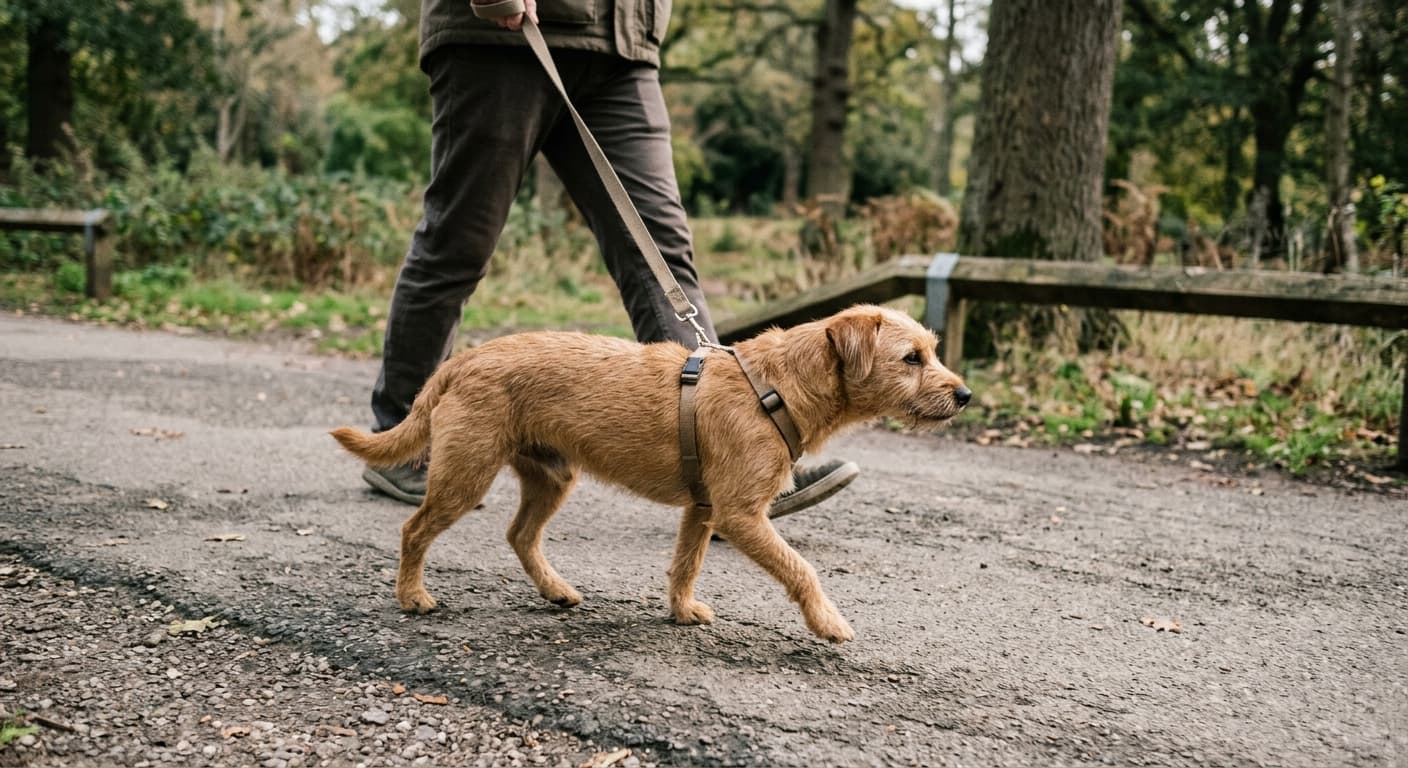
Washington holds dog owners strictly liable for bite injuries under RCW 16.08.040. An owner is responsible whenever a dog bites someone in a public place or lawfully on private property, regardless of whether the dog had bitten before or the owner knew of any aggressive tendency.
Estimate your claim: Use our free Washington Dog Bite Settlement Calculator to see a rough settlement range based on the medical bills, the bite location, the victim's age, and Washington's liability rule.
Overview of Washington Dog Bite Laws
Washington state holds dog owners strictly liable when their dog bites someone. Under RCW 16.08.040, the owner of any dog that bites a person while that person is in a public place, or lawfully on private property (including the dog owner's property), is liable for damages. This liability applies regardless of the dog's prior behavior or whether the owner had any knowledge of viciousness.

This strict liability framework means a bite victim does not need to prove the owner was negligent or that the dog had bitten before. Washington's approach differs from states that follow the so-called "one-bite rule," where owners only become liable after the first known aggressive incident.
The statute covers bites specifically. For non-bite injuries caused by dogs (such as a dog knocking someone down), victims may pursue claims under general negligence principles rather than the strict liability statute.
Who Qualifies as an "Owner" Under Washington Law
Washington's dog bite statute applies to the "owner" of the dog, but RCW 16.08.040 does not define that term. The only definition of "owner" in the chapter sits in RCW 16.08.070(7), which covers "any person, firm, corporation, organization, or department possessing, harboring, keeping, having an interest in, or having control or custody of an animal." By its own opening sentence, that definition applies only throughout RCW 16.08.070 through 16.08.100, the dangerous dog provisions. It does not, on the face of the statute, control who counts as an owner under the strict liability section.
That leaves the reach of "owner" in RCW 16.08.040 to be worked out case by case. If a friend is dog-sitting and the dog bites a mail carrier, a victim may argue the friend was harboring or keeping the dog, but whether the strict liability statute extends that far is a question for the court rather than something the text answers. Victims in that situation commonly plead ordinary negligence against the person who was controlling the dog alongside a strict liability claim against the titled owner.
What Victims Need to Prove
To recover damages under Washington's strict liability statute, a dog bite victim needs to establish three elements:
- The defendant was the owner of the dog
- The dog bit the victim
- The victim was in a public place or lawfully on private property at the time of the bite
The victim does not need to show that the owner knew the dog was dangerous, that the owner failed to take precautions, or that the dog had a history of aggression. The strict liability standard removes those burdens from the victim's case.
Lawful Presence on Private Property
A victim is considered "lawfully" on private property when they have express or implied permission to be there. Examples include:
- Mail carriers, delivery drivers, and utility workers performing their jobs
- Guests, neighbors, and social visitors
- Contractors, repair workers, and service providers
- Children who enter an unfenced yard (courts often treat young children differently than adult trespassers)
Damages Available to Dog Bite Victims
Washington law does not place a cap on compensatory damages for dog bite injuries. Victims may recover both economic and non-economic damages.
Economic Damages
| Category | Examples |
|---|---|
| Medical expenses | Emergency room visits, surgery, stitches, physical therapy, infection treatment |
| Future medical costs | Reconstructive surgery, scar revision, ongoing therapy |
| Lost wages | Time missed from work during recovery |
| Lost earning capacity | Reduced ability to work due to permanent injury |
| Property damage | Torn clothing, damaged personal items, veterinary bills if a pet was also injured |
Non-Economic Damages
| Category | Description |
|---|---|
| Pain and suffering | Physical pain from the bite and treatment |
| Emotional distress | Anxiety, fear of dogs, PTSD, nightmares |
| Scarring and disfigurement | Permanent marks, especially on the face or hands |
| Loss of enjoyment of life | Inability to participate in activities due to injury or fear |
Because Washington imposes strict liability, victims can recover these damages without proving the owner acted carelessly or knew the dog posed a risk.
Defenses Available to Dog Owners
Even under strict liability, Washington law provides several defenses that can reduce or eliminate a dog owner's responsibility.
Provocation (RCW 16.08.060)
RCW 16.08.060 states that proof of provocation of the attack by the injured person is a "complete defense" to a damages action. This means if the owner can show the victim provoked the dog, the owner owes nothing.
Provocation typically involves intentional actions such as hitting, kicking, teasing, or tormenting the dog. Accidental actions (like stepping on a dog's tail) generally do not qualify as provocation.
Trespassing
The strict liability statute requires the victim to be in a public place or "lawfully" on private property. If the victim was trespassing at the time of the bite, the owner may not be strictly liable. However, trespassing victims could still bring a negligence claim in some circumstances.
Courts often apply different standards to children, particularly young children who may not understand property boundaries.
Comparative Fault (RCW 4.22.005)
Washington follows a pure comparative negligence system under RCW 4.22.005. If the victim's own actions contributed to the bite, a jury may assign a percentage of fault to the victim, and the damages award is reduced by that percentage.
For example, if a jury finds the victim 25% at fault and total damages equal $100,000, the victim recovers $75,000. Under Washington's "pure" system, a victim can recover some compensation even if found more than 50% at fault, though the award is reduced accordingly.
Important note: Washington law holds that children under six years old cannot be found negligent.
Police Dog Exception
RCW 16.08.040 does not apply to the lawful application of a police dog as defined in RCW 4.24.410. If a police dog bites someone during the course of official duties, the strict liability statute does not apply.
Dangerous Dog Laws in Washington (RCW 16.08.070 - 16.08.100)
Washington has a detailed statutory framework for classifying and regulating dangerous dogs. These provisions exist alongside the strict liability statute and impose additional requirements on owners of dogs that have demonstrated aggressive behavior.
Potentially Dangerous Dog (RCW 16.08.070)
Under RCW 16.08.070, a "potentially dangerous dog" is any dog that, without provocation:
- Bites a human or domestic animal on public or private property
- Chases or approaches a person on public grounds in a menacing fashion or apparent attitude of attack
- Has a known propensity or tendency to attack unprovoked, cause injury, or threaten the safety of humans or domestic animals
Potentially dangerous dogs are regulated by local, municipal, and county ordinances under RCW 16.08.090.
Dangerous Dog (RCW 16.08.070)
A "dangerous dog" under the same statute is any dog that:
- Inflicts severe injury on a human without provocation on public or private property
- Kills a domestic animal without provocation while off the owner's property
- Has been previously found to be potentially dangerous (because of injury inflicted on a human), and the owner received notice, yet the dog again aggressively bites, attacks, or endangers human safety
"Severe injury" means any physical injury resulting in broken bones or disfiguring lacerations requiring multiple sutures or cosmetic surgery.
Registration and Insurance Requirements (RCW 16.08.080)
Owners of dogs declared dangerous must comply with strict requirements under RCW 16.08.080:
| Requirement | Details |
|---|---|
| Certificate of registration | Issued by animal control after the owner provides evidence of proper enclosure |
| Warning signs | Clearly visible signs warning of a dangerous dog, including symbols to inform children |
| Liability insurance or surety bond | Minimum $250,000 coverage for personal injuries inflicted by the dog |
| Proper enclosure | Securely confined indoors or in a locked pen designed to prevent escape and entry of children |
It is unlawful to have a dangerous dog in Washington without a valid certificate of registration.
Restraint Requirements (RCW 16.08.090)
Under RCW 16.08.090, owners of dangerous dogs cannot permit the dog outside its proper enclosure unless the dog is:
- Muzzled with a muzzle that prevents biting but does not injure the dog or interfere with its vision or breathing
- Restrained by a substantial chain or leash
- Under the physical control of a responsible person
Penalties for Dangerous Dog Attacks (RCW 16.08.100)
RCW 16.08.100 establishes serious criminal penalties for owners of dangerous dogs:
- Class C felony: If a dangerous dog attacks or bites a person or domestic animal and the owner has a prior conviction under Chapter 16.08, the owner faces a class C felony. The dog is confiscated, quarantined, and destroyed.
- Class C felony for severe injury or death: The owner of any dog (whether or not previously declared dangerous) that aggressively attacks and causes severe injury or death to a human faces a class C felony upon conviction.
- Confiscation for non-compliance: A dangerous dog is immediately confiscated if not validly registered or if the owner lacks required insurance. The owner has 20 days to correct deficiencies before the dog is destroyed.
Affirmative Defenses Under RCW 16.08.100
Owners charged under the dangerous dog statute may assert an affirmative defense if they can prove by a preponderance of the evidence that they complied with all ownership requirements and that the victim trespassed or provoked the dog without justification.
Statute of Limitations for Dog Bite Claims
Under RCW 4.16.080, Washington provides a three-year statute of limitations for personal injury claims, including dog bite cases. The clock starts running on the date of the bite.
Key considerations for the filing deadline:
- Minors: Under RCW 4.16.190, if the victim was under 18 at the time of the bite, the statute of limitations may be tolled (paused) until the victim turns 18, at which point the three-year period begins
- Government claims: Claims against government entities (such as bites by government-owned dogs that are not police dogs) add a procedural step rather than a shorter deadline. Under RCW 4.96.020, a tort claim against a local government must be presented on the standard claim form within the same limitations period that applies to the lawsuit, and no suit may be filed until 60 calendar days after presentment. The limitations period is tolled during those 60 days
- Discovery rule: In rare cases where an injury is not immediately apparent, the statute may begin running from the date the victim discovered or reasonably should have discovered the injury
Filing after the three-year deadline typically results in the court dismissing the case permanently.
Landlord Liability for Dog Bites in Washington
Washington courts have generally protected landlords from liability for bites by a tenant's dog. The Washington Supreme Court held in Frobig v. Gordon that landlords have no duty to protect third parties from a tenant's lawfully owned but dangerous animals, even when the landlord knows the animal is present.
However, a landlord may face liability in limited circumstances:
- Harboring or keeping: If a landlord feeds, walks, or otherwise cares for a tenant's dog, a court may consider the landlord a "harborer" or "keeper" of the animal. In that case, the landlord could be strictly liable for bites, just as the owner would be.
- Control over common areas: If a landlord has the ability to exclude the dog from common areas (hallways, courtyards, parking lots) and fails to act after learning the dog is dangerous, a negligence claim may be possible.
Landlords who allow pets on rental properties should consider requiring tenants to carry renter's insurance with adequate liability coverage and including specific pet behavior clauses in lease agreements.
Breed-Specific Legislation in Washington
RCW 16.08.110, enacted in 2019 and effective January 1, 2020, restricts breed-based dog regulation. A city or county may not prohibit possessing a dog based on its breed, impose breed-specific requirements, or declare a dog dangerous or potentially dangerous based on its breed, unless the jurisdiction sets up a behavioral-test exemption process. To keep a breed restriction in place, the city or county must let any dog pass out of it by passing the AKC Canine Good Citizen test or an equivalent behavioral test, grant that exemption for at least two years, and allow retesting both to maintain the exemption and to pass after an initial failure. The statute still allows a city or county to document a dog's breed or appearance for identification purposes when declaring a dog dangerous or potentially dangerous.
Some local jurisdictions in Washington have historically enacted breed-specific ordinances targeting breeds such as pit bulls. Under RCW 16.08.110, those ordinances stay lawful only if the jurisdiction has adopted the behavioral-test exemption process described above.
If you live in a Washington city or county with breed restrictions, check with your local animal control office to confirm the exemption process is in place and how to request testing for your dog.
How to File a Dog Bite Claim in Washington
Taking the right steps after a dog bite strengthens a potential legal claim. Here is a recommended process:
- Get medical treatment immediately. Prompt medical attention creates documentation of injuries and reduces infection risk. Keep all medical records and bills.
- Report the bite to animal control. Contact your local animal control agency or law enforcement. An official report creates a record of the incident and may trigger an investigation into the dog's history.
- Document the scene and injuries. Photograph bite wounds, torn clothing, the location of the attack, and the dog (if it is safe to do so). Take photos at multiple stages of healing.
- Gather witness information. Collect names, phone numbers, and addresses of anyone who saw the bite.
- Identify the dog and owner. Get the owner's name, address, phone number, and homeowner's or renter's insurance information. Ask whether the dog's vaccinations are current.
- Preserve physical evidence. Keep torn clothing, bloodstained items, and any objects involved in the incident.
- Consult a personal injury attorney. An attorney experienced in Washington dog bite cases can evaluate the claim, identify all potentially liable parties, and handle negotiations with insurance companies. Many personal injury attorneys offer free consultations and work on a contingency fee basis.
Dog Owner Responsibilities in Washington
Beyond the strict liability and dangerous dog statutes, Washington dog owners should be aware of general responsibilities:
- Leash laws: Many Washington cities and counties require dogs to be leashed in public places. While there is no single statewide leash law, local ordinances in Seattle, Tacoma, Spokane, and most other municipalities impose leash requirements.
- Rabies vaccination: Washington Administrative Code (WAC) and local regulations require dogs to be vaccinated against rabies.
- Licensing: Most Washington counties and cities require annual dog licensing and registration.
- Confinement: Owners must keep dogs securely confined on their property or under control in public.
Violating these local ordinances can serve as evidence of negligence in a dog bite case, potentially strengthening a victim's claim beyond the strict liability statute.
Criminal Penalties for Dog Owners
Washington law imposes criminal penalties on dog owners in serious cases:
| Scenario | Charge | Statute |
|---|---|---|
| Dangerous dog attacks after prior owner conviction | Class C felony | RCW 16.08.100(3) |
| Any dog causes severe injury or death to a human | Class C felony | RCW 16.08.100(3) |
| Owning dangerous dog without registration | Unlawful; dog subject to immediate confiscation | RCW 16.08.080 |
| Violating dangerous dog restraint requirements | Subject to local penalties | RCW 16.08.090 |
A class C felony in Washington carries a maximum penalty of five years in prison and a $10,000 fine under RCW 9A.20.021. Criminal penalties are separate from and in addition to any civil liability for damages.
Washington Dog Bite Laws at a Glance
| Topic | Details |
|---|---|
| Liability standard | Strict liability (RCW 16.08.040) |
| Statute of limitations | Three years (RCW 4.16.080) |
| Comparative fault | Pure comparative negligence (RCW 4.22.005) |
| Provocation defense | Complete defense if proven (RCW 16.08.060) |
| Dangerous dog insurance | Minimum $250,000 (RCW 16.08.080) |
| Criminal penalty for fatal/severe attacks | Class C felony (RCW 16.08.100) |
| Damages cap | None |
| Police dog exception | Yes (RCW 16.08.040) |
More Washington Laws
Frequently Asked Questions
Does Washington follow the one-bite rule for dog bite cases?
No. Washington is a strict liability state under RCW 16.08.040. Dog owners are liable for bite injuries regardless of whether the dog has bitten before or the owner knew the dog was aggressive. The victim only needs to prove the defendant owned the dog, the dog bit the victim, and the victim was in a public place or lawfully on private property.
How long do I have to file a dog bite lawsuit in Washington?
Washington provides a three-year statute of limitations for personal injury claims under RCW 4.16.080. The deadline runs from the date of the bite. Minors may have the deadline tolled until they turn 18, at which point the three-year period begins. Claims against a government entity are not on a shorter clock, but RCW 4.96.020 requires presenting a tort claim form first, and no suit may be filed until 60 calendar days after presentment, with the limitations period tolled during that wait.
Can I still recover compensation if I was partially at fault for the dog bite?
Yes. Washington follows a pure comparative negligence system under RCW 4.22.005. Your compensation is reduced by your percentage of fault, but you can still recover even if you were more than 50% at fault. For example, if you are found 30% at fault and damages total $50,000, you would recover $35,000. However, if you provoked the dog, RCW 16.08.060 treats that as a complete defense, which would bar recovery entirely.
What happens to a dog that is declared dangerous in Washington?
Under RCW 16.08.080, the owner must obtain a certificate of registration, maintain at least $250,000 in liability insurance or a surety bond, keep the dog in a secure enclosure, and post clearly visible warning signs. Outside the enclosure, the dog must be muzzled, leashed, and under the physical control of a responsible person (RCW 16.08.090). Failure to comply results in immediate confiscation of the dog.
Can a dog owner face criminal charges for a dog bite in Washington?
Yes. Under RCW 16.08.100, the owner of any dog that aggressively attacks and causes severe injury or death to a person faces a class C felony, punishable by up to five years in prison and a $10,000 fine. If a dangerous dog attacks and the owner has a prior conviction under Chapter 16.08, the owner also faces a class C felony, and the dog is confiscated and destroyed.
Injured in Washington? Get a free case review from a personal-injury attorney
If someone else's negligence caused your injury, you may be owed compensation for medical bills, lost wages, and pain and suffering. Get a free, no-obligation review from a Washington personal-injury attorney. Most work on contingency, so there is no upfront cost.
Updates
Corrected two points of Washington law: the broad "owner" definition comes from RCW 16.08.070(7) and by its own terms governs only the dangerous dog sections rather than the strict liability statute, and a tort claim against a government entity is not on a 60 day deadline but must be presented within the ordinary three year period, with a 60 day waiting period after presentment during which the limitations clock is tolled.
Rewrote the Breed-Specific Legislation section to state Washington's actual statutory rule: a city or county may only keep a breed-based dog restriction if it offers a good-behavior test exemption (AKC Canine Good Citizen or equivalent, at least two years, with retesting rights), rather than describing it as a nonbinding statewide trend.
Independently fact-checked against the cited primary sources; governing law re-checked for recent changes
Governing law re-checked for recent changes
Governing law re-checked for recent changes
Reviewed and approved by an editor
The Law Behind This Article
This article rests on the statutory provisions below, held in our own legal record and retrieved from the official source. Tap a section to read the operative text.
Revised Code of Washington
§ 16.08.040Dog bites—Liability.In forcecited in 2 of our articles
(1) The owner of any dog which shall bite any person while such person is in or on a public place or lawfully in or on a private place including the property of the owner of such dog, shall be liable for such damages as may be suffered by the person bitten, regardless of the former viciousness of such dog or the owner's knowledge of such viciousness. (2) This section does not apply to the lawful application of a police dog, as defined in RCW 4.24.410.
Official text (excerpt) · last checked 2026-08-28 · Read the full text in our law library · Verify at app.leg.wa.gov
Cited in 29 court opinions in our collectionLatest citing opinion in our collection: 2025
In the courts (editorial summary, independently checked):Washington courts read RCW 16.08.040 as strict liability in derogation of the common law, strictly construed. Sligar v. Odell (2010) held a plaintiff must prove she was lawfully on the owner’s property, and consent is not presumed where the property is fenced. Beeler v. Hickman (1988) held "owner" is not limited to the dog’s purchaser.
Opinions citing this section in our collection:
- Wright v. Engum (Washington Supreme Court 1994, 124 Wash. 2d 343)“…liable regardless of notice. Specifically, Plaintiff cites RCW 16.08.040 which provides that the dog owner "shal…”
- Sligar v. Odell (Court of Appeals of Washington 2010, 156 Wash. App. 720)✓A neighbor stumbled against a six-foot chain link fence and the dog bit her finger where it poked through; the court held consent cannot be presumed when the owner's property is fenced, so she was not lawfully there and RCW 16.08.040 strict liability did not apply.
- Beeler v. Hickman (Court of Appeals of Washington 1988, 50 Wash. App. 746)✓Grandparents kept their granddaughter's beagle for three years and it bit a two-year-old neighbor in the face; the court held owner under RCW 16.08.040 is not limited to the purchaser and left to a jury whether their years of possession made them owners.
Identified automatically from the court opinions citing this section — not a ranking of which case controls.
Also relied on in: Dog Bite Laws by State: Liability and Victim Rights
§ 16.08.070Dangerous dogs and related definitions.In force
Unless the context clearly requires otherwise, the definitions in this section apply throughout RCW 16.08.070 through 16.08.100. (1) "Potentially dangerous dog" means any dog that when unprovoked: (a) Inflicts bites on a human or a domestic animal either on public or private property, or (b) chases or approaches a person upon the streets, sidewalks, or any public grounds in a menacing fashion or apparent attitude of attack, or any dog with a known propensity, tendency, or disposition to attack unprovoked, to cause injury, or to cause injury or otherwise to threaten the safety of humans or domestic animals. (2) "Dangerous dog" means any dog that (a) inflicts severe injury on a human being without provocation on public or private property, (b) kills a domestic animal without provocation while the dog is off the owner's property, or (c) has been previously found to be potentially dangerous because of injury inflicted on a human, the owner having received notice of such and the dog again aggressively bites, attacks, or endangers the safety of humans.
Official text (excerpt) · last checked 2026-07-29 · Read the full text in our law library · Verify at app.leg.wa.gov
Cited in 16 court opinions in our collectionLatest citing opinion in our collection: 2025
Opinions citing this section in our collection:
- State v. Bash (Washington Supreme Court 1996, 130 Wash. 2d 594)“…establish criminal liability under several circumstances. RCW 16.08.070(1) defines "Potentially dangerous dog…”
- Rabon v. City of Seattle (Washington Supreme Court 1998, 135 Wash. 2d 278)“…two categories: “potentially dangerous” and “dangerous.” 7 RCW 16.08.070. While the statute expressly allows loc…”
- Clemmons v. Fidler (Court of Appeals of Washington 1990, 58 Wash. App. 32)“…or the purposes of these particular dangerous dog statutes (RCW 16.08.070-100), "owner" is defined as "any person…”
Identified automatically from the court opinions citing this section — not a ranking of which case controls.
§ 16.08.080Dangerous dogs—Notice to owners—Right of appeal—Certificate of registration required—Surety bond—Liability insurance—Restrictions.In force
(1) Any city or county that has a notification and appeal procedure with regard to determining a dog within its jurisdiction to be dangerous may continue to utilize or amend its procedure. A city or county animal control authority that does not have a notification and appeal procedure in place as of June 13, 2002, and seeks to declare a dog within its jurisdiction, as defined in subsection (7) of this section, to be dangerous must serve notice upon the dog owner in person or by regular and certified mail, return receipt requested. (2) The notice must state: The statutory basis for the proposed action; the reasons the authority considers the animal dangerous; a statement that the dog is subject to registration and controls required by this chapter, including a recitation of the controls in subsection (6) of this section; and an explanation of the owner's rights and of the proper procedure for appealing a decision finding the dog dangerous.
Official text (excerpt) · last checked 2026-07-29 · Read the full text in our law library · Verify at app.leg.wa.gov
Cited in 9 court opinions in our collectionLatest citing opinion in our collection: 2024
Opinions citing this section in our collection:
- State v. Bash (Washington Supreme Court 1996, 130 Wash. 2d 594)“…ple sutures or cosmetic surgery." RCW 16.08.070(3). Under RCW 16.08.080, it is unlawful to have an unregistered…”
- Rabon v. City of Seattle (Washington Supreme Court 1998, 135 Wash. 2d 278)“…ting both the registration and execution of dangerous dogs. RCW 16.08.080; RCW 16.08.100. The statute first req…”
- Clemmons v. Fidler (Court of Appeals of Washington 1990, 58 Wash. App. 32)“…g the owner for any personal injuries inflicted by the dog. RCW 16.08.080 (enacted by *37 Laws of…”
Identified automatically from the court opinions citing this section — not a ranking of which case controls.
§ 16.08.090Dangerous dogs—Requirements for restraint—Potentially dangerous dogs—Dogs not declared dangerous.In force
(1) It is unlawful for an owner of a dangerous dog to permit the dog to be outside the proper enclosure unless the dog is muzzled and restrained by a substantial chain or leash and under physical restraint of a responsible person. The muzzle shall be made in a manner that will not cause injury to the dog or interfere with its vision or respiration but shall prevent it from biting any person or animal. (2) Potentially dangerous dogs shall be regulated only by local, municipal, and county ordinances. Nothing in this section limits restrictions local jurisdictions may place on owners of potentially dangerous dogs. (3) Dogs shall not be declared dangerous if the threat, injury, or damage was sustained by a person who, at the time, was committing a wilful trespass or other tort upon the premises occupied by the owner of the dog, or was tormenting, abusing, or assaulting the dog or has, in the past, been observed or reported to have tormented, abused, or assaulted the dog or was committing or attempting to commit a crime.
Official text (excerpt) · last checked 2026-07-29 · Read the full text in our law library · Verify at app.leg.wa.gov
Cited in 9 court opinions in our collectionLatest citing opinion in our collection: 2025
Opinions citing this section in our collection:
- State v. Bash (Washington Supreme Court 1996, 130 Wash. 2d 594)“…must be properly restrained and muzzled in accordance with RCW 16.08.090(1) when outside its enclosure. Potentia…”
- Rabon v. City of Seattle (Washington Supreme Court 1998, 135 Wash. 2d 278)“…nquish jurisdiction of dangerous dogs to local authorities. RCW 16.08.090(2). For dogs meeting the detailed sta…”
- Mansour v. King County (Court of Appeals of Washington 2006, 131 Wash. App. 255)“…l notified Mansour that “[a]nimals declared in violation of RCW 16.08.090 and/or King County Code 11.04.230 may b…”
Identified automatically from the court opinions citing this section — not a ranking of which case controls.
§ 16.08.100Dangerous dogs—Confiscation—Conditions—Duties of animal control authority—Penalties and affirmative defenses for owners of dogs that attack.In force
(1) Any dangerous dog shall be immediately confiscated by an animal control authority if the: (a) Dog is not validly registered under RCW 16.08.080; (b) owner does not secure the liability insurance coverage required under RCW 16.08.080; (c) dog is not maintained in the proper enclosure; or (d) dog is outside of the dwelling of the owner, or outside of the proper enclosure and not under physical restraint of the responsible person. The owner must pay the costs of confinement and control. The animal control authority must serve notice upon the dog owner in person or by regular and certified mail, return receipt requested, specifying the reason for the confiscation of the dangerous dog, that the owner is responsible for payment of the costs of confinement and control, and that the dog will be destroyed in an expeditious and humane manner if the deficiencies for which the dog was confiscated are not corrected within twenty days. The animal control authority shall destroy the confiscated dangerous dog in an expeditious and humane manner if any deficiencies required by this subsection are not corrected within twenty days of notification.
Official text (excerpt) · last checked 2026-07-29 · Read the full text in our law library · Verify at app.leg.wa.gov
Cited in 14 court opinions in our collectionLatest citing opinion in our collection: 2025
Opinions citing this section in our collection:
- State v. Bash (Washington Supreme Court 1996, 130 Wash. 2d 594)“…d Edward D. Bash were charged by information with violating RCW 16.08.100(3), which provides that the owner of a…”
- Rabon v. City of Seattle (Washington Supreme Court 1998, 135 Wash. 2d 278)“…sical restraint the owner is guilty of a gross misdemeanor. RCW 16.08.100(1). In addition, under any of these cir…”
- Spokane County v. Bates (Court of Appeals of Washington 1999, 96 Wash. App. 893)“…ir. The owners of the dogs were charged and convicted under RCW 16.08.100(3) which states: The owner of any dog…”
Identified automatically from the court opinions citing this section — not a ranking of which case controls.
§ 16.08.060Provocation as a defense.In force
Proof of provocation of the attack by the injured person shall be a complete defense to an action for damages.
Official text (excerpt) · last checked 2026-07-29 · Read the full text in our law library · Verify at app.leg.wa.gov
§ 4.22.005Effect of contributory fault.In forcecited in 7 of our articles
In an action based on fault seeking to recover damages for injury or death to person or harm to property, any contributory fault chargeable to the claimant diminishes proportionately the amount awarded as compensatory damages for an injury attributable to the claimant's contributory fault, but does not bar recovery. This rule applies whether or not under prior law the claimant's contributory fault constituted a defense or was disregarded under applicable legal doctrines, such as last clear chance.
Official text (excerpt) · last checked 2026-09-08 · Read the full text in our law library · Verify at app.leg.wa.gov
Cited in 95 court opinions in our collectionLatest citing opinion in our collection: 2026
Opinions citing this section in our collection:
- Sofie v. Fibreboard Corp. (Washington Supreme Court 1989, 112 Wash. 2d 636)“…ce Dolliver's discussion, on pages 684-85, of the effect of RCW 4.22.005 on Seay v. Chrysler Corp., 93 Wn.2d…”
- Keller v. City of Spokane (Washington Supreme Court 2002, 146 Wash. 2d 237)“…ative fault in 1981. Laws of 1981, ch. 27, § 8 (codified at RCW 4.22.005). RCW 4.22.005 states in part: In an…”
- Davis v. Globe MacHine Manufacturing Co. (Washington Supreme Court 1984, 102 Wash. 2d 68)“…ion of comparative negligence or comparative fault", citing RCW 4.22.005. We reject petitioner's argument for se…”
Identified automatically from the court opinions citing this section — not a ranking of which case controls.
Also relied on in: Washington Car Accident Laws: Fault, Insurance, and Your Claim, Washington Motorcycle Accident Laws (2026): Deadlines & Helmets, Truck Accident Laws in Washington (2026): Deadlines & Liability
§ 4.16.080Actions limited to three years.In forcecited in 8 of our articles
The following actions shall be commenced within three years: (1) An action for waste or trespass upon real property; (2) An action for taking, detaining, or injuring personal property, including an action for the specific recovery thereof, or for any other injury to the person or rights of another not hereinafter enumerated; (3) Except as provided in RCW 4.16.040(2), an action upon a contract or liability, express or implied, which is not in writing, and does not arise out of any written instrument; (4) An action for relief upon the ground of fraud, the cause of action in such case not to be deemed to have accrued until the discovery by the aggrieved party of the facts constituting the fraud; (5) An action against a sheriff, coroner, or constable upon a liability incurred by the doing of an act in his or her official capacity and by virtue of his or her office, or by the omission of an official duty, including the nonpayment of money collected upon an execution; but this subsection shall not apply to action for an escape; (6) An action against an officer charged with misappropriation or a failure to properly account for public funds intrusted to his or her custody; an action…
Official text (excerpt) · last checked 2026-07-29 · Read the full text in our law library · Verify at app.leg.wa.gov
Cited in 937 court opinions in our collectionLatest citing opinion in our collection: 2026
Opinions citing this section in our collection:
- Robinson v. City of Seattle (Washington Supreme Court 1992, 119 Wash. 2d 34)“…ly for the trial court's grant of HPO payment refunds under RCW 4.16.080(3), but also to what extent such consid…”
- Ruth v. Dight (Washington Supreme Court 1969, 75 Wash. 2d 660)“…tatute of limitations (RCW 4.16.010 *664 and RCW 4.16.080(2)); but defendant estate’s motion rest…”
- Tingey v. Haisch (Washington Supreme Court 2007, 159 Wash. 2d 652)“…applicable statute of limitation for Tingey’s action is the RCW 4.16.080(3) three-year limitation for oral contr…”
Identified automatically from the court opinions citing this section — not a ranking of which case controls.
Also relied on in: Washington Slip and Fall Laws: Proving Premises Liability Under Pure Comparative Fault, Washington Statute of Limitations: Filing Deadlines by Case Type, Washington At-Will Employment Laws: Exceptions and Your Rights
§ 4.16.190Statute tolled by personal disability.In forcecited in 2 of our articles
Unless otherwise provided in this section, if a person entitled to bring an action mentioned in this chapter, except for a penalty or forfeiture, or against a sheriff or other officer, for an escape, be at the time the cause of action accrued either under the age of eighteen years, or incompetent or disabled to such a degree that he or she cannot understand the nature of the proceedings, such incompetency or disability as determined according to chapter 11.130 RCW, or imprisoned on a criminal charge prior to sentencing, the time of such disability shall not be a part of the time limited for the commencement of action.
Official text (excerpt) · last checked 2026-07-29 · Read the full text in our law library · Verify at app.leg.wa.gov
Cited in 108 court opinions in our collectionLatest citing opinion in our collection: 2026
Opinions citing this section in our collection:
- Young v. Key Pharmaceuticals, Inc. (Washington Supreme Court 1989, 112 Wash. 2d 216)“…mitations, overriding the tolling statute for such persons, RCW 4.16.190. We hold that it does not and reverse t…”
- Duke v. Boyd (Washington Supreme Court 1997, 133 Wash. 2d 80)“…the state is not considered part of the limitation period); RCW 4.16.190 (time while person is disabled is not p…”
- Rivas v. Overlake Hosp. Medical Center (Washington Supreme Court 2008, 189 P.3d 753)“…ility as determined according to chapter 11.88 RCW." Former RCW 4.16.190 (1993). [1] We must decide what "as de…”
Identified automatically from the court opinions citing this section — not a ranking of which case controls.
§ 4.24.410Police dogs—Immunity.In force
(1) As used in this section: (a) "Police dog" means a dog used by a law enforcement agency specially trained for law enforcement work and under the control of a dog handler. (b) "Accelerant detection dog" means a dog used exclusively for accelerant detection by the state fire marshal or a fire department and under the control of the state fire marshal or his or her designee or a fire department handler. (c) "Dog handler" means a law enforcement officer who has successfully completed training as prescribed by the Washington state criminal justice training commission in police dog handling, or in the case of an accelerant detection dog, the state fire marshal's designee or an employee of the fire department authorized by the fire chief to be the dog's handler. (d) "Lawful application of a police dog" means employment or specific use of a police dog as allowed by law. (2) Any dog handler who uses a police dog in the line of duty in good faith is immune from civil action for damages arising out of such use of the police dog or accelerant detection dog.
Official text (excerpt) · last checked 2026-07-29 · Read the full text in our law library · Verify at app.leg.wa.gov
Cited in 11 court opinions in our collectionLatest citing opinion in our collection: 2025
Opinions citing this section in our collection:
- State v. Kisor (Court of Appeals of Washington 1993, 68 Wash. App. 610)“…has reason to know to be a police dog, as defined in RCW 4.24.410, whether or not the dog is actually eng…”
- Finch v. Thurston County (Washington Supreme Court 2016, 186 Wash. 2d 744)“…ly to the lawful application of a police dog, as defined in RCW 4.24.410." RCW 16.08.040(2). RCW 4.24.410 define…”
- Sofie v. Fibreboard Corp. (Washington Supreme Court 1989, 112 Wash. 2d 636)“…rden assisting evacuation or attempting to control hazard); RCW 4.24.410 (immunity from liability of dog handler…”
Identified automatically from the court opinions citing this section — not a ranking of which case controls.
§ 16.08.110Breed-based regulations.In force
(1) A city or county may not prohibit the possession of a dog based upon its breed, impose requirements specific to possession of a dog based upon its breed, or declare a dog dangerous or potentially dangerous based on its breed unless all of the following conditions are met: (a) The city or county has established and maintains a reasonable process for exempting any dog from breed-based regulations or a breed ban if the dog passes the American kennel club canine good citizen test or a reasonably equivalent canine behavioral test as determined by the city or county; (b) Dogs that pass the American kennel club canine good citizen test or a reasonably equivalent canine behavioral test are exempt from breed-based regulations for a period of at least two years; (c) Dogs that pass the American kennel club canine good citizen test or a reasonably equivalent canine behavioral test are given the opportunity to retest to maintain their exemption from breed-based regulations; and (d) Dogs that fail the American kennel club canine good citizen test or a reasonably equivalent canine behavioral test are given the opportunity to retest within a reasonable period of time, as determined by the…
Official text (excerpt) · last checked 2026-07-29 · Read the full text in our law library · Verify at app.leg.wa.gov
Explore the law
This article also draws on these acts and chapters (opening at their first section): Revised Code of Washington § 16.08.010 (Liability for injury to stock by dogs.)
Related law for further reading — not part of this article’s citations.
Search our full record of US law — 2.1 million sections, every state + federal →
Sources and References
- RCW 16.08.040: Dog Bites - Liability(app.leg.wa.gov).gov
- RCW 16.08.060: Provocation as a Defense(app.leg.wa.gov).gov
- RCW 16.08.070: Dangerous Dogs and Related Definitions(app.leg.wa.gov).gov
- RCW 16.08.080: Dangerous Dogs - Registration, Insurance, Restrictions(app.leg.wa.gov).gov
- RCW 16.08.090: Dangerous Dogs - Restraint Requirements(app.leg.wa.gov).gov
- RCW 16.08.100: Dangerous Dogs - Confiscation, Penalties, Affirmative Defenses(app.leg.wa.gov).gov
- RCW 16.08.110: Breed-Based Regulations(app.leg.wa.gov).gov
- RCW 4.16.080: Actions Limited to Three Years(app.leg.wa.gov).gov
- RCW 4.22.005: Effect of Contributory Fault(app.leg.wa.gov).gov
- RCW 9A.20.021: Maximum Sentences for Felonies(app.leg.wa.gov).gov
- Chapter 16.08 RCW: Dogs(app.leg.wa.gov).gov
- RCW 4.96.020: Tortious Conduct of Local Governmental Entities - Claim Presentment(app.leg.wa.gov)