
Texas
Texas Biometric Privacy Laws: Collection, Consent & Penalties (2026)
Independently fact-checked against primary sources (last audited August 15, 2026). · Reviewed by the RecordingLaw editorial team. · Law checked current as of August 15, 2026. · 10 primary sources cited on this page. How we verify our legal content

Texas regulates biometric data under the Capture or Use of Biometric Identifier Act, codified at Tex. Bus. & Com. Code 503.001. Businesses must inform individuals and obtain consent before capturing fingerprints, face geometry, voiceprints, or retina scans for any commercial purpose. Only the Attorney General can enforce CUBI, with civil penalties up to $25,000 per violation.
Texas has emerged as the most aggressive enforcer of biometric privacy in the United States. While Illinois gets the headlines for its private right of action under BIPA, Texas has quietly secured more than $2.7 billion in biometric privacy settlements through attorney general enforcement alone.
The Capture or Use of Biometric Identifier Act, known as CUBI, has been Texas law since 2001. For two decades it sat largely dormant. That changed in 2022 when Attorney General Ken Paxton began filing enforcement actions against major technology companies, producing historic settlements that dwarfed anything seen under Illinois BIPA.
This article covers every provision of CUBI, the layered protections added by the TDPSA, enforcement history, employer obligations, and what a 2025 amendment means for artificial intelligence companies operating in Texas.
What Is the Texas Capture or Use of Biometric Identifier Act?
CUBI is codified at Chapter 503 of the Texas Business and Commerce Code. The Texas Legislature passed the law in 2001 as House Bill 678, effective September 1, 2001, which placed it at former Section 35.50 of the Business and Commerce Code. A 2007 nonsubstantive revision of the code (HB 2278) moved it to Section 503.001 effective April 1, 2009, and the section has since been amended in 2009 (HB 3186), 2017 (SB 1343) and 2025 (HB 149). The 2009 date attached to CUBI in many summaries is that recodification, not the enactment: Texas had a dedicated biometric privacy statute seven years before Illinois passed BIPA in 2008.
The law regulates the capture, possession, disclosure, and destruction of biometric identifiers when collected for a commercial purpose. Unlike comprehensive data privacy laws that cover all personal data, CUBI focuses exclusively on biometric data.
CUBI applies to any person or entity that captures biometric identifiers for a commercial purpose within Texas. There are no revenue thresholds or minimum employee counts. A small business using fingerprint scanners for employee timekeeping is subject to the same rules as a multinational technology company running facial recognition software.
What Biometric Identifiers Does CUBI Cover?
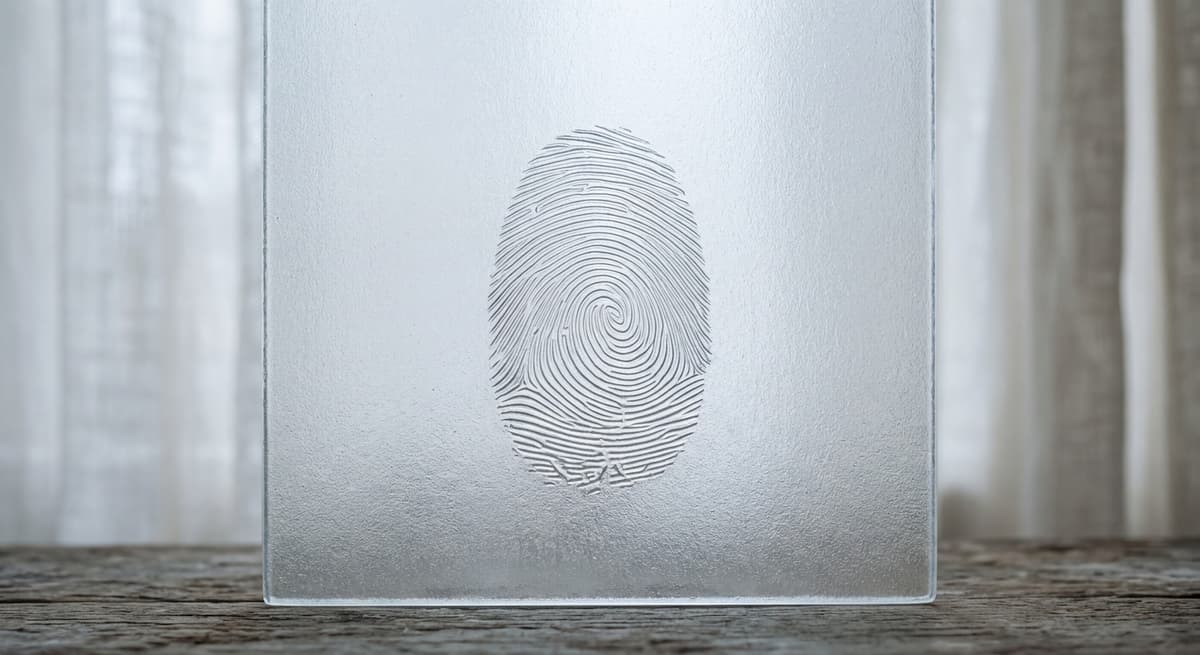
Under Section 503.001(a), a "biometric identifier" means:
- Retina or iris scans
- Fingerprints
- Voiceprints
- Records of hand geometry
- Records of face geometry
This definition is narrower than the biometric data definitions found in some comprehensive privacy laws. CUBI does not cover DNA, keystroke patterns, gait analysis, or behavioral biometrics.
The one statutory exclusion applies to voiceprint data held by a financial institution or an affiliate of a financial institution. Under Section 503.001(e), these entities are exempt from CUBI for voiceprint data only.
Notably, unlike Illinois BIPA, CUBI does not explicitly exclude photographs, written signatures, or demographic data from its definitions. However, enforcement actions have focused on biometric data that can be used to uniquely identify individuals, such as facial geometry extracted from photographs rather than the photographs themselves.
Consent and Notice Requirements
CUBI establishes a straightforward two-step consent process under Section 503.001(b). Before capturing a biometric identifier for a commercial purpose, a person must:
- Inform the individual that a biometric identifier is being captured
- Receive the individual's consent to capture the biometric identifier
The statute does not specify that consent must be in writing, which differs from Illinois BIPA's requirement of a written release. This means Texas employers and businesses have more flexibility in how they obtain consent, but the consent must still be affirmative and given before collection begins.
The "commercial purpose" requirement is important. CUBI only applies when biometric data is captured for a commercial purpose. Government agencies collecting biometric data for law enforcement or national security purposes fall outside the statute's scope.
Disclosure Restrictions: Four Permitted Exceptions
Once a biometric identifier has been captured, Section 503.001(c)(1) prohibits selling, leasing, or otherwise disclosing it to another person. There are only four narrow exceptions:
- Disappearance or death identification: The individual consents to disclosure for identification purposes if the individual disappears or dies
- Financial transactions: The disclosure completes a financial transaction that the individual requested or authorized
- Legal requirements: The disclosure is required or permitted by a federal statute or a state statute other than Chapter 552 of the Government Code (the Texas Public Information Act)
- Law enforcement: The disclosure is made by or to a law enforcement agency for a law enforcement purpose in response to a warrant
These restrictions are significant. They mean a company cannot share biometric data with third-party vendors, advertising partners, or affiliated companies unless one of these four exceptions applies. The Meta and Google enforcement actions both centered on unauthorized sharing and use of biometric data beyond what users consented to.
Storage and Destruction Requirements
CUBI imposes two obligations on anyone who possesses a commercially captured biometric identifier under Section 503.001(c).
Reasonable Care Standard
The holder must store, transmit, and protect the biometric identifier from disclosure "using reasonable care and in a manner that is the same as or more protective than the manner in which the person stores, transmits, and protects any other confidential information the person possesses."
This ties the security standard to the entity's existing data protection practices. If a company uses encryption and access controls for financial data, it must apply at least the same protections to biometric data.

Mandatory Destruction Timeline
The holder must destroy the biometric identifier "within a reasonable time, but not later than the first anniversary of the date the purpose for collecting the identifier expires." In plain terms, once the reason for collecting the data no longer applies, the data must be destroyed within one year.
If another law requires the entity to retain records for a longer period, Section 503.001(c-1) extends the destruction deadline to one year after that other law's retention requirement ends.
Employer Obligations Under CUBI
Many Texas employers use fingerprint scanners, hand geometry readers, or facial recognition systems for timekeeping, building access, or security purposes. CUBI has specific implications for these employers.
Under Section 503.001(c-2), when an employer captures a biometric identifier for security purposes, the purpose for collecting the identifier is legally presumed to expire on termination of the employment relationship. This triggers the one-year destruction clock.
Practical steps for Texas employers include:
- Notify employees in writing before enrolling them in any biometric system, even though CUBI does not require written consent
- Obtain affirmative consent from each employee before capturing fingerprints, face scans, or other biometric identifiers
- Establish a retention schedule that destroys biometric data within one year after an employee leaves the company
- Apply reasonable security measures to protect stored biometric data at least as rigorously as other confidential business information
- Never share biometric data with third-party payroll providers, staffing agencies, or other vendors unless a statutory exception applies
Enforcement: No Private Right of Action, But Massive Penalties
CUBI does not include a private right of action. Individual Texans cannot sue companies for violating the statute. Only the Texas Attorney General has authority to enforce the law.
Under Section 503.001(d), violations carry civil penalties of up to $25,000 per violation. The AG's office interprets both the unauthorized capture and the improper storage of a biometric identifier as separate violations, potentially doubling the penalty exposure per incident.
This enforcement model has proven devastating for major technology companies. Because the AG aggregates violations across millions of users, the per-violation penalties compound into figures that dwarf anything seen under Illinois BIPA's private right of action.

The $1.4 Billion Meta Settlement (2024)
On July 30, 2024, Attorney General Ken Paxton announced a $1.4 billion settlement with Meta over Facebook's facial recognition "Tag Suggestions" feature. Meta had automatically enabled facial recognition for all users, capturing face geometry from uploaded photos without first informing users or obtaining their consent.
Key details of the Meta settlement:
- Amount: $1.4 billion paid over five years
- Basis: First-ever lawsuit filed and settlement obtained under CUBI
- Violation: Meta ran facial recognition on photos uploaded by Texans without notice or consent
- Scale: The largest privacy settlement ever obtained by a single state attorney general
- Context: Dwarfed the $390 million multistate settlement (40 states) that Google paid in 2022
The lawsuit originated in February 2022 after Meta announced it would discontinue its facial recognition system. The AG alleged that Meta had been violating CUBI for years by automatically scanning the face geometry of every person in uploaded photographs.
The $1.375 Billion Google Settlement (2025)
On October 31, 2025, the AG finalized a $1.375 billion settlement with Google. This settlement resolved two lawsuits filed in 2022.
The first lawsuit alleged Google violated CUBI by collecting biometric identifiers through Google Photos (facial geometry), Google Assistant (voiceprints), and Nest Hub Max cameras (face geometry of anyone appearing on camera) without consent.
The second lawsuit alleged Google violated the Texas Deceptive Trade Practices Act by misleading users about geolocation tracking and Incognito mode data collection.
Key details of the Google settlement:
- Amount: $1.375 billion, the largest single-state privacy settlement against Google
- Comparison: The next largest single-state Google privacy settlement was $93 million
- Products involved: Google Photos, Google Assistant, Nest Hub Max
- Biometric data: Face geometry and voiceprints captured without consent
Together, the Meta and Google settlements total over $2.77 billion, establishing Texas as the most consequential enforcer of biometric privacy in the country.
How CUBI Compares to Illinois BIPA
Texas CUBI and Illinois BIPA are the two most significant biometric privacy laws in the United States, but they work very differently.
| Feature | Texas CUBI | Illinois BIPA |
|---|---|---|
| Enacted | 2001 | 2008 |
| Statute | Tex. Bus. & Com. Code Ch. 503 | 740 ILCS 14 |
| Private right of action | No | Yes |
| Enforcement | AG only | Individuals and AG |
| Consent type | Informed consent (no writing required) | Written release required |
| Max penalty per violation | $25,000 | $5,000 |
| Largest settlement | $1.4 billion (Meta) | $650 million (Meta) |
| Retention policy required | Implied by destruction rule | Written policy required |
| Applies to | Any person | Private entities only |
The key difference is enforcement mechanism. BIPA's private right of action has produced over 1,400 class action lawsuits, but individual settlements tend to be smaller. CUBI's AG-only model produces fewer cases but far larger outcomes because the state aggregates violations across entire populations.
The TDPSA: A Second Layer of Biometric Protection
The Texas Data Privacy and Security Act (TDPSA), codified at Chapter 541 of the Business and Commerce Code, took effect on July 1, 2024. It adds a comprehensive layer of biometric protection on top of CUBI.
The TDPSA classifies "biometric data" as sensitive personal data. Under the TDPSA, biometric data is defined as "data generated by automatic measurements of an individual's biological characteristics" that is processed for the purpose of uniquely identifying an individual.
This definition is broader than CUBI's. It potentially covers behavioral biometrics, gait analysis, and other biological measurements that fall outside CUBI's enumerated list of five identifiers.
Under the TDPSA, businesses must obtain the consumer's affirmative consent before processing sensitive data, including biometric data. The TDPSA defines consent as "a clear affirmative act signifying a consumer's freely given, specific, informed, and unambiguous agreement." Acceptance of general terms of use does not qualify. Consent obtained through dark patterns does not qualify.
The practical effect is that Texas businesses now face two overlapping consent requirements for biometric data: CUBI's informed consent standard and the TDPSA's affirmative consent standard. Compliance with the stricter TDPSA standard will generally satisfy both.

2025 Amendment: The AI Training Exemption
On June 22, 2025, Governor Greg Abbott signed House Bill 149, the Texas Responsible Artificial Intelligence Governance Act. This law, effective January 1, 2026, amends CUBI to create a limited exemption for artificial intelligence development.
HB 149 amended Section 503.001(e), which already exempted voiceprint data held by financial institutions, adding two more exemptions. The first covers the training, processing, or storage of biometric identifiers used in developing, training, evaluating, or offering AI models or systems, unless the AI system is used or deployed to uniquely identify a specific individual. The second, separate from the AI training exemption, covers AI models or systems developed or deployed to prevent, detect, or respond to security incidents, identity theft, fraud, or harassment, or to investigate, report, or prosecute that kind of conduct.
Important limitations on the AI exemption:
- If biometric data captured for AI training is later repurposed for commercial identification, standard CUBI provisions apply
- An individual is not considered to have consented to biometric capture simply because their image appears on the internet, unless the individual made the image publicly available themselves
- A separate TRAIGA provision, Section 552.054(b) of the Business and Commerce Code, bars governmental entities (not private companies) from developing or deploying an AI system to identify a specific individual using biometric data or images gathered from the internet or other public sources without consent, but only when that gathering would infringe a right under the United States Constitution, the Texas Constitution, or state or federal law
- Section 552.054(c) provides that a violation of Section 503.001 is also a violation of TRAIGA. That routes CUBI violations into a second penalty scheme in Section 552.105, which sets civil penalties of $10,000 to $12,000 for each curable violation, $80,000 to $200,000 for each uncurable violation, and $2,000 to $40,000 for each day a violation continues, on top of CUBI's $25,000
This amendment reflects the tension between AI development and biometric privacy. Companies training AI models on facial data can do so without CUBI compliance, but the moment they deploy those models to identify specific people in Texas, full CUBI requirements apply.
Filing a Complaint
Texans who believe their biometric data has been collected or shared without consent can file a complaint directly with the Texas Attorney General's Consumer Protection Division. While individuals cannot sue under CUBI, AG complaints have led to investigations and the massive enforcement actions described above.
This article provides general legal information about Texas biometric privacy laws. It is not legal advice. If you need guidance about a specific situation involving biometric data collection or compliance, consult a qualified attorney licensed in Texas.
Related: Texas Data Privacy Laws | Illinois Biometric Privacy (BIPA) | Data Privacy Laws by State
More Texas Laws
Frequently Asked Questions
Can I sue a company in Texas for collecting my fingerprints without consent?
No. CUBI does not include a private right of action. Only the Texas Attorney General can bring enforcement actions under the statute. However, you can file a complaint with the AG's Consumer Protection Division, which has used such complaints to build cases leading to billion-dollar settlements.
Does CUBI apply to my employer's fingerprint time clock?
Yes. If your employer uses fingerprint scanners, hand geometry readers, or facial recognition for timekeeping or building access, CUBI requires the employer to inform you and obtain your consent before capturing your biometric data. The employer must also destroy your biometric data within one year after your employment ends under Section 503.001(c-2).
How does CUBI interact with the Texas Data Privacy and Security Act?
The TDPSA, effective July 1, 2024, adds a second layer of protection. It classifies biometric data as sensitive personal data requiring affirmative consent before processing. Businesses handling biometric data in Texas must comply with both CUBI and the TDPSA. Meeting the TDPSA's stricter consent standard will generally satisfy CUBI's requirements as well.
Are doorbell cameras with facial recognition legal in Texas?
Doorbell cameras that capture face geometry for identification purposes must comply with CUBI. Companies like Amazon have blocked facial recognition features on Ring doorbells in Texas due to CUBI restrictions. Homeowners using such devices for personal, non-commercial purposes may fall outside the statute's commercial purpose requirement, but manufacturers and service providers processing that data commercially are subject to CUBI.
Does the 2025 AI exemption mean companies can scrape my face from social media to train AI?
Not exactly. HB 149 exempts AI training from CUBI, but it explicitly states that an individual has not consented to biometric capture merely because their image appears online. The exemption only applies to AI development and training activities. If the AI system is deployed to identify specific individuals, full CUBI requirements apply. A separate TRAIGA provision, Section 552.054(b) of the Texas Business and Commerce Code (not the Government Code), also restricts governmental entities (not private companies) from deploying AI to identify a specific individual from publicly gathered biometric data or images without consent, but only when doing so would infringe a right under the United States Constitution, the Texas Constitution, or state or federal law.
Affected by a data breach or biometric privacy violation?
If your personal data was exposed in a breach, or your fingerprint or face scan was collected without your consent, you may be eligible to join a claim for compensation. Find out for free, with no obligation.
Updates
Corrected the date Texas enacted CUBI to 2001 (the 2009 date was a recodification, and Texas in fact predates Illinois BIPA by seven years), and corrected Section 552.054 to the Business and Commerce Code rather than the Government Code.
Corrected the description of the 2026 CUBI/AI amendment (HB 149): it amended, rather than newly created, the exemption list at Section 503.001(e), and it added an exemption (missing from the prior version of this page) for AI systems used to prevent or investigate security incidents, identity theft, and fraud. Also corrected an overstated claim about government agencies and public images: the actual restriction is a separate law (Government Code Sec. 552.054(b)) that applies only to governmental entities and only when the gathering would infringe a constitutional or other legal right.
Independently fact-checked against the cited primary sources; governing law re-checked for recent changes
Reviewed and approved by an editor
The Law Behind This Article
This article rests on the statutory provisions below, held in our own legal record and retrieved from the official source. Tap a section to read the operative text.
Texas Business & Commerce Code
§ 503.001CAPTURE OR USE OF BIOMETRIC IDENTIFIERIn forcecited in 9 of our articles
(a) In this section: (1) "Artificial intelligence system" has the meaning assigned by Section 551.001. (2) "Biometric identifier" means a retina or iris scan, fingerprint, voiceprint, or record of hand or face geometry. (b) A person may not capture a biometric identifier of an individual for a commercial purpose unless the person: (1) informs the individual before capturing the biometric identifier; and (2) receives the individual's consent to capture the biometric identifier. (b-1) For purposes of Subsection (b), an individual has not been informed of and has not provided consent for the capture or storage of a biometric identifier of an individual for a commercial purpose based solely on the existence of an image or other media containing one or more biometric identifiers of the individual on the Internet or other publicly available source unless the image or other media was made publicly available by the individual to whom the biometric identifiers relate.
Official text (excerpt) · last checked 2026-08-28 · Read the full text in our law library · Verify at statutes.capitol.texas.gov
Also relied on in: Amazon Ring Sued Over "Familiar Faces" Facial Recognition (2026), Alabama Smart Glasses Recording Laws, Oklahoma Smart Glasses Recording Laws 2026
Search our full record of US law — 2.1 million sections, every state + federal →
Sources and References
- Texas Business and Commerce Code Chapter 503(statutes.capitol.texas.gov).gov
- Texas AG CUBI Information Page(texasattorneygeneral.gov).gov
- AG Paxton $1.4B Meta Settlement Announcement(texasattorneygeneral.gov).gov
- AG Paxton $1.375B Google Settlement Announcement(texasattorneygeneral.gov).gov
- AG Paxton Google Settlement Finalized(texasattorneygeneral.gov).gov
- TDPSA Official AG Page(texasattorneygeneral.gov).gov
- TDPSA Full Text (HB 4, 88th Legislature)(capitol.texas.gov).gov
- HB 149 Bill History (89th Legislature)(capitol.texas.gov).gov
- HB 149 Enrolled Text(capitol.texas.gov).gov
- HB 149 Senate Analysis(capitol.texas.gov).gov
- HB 678 (77th Legislature, 2001), the original CUBI enactment at former Bus. & Com. Code Sec. 35.50(capitol.texas.gov)
- Texas Business and Commerce Code Chapter 552 (Artificial Intelligence Protection), including Sec. 552.054 and Sec. 552.105(statutes.capitol.texas.gov)
- HB 3186 (81st Legislature, 2009), amending Bus. & Com. Code Sec. 503.001(capitol.texas.gov)