Texas Landlord-Tenant Recording Laws: Cameras, Privacy, and Rights
Independently fact-checked against primary sources (last audited August 15, 2026). · Reviewed by the RecordingLaw editorial team. · Law checked current as of August 15, 2026. · 6 primary sources cited on this page. How we verify our legal content
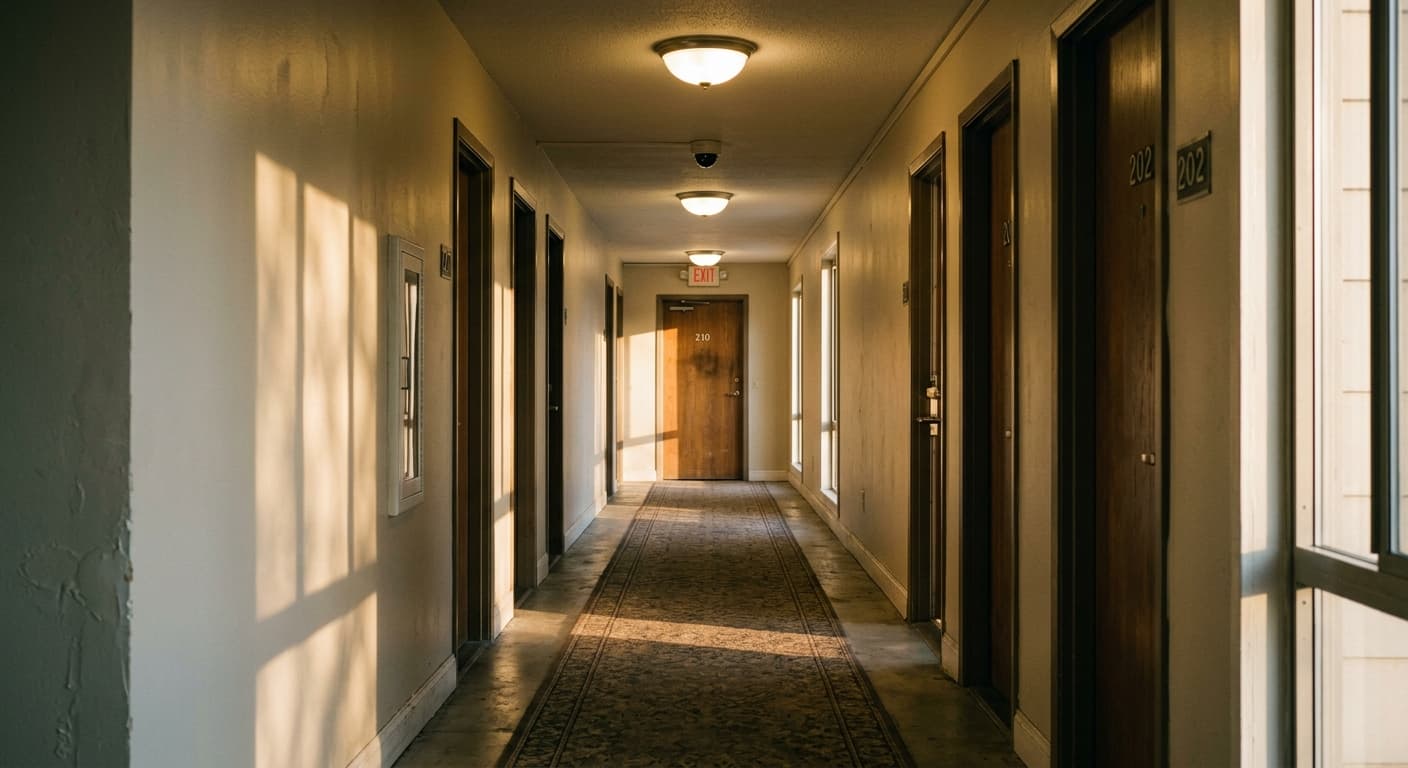
Texas is a one-party consent state under Tex. Penal Code 16.02, so any party to a conversation may record it without notifying the other. Tenants may record discussions with landlords, and landlords may record conversations they join. Landlords may not place hidden cameras inside a rental unit.
Overview of Texas Landlord-Tenant Recording Laws
The intersection of recording law and landlord-tenant relationships in Texas involves multiple statutes. Tex. Penal Code Section 16.02 governs audio recording consent, Tex. Penal Code Section 21.15 prohibits invasive visual recording, and Tex. Property Code Chapter 92 establishes landlord and tenant rights regarding security, repairs, and property conditions.
For the broader context of recording law in the state, see the main Texas recording laws page. The Texas Attorney General's office provides guidance on tenant rights, and the Texas State Law Library maintains resources on landlord-tenant law topics.
Tenant Rights: Recording Landlord Interactions
One-Party Consent for Tenant Recordings
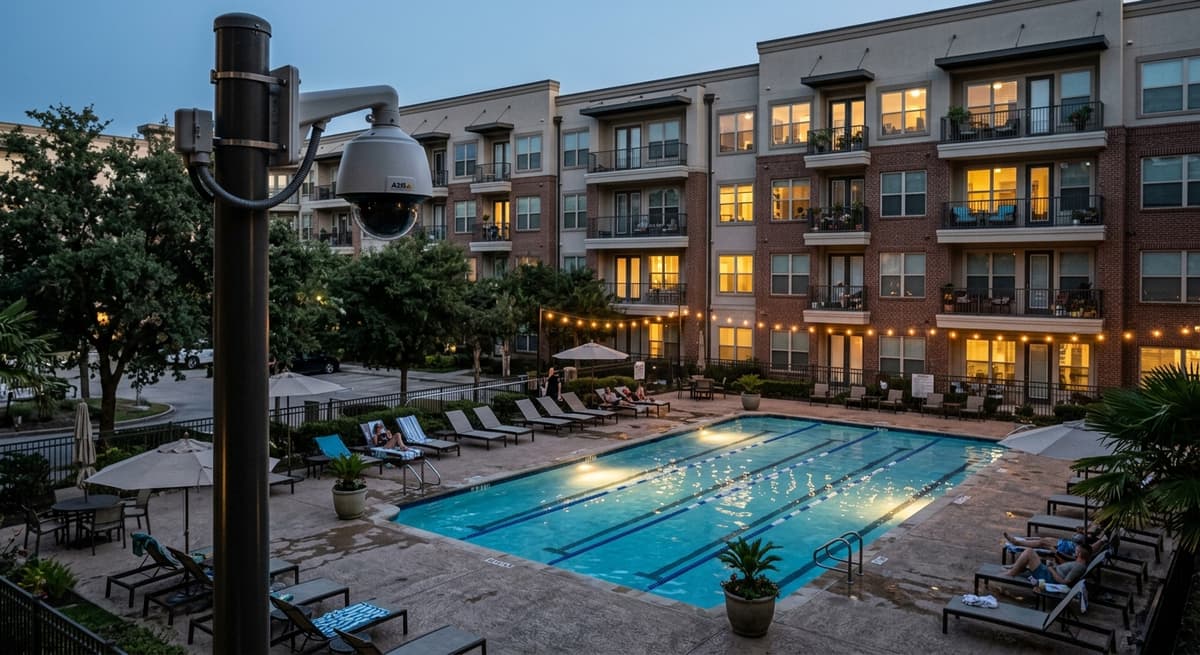
Under the one-party consent rule in Tex. Penal Code Section 16.02, Texas tenants can record any conversation they participate in with their landlord, property manager, maintenance staff, or any other representative of the landlord. No notification is required.
Common situations where tenants record landlord interactions include:
- Repair requests: Documenting verbal promises to fix maintenance issues
- Lease negotiations: Preserving discussions about rent increases, lease terms, or renewal conditions
- Move-in and move-out inspections: Recording the condition of the property and any verbal acknowledgments
- Security deposit disputes: Capturing discussions about deductions and damage assessments
- Harassment documentation: Recording threatening, discriminatory, or retaliatory behavior
- Illegal entry complaints: Documenting instances of unauthorized landlord access
Using Recordings as Evidence
Tenant recordings are generally admissible in Texas courts when made lawfully under the one-party consent rule. These recordings can support claims in:
- Justice court eviction proceedings
- Small claims cases for security deposit recovery
- Fair housing discrimination complaints
- Breach of lease contract claims
- Personal injury cases related to unsafe property conditions
- Retaliation claims under the Texas Property Code
Authentication under Texas Rules of Evidence Rule 901 requires the tenant to testify that the recording is genuine and unaltered. Digital recordings with metadata (timestamps, file creation data) strengthen authentication.
Landlord Rights: Surveillance on Rental Properties
Where Landlords Can Install Cameras
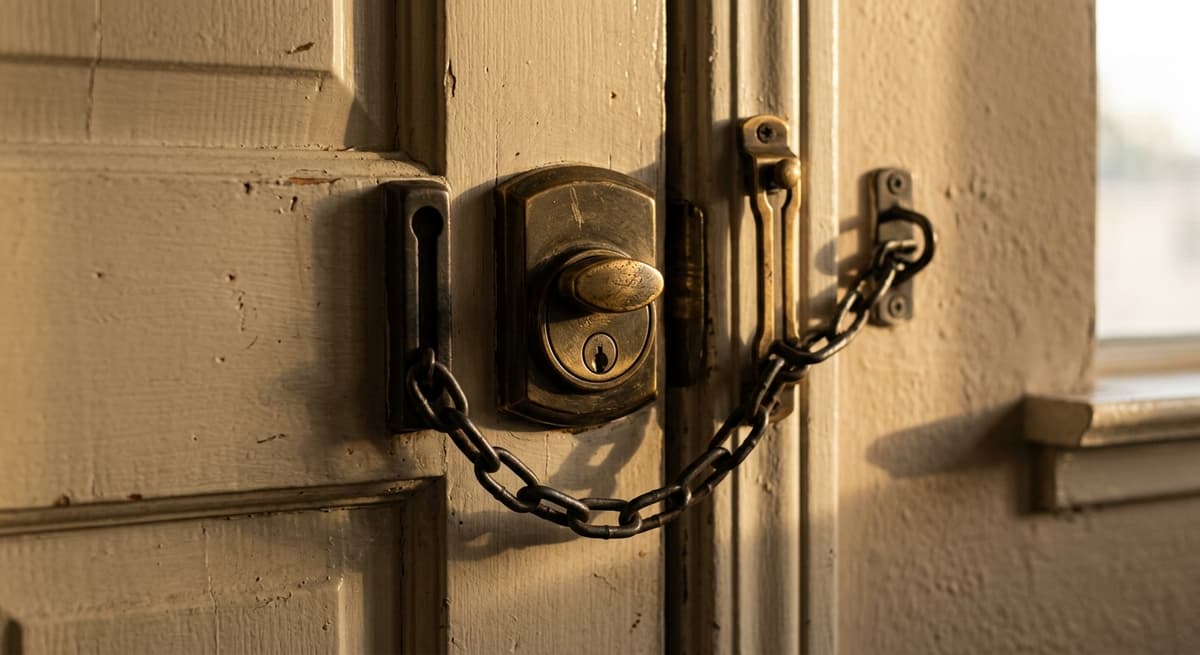
Landlords in Texas can install security cameras on rental properties in areas where tenants and visitors do not have a reasonable expectation of privacy. Permissible locations include:
- Building exteriors and entrances
- Parking lots and garages (common areas)
- Hallways and stairwells in multi-unit buildings
- Lobbies and common recreation areas
- Laundry rooms and mail areas
- Exterior walkways and courtyards
- Property perimeters and fencing
These cameras serve legitimate purposes including crime deterrence, liability protection, lease compliance monitoring in common areas, and property damage prevention.
Where Landlords Cannot Install Cameras
Landlords are prohibited from placing cameras in areas where tenants have a reasonable expectation of privacy. Prohibited locations include:
- Inside individual rental units (apartments, houses, condos)
- Bathrooms and restrooms in any location
- Bedrooms and sleeping areas
- Fenced backyards that serve a single unit
- Private patios and balconies enclosed from public view
- Changing areas in pools or fitness centers
Installing cameras in these locations with the intent to invade a tenant's privacy violates Tex. Penal Code Section 21.15 (invasive visual recording), a state jail felony punishable by 180 days to 2 years in prison and fines up to $10,000. As of September 1, 2025, a conviction generally requires a 10-year sex offender registration period; lifetime registration applies only if the person has a second reportable conviction of any kind.
Audio Recording by Landlord Surveillance Systems
When landlord surveillance cameras include audio recording, the one-party consent requirement applies. A camera system that passively records audio of tenant conversations in common areas, without any consenting party participating, may violate Tex. Penal Code Section 16.02.
Landlords who install audio-capable cameras should:
- Post clear signage disclosing that audio recording is in progress
- Limit audio recording to areas where the landlord or staff regularly interact with tenants
- Disable audio in areas where tenants converse privately
- Include surveillance disclosure in lease agreements
Tenant Privacy Rights

The Reasonable Expectation of Privacy
Texas courts recognize that tenants have a reasonable expectation of privacy inside their rental units. This expectation extends to all areas within the leased premises, including bedrooms, bathrooms, and private living spaces. The landlord's ownership of the property does not override the tenant's privacy rights within the leased unit.
Landlord Entry and Recording
Texas does not have a comprehensive statute requiring advance notice before landlord entry, unlike many other states; entry rights are instead controlled by the lease and general common-law and trespass principles. Separately, Tex. Property Code Section 92.0081 prohibits a landlord from barring a tenant's own entry into the unit, such as through an unlawful lockout or an improper lock change, except by judicial process, bona fide repairs or construction, or an emergency.
A landlord who enters a tenant's unit and records the interior without permission may face liability for:
- Invasion of privacy (civil tort)
- Invasive visual recording (criminal under Section 21.15 if the recording was made without consent and with intent to invade privacy)
- Violation of the lease agreement
- Harassment or retaliation claims
Tenant Camera Installation
Tenants have the right to install security cameras inside their own rental units for personal security purposes. This includes doorbell cameras, interior cameras for pet monitoring, and nanny cameras. Tenants should:
- Review the lease for any restrictions on camera installation
- Avoid mounting cameras in a way that damages the property
- Ensure cameras do not capture areas outside the leased premises where others have privacy expectations
- Remove cameras and repair any mounting damage upon move-out
Security Devices Under Texas Property Code
Landlord Obligations for Security Devices
Tex. Property Code Chapter 92, Subchapter D requires landlords to provide specific security devices on rental properties, including:
- Window latches on all exterior windows
- Sliding door pin locks or security bars
- Deadbolts on exterior doors
- Door viewers (peepholes) on exterior doors
- Keyless bolts on exterior doors
These requirements exist independently of any camera surveillance and represent minimum security standards. A landlord who fails to install required security devices faces liability under the Property Code.
Tenant Requests for Additional Security
Under Section 92.164, a tenant can request that a landlord install or repair security devices at the landlord's expense if the devices are required by the statute. If the landlord fails to comply within a reasonable time after receiving written notice, the tenant may:
- Install the device and deduct the cost from rent
- File suit for actual damages, a civil penalty of one month's rent plus $500, court costs, and attorney fees
Landlord Retaliation Protections
Protected Tenant Activities
Tex. Property Code Section 92.331 prohibits landlord retaliation against tenants who engage in legally protected activities. A landlord cannot take adverse action against a tenant for:
- Requesting repairs in good faith
- Filing complaints with government agencies about building code violations
- Participating in tenant organizations
- Exercising legal rights under the lease or the Property Code
Retaliation and Recording
Tenants who record their interactions with landlords while exercising these protected rights create valuable evidence of retaliation. If a landlord retaliates after a tenant reports problems, a recording of the landlord's retaliatory statements or actions can support a claim under Section 92.331.
The anti-retaliation protection lasts for six months from the date of the tenant's protected action. During this period, a rebuttable presumption of retaliation applies if the landlord takes adverse action.
Short-Term Rental Recording Issues
Airbnb and Vacation Rental Cameras
Short-term rental hosts in Texas face unique recording law considerations. Major platforms like Airbnb require hosts to disclose any cameras on the property and prohibit cameras in private spaces.
Under Texas law, a short-term rental host can place cameras in:
- Exterior areas and entrances
- Common areas of the rental (living rooms, kitchens) with disclosure
- Parking areas and driveways
A host cannot place cameras in:
- Bedrooms and sleeping areas
- Bathrooms and shower areas
- Any area where guests have a reasonable expectation of privacy
Disclosure Requirements for Short-Term Rentals
While Texas state law does not have a specific disclosure statute for short-term rental surveillance, platform policies and general privacy principles require hosts to:
- Disclose the presence and location of all cameras in the listing description
- Identify whether cameras are active or disabled during guest stays
- Remove or disable cameras in private spaces
- Inform guests of audio recording capabilities
Failure to disclose hidden cameras in a short-term rental can result in criminal prosecution under Section 21.15, civil liability for invasion of privacy, and removal from rental platforms.
More Texas Recording Laws
Audio Recording | Video Recording | Voyeurism & Hidden Cameras | Workplace Recording | Recording Police | Phone Call Recording | Security Cameras | Recording in Public | Landlord-Tenant | Dashcam Laws | Schools | Medical Recording
← Back to Texas Recording Laws
More Texas Recording Topics
More Texas Laws
Frequently Asked Questions
Can a tenant record conversations with their landlord in Texas?
Yes. Texas is a one-party consent state under Penal Code Section 16.02. A tenant who participates in a conversation with their landlord can record it without notifying the landlord. This applies to in-person discussions, phone calls, and electronic communications about repairs, lease terms, or disputes.
Can a landlord put cameras inside a rental unit in Texas?
No. Landlords cannot install cameras inside a tenant's rental unit, including bedrooms, bathrooms, and private living areas. The tenant has a reasonable expectation of privacy inside the leased premises. Installing cameras in these areas without consent and with intent to invade privacy violates Tex. Penal Code Section 21.15, a state jail felony.
Can a landlord install security cameras in common areas of an apartment building?
Yes. Landlords can install cameras in hallways, lobbies, parking lots, laundry rooms, and other common areas where tenants do not have a reasonable expectation of privacy. If the cameras record audio, the one-party consent requirement under Section 16.02 applies.
Can a tenant install a doorbell camera on a rental property in Texas?
Generally yes. Tenants can install doorbell cameras and other security devices for personal safety. The tenant should review the lease for restrictions on modifications, avoid causing damage to the property, and remove the camera upon move-out. Tex. Property Code Section 202.023 prevents HOAs from prohibiting security devices.
Can an Airbnb host have hidden cameras in Texas?
No. Cameras in private spaces like bedrooms and bathrooms placed without consent and with intent to invade privacy violate Tex. Penal Code Section 21.15. Even in common areas, platform policies require disclosure of all cameras. A host who fails to disclose cameras faces criminal prosecution, civil liability, and removal from rental platforms.
Updates
Corrected an overstated claim that a first Penal Code Section 21.15 conviction requires lifetime sex-offender registration (it is a 10-year period, lifetime only on a second reportable conviction), and fixed a mismatched citation that attributed a landlord-entry-consent rule to Property Code Section 92.0081, which actually governs unlawful lockouts rather than entry notice.
Independently fact-checked against the cited primary sources; governing law re-checked for recent changes
Added the required intent-to-invade-privacy element to three statements about landlord cameras violating Tex. Penal Code Section 21.15, which is not a strict-liability statute.
Corrected two more restatements of the Section 21.15 overstatement (the 'Landlord Entry and Recording' liability bullet and the Airbnb hidden-camera FAQ answer) to include the statute's required lack-of-consent and intent-to-invade-privacy elements.
Governing law re-checked for recent changes
Added note on [TAKE IT DOWN Act](/us-laws/take-it-down-act) (S. 146, signed May 19, 2025; platform compliance May 19, 2026) and H.B. 1465 § 21.15 expanded location definition (eff. Sept. 1, 2025). Core recording rules under § 16.02 and relevant primary law unchanged.
Reviewed and approved by an editor
The Law Behind This Article
This article rests on the statutory provisions below, held in our own legal record and retrieved from the official source. Tap a section to read the operative text.
Texas Penal Code
§ 16.02UNLAWFUL INTERCEPTION, USE, OR DISCLOSURE OF WIRE, ORAL, OR ELECTRONIC COMMUNICATIONSIn forcecited in 17 of our articles
(a) In this section: (1) "Communication common carrier," "computer trespasser," "contents," "covert entry," "electronic communication," "intercept," "interception device," "investigative or law enforcement officer," "oral communication," "protected computer," and "wire communication" have the meanings assigned by Article 18A.001, Code of Criminal Procedure. (2) "Immediate life-threatening situation" and "member of a law enforcement unit specially trained to respond to and deal with life-threatening situations" have the meanings assigned by Article 18A.201, Code of Criminal Procedure.
Official text (excerpt) · last checked 2026-08-31 · Read the full text in our law library · Verify at statutes.capitol.texas.gov
Cited in 39 court opinions in our collectionLatest citing opinion in our collection: 2026
In the courts (editorial summary, independently checked):Texas courts have applied Section 16.02 to contested recordings. Long v. State (2017) held the oral communication definition carries a reasonable expectation of privacy test, sustaining a conviction over a covert locker room recording. Banargent v. State (2007) held a jail inmate impliedly consented, so no Section 16.02 violation.
Opinions citing this section in our collection:
- Banargent v. State (Texas Court of Appeals, 14th District (Houston) 2007, 228 S.W.3d 393)✓Jail phone prompts and posted notices warned that calls could be recorded, and a recorded call captured the defendant admitting he stabbed the victim; the court held he impliedly consented, so the recording did not violate Section 16.02.
- Long v. State (Court of Criminal Appeals of Texas 2017, 535 S.W.3d 511)✓A school board member had her daughter hide a phone in a visiting locker room to record the coach's halftime speech and sent it to the board; the court held Section 16.02's 'oral communication' incorporates the expectation of privacy test, which the coach met.
- Siddiq v. State (Court of Appeals of Texas 2016, 502 S.W.3d 387)✓Police automatically recorded a DWI arrestee's call to his father from the jail book-in desk, capturing him saying he was drunk; the court applied the law enforcement exception to hold the recording did not violate Section 16.02, so admitting it was not error.
Identified automatically from the court opinions citing this section — not a ranking of which case controls.
Also relied on in: Texas Recording Laws (2026): One-Party Consent Rules, One-Party Consent States: Complete 2026 Guide, Texas Security Camera Laws: Residential, Commercial, and Privacy Rules
§ 21.15INVASIVE VISUAL RECORDINGIn forcecited in 13 of our articles
(a) In this section: (1) "Female breast" means any portion of the female breast below the top of the areola. (2) "Intimate area" means the naked or clothed genitals, pubic area, anus, buttocks, or female breast of a person. (3) "Changing room" means a room or portioned area provided for or primarily used for the changing of clothing and includes dressing rooms, locker rooms, and swimwear changing areas. (3-a) "Place in which a person has a reasonable expectation of privacy" means a place in which a reasonable person would believe that the person could disrobe in privacy, without being concerned that the act of undressing would be photographed or visually recorded by another or that a visual image of the person undressing would be broadcasted or transmitted by another. The term includes a bathroom, bedroom, and changing room. (4) "Promote" has the meaning assigned by Section 43.21.
Official text (excerpt) · last checked 2026-08-31 · Read the full text in our law library · Verify at statutes.capitol.texas.gov
Cited in 44 court opinions in our collectionLatest citing opinion in our collection: 2025
In the courts (editorial summary, independently checked):The Court of Criminal Appeals struck down the 2007 improper photography provision at Penal Code 21.15(b)(1), and Ex parte Shay (2016) set aside a conviction under it. The Legislature re-enacted the section in 2015, and Ex Parte Kamilah a Hamilton (2020) held the current subsection (b)(1) survives strict scrutiny and is not overbroad.
Opinions citing this section in our collection:
- Ex Parte Nyabwa (Texas Court of Appeals, 14th District (Houston) 2011, 366 S.W.3d 719)✓Charged with improper photography, Nyabwa attacked section 21.15(b)(1) by pretrial habeas; the court of appeals held the 2007 subsection regulated the photographer's intent rather than speech and was neither overbroad nor vague. Ex parte Thompson struck it down in 2014.
- Ex parte Shay (Court of Criminal Appeals of Texas 2016, 507 S.W.3d 731)✓Shay pleaded guilty under section 21.15(b)(1) before Ex parte Thompson struck that subsection down; the Court of Criminal Appeals held his favorable plea bargain did not estop habeas relief, set aside the conviction, and remanded to dismiss the indictment.
- Ex Parte Kamilah a Hamilton (Texas Court of Appeals, 14th District (Houston) 2020)✓Indicted under the 2015 version of section 21.15(b)(1) for broadcasting an image of a complainant's intimate area, Hamilton claimed facial overbreadth; the court held the rewritten subsection survives strict scrutiny, is not overbroad, and affirmed denial of relief.
Identified automatically from the court opinions citing this section — not a ranking of which case controls.
Also relied on in: Texas Laws on Recording in Public: Rights, Limits, and Exceptions, Texas School Recording Laws: Classrooms, Cameras, and Student Privacy, Texas Workplace Recording Laws: Employee and Employer Rights
Search our full record of US law — 2.1 million sections, every state + federal →
Sources and References
- Tex. Property Code Chapter 92 - Residential Tenancies(statutes.capitol.texas.gov).gov
- Tex. Penal Code Section 16.02(statutes.capitol.texas.gov).gov
- Tex. Penal Code Section 21.15(statutes.capitol.texas.gov).gov
- Texas AG - Renter's Rights(texasattorneygeneral.gov).gov
- Texas State Law Library - Repairs(guides.sll.texas.gov).gov
- Texas State Law Library - Retaliation(guides.sll.texas.gov).gov