
Kentucky
Kentucky Landlord-Tenant Recording Laws: Surveillance, Privacy, and Disputes
Independently fact-checked against primary sources (last audited August 15, 2026). · Reviewed by the RecordingLaw editorial team. · Law checked current as of August 9, 2026. · 10 primary sources cited on this page. How we verify our legal content
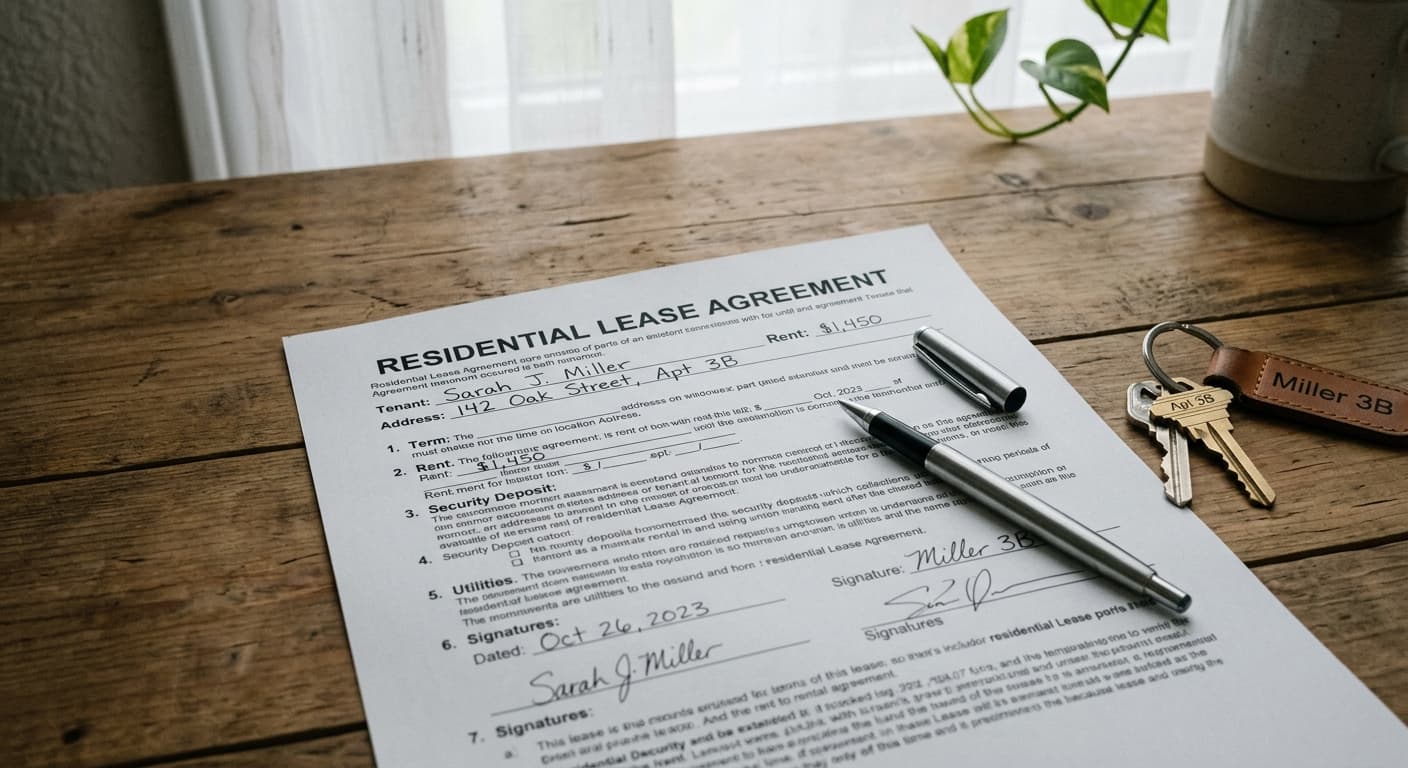
Under Kentucky's one-party consent law (KRS 526.020), both landlords and tenants may record any conversation they participate in without notifying the other party. Landlords cannot install cameras or recording devices inside a rental unit where tenants hold a reasonable expectation of privacy, though cameras in common areas such as lobbies and hallways are permitted.
Kentucky landlord-tenant recording disputes involve a mix of the state's one-party consent eavesdropping law (KRS 526.020), privacy expectations within rental properties, and the landlord-tenant rights established under the Kentucky Uniform Residential Landlord and Tenant Act (KRS Chapter 383), which applies only in the Kentucky cities and counties that have adopted it under KRS 383.500 -- Louisville/Jefferson County and Lexington-Fayette County are the largest, alongside a number of smaller adopting cities and counties. Readers elsewhere in Kentucky should confirm their locality's adoption status before relying on the statutory protections described below.
This guide covers what landlords and tenants can legally record, surveillance rules for rental properties, how recordings can be used in housing disputes, and practical advice for both parties.
Tenant Recording Rights
Recording Conversations With Your Landlord
Under Kentucky's one-party consent law, tenants can record any conversation they participate in with their landlord, property manager, maintenance staff, or any other representative of the rental property. This includes:
- In-person conversations about repairs, lease terms, or complaints
- Phone calls about rent payments, maintenance requests, or lease renewals
- Meetings during lease signing, walkthrough inspections, or move-out assessments
- Discussions about security deposits, late fees, or eviction notices
- Interactions during property showings when you are present
You do not need to tell the landlord you are recording. Your participation in the conversation satisfies the one-party consent requirement.
Why Tenants Record
Common reasons tenants record interactions with landlords include:
- Documenting verbal agreements about repairs, rent adjustments, or lease modifications
- Preserving evidence of harassment or illegal behavior by the landlord
- Recording illegal entry where the landlord enters without proper notice
- Documenting habitability issues and the landlord's response (or lack of response)
- Creating evidence for court in eviction defense, security deposit disputes, or discrimination claims
- Recording threats of retaliation for exercising tenant rights
Tenant Cameras Inside the Rental Unit
Tenants can install security cameras inside their own rental unit for personal safety and security. This is part of the tenant's right to quiet enjoyment of the premises. Considerations include:
- Interior cameras monitoring your own living space are legal
- Doorbell cameras on your apartment or house entrance are generally permitted
- Window-facing cameras are acceptable as long as they do not invade neighbor privacy expectations
- Tenants should review their lease for any specific provisions regarding alterations or installations that may affect camera mounting
- Audio-capable cameras inside your unit follow one-party consent rules for any conversations you are part of
Landlord Surveillance Rights

Common Area Surveillance
Landlords of multi-unit residential properties can install security cameras in common areas where tenants and visitors do not have a reasonable expectation of privacy:
| Common Area | Camera Permitted? | Notes |
|---|---|---|
| Building lobby and entrance | Yes | Standard security practice |
| Hallways and corridors | Yes | Typical for multi-unit buildings |
| Parking lots and garages | Yes | Helps prevent theft and vandalism |
| Laundry rooms | Generally yes | Cameras should not view into changing areas |
| Mailbox areas | Yes | Prevents mail theft |
| Exterior of building | Yes | Standard perimeter security |
| Pool and recreation areas | Permitted with caution | Should not capture intimate activities |
| Storage areas | Yes | Deters theft |
Prohibited Surveillance Locations
Landlords cannot install cameras or recording devices in:
- Inside individual rental units (without tenant consent)
- Bathrooms in any location
- Shared laundry rooms in positions that capture changing activity
- Inside tenant storage units (individual locked storage areas)
Installing cameras inside a tenant's rental unit without their knowledge constitutes an invasion of the tenant's privacy and may violate KRS 531.090 (voyeurism) if intimate areas are captured.
Audio Recording by Landlords
If landlord security cameras include audio recording in common areas, the eavesdropping laws in KRS Chapter 526 apply. Passive audio recording of tenant conversations in hallways or lobbies, where the landlord is not a participant, could constitute eavesdropping under KRS 526.020.
Landlords should either:
- Disable audio on common area cameras, or
- Post clear notices about audio recording and rely on an implied consent argument (though this is legally untested in Kentucky), or
- Limit audio recording to situations where a landlord representative is actively participating in conversations
Kentucky Landlord-Tenant Act and Privacy

The protections below come from Kentucky's Uniform Residential Landlord and Tenant Act (KRS Chapter 383), which is not automatic statewide law. Under KRS 383.500, it applies only in cities, counties, and urban-county governments that have formally adopted it in full, including Louisville/Jefferson County and Lexington-Fayette County. Tenants and landlords outside an adopting jurisdiction do not get these statutory notice and retaliation protections and instead fall back on common-law and lease-based rules.
Right to Quiet Enjoyment
Under KRS 383.615, the landlord must not abuse the right of access or use it to harass the tenant. This right to quiet enjoyment includes freedom from unreasonable surveillance within the rental unit.
Notice Requirements for Entry
KRS 383.615 requires landlords in URLTA-adopting jurisdictions to provide at least two days' notice before entering a rental unit, except in emergencies. Permitted reasons for entry include:
- Repairs and maintenance
- Inspections
- Showing the unit to prospective tenants or buyers
- Emergency situations (fire, flooding, gas leak)
If a landlord enters without proper notice or for unauthorized reasons, the tenant's recording of the encounter (if present) or security camera footage from inside the unit can serve as evidence of the violation.
Retaliation Protections
KRS 383.705 prohibits landlord retaliation against tenants who exercise their legal rights, in the Kentucky cities and counties that have adopted URLTA. If a tenant records a landlord interaction and the landlord retaliates (by raising rent, decreasing services, or initiating eviction), the retaliation itself may be actionable.
Protected tenant activities that cannot trigger retaliation include:
- Reporting code violations to government agencies
- Complaining to the landlord about habitability issues
- Exercising rights under the lease or under law
- Joining or organizing a tenant association
Recording in Eviction Proceedings

Documenting the Eviction Process
Tenants facing eviction in Kentucky can record interactions related to the eviction process, including:
- Conversations with the landlord about the reasons for eviction
- Discussions with process servers or law enforcement during eviction execution
- The condition of the rental unit during move-out (video evidence of condition)
- Property walkthrough and security deposit inspection
Using Recordings as Evidence
Recordings made under one-party consent are generally admissible in Kentucky district court, where most eviction cases are heard. Under KRS 383.660, landlords in URLTA-adopting jurisdictions must follow specific procedures to evict tenants, and recordings can demonstrate:
- Whether proper notice was given
- Whether the alleged lease violation actually occurred
- Whether the landlord's claims are truthful
- Whether the landlord attempted to resolve the issue before filing for eviction
Security Deposit Disputes
Recording Move-In and Move-Out Condition
One of the most practical uses of recording in the landlord-tenant context is documenting the condition of a rental unit at move-in and move-out. Under KRS 383.580, the 30-to-60-day periods are not a deadline for returning a deposit. They are the minimum waiting periods a landlord must observe before it may lawfully keep an unclaimed deposit: 30 days after a tenant who owes rent leaves without demanding a refund, and up to 60 days after an unanswered refund notice to a tenant who left owing no rent.
Video documentation can:
- Establish the condition of the unit when you moved in
- Show the condition when you moved out
- Prove or disprove claims of damage beyond normal wear and tear
- Document whether the landlord made repairs before re-renting
Photographing and Filming Damage
Both landlords and tenants should document the unit condition with:
- Wide-angle shots of each room
- Close-up footage of any pre-existing damage
- Video of appliances and systems in working condition
- Timestamped recordings (most smartphones do this automatically)
- Footage of the walkthrough inspection if both parties are present
Lease Provisions About Recording
Can a Lease Prohibit Recording?
Some Kentucky leases include provisions that restrict or prohibit recording on the property. These provisions may include:
- Restrictions on installing exterior cameras that alter the appearance of the building
- Requirements for landlord approval before installing security systems
- Prohibitions on recording in common areas
- Notice requirements for any camera installation
While landlords can include recording restrictions in leases, the enforceability of a complete recording ban is questionable when it conflicts with the tenant's right to personal security and the legal right to record under one-party consent. A court would likely balance the landlord's property rights against the tenant's privacy and safety interests.
Lease Addendums for Camera Installation
Landlords who want to manage tenant camera installations can use lease addendums that:
- Require written notice before installing exterior cameras
- Specify permitted mounting methods (to prevent property damage)
- Address removal and restoration obligations at move-out
- Clarify liability for camera-related property damage
Discrimination Documentation
Fair Housing Recordings
Tenants who believe they are experiencing housing discrimination can record interactions with landlords as evidence. The Fair Housing Act and Kentucky Civil Rights Act (KRS Chapter 344) prohibit discrimination based on race, color, religion, national origin, sex, disability, and familial status.
Recordings can document:
- Different treatment compared to other tenants
- Discriminatory statements by landlords or property managers
- Refusal to make reasonable disability accommodations
- Discriminatory advertising or steering
- Retaliation for filing fair housing complaints
These recordings can be submitted to the Kentucky Commission on Human Rights, HUD, or used as evidence in civil rights litigation.
More Kentucky Recording Laws
Audio Recording | Video Recording | Voyeurism and Hidden Cameras | Workplace Recording | Recording Police | Phone Call Recording | Security Cameras | Recording in Public | Landlord-Tenant Recording | Dashcam Laws | School Recording | Medical Recording
Back to Kentucky Recording Laws
More Kentucky Recording Topics
More Kentucky Laws
Frequently Asked Questions
Can I record my landlord in Kentucky without telling them?
Yes. Under Kentucky one-party consent law (KRS 526.020), you can record any conversation you participate in with your landlord without informing them. This includes in-person conversations, phone calls, and meetings about lease terms, repairs, or disputes.
Can my landlord install cameras inside my apartment in Kentucky?
No. Landlords cannot install cameras or recording devices inside individual rental units. Tenants have a reasonable expectation of privacy in their homes. Landlords can install cameras in common areas of multi-unit buildings like lobbies, hallways, and parking lots.
Can I install security cameras in my rental unit in Kentucky?
Yes. Tenants can install security cameras inside their own rental unit for personal safety. You should review your lease for provisions about alterations or installations. Doorbell cameras and window-mounted cameras are generally permitted as well.
Can I use recordings as evidence in an eviction case in Kentucky?
Yes. Recordings made under one-party consent are generally admissible in Kentucky courts, including district court where eviction cases are heard. The recording must be authenticated and relevant to the issues in the case.
How much notice must a landlord give before entering my rental in Kentucky?
In Kentucky cities and counties that have adopted the Uniform Residential Landlord and Tenant Act (KRS Chapter 383), such as Louisville/Jefferson County and Lexington-Fayette County, KRS 383.615 requires landlords to provide at least two days' notice before entering a rental unit, except in emergencies. If your landlord enters without proper notice, any recording you make of the encounter can serve as evidence of the violation. Outside an adopting jurisdiction, this statutory notice requirement does not apply, though lease terms and common-law protections may still be relevant.
Updates
Added the missing disclosure that Kentucky's Uniform Residential Landlord and Tenant Act applies only in cities and counties that have adopted it (such as Louisville/Jefferson County and Lexington-Fayette County), not statewide, and repointed every KRS Chapter 383 citation link on the page -- all five were misrouted to unrelated statutes.
Independently fact-checked against the cited primary sources
Corrected a description of KRS 383.580: its 30/60-day periods are the minimum waiting periods before a landlord may keep an unclaimed deposit, not a deadline for returning deposits to tenants.
Governing law re-checked for recent changes
Corrected a wrong-section citation: the 'landlord shall not abuse the right of access or use it to harass the tenant' language is verbatim from KRS 383.615 (Access), not KRS 383.595.
Governing law re-checked for recent changes
Reviewed and approved by an editor
The Law Behind This Article
This article rests on the statutory provisions below, held in our own legal record and retrieved from the official source. Tap a section to read the operative text.
Kentucky Revised Statutes, Chapter 526: EAVESDROPPING AND RELATED OFFENSES
§ 526.020EavesdroppingIn forcecited in 20 of our articles
(1) A person is guilty of eavesdropping when he intentionally uses any device to eavesdrop, whether or not he is present at the time. (2) Eavesdropping is a Class D felony.
Official text (excerpt) · last checked 2026-08-31 · Read the full text in our law library · Verify at apps.legislature.ky.gov
Cited in 8 court opinions in our collectionLatest citing opinion in our collection: 2023
In the courts (editorial summary, independently checked):Basham v. Commonwealth (1984) held wiretap evidence obtained under a valid federal order is admissible in Kentucky, though it noted no state law authorizes electronic surveillance by Kentucky police. Brock v. Commonwealth (1997) held the exclusionary rule reaches only constitutional violations, so a private recording was not suppressed.
Opinions citing this section in our collection:
- Springer v. Commonwealth (Kentucky Supreme Court 1999, 998 S.W.2d 439)✓A neighbor used a police scanner to tape cordless calls from the victim's home, and detectives played it to induce Eades to confess; the court held the federal wiretap act and Kentucky's eavesdropping statutes did not bar using it against someone who was not a party to the calls.
- Stringer v. Wal-Mart Stores, Inc. (Kentucky Supreme Court 2004, 151 S.W.3d 781)✓Wal-Mart secretly ran about forty hours of audio and video surveillance of employees in a store claims area; the court did not decide whether that violated KRS 526.020, holding instead that the employees' statutory claim failed for lack of damages caused by the recording itself.
- Brock v. Commonwealth (Kentucky Supreme Court 1997, 947 S.W.2d 24)✓Brock, claiming self-defense, was kept from using a private tape of the victim's mother saying her son had gone to kill him; the court held that even assuming the tape violated KRS 526.020, the exclusionary rule reaches only state action, so suppression was not required.
Identified automatically from the court opinions citing this section — not a ranking of which case controls.
Also relied on in: Kentucky Recording Laws (2026): One-Party Consent Rules, Kentucky Dashcam Laws: Legality, Mounting Rules, and Evidence Use, Kentucky Video Recording Laws: Surveillance, Privacy, and Legal Limits
Kentucky Revised Statutes, Chapter 383: RENTAL OF PROPERTY -- FORCIBLE ENTRY AND DETAINER -- UNIFORM RESIDENTIAL LANDLORD AND TENANT ACT
§ 383.500Local governments authorized to adopt provisions of the Uniform Residential Landlord and Tenant Act in their entirety and without amendmentIn force
The General Assembly hereby authorizes cities, counties and urban-county governments to enact the provisions of the Uniform Residential Landlord and Tenant Act as set forth in KRS 383.505 to 383.705. If adopted, these provisions shall be adopted in their entirety and without amendment. No other ordinance shall be enacted by a city, county or urban- county government which relates to the subjects embraced in KRS 383.505 to 383.705.
Official text (excerpt) · last checked 2026-07-29 · Read the full text in our law library · Verify at apps.legislature.ky.gov
Cited in 9 court opinions in our collectionLatest citing opinion in our collection: 2024
Opinions citing this section in our collection:
- Cabinet for Health & Family v. J.M.G. (Kentucky Supreme Court 2015, 475 S.W.3d 600)“…ample, in the Uniform Residential Landlord and -Tenant Act (KRS 383.500 — 383,705), where it is defined as “wit…”
- Miller v. Cundiff (Court of Appeals of Kentucky 2007, 245 S.W.3d 786)“…nder the Uniform Residential Landlord Tenant Act (“URLTA”), KRS 383.500 et seq., which has been ad…”
- Caudill v. Acton (Court of Appeals of Kentucky 2004, 175 S.W.3d 617)“…3.505 to 383.715, in 1984 as JCO §§ 151.01 to 151.51. Under KRS 383.500, any city, county or urban county gover…”
Identified automatically from the court opinions citing this section — not a ranking of which case controls.
§ 383.580Security depositsIn forcecited in 2 of our articles
(1) All landlords of residential property requiring security deposits prior to occupancy shall be required to deposit all tenants' security deposits in an account used only for that purpose, in any bank or other lending institution subject to regulation by the Commonwealth of Kentucky or any agency of the United States government. Prospective tenants shall be informed of the location of the separate account and the account number. (2) Prior to tendering any consideration deemed to be a security deposit, the prospective tenant shall be presented with a comprehensive listing of any then-existing damage to the unit which would be the basis for a charge against the security deposit and the estimated dollar cost of repairing such damage. The tenant shall have the right to inspect the premises to ascertain the accuracy of such listing prior to taking occupancy. The landlord and the tenant shall sign the listing, which signatures shall be conclusive evidence of the accuracy of such listing, but shall not be construed to be conclusive to latent defects.
Official text (excerpt) · last checked 2026-09-05 · Read the full text in our law library · Verify at apps.legislature.ky.gov
Cited in 1 court opinions in our collectionLatest citing opinion in our collection: 2011
Opinions citing this section in our collection:
- O'Rourke v. Lexington Real Estate Co. (Court of Appeals of Kentucky 2011, 365 S.W.3d 584)“…ad a duty to notify him of any repair estimates pursuant to KRS 383.580(3). However, this issue is not before u…”
Identified automatically from the court opinions citing this section — not a ranking of which case controls.
Also relied on in: Kentucky Landlord-Tenant Laws (2026): Deposits, Notice, and Tenant Rights
§ 383.615AccessIn force
(1) A tenant shall not unreasonably withhold consent to the landlord to enter into the dwelling unit in order to inspect the premises, make necessary or agreed repairs, decorations, alterations, or improvements, supply necessary or agreed services, or exhibit the dwelling unit to prospective or actual purchasers, mortgagees, tenants, workmen, or contractors. (2) A landlord may enter the dwelling unit without consent of the tenant in case of emergency. (3) A landlord shall not abuse the right of access or use it to harass the tenant. Except in case of emergency or unless it is impracticable to do so, the landlord shall give the tenant at least two (2) days' notice of his intent to enter and may enter only at reasonable times. (4) A landlord has no other right of access except: (a) Pursuant to court order; (b) As permitted by KRS 383.665 and 383.670(2); or (c) Unless the tenant has abandoned or surrendered the premises.
Official text (excerpt) · last checked 2026-07-29 · Read the full text in our law library · Verify at apps.legislature.ky.gov
Cited in 3 court opinions in our collectionLatest citing opinion in our collection: 2024
Opinions citing this section in our collection:
- James Javonte Crite v. Commonwealth of Kentucky (Kentucky Supreme Court 2024)“…th, 179 S.W.3d 830, 838 (Ky. 2005). However, the 4 KRS 383.615(2) provides: “A landlord may enter the…”
- Charlie W. Gordon v. Eric T. Gordon (Court of Appeals of Kentucky 2021)“…cord shows Eric entered Charlie’s residence without notice. KRS 383.615(2) provides that “[a] landlord may ent…”
Identified automatically from the court opinions citing this section — not a ranking of which case controls.
§ 383.660Tenant's noncompliance with rental agreement -- Failure to pay rentIn force
(1) Except as provided in KRS 383.505 to 383.715, if there is a material noncompliance by the tenant with the rental agreement or a material noncompliance with KRS 383.605 or 383.610, the landlord may deliver a written notice to the tenant specifying the acts and omissions constituting the breach and that the rental agreement will terminate upon a date not less than fourteen (14) days after receipt of the notice. If the breach is not remedied in fifteen (15) days, the rental agreement shall terminate as provided in the notice subject to the following. If the breach is remediable by repairs or the payment of damages or otherwise and the tenant adequately remedies the breach before the date specified in the notice, the rental agreement shall not terminate. If substantially the same act or omission which constituted a prior noncompliance of which notice was given recurs within six (6) months, the landlord may terminate the rental agreement upon at least fourteen (14) days' written notice specifying the breach and the date of termination of the rental agreement.
Official text (excerpt) · last checked 2026-07-29 · Read the full text in our law library · Verify at apps.legislature.ky.gov
Cited in 5 court opinions in our collectionLatest citing opinion in our collection: 2023
Opinions citing this section in our collection:
- HOUSING AUTHORITY OF COVINGTON v. Turner (Court of Appeals of Kentucky 2009, 295 S.W.3d 123)“…has the right to remedy the breach of the lease pursuant to KRS 383.660(1), contained within the Uniform Reside…”
- O'Rourke v. Lexington Real Estate Co. (Court of Appeals of Kentucky 2011, 365 S.W.3d 584)“…may recover actual damages and reasonable attorney’s fees.” KRS 383.660(3). “ ‘Willful’ means with deliberate i…”
- Caudill v. Acton (Court of Appeals of Kentucky 2004, 175 S.W.3d 617)“…Id. 14 . JCO 151.42, KRS 383.660 (remedy for failure to pay rent); JCO 1…”
Identified automatically from the court opinions citing this section — not a ranking of which case controls.
§ 383.705Retaliatory conductIn force
(1) Except as provided in this section, a landlord may not retaliate by increasing rent or decreasing services or by bringing or threatening to bring an action for possession after: (a) The tenant has complained to a governmental agency charged with responsibility for enforcement of a building or housing code of a violation applicable to the premises materially affecting health and safety; (b) The tenant has complained to the landlord of a violation under KRS 383.595; (c) The tenant has organized or become a member of a tenant's union or similar organization. (2) If the landlord acts in violation of subsection (1) of this section, the tenant is entitled to the remedies provided in KRS 383.655 and has a defense in any retaliatory action against him for possession. In an action by or against the tenant, evidence of a complaint within one (1) year before the alleged act of retaliation creates a presumption that the landlord's conduct was in retaliation. The presumption does not arise if the tenant made the complaint after notice of a proposed rent increase or diminution of services.
Official text (excerpt) · last checked 2026-07-29 · Read the full text in our law library · Verify at apps.legislature.ky.gov
Cited in 1 court opinions in our collectionLatest citing opinion in our collection: 2020
Opinions citing this section in our collection:
- Drake v. McKinney (District Court, W.D. Kentucky 2020)“…tenant is in possession, the tenant may counterclaim[.]”); Ky. Rev. Stat. § 383.705 (providing that a landlord is not allow…”
Identified automatically from the court opinions citing this section — not a ranking of which case controls.
Kentucky Revised Statutes, Chapter 531: PORNOGRAPHY
§ 531.090VoyeurismIn forcecited in 13 of our articles
(1) A person is guilty of voyeurism when: (a) He or she intentionally: 1. Uses or causes the use of any camera, videotape, photooptical, photoelectric, or other image recording device for the purpose of observing, viewing, photographing, filming, or videotaping the sexual conduct, genitals, an undergarment worn without being publicly visible, or nipple of the female breast of another person without that person's consent; or 2. Uses the unaided eye or any device designed to improve visual acuity for the purpose of observing or viewing the sexual conduct, genitals, an undergarment worn without being publicly visible, or nipple of the female breast of another person without that person's consent; or 3.
Official text (excerpt) · last checked 2026-08-31 · Read the full text in our law library · Verify at apps.legislature.ky.gov
Cited in 9 court opinions in our collectionLatest citing opinion in our collection: 2026
In the courts (editorial summary, independently checked):Kentucky courts have treated KRS 531.090 largely as a jury-instruction question. Williams v. Commonwealth (2005) held the 2002 voyeurism statute could not reach conduct predating its July 15, 2002 effective date, and Morgan v. Commonwealth (2006) held voyeurism is not a lesser-included offense of first-degree burglary.
Opinions citing this section in our collection:
- Williams v. Commonwealth (Kentucky Supreme Court 2005, 178 S.W.3d 491)✓Williams photographed his eight-year-old stepdaughter naked in January 2001 and sought a lesser-included voyeurism instruction; the court held KRS 531.090 created a new offense effective July 15, 2002 and was not retroactive, so it could not reach his earlier conduct.
- Morgan v. Commonwealth (Kentucky Supreme Court 2006, 189 S.W.3d 99)✓Morgan watched a couple through a trailer window, then cut the phone line and broke in armed; the court held voyeurism under KRS 531.090 is not a lesser-included offense of first-degree burglary because it requires proof of unlawful entry to view another person.
- Commonwealth v. Mixon (Kentucky Supreme Court 1992, 827 S.W.2d 689)“…lier cases, arising under the former habitual criminal act, KRS 531.090, required authenticated records of fore…”
Identified automatically from the court opinions citing this section — not a ranking of which case controls.
Also relied on in: Kentucky Laws on Recording in Public: Rights, Limits, and Exceptions, Kentucky School Recording Laws: Student, Parent, and Teacher Rights, Kentucky Security Camera Laws: Home, Business, and HOA Rules
Explore the law
This article also draws on these acts and chapters (opening at their first section): Kentucky Revised Statutes, Chapter 344: CIVIL RIGHTS § 344.010 (Definitions for chapter) · Kentucky Revised Statutes, Chapter 383: RENTAL OF PROPERTY -- FORCIBLE ENTRY AND DETAINER -- UNIFORM RESIDENTIAL LANDLORD AND TENANT ACT § 383.010 (Recovery of rent -- Interest -- Persons entitled to and liable for)
Related law for further reading — not part of this article’s citations.
Search our full record of US law — 2.1 million sections, every state + federal →
Sources and References
- KRS 526.020 - Eavesdropping(apps.legislature.ky.gov).gov
- KRS Chapter 383 - Uniform Residential Landlord and Tenant Act(apps.legislature.ky.gov).gov
- KRS 383.615 - Landlord Access to Rental Unit(apps.legislature.ky.gov).gov
- KRS 383.705 - Retaliatory Conduct Prohibited(apps.legislature.ky.gov).gov
- KRS Chapter 344 - Kentucky Civil Rights Act(apps.legislature.ky.gov).gov
- HUD - Fair Housing Act Overview(hud.gov).gov
- Kentucky Commission on Human Rights(kchr.ky.gov).gov
- KRS 383.500 - Local Adoption of the Uniform Residential Landlord and Tenant Act(apps.legislature.ky.gov).gov
- KRS 383.660 - Tenant's Noncompliance With Rental Agreement(apps.legislature.ky.gov).gov
- KRS 383.580 - Security Deposits(apps.legislature.ky.gov).gov