
Oklahoma
Oklahoma Dashcam Laws: Legality, Mounting Rules, and Evidence Use
Independently fact-checked against primary sources (last audited August 15, 2026). · Reviewed by the RecordingLaw editorial team. · 4 primary sources cited on this page. How we verify our legal content
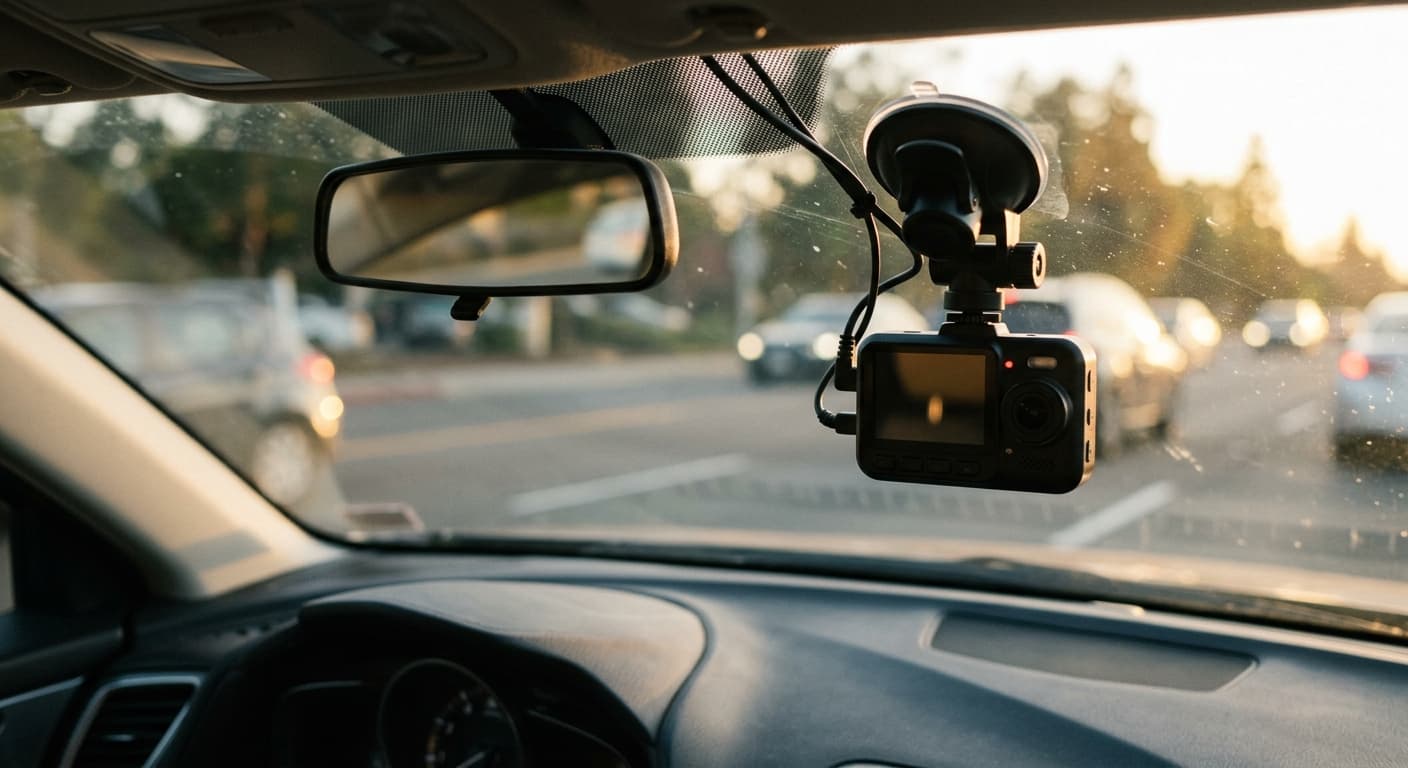
Dashcams are legal in Oklahoma, and no dashcam-specific statute restricts their use, though Oklahoma's windshield-obstruction law (47 O.S. Section 12-404) prohibits mounting anything that blocks the driver's view. Audio recording is allowed under the one-party consent rule of Okla. Stat. tit. 13, Section 176.4 because the driver is a party to in-car conversations. Mount the camera where it does not obstruct your view of the road.
Overview of Oklahoma Dashcam Laws
Oklahoma has no state law that specifically addresses dashcams or dashboard cameras. Oklahoma has no dashcam-specific statute, but its general windshield-obstruction law (47 O.S. 12-404(C)) governs mounting, so placement still matters. Dashboard cameras are legal to install and operate in both personal and commercial vehicles.
The legal analysis for dashcams in Oklahoma draws from several areas of law: the Security of Communications Act (for audio recording), general traffic safety regulations (for camera mounting), and the Oklahoma Evidence Code (for using footage in court). This guide covers all the rules you need to know.
Legality of Dashcams in Oklahoma
No Specific Dashcam Statute
Oklahoma has not enacted any legislation specifically addressing dashboard cameras. This means:
- There is no law prohibiting dashcam use
- There is no requirement to register or notify anyone about your dashcam
- No permit is needed to operate a dashcam in Oklahoma
- Both front-facing and rear-facing cameras are permitted
- Multi-camera systems (front, rear, cabin) are allowed
Windshield Mounting Considerations
Oklahoma has a specific windshield-obstruction statute, 47 O.S. Section 12-404. Subsection C prohibits driving with any sign, poster, object, or other material suspended from the interior of the vehicle that materially obstructs, obscures, or impairs the driver's clear view of the highway ahead, to either side, or of an intersecting highway. A dashcam mounted where it blocks the driver's forward view can violate this section.
Best practices for mounting:
- Place the camera behind the rearview mirror where it does not block your forward view
- Use a compact camera that takes up minimal windshield space
- Ensure the mount is secure and the camera will not fall during driving
- Avoid placing cameras on the driver's side of the windshield where they obstruct your line of sight
- Consider dash-mounted or rearview mirror cameras as alternatives to windshield-mounted units
Commercial Vehicles
Commercial vehicles operating in Oklahoma can use dashcams for fleet management, safety, and liability purposes. The Federal Motor Carrier Safety Administration (FMCSA) does not prohibit dashcams in commercial vehicles and has acknowledged their value for safety monitoring and accident documentation.
Oklahoma commercial vehicle operators should also consider:
- Fleet management company policies about dashcam use and data retention
- Driver notification requirements if cabin-facing cameras are used
- Department of Transportation regulations for specific vehicle types
- Insurance requirements that may mandate or incentivize dashcam installation
Audio Recording from Dashcams
One-Party Consent Rules Apply
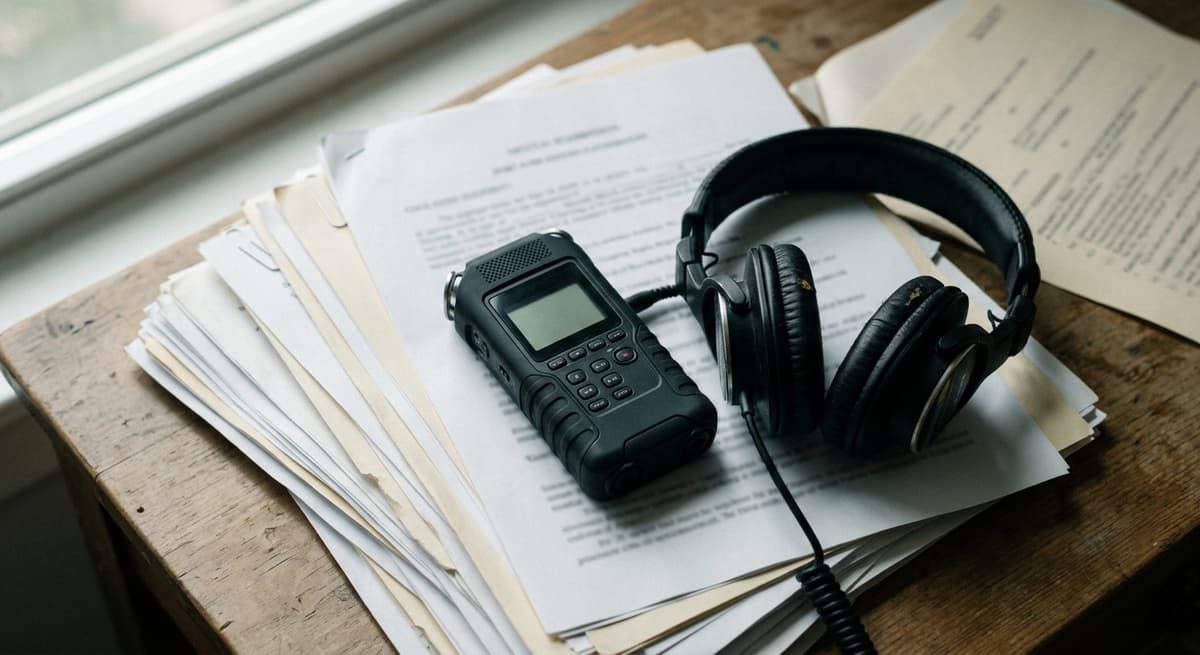
Many modern dashcams include built-in microphones that record audio inside the vehicle along with external video. This audio recording function is subject to Oklahoma's one-party consent law under Okla. Stat. tit. 13, Section 176.4.
As the driver and vehicle owner, you are a party to any conversation happening inside your vehicle. Your presence satisfies the one-party consent requirement, meaning the dashcam can legally record audio of:
- Conversations with passengers
- Phone calls conducted on speaker
- Your own dictation or voice notes
- Interactions with law enforcement during traffic stops (through your window)
- Any other audio inside your vehicle while you are present
When Audio Recording May Be Problematic
Audio recording from a dashcam can create legal issues in specific situations:
- When you lend your vehicle to someone else, you are no longer a party to conversations in the car. Audio recording without any participant's consent could violate Section 176.3.
- Rideshare and taxi drivers who record passengers should consider whether the driver's presence satisfies one-party consent (it generally does in Oklahoma).
- Fleet vehicles with cabin-facing cameras and audio may need driver consent or notification policies.
- Interstate travel may bring you into all-party consent states where passengers could have different expectations.
Disabling Audio
If you prefer to avoid audio recording complications, most dashcams allow you to disable the microphone through the camera's settings menu. Video-only dashcam recording does not implicate the Security of Communications Act at all, since it does not capture "oral communications."
Using Dashcam Footage as Evidence

In Accident Claims
Dashcam footage is one of the most valuable forms of evidence in vehicle accident cases. In Oklahoma, dashcam video can document:
- The moments before, during, and after a collision
- Traffic signals, speed, and road conditions at the time of an incident
- The other driver's actions, lane changes, and turning signals
- Weather and visibility conditions
- Injuries sustained at the scene
- Statements made by the other driver after the accident
Admissibility in Oklahoma Courts
Dashcam footage is admissible as evidence in Oklahoma courts when it meets the authentication requirements of the Oklahoma Evidence Code (Okla. Stat. tit. 12, Section 2901). Authentication requires showing that:
- The dashcam was functioning properly at the time of recording
- The footage accurately represents what occurred
- The footage has not been edited, altered, or tampered with
- The date and time stamps are accurate
- The footage is relevant to the issues in the case
Types of Cases Where Dashcam Evidence Is Used
| Case Type | How Dashcam Footage Helps |
|---|---|
| Auto accident liability | Shows which driver was at fault |
| Hit-and-run identification | Captures license plates and vehicle descriptions |
| Insurance fraud detection | Documents staged accidents or false claims |
| Traffic violations | Records reckless driving, running red lights, DUI behavior |
| Road rage incidents | Preserves evidence of aggressive driving or threats |
| Police encounter documentation | Records traffic stops and officer interactions |
| Vandalism and property damage | Captures incidents in parking lots or at parked vehicles |
Insurance Claims
Oklahoma insurance companies commonly accept dashcam footage as supporting evidence for claims. Benefits include:
- Faster claims resolution when fault is clear from the video
- Protection against false claims where another party misrepresents what happened
- Documentation of hit-and-run incidents that might otherwise lack evidence
- Support for uninsured/underinsured motorist claims by showing the other party's actions
Some auto insurance providers offer premium discounts for vehicles equipped with dashcams. Check with your insurance company about available discounts and any specific requirements for camera type or footage quality.
Dashcams and Law Enforcement
Traffic Stops
During a traffic stop in Oklahoma, your dashcam can continue to record. The officer cannot order you to turn off your dashcam. Your right to record your own traffic stop is protected by both the one-party consent statute and the First Amendment.
If your dashcam records audio of your interaction with the officer, this is legal because you are a party to the conversation. The recording can serve as evidence if a dispute arises about what was said or what occurred during the stop.
Police Access to Dashcam Footage
Law enforcement in Oklahoma may request access to your dashcam footage in several situations:
- As a witness to an accident you did not cause
- During an investigation into a crime your camera may have captured
- As evidence in your own traffic citation or criminal case
You are generally not required to provide dashcam footage voluntarily. Police can obtain your footage through:
- Your voluntary cooperation (you choose to share the video)
- A search warrant issued by a judge based on probable cause
- A subpoena in connection with legal proceedings
- A court order in ongoing litigation
Parking Mode and Unattended Recording
Many dashcams feature a "parking mode" that continues recording when the vehicle is parked and the engine is off. This feature activates when the camera detects motion or impact. Parking mode recording is legal in Oklahoma because:
- Video-only recording in public spaces has no consent requirement
- The camera is on your own property (your vehicle)
- The recording captures events visible to anyone passing by
Audio recording in parking mode can raise questions since you are not present in the vehicle. Consider disabling audio for parking mode to avoid potential issues.
Types of Dashcams
Front-Facing Cameras
The most common type of dashcam records the view through the windshield. These cameras capture:
- The road ahead and traffic conditions
- Other vehicles, pedestrians, and obstacles
- Traffic signals, signs, and road markings
- Weather and lighting conditions
Dual-Camera Systems
Dual-camera systems record both front and rear views. The rear camera typically mounts on the back window or license plate area. These systems provide:
- Coverage of rear-end collisions
- Documentation of tailgating behavior
- Full 360-degree incident documentation when combined with side cameras
- Parking lot coverage from multiple angles
Cabin-Facing Cameras
Some dashcams include a cabin-facing camera that records inside the vehicle. These are commonly used by:
- Rideshare and taxi drivers to document passenger behavior
- Fleet operators for driver monitoring
- Parents monitoring teen drivers
- Commercial vehicle operators for safety compliance
In Oklahoma, cabin-facing cameras that record audio are subject to one-party consent. The driver is a participant in any in-car conversation and satisfies the consent requirement.
Dashcam Data Retention and Storage
Storage Options
Dashcams typically store footage on microSD cards with limited capacity. When storage is full, most cameras overwrite the oldest footage automatically. For footage you want to preserve:
- Lock important clips using the camera's emergency save button
- Transfer footage to a computer or cloud storage regularly
- Use a large-capacity memory card to store more footage before overwriting
- Back up critical recordings in multiple locations
How Long to Keep Footage
Consider retaining dashcam footage for:
- Accident-related clips: At least until the statute of limitations expires for potential claims (generally 2 years for personal injury in Oklahoma under Okla. Stat. tit. 12, Section 95)
- Routine footage: Most cameras overwrite automatically after a few days
- Crime-related footage: Until law enforcement confirms they no longer need it
- Insurance claim footage: Until the claim is fully resolved
More Oklahoma Recording Laws
Audio Recording | Video Recording | Voyeurism & Hidden Cameras | Workplace Recording | Recording Police | Phone Call Recording | Security Cameras | Recording in Public | Landlord-Tenant | Dashcam Laws | Schools | Medical Recording
Back to Oklahoma Recording Laws
More Oklahoma Recording Topics
More Oklahoma Laws
Frequently Asked Questions
Are dashcams legal in Oklahoma?
Yes. Oklahoma has no law prohibiting the use of dashcams in personal or commercial vehicles. You can install front-facing, rear-facing, and cabin-facing cameras without a permit or registration. Mount the camera so it does not obstruct your view of the road.
Can my dashcam record audio inside my car in Oklahoma?
Yes. Under Oklahoma's one-party consent law (Okla. Stat. tit. 13, Section 176.4), you can record audio of conversations in your vehicle because you are a party to those conversations. If you lend your vehicle to someone else, audio recording without any participant's consent may be problematic.
Can I use dashcam footage as evidence in an accident claim in Oklahoma?
Yes. Dashcam footage is admissible in Oklahoma courts and is commonly accepted by insurance companies. The footage must be authenticated as genuine and unaltered under the Oklahoma Evidence Code. Dashcam video can help establish fault, document conditions, and support your claim.
Can police in Oklahoma make me turn off my dashcam?
No. Police cannot order you to turn off your dashcam during a traffic stop or any other encounter. Your right to record your own interactions with law enforcement is protected by the First Amendment and Oklahoma's one-party consent law. The dashcam should continue running throughout any police encounter.
Where should I mount my dashcam in Oklahoma?
Mount the camera behind the rearview mirror or in a location that does not obstruct your forward view of the road. Oklahoma's windshield-obstruction statute, 47 O.S. Section 12-404(C), prohibits suspending any object from the vehicle's interior that materially obstructs, obscures, or impairs the driver's view. Compact cameras mounted high and centered work best.
Updates
Corrected the page's repeated claim that Oklahoma has no windshield-obstruction statute for dashcams. Oklahoma does have one, 47 O.S. Section 12-404(C), which bars suspending anything from the vehicle's interior that blocks the driver's view. Also fixed several broken oscn.net citation links (one-party consent, felony interception, evidence authentication, and the injury statute of limitations) that pointed to unrelated statutes.
Independently fact-checked against the cited primary sources
Added UpdatesLog. No substantive legal errors found. Verified 13 O.S. section 176.4 one-party consent and section 176.3 felony interception references are accurate.
Reviewed and approved by an editor
The Law Behind This Article
This article rests on the statutory provisions below, held in our own legal record and retrieved from the official source. Tap a section to read the operative text.
Oklahoma Statutes, Title 13: COMMON CARRIERS
§ 176.3Prohibited acts - Felonies – Penalties - VenueIn forcecited in 13 of our articles
Except as otherwise specifically provided in this act, any person is guilty of a Class D1 felony offense and upon conviction shall be punished by a fine of not less than Five Thousand Dollars ($5,000.00), or by imprisonment as provided for in subsections B through F of Section 20N of Title 21 of the Oklahoma Statutes, or by both who: 1. Willfully intercepts, endeavors to intercept or procures any other person to intercept or endeavor to intercept any wire, oral or electronic communication; 2. Willfully uses, endeavors to use or procures any other person to use or endeavor to use any electronic, mechanical or other device to intercept any oral communication; 3. Willfully discloses or endeavors to disclose to any other person the contents of any wire, oral or electronic communication, knowing or having reason to know that the information was obtained in violation of the provisions of the Security of Communications Act; 4. Willfully uses or endeavors to use the contents of any wire, oral or electronic communication, knowing or having reason to know that the information was obtained in violation of the provisions of the Security of Communications Act; 5.
Official text (excerpt) · last checked 2026-08-31 · Read the full text in our law library · Verify at oklegislature.gov
Also relied on in: Oklahoma Recording Laws (2026): One-Party Consent Rules, Oklahoma AI Meeting Recording Laws: One-Party Consent Rules (2026), Oklahoma Audio Recording Laws: One-Party Consent Rules and Penalties
Oklahoma Statutes, Title 12: CIVIL PROCEDURE
§ 95Limitation of other actionsIn forcecited in 3 of our articles
A. Civil actions other than for the recovery of real property can only be brought within the following periods, after the cause of action shall have accrued, and not afterwards: 1. Within five (5) years: An action upon any contract, agreement, or promise in writing; 2. Within three (3) years: An action upon a contract express or implied not in writing; an action upon a liability created by statute other than a forfeiture or penalty; and an action on a foreign judgment; 3. Within two (2) years: An action for trespass upon real property; an action for taking, detaining, or injuring personal property, including actions for the specific recovery of personal property; an action for injury to the rights of another, not arising on contract, and not hereinafter enumerated; an action for relief on the ground of fraud - the cause of action in such case shall not be deemed to have accrued until the discovery of the fraud; 4. Within one (1) year: An action for libel, slander, assault, battery, malicious prosecution, or false imprisonment; an action upon a statute for penalty or forfeiture, except where the statute imposing it prescribes a different limitation; 5.
Official text (excerpt) · last checked 2026-09-10 · Read the full text in our law library · Verify at oklegislature.gov
Cited in 358 court opinions in our collectionLatest citing opinion in our collection: 2026
Opinions citing this section in our collection:
- Miller v. Miller (Supreme Court of Oklahoma 1998, 69 O.B.A.J. 1172)“…should be governed by the statute of limitations for fraud, 12 O.S. Supp.1997 § 95(3), 13 and by the “discovery rule” app…”
- Resolution Trust Corp. v. Grant (Supreme Court of Oklahoma 1995, 66 O.B.A.J. 2131)“…on Trust’s claims were barred by the two-year limitation of 12 O.S.Supp.1994 § 95(3), 4 the directors moved…”
- Woods v. Prestwick House, Inc. (Supreme Court of Oklahoma 2011, 247 P.3d 1183)“…g, it: applied the two year statute of limitations found in 12 O.S. Supp.2009 § 95(A)(8); adopted the single publication r…”
Identified automatically from the court opinions citing this section — not a ranking of which case controls.
Also relied on in: Oklahoma Statute of Limitations: Filing Deadlines by Case Type, Oklahoma Car Accident Laws: Fault, Insurance, and Your Claim
Search our full record of US law — 2.1 million sections, every state + federal →
Sources and References
- Oklahoma Security of Communications Act(oscn.net).gov
- Okla. Stat. tit. 13, Section 176.4 - One-Party Consent(law.justia.com)
- Oklahoma Motor Vehicle Code(oklegislature.gov).gov
- Federal Motor Carrier Safety Administration(fmcsa.dot.gov).gov
- Okla. Stat. tit. 12, Section 95 - Statute of Limitations(law.justia.com)
- Oklahoma Legislature - Oklahoma Statutes(oklegislature.gov).gov